<?xml version='1.0'?>
<!DOCTYPE art SYSTEM 'http://www.biomedcentral.com/xml/article.dtd'>
<art>
	<ui>1556-276X-8-41</ui>
	<ji>1556-276X</ji>
	<fm>
		<dochead>Nano Express</dochead>
		<bibl>
			<title>
				<p>Kinetic study of H-terminated silicon nanowires oxidation in very first stages</p>
			</title>
			<aug>
				<au id="A1" ce="yes"><snm>Bashouti</snm><mi>Y</mi><fnm>Muhammad</fnm><insr iid="I1"/><email>muhammad.bashouti@mpl.mpg.de</email></au>
				<au id="A2" ce="yes"><snm>Sardashti</snm><fnm>Kasra</fnm><insr iid="I1"/><email>ksardash@ucsd.edu</email></au>
				<au id="A3"><snm>Ristein</snm><fnm>J&#252;rgen</fnm><insr iid="I2"/><email>juergen.ristein@physik.uni-erlangen.de</email></au>
				<au id="A4" ca="yes"><snm>Christiansen</snm><fnm>Silke</fnm><insr iid="I1"/><email>silke.christiansen@mpl.mpg.de</email></au>
			</aug>
			<insg>
				<ins id="I1"><p>Max Planck Institute for the Science of Light Physics department G&#252;nther-Scharowsky-St. 1, Erlangen, 91058, Germany</p></ins>
				<ins id="I2"><p>Technical Physics, University of Erlangen-N&#252;rnberg, Erwin-Rommel St.1, Erlangen, 91058, Germany</p></ins>
			</insg>
			<source>Nanoscale Research Letters</source>
			<section><title><p>Regular submissions</p></title></section><issn>1556-276X</issn>
			<pubdate>2013</pubdate>
			<volume>8</volume>
			<issue>1</issue>
			<fpage>41</fpage>
			<url>http://www.nanoscalereslett.com/content/8/1/41</url>
			<xrefbib><pubidlist><pubid idtype="doi">10.1186/1556-276X-8-41</pubid><pubid idtype="pmpid">23336401</pubid></pubidlist></xrefbib>
		</bibl>
		<history><rec><date><day>9</day><month>10</month><year>2012</year></date></rec><acc><date><day>27</day><month>11</month><year>2012</year></date></acc><pub><date><day>21</day><month>1</month><year>2013</year></date></pub></history>
		<cpyrt><year>2013</year><collab>Bashouti; licensee Springer.</collab><note>This is an Open Access article distributed under the terms of the Creative Commons Attribution License (<url>http://creativecommons.org/licenses/by/2.0</url>), which permits unrestricted use, distribution, and reproduction in any medium, provided the original work is properly cited.</note></cpyrt>
		<kwdg>
			<kwd>Silicon nanowires</kwd>
			<kwd>Oxidation</kwd>
			<kwd>Kinetics</kwd>
			<kwd>Activation energy</kwd>
		</kwdg>
		<abs>
			<sec>
				<st>
					<p>Abstract</p>
				</st><p>Oxidation of silicon nanowires (Si NWs) is an undesirable phenomenon that has a detrimental effect on their electronic properties. To prevent oxidation of Si NWs, a deeper understanding of the oxidation reaction kinetics is necessary. In the current work, we study the oxidation kinetics of hydrogen-terminated Si NWs (H-Si NWs) as the starting surfaces for molecular functionalization of Si surfaces. H-Si NWs of 85-nm average diameter were annealed at various temperatures from 50&#176;C to 400&#176;C, in short-time spans ranging from 5 to 60 min. At high temperatures (<it>T</it> &#8805; 200&#176;C), oxidation was found to be dominated by the oxide growth site formation (made up of silicon suboxides) and subsequent silicon oxide self-limitation. Si-Si backbond oxidation and Si-H surface bond propagation dominated the process at lower temperatures (<it>T</it> &lt; 200&#176;C).</p>
			</sec>
		</abs>
	</fm>
	<bdy>
		<sec>
			<st>
				<p>Background</p>
			</st><p>During the last decade, silicon nanowires (Si NWs) have been studied extensively to be employed in the modern electronic industry in the direction of the size reduction and efficiency boost of the devices <abbrgrp>
					<abbr bid="B1">1</abbr>
				</abbrgrp>. Because of the high surface to volume ratio, Si NWs&#8217; properties depend firmly on their surface conditions and surface terminations, in particular. The oxidation of Si NWs, when exposed to ambient air, is believed to have a detrimental effect on their electrical properties due to the low quality of the oxide, giving rise to the uncontrolled interface states and enhanced carrier recombination rates <abbrgrp>
					<abbr bid="B2">2</abbr>
				</abbrgrp>. This necessitates protection of Si NWs&#8217; surfaces against oxidation via termination by various chemical moieties (i.e., alkyls and alkenyls) <abbrgrp>
					<abbr bid="B3">3</abbr>
					<abbr bid="B4">4</abbr>
				</abbrgrp>. However, to better prevent oxide formation, a deeper understanding of the Si NW&#8217;s oxidation mechanisms and kinetics is essential. For planar Si, the widely known Deal-Grove (DG) model considers the interfacial oxidation reaction and oxidant diffusion as the major rate-determining reaction steps for short and long oxidation times, respectively <abbrgrp>
					<abbr bid="B5">5</abbr>
				</abbrgrp>. DG model has undergone a number of modifications due to imprecise prediction of the oxidation behavior at low temperatures (<it>T</it> &#8804; 700&#176;C) in convex/concave surfaces and for very thin oxide layers <abbrgrp>
					<abbr bid="B6">6</abbr>
					<abbr bid="B7">7</abbr>
					<abbr bid="B8">8</abbr>
				</abbrgrp>. Specifically, in sufficiently small Si NWs (<it>d</it> &#8804; 44 nm), oxidation can be completely retarded by the compressive stress normal to the oxide/NW interface <abbrgrp>
					<abbr bid="B9">9</abbr>
					<abbr bid="B10">10</abbr>
				</abbrgrp>. Nevertheless, the studies on the oxidation mechanisms of Si NWs have been focused mostly on the formation of thick oxide layers at relatively high temperatures and long times, overlooking the early stages of oxidation which involve removal of surface functionalities and suboxides formation.</p><p>In this article, thermal stability of hydrogen-terminated Si NWs of 85-nm average diameter was investigated by means of the surface-sensitive X-ray photoelectron spectroscopy (XPS) for a variety of temperatures and times. H-terminated surfaces are of importance since they are considered as the starting surfaces for further functionalization of Si NWs <abbrgrp>
					<abbr bid="B11">11</abbr>
					<abbr bid="B12">12</abbr>
					<abbr bid="B13">13</abbr>
					<abbr bid="B14">14</abbr>
					<abbr bid="B15">15</abbr>
				</abbrgrp>. The different kinetic behavior for the three transient silicon suboxides and SiO<sub>2</sub> has been shown. Growth regimes were mainly addressed by four different phenomena including Si-Si backbond oxidation, surface bond propagation, suboxide growth site formation, and self-limited oxidant diffusion. A preliminary oxidation mechanism, elucidating the influence of time and temperature on the role of latter factors, is outlined.</p>
		</sec>
		<sec>
			<st>
				<p>Methods</p>
			</st>
			<sec>
				<st>
					<p>Synthesis of initial Si NWs</p>
				</st><p>To produce Si NWs, the vapor&#8211;liquid-solid (VLS) technique for silane (SiH4) gas, assisted by gold (Au) as silane decomposition catalyst, was employed. Prior to the VLS process, the native oxides on substrates of Si(111) have to be removed through etching in diluted HF. A thin gold layer of 2 nm in thickness was then sputtered on the etched substrates. After being transferred to the VLS operation chamber, the substrates were subjected to temperature and pressure of &#8776;580&#176;C and &#8776; 5 &#215; 10<sup>&#8722;7</sup> mbar for 10 min, as to be annealed. Subsequently, to grow nanowires on the surface, temperature was reduced to &#8776;520&#176;C and a gas mixture of 5 to 10 ccm (standard cm<sup>3</sup> min<sup>&#8722;1</sup>) Ar and 5 ccm SiH4 was introduced for 20 min at a pressure ranging from 0.5 to 2 mbar.</p>
			</sec>
			<sec>
				<st>
					<p>Si NWs hydrogen termination</p>
				</st><p>The grown Si NWs has to be treated on their surface. Si NW were first cleaned by N<sub>2</sub>(g) flow for several seconds and then exposed in a sequence to buffered HF solution (pH = 5) and NH<sub>4</sub>F (40% in water) for 30 to 50 s and 30 to &#8722;180 s, respectively. H-terminated Si NWs were rinsed by water for less than 10 s per side to prevent the oxidation and dried in N<sub>2</sub>(g) for 10 s.</p>
			</sec>
			<sec>
				<st>
					<p>Oxide growth in Si NWs</p>
				</st><p>To evaluate the thermal stability of hydrogen atoms bonded to NWs&#8217; surfaces and find dominant oxidation mechanisms, H-Si NWs were annealed at atmospheric condition in six distinct temperatures of 50&#176;C, 75&#176;C, 150&#176;C, 200&#176;C, 300&#176;C, and 400&#176;C, each for five different time-spans: 5, 10, 20, 30, and 60 min. The annealing and hydrogen-termination processes were gentle in the sense that they did not melt the Si NWs or change their diameters.</p>
			</sec>
			<sec>
				<st>
					<p>Characterization of Si NWs</p>
				</st><p>Pristine Si NWs were examined by scanning electron microscopy (SEM, Toshiba S-4800, Toshiba International (Europe) Ltd., Uxbridge, UK) with 5.0 kV voltage and 10.0 &#956;A current, on top and side views. After each heating stage, the specimens were scanned by home-made XPS. Core level and valance band photoelectron spectra were excited by monochromatic Al K radiation (1,487 eV) and collected, at take-off angle of 35&#176;, by a hemispherical analyzer with adjustable overall resolution between 0.8 and 1.2 eV. The surveys were conducted in various ranges of electron energies including the overall binding energy survey (0 to 1,000 eV) besides individual spectra for Si 2<it>p</it> (95.0 to 110.0 eV), C 1&#8201;<it>s</it> (282.0 to 287.0 eV) and O 1&#8201;<it>s</it> (520 to 550 eV) which were monitored more accurately in a discrete number of scans. All spectra were taken at room temperature in a UHV chamber of about 10<sup>&#8722;10</sup> Torr pressure. The resulting XPS spectra were analyzed by spectral decomposition using the XPS peak software and their oxide levels were determined.</p>
			</sec>
		</sec>
		<sec>
			<st>
				<p>Results and discussion</p>
			</st><p>The VLS-grown Si NWs used in this study were randomly oriented with average diameter and length of 84.96 nm and 3.508 &#956;m, respectively. The pristine Si NWs are covered by a native oxide layer of 1 to 4 nm. SEM and transmission electron microscopy (TEM) micrographs of the pristine Si NWs are depicted in Figure <figr fid="F1">1</figr>. Residual gold nanoparticles were removed by rinsing the Si NWs into HNO<sub>3</sub> solution preventing its catalytic effect on oxidation.</p>
			<fig id="F1"><title><p>Figure 1</p></title><caption><p>SEM and transmission electron microscopy (TEM) micrographs of the pristine Si NWs</p></caption><text>
   <p><b>SEM and transmission electron microscopy (TEM) micrographs of the pristine Si NWs.</b> (<b>a</b>) Top-view SEM micrograph of the Si NWs grown by VLS mechanism showing their random orientation. (<b>b</b>) TEM image of an individual Si NW cross-section representing the continuous native oxide layer of 3 to 4 nm in diameter atop. Regarding the micrographs, the Si core diameter can be estimated as 50 &#177; 10 nm. The red dotted line insists on the fact that TEM micrograph is taken for a single Si NW among the large ensemble observed through SEM.</p>
</text><graphic file="1556-276X-8-41-1"/></fig><p>As an illustrative Si 2<it>p</it> spectrum of oxidized Si NWs, the Si 2<it>p</it> spectrum of the H-terminated Si NWs annealed at 500&#176;C for 60 min is depicted in Figure <figr fid="F2">2</figr>. By formation of even very thin silicon dioxide layers, the Si 2<it>p</it> XPS survey of Si NWs changes, showing a peak between the binding energies of 102 to 104 eV. To quantitatively evaluate the oxidation process, Si 2<it>p</it> spectral decomposition was conducted on the spectra after Shirley background subtraction, through a curve-fitting procedure using Gaussian-Lorentzian functions <abbrgrp>
					<abbr bid="B16">16</abbr>
				</abbrgrp>. Consequently, the Si 2<it>p</it> spectra can be divided into six different sub-peaks including two silicon spin-splitting peaks as Si 2<it>p</it>
				<sub>1/2</sub> and Si 2<it>p</it>
				<sub>3/2</sub>, three silicon sub-stoichiometric oxides (known as suboxides) peaks as Si<sub>2</sub>O, SiO and Si<sub>2</sub>O<sub>3</sub>, and the silicon dioxide (SiO<sub>2</sub>) peak. The chemical shifts (&#916;) of the sub-peaks obtained in Figure <figr fid="F2">2</figr> relative to the Si 2<it>p</it>
				<sub>3/2</sub> (at 99.60 &#177; 0.02 eV) are as follows: Si 2<it>p</it>
				<sub>1/2</sub> (&#916; = 0.60 eV), Si<sub>2</sub>O (&#916; = 0.97 eV), SiO (&#916; = 1.77 eV), Si<sub>2</sub>O<sub>3</sub> (&#916; = 2.50 eV), and SiO<sub>2</sub> (&#916; = 3.87 eV).</p>
			<fig id="F2"><title><p>Figure 2</p></title><caption><p>Spectral decomposition of Si 2<it>p</it> spectrum of Si NWs sample annealed at 500&#176;C for 60 min</p></caption><text>
   <p><b>Spectral decomposition of Si 2</b><b><it>p </it></b><b>spectrum of Si NWs sample annealed at 500&#176;</b><b>C for 60 min.</b> Spectral decomposition of Si 2<it>p</it> spectrum of Si NWs sample annealed at 500&#176;C for 60 min, having all the relevant suboxide and silicon peaks (Si 2<it>p</it>3/2 in dark green and Si 2<it>p</it>1/2 in light green). The black line is the original spectrum, while the red graph represents the fitting curve which is sum of all of the decomposed peaks and fit well the experimentally obtained spectrum.</p>
</text><graphic file="1556-276X-8-41-2"/></fig><p>The amount of each of suboxides, relative to the amount of intact silicon, can be calculated by dividing the integrated area under the suboxide&#8217;s peak (<it>A</it>
				<sub>SiOx</sub>) by the sum of the integrated area under Si 2<it>p</it>
				<sub>1/2</sub> and Si 2<it>p</it>
				<sub>3/2</sub> peaks (<it>A</it>
				<sub>Si 2<it>p</it>1/2</sub> + <it>A</it>
				<sub>Si 2<it>p</it>3/2</sub>). The resulting value is called suboxide intensity, shown by <it>I</it>
				<sub>SiOx</sub>. In addition, total oxide intensity (<it>I</it>
				<sub>ox</sub>) can be calculated as the sum of all the four suboxide intensities (<it>I</it>
				<sub>ox</sub> = <it>I</it>
				<sub>Si2O</sub> + <it>I</it>
				<sub>SiO</sub> + <it>I</it>
				<sub>Si2O3</sub> + <it>I</it>
				<sub>SiO2</sub>). Oxide intensity can also be expressed in number of monolayers, regarding the fact that each 0.21 of oxide intensity corresponds to one oxide monolayer <abbrgrp>
					<abbr bid="B17">17</abbr>
				</abbrgrp>. The total oxide intensity, besides suboxide intensities for the Si NWs specimens annealed at 150&#176;C and 400&#176;C, is listed in Table <tblr tid="T1">1</tblr>. Except SiO<sub>2</sub>, all the suboxide intensities for both of the annealing temperatures are comparable and more or less show very slight variations over the annealing time. However, at 150&#176;C, suboxides hold a larger share of the total oxide intensity whereas at 400&#176;C, SiO<sub>2</sub> mainly contributes to the overall oxide amount detected.</p>
			<table id="T1">
				<title>
					<p>Table 1</p>
				</title>
				<caption>
					<p>
						<b>Intensity of the silicon suboxides for the samples annealed at 150</b>&#176;<b>C and 400</b>&#176;<b>C</b>
					</p>
				</caption>
				<tgroup align="left" cols="11">
					<colspec align="left" colname="c1" colnum="1" colwidth="1*"/>
					<colspec align="left" colname="c2" colnum="2" colwidth="1*"/>
					<colspec align="left" colname="c3" colnum="3" colwidth="1*"/>
					<colspec align="left" colname="c4" colnum="4" colwidth="1*"/>
					<colspec align="left" colname="c5" colnum="5" colwidth="1*"/>
					<colspec align="left" colname="c6" colnum="6" colwidth="1*"/>
					<colspec align="left" colname="c7" colnum="7" colwidth="1*"/>
					<colspec align="left" colname="c8" colnum="8" colwidth="1*"/>
					<colspec align="left" colname="c9" colnum="9" colwidth="1*"/>
					<colspec align="left" colname="c10" colnum="10" colwidth="1*"/>
					<colspec align="left" colname="c11" colnum="11" colwidth="1*"/>
					<thead valign="top">
						<row>
							<entry colname="c1"/>
							<entry colname="2" nameend="c6" namest="c2" rowsep="1">
								<p>
									<b>
										<it>T</it>
									</b> = <b>150</b>&#176;<b>C</b>
								</p>
							</entry>
							<entry colname="7" nameend="c11" namest="c7" rowsep="1">
								<p>
									<b>
										<it>T</it>
									</b> = <b>400</b>&#176;<b>C</b>
								</p>
							</entry>
						</row>
						<row rowsep="1">
							<entry colname="c1">
								<p>
									<b>Intensity/oxidation time (min)</b>
								</p>
							</entry>
							<entry colname="c2">
								<p>
									<b>5</b>
								</p>
							</entry>
							<entry colname="c3">
								<p>
									<b>10</b>
								</p>
							</entry>
							<entry colname="c4">
								<p>
									<b>20</b>
								</p>
							</entry>
							<entry colname="c5">
								<p>
									<b>30</b>
								</p>
							</entry>
							<entry colname="c6">
								<p>
									<b>60</b>
								</p>
							</entry>
							<entry colname="c7">
								<p>
									<b>5</b>
								</p>
							</entry>
							<entry colname="c8">
								<p>
									<b>10</b>
								</p>
							</entry>
							<entry colname="c9">
								<p>
									<b>20</b>
								</p>
							</entry>
							<entry colname="c10">
								<p>
									<b>30</b>
								</p>
							</entry>
							<entry colname="c11">
								<p>
									<b>60</b>
								</p>
							</entry>
						</row>
					</thead>
					<tbody valign="top">
						<row>
							<entry colname="c1">
								<p>Si<sub>2</sub>O</p>
							</entry>
							<entry colname="c2">
								<p>0.317</p>
							</entry>
							<entry colname="c3">
								<p>0.269</p>
							</entry>
							<entry colname="c4">
								<p>0.252</p>
							</entry>
							<entry colname="c5">
								<p>0.289</p>
							</entry>
							<entry colname="c6">
								<p>0.198</p>
							</entry>
							<entry colname="c7">
								<p>0.235</p>
							</entry>
							<entry colname="c8">
								<p>0.227</p>
							</entry>
							<entry colname="c9">
								<p>0.186</p>
							</entry>
							<entry colname="c10">
								<p>0.212</p>
							</entry>
							<entry colname="c11">
								<p>0.249</p>
							</entry>
						</row>
						<row>
							<entry colname="c1">
								<p>SiO</p>
							</entry>
							<entry colname="c2">
								<p>0.067</p>
							</entry>
							<entry colname="c3">
								<p>0.092</p>
							</entry>
							<entry colname="c4">
								<p>0.102</p>
							</entry>
							<entry colname="c5">
								<p>0.151</p>
							</entry>
							<entry colname="c6">
								<p>0.148</p>
							</entry>
							<entry colname="c7">
								<p>0.107</p>
							</entry>
							<entry colname="c8">
								<p>0.089</p>
							</entry>
							<entry colname="c9">
								<p>0.142</p>
							</entry>
							<entry colname="c10">
								<p>0.095</p>
							</entry>
							<entry colname="c11">
								<p>0.104</p>
							</entry>
						</row>
						<row>
							<entry colname="c1">
								<p>Si<sub>2</sub>O<sub>3</sub>
								</p>
							</entry>
							<entry colname="c2">
								<p>0.026</p>
							</entry>
							<entry colname="c3">
								<p>0.078</p>
							</entry>
							<entry colname="c4">
								<p>0.076</p>
							</entry>
							<entry colname="c5">
								<p>0.126</p>
							</entry>
							<entry colname="c6">
								<p>0.088</p>
							</entry>
							<entry colname="c7">
								<p>0.157</p>
							</entry>
							<entry colname="c8">
								<p>0.077</p>
							</entry>
							<entry colname="c9">
								<p>0.149</p>
							</entry>
							<entry colname="c10">
								<p>0.139</p>
							</entry>
							<entry colname="c11">
								<p>0.083</p>
							</entry>
						</row>
						<row>
							<entry colname="c1">
								<p>SiO<sub>2</sub>
								</p>
							</entry>
							<entry colname="c2">
								<p>0.228</p>
							</entry>
							<entry colname="c3">
								<p>0.350</p>
							</entry>
							<entry colname="c4">
								<p>0.414</p>
							</entry>
							<entry colname="c5">
								<p>0.666</p>
							</entry>
							<entry colname="c6">
								<p>0.787</p>
							</entry>
							<entry colname="c7">
								<p>1.181</p>
							</entry>
							<entry colname="c8">
								<p>1.390</p>
							</entry>
							<entry colname="c9">
								<p>1.569</p>
							</entry>
							<entry colname="c10">
								<p>1.604</p>
							</entry>
							<entry colname="c11">
								<p>1.922</p>
							</entry>
						</row>
						<row rowsep="1">
							<entry colname="c1">
								<p>Total</p>
							</entry>
							<entry colname="c2">
								<p>0.640</p>
							</entry>
							<entry colname="c3">
								<p>0.790</p>
							</entry>
							<entry colname="c4">
								<p>0.845</p>
							</entry>
							<entry colname="c5">
								<p>1.234</p>
							</entry>
							<entry colname="c6">
								<p>1.223</p>
							</entry>
							<entry colname="c7">
								<p>1.680</p>
							</entry>
							<entry colname="c8">
								<p>1.785</p>
							</entry>
							<entry colname="c9">
								<p>2.047</p>
							</entry>
							<entry colname="c10">
								<p>2.052</p>
							</entry>
							<entry colname="c11">
								<p>2.360</p>
							</entry>
						</row>
					</tbody>
				</tgroup>
			</table><p>Variation in the total oxide intensity (<it>I</it>
				<sub>ox</sub>) for all the six temperatures over oxidation time up to 60 min is shown in Figure <figr fid="F3">3</figr>. For both the high temperature (<it>T</it> &#8805; 200&#176;C) and low-temperature oxidation (<it>T</it> &lt; 200&#176;C), the oxide intensity reaches a saturation level beyond which the oxide amount grows negligibly. However, in low-temperature oxidation, the time to reach 80% of the saturation levels (defined as &#915;sat) is in the range of 20 to 30 min, whereas in high-temperature oxidation it ranges from 8 min to 12 min. Average &#915;sat for high- and low-temperature oxidation are marked in Figure <figr fid="F3">3</figr> by dashed and dotted lines, respectively. This indicates roughly both similarities and differences between the underlying oxidation mechanisms in these two temperature ranges. The presence of the saturation levels reveals the fact that a mechanism is hindering further oxide growth after formation of a certain oxide level. On the other hand, the growth rates differ between the two temperature ranges, revealing the existence of mechanisms with different thermal activation energies.</p>
			<fig id="F3"><title><p>Figure 3</p></title><caption><p>Variation of total oxide monolayer over time for the six different oxidation temperatures</p></caption><text>
   <p><b>Variation of total oxide monolayer over time for the six different oxidation temperatures.</b> The two dashed and dotted lines represent saturation times (&#915;) for high- and low-temperature oxidation, respectively.</p>
</text><graphic file="1556-276X-8-41-3"/></fig><p>The growth of oxide in planar silicon in thick layers and at high temperatures has been successfully expressed by the Deal-Grove model. However, it breaks down in very thin oxide layers and has been modified considering the suboxides as nucleation sites (or oxide growth sites) that are necessary for oxide build-up <abbrgrp>
					<abbr bid="B6">6</abbr>
				</abbrgrp>. Through high-temperature oxidation, silicon suboxides exhibit relatively constant values after a sharp increase in their intensities. Therefore, in the early stages of Si NWs oxidation, formation of the growth sites composed of suboxides can be taken into account as the major mechanism.</p><p>Further oxidation and rise of the flat tail indicate existence of a second mechanism, which is impeding oxide formation at the suboxide growth sites. In Si NWs, such retarded oxidation behaviors have mostly been attributed to their geometry and presence of compressive stresses normal to the silicon/silicon oxide interfaces that limit further oxide growth and its expansion <abbrgrp>
					<abbr bid="B8">8</abbr>
					<abbr bid="B10">10</abbr>
				</abbrgrp>. Nevertheless, compressive stresses are more expected for NWs of diameter below 44 nm which is far below the average diameter of the Si NWs studied here <abbrgrp>
					<abbr bid="B9">9</abbr>
				</abbrgrp>. Additionally, comparison between Si NWs and planar Si(100) oxidation behavior in the same time and temperature ranges showed similar flat tails of oxide <abbrgrp>
					<abbr bid="B18">18</abbr>
				</abbrgrp>. Therefore, the retarded oxidation in Si NWs, in analogy with planar silicon, can be attributed to the self-limited oxidation caused by the act of firstly formed oxide layer as a diffusion barrier <abbrgrp>
					<abbr bid="B19">19</abbr>
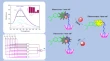
				</abbrgrp>. The two mechanisms are summarized in Figure <figr fid="F4">4</figr>.</p>
			<fig id="F4"><title><p>Figure 4</p></title><caption><p>Scheme of the suggested mechanism for high-temperature oxidation of the H-terminated Si NW</p></caption><text>
   <p><b>Scheme of the suggested mechanism for high</b>-<b>temperature oxidation of the H</b>-<b>terminated Si NWs.</b></p>
</text><graphic file="1556-276X-8-41-4"/></fig><p>At lower temperatures, increase of the total oxide intensity is accompanied by the rise in the intensity of suboxides with amounts comparable to SiO<sub>2</sub> intensity (Table <tblr tid="T1">1</tblr>). Backbond oxidation can be considered as the primary mechanism causing formation Si-O-Si bonds below the surface-terminating Si-H bonds. The backbonds can be oxidized in different oxidation states and can finally form the full oxide layer atop. Compared to planar samples, Si NWs exhibit faster backbond oxidation, indicating the effect of circumferential tensile stresses on the stability of Si-Si bonds <abbrgrp>
					<abbr bid="B18">18</abbr>
				</abbrgrp>. For longer oxidation times, upon formation of a larger number of oxidized backbonds, isolated Si-OH bonds start to form upon interaction of Si-H and Si-O bonds in the oxidized backbond <abbrgrp>
					<abbr bid="B20">20</abbr>
				</abbrgrp>. By completion of the backbond oxidation, besides the Si-OH formation, remaining Si-H surface bonds start to rupture and hydrogen propagation begins. Low-temperature oxidation mechanism is summarized in the scheme illustrated in Figure <figr fid="F5">5</figr>. It should be noted that the hydroxyl groups shown in Figure <figr fid="F5">5</figr> represent both the isolated hydroxyl groups formed throughout the oxidation and after completion of oxidation as frequent for SiO<sub>2</sub> in H<sub>2</sub>O-containing environments <abbrgrp>
					<abbr bid="B21">21</abbr>
				</abbrgrp>.</p>
			<fig id="F5"><title><p>Figure 5</p></title><caption><p>Scheme of the suggested mechanism for low-temperature oxidation of the H-terminated Si NWs</p></caption><text>
   <p><b>Scheme of the suggested mechanism for low</b>-<b>temperature oxidation of the H</b>-<b>terminated Si NWs.</b></p>
</text><graphic file="1556-276X-8-41-5"/></fig>
		</sec>
		<sec>
			<st>
				<p>Conclusions</p>
			</st><p>In conclusion, the growth kinetics of the suboxides and silicon dioxide is highly dependent to temperature and time. At lower temperatures, oxidation is first controlled by backbond oxidation. After full oxidation of the backbonds, Si-H bond rupture dominates the process kinetics. At higher temperatures, suboxide nucleation sites (known as oxide growth sites) control the early stages of oxidation. After complete formation of the very first oxide monolayers, further oxidation is self-limited as the oxidant&#8217;s diffusion through the oxide layers is impaired. These findings suggest a perspective on more efficient methods to stabilize Si NWs against oxidation over the long term.</p>
		</sec>
		<sec>
			<st>
				<p>Abbreviations</p>
			</st><p>SEM: Scanning electron microscopy; Si NWs: Silicon nanowires; VLS: Vapor&#8211;liquid-solid; XPS: X-ray photoelectron spectroscopy.</p>
		</sec>
		<sec>
			<st>
				<p>Competing interests</p>
			</st><p>The authors declare that they have no competing interests.</p>
		</sec>
		<sec>
			<st>
				<p>Authors&#8217; contributions</p>
			</st><p>MYB and KS carried out the experiments and wrote the article. JR and SHC conceived of the study and participated in its design and coordination. All authors read and approved the final manuscript.</p>
		</sec>
	</bdy>
	<bm>
		<ack>
			<sec>
				<st>
					<p>Acknowledgments</p>
				</st><p>KS wishes to thank University of Erlangen-Nuremberg and the Elite Advanced Materials and Processes (MAP) graduate program for the MS thesis scholarship. MYB gratefully acknowledges the Max-Planck Society for the Post-Doctoral fellowship. SHC acknowledges the financial support by the FP7264 EU project LCAOS (nr. 258868, HEALTH priority) and the BMBF project (MNI priority) NAWION.</p>
			</sec>
		</ack>
		<refgrp><bibl id="B1"><title><p>Colloquium: structural, electronic, and transport properties of silicon nanowires</p></title><aug><au><snm>Rurali</snm><fnm>R</fnm></au></aug><source>Rev Mod Phys</source><pubdate>2010</pubdate><volume>82</volume><fpage>427</fpage><lpage>449</lpage><xrefbib><pubid idtype="doi">10.1103/RevModPhys.82.427</pubid></xrefbib></bibl><bibl id="B2"><title><p>Silicon nanowires terminated with methyl functionalities exhibit stronger Si-C bonds than equivalent 2D surfaces</p></title><aug><au><snm>Bashouti</snm><fnm>MY</fnm></au><au><snm>Paska</snm><fnm>Y</fnm></au><au><snm>Puniredd</snm><fnm>SR</fnm></au><au><snm>Stelzner</snm><fnm>T</fnm></au><au><snm>Christiansen</snm><fnm>S</fnm></au><au><snm>Haick</snm><fnm>H</fnm></au></aug><source>Phys Chem Chem Phys</source><pubdate>2009</pubdate><volume>11</volume><fpage>3845</fpage><lpage>3848</lpage><xrefbib><pubidlist><pubid idtype="doi">10.1039/b820559k</pubid><pubid idtype="pmpid" link="fulltext">19440610</pubid></pubidlist></xrefbib></bibl><bibl id="B3"><title><p>Covalent attachment of alkyl functionality to 50 nm silicon nanowires through a chlorination/alkylation process</p></title><aug><au><snm>Bashouti</snm><fnm>MY</fnm></au><au><snm>Stelzner</snm><fnm>T</fnm></au><au><snm>Christiansen</snm><fnm>S</fnm></au><au><snm>Haick</snm><fnm>H</fnm></au></aug><source>J Phys Chem C</source><pubdate>2009</pubdate><volume>113</volume><fpage>14823</fpage><lpage>14828</lpage><xrefbib><pubid idtype="doi">10.1021/jp905394w</pubid></xrefbib></bibl><bibl id="B4"><title><p>Chemical passivation of silicon nanowires with C(1)-C(6) alkyl chains through covalent Si-C bonds</p></title><aug><au><snm>Bashouti</snm><fnm>MY</fnm></au><au><snm>Stelzner</snm><fnm>T</fnm></au><au><snm>Berger</snm><fnm>A</fnm></au><au><snm>Christiansen</snm><fnm>S</fnm></au><au><snm>Haick</snm><fnm>H</fnm></au></aug><source>J Phys Chem C</source><pubdate>2008</pubdate><volume>112</volume><fpage>19168</fpage><lpage>19172</lpage><xrefbib><pubid idtype="doi">10.1021/jp8077437</pubid></xrefbib></bibl><bibl id="B5"><title><p>General relationship for the thermal oxidation of silicon</p></title><aug><au><snm>Deal</snm><fnm>BE</fnm></au><au><snm>Grove</snm><fnm>AS</fnm></au></aug><source>J Appl Phys</source><pubdate>1965</pubdate><volume>36</volume><fpage>3770</fpage><lpage>3778</lpage><xrefbib><pubid idtype="doi">10.1063/1.1713945</pubid></xrefbib></bibl><bibl id="B6"><title><p>Modeling the growth of thin silicon oxide films on silicon</p></title><aug><au><snm>Dimitrijev</snm><fnm>S</fnm></au><au><snm>Harrison</snm><fnm>HB</fnm></au></aug><source>J Appl Phys</source><pubdate>1996</pubdate><volume>80</volume><fpage>2467</fpage><lpage>2470</lpage><xrefbib><pubid idtype="doi">10.1063/1.363050</pubid></xrefbib></bibl><bibl id="B7"><title><p>Modeling stress retarded self-limiting oxidation of suspended silicon nanowires for the development of silicon nanowire-based nanodevices</p></title><aug><au><snm>Fazzini</snm><fnm>P-F</fnm></au><au><snm>Bonafos</snm><fnm>C</fnm></au><au><snm>Claverie</snm><fnm>A</fnm></au><au><snm>Hubert</snm><fnm>A</fnm></au><au><snm>Ernst</snm><fnm>T</fnm></au><au><snm>Respaud</snm><fnm>M</fnm></au></aug><source>J Appl Phys</source><pubdate>2011</pubdate><volume>110</volume><fpage>033524</fpage><xrefbib><pubid idtype="doi">10.1063/1.3611420</pubid></xrefbib></bibl><bibl id="B8"><title><p>Oxidation of silicon nanowires</p></title><aug><au><snm>Shir</snm><fnm>D</fnm></au><au><snm>Liu</snm><fnm>BZ</fnm></au><au><snm>Mohammad</snm><fnm>AM</fnm></au><au><snm>Lew</snm><fnm>KK</fnm></au><au><snm>Mohney</snm><fnm>SE</fnm></au></aug><source>J Vac Sci Technol B</source><pubdate>2006</pubdate><volume>24</volume><fpage>1333</fpage><xrefbib><pubid idtype="doi">10.1116/1.2198847</pubid></xrefbib></bibl><bibl id="B9"><title><p>Retarded oxidation of Si nanowires</p></title><aug><au><snm>Buttner</snm><fnm>CC</fnm></au><au><snm>Zacharias</snm><fnm>M</fnm></au></aug><source>Appl Phys Lett</source><pubdate>2006</pubdate><volume>89</volume><fpage>263106</fpage><xrefbib><pubid idtype="doi">10.1063/1.2424297</pubid></xrefbib></bibl><bibl id="B10"><title><p>Oxidation of silicon nanowires for top-gated field effect transistors</p></title><aug><au><snm>Liu</snm><fnm>B</fnm></au><au><snm>Wang</snm><fnm>Y</fnm></au><au><snm>Ho</snm><fnm>T-t</fnm></au><au><snm>Lew</snm><fnm>K-K</fnm></au><au><snm>Eichfeld</snm><fnm>SM</fnm></au><au><snm>Redwing</snm><fnm>JM</fnm></au><au><snm>Mayer</snm><fnm>TS</fnm></au><au><snm>Mohney</snm><fnm>SE</fnm></au></aug><source>J Vac Sci Technol A</source><pubdate>2008</pubdate><volume>26</volume><fpage>370</fpage><xrefbib><pubid idtype="doi">10.1116/1.2899333</pubid></xrefbib></bibl><bibl id="B11"><title><p>Tuning the electrical properties of Si nanowire field-effect transistors by molecular engineering</p></title><aug><au><snm>Bashouti</snm><fnm>MY</fnm></au><au><snm>Tung</snm><fnm>RT</fnm></au><au><snm>Haick</snm><fnm>H</fnm></au></aug><source>Small</source><pubdate>2009</pubdate><volume>5</volume><fpage>2761</fpage><lpage>2769</lpage><xrefbib><pubidlist><pubid idtype="doi">10.1002/smll.200901402</pubid><pubid idtype="pmpid" link="fulltext">19771570</pubid></pubidlist></xrefbib></bibl><bibl id="B12"><title><p>Chemical and electrical passivation of silicon (111) surfaces through functionalization with sterically hindered alkyl groups</p></title><aug><au><snm>Nemanick</snm><fnm>EJ</fnm></au><au><snm>Hurley</snm><fnm>PT</fnm></au><au><snm>Brunschwig</snm><fnm>BS</fnm></au><au><snm>Lewis</snm><fnm>NS</fnm></au></aug><source>J Phys Chem B</source><pubdate>2006</pubdate><volume>110</volume><fpage>14800</fpage><lpage>14808</lpage><xrefbib><pubidlist><pubid idtype="doi">10.1021/jp057070i</pubid><pubid idtype="pmpid" link="fulltext">16869589</pubid></pubidlist></xrefbib></bibl><bibl id="B13"><title><p>Enhanced sensing of nonpolar volatile organic compounds by silicon nanowire field effect transistors</p></title><aug><au><snm>Paska</snm><fnm>Y</fnm></au><au><snm>Stelzner</snm><fnm>T</fnm></au><au><snm>Christiansen</snm><fnm>S</fnm></au><au><snm>Haick</snm><fnm>H</fnm></au></aug><source>ACS Nano</source><pubdate>2011</pubdate><volume>5</volume><fpage>5620</fpage><lpage>5626</lpage><xrefbib><pubidlist><pubid idtype="doi">10.1021/nn201184c</pubid><pubid idtype="pmpid" link="fulltext">21648442</pubid></pubidlist></xrefbib></bibl><bibl id="B14"><title><p>Chemical functionalisation of silicon and germanium nanowires</p></title><aug><au><snm>Collins</snm><fnm>G</fnm></au><au><snm>Holmes</snm><fnm>JD</fnm></au></aug><source>J Mater Chem</source><pubdate>2011</pubdate><volume>21</volume><fpage>11052</fpage><lpage>11069</lpage><xrefbib><pubid idtype="doi">10.1039/c1jm11028d</pubid></xrefbib></bibl><bibl id="B15"><title><p>Controlling the electronic properties of silicon nanowires with functional molecular groups</p></title><aug><au><snm>Haight</snm><fnm>R</fnm></au><au><snm>Sekaric</snm><fnm>L</fnm></au><au><snm>Afzali</snm><fnm>A</fnm></au><au><snm>Newns</snm><fnm>D</fnm></au></aug><source>Nano Letters</source><pubdate>2009</pubdate><volume>9</volume><fpage>3165</fpage><lpage>3170</lpage><xrefbib><pubidlist><pubid idtype="doi">10.1021/nl901351h</pubid><pubid idtype="pmpid" link="fulltext">19681641</pubid></pubidlist></xrefbib></bibl><bibl id="B16"><title><p>Microscopic structure of the Sio2/Si interface</p></title><aug><au><snm>Himpsel</snm><fnm>FJ</fnm></au><au><snm>Mcfeely</snm><fnm>FR</fnm></au><au><snm>Talebibrahimi</snm><fnm>A</fnm></au><au><snm>Yarmoff</snm><fnm>JA</fnm></au><au><snm>Hollinger</snm><fnm>G</fnm></au></aug><source>Phys Rev B</source><pubdate>1988</pubdate><volume>38</volume><fpage>6084</fpage><lpage>6096</lpage><xrefbib><pubid idtype="doi">10.1103/PhysRevB.38.6084</pubid></xrefbib></bibl><bibl id="B17"><title><p>Infrared and X-ray photoelectron spectroscopic studies of the reactions of hydrogen-terminated crystalline Si(111) and Si(100) surfaces with Br-2, I-2, and ferrocenium in alcohol solvents</p></title><aug><au><snm>Haber</snm><fnm>JA</fnm></au><au><snm>Lewis</snm><fnm>NS</fnm></au></aug><source>J Phys Chem B</source><pubdate>2002</pubdate><volume>106</volume><fpage>3639</fpage><lpage>3656</lpage><xrefbib><pubid idtype="doi">10.1021/jp0102872</pubid></xrefbib></bibl><bibl id="B18"><title><p>Early stages of oxide growth in H-terminated silicon nanowires: determination of kinetic behavior and activation energy</p></title><aug><au><snm>Bashouti</snm><fnm>MY</fnm></au><au><snm>Sardashti</snm><fnm>K</fnm></au><au><snm>Ristein</snm><fnm>J</fnm></au><au><snm>Christiansen</snm><fnm>SH</fnm></au></aug><source>Phys Chem Chem Phys</source><pubdate>2012</pubdate><volume>14</volume><fpage>11877</fpage><lpage>11881</lpage><xrefbib><pubidlist><pubid idtype="doi">10.1039/c2cp41709j</pubid><pubid idtype="pmpid" link="fulltext">22837043</pubid></pubidlist></xrefbib></bibl><bibl id="B19"><title><p>Initial oxidation of silicon(100) - a unified chemical-model for thin and thick oxide-growth rates and interfacial structure</p></title><aug><au><snm>Whidden</snm><fnm>TK</fnm></au><au><snm>Thanikasalam</snm><fnm>P</fnm></au><au><snm>Rack</snm><fnm>MJ</fnm></au><au><snm>Ferry</snm><fnm>DK</fnm></au></aug><source>J Vac Sci Technol B</source><pubdate>1995</pubdate><volume>13</volume><fpage>1618</fpage><lpage>1625</lpage><xrefbib><pubid idtype="doi">10.1116/1.587867</pubid></xrefbib></bibl><bibl id="B20"><title><p>FTIR study of the oxidation of porous silicon</p></title><aug><au><snm>Mawhinney</snm><fnm>DB</fnm></au><au><snm>Glass</snm><fnm>JA</fnm></au><au><snm>Yates</snm><fnm>JT</fnm></au></aug><source>J Phys Chem B</source><pubdate>1997</pubdate><volume>101</volume><fpage>1202</fpage><lpage>1206</lpage><xrefbib><pubid idtype="doi">10.1021/jp963322r</pubid></xrefbib></bibl><bibl id="B21"><title><p>Infrared characterization of interfacial Si-O bond formation on silanized flat SiO2/Si surfaces</p></title><aug><au><snm>Tian</snm><fnm>R</fnm></au><au><snm>Seitz</snm><fnm>O</fnm></au><au><snm>Li</snm><fnm>M</fnm></au><au><snm>Hu</snm><fnm>WW</fnm></au><au><snm>Chabal</snm><fnm>YJ</fnm></au><au><snm>Gao</snm><fnm>J</fnm></au></aug><source>Langmuir</source><pubdate>2010</pubdate><volume>26</volume><fpage>4563</fpage><lpage>4566</lpage><xrefbib><pubidlist><pubid idtype="doi">10.1021/la904597c</pubid><pubid idtype="pmpid" link="fulltext">20180563</pubid></pubidlist></xrefbib></bibl></refgrp>
	</bm>
</art>