<?xml version='1.0'?>
<!DOCTYPE art SYSTEM 'http://www.biomedcentral.com/xml/article.dtd'>
<art>
	<ui>1556-276X-8-4</ui>
	<ji>1556-276X</ji>
	<fm>
		<dochead>Nano Express</dochead>
		<bibl>
			<title>
				<p>Synthesis and characterization of NIR-responsive Au<sub>rod</sub>@pNIPAAm-PEGMA nanogels as vehicles for delivery of photodynamic therapy agents</p>
			</title>
			<aug>
				<au id="A1"><snm>Shang</snm><fnm>Ting</fnm><insr iid="I1"/><email>shangting2010@sina.com</email></au>
				<au id="A2"><snm>Wang</snm><fnm>Cai-ding</fnm><insr iid="I1"/><email>licaiting109@gmail.com</email></au>
				<au id="A3" ca="yes"><snm>Ren</snm><fnm>Lei</fnm><insr iid="I1"/><insr iid="I2"/><email>renlei@xmu.edu.cn</email></au>
				<au id="A4" ca="yes"><snm>Tian</snm><fnm>Xin-hua</fnm><insr iid="I3"/><email>txhmd@163.com</email></au>
				<au id="A5"><snm>Li</snm><fnm>Dong-hui</fnm><insr iid="I4"/><email>lidh@xmu.edu.cn</email></au>
				<au id="A6"><snm>Ke</snm><fnm>Xue-bin</fnm><insr iid="I1"/><email>kcc2691@126.com</email></au>
				<au id="A7"><snm>Chen</snm><fnm>Min</fnm><insr iid="I1"/><email>loveyuechunforever@163.coml</email></au>
				<au id="A8"><snm>Yang</snm><fnm>An-qi</fnm><insr iid="I1"/><email>y003045@yahoo.com.cn</email></au>
			</aug>
			<insg>
				<ins id="I1"><p>Department of Biomaterials, Research Center of Biomedical Engineering, College of Materials, Xiamen University, Xiamen 361005, China</p></ins>
				<ins id="I2"><p>State Key Laboratory for Physical Chemistry of Solid Surfaces, Xiamen University, Xiamen 361005, China</p></ins>
				<ins id="I3"><p>Neurosurgical Department of Affiliated Zhongshan Hospital, Xiamen University, Xiamen 361004, China</p></ins>
				<ins id="I4"><p>College of Medicine, Xiamen University, Xiamen 361005, China</p></ins>
			</insg>
			<source>Nanoscale Research Letters</source>
			<section><title><p>Regular submissions</p></title></section><issn>1556-276X</issn>
			<pubdate>2013</pubdate>
			<volume>8</volume>
			<issue>1</issue>
			<fpage>4</fpage>
			<xrefbib><pubidlist><pubid idtype="doi">10.1186/1556-276X-8-4</pubid><pubid idtype="pmpid">23279853</pubid></pubidlist></xrefbib>
		</bibl>
		<history><rec><date><day>19</day><month>11</month><year>2012</year></date></rec><acc><date><day>11</day><month>12</month><year>2012</year></date></acc><pub><date><day>2</day><month>1</month><year>2013</year></date></pub></history>
		<cpyrt><year>2013</year><collab>Shang et al; licensee Springer.</collab><note>This is an Open Access article distributed under the terms of the Creative Commons Attribution License (<url>http://creativecommons.org/licenses/by/2.0</url>), which permits unrestricted use, distribution, and reproduction in any medium, provided the original work is properly cited.</note></cpyrt>
		<kwdg>
			<kwd>NIR-responsive</kwd>
			<kwd>Au<sub>rod</sub>@pNIPAAm-PEGMA nanogel</kwd>
			<kwd>LCST</kwd>
			<kwd>singlet oxygen</kwd>
			<kwd>PDT</kwd>
		</kwdg>
		<abs>
			<sec>
				<st>
					<p>Abstract</p>
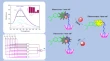
				</st><p>A near-infrared (NIR)-responsive Au<sub>rod</sub>@pNIPAAm-PEGMA nanogel was synthesized in two steps, growing a PEGMA monolayer on the surface of gold nanorods (AuNRs), followed by <it>in situ</it> polymerization and cross-linking of <it>N</it>-iso-propylacrylamide (NIPAAm) and poly-(ethylene glycol)-methacrylate (PEGMA). The AuNRs and Au<sub>rod</sub>@pNIPAAm-PEGMA nanogel were characterized by UV&#8211;vis spectroscopy, Raman spectroscopy, Fourier transform infrared spectroscopy, and transmission electron microscopy, respectively. The lower critical solution temperature of the Au<sub>rod</sub>@pNIPAAm-PEGMA nanogel could be tuned by changing the molar ratio of NIPAAm/PEGMA. The NIR-mediated drug release behavior of the Au<sub>rod</sub>@pNIPAAm-PEGMA nanogel was studied with zinc phthalocyanines (ZnPc<sub>4</sub>) as a drug model. It was also demonstrated that the loaded ZnPc<sub>4</sub> could keep the capability of generating singlet oxygen, and the <it>in vitro</it> study showed a great photodynamic therapy (PDT) effect on Hela cells. It thus indicated the potential of this Au<sub>rod</sub>@pNIPAAm-PEGMA nanogel for application as a drug carrier in PDT, which might make contributions to oncotherapy.</p>
			</sec>
		</abs>
	</fm>
	<bdy>
		<sec>
			<st>
				<p>Background</p>
			</st><p>Gold nanoparticles including nanoshells, nanocages, and nanorods have drawn increasing attention in photodynamic therapy (PDT), drug delivery, and diagnostic imaging field in recent years <abbrgrp>
					<abbr bid="B1">1</abbr>
					<abbr bid="B2">2</abbr>
					<abbr bid="B3">3</abbr>
					<abbr bid="B4">4</abbr>
					<abbr bid="B5">5</abbr>
				</abbrgrp>. Among them, gold nanorods (AuNRs) are of particular interest due to their unique optical properties. With the different aspect ratios and the resulting longitudinal surface plasmon resonance (SPR), AuNRs exhibit an absorption band in the near-infrared (NIR) region <abbrgrp>
					<abbr bid="B6">6</abbr>
				</abbrgrp>, which conduces to higher photothermal conversion and also shows significant biomedical application in view of the penetration of NIR light into biological tissues <abbrgrp>
					<abbr bid="B7">7</abbr>
					<abbr bid="B8">8</abbr>
				</abbrgrp>.</p><p>Poly(<it>N</it>-isopropylacrylamide) (pNIPAAm) gel, as one of the most widely studied temperature-responsive polymers <abbrgrp>
					<abbr bid="B9">9</abbr>
					<abbr bid="B10">10</abbr>
					<abbr bid="B11">11</abbr>
				</abbrgrp>, undergoes phase transition in water when the temperature increases or decreases beyond its lower critical solution temperature (LCST; approximately 32&#176;C) <abbrgrp>
					<abbr bid="B12">12</abbr>
					<abbr bid="B13">13</abbr>
				</abbrgrp>. Besides, its LCST can be tuned by the addition of a comonomer during polymerization <abbrgrp>
					<abbr bid="B14">14</abbr>
					<abbr bid="B15">15</abbr>
				</abbrgrp>. Combining this temperature-responsive gel and gold nanoparticles together, the temperature-responsive gel can be induced to collapse by the photothermal conversion of gold nanoparticles, which gives rise to much possibility for the application of the temperature-responsive gel in drug delivery. The composites of Au@pNIPAAm have been synthesized and studied in many works <abbrgrp>
					<abbr bid="B16">16</abbr>
					<abbr bid="B17">17</abbr>
					<abbr bid="B18">18</abbr>
				</abbrgrp>. However, the combination mostly through the physical embedding effect or electrostatic interaction between gold nanoparticles and pNIPAAm may make the composites lack long-term stability, especially in the biological environment. Our previous work has reported the synthesis of a core-shell structured multifunctional hybrid Au@IPN-pNIPAAm nanogel in which the hydrogel could be chemically grafted onto a single gold nanoparticle <abbrgrp>
					<abbr bid="B19">19</abbr>
				</abbrgrp>.</p><p>Herein, we developed a new way to immobilize pNIPAAm combined with poly-(ethylene glycol)-methacrylate (PEGMA) on the surface of AuNRs through chemical grafting to obtain NIR-responsive Au<sub>rod</sub>@pNIPAAm-PEGMA nanogel. ZnPc<sub>4,</sub> a photosensitizer, was used as drug model to investigate the drug loading and release properties of the Au<sub>rod</sub>@pNIPAAm-PEGMA nanogel. The capacity of generating singlet oxygen of ZnPc4 after being loaded in the Au<sub>rod</sub>@pNIPAAm-PEGMA nanogel was measured, and the <it>in vitro</it> PDT was also studied. Our current results suggested the potential of Au<sub>rod</sub>@pNIPAAm-PEGMA nanogel as a carrier in PDT.</p>
		</sec>
		<sec>
			<st>
				<p>Methods</p>
			</st>
			<sec>
				<st>
					<p>Synthesis of PEGMA-SH compound</p>
				</st><p>Concentrations of 1.0 mmol 5,5<sup>&#8242;</sup>-dithiobis (2-nitrobenzoic acid) (DTNB) and 2.0 mmol dicyclohexylcarbodiimide (DCC) were dissolved in 50 mL of dichlormethane, followed by the addition of 2.2 mmol 4-dimethylaminopyridine (DMAP) and 2.0 mmol PEGMA. The mixture was degassed with nitrogen and then stirred for 48 h at room temperature. After filtration, the filtrate was washed sequentially with water, 5% acetic acid, and water. Then, the organic phase was dried over magnesium sulfate, filtered, and evaporated to dryness. The product was dissolved in 100 mL of water/ethanol (<it>V</it>/<it>V</it>, 4/1) with the addition of 2 mL of 1 M sodium borohydride (NaBH<sub>4</sub>) and stirred for 2 h, and was used without further purification.</p>
			</sec>
			<sec>
				<st>
					<p>Synthesis of Au<sub>rod</sub>@pNIPAAm-PEGMA nanogel</p>
				</st><p>AuNRs with a length of 50 nm were synthesized using the seed-mediated growth method as reported previously <abbrgrp>
						<abbr bid="B20">20</abbr>
					</abbrgrp>. Subsequently, 0.1 mmol PEGMA-SH was added to 25 mL of the as-prepared AuNRs suspension (1.6 &#215; 10<sup>&#8722;6</sup> &#956;mol) and continuously stirred for 5 h at room temperature. Au<sub>rod</sub>@PEGMA was collected by centrifugation at 9,500 rpm for 12 min and then re-dispersed in 15 mL of the deionized water, followed by the addition of 1.8 mmol NIPAAm, 0.2 mmol PEGMA, 86.69 &#956;mol sodium dodecyl sulfate (SDS), and 12.97 &#956;mol <it>N</it>,<it>N</it>-methylenebisacrylamide (BIS). The mixture was heated to 75&#176;C with stirring and maintained in vacuum. After equilibration for 1 h, the polymerization was initiated by adding 109.6 &#956;mol ammonium persulfate (APS). The reaction was allowed to proceed for 4 h at 75&#176;C and terminated by opening the system to air. The resulting Au<sub>rod</sub>@pNIPAAm-PEGMA nanogels were purified by repeated centrifugation (9,000 rpm for 12 min) and subsequently lyophilized for further use.</p>
			</sec>
			<sec>
				<st>
					<p>Characterization</p>
				</st><p>The optical properties of AuNRs and Au<sub>rod</sub>@pNIPAAm-PEGMA nanogels were characterized by an UV&#8211;vis spectrophotometer (DUTM800, Beckman Coulter, Brea, CA, USA) with a scanning speed of 1,200 nm/min from 400 to 1,000 nm. The transmission electron microscopy (TEM) images were obtained from a JEM 2100 microscope (JEOL Ltd., Tokyo, Japan) operating at an acceleration voltage of 200 kV. Raman spectra were performed on an UV-1000x instrument (Renishaw, Wotton-under-Edge, UK) (path length = 200 nm) using a red light-emitting diode laser (<it>&#955;</it> = 785 nm, 0.5 mW). A Fourier transform interferometer (AVATAR360, Nicolet Instrument Corporation, Madison, WI, USA) was used to record the absorption spectra of AuNRs and Au<sub>rod</sub>@pNIPAAm-PEGMA nanogels between 400 and 4,000 cm<sup>&#8722;1</sup> at a spectral resolution of 4 cm<sup>&#8722;1</sup>.</p>
			</sec>
			<sec>
				<st>
					<p>LCST measurement of Au<sub>rod</sub>@pNIPAAm-PEGMA nanogel</p>
				</st><p>In order to investigate the thermal property of the Au<sub>rod</sub>@pNIPAAm-PEGMA nanogel, nanogels with different molar ratios of NIPAAm/PEGMA (1:0, 18:1, 12:1, 9:1, 6:1, 4.5:1) were synthesized. LCSTs of nanogels were measured through turbidimetric measurement. The concentration for each Au<sub>rod</sub>@pNIPAAm-PEGMA nanogel in the deionized water was maintained at 1 mg/mL. The light transmittances at 600 nm were then measured by an UV&#8211;vis spectrophotometer (TU-1901, Beijing Purkinje General Instrument Co. Ltd, Beijing, China) equipped with a temperature-controlled sample holder, and the heating rate was set at 0.1&#176;C/min. The LCST was defined as the initial break point in the resulting transmittance versus temperature curves.</p>
			</sec>
			<sec>
				<st>
					<p>ZnPc<sub>4</sub> loading and NIR-mediated ZnPc<sub>4</sub> release</p>
				</st><p>Two milligrams of Au<sub>rod</sub>@pNIPAAm-PEGMA nanogels and 2 mg of ZnPc<sub>4</sub> were dispersed in 10 mL of <it>N</it>,<it>N</it>-dimethyl formamide (DMF) and stirred for 24 h at room temperature. The ZnPc<sub>4</sub>-loaded Au<sub>rod</sub>@pNIPAAm-PEGMA nanogels were then collected by centrifugation (9,000 rpm for 12 min). To determine the amount of unloaded ZnPc<sub>4</sub>, the supernatant was analyzed by an UV&#8211;vis spectrophotometer (DUTM800, Beckman Coulter) at 680 nm where ZnPc<sub>4</sub> has a maximum absorption. The loading efficiency was calculated according to the following formula:</p><p><display-formula>
						<m:math name="1556-276X-8-4-i1" xmlns:m="http://www.w3.org/1998/Math/MathML"><m:mrow>
   <m:mtext>Loading</m:mtext>
   <m:mspace width="0.25em"/>
   <m:mtext>efficiency</m:mtext>
   <m:mo>=</m:mo>
   <m:mfrac>
      <m:mrow>
         <m:msub>
            <m:mi>W</m:mi>
            <m:mi mathvariant="normal">t</m:mi>
         </m:msub>
         <m:mo>-</m:mo>
         <m:msub>
            <m:mi>W</m:mi>
            <m:mn>0</m:mn>
         </m:msub>
      </m:mrow>
      <m:mrow>
         <m:msub>
            <m:mi>W</m:mi>
            <m:mi mathvariant="normal">t</m:mi>
         </m:msub>
      </m:mrow>
   </m:mfrac>
   <m:mspace width="0.5em"/>
   <m:mo>&#215;</m:mo>
   <m:mn>100</m:mn>
   <m:mo>%</m:mo>
   <m:mo>,</m:mo>
</m:mrow>
</m:math>
					</display-formula></p><p>where <it>W</it>
					<sub>t</sub> represents the total amount of ZnPc<sub>4</sub> and <it>W</it>
					<sub>0</sub> represents the unloaded amount of ZnPc<sub>4</sub>.</p><p>For the NIR-mediated ZnPc<sub>4</sub> release, 5 mL of the ZnPc<sub>4</sub>-loaded Au<sub>rod</sub>@pNIPAAm-PEGMA nanogel suspension (1 mg/mL) was placed into dialysis bags (molecular weight cutoff, 8 to 14 kDa) and irradiated by an 808-nm laser (0 to 400 mW/cm<sup>2</sup>) for different times (0 to 60 min). To determine the amount of ZnPc<sub>4</sub> released, the dialysate was removed and subsequently analyzed by an UV&#8211;vis spectrophotometer (DUTM800, Beckman Coulter). The release efficiency was calculated as follows:</p><p><display-formula>
						<m:math name="1556-276X-8-4-i2" xmlns:m="http://www.w3.org/1998/Math/MathML"><m:mrow>
   <m:mspace width="0.25em"/>
   <m:mtext>Release</m:mtext>
   <m:mspace width="0.5em"/>
   <m:mtext>efficiency</m:mtext>
   <m:mo>=</m:mo>
   <m:mfrac>
      <m:mrow>
         <m:msub>
            <m:mi>W</m:mi>
            <m:mi mathvariant="normal">r</m:mi>
         </m:msub>
      </m:mrow>
      <m:mrow>
         <m:msub>
            <m:mi>W</m:mi>
            <m:mi mathvariant="normal">l</m:mi>
         </m:msub>
      </m:mrow>
   </m:mfrac>
   <m:mo>&#215;</m:mo>
   <m:mn>100</m:mn>
   <m:mo>%</m:mo>
   <m:mo>,</m:mo>
</m:mrow>
</m:math>
					</display-formula></p><p>where <it>W</it>
					<sub>r</sub> represents the released amount of ZnPc<sub>4</sub> and <it>W</it>
					<sub>l</sub> represents the loaded amount of ZnPc<sub>4</sub>.</p>
			</sec>
			<sec>
				<st>
					<p>Singlet oxygen detection</p>
				</st><p>The generation of singlet oxygen (<sup>1</sup>O<sub>2</sub>) from ZnPc<sub>4</sub> loaded in the Au<sub>rod</sub>@pNIPAAm-PEGMA nanogel was determined by the transformation of 9,10-dimethylanthracene (DMA) which exhibits a maximum absorption at 377 nm <abbrgrp>
						<abbr bid="B21">21</abbr>
					</abbrgrp>. The DMA can react irreversibly with <sup>1</sup>O<sub>2</sub> to yield an endoperoxide. The reaction could be monitored by recording the decrease in the absorption at 377 nm. In a typical experiment, 0.105 mg of the Au<sub>rod</sub>@pNIPAAm-PEGMA nanogel loaded with 0.0135 &#956;mol ZnPc<sub>4</sub> was dispersed in 3 mL of DMF, and then, 0.45 &#956;mol DMA was added. Pure ZnPc<sub>4</sub> (0.0135 &#956;mol) was used as a control. The solutions were then irradiated with a LED lamp (680 nm, 10 mW/cm<sup>2</sup>) or a NIR laser (808 nm, 400 mW/cm<sup>2</sup>). The absorption measurements followed by irradiation were carried out every 5 min.</p>
			</sec>
			<sec>
				<st>
					<p>Light-induced <it>in vitro</it> PDT effect</p>
				</st><p>Hela cells were seeded into 24-well cell culture plates (1 &#215; 10<sup>5</sup> cells/well) and incubated for 24 h. After being treated with ZnPc<sub>4</sub>-loaded Au<sub>rod</sub>@pNIPAAm-PEGMA nanogels (300 &#956;g/mL) in serum-free medium at 37&#176;C for 22 h, chloroquine (10 mg/mL) was added into every well for another 2 h to promote endosomal escape <abbrgrp>
						<abbr bid="B22">22</abbr>
					</abbrgrp>. Then, Hela cells were washed with PBS and incubated in a nanogel-free medium and treated with an 808-nm laser at 400 mW/cm<sup>2</sup> for 15 min and a 680-nm LED lamp at 10 mW/cm<sup>2</sup> for 40 min. For cell survival test, the irradiated plates were returned to the incubator, and cell viability was colorimetrically measured 48 h later with MTT assay <abbrgrp>
						<abbr bid="B23">23</abbr>
					</abbrgrp>.</p>
			</sec>
		</sec>
		<sec>
			<st>
				<p>Results and discussion</p>
			</st>
			<sec>
				<st>
					<p>Synthesis of Au<sub>rod</sub>@pNIPAAm-PEGMA nanogel</p>
				</st><p>The synthesis of PEGMA-SH was shown in Figure&#160;<figr fid="F1">1</figr>. PEGMA-DTNB compound was firstly gained by the esterification reaction between the terminal hydroxyl group on the PEGMA and the carboxyl group on the DTNB with the DCC as medium and DMAP as catalyst <abbrgrp>
						<abbr bid="B24">24</abbr>
						<abbr bid="B25">25</abbr>
					</abbrgrp>. Subsequently, the disulfide bond of PEGMA-DTNB was reduced by NaBH<sub>4</sub> to yield the desired PEGMA-SH compound.</p>
				<fig id="F1"><title><p>Figure 1</p></title><caption><p>Schematic description of the synthesis of PEGMA-SH</p></caption><text>
   <p>
      <b>Schematic description of the synthesis of PEGMA-SH.</b>
   </p>
</text><graphic file="1556-276X-8-4-1"/></fig><p>The strategy to prepare the Au<sub>rod</sub>@pNIPAAm-PEGMA nanogel involves two steps, growing a PEGMA monolayer on the surface of a AuNR, followed by <it>in situ</it> polymerization and cross-linking of NIPAAm and PEGMA, as depicted in Figure&#160;<figr fid="F2">2</figr>. In the first step, the AuNR surface was modified with a PEGMA self-assembled monolayer through a sulfhydryl-gold interaction. In the second step, PEGMA-modified AuNRs could be used as a template for <it>in situ</it> formation of hydrogel by polymerization and cross-linking of NIPAM and PEGMA with BIS as crosslinker, APS as initiator, and SDS as emulsifier. The coating of pNIPAAm-PEGMA on AuNRs can be reflected in the corresponding UV&#8211;vis spectra (Figure&#160;<figr fid="F3">3</figr>). AuNRs used in this work had a length of about 50 nm with an aspect ratio of approximately 3.2 (Figure&#160;<figr fid="F4">4</figr>A) which exhibited the maximum of the plasmon peak of 794 nm (Figure&#160;<figr fid="F3">3</figr>a). After the AuNRs were modified with pNIPAAm-PEGMA, a red shift from 794 to 801 nm occurred (Figure&#160;<figr fid="F3">3</figr>b). This red shift of SPR and the peak shape widening might be due to a change for AuNRs in the local refractive index produced by the pNIPAAm-PEGMA shell (Figure&#160;<figr fid="F4">4</figr>B) <abbrgrp>
						<abbr bid="B26">26</abbr>
					</abbrgrp>.</p>
				<fig id="F2"><title><p>Figure 2</p></title><caption><p>Preparation of the Au<sub>rod</sub>@pNIPAAm-PEGMA nanogel</p></caption><text>
   <p><b>Preparation of the Au</b><sub><b>rod</b></sub><b>@pNIPAAm-PEGMA nanogel.</b> (1, 2) Schematic of the sequence of steps in the synthesis of the hybrid Au<sub>rod</sub>@pNIPAAm-PEGMA nanogels, (3) ZnPc4 loading process, and (4) NIR-mediated ZnPc<sub>4</sub> release.</p>
</text><graphic file="1556-276X-8-4-2"/></fig>
				<fig id="F3"><title><p>Figure 3</p></title><caption><p>The UV&#8211;vis spectra of (a) AuNRs and (b) Au<sub>rod</sub>@pNIPAAm-PEGMA nanogel</p></caption><text>
   <p>
      <b>The UV&#8211;vis spectra of (a) AuNRs and (b) Au</b>
      <sub>
         <b>rod</b>
      </sub>
      <b>@pNIPAAm-PEGMA nanogel.</b>
   </p>
</text><graphic file="1556-276X-8-4-3"/></fig>
				<fig id="F4"><title><p>Figure 4</p></title><caption><p>The typical TEM images of AuNRs (A) before and (B) after modification with pNIPAAM-PEGMA, respectively</p></caption><text>
   <p>
      <b>The typical TEM images of AuNRs (A) before and (B) after modification with pNIPAAM-PEGMA, respectively.</b>
   </p>
</text><graphic file="1556-276X-8-4-4"/></fig><p>Raman spectra were also used to identify the synthesis of the Au<sub>rod</sub>@pNIPAAm-PEGMA nanogel. The Raman spectrum of the as-prepared AuNRs (Figure&#160;<figr fid="F5">5</figr>a) exhibited a band at 190 nm which was ascribable to the Au-Br bond on the surface of AuNRs <abbrgrp>
						<abbr bid="B27">27</abbr>
					</abbrgrp>. This is because the as-prepared AuNRs were stabilized by the cationic detergent cetyltrimethylammonium bromide (CTAB) in the aqueous solution. After being modified with pNIPAAm-PEGMA (Figure&#160;<figr fid="F5">5</figr>b), the Au-Br band disappeared, and a band at 320 nm was observed, which was assigned to the Au-S bond <abbrgrp>
						<abbr bid="B28">28</abbr>
					</abbrgrp>. It is thus suggested that PEGMA-SH might replace CTAB to form PEGMA-modified AuNRs through the Au-S bond, and then, PEGMA-SH on the surface of AuNRs might serve as the template for the following polymerization and cross-linking of NIPAAm and PEGMA.</p>
				<fig id="F5"><title><p>Figure 5</p></title><caption><p>The Raman spectra of (a) AuNRs and (b) Au<sub>rod</sub>@pNIPAAm-PEGMA nanogel</p></caption><text>
   <p>
      <b>The Raman spectra of (a) AuNRs and (b) Au</b>
      <sub>
         <b>rod</b>
      </sub>
      <b>@pNIPAAm-PEGMA nanogel.</b>
   </p>
</text><graphic file="1556-276X-8-4-5"/></fig><p>FTIR spectra (Figure&#160;<figr fid="F6">6</figr>) were recorded to confirm the structure of the polymer shell. In the FTIR spectrum of PEGMA-modified AuNRs (Figure&#160;<figr fid="F6">6</figr>a), the absorption peaks of PEGMA, including <it>&#957;</it>(C=O) (1,721 cm<sup>&#8722;1</sup>) and <it>&#957;</it>(C-O-C) (1,105 cm<sup>&#8722;1</sup>), were observed. The spectrum of Au<sub>rod</sub>@pNIPAAm-PEGMA nanogels (Figure&#160;<figr fid="F6">6</figr>b) exhibited the characteristic peaks of polymerized NIPAAm at 1,650 cm<sup>&#8722;1</sup> (<it>&#957;</it>(C=O), amide I) and 1,550 cm<sup>&#8722;1</sup> (<it>&#948;</it>(N-H), amide II). Hence, the FTIR results could provide evidence for the surface modification and polymerization on AuNRs.</p>
				<fig id="F6"><title><p>Figure 6</p></title><caption><p>FTIR spectra of (a) Au@PEGMA and (b)Au<sub>rod</sub>@pNIPAAm-PEGMA nanogel</p></caption><text>
   <p>
      <b>FTIR spectra of (a) Au@PEGMA and (b) Au</b>
      <sub>
         <b>rod</b>
      </sub>
      <b>@pNIPAAm-PEGMA nanogel.</b>
   </p>
</text><graphic file="1556-276X-8-4-6"/></fig>
			</sec>
			<sec>
				<st>
					<p>Thermosensitive property of Au<sub>rod</sub>@pNIPAAm-PEGMA nanogel</p>
				</st><p>Figure&#160;<figr fid="F7">7</figr> and Table&#160;<tblr tid="T1">1</tblr> showed the effect of the molar ratios of NIPAAm/PEGMA on the LCSTs of the Au<sub>rod</sub>@pNIPAAm-PEGMA nanogel. The Au<sub>rod</sub>@pNIPAAm (the molar ratio of NIPAAm/PEGMA, 1:0) exhibited an LCST of approximately 32&#176;C, which was consistent with pure pNIPAAm <abbrgrp>
						<abbr bid="B13">13</abbr>
					</abbrgrp>. It is clearly shown in Table&#160;<tblr tid="T1">1</tblr> that the LCSTs of the Au<sub>rod</sub>@pNIPAAm-PEGMA nanogel could be tuned by changing the molar ratio of NIPAAm/PEGMA. Namely, as the molar ratio of NIPAAm/PEGMA decreased, the LCST of the nanogel increased. For example, when the molar ratio of NIPAAm/PEGMA was set at 18:1, the LCST of Au<sub>rod</sub>@pNIPAAm-PEGMA nanogels could be up to 36&#176;C. The addition of hydrophilic PEGMA increased the hydrophilicity of pNIPAAm due to the strong interactions between water and hydrophilic groups on the polymer, which led to an increased LCST <abbrgrp>
						<abbr bid="B29">29</abbr>
					</abbrgrp>. It is thus expected that this attractive property of tunable LCST might make Au<sub>rod</sub>@pNIPAAm-PEGMA nanogels more promising in drug delivery application.</p>
				<fig id="F7"><title><p>Figure 7</p></title><caption><p>The transmittance versus temperature curves of Au<sub>rod</sub>@pNIPAAm-PEGMA nanogels</p></caption><text>
   <p><b>The transmittance versus temperature curves of Au</b><sub><b>rod</b></sub><b>@pNIPAAm-PEGMA nanogels.</b> With different molar ratios of NIPAAm/PEGMA (1:0, 18:1, 12:1, 9:1, 6:1, 4.5:1, respectively).</p>
</text><graphic file="1556-276X-8-4-7"/></fig>
				<table id="T1">
					<title>
						<p>Table 1</p>
					</title>
					<caption>
						<p>
							<b>The LCSTs of Au</b><sub><b>rod</b></sub><b>@pNIPAAm-PEGMA nanogels with different molar ratios of NIPAAm/PEGMA</b>
						</p>
					</caption>
					<tgroup align="left" cols="4">
						<colspec align="left" colname="c1" colnum="1" colwidth="1*"/>
						<colspec align="left" colname="c2" colnum="2" colwidth="1*"/>
						<colspec align="left" colname="c3" colnum="3" colwidth="1*"/>
						<colspec align="left" colname="c4" colnum="4" colwidth="1*"/>
						<thead valign="top">
							<row rowsep="1">
								<entry colname="c1">
									<p>
										<b>NIPAAm (mmol)</b>
									</p>
								</entry>
								<entry colname="c2">
									<p>
										<b>PEGMA (mmol)</b>
									</p>
								</entry>
								<entry colname="c3">
									<p>
										<b>NIPAAm/PEGMA (mmol/mmol)</b>
									</p>
								</entry>
								<entry colname="c4">
									<p>
										<b>LCST (&#176;C)</b>
									</p>
								</entry>
							</row>
						</thead>
						<tbody valign="top">
							<row>
								<entry colname="c1">
									<p>1.8</p>
								</entry>
								<entry colname="c2">
									<p>0</p>
								</entry>
								<entry colname="c3">
									<p>1:0</p>
								</entry>
								<entry colname="c4">
									<p>32</p>
								</entry>
							</row>
							<row>
								<entry colname="c1">
									<p>1.8</p>
								</entry>
								<entry colname="c2">
									<p>0.1</p>
								</entry>
								<entry colname="c3">
									<p>18:1</p>
								</entry>
								<entry colname="c4">
									<p>36</p>
								</entry>
							</row>
							<row>
								<entry colname="c1">
									<p>1.8</p>
								</entry>
								<entry colname="c2">
									<p>0.15</p>
								</entry>
								<entry colname="c3">
									<p>12:1</p>
								</entry>
								<entry colname="c4">
									<p>38</p>
								</entry>
							</row>
							<row>
								<entry colname="c1">
									<p>1.8</p>
								</entry>
								<entry colname="c2">
									<p>0.2</p>
								</entry>
								<entry colname="c3">
									<p>9:1</p>
								</entry>
								<entry colname="c4">
									<p>40</p>
								</entry>
							</row>
							<row>
								<entry colname="c1">
									<p>1.8</p>
								</entry>
								<entry colname="c2">
									<p>0.3</p>
								</entry>
								<entry colname="c3">
									<p>6:1</p>
								</entry>
								<entry colname="c4">
									<p>42</p>
								</entry>
							</row>
							<row rowsep="1">
								<entry colname="c1">
									<p>1.8</p>
								</entry>
								<entry colname="c2">
									<p>0.4</p>
								</entry>
								<entry colname="c3">
									<p>4.5:1</p>
								</entry>
								<entry colname="c4">
									<p>44</p>
								</entry>
							</row>
						</tbody>
					</tgroup>
				</table>
			</sec>
			<sec>
				<st>
					<p>NIR-mediated ZnPc<sub>4</sub> release</p>
				</st><p>NIR-mediated release of ZnPc<sub>4</sub> loaded in Aurod@pNIPAAm-PEGMA nanogels was investigated with the irradiation of a NIR laser (808 nm). When the sample was irradiated at 200 mW/cm<sup>2</sup>, the release efficiency was about 23.5% in the initial 20 min. As the irradiated time was prolonged, the cumulative release efficiency was up to 37.4% within 1 h (Figure&#160;<figr fid="F8">8</figr>A). This can be explained by the AuNRs of Au<sub>rod</sub>@pNIPAAm-PEGMA nanogels absorbing a certain SPR wavelength light and converting it into heat <abbrgrp>
						<abbr bid="B30">30</abbr>
					</abbrgrp>. The heat diffused into the polymer shell and caused the shrinkage of the pNIPAAm-PEGMA nanogels and the release of ZnPc<sub>4</sub>.</p>
				<fig id="F8"><title><p>Figure 8</p></title><caption><p>NIR-mediated release of ZnPc<sub>4</sub></p></caption><text>
   <p><b>NIR-mediated release of ZnPc</b><sub><b>4</b></sub><b>.</b> (<b>A</b>) Time- and (<b>B</b>) power-dependent of release of ZnPc<sub>4</sub> from Au<sub>rod</sub>@pNIPAAm-PEGMA nanogels, respectively.</p>
</text><graphic file="1556-276X-8-4-8"/></fig><p>The effect of laser power density on drug release was studied (Figure&#160;<figr fid="F8">8</figr>B). Exposure of Au<sub>rod</sub>@pNIPAAm-PEGMA nanogels to an 808-nm laser with the power of 100 mW/ cm<sup>2</sup> for 15 min caused 20% of the loaded ZnPc<sub>4</sub> released. More loaded ZnPc<sub>4</sub> (43.7%) in Au<sub>rod</sub>@pNIPAAm-PEGMA nanogels could be released upon the irradiation power of 800 mW/ cm<sup>2</sup>. This is because when irradiated with a low-power NIR laser, small shrinkage of nanogels occurred, whereas a laser at high power might make nanogels shrink considerably and rapidly <abbrgrp>
						<abbr bid="B31">31</abbr>
					</abbrgrp>, consequently more ZnPc<sub>4</sub> could be released. It is thus speculated that the NIR-responsive Au<sub>rod</sub>@pNIPAAm-PEGMA nanogel, acting as drug delivery carriers, could offer specific drug delivery to the targeted site, such as a tumor zone.</p>
			</sec>
			<sec>
				<st>
					<p>Singlet oxygen detection</p>
				</st><p>In PDT, the photosensitizing drugs should preferentially accumulate in target tissues and subsequently be activated by light with a matching wavelength to generate reactive singlet oxygen <abbrgrp>
						<abbr bid="B32">32</abbr>
					</abbrgrp>. The singlet oxygen will cause the destruction of target cells by a complex cascade of chemical, biological, and physiological reactions <abbrgrp>
						<abbr bid="B33">33</abbr>
					</abbrgrp>. The Au<sub>rod</sub>@pNIPAAm-PEGMA nanogels served as ZnPc<sub>4</sub> carrier in PDT; besides the excellent properties of drug loading and release, its effect on the capability of loaded ZnPc<sub>4</sub> to generate singlet oxygen was also investigated.</p><p>Photo-induced <sup>1</sup>O<sub>2</sub> of ZnPc<sub>4</sub> was examined by a chemical method by using DMA, which could react with <sup>1</sup>O<sub>2</sub> to form an endoperoxide. The decrease in amount of DMA can be recorded by measuring the absorption at 377 nm. As shown in Figure&#160;<figr fid="F9">9</figr>, when ZnPc<sub>4</sub>-loaded Au<sub>rod</sub>@pNIPAAm-PEGMA nanogels or pure ZnPc<sub>4</sub> was irradiated by an 808-nm laser, the absorption of DMA remained unchanged with the increase of exposure time to light, whereas the absorption of DMA continuously decreased as the ZnPc<sub>4</sub>-loaded Au<sub>rod</sub>@pNIPAAm-PEGMA nanogels or pure ZnPc<sub>4</sub> was irradiated by a 680-nm light. This decrease indicated the production of <sup>1</sup>O<sub>2</sub>, which can irreversibly react with DMA. Moreover, the generation curve of ZnPc<sub>4</sub>-loaded Au<sub>rod</sub>@pNIPAAm-PEGMA nanogels was similar with that of pure ZnPc<sub>4</sub>, demonstrating that the capacity of generating <sup>1</sup>O<sub>2</sub> of ZnPc<sub>4</sub> was hardly affected after being loaded in Au<sub>rod</sub>@pNIPAAm-PEGMA nanogels. It is thus suggested that the Au<sub>rod</sub>@pNIPAAm-PEGMA nanogel might be a promising drug carrier for photodynamic therapy in the future.</p>
				<fig id="F9"><title><p>Figure 9</p></title><caption><p>The generation profiles of singlet oxygen from ZnPc<sub>4</sub>-loaded Au<sub>rod</sub>@pNIPAAm-PEGMA nanogels (Au/P)</p></caption><text>
   <p><b>The generation profiles of singlet oxygen from ZnPc</b><sub><b>4</b></sub><b>-loaded Au</b><sub><b>rod</b></sub><b>@pNIPAAm-PEGMA nanogels (Au/P).</b> The nanogels were irradiated by an 808-nm laser and a 680-nm LED lamp, respectively.</p>
</text><graphic file="1556-276X-8-4-9"/></fig>
			</sec>
			<sec>
				<st>
					<p>
						<it>In vitro</it> PDT study on Hela cells</p>
				</st><p>The <it>in vitro</it> PDT study, represented in Figure&#160;<figr fid="F10">10</figr>, showed the percentage of cell viability after treatment of Hela cells with the ZnPc<sub>4</sub>-loaded Au<sub>rod</sub>@pNIPAAm-PEGMA nanogel (300 &#956;g/mL) at different irradiated conditions. Compared with the cells&#8217; group with no light treatment, no significant difference of the cell viability was found in the 808-nm laser-treated group. However, for the 680-nm light-treated group, the cell viability decreased to 40%. It is interesting to note that when irradiated by the two lights, the cell viability decreased to 10%. This is because the 808-nm laser treatment might result in the release of ZnPc<sub>4</sub> from nanogels, which could improve the efficiency of the generation of singlet oxygen after the 680-nm irradiation and thus enhance the PDT effect on Hela cells.</p>
				<fig id="F10"><title><p>Figure 10</p></title><caption><p>The photodynamic therapy effect of ZnPc<sub>4</sub>-loaded Au<sub>rod</sub>@pNIPAAm-PEGMA nanogels on Hela cells at different irradiated conditions</p></caption><text>
   <p>
      <b>The photodynamic therapy effect of ZnPc</b>
      <sub>
         <b>4</b>
      </sub>
      <b>-loaded Au</b>
      <sub>
         <b>rod</b>
      </sub>
      <b>@pNIPAAm-PEGMA nanogels on Hela cells at different irradiated conditions.</b>
   </p>
</text><graphic file="1556-276X-8-4-10"/></fig>
			</sec>
		</sec>
		<sec>
			<st>
				<p>Conclusions</p>
			</st><p>A facile approach to prepare near-infrared-responsive Au<sub>rod</sub>@pNIPAAm-PEGMA nanogels was described. The LCSTs of these Au<sub>rod</sub>@pNIPAAm-PEGMA nanogels could be tuned by changing the molar ratio of NIPAAm/PEGMA. The release of ZnPc<sub>4</sub> loaded in Au<sub>rod</sub>@pNIPAAm-PEGMA nanogels increased with the extension of irradiated time and the increase of the power of the NIR laser. The loaded ZnPc<sub>4</sub> in Au<sub>rod</sub>@pNIPAAm-PEGMA nanogels could generate singlet oxygen efficiently. The <it>in vitro</it> study showed obvious PDT effect on Hela cells. On these bases, the Au<sub>rod</sub>@pNIPAAm-PEGMA nanogels might serve as a promising drug carrier in PDT.</p>
		</sec>
		<sec>
			<st>
				<p>Competing interests</p>
			</st><p>The authors declare that they have no competing interests.</p>
		</sec>
		<sec>
			<st>
				<p>Authors&#8217; contributions</p>
			</st><p>RL conceived the study, participated in the experimental design, and helped draft the manuscript. TXH participated in the design of the study and performed the statistical analysis. ST and WCD carried out the preparation experiments and drafted the manuscript. LDH, KXB, YAQ, and CM participated in the characterization experiments. All authors read and approved the final manuscript.</p>
		</sec>
		<sec>
			<st>
				<p>Authors&#8217; information</p>
			</st><p>RL, TXH, and LDH are Ph.Ds. and professors. ST, WCD, KXB, YAQ, and CM are M.D. students in the Department of Biomaterials, College of Materials, Xiamen University.</p>
		</sec>
	</bdy>
	<bm>
		<ack>
			<sec>
				<st>
					<p>Acknowledgments</p>
				</st><p>This work was financially supported by the National Basic Research Program of China (2010CB732402, 2013CB933703) and the National Natural Science Foundation of China (30970733, 81171448).</p>
			</sec>
		</ack>
		<refgrp><bibl id="B1"><title><p>Functionalized gold nanoparticles for drug delivery</p></title><aug><au><snm>Han</snm><fnm>G</fnm></au><au><snm>Ghosh</snm><fnm>P</fnm></au><au><snm>Rotello</snm><fnm>VM</fnm></au></aug><source>Nanomedicine</source><pubdate>2007</pubdate><volume>2</volume><fpage>113</fpage><lpage>123</lpage><xrefbib><pubidlist><pubid idtype="doi">10.2217/17435889.2.1.113</pubid><pubid idtype="pmpid" link="fulltext">17716197</pubid></pubidlist></xrefbib></bibl><bibl id="B2"><title><p>Nanoshell-enabled photothermal cancer therapy: impending clinical impact</p></title><aug><au><snm>Lal</snm><fnm>S</fnm></au><au><snm>Clare</snm><fnm>SE</fnm></au><au><snm>Halas</snm><fnm>NJ</fnm></au></aug><source>Acc Chem Res</source><pubdate>2008</pubdate><volume>41</volume><fpage>1842</fpage><lpage>1851</lpage><xrefbib><pubidlist><pubid idtype="doi">10.1021/ar800150g</pubid><pubid idtype="pmpid" link="fulltext">19053240</pubid></pubidlist></xrefbib></bibl><bibl id="B3"><title><p>Gold nanorods as contrast agents for biological imaging: optical properties, surface conjugation and photothermal effects</p></title><aug><au><snm>Tong</snm><fnm>L</fnm></au><au><snm>Wei</snm><fnm>QS</fnm></au><au><snm>Wei</snm><fnm>A</fnm></au><au><snm>Cheng</snm><fnm>JX</fnm></au></aug><source>Photochem Photobiol</source><pubdate>2009</pubdate><volume>85</volume><fpage>21</fpage><lpage>32</lpage><xrefbib><pubidlist><pubid idtype="doi">10.1111/j.1751-1097.2008.00507.x</pubid><pubid idtype="pmcid">2818790</pubid><pubid idtype="pmpid" link="fulltext">19161395</pubid></pubidlist></xrefbib></bibl><bibl id="B4"><title><p>Gold nanocages for biomedical applications</p></title><aug><au><snm>Skrabalak</snm><fnm>SE</fnm></au><au><snm>Chen</snm><fnm>J</fnm></au><au><snm>Au</snm><fnm>L</fnm></au><au><snm>Lu</snm><fnm>X</fnm></au><au><snm>Li</snm><fnm>X</fnm></au><au><snm>Xia</snm><fnm>Y</fnm></au></aug><source>Adv Mater</source><pubdate>2007</pubdate><volume>19</volume><fpage>3177</fpage><lpage>3184</lpage><xrefbib><pubidlist><pubid idtype="doi">10.1002/adma.200701972</pubid><pubid idtype="pmcid">2480527</pubid><pubid idtype="pmpid" link="fulltext">18648528</pubid></pubidlist></xrefbib></bibl><bibl id="B5"><title><p>Nanoparticles in photodynamic therapy</p></title><aug><au><snm>Nann</snm><fnm>T</fnm></au></aug><source>Nano Biomed Eng</source><pubdate>2011</pubdate><volume>3</volume><fpage>137</fpage><lpage>143</lpage></bibl><bibl id="B6"><title><p>Wet chemical synthesis of high aspect ratio cylindrical gold nanorod</p></title><aug><au><snm>Jana</snm><fnm>NR</fnm></au><au><snm>Gearheart</snm><fnm>L</fnm></au><au><snm>Murphy</snm><fnm>CJ</fnm></au></aug><source>J Phys Chem B</source><pubdate>2001</pubdate><volume>105</volume><fpage>4065</fpage><lpage>4067</lpage></bibl><bibl id="B7"><title><p>Gold nanorod bioconjugates</p></title><aug><au><snm>Liao</snm><fnm>HW</fnm></au><au><snm>Hafner</snm><fnm>JH</fnm></au></aug><source>Chem Mater</source><pubdate>2005</pubdate><volume>17</volume><fpage>4636</fpage><lpage>4641</lpage><xrefbib><pubid idtype="doi">10.1021/cm050935k</pubid></xrefbib></bibl><bibl id="B8"><title><p>Redox approaches derived Tin (IV) oxide nanoparticles/graphene nanocomposites as the near-infrared absorber for selective human prostate cancer cells destruction</p></title><aug><au><snm>Cheng</snm><fnm>JS</fnm></au><au><snm>Liang</snm><fnm>QQ</fnm></au><au><snm>Chang</snm><fnm>HX</fnm></au><au><snm>Zhu</snm><fnm>WJ</fnm></au></aug><source>Nano Biomed Eng</source><pubdate>2012</pubdate><volume>4</volume><fpage>76</fpage><lpage>82</lpage></bibl><bibl id="B9"><title><p>In vitro evaluation of novel polymer-coated magnetic nanoparticles for controlled drug delivery</p></title><aug><au><snm>Rahimi</snm><fnm>M</fnm></au><au><snm>Wadajkar</snm><fnm>A</fnm></au><au><snm>Subramanian</snm><fnm>K</fnm></au><au><snm>Yousef</snm><fnm>M</fnm></au><au><snm>Cui</snm><fnm>W</fnm></au><au><snm>Hsieh</snm><fnm>JT</fnm></au><au><snm>Nguyen</snm><fnm>KT</fnm></au></aug><source>Nanomedicine</source><pubdate>2010</pubdate><volume>6</volume><fpage>672</fpage><lpage>680</lpage><xrefbib><pubidlist><pubid idtype="doi">10.1016/j.nano.2010.01.012</pubid><pubid idtype="pmcid">2924461</pubid><pubid idtype="pmpid" link="fulltext">20172050</pubid></pubidlist></xrefbib></bibl><bibl id="B10"><title><p>Poly(<it>N</it>-isopropylacrylamide)-coated thermo-responsive nanoparticles for controlled delivery of sulfonated Zn-phthalocyanine in Chinese hamster ovary cells in vitro and zebra fish in vivo</p></title><aug><au><snm>He</snm><fnm>J</fnm></au><au><snm>Chen</snm><fnm>JY</fnm></au><au><snm>Wang</snm><fnm>P</fnm></au><au><snm>Wang</snm><fnm>PN</fnm></au><au><snm>Guo</snm><fnm>J</fnm></au><au><snm>Yang</snm><fnm>WL</fnm></au><au><snm>Wang</snm><fnm>CC</fnm></au><au><snm>Peng</snm><fnm>Q</fnm></au></aug><source>Nanotechnology</source><pubdate>2007</pubdate><volume>18</volume><fpage>5</fpage></bibl><bibl id="B11"><title><p>Synthesis, characterization and therapeutic efficacy of a biodegradable, thermoresponsive hydrogel designed for application in chronic infarcted myocardium</p></title><aug><au><snm>Fujimoto</snm><fnm>KL</fnm></au><au><snm>Ma</snm><fnm>ZW</fnm></au><au><snm>Nelson</snm><fnm>DM</fnm></au><au><snm>Hashizume</snm><fnm>R</fnm></au><au><snm>Guan</snm><fnm>JJ</fnm></au><au><snm>Tobita</snm><fnm>K</fnm></au><au><snm>Wagner</snm><fnm>WR</fnm></au></aug><source>Biomaterials</source><pubdate>2009</pubdate><volume>30</volume><fpage>4357</fpage><lpage>4368</lpage><xrefbib><pubidlist><pubid idtype="doi">10.1016/j.biomaterials.2009.04.055</pubid><pubid idtype="pmcid">2860787</pubid><pubid idtype="pmpid">19487021</pubid></pubidlist></xrefbib></bibl><bibl id="B12"><title><p>Synthesis of thermosensitive micelles based on poly(<it>N</it>-isopropylacrylamide) and poly(<smcaps>l</smcaps>-alanine) for controlled release of adriamycin</p></title><aug><au><snm>Qiao</snm><fnm>P</fnm></au><au><snm>Niu</snm><fnm>QS</fnm></au><au><snm>Wang</snm><fnm>ZB</fnm></au><au><snm>Cao</snm><fnm>DP</fnm></au></aug><source>Chem Eng J</source><pubdate>2010</pubdate><volume>159</volume><fpage>257</fpage><lpage>263</lpage><xrefbib><pubid idtype="doi">10.1016/j.cej.2010.02.035</pubid></xrefbib></bibl><bibl id="B13"><title><p>Temperature sensitivity of a hydrogel network containing different LCST oligomers grafted to the hydrogel backbone</p></title><aug><au><snm>Inoue</snm><fnm>T</fnm></au><au><snm>Chen</snm><fnm>GH</fnm></au><au><snm>Nakamae</snm><fnm>K</fnm></au><au><snm>Hoffman</snm><fnm>AS</fnm></au></aug><source>Polymer Gels and Networks</source><pubdate>1997</pubdate><volume>5</volume><fpage>561</fpage><lpage>575</lpage></bibl><bibl id="B14"><title><p>In situ formation of thermosensitive P(NIPAAm-co-GMA)/PEI hydrogels</p></title><aug><au><snm>Wang</snm><fnm>ZC</fnm></au><au><snm>Xu</snm><fnm>XD</fnm></au><au><snm>Chen</snm><fnm>CS</fnm></au><au><snm>Wang</snm><fnm>GR</fnm></au><au><snm>Cheng</snm><fnm>SX</fnm></au><au><snm>Zhang</snm><fnm>XZ</fnm></au><au><snm>Zhu</snm><fnm>RX</fnm></au></aug><source>React Funct Polym</source><pubdate>2009</pubdate><volume>69</volume><fpage>14</fpage><lpage>19</lpage><xrefbib><pubid idtype="doi">10.1016/j.reactfunctpolym.2008.10.004</pubid></xrefbib></bibl><bibl id="B15"><title><p>New &#8220;smart&#8221; poly(NIPAM) microgels and nanoparticle microgel hybrids: properties and advances in characterisation</p></title><aug><au><snm>Karg</snm><fnm>M</fnm></au><au><snm>Hellweg</snm><fnm>T</fnm></au></aug><source>Curr Opin Colloid In</source><pubdate>2009</pubdate><volume>14</volume><fpage>438</fpage><lpage>450</lpage><xrefbib><pubid idtype="doi">10.1016/j.cocis.2009.08.002</pubid></xrefbib></bibl><bibl id="B16"><title><p>Au@pNIPAM thermosensitive nanostructures: control over shell cross-linking, overall dimensions, and core growth</p></title><aug><au><snm>Contreras-C&#225;ceres</snm><fnm>R</fnm></au><au><snm>Pacifico</snm><fnm>J</fnm></au><au><snm>Pastoriza-Santos</snm><fnm>I</fnm></au><au><snm>Perez-Juste</snm><fnm>J</fnm></au><au><snm>Fern&#225;ndez-Barbero</snm><fnm>A</fnm></au><au><snm>Liz-Marz&#225;n</snm><fnm>LM</fnm></au></aug><source>Adv Funct Mater</source><pubdate>2009</pubdate><volume>19</volume><fpage>3070</fpage><lpage>3076</lpage><xrefbib><pubid idtype="doi">10.1002/adfm.200900481</pubid></xrefbib></bibl><bibl id="B17"><title><p>Manipulating the motion of gold aggregates using stimulus-responsive patterned polymer brushes as a motor</p></title><aug><au><snm>Chen</snm><fnm>T</fnm></au><au><snm>Chang</snm><fnm>DP</fnm></au><au><snm>Zhang</snm><fnm>JM</fnm></au><au><snm>Jordan</snm><fnm>R</fnm></au><au><snm>Zauscher</snm><fnm>S</fnm></au></aug><source>Adv Funct Mater</source><pubdate>2012</pubdate><volume>22</volume><fpage>429</fpage><lpage>434</lpage><xrefbib><pubid idtype="doi">10.1002/adfm.201101795</pubid></xrefbib></bibl><bibl id="B18"><title><p>Gold nanocages covered with thermally-responsive polymers for controlled release by high-intensity focused ultrasound</p></title><aug><au><snm>Li</snm><fnm>WY</fnm></au><au><snm>Cai</snm><fnm>X</fnm></au><au><snm>Kim</snm><fnm>CH</fnm></au><au><snm>Sun</snm><fnm>GR</fnm></au><au><snm>Zhang</snm><fnm>Y</fnm></au><au><snm>Deng</snm><fnm>R</fnm></au><au><snm>Yang</snm><fnm>MX</fnm></au><au><snm>Chen</snm><fnm>JY</fnm></au><au><snm>Achilefu</snm><fnm>S</fnm></au><au><snm>Wang</snm><fnm>LV</fnm></au><au><snm>Xia</snm><fnm>YN</fnm></au></aug><source>Nanoscale</source><pubdate>2011</pubdate><volume>3</volume><fpage>1724</fpage><lpage>1730</lpage><xrefbib><pubidlist><pubid idtype="doi">10.1039/c0nr00932f</pubid><pubid idtype="pmcid">3079502</pubid><pubid idtype="pmpid" link="fulltext">21321760</pubid></pubidlist></xrefbib></bibl><bibl id="B19"><title><p>Multifunctional Au@IPN-pNIPAAm nanogels for cancer cell imaging and combined chemo-photothermal treatment</p></title><aug><au><snm>Zhao</snm><fnm>XQ</fnm></au><au><snm>Wang</snm><fnm>TX</fnm></au><au><snm>Liu</snm><fnm>W</fnm></au><au><snm>Wang</snm><fnm>CD</fnm></au><au><snm>Wang</snm><fnm>D</fnm></au><au><snm>Shang</snm><fnm>T</fnm></au><au><snm>Shen</snm><fnm>LH</fnm></au><au><snm>Ren</snm><fnm>L</fnm></au></aug><source>J Mater Chem</source><pubdate>2011</pubdate><volume>21</volume><fpage>7240</fpage><lpage>7247</lpage><xrefbib><pubid idtype="doi">10.1039/c1jm10277j</pubid></xrefbib></bibl><bibl id="B20"><title><p>Room temperature, high-yield synthesis of multiple shapes of gold nanoparticles in aqueous solution</p></title><aug><au><snm>Sau</snm><fnm>TK</fnm></au><au><snm>MurPhy</snm><fnm>CJ</fnm></au></aug><source>J Am Chem Soc</source><pubdate>2004</pubdate><volume>126</volume><fpage>8648</fpage><lpage>8649</lpage><xrefbib><pubidlist><pubid idtype="doi">10.1021/ja047846d</pubid><pubid idtype="pmpid" link="fulltext">15250706</pubid></pubidlist></xrefbib></bibl><bibl id="B21"><title><p>Synthesis and photodynamic properties of amphiphilic A<sub>3</sub>B-phthalocyanine derivatives bearing N-heterocycles as potential cationic phototherapeutic agents</p></title><aug><au><snm>Tempesti</snm><fnm>TC</fnm></au><au><snm>Alvarez</snm><fnm>MG</fnm></au><au><snm>Durantini</snm><fnm>EN</fnm></au></aug><source>Dyes Pigments</source><pubdate>2011</pubdate><volume>91</volume><fpage>6</fpage><lpage>12</lpage><xrefbib><pubid idtype="doi">10.1016/j.dyepig.2011.02.004</pubid></xrefbib></bibl><bibl id="B22"><title><p>Cell line-dependent internalization pathways and intracellular trafficking determine transfection efficiency of nanoparticle vectors</p></title><aug><au><snm>Douglas</snm><fnm>KL</fnm></au><au><snm>Piccirillo</snm><fnm>CA</fnm></au><au><snm>Tabrizian</snm><fnm>M</fnm></au></aug><source>Eur J Pharm Biopharm</source><pubdate>2008</pubdate><volume>68</volume><fpage>676</fpage><lpage>687</lpage><xrefbib><pubidlist><pubid idtype="doi">10.1016/j.ejpb.2007.09.002</pubid><pubid idtype="pmpid" link="fulltext">17945472</pubid></pubidlist></xrefbib></bibl><bibl id="B23"><title><p>Multifunctional ZnPc-loaded mesoporous silica nanoparticles for enhancement of photodynamic therapy efficacy by endolysosomal escape</p></title><aug><au><snm>Tu</snm><fnm>J</fnm></au><au><snm>Wang</snm><fnm>TX</fnm></au><au><snm>Shi</snm><fnm>W</fnm></au><au><snm>Wu</snm><fnm>GS</fnm></au><au><snm>Tian</snm><fnm>XH</fnm></au><au><snm>Wang</snm><fnm>YH</fnm></au><au><snm>Ge</snm><fnm>DT</fnm></au><au><snm>Ren</snm><fnm>L</fnm></au></aug><source>Biomaterials</source><pubdate>2012</pubdate><volume>33</volume><fpage>7903</fpage><lpage>7914</lpage><xrefbib><pubidlist><pubid idtype="doi">10.1016/j.biomaterials.2012.07.025</pubid><pubid idtype="pmpid" link="fulltext">22840227</pubid></pubidlist></xrefbib></bibl><bibl id="B24"><title><p>Design and study of some novel ibuprofen derivatives with potential nootropic and neuroprotective properties</p></title><aug><au><snm>Siskou</snm><fnm>IC</fnm></au><au><snm>Rekka</snm><fnm>EA</fnm></au><au><snm>Kourounakis</snm><fnm>AP</fnm></au><au><snm>Chrysselis</snm><fnm>MC</fnm></au><au><snm>Tsiakitzis</snm><fnm>K</fnm></au><au><snm>Kourounakis</snm><fnm>PN</fnm></au></aug><source>Bioorg Med Chem Lett</source><pubdate>2007</pubdate><volume>15</volume><fpage>951</fpage><lpage>961</lpage><xrefbib><pubid idtype="doi">10.1016/j.bmc.2006.10.056</pubid></xrefbib></bibl><bibl id="B25"><title><p>Solubilization of hydrophobic peptides by reversible cysteine PEGylation</p></title><aug><au><snm>Pomroy</snm><fnm>NC</fnm></au><au><snm>Deber</snm><fnm>CM</fnm></au></aug><source>Biochem Bioph Res Co</source><pubdate>1998</pubdate><volume>245</volume><fpage>618</fpage><lpage>621</lpage><xrefbib><pubid idtype="doi">10.1006/bbrc.1998.8493</pubid></xrefbib></bibl><bibl id="B26"><title><p>Au nanoparticle templated synthesis of pNIPAm nanogels</p></title><aug><au><snm>Singh</snm><fnm>N</fnm></au><au><snm>Lyon</snm><fnm>LA</fnm></au></aug><source>Chem Mater</source><pubdate>2007</pubdate><volume>19</volume><fpage>719</fpage><lpage>726</lpage><xrefbib><pubid idtype="doi">10.1021/cm061878d</pubid></xrefbib></bibl><bibl id="B27"><title><p>Infrared and Raman spectra of 1,5-cyclooctadiene complexes of copper (&#1030;), silver (&#1030;), gold (&#1030;), and gold (III), and the nature of the gold compounds</p></title><aug><au><snm>Leedham</snm><fnm>TJ</fnm></au><au><snm>Powell</snm><fnm>DB</fnm></au><au><snm>Scott</snm><fnm>JGV</fnm></au></aug><source>Spectrochimi Acta A</source><pubdate>1973</pubdate><volume>29</volume><fpage>559</fpage><lpage>565</lpage><xrefbib><pubid idtype="doi">10.1016/0584-8539(73)80037-6</pubid></xrefbib></bibl><bibl id="B28"><title><p>Chain-length-dependent vibrational resonances in alkanethiol self-assembled monolayers observed on plasmonic nanoparticle substrates</p></title><aug><au><snm>Levin</snm><fnm>CS</fnm></au><au><snm>Janesko</snm><fnm>BJ</fnm></au><au><snm>Bardhan</snm><fnm>R</fnm></au><au><snm>Scuseria</snm><fnm>GE</fnm></au><au><snm>Hartgerink</snm><fnm>JD</fnm></au><au><snm>Halas</snm><fnm>NJ</fnm></au></aug><source>Nano Lett</source><pubdate>2006</pubdate><volume>6</volume><fpage>2617</fpage><lpage>2621</lpage><xrefbib><pubidlist><pubid idtype="doi">10.1021/nl062283k</pubid><pubid idtype="pmpid" link="fulltext">17090101</pubid></pubidlist></xrefbib></bibl><bibl id="B29"><title><p>Effect of comonomer hydrophilicity and ionization on the lower critical solution temperature of <it>N</it>-isopropylacrylamide copolymers</p></title><aug><au><snm>Feil</snm><fnm>H</fnm></au><au><snm>Bae</snm><fnm>YH</fnm></au><au><snm>Jan</snm><fnm>FJ</fnm></au><au><snm>Kim</snm><fnm>SW</fnm></au></aug><source>Macromolecules</source><pubdate>1993</pubdate><volume>26</volume><fpage>2496</fpage><lpage>2500</lpage><xrefbib><pubid idtype="doi">10.1021/ma00062a016</pubid></xrefbib></bibl><bibl id="B30"><title><p>PNIPAM gel-coated gold nanorods for targeted delivery responding to a near-infrared laser</p></title><aug><au><snm>Kawano</snm><fnm>T</fnm></au><au><snm>Niidome</snm><fnm>Y</fnm></au><au><snm>Mori</snm><fnm>T</fnm></au><au><snm>Katayama</snm><fnm>Y</fnm></au><au><snm>Niidome</snm><fnm>T</fnm></au></aug><source>Bioconjugate Chem</source><pubdate>2009</pubdate><volume>20</volume><fpage>209</fpage><lpage>212</lpage><xrefbib><pubid idtype="doi">10.1021/bc800480k</pubid></xrefbib></bibl><bibl id="B31"><title><p>Light-induced effects in sulfonated aluminum phthalocyanines - potential photosensitizers in the photodynamic therapy spectroscopic and kinetic study</p></title><aug><au><snm>Palewska</snm><fnm>K</fnm></au><au><snm>Sujka</snm><fnm>M</fnm></au><au><snm>Urasi&#324;ska-W&#972;jcik</snm><fnm>B</fnm></au><au><snm>Sworakowski</snm><fnm>J</fnm></au><au><snm>Lipi&#324;ski</snm><fnm>J</fnm></au><au><snm>Ne&#353;p&#367;rek</snm><fnm>S</fnm></au><au><snm>Raku&#353;an</snm><fnm>J</fnm></au><au><snm>Kar&#225;skov&#225;</snm><fnm>M</fnm></au></aug><source>J Photoch Photobio A</source><pubdate>2008</pubdate><volume>197</volume><fpage>1</fpage><lpage>12</lpage><xrefbib><pubid idtype="doi">10.1016/j.jphotochem.2007.11.025</pubid></xrefbib></bibl><bibl id="B32"><title><p>Photodynamic therapy of skin cancer: controlled drug delivery of 5-ALA and its esters</p></title><aug><au><snm>Lopez</snm><fnm>RF</fnm></au><au><snm>Lange</snm><fnm>N</fnm></au><au><snm>Guy</snm><fnm>R</fnm></au><au><snm>Bentley</snm><fnm>MV</fnm></au></aug><source>Adv Drug Deliv Rev</source><pubdate>2004</pubdate><volume>56</volume><fpage>77</fpage><lpage>94</lpage><xrefbib><pubidlist><pubid idtype="doi">10.1016/j.addr.2003.09.002</pubid><pubid idtype="pmpid" link="fulltext">14706446</pubid></pubidlist></xrefbib></bibl><bibl id="B33"><title><p>Reactive oxygen species produced by irradiation of some phthalocyanine derivatives</p></title><aug><au><snm>Cer&#324;y</snm><fnm>JR</fnm></au><au><snm>Kar&#225;skov&#225;</snm><fnm>M</fnm></au><au><snm>San</snm><fnm>JR</fnm></au><au><snm>Ne&#353;p&#367;rek</snm><fnm>S</fnm></au></aug><source>J Photochem Photobiol A</source><pubdate>2010</pubdate><volume>210</volume><fpage>82</fpage><lpage>88</lpage><xrefbib><pubid idtype="doi">10.1016/j.jphotochem.2009.11.016</pubid></xrefbib></bibl></refgrp>
	</bm>
</art>