<?xml version='1.0'?>
<!DOCTYPE art SYSTEM 'http://www.biomedcentral.com/xml/article.dtd'>
<art>
	<ui>1556-276X-7-673</ui>
	<ji>1556-276X</ji>
	<fm>
		<dochead>Nano Express</dochead>
		<bibl>
			<title>
				<p>Time-dependent universal conductance fluctuations in IrO<sub>2</sub> nanowires</p>
			</title>
			<aug>
				<au id="A1"><snm>Lin</snm><fnm>Yong-Han</fnm><insr iid="I1"/><email>yonghanlin@gmail.com</email></au>
				<au id="A2" ca="yes"><snm>Wang</snm><fnm>Lu-Yao</fnm><insr iid="I2"/><email>089948@mail.fju.edu.tw</email></au>
				<au id="A3" ca="yes"><snm>Lin</snm><fnm>Juhn-Jong</fnm><insr iid="I1"/><insr iid="I3"/><email>jjlin@mail.nctu.edu.tw</email></au>
			</aug>
			<insg>
				<ins id="I1"><p>Institute of Physics, National Chiao Tung University, Hsinchu 30010, Taiwan</p></ins>
				<ins id="I2"><p>Department of Physics, Fu Jen Catholic University, Hsinchuang 24205, Taiwan</p></ins>
				<ins id="I3"><p>Department of Electrophysics, National Chiao Tung University, Hsinchu 30010, Taiwan</p></ins>
			</insg>
			<source>Nanoscale Research Letters</source>
			<section><title><p>Regular submissions</p></title></section><issn>1556-276X</issn>
			<pubdate>2012</pubdate>
			<volume>7</volume>
			<issue>1</issue>
			<fpage>673</fpage>
			<url>http://www.nanoscalereslett.com/content</url>
			<xrefbib><pubidlist><pubid idtype="doi">10.1186/1556-276X-7-673</pubid><pubid idtype="pmpid">23237379</pubid></pubidlist></xrefbib>
		</bibl>
		<history><rec><date><day>21</day><month>9</month><year>2012</year></date></rec><acc><date><day>4</day><month>12</month><year>2012</year></date></acc><pub><date><day>13</day><month>12</month><year>2012</year></date></pub></history>
		<cpyrt><year>2012</year><collab>Lin et al.; licensee Springer.</collab><note>This is an Open Access article distributed under the terms of the Creative Commons Attribution License (<url>http://creativecommons.org/licenses/by/2.0</url>), which permits unrestricted use, distribution, and reproduction in any medium, provided the original work is properly cited.</note></cpyrt>
		<kwdg>
			<kwd>Quantum-interference effect</kwd>
			<kwd>Universal conductance fluctuation</kwd>
			<kwd>Mobile defect</kwd>
			<kwd>Iridium dioxide nanowire</kwd>
			<kwd>Rutile structure</kwd>
		</kwdg>
		<abs>
			<sec>
				<st>
					<p>Abstract</p>
				</st>
				<sec>
					<st>
						<p/>
					</st>
					<p>Single-crystalline iridium dioxide nanowires show the time-dependent universal conductance fluctuations (TUCFs) at cryogenic temperatures. The conductance fluctuations persist up to temperature <it>T</it> as high as nearly 10 K. The root-mean-square TUCF magnitudes increase with decreasing <it>T</it>, reaching approximately 0.1 <it>e</it>
						<sup>2</sup>&#8201;/&#8201;<it>h</it> at 1.7 K. We ascribe these conductance fluctuations to originating from the conduction electrons scattering upon mobile defects (moving scattering centers). Our measured TUCF characteristics are satisfactorily explained in terms of the existing TUCF theory in its three-dimensional form. The extracted electron dephasing length <it>L</it>
						<sub>
							<it>&#966;</it>
						</sub>(1.7 K) &#8771;90 nm is smaller than the diameter (&#8776; 180 nm) of our nanowires.</p>
				</sec>
			</sec>
		</abs>
	</fm>
	<bdy>
		<sec>
			<st>
				<p>Background</p>
			</st>
			<p>Quantum-interference effects often manifest in the electronic transport properties of miniature conductors at cryogenic temperatures 
				<abbrgrp>
					<abbr bid="B1">1</abbr>
					<abbr bid="B2">2</abbr>
				</abbrgrp>. The recent development in nanoscale material synthesis methods has made the fabrications of quasi-one-dimensional (Q1D) nanowires widely accessible. One of the experimental realizations of the marked quantum-interference effects is the observation of the universal conductance fluctuations (UCFs) 
				<abbrgrp>
					<abbr bid="B1">1</abbr>
					<abbr bid="B2">2</abbr>
					<abbr bid="B3">3</abbr>
				</abbrgrp> in Q1D metallic 
				<abbrgrp>
					<abbr bid="B4">4</abbr>
					<abbr bid="B5">5</abbr>
				</abbrgrp> and heavily doped semiconductor 
				<abbrgrp>
					<abbr bid="B6">6</abbr>
					<abbr bid="B7">7</abbr>
				</abbrgrp> nanowires. In sharp contrast to the classical thermal noise, the UCF magnitudes increase with reducing temperature <it>T</it> 
				<abbrgrp>
					<abbr bid="B8">8</abbr>
					<abbr bid="B9">9</abbr>
					<abbr bid="B10">10</abbr>
					<abbr bid="B11">11</abbr>
				</abbrgrp>, owing to the inherent quantum nature of the electron waves traversing in a weakly random potential. In the limit of <it>T</it>&#8594;0, the root-mean-square UCF magnitudes are theoretically predicted to reach a universal value of <it>C</it>
				<it>e</it>
				<sup>2</sup>&#8201;/&#8201;<it>h</it>, where the constant <it>C</it> depends on sample dimensionality and is of order unity in one, two and three dimensions. A weakly random potential realized in a given sample corresponds to a specific impurity configuration. In the case of the presence of static defects alone, magnetic-field (and Fermi-energy, via a back-gate voltage) dependent UCFs can be observed. This kind of aperiodic UCF &#8216;magneto-fingerprints&#8217; are largely reproducible if the sample is constantly kept at low temperatures and thus, the impurity configuration remains unaltered during the course of the measurement. Such magnetic-field dependent UCFs have been commonly observed in the past three decades 
				<abbrgrp>
					<abbr bid="B12">12</abbr>
					<abbr bid="B13">13</abbr>
					<abbr bid="B14">14</abbr>
					<abbr bid="B15">15</abbr>
				</abbrgrp>. The second kind of conductance fluctuations is the time-dependent UCFs (TUCFs) which have rarely been seen in experiments using conventional lithographic metal mesoscopic structures 
				<abbrgrp>
					<abbr bid="B16">16</abbr>
					<abbr bid="B17">17</abbr>
					<abbr bid="B18">18</abbr>
				</abbrgrp>. Recently, two of the authors have observed pronounced TUCFs in single-crystalline RuO<sub>2</sub> nanowires grown by the thermal evaporation method 
				<abbrgrp>
					<abbr bid="B4">4</abbr>
				</abbrgrp>. The TUCF signals persisted up to as high as <it>T</it>&#8201;&gt;&#8201;10 K. The measured TUCFs were ascribed to originating from the scattering of conduction electrons with <it>mobile</it> defects, i.e., moving scattering centers 
				<abbrgrp>
					<abbr bid="B19">19</abbr>
				</abbrgrp>. A quantitative comparison with the existing theoretical predictions 
				<abbrgrp>
					<abbr bid="B20">20</abbr>
					<abbr bid="B21">21</abbr>
				</abbrgrp> was satisfactory and, in particular, the number of mobile defects in a phase-coherent volume had been inferred. The mobile defects were proposed to be associated with certain point defects (e.g., oxygen vacancies) which were contained in the as-grown nanowires.</p>
			<p>In this paper, we would like to show that notable TUCFs also exist in single-crystalline iridium dioxide (IrO<sub>2</sub>) nanowires grown by the distinctly different metal-organic chemical vapor deposition (MOCVD) method. Taking together the results obtained in these two complimentary RuO<sub>2</sub> and IrO<sub>2</sub> nanowire experiments, we demonstrate that mobile defects are common and rich in conducting metal oxide nanowires with rutile structure, regardless of how the nanowires are synthesized. This observation could have important bearing on the fundamental understanding and future applications of nanoscale metallic oxide materials. We would like to mention that TUCFs in conventional metal mesoscopic structures fabricated by physical deposition in conjunction with lithographic method only occur at sub-kelvin temperatures 
				<abbrgrp>
					<abbr bid="B16">16</abbr>
					<abbr bid="B17">17</abbr>
					<abbr bid="B18">18</abbr>
				</abbrgrp>.</p>
		</sec>
		<sec>
			<st>
				<p>Methods</p>
			</st>
			<p>Single-crystalline IrO<sub>2</sub> nanowires were grown by the MOCVD method. The morphology and atomic structure of the nanowires were studied by scanning electron microscopy (SEM) and transmission electron microscopy. Four-probe single nanowire devices were fabricated by the electron-beam lithography, as described previously 
				<abbrgrp>
					<abbr bid="B22">22</abbr>
				</abbrgrp>. (The inset of Figure 
				<figr fid="F1">1</figr> shows an SEM image of the NW1 device taken from 
				<abbrgrp>
					<abbr bid="B22">22</abbr>
				</abbrgrp>. In 
				<abbrgrp>
					<abbr bid="B22">22</abbr>
				</abbrgrp>, the electrical transport properties of the two NW1 and NW2 nanowire devices had been studied at high temperatures of 30 to 300 K.) The resistance measurements were performed on a standard <sup>4</sup>He cryostat. A Linear Research LR-700 ac resistance bridge (Linear Research Inc., San Diego, CA, USA) operating at a frequency of 16 Hz was employed for resistance measurements. An excitation current of &#8818; 100 nA (so that the voltage drop &#8818;&#8201;<it>k</it>
				<sub>B</sub>
				<it>T</it>/<it>e</it>, where <it>k</it>
				<sub>B</sub> is the Boltzmann constant, and <it>e</it> is the electronic charge) was applied to avoid joule heating. Table 
				<tblr tid="T1">1</tblr> lists the parameters of the two nanowires studied in this work.  </p>
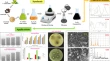
			<fig id="F1"><title><p>Figure 1</p></title><caption><p>Variation of normalized resistance <it>R</it>(<it>T</it>)/<it>R</it> (30 K) with logarithm of temperature for the NW1 device</p></caption><text>
   <p><b>Variation of normalized resistance </b><b><it>R</it></b>(<it>T</it>)/<it>R</it><b> (30 K) with logarithm of temperature for the NW1 device.</b> The insets show the resistance as a function of temperature between 1.7 and 300 K and an SEM image of the NW1 device taken from 
						<abbrgrp><abbr bid="B22">22</abbr></abbrgrp>.</p>
</text><graphic file="1556-276X-7-673-1"/></fig>
			<table id="T1">
				<title>
					<p>Table 1</p>
				</title>
				<caption>
					<p>
						<b>Values of relevant parameters for two IrO</b>
						<sub>2</sub> <b>nanowire devices</b>
					</p>
				</caption>
				<tgroup cols="7">
					<colspec align="left" colname="c1" colnum="1" colwidth="1*"/>
					<colspec align="left" colname="c2" colnum="2" colwidth="1*"/>
					<colspec align="left" colname="c3" colnum="3" colwidth="1*"/>
					<colspec align="left" colname="c4" colnum="4" colwidth="1*"/>
					<colspec align="left" colname="c5" colnum="5" colwidth="1*"/>
					<colspec align="left" colname="c6" colnum="6" colwidth="1*"/>
					<colspec align="left" colname="c7" colnum="7" colwidth="1*"/>
					<thead valign="top">
						<row rowsep="1">
							<entry align="left" colname="c1">
								<p>
									<b>Device</b>
								</p>
							</entry>
							<entry align="left" colname="c2">
								<p>
									<b>
										<it>d</it>
									</b> <b>(nm)</b>
								</p>
							</entry>
							<entry align="left" colname="c3">
								<p>
									<b>
										<it>L</it>
									</b> <b>(<it>&#956;</it>m)</b>
								</p>
							</entry>
							<entry align="left" colname="c4">
								<p>
									<b>
										<it>&#961;</it>(300 K) (<it>&#956;&#937;</it> cm)</b>
								</p>
							</entry>
							<entry align="left" colname="c5">
								<p>
									<b>
										<it>&#961;</it>(10 K) (<it>&#956;&#937;</it> cm)</b>
								</p>
							</entry>
							<entry align="left" colname="c6">
								<p>
									<b>
										<it>D</it>
									</b> <b>(cm<sup>2</sup>/s)</b>
								</p>
							</entry>
							<entry align="left" colname="c7">
								<p>
									<b>
										<it>l</it>
									</b> <b>(nm)</b>
								</p>
							</entry>
						</row>
					</thead>
					<tfoot>
						<p>
							<it>d</it> is the diameter, <it>L</it> is the voltage probe distance in a four-probe geometry, <it>D</it> is the electron diffusion constant, and <it>&#8467;</it> is the electron mean free path. <it>D</it> and <it>l</it> are for 10 K.</p>
					</tfoot>
					<tbody>
						<row>
							<entry align="left" colname="c1">
								<p>NW1</p>
							</entry>
							<entry align="justify" colname="c2">
								<p>&#8776; 180</p>
							</entry>
							<entry align="justify" colname="c3">
								<p>&#8776; 0.83</p>
							</entry>
							<entry align="justify" colname="c4">
								<p>295</p>
							</entry>
							<entry align="justify" colname="c5">
								<p>270</p>
							</entry>
							<entry align="justify" colname="c6">
								<p>1.6</p>
							</entry>
							<entry align="justify" colname="c7">
								<p>0.74</p>
							</entry>
						</row>
						<row rowsep="1">
							<entry align="left" colname="c1">
								<p>NW2</p>
							</entry>
							<entry align="justify" colname="c2">
								<p>&#8776; 180</p>
							</entry>
							<entry align="justify" colname="c3">
								<p>&#8776; 0.83</p>
							</entry>
							<entry align="justify" colname="c4">
								<p>220</p>
							</entry>
							<entry align="justify" colname="c5">
								<p>185</p>
							</entry>
							<entry align="justify" colname="c6">
								<p>2.4</p>
							</entry>
							<entry align="justify" colname="c7">
								<p>1.08</p>
							</entry>
						</row>
					</tbody>
				</tgroup>
			</table>
		</sec>
		<sec>
			<st>
				<p>Results and discussion</p>
			</st>
			<p>The inset of Figure 
				<figr fid="F1">1</figr> shows the temperature dependence of resistance for the NW1 device from room temperature down to 1.7 K. This figure clearly reveals that the overall electrical transport property of this single-crystalline nanowire is metallic, as previously established theoretically 
				<abbrgrp>
					<abbr bid="B23">23</abbr>
				</abbrgrp> and experimentally 
				<abbrgrp>
					<abbr bid="B22">22</abbr>
					<abbr bid="B24">24</abbr>
				</abbrgrp>. At temperature <it>T</it> below about 50 K, the resistance increases slightly with further reduction of <it>T</it>, suggesting that this nanowire lies in the weakly disordered regime of <it>k</it>
				<sub>F</sub>
				<it>l</it>&#8201;&gt;&#8201;1, where <it>k</it>
				<sub>F</sub> is the Fermi wavenumber, and <it>l</it> is the electron mean free path (<it>k</it>
				<sub>F</sub>
				<it>l</it>&#8201;&#8776;&#8201;6 in this particular nanowire). The small relative resistance increase of <it>R</it>(1.7 K) / <it>R</it>(50 K) &#8771;1.014 can arise from the contributions of the weak localization and electron-electron interaction effects 
				<abbrgrp>
					<abbr bid="B2">2</abbr>
					<abbr bid="B25">25</abbr>
				</abbrgrp> (and possibly also from other effects such as the two-level tunneling systems 
				<abbrgrp>
					<abbr bid="B4">4</abbr>
					<abbr bid="B26">26</abbr>
				</abbrgrp>).</p>
			<p>The main panel of Figure 
				<figr fid="F1">1</figr> plots the normalized resistance, <it>R</it>(<it>T</it>) / <it>R</it>(30 K), as a function of temperature for <it>T</it>&#8201;&lt;&#8201;60 K. The nanowire resistance was recorded while the temperature was decreased relatively slowly. What is most interesting in this figure is the notably increased resistance distribution at a fixed <it>T</it> as the temperature is lowered to approximately below 6 K. As shown in the previous studies 
				<abbrgrp>
					<abbr bid="B4">4</abbr>
					<abbr bid="B16">16</abbr>
					<abbr bid="B17">17</abbr>
					<abbr bid="B18">18</abbr>
				</abbrgrp>, this increased resistance distribution with decreasing temperature directly manifests the TUCF behavior whose origin is the existence of moving scattering centers in this particular nanowire. As a consequence, the measured resistance is a function of time at a given temperature. This observation comprises the central theme of this paper. This resistance distribution reflects the presence of the TUCF phenomenon. Thus, we shall argue in our succeeding discussion that a small fraction of the point defects contained in our as-grown nanowires must be the mobile defects. It should be noted that the TUCFs are originated from an inherent quantum-interference mechanism. Contrary to the thermal noise, the fluctuation magnitudes of the TUCFs progressively diminish as the temperature increases.</p>
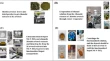
			<p>We discuss the TUCF features in a more intuitive manner. In Figure 
				<figr fid="F2">2</figr>, we plot the resistance as a function of time for the NW1 device at several <it>T</it> values below 10 K. Inspection of this figure clearly indicates that, at a given <it>T</it>, the resistance fluctuates with time. There exist both overlapping fast fluctuations and individual slow fluctuations (the slow ones are indicated by arrows in some of them). In particular, the magnitudes of the fast fluctuations increase with decreasing temperature. As the temperature increases to about 10 K, the fast fluctuations disappear to within our experimental error (i.e., our instrumental noise), while the slow fluctuations mimic random telegraph noise 
				<abbrgrp>
					<abbr bid="B27">27</abbr>
				</abbrgrp>. In order to compare with the existing TUCF theory of Feng 
				<abbrgrp>
					<abbr bid="B21">21</abbr>
				</abbrgrp>, we shall focus our discussion on the fast resistance fluctuations in this paper. </p>
			<fig id="F2"><title><p>Figure 2</p></title><caption><p>Variation of resistance with time for the NW1 device</p></caption><text>
   <p><b>Variation of resistance with time for the NW1 device.</b> Resistance as a function of time for the NW1 device at five temperatures, as indicated. The resistances at 8.0, 4.2, 2.8, and 1.73 K have been offset by 2, 4, 6, and 8 <it>&#937;</it>, respectively, for clarity. The arrows indicate four slow fluctuations occurring at &#8776; 280, &#8776; 370, &#8776; 760, and &#8776; 945 s in the resistance curve for <it>T</it> = 4.2 K.</p>
</text><graphic file="1556-276X-7-673-2"/></fig>
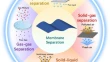
			<p>Figure 
				<figr fid="F3">3</figr> plots the temporal variation of the conductance fluctuations <it>&#948;G</it>&#8201;=&#8201;<it>G</it>&#8201;&#8722;&#8201;&#9001;<it>G</it>&#9002; in units of the quantum conductance <it>e</it>
				<sup>2</sup>/<it>h</it> for the NW1 device at <it>T</it>&#8201;=&#8201;1.73 K, where &#9001;<it>G</it>&#9002; is the measured conductance <it>G</it>&#8201;=&#8201;1&#8201;/&#8201;<it>R</it>averaged over time. It can be seen that the &#8216;peak-to-peak&#8217; conductance fluctuation magnitude reaches &#8776; 0.1 to 0.2 <it>e</it>
				<sup>2</sup>&#8201;/&#8201;<it>h</it>. This result of a fraction of <it>e</it>
				<sup>2</sup>&#8201;/&#8201;<it>h</it> at low <it>T</it> provides a meaningful indication that our measured conductance fluctuations are associated with the TUCF phenomenon 
				<abbrgrp>
					<abbr bid="B4">4</abbr>
					<abbr bid="B21">21</abbr>
				</abbrgrp>. </p>
			<fig id="F3"><title><p>Figure 3</p></title><caption><p>TUCFs for the NW1 device</p></caption><text>
   <p><b>TUCFs for the NW1 device.</b> Conductance variation <it>&#948;G</it>&#8201;=&#8201;<it>G</it>&#8201;&#8722;&#8201;&#9001;<it>G</it>&#9002; versus time for the NW1 device at <it>T</it>&#8201;=&#8201;1.73 K plotted in units of the quantum conductance <it>e</it><sup>2</sup>&#8201;/&#8201;<it>h</it>.</p>
</text><graphic file="1556-276X-7-673-3"/></fig>
			<p>In order to quantitatively analyze the fast TUCFs, we evaluate the root-mean-square magnitude of the conductance fluctuation defined by 
				<inline-formula>
					<m:math name="1556-276X-7-673-i1" xmlns:m="http://www.w3.org/1998/Math/MathML"><m:mfenced separators="" open="" close="">
   <m:mrow>
      <m:mi>&#948;</m:mi>
      <m:msub>
         <m:mrow>
            <m:mi>G</m:mi>
         </m:mrow>
         <m:mrow>
            <m:mtext>rms</m:mtext>
         </m:mrow>
      </m:msub>
      <m:mo>=</m:mo>
      <m:msqrt>
         <m:mrow>
            <m:mo>&#9001;</m:mo>
            <m:msup>
               <m:mrow>
                  <m:mo>(</m:mo>
                  <m:mi>G</m:mi>
                  <m:mo>&#8722;</m:mo>
                  <m:mo>&#9001;</m:mo>
                  <m:mi>G</m:mi>
                  <m:mo>&#9002;</m:mo>
                  <m:mo>)</m:mo>
               </m:mrow>
               <m:mrow>
                  <m:mn>2</m:mn>
               </m:mrow>
            </m:msup>
            <m:mo>&#9002;</m:mo>
         </m:mrow>
      </m:msqrt>
   </m:mrow>
</m:mfenced>
</m:math>
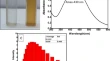
				</inline-formula>, where &#9001;&#8230;&#9002;denotes the averaging over a proper time interval while excluding the slow fluctuations. Figure 
				<figr fid="F4">4</figr> plots <it>&#948;</it>
				<it>G</it>
				<sub>rms</sub> as a function of <it>T</it> in double-logarithmic scales for the NW1 and NW2 devices studied in this work. This figure clearly demonstrates that our measured <it>&#948;</it>
				<it>G</it>
				<sub>rms</sub>increases with decreasing <it>T</it> in both nanowires. As <it>T</it> increases to about 10 K, the size of <it>&#948;</it>
				<it>G</it>
				<sub>rms</sub>becomes indistinguishable from the instrumental noise (our instrumental noise level is &#8776;&#8201;0.01<it>e</it>
				<sup>2</sup>&#8201;/&#8201;<it>h</it> in the present study; therefore, the data points at 20 K in Figure 
				<figr fid="F4">4</figr> are only plotted for reference).</p>
			<fig id="F4"><title><p>Figure 4</p></title><caption><p>Root-mean-square conductance fluctuation magnitude <it>&#948;</it><it>G</it><sub>rms</sub>as function of temperature for NW1 and NW2 devices</p></caption><text>
   <p><b>Root-mean-square conductance fluctuation magnitude </b><it>&#948;</it><it>G</it><sub>rms</sub><b>as function of temperature for NW1 and NW2 devices.</b> The dot-dashed, dashed, and dotted curves are the theoretical predictions of Equation 1 with the exponent of temperature <it>p</it> = 2, 3, and 4, respectively, for the electron-phonon relaxation rate 1/<it>&#964;</it><sub>ep</sub>&#8201;=&#8201;<it>A</it><sub>ep</sub><it>T</it><sup><it>p</it></sup>. The inset shows the extracted electron dephasing length <it>L</it><sub><it>&#966;</it></sub> as a function of temperature for the two nanowires. The dashed curve indicates a <it>T</it><sup>3</sup> temperature dependence. The data points at 10 K could be subject to large uncertainties and are only drawn for reference.</p>
</text><graphic file="1556-276X-7-673-4"/></fig>
			<p>Theoretically, the TUCFs in different sample dimensionalities and under different conditions have been studied by Al&#8217;tshuler 
				<abbrgrp>
					<abbr bid="B8">8</abbr>
					<abbr bid="B9">9</abbr>
				</abbrgrp> and Lee, Stone, and Fukuyama 
				<abbrgrp>
					<abbr bid="B10">10</abbr>
					<abbr bid="B11">11</abbr>
				</abbrgrp>. In particular, Feng and coworkers 
				<abbrgrp>
					<abbr bid="B20">20</abbr>
					<abbr bid="B21">21</abbr>
				</abbrgrp> have proposed that the TUCFs are very sensitive to the motion of single or a few mobile defects. In order to interpret our TUCF data, it is important to identify the effective sample dimensionality of our IrO<sub>2</sub> nanowires. In the quantum-interference studies, the effective nanowire dimensionality is determined by the ratio of the electron dephasing length <it>L</it>
				<sub>
					<it>&#966;</it>
				</sub> to the nanowire diameter <it>d</it>. A nanowire lies in the Q1D regime if <it>L</it>
				<sub>
					<it>&#966;</it>
				</sub>&#8201;/&#8201;<it>d</it>&#8201;&#8811;&#8201;1, and in the three-dimensional (3D) regime if <it>L</it>
				<sub>
					<it>&#966;</it>
				</sub>&#8201;/&#8201;<it>d</it>&#8201;&#8810;&#8201;1. We have found that our measured <it>&#948;</it>
				<it>G</it>
				<sub>rms</sub>(<it>T</it>) definitely cannot be consistently described by the Q1D form of the TUCF theory, because using the Q1D form would always lead to an extracted <it>L</it>
				<sub>
					<it>&#966;</it>
				</sub> smaller than <it>d</it>. Therefore, we have turned to compare our results with the 3D theoretical form. Feng predicted that for a 3D sample and in the &#8216;saturated&#8217; regime, the TUCF magnitudes are given by 
				<abbrgrp>
					<abbr bid="B21">21</abbr>
				</abbrgrp>
			</p>
			<p>
				<display-formula id="M1">
					<m:math name="1556-276X-7-673-i2" xmlns:m="http://www.w3.org/1998/Math/MathML"><m:msup>
   <m:mrow>
      <m:mo>(</m:mo>
      <m:mi>&#948;</m:mi>
      <m:msub>
         <m:mrow>
            <m:mi>G</m:mi>
         </m:mrow>
         <m:mrow>
            <m:mtext>rms</m:mtext>
         </m:mrow>
      </m:msub>
      <m:mo>)</m:mo>
   </m:mrow>
   <m:mrow>
      <m:mn>2</m:mn>
   </m:mrow>
</m:msup>
<m:mo>=</m:mo>
<m:mn>28</m:mn>
<m:mi>.</m:mi>
<m:mn>2</m:mn>
<m:mo>&#9001;</m:mo>
<m:msup>
   <m:mrow>
      <m:mi>G</m:mi>
   </m:mrow>
   <m:mrow>
      <m:mn>2</m:mn>
   </m:mrow>
</m:msup>
<m:mo>&#9002;</m:mo>
<m:mfrac>
   <m:mrow>
      <m:mn>1</m:mn>
   </m:mrow>
   <m:mrow>
      <m:msubsup>
         <m:mrow>
            <m:mi>k</m:mi>
         </m:mrow>
         <m:mrow>
            <m:mi mathvariant="normal">F</m:mi>
         </m:mrow>
         <m:mrow>
            <m:mn>4</m:mn>
         </m:mrow>
      </m:msubsup>
      <m:msup>
         <m:mrow>
            <m:mi>&#8467;</m:mi>
         </m:mrow>
         <m:mrow>
            <m:mn>2</m:mn>
         </m:mrow>
      </m:msup>
   </m:mrow>
</m:mfrac>
<m:mfrac>
   <m:mrow>
      <m:msub>
         <m:mrow>
            <m:mi>L</m:mi>
         </m:mrow>
         <m:mrow>
            <m:mi>&#966;</m:mi>
         </m:mrow>
      </m:msub>
   </m:mrow>
   <m:mrow>
      <m:mi>L</m:mi>
      <m:msup>
         <m:mrow>
            <m:mi>d</m:mi>
         </m:mrow>
         <m:mrow>
            <m:mn>2</m:mn>
         </m:mrow>
      </m:msup>
   </m:mrow>
</m:mfrac>
<m:mspace width="0.3em"/>
<m:mo>,</m:mo>
</m:math>
				</display-formula>
			</p>
			<p>where <it>L</it> (&gt;<it>L</it>
				<sub>
					<it>&#966;</it>
				</sub>) is the nanowire sample length. In the theory, the so-called saturated regime refers to the regime with the parameter <it>&#946;</it>&#8201;&#8811;&#8201;(<it>&#8467;</it>/<it>L</it>
				<sub>
					<it>&#966;</it>
				</sub>)<sup>2</sup>, where <it>&#946;</it> stands for the ratio of the number of mobile defects to the number of total (static and mobile) defects.</p>
			<p>We have carried out least-squares fits of our measured <it>&#948;</it>
				<it>G</it>
				<sub>rms</sub>(<it>T</it>) to the predictions of Equation 1, using 
				<inline-formula>
					<m:math name="1556-276X-7-673-i3" xmlns:m="http://www.w3.org/1998/Math/MathML"><m:mfenced separators="" open="" close="">
   <m:mrow>
      <m:msub>
         <m:mrow>
            <m:mi>L</m:mi>
         </m:mrow>
         <m:mrow>
            <m:mi>&#966;</m:mi>
         </m:mrow>
      </m:msub>
      <m:mo>=</m:mo>
      <m:msqrt>
         <m:mrow>
            <m:mi>D</m:mi>
            <m:msub>
               <m:mrow>
                  <m:mi>&#964;</m:mi>
               </m:mrow>
               <m:mrow>
                  <m:mi>&#966;</m:mi>
               </m:mrow>
            </m:msub>
         </m:mrow>
      </m:msqrt>
   </m:mrow>
</m:mfenced>
</m:math>
				</inline-formula> as the sole adjustable parameter, where <it>D</it> is the electron diffusion constant, and <it>&#964;</it>
				<sub>
					<it>&#966;</it>
				</sub> is the <it>T</it> dependent electron dephasing time. Explicitly, in a 3D weakly disordered conductor, the total electron dephasing rate is essentially given by two contributions 
				<abbrgrp>
					<abbr bid="B28">28</abbr>
					<abbr bid="B29">29</abbr>
				</abbrgrp>: 
				<inline-formula>
					<m:math name="1556-276X-7-673-i4" xmlns:m="http://www.w3.org/1998/Math/MathML"><m:mfenced separators="" open="" close="">
   <m:mrow>
      <m:mn>1</m:mn>
      <m:mo>/</m:mo>
      <m:msub>
         <m:mrow>
            <m:mi>&#964;</m:mi>
         </m:mrow>
         <m:mrow>
            <m:mi>&#966;</m:mi>
         </m:mrow>
      </m:msub>
      <m:mo>=</m:mo>
      <m:mn>1</m:mn>
      <m:mo>/</m:mo>
      <m:msubsup>
         <m:mrow>
            <m:mi>&#964;</m:mi>
         </m:mrow>
         <m:mrow>
            <m:mi>&#966;</m:mi>
         </m:mrow>
         <m:mrow>
            <m:mn>0</m:mn>
         </m:mrow>
      </m:msubsup>
      <m:mo>+</m:mo>
      <m:mn>1</m:mn>
      <m:mo>/</m:mo>
      <m:msub>
         <m:mrow>
            <m:mi>&#964;</m:mi>
         </m:mrow>
         <m:mrow>
            <m:mtext>ep</m:mtext>
         </m:mrow>
      </m:msub>
   </m:mrow>
</m:mfenced>
</m:math>
				</inline-formula>, where the first contribution 
				<inline-formula>
					<m:math name="1556-276X-7-673-i5" xmlns:m="http://www.w3.org/1998/Math/MathML"><m:mfenced separators="" open="" close="">
   <m:mrow>
      <m:mn>1</m:mn>
      <m:mo>/</m:mo>
      <m:msubsup>
         <m:mrow>
            <m:mi>&#964;</m:mi>
         </m:mrow>
         <m:mrow>
            <m:mi>&#966;</m:mi>
         </m:mrow>
         <m:mrow>
            <m:mn>0</m:mn>
         </m:mrow>
      </m:msubsup>
   </m:mrow>
</m:mfenced>
</m:math>
				</inline-formula> is a constant or a very weakly <it>T</it>-dependent term 
				<abbrgrp>
					<abbr bid="B30">30</abbr>
					<abbr bid="B31">31</abbr>
				</abbrgrp>, and the second contribution 
				<inline-formula>
					<m:math name="1556-276X-7-673-i6" xmlns:m="http://www.w3.org/1998/Math/MathML"><m:mfenced separators="" open="" close="">
   <m:mrow>
      <m:mn>1</m:mn>
      <m:mo>/</m:mo>
      <m:msub>
         <m:mrow>
            <m:mi>&#964;</m:mi>
         </m:mrow>
         <m:mrow>
            <m:mtext>ep</m:mtext>
         </m:mrow>
      </m:msub>
      <m:mo>=</m:mo>
      <m:msub>
         <m:mrow>
            <m:mi>A</m:mi>
         </m:mrow>
         <m:mrow>
            <m:mtext>ep</m:mtext>
         </m:mrow>
      </m:msub>
      <m:msup>
         <m:mrow>
            <m:mi>T</m:mi>
         </m:mrow>
         <m:mrow>
            <m:mi>p</m:mi>
         </m:mrow>
      </m:msup>
   </m:mrow>
</m:mfenced>
</m:math>
				</inline-formula> denotes the electron-phonon relaxation rate, with <it>A</it>
				<sub>ep</sub> being the electron-phonon coupling strength, and <it>p</it> being an exponent of temperature. In general, the value of <it>p</it> depends on the measurement temperature interval as well as the degree of disorder in the sample. Typically, 2&#8201;&#8804;&#8201;<it>p</it>&#8201;&#8804;&#8201;4 in 3D metals 
				<abbrgrp>
					<abbr bid="B30">30</abbr>
					<abbr bid="B31">31</abbr>
					<abbr bid="B32">32</abbr>
				</abbrgrp>.</p>
			<p>Since the NW1 and NW2 devices reveal overall similar TUCF features (except that the TUCF magnitudes in the latter are somewhat smaller than those in the former), we shall concentrate the following discussion on the NW1 device. Our fitted results with the exponent of temperature <it>p</it> being fixed to be 2, 3, or 4 are shown by the dot-dashed, dashed, and dotted curves, respectively, in the main panel of Figure 
				<figr fid="F4">4</figr> (for simplicity, we chose the value of <it>p</it> to be an integer in our least-squares fits to Equation 1). Inspection of this figure indicates that Equation 1 can satisfactorily describe the experimental results. The fit with the exponent <it>p</it> = 3 gives a slightly (notably) better description than that with <it>p</it> = 4(2). Numerically, our fitted values of the relevant parameters for the NW1 device are listed in Table 
				<tblr tid="T2">2</tblr>. The extracted electron-phonon coupling strength <it>A</it>
				<sub>ep</sub>&#8201;&#8776;&#8201;4&#8201;&#215;&#8201;10<sup>9</sup> K<sup>&#8722;<it>p</it>
				</sup> s<sup>&#8722;1</sup> is compatible to that previously found in normal metals, such as RuO<sub>2</sub> nanowires 
				<abbrgrp>
					<abbr bid="B4">4</abbr>
				</abbrgrp> and AuPd wires and films 
				<abbrgrp>
					<abbr bid="B28">28</abbr>
					<abbr bid="B29">29</abbr>
				</abbrgrp>. We would like to note in passing that a more quantitative extraction of the value of <it>p</it> would require further measurements on, e.g., the magnetoresistances in the weak-localization effect 
				<abbrgrp>
					<abbr bid="B25">25</abbr>
					<abbr bid="B28">28</abbr>
					<abbr bid="B29">29</abbr>
				</abbrgrp>. </p>
			<table id="T2">
				<title>
					<p>Table 2</p>
				</title>
				<caption>
					<p>
						<b>Values of fitted parameters for the electron dephasing rate</b> 
						<inline-formula>
							<m:math name="1556-276X-7-673-i7" xmlns:m="http://www.w3.org/1998/Math/MathML"><m:mfenced separators="" open="" close="">
   <m:mrow>
      <m:mn mathvariant="bold">1</m:mn>
      <m:mo>/</m:mo>
      <m:msub>
         <m:mrow>
            <m:mi mathvariant="bold">&#964;</m:mi>
         </m:mrow>
         <m:mrow>
            <m:mi mathvariant="bold">&#966;</m:mi>
         </m:mrow>
      </m:msub>
      <m:mspace width=".3em"/>
      <m:mo mathvariant="bold">=</m:mo>
      <m:mspace width=".3em"/>
      <m:mn mathvariant="bold">1</m:mn>
      <m:mo>/</m:mo>
      <m:msubsup>
         <m:mrow>
            <m:mi mathvariant="bold">&#964;</m:mi>
         </m:mrow>
         <m:mrow>
            <m:mi mathvariant="bold">&#966;</m:mi>
         </m:mrow>
         <m:mrow>
            <m:mn mathvariant="bold">0</m:mn>
         </m:mrow>
      </m:msubsup>
      <m:mspace width=".3em"/>
      <m:mo mathvariant="bold">+</m:mo>
      <m:mspace width=".3em"/>
      <m:msub>
         <m:mrow>
            <m:mi mathvariant="bold">A</m:mi>
         </m:mrow>
         <m:mrow>
            <m:mtext>ep</m:mtext>
         </m:mrow>
      </m:msub>
      <m:msup>
         <m:mrow>
            <m:mi mathvariant="bold">T</m:mi>
         </m:mrow>
         <m:mrow>
            <m:mi mathvariant="bold">p</m:mi>
         </m:mrow>
      </m:msup>
   </m:mrow>
</m:mfenced>
</m:math>
						</inline-formula> <b>in NW1 device</b>
					</p>
				</caption>
				<tgroup cols="3">
					<colspec align="left" colname="c1" colnum="1" colwidth="1*"/>
					<colspec align="center" colname="c2" colnum="2" colwidth="1*"/>
					<colspec align="center" colname="c3" colnum="3" colwidth="1*"/>
					<thead valign="top">
						<row rowsep="1">
							<entry align="left" colname="c1">
								<p>
									<b>Exponent <it>p</it>
									</b>
								</p>
							</entry>
							<entry align="center" colname="c2">
								<p>
									<inline-formula>
										<m:math name="1556-276X-7-673-i8" xmlns:m="http://www.w3.org/1998/Math/MathML"><m:mfenced separators="" open="" close="">
   <m:mrow>
      <m:mn mathvariant="bold">1</m:mn>
      <m:mo mathvariant="bold">/</m:mo>
      <m:msubsup>
         <m:mrow>
            <m:mi mathvariant="bold">&#964;</m:mi>
         </m:mrow>
         <m:mrow>
            <m:mi mathvariant="bold">&#966;</m:mi>
         </m:mrow>
         <m:mrow>
            <m:mn mathvariant="bold">0</m:mn>
         </m:mrow>
      </m:msubsup>
   </m:mrow>
</m:mfenced>
</m:math>
									</inline-formula> <b>(s<sup>&#8722;1</sup>)</b>
								</p>
							</entry>
							<entry align="center" colname="c3">
								<p>
									<b>
										<it>A</it>
										<sub>ep</sub> (K<sup>&#8722;<it>p</it>
										</sup> s <sup>&#8722;1</sup>)</b>
								</p>
							</entry>
						</row>
					</thead>
					<tbody>
						<row>
							<entry align="left" colname="c1">
								<p>2</p>
							</entry>
							<entry align="center" colname="c2">
								<p>&#8776; 1&#215;10<sup>9</sup>
								</p>
							</entry>
							<entry align="center" colname="c3">
								<p>&#8776; 6&#215;10<sup>9</sup>
								</p>
							</entry>
						</row>
						<row>
							<entry align="left" colname="c1">
								<p>3</p>
							</entry>
							<entry align="center" colname="c2">
								<p>&#8776; 7&#215;10<sup>8</sup>
								</p>
							</entry>
							<entry align="center" colname="c3">
								<p>&#8776; 4&#215;10<sup>9</sup>
								</p>
							</entry>
						</row>
						<row rowsep="1">
							<entry align="left" colname="c1">
								<p>4</p>
							</entry>
							<entry align="center" colname="c2">
								<p>&#8776; 5&#215;10<sup>8</sup>
								</p>
							</entry>
							<entry align="center" colname="c3">
								<p>&#8776; 2&#215;10<sup>9</sup>
								</p>
							</entry>
						</row>
					</tbody>
				</tgroup>
			</table>
			<p>Our extracted <it>L</it>
				<sub>
					<it>&#966;</it>
				</sub> values at different temperatures between 1.7 and 10 K are plotted in the inset of Figure 
				<figr fid="F4">4</figr>. We obtain a relatively short <it>L</it>
				<sub>
					<it>&#966;</it>
				</sub>(1.7 K) &#8776; 90 nm in the NW1 device. Moreover, <it>L</it>
				<sub>
					<it>&#966;</it>
				</sub>
				<it> decreases rapidly with increasing</it> <b>
					<it>T</it>
				</b><b>, reaching a small size of</b>
				<it>L</it>
				<sub>
					<it>&#966;</it>
				</sub>(8 K) &#8776; 10 nm. The extracted relatively short <it>L</it>
				<sub>
					<it>&#966;</it>
				</sub> values may partly arise from non-negligible experimental uncertainties. First, our measured TUCF magnitudes are small, which render large uncertainties in the separation and evaluations of <it>&#948;</it>
				<it>G</it>
				<sub>rms</sub> from the background instrumental noise (experimentally, our TUCF signals become hardly distinguished from the instrumental noise as <it>T</it>&#8201;&#8819;&#8201;8K). Second, our nanowires with diameters of 180 nm may fall close to the 1D-to-3D crossover regime with regards to the quantum-interference effects, instead of falling deep in the 3D regime. Therefore, Equation 1 is probably only about to become fully valid (however, we would like to remind that our data definitely cannot be described by the 1D form of TUCF theory). Third, the determination of the relevant sample volume <it>L</it>
				<it>d</it>
				<sup>2</sup> is subject to some uncertainties. In any case, note that we obtain <it>L</it>
				<sub>
					<it>&#966;</it>
				</sub>&#8201;&lt;&#8201;<it>d</it> over our measurement <it>T</it> range; hence, the 3D TUCF phenomenon in this NW1 device is more or less justified.</p>
		</sec>
		<sec>
			<st>
				<p>Conclusions</p>
			</st>
			<p>We have observed TUCFs at cryogenic temperatures in metallic single-crystalline IrO<sub>2</sub> nanowires grown by the MOCVD method. The TUCFs originate from the scattering of conduction electrons upon mobile defects. Our measured TUCF magnitudes as a function of temperature are satisfactorily described by the existing theory in the three-dimensional regime. Taken together with our previous observations in single-crystalline RuO<sub>2</sub> nanowires grown by the distinctly different thermal evaporation method 
				<abbrgrp>
					<abbr bid="B4">4</abbr>
				</abbrgrp>, the present study indicates that moving scattering centers may be common to the conducting metal oxide rutile nanostructures, regardless of how they are synthesized. Our observations could have important bearing on the fundamental research and technological applications of synthetic metal oxide nanoelectronic devices.</p>
		</sec>
		<sec>
			<st>
				<p>Competing interests</p>
			</st>
			<p>The authors declare that they have no competing interests.</p>
		</sec>
		<sec>
			<st>
				<p>Authors&#8217; contributions</p>
			</st>
			<p>YHL fabricated the devices and conducted the electrical measurements. LYW analyzed the results and wrote the manuscript. JJL coordinated and supervised the overall study and helped to draft the manuscript. All authors read and approved the final manuscript.</p>
		</sec>
	</bdy>
	<bm>
		<ack>
			<sec>
				<st>
					<p>Acknowledgements</p>
				</st>
				<p>The authors are grateful to YS Huang for providing us with the IrO<sub>2</sub> nanowires used in this study. This work was supported by Taiwan National Science Council through Grant No. 101-2120-M-009-005 and by the MOE ATU Program (for JJL).</p>
			</sec>
		</ack>
		<refgrp><bibl id="B1"><aug><au><snm>Akkermans</snm><fnm>E</fnm></au><au><snm>Montambaux</snm><fnm>G</fnm></au></aug><source>Mesoscopic Physics with Electrons and Photons</source><publisher>Cambridge: Cambridge University Press</publisher><pubdate>2007</pubdate></bibl><bibl id="B2"><aug><au><snm>Al&#8217;tshuler</snm><fnm>BL</fnm></au><au><snm>Lee</snm><fnm>PA</fnm></au><au><snm>Webb</snm><fnm>RA</fnm></au></aug><source>Mesoscopic Phenomena in Solids</source><publisher>New York: Elsevier</publisher><pubdate>1991</pubdate></bibl><bibl id="B3"><title><p>Aharonov-Bohm effect in normal metal: quantum coherence and transport</p></title><aug><au><snm>Washburn</snm><fnm>S</fnm></au><au><snm>Webb</snm><fnm>RA</fnm></au></aug><source>Adv Phys</source><pubdate>1986</pubdate><volume>35</volume><fpage>375</fpage><xrefbib><pubid idtype="doi">10.1080/00018738600101921</pubid></xrefbib></bibl><bibl id="B4"><title><p>Temporal universal conductance fluctuations in RuO2 nanowires due to mobile defects</p></title><aug><au><snm>Lien</snm><fnm>AS</fnm></au><au><snm>Wang</snm><fnm>LY</fnm></au><au><snm>Chu</snm><fnm>CS</fnm></au><au><snm>Lin</snm><fnm>JJ</fnm></au></aug><source>Phys Rev B</source><pubdate>2011</pubdate><volume>84</volume><fpage>155432</fpage></bibl><bibl id="B5"><title><p>Universal conductance fluctuations in indium tin oxide nanowires</p></title><aug><au><snm>Yang</snm><fnm>PY</fnm></au><au><snm>Wang</snm><fnm>LY</fnm></au><au><snm>Hsu</snm><fnm>YW</fnm></au><au><snm>Lin</snm><fnm>JJ</fnm></au></aug><source>Phys Rev B</source><pubdate>2012</pubdate><volume>85</volume><fpage>085423</fpage></bibl><bibl id="B6"><title><p>Spin-orbit coupling and phase coherence in InAs nanowires</p></title><aug><au><snm>Est&#233;vez Hern&#225;ndez</snm><fnm>S</fnm></au><au><snm>Akabori</snm><fnm>M</fnm></au><au><snm>Sladek</snm><fnm>K</fnm></au><au><snm>Volk</snm><fnm>Ch</fnm></au><au><snm>Alagha</snm><fnm>S</fnm></au><au><snm>Hardtdegen</snm><fnm>H</fnm></au><au><snm>Pala</snm><fnm>MG</fnm></au><au><snm>Demarina</snm><fnm>N</fnm></au><au><snm>Gr&#252;tzmacher</snm><fnm>D</fnm></au><au><snm>Sch&#228;pers</snm><fnm>Th</fnm></au></aug><source>Phys Rev B</source><pubdate>2010</pubdate><volume>82</volume><fpage>235303</fpage></bibl><bibl id="B7"><title><p>Universal conductance fluctuations and localization effects in InN nanowires connected in parallel</p></title><aug><au><snm>Alagha</snm><fnm>S</fnm></au><au><snm>Est&#233;vez Hern&#225;ndez</snm><fnm>S</fnm></au><au><snm>Bl&#246;mers</snm><fnm>C</fnm></au><au><snm>Stoica</snm><fnm>T</fnm></au><au><snm>Calarco</snm><fnm>R</fnm></au><au><snm>Sch&#228;pers</snm><fnm>Th</fnm></au></aug><source>J Appl Phys</source><pubdate>2010</pubdate><volume>108</volume><fpage>113704</fpage><xrefbib><pubid idtype="doi">10.1063/1.3516216</pubid></xrefbib></bibl><bibl id="B8"><title><p>Fluctuations in the extrinsic conductivity of disordered conductors</p></title><aug><au><snm>Al&#8217;tshuler</snm><fnm>BL</fnm></au></aug><source>JETP Lett</source><pubdate>1985</pubdate><volume>41</volume><fpage>648</fpage></bibl><bibl id="B9"><title><p>Fluctuation properties of small conductors</p></title><aug><au><snm>Al&#8217;tshuler</snm><fnm>BL</fnm></au><au><snm>Khmel&#8217;Nitski&#305;&#774;</snm><fnm>DE</fnm></au></aug><source>JETP Lett</source><pubdate>1986</pubdate><volume>42</volume><fpage>359</fpage></bibl><bibl id="B10"><title><p>Universal conductance fluctuations in metals</p></title><aug><au><snm>Lee</snm><fnm>PA</fnm></au><au><snm>Stone</snm><fnm>AD</fnm></au></aug><source>Phys Rev Lett</source><pubdate>1985</pubdate><volume>55</volume><fpage>1622</fpage><xrefbib><pubidlist><pubid idtype="doi">10.1103/PhysRevLett.55.1622</pubid><pubid idtype="pmpid" link="fulltext">10031872</pubid></pubidlist></xrefbib></bibl><bibl id="B11"><title><p>Universal conductance fluctuations in metals: effects of finite temperature, interactions, and magnetic field</p></title><aug><au><snm>Lee</snm><fnm>PA</fnm></au><au><snm>Stone</snm><fnm>AD</fnm></au><au><snm>Fukuyama</snm><fnm>H</fnm></au></aug><source>Phys Rev B</source><pubdate>1987</pubdate><volume>35</volume><fpage>1039</fpage><xrefbib><pubid idtype="doi">10.1103/PhysRevB.35.1039</pubid></xrefbib></bibl><bibl id="B12"><title><p>Magnetoresistance of small, quasi-one-dimensional, normal-metal rings and lines</p></title><aug><au><snm>Umbach</snm><fnm>CP</fnm></au><au><snm>Washburn</snm><fnm>S</fnm></au><au><snm>Laibowitz</snm><fnm>RB</fnm></au><au><snm>Webb</snm><fnm>RA</fnm></au></aug><source>Phys Rev B</source><pubdate>1984</pubdate><volume>30</volume><fpage>4048</fpage><xrefbib><pubid idtype="doi">10.1103/PhysRevB.30.4048</pubid></xrefbib></bibl><bibl id="B13"><title><p>Aperiodic magnetoresistance oscillations in narrow inversion layers in Si</p></title><aug><au><snm>Licini</snm><fnm>JC</fnm></au><au><snm>Bishop</snm><fnm>DJ</fnm></au><au><snm>Kastner</snm><fnm>MA</fnm></au><au><snm>Melngailis</snm><fnm>J</fnm></au></aug><source>Phys Rev Lett</source><pubdate>2987</pubdate><volume>55</volume><fpage>1985</fpage></bibl><bibl id="B14"><title><p>Universal conductance fluctuations in silicon inversion-layer nanostructures</p></title><aug><au><snm>Skocpol</snm><fnm>WJ</fnm></au><au><snm>Mankiewich</snm><fnm>PM</fnm></au><au><snm>Howard</snm><fnm>RE</fnm></au><au><snm>Jackel</snm><fnm>LD</fnm></au><au><snm>Tennant</snm><fnm>DM</fnm></au><au><snm>Stone</snm><fnm>AD</fnm></au></aug><source>Phys Rev Lett</source><pubdate>2865</pubdate><volume>56</volume><fpage>1986</fpage></bibl><bibl id="B15"><title><p>Universal conductance fluctuations and electron coherence lengths in a narrow two-dimensional electron gas</p></title><aug><au><snm>Thornton</snm><fnm>TJ</fnm></au><au><snm>Pepper</snm><fnm>M</fnm></au><au><snm>Ahmed</snm><fnm>H</fnm></au><au><snm>Davies</snm><fnm>GJ</fnm></au><au><snm>Andrews</snm><fnm>D</fnm></au></aug><source>Phys Rev B</source><pubdate>1987</pubdate><volume>36</volume><fpage>4514</fpage><xrefbib><pubid idtype="doi">10.1103/PhysRevB.36.4514</pubid></xrefbib></bibl><bibl id="B16"><title><p>Resistance fluctuations in thin Bi wires and films</p></title><aug><au><snm>Beutler</snm><fnm>DE</fnm></au><au><snm>Meisenheimer</snm><fnm>TL</fnm></au><au><snm>Giordano</snm><fnm>N</fnm></au></aug><source>Phys Rev Lett</source><pubdate>1987</pubdate><volume>58</volume><fpage>1240</fpage><xrefbib><pubidlist><pubid idtype="doi">10.1103/PhysRevLett.58.1240</pubid><pubid idtype="pmpid" link="fulltext">10034378</pubid></pubidlist></xrefbib></bibl><bibl id="B17"><title><p>Conductance fluctuations in thin silver films</p></title><aug><au><snm>Meisenheimer</snm><fnm>TL</fnm></au><au><snm>Giordano</snm><fnm>N</fnm></au></aug><source>Phys Rev B</source><pubdate>1989</pubdate><volume>39</volume><fpage>9929</fpage><xrefbib><pubid idtype="doi">10.1103/PhysRevB.39.9929</pubid></xrefbib></bibl><bibl id="B18"><title><p>Conductance fluctuations in thin metal films</p></title><aug><au><snm>Meisenheimer</snm><fnm>TL</fnm></au><au><snm>Beutler</snm><fnm>DE</fnm></au><au><snm>Giordano</snm><fnm>N</fnm></au></aug><source>Jpn J Appl Phys</source><pubdate>1987</pubdate><volume>26</volume><fpage>695</fpage><xrefbib><pubid idtype="doi">10.1143/JJAP.26.695</pubid></xrefbib></bibl><bibl id="B19"><title><p>Conductance fluctuations and low-frequency noise in small disordered systems: experiment</p></title><aug><au><snm>Giordano</snm><fnm>N</fnm></au></aug><source>Mesoscopic Phenomena in Solids</source><publisher>Elsevier, New York</publisher><editor>Al&#8217;tshuler BL, Lee PA, Webb RA</editor><pubdate>1991</pubdate><fpage>131</fpage><lpage>131</lpage></bibl><bibl id="B20"><title><p>Sensitivity of the conductance of a disordered metal to the motion of a single atom: implications for 1/f noise</p></title><aug><au><snm>Feng</snm><fnm>S</fnm></au><au><snm>Lee</snm><fnm>PA</fnm></au><au><snm>Stone</snm><fnm>AD</fnm></au></aug><source>Phys Rev Lett</source><pubdate>1986</pubdate><volume>56</volume><fpage>1960</fpage><note>A published erratum appears in Phys Rev Lett 1986, 56:2772</note><xrefbib><pubidlist><pubid idtype="doi">10.1103/PhysRevLett.56.1960</pubid><pubid idtype="pmpid" link="fulltext">10032821</pubid></pubidlist></xrefbib></bibl><bibl id="B21"><title><p>Conductance fluctuations and 1/f noise magnitudes in small disordered structures: theory</p></title><aug><au><snm>Feng</snm><fnm>S</fnm></au></aug><source>Mesoscopic Phenomena in Solids</source><publisher>New York: Elsevier</publisher><editor>Al&#8217;tshuler BL, Lee PA, Webb RA</editor><pubdate>1991</pubdate><fpage>107</fpage><lpage>107</lpage></bibl><bibl id="B22"><title><p>Electrical transport studies of individual IrO2 nanorods and their nanorod contacts</p></title><aug><au><snm>Lin</snm><fnm>YH</fnm></au><au><snm>Sun</snm><fnm>YC</fnm></au><au><snm>Jian</snm><fnm>WB</fnm></au><au><snm>Chang</snm><fnm>HM</fnm></au><au><snm>Huang</snm><fnm>YS</fnm></au><au><snm>Lin</snm><fnm>JJ</fnm></au></aug><source>Nanotechnology</source><pubdate>2008</pubdate><volume>19</volume><fpage>045711</fpage><xrefbib><pubidlist><pubid idtype="doi">10.1088/0957-4484/19/04/045711</pubid><pubid idtype="pmpid" link="fulltext">21817528</pubid></pubidlist></xrefbib></bibl><bibl id="B23"><title><p>Electronic structure of RuO2, OsO2, and IrO2</p></title><aug><au><snm>Mattheiss</snm><fnm>LF</fnm></au></aug><source>Phys Rev B</source><pubdate>2433</pubdate><volume>13</volume><fpage>1976</fpage></bibl><bibl id="B24"><title><p>Low temperature electrical transport properties of RuO2 and IrO2 single crystals</p></title><aug><au><snm>Lin</snm><fnm>JJ</fnm></au><au><snm>Huang</snm><fnm>SM</fnm></au><au><snm>Lin</snm><fnm>YH</fnm></au><au><snm>Lee</snm><fnm>TC</fnm></au><au><snm>Liu</snm><fnm>H</fnm></au><au><snm>Zhang</snm><fnm>XX</fnm></au><au><snm>Chen</snm><fnm>RS</fnm></au><au><snm>Huang</snm><fnm>YS</fnm></au></aug><source>J Phys: Condens Matter</source><pubdate>2004</pubdate><volume>16</volume><fpage>8035</fpage><xrefbib><pubid idtype="doi">10.1088/0953-8984/16/45/025</pubid></xrefbib></bibl><bibl id="B25"><title><p>Quantum effects in disordered metal films</p></title><aug><au><snm>Al&#8217;tshuler</snm><fnm>BL</fnm></au><au><snm>Aronov</snm><fnm>AG</fnm></au><au><snm>Gershenson</snm><fnm>ME</fnm></au><au><snm>Sharvin Yu</snm><fnm>V</fnm></au></aug><source>Sov Sci Rev Sect A: Phys Rev</source><pubdate>1987</pubdate><volume>9</volume><fpage>223</fpage></bibl><bibl id="B26"><title><p>Four-probe electrical-transport measurements on single indium tin oxide nanowires between 1.5 and 300 K</p></title><aug><au><snm>Chiu</snm><fnm>SP</fnm></au><au><snm>Chung</snm><fnm>HF</fnm></au><au><snm>Lin</snm><fnm>YH</fnm></au><au><snm>Kai</snm><fnm>JJ</fnm></au><au><snm>Chen</snm><fnm>FR</fnm></au><au><snm>Lin</snm><fnm>JJ</fnm></au></aug><source>Nanotechnology</source><pubdate>2009</pubdate><volume>20</volume><fpage>105203</fpage><xrefbib><pubidlist><pubid idtype="doi">10.1088/0957-4484/20/10/105203</pubid><pubid idtype="pmpid" link="fulltext">19417513</pubid></pubidlist></xrefbib></bibl><bibl id="B27"><title><p>Discrete resistance switching in submicrometer silicon inversion layers: individual interface traps and low-frequency (1/f?) noise</p></title><aug><au><snm>Ralls</snm><fnm>KS</fnm></au><au><snm>Skocpol</snm><fnm>WJ</fnm></au><au><snm>Jackel</snm><fnm>LD</fnm></au><au><snm>Howard</snm><fnm>RE</fnm></au><au><snm>Fetter</snm><fnm>LA</fnm></au><au><snm>Epworth</snm><fnm>RW</fnm></au><au><snm>Tennant</snm><fnm>DM</fnm></au></aug><source>Phys Rev Lett</source><pubdate>1984</pubdate><volume>52</volume><fpage>228</fpage><xrefbib><pubid idtype="doi">10.1103/PhysRevLett.52.228</pubid></xrefbib></bibl><bibl id="B28"><title><p>Observation of a linear mean-free-path dependence of the electron-phonon scattering rate in thick AuPd films</p></title><aug><au><snm>Zhong</snm><fnm>YL</fnm></au><au><snm>Lin</snm><fnm>JJ</fnm></au></aug><source>Phys Rev Lett</source><pubdate>1998</pubdate><volume>80</volume><fpage>588</fpage><xrefbib><pubid idtype="doi">10.1103/PhysRevLett.80.588</pubid></xrefbib></bibl><bibl id="B29"><title><p>Direct observation of electron dephasing due to inelastic scattering from defects in weakly disordered AuPd wires</p></title><aug><au><snm>Zhong</snm><fnm>YL</fnm></au><au><snm>Sergeev</snm><fnm>A</fnm></au><au><snm>Chen</snm><fnm>CD</fnm></au><au><snm>Lin</snm><fnm>JJ</fnm></au></aug><source>Phys Rev Lett</source><pubdate>2010</pubdate><volume>104</volume><fpage>206803</fpage><xrefbib><pubid idtype="pmpid" link="fulltext">20867051</pubid></xrefbib></bibl><bibl id="B30"><title><p>Recent experimental studies of electron dephasing in metal and semiconductor mesoscopic structures</p></title><aug><au><snm>Lin</snm><fnm>JJ</fnm></au><au><snm>Bird</snm><fnm>JP</fnm></au></aug><source>J Phys: Condens Matter</source><pubdate>2002</pubdate><volume>14</volume><fpage>R501</fpage><xrefbib><pubid idtype="doi">10.1088/0953-8984/14/18/201</pubid></xrefbib></bibl><bibl id="B31"><title><p>Electron dephasing near zero temperature: an experimental review</p></title><aug><au><snm>Lin</snm><fnm>JJ</fnm></au><au><snm>Li</snm><fnm>TJ</fnm></au><au><snm>Zhong</snm><fnm>YL</fnm></au></aug><source>J Phys Soc Jpn</source><pubdate>2003</pubdate><volume>72</volume><issue>Suppl. A</issue><fpage>7</fpage></bibl><bibl id="B32"><title><p>Electron-phonon interaction in disordered conductors: static and vibrating scattering potentials</p></title><aug><au><snm>Sergeev</snm><fnm>A</fnm></au><au><snm>Mitin</snm><fnm>V</fnm></au></aug><source>Phys Rev B</source><pubdate>2000</pubdate><volume>61</volume><fpage>6041</fpage><xrefbib><pubid idtype="doi">10.1103/PhysRevB.61.6041</pubid></xrefbib></bibl></refgrp>
	</bm>
</art>