<?xml version='1.0'?>
<!DOCTYPE art SYSTEM 'http://www.biomedcentral.com/xml/article.dtd'>
<art>
	<ui>1556-276X-7-663</ui>
	<ji>1556-276X</ji>
	<fm>
		<dochead>Nano Express</dochead>
		<bibl>
			<title>
				<p>Fabrication and photocatalytic properties of silicon nanowires by metal-assisted chemical etching: effect of H<sub>2</sub>O<sub>2</sub> concentration</p>
			</title>
			<aug>
				<au id="A1"><snm>Liu</snm><fnm>Yousong</fnm><insr iid="I1"/><email>liuyousong217@163.com</email></au>
				<au id="A2" ca="yes"><snm>Ji</snm><fnm>Guangbin</fnm><insr iid="I1"/><email>gbji@nuaa.edu.cn</email></au>
				<au id="A3"><snm>Wang</snm><fnm>Junyi</fnm><insr iid="I1"/><email>sue_nj_0113@126.com</email></au>
				<au id="A4"><snm>Liang</snm><fnm>Xuanqi</fnm><insr iid="I1"/><email>liang.xuanqi@163.com</email></au>
				<au id="A5"><snm>Zuo</snm><fnm>Zewen</fnm><insr iid="I2"/><email>zuozewen@126.com</email></au>
				<au id="A6"><snm>Shi</snm><fnm>Yi</fnm><insr iid="I3"/><email>yshi@nju.edu.cn</email></au>
			</aug>
			<insg>
				<ins id="I1"><p>College of Materials Science and Technology, Nanjing University of Aeronautics and Astronautics, Nanjing, 211100, People's Republic of China</p></ins>
				<ins id="I2"><p>College of Physics and Electronics Information, Anhui Normal University, Wuhu, 241000, People's Republic of China</p></ins>
				<ins id="I3"><p>College of Electronic Science and Engineering, Nanjing University, Nanjing, 210093, People's Republic of China</p></ins>
			</insg>
			<source>Nanoscale Research Letters</source>
			<section><title><p>Regular submissions</p></title></section><issn>1556-276X</issn>
			<pubdate>2012</pubdate>
			<volume>7</volume>
			<issue>1</issue>
			<fpage>663</fpage>
			<url>http://www.nanoscalereslett.com/content/7/1/663</url>
			<xrefbib><pubidlist><pubid idtype="doi">10.1186/1556-276X-7-663</pubid><pubid idtype="pmpid">23217211</pubid></pubidlist></xrefbib>
		</bibl>
		<history><rec><date><day>23</day><month>9</month><year>2012</year></date></rec><acc><date><day>22</day><month>11</month><year>2012</year></date></acc><pub><date><day>5</day><month>12</month><year>2012</year></date></pub></history>
		<cpyrt><year>2012</year><collab>Liu et al.; licensee Springer.</collab><note>This is an Open Access article distributed under the terms of the Creative Commons Attribution License (
				<url>http://creativecommons.org/licenses/by/2.0</url>), which permits unrestricted use, distribution, and reproduction in any medium, provided the original work is properly cited.</note></cpyrt>
		<kwdg>
			<kwd>Silicon nanowire arrays</kwd>
			<kwd>H<sub>2</sub>O<sub>2</sub>
			</kwd>
			<kwd>Photocatalytic properties</kwd>
		</kwdg>
		<abs>
			<sec>
				<st>
					<p>Abstract</p>
				</st>
				<p>In the current study, monocrystalline silicon nanowire arrays (SiNWs) were prepared through a metal-assisted chemical etching method of silicon wafers in an etching solution composed of HF and H<sub>2</sub>O<sub>2</sub>. Photoelectric properties of the monocrystalline SiNWs are improved greatly with the formation of the nanostructure on the silicon wafers. By controlling the hydrogen peroxide concentration in the etching solution, SiNWs with different morphologies and surface characteristics are obtained. A reasonable mechanism of the etching process was proposed. Photocatalytic experiment shows that SiNWs prepared by 20% H<sub>2</sub>O<sub>2</sub> etching solution exhibit the best activity in the decomposition of the target organic pollutant, Rhodamine B (RhB), under Xe arc lamp irradiation for its appropriate Si nanowire density with the effect of Si content and contact area of photocatalyst and RhB optimized.</p>
			</sec>
		</abs>
	</fm>
	<bdy>
		<sec>
			<st>
				<p>Background</p>
			</st>
			<p>Photocatalysis has attracted much interest due to its potential advantages in utilizing solar energy to degrade organic pollutants and develop new energy 
				<abbrgrp>
					<abbr bid="B1">1</abbr>
					<abbr bid="B2">2</abbr>
					<abbr bid="B3">3</abbr>
					<abbr bid="B4">4</abbr>
				</abbrgrp>. As a traditional photocatalyst, semiconductor TiO<sub>2</sub> has enormous potential in photocatalysis, but its wide band gap (3.2 eV) limits the use of light energy 
				<abbrgrp>
					<abbr bid="B5">5</abbr>
					<abbr bid="B6">6</abbr>
				</abbrgrp>.</p>
			<p>Silicon materials, which exhibit a wide optical adsorption range, high optical absorption efficiency, and high electron mobility, become a great potential photoelectric conversion material for its important applications in the field of photovoltaics and photocatalysis 
				<abbrgrp>
					<abbr bid="B7">7</abbr>
					<abbr bid="B8">8</abbr>
					<abbr bid="B9">9</abbr>
					<abbr bid="B10">10</abbr>
				</abbrgrp>. The realization of the silicon structure, especially the preparation of nanowire arrays, is very significant for the development and production of efficient quantum devices, photoelectric devices, and electronic and optical sensors 
				<abbrgrp>
					<abbr bid="B11">11</abbr>
					<abbr bid="B12">12</abbr>
					<abbr bid="B13">13</abbr>
					<abbr bid="B14">14</abbr>
					<abbr bid="B15">15</abbr>
				</abbrgrp>. Various methods have been developed to prepare one-dimensional silicon nanostructures, such as chemical vapor deposition 
				<abbrgrp>
					<abbr bid="B16">16</abbr>
				</abbrgrp>, supercritical fluid-liquid&#8211;solid synthesis 
				<abbrgrp>
					<abbr bid="B17">17</abbr>
				</abbrgrp>, laser ablation 
				<abbrgrp>
					<abbr bid="B18">18</abbr>
				</abbrgrp>, thermal evaporation decomposition 
				<abbrgrp>
					<abbr bid="B19">19</abbr>
				</abbrgrp>, and other processes.</p>
			<p>In recent years, a simple catalytic etching technique with metal particles as catalyst to prepare large-area aligned monocrystalline silicon nanowire arrays on silicon wafers has been reported 
				<abbrgrp>
					<abbr bid="B20">20</abbr>
					<abbr bid="B21">21</abbr>
					<abbr bid="B22">22</abbr>
					<abbr bid="B23">23</abbr>
					<abbr bid="B24">24</abbr>
					<abbr bid="B25">25</abbr>
					<abbr bid="B26">26</abbr>
					<abbr bid="B27">27</abbr>
				</abbrgrp>. The technique is actually a wet chemical corrosion, the process of which is relatively simple, low cost, and controllable. Recent works on the etching method with depositions of two-dimensional (2-D) micro/nanoparticle arrays 
				<abbrgrp>
					<abbr bid="B28">28</abbr>
					<abbr bid="B29">29</abbr>
					<abbr bid="B30">30</abbr>
					<abbr bid="B31">31</abbr>
					<abbr bid="B32">32</abbr>
					<abbr bid="B33">33</abbr>
				</abbrgrp> or 2-D nanopattern fabrications 
				<abbrgrp>
					<abbr bid="B34">34</abbr>
					<abbr bid="B35">35</abbr>
				</abbrgrp> with highly ordered configurations, which are applicable for enabling highly dense nanowire formation, have also been reported. The controlled depositions of micro/nanoparticles result in close-packed highly ordered 2-D arrays with monolayer configuration, and these methods had been implemented in photonic devices 
				<abbrgrp>
					<abbr bid="B28">28</abbr>
					<abbr bid="B29">29</abbr>
					<abbr bid="B30">30</abbr>
					<abbr bid="B31">31</abbr>
					<abbr bid="B32">32</abbr>
					<abbr bid="B33">33</abbr>
				</abbrgrp>. In addition, the use of diblock copolymer lithography methods had enabled the fabrication of highly ordered and ultrahigh-density 2-D nanopattern arrays 
				<abbrgrp>
					<abbr bid="B34">34</abbr>
					<abbr bid="B35">35</abbr>
				</abbrgrp>. However, literatures about the influence of etching solution composition on the morphologies and properties of Si nanowire arrays are rarely reported.</p>
			<p>In this paper, we use monocrystalline silicon wafers as the matrix, Ag as the catalyst, and hydrofluoric acid (HF) and hydrogen peroxide (H<sub>2</sub>O<sub>2</sub>) as the etching solution to prepare silicon nanowire arrays utilizing the wet chemical etching method. The photoelectric properties of the monocrystalline silicon nanowire arrays and the silicon wafers were also investigated. Additionally, in our study, we found that the increase of H<sub>2</sub>O<sub>2</sub> concentration can influence the morphology and surface characteristics of the nanowires, which may affect their light absorption and photocatalytic properties.</p>
		</sec>
		<sec>
			<st>
				<p>Methods</p>
			</st>
			<sec>
				<st>
					<p>Synthesis of SiNWs</p>
				</st>
				<p>In our experiment, (100)-oriented p-type silicon wafers were purchased and cut into 2&#8201;&#215;&#8201;2 cm<sup>2</sup> small pieces using a glass sword. A metal catalytic etching method was utilized to prepare monocrystalline silicon nanowire arrays (SiNWs). In a typical process, the pieces of the selected silicon wafers were washed by sonication in acetone and deionized water. Then, the silicon wafers were dipped into HF/H<sub>2</sub>O solution (1:10) to remove the thin oxidation layer and dried by N<sub>2</sub> blow. Subsequently, the silicon wafers were immersed in a solution of 0.14 M HF and 0.01 M AgNO<sub>3</sub> for 30 s. After a uniform layer of Ag nanoparticles was coated, the wafers were then immersed in the etchant solution composed of HF, H<sub>2</sub>O<sub>2</sub>, and H<sub>2</sub>O (the volume ratios are 20:10:70, 20:20:60, and 20:30:50, so the H<sub>2</sub>O<sub>2</sub> concentration can be recorded as 10%, 20%, and 30%, respectively) at room temperature in a sealed Teflon vessel. The Si wafers were immersed in a solution of concentrated nitric acid solution to remove the excess Ag nanoparticles, rinsed with deionized water, and then dried in vacuum at 60&#176;C.</p>
			</sec>
			<sec>
				<st>
					<p>Characterization of SiNWs</p>
				</st>
				<p>The morphologies and microstructure of the as-synthesized SiNWs were characterized by scanning electronic microscopy (SEM; HITACHI-S4800, Chiyoda-ku, Japan) and transmission electron microscopy (TEM; JEOL JEM-2100, Akishima-shi, Japan). Ultraviolet&#8211;visible (UV&#8211;vis) absorption spectra of the SiNWs were obtained using a UV&#8211;vis spectrometer (Shimadzu UV-3600, Kyoto, Japan).</p>
			</sec>
			<sec>
				<st>
					<p>Photoelectrochemical measurements</p>
				</st>
				<p>The photoelectrochemical measurements were carried out in a three-electrode cell in a 0.5 M Na<sub>2</sub>SO<sub>4</sub> electrolyte solution with Si nanowire arrays, Pt electrode, and saturated mercury electrode as the working electrode, counter electrode, and reference electrode, respectively, using a CHI electrochemical analyzer (CHI 660D, CH Instruments, Chenhua Co., Shanghai, China). A 500-W xenon lamp with a light intensity of 400 mW/cm<sup>2</sup> was used as the light source.</p>
			</sec>
			<sec>
				<st>
					<p>Photocatalytic degradation of aqueous RhB over SiNWs</p>
				</st>
				<p>Photodegradation experiments were carried out in a 100-mL conical flask containing 50-mL Rhodamine B (RhB) solution with an initial concentration of 1 ppm under stirring. The prepared silicon substrate with Si nanowire arrays was put in a quartz device, and the reaction system was illuminated under a xenon lamp (light intensity of 400 mW/cm<sup>2</sup>). After every 1 h, 4 mL of the suspension was withdrawn throughout the experiment. The samples were analyzed using a UV&#8211;vis spectrophotometer (Shimadzu UV-3600) after removing the catalyst powders by centrifugation.</p>
			</sec>
		</sec>
		<sec>
			<st>
				<p>Results and discussion</p>
			</st>
			<sec>
				<st>
					<p>Structure, optical properties, and photoelectric properties of SiNWs</p>
				</st>
				<sec>
					<st>
						<p>SEM and TEM of SiNWs prepared with the etching solution containing 10% H<sub>2</sub>O<sub>2</sub> (noted as 10% SiNWs)</p>
					</st>
					<p>In order to study the morphology and structure of the SiNWs, SEM and TEM measurements were performed. The SEM images of the 10% SiNWs are shown in Figure 
						<figr fid="F1">1</figr>. From top-view images (Figure 
						<figr fid="F1">1a</figr>,b), it can be obviously seen that SiNWs with some congregated bundles were obtained. Based on the cross-sectional SEM image (Figure 
						<figr fid="F1">1c</figr>), the nanowires that are approximately 13 to 16 &#956;m in length are vertical to the substrate surface. Figure 
						<figr fid="F1">1d</figr> is the magnified cross-sectional image of the SiNWs which shows that the diameter is about 130 to 170 nm and the wires are uniform and straight. All these morphology characterizations show that through the etching reaction on silicon wafers, the Si nanowire structure has been realized. Compared with the silicon bulk material, the prepared nanowire arrays lay a reliable foundation in the structure for their improvement in photoelectric and photocatalytic performance.</p>
					<fig id="F1"><title><p>Figure 1</p></title><caption><p>SEM images of the 10% SiNWs: (a, b) top view and (c, d) cross section</p></caption><text>
   <p>
      <b>SEM images of the 10% SiNWs: (a, b) top view and (c, d) cross section.</b>
   </p>
</text><graphic file="1556-276X-7-663-1"/></fig>
					<p>Figure 
						<figr fid="F2">2</figr> is the TEM image of 10% SiNWs which clearly shows that the nanowires are gathered and have a bunch shape. The Si nanowires possess a diameter of about 130 to 170 nm and a length of about 3 &#956;m, which is much shorter than that of the SEM results and may have resulted from the splitting of the silicon nanowires by ultrasonication in the sampling preparation process. The high-magnification illustration further proves that the nanowires' diameter is the same with that of the SEM test results.Moreover, it can be clearly seen that the Si nanowire displays an inhomogeneous color, indicating that the diameter of Si nanowires preared via the metal catalytic etching method is inhomogeneous.</p>
					<fig id="F2"><title><p>Figure 2</p></title><caption><p>TEM image of 10% SiNWs and the high-magnification image of a selected area (inset)</p></caption><text>
   <p>
      <b>TEM image of 10% SiNWs and the high-magnification image of a selected area (inset).</b>
   </p>
</text><graphic file="1556-276X-7-663-2"/></fig>
				</sec>
				<sec>
					<st>
						<p>UV&#8211;vis absorption and diffuse reflection spectra</p>
					</st>
					<p>Figure 
						<figr fid="F3">3</figr> compares the UV&#8211;vis absorption and diffuse reflection from a bare silicon wafer and a sample of 10% SiNWs. Figure 
						<figr fid="F3">3a</figr> shows that the 10% SiNWs exhibit an excellent antireflection property and the reflection is below 3% for a wide range of wavelengths. It may be ascribed to the light-trapping effect caused by the construction of the SiNW nanostructure, leading to the incident light being reflected and refracted in multiple nanowire arrays and eventually being effectively absorbed. The silicon wafer shows more than 30% reflection for wavelengths 200 to 800 nm, and the reflection can be as high as 64% in ultraviolet areas. As shown in Figure 
						<figr fid="F3">3b</figr>, the absorption spectra were converted from the reflection spectra by the standard Kubelka-Munk method, from which it can be seen that the adsorption intensity of the 10% SiNWs is obviously stronger than that of the bare Si wafer across the entire UV and visible light. The results demonstrate that the optical properties and the light absorption performance have been improved greatly due to the construction of the Si nanowire structure.</p>
					<fig id="F3"><title><p>Figure 3</p></title><caption><p>UV&#8211;vis (a) diffuse reflection and (b) absorption spectra of the silicon wafer and SiNWs</p></caption><text>
   <p><b>UV&#8211;vis</b> (<b>a</b>) diffuse reflection and (<b>b</b>) <b>absorption spectra of the silicon wafer and SiNWs.</b></p>
</text><graphic file="1556-276X-7-663-3"/></fig>
				</sec>
				<sec>
					<st>
						<p>Photoelectrochemical results</p>
					</st>
					<p>Figure 
						<figr fid="F4">4</figr> shows the photoelectrochemical results of the silicon wafer and 10% SiNWs. From the photoelectrochemical results of the silicon wafer and 10% SiNWs, we can obviously draw the conclusion that in the illumination condition, the light current of the 10% SiNWs is higher than that of the silicon wafer (10% SiNWs, 0.35 mA; Si, 0.09 mA; with an applied voltage of 0.5 V). The improved light current may be ascribed to the enhanced adsorption ability and photogenerated carrier separation efficiency of the 10% SiNWs, taking advantage of the formation of the Si nanowire structure. Therefore, it can be clearly inferred that the construction of the nanostructure is an effective way to improve the photoelectric performance of silicon materials.</p>
					<fig id="F4"><title><p>Figure 4</p></title><caption><p>Photoelectrochemical results of silicon wafer and 10% SiNWs.</p></caption><text>
   <p>
      <b>Photoelectrochemical results of silicon wafer and 10% SiNWs.</b>
   </p>
</text><graphic file="1556-276X-7-663-4"/></fig>
				</sec>
			</sec>
			<sec>
				<st>
					<p>Influence of H<sub>2</sub>O<sub>2</sub> concentration on the structure and photocatalytic properties of SiNWs</p>
				</st>
				<p>As H<sub>2</sub>O<sub>2</sub> is an important component in the etching solution, our results show that the increase of H<sub>2</sub>O<sub>2</sub> concentration can affect the morphology and surface characteristics of the nanowires. As described in the above &#8216;Methods&#8217; section, we change a single-variable condition - the concentration of H<sub>2</sub>O<sub>2</sub> in the etching process to prepare different SiNWs noted as 20% and 30% SiNWs.</p>
				<sec>
					<st>
						<p>Characterization of 20% and 30% SiNWs</p>
					</st>
					<p>Figure 
						<figr fid="F5">5</figr> is the SEM images of the SiNWs prepared in an etching solution with different H<sub>2</sub>O<sub>2</sub> concentrations. It can be obviously seen from Figure 
						<figr fid="F5">5a</figr>,b that as the concentration of H<sub>2</sub>O<sub>2</sub> is increased from 10% to 20%, the 20% SiNWs clearly present a better linear morphology with the nanowire diameters approximately ranging from 70 to 180 nm. Moreover, in comparison with the 10% SiNWs, which show a reunion phenomenon and high nanowire density, 20% SiNWs possess a diffusion configuration and low nanowire density with the nanowire space enlarged. When the concentration of H<sub>2</sub>O<sub>2</sub> is further increased to 30%, the prepared SiNWs do not show an expected morphology of silicon nanowire arrays but a chaotic porous structure (Figure 
						<figr fid="F5">5c</figr>,d). With the excessive concentration of H<sub>2</sub>O<sub>2</sub>, the probability of horizontal etching increases and influences the vertical etching direction. Along with the increase of the horizontal etching speed, it may even overcome Ag particle gravity and influence of vertical etching speed and intensity, leading to a chaotic porous structure on the silicon substrate.</p>
					<fig id="F5"><title><p>Figure 5</p></title><caption><p>SEM images of SiNWs with different H<sub>2</sub>O<sub>2</sub> contents: (a, b) 20% and (c, d) 30%</p></caption><text>
   <p><b>SEM images of SiNWs with different H</b><sub><b>2</b></sub><b>O</b><sub><b>2 </b></sub><b>contents</b>: (<b>a</b>, <b>b</b>) <b>20% and</b> (<b>c</b>, <b>d</b>) <b>30%.</b></p>
</text><graphic file="1556-276X-7-663-5"/></fig>
					<p>The morphological features above show that an appropriate improvement of the H<sub>2</sub>O<sub>2</sub> concentration (20%) can enlarge the space of the prepared nanowires and influence their density which may affect the light absorption and photocatalytic properties. However, when the H<sub>2</sub>O<sub>2</sub> concentration is too high (30%), a chaotic porous silicon structure, instead of nanowire arrays, is formed, caused by the horizontal etching speed overcoming Ag particle gravity and vertical etching speed under the influence of excessively high concentration of H<sub>2</sub>O<sub>2</sub>.</p>
				</sec>
				<sec>
					<st>
						<p>Photocatalytic activities of SiNWs</p>
					</st>
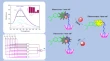
					<p>With a wide optical adsorption range and high absorption intensity, the SiNWs are expected to be potential in the photocatalytic field. A series of experiments for the photodegradation of RhB under the illumination of a 400-mW/cm<sup>2</sup> xenon lamp were carried out in order to evaluate the photocatalytic activity of SiNWs (as shown in Figure 
						<figr fid="F6">6</figr>).</p>
					<fig id="F6"><title><p>Figure 6</p></title><caption><p>UV&#8211;vis absorption spectra of RhB solution and <it>C</it>-<it>t</it> curves of SiNWs</p></caption><text>
   <p><b>UV</b>&#8211;<b>vis absorption spectra of RhB solution and </b><b><it>C</it></b>-<b><it>t </it></b><b>curves of SiNWs. </b>(<b>a</b>-<b>c</b>) UV&#8211;vis absorption spectra of RhB solution decomposed by SiNWs with different H<sub>2</sub>O<sub>2</sub> contents under Xe arc lamp irradiation: (<b>a</b>) 10%, (<b>b</b>) 20%, (<b>c</b>) 30%. (<b>d</b>) <it>C</it>-<it>t</it> curves of the three kinds of SiNWs.</p>
</text><graphic file="1556-276X-7-663-6"/></fig>
					<p>As shown in Figure 
						<figr fid="F6">6a</figr>,b,c, the typical absorption peak of RhB after degradation by 10%, 20%, and 30% SiNWs, respectively, was decreased with the extension of the irradiation time, especially in the first 1 h which may have resulted from the adsorption effect. As shown in Figure 
						<figr fid="F6">6d</figr>, the degradation rate of RhB reached to about 30%, 35%, and 20% for 10%, 20%, and 30% SiNWs, respectively, after 5 h of irradiation. The results clearly demonstrate that the silicon nanowires can function as effective photocatalysts with light irradiation and the 20% SiNWs exhibit the highest photocatalytic decomposition efficiency, while the 30% SiNWs with a chaotic porous structure was the worst. The enhanced catalytic activity of the 20% SiNWs could be attributed to their morphology characterization which possesses an appropriate nanowire density to optimize the effect of Si content and contact area of the photocatalyst and RhB.</p>
				</sec>
			</sec>
			<sec>
				<st>
					<p>Formation mechanism of SiNW arrays</p>
				</st>
				<p>In brief, the metal-assisted chemical etching method to prepare silicon nanowires is a process in which silicon is oxidized into SiO<sub>2</sub> using metal nanoparticles (such as Au, Ag, Fe, etc.) as catalysts and H<sub>2</sub>O<sub>2</sub> as oxidant and then etched using HF solution.</p>
				<p>Metal-assisted chemical etching to prepare silicon nanowires can be divided into two processes (taking Ag as an example):</p>
				<p indent="1">1. As shown in Figure 
					<figr fid="F7">7a</figr>, when the silicon wafer is immersed into AgNO<sub>3</sub>/HF mixture solution, silver ions in the vicinity of the silicon surface capture electrons from silicon and deposit on the silicon substrate surface in the form of metallic silver nuclei; at the same time, the silicon around the silver nuclei is oxidized to SiO<sub>2</sub>. The process is the same as the mechanism of the deposition of copper nanoparticles on silicon substrate surface 
					<abbrgrp>
						<abbr bid="B36">36</abbr>
					</abbrgrp>, which is the replacement reaction, and can be divided into two synchronous reaction steps (the cathode reaction and the anode reaction):</p>
				<fig id="F7"><title><p>Figure 7</p></title><caption><p>Mechanism diagram of Ag deposition on the Si surface in HF/AgNO<sub>3</sub> solution</p></caption><text>
   <p><b>Mechanism diagram of Ag deposition on the Si surface in HF</b>/<b>AgNO</b><sub><b>3 </b></sub><b>solution.</b> (<b>a</b>) Formation of Ag nucleation. (<b>b</b>) Ag particle growth and Si substrate oxidation. (<b>c</b>) Ag particles trapped in the pits formed by the etching of SiO<sub>2</sub> around it by HF.</p>
</text><graphic file="1556-276X-7-663-7"/></fig>
				<p indent="2">a. Cathode reaction:</p>
				<p>Ag<sup>+</sup> + e<sup>&#8722;</sup>&#8201;=&#8201;Ag<it>E</it>
					<sup>
						<it>&#952;</it>
					</sup>&#8201;=&#8201;0.79 V</p>
				<p indent="2">b. Anode reaction:</p>
				<p>Si&#8201;+&#8201;2H<sub>2</sub>O&#8201;=&#8201;SiO<sub>2</sub>&#8201;+&#8201;4H<sup>+</sup> + 4e<sup>&#8722;</sup>
					<it>E</it>
					<sup>
						<it>&#952;</it>
					</sup>&#8201;=&#8201;0.91 V</p>
				<p>SiO<sub>2</sub>&#8201;+&#8201;6HF&#8201;=&#8201;SiF<sub>6</sub>
					<sup>2&#8722;</sup>&#8201;+&#8201;2H<sub>2</sub>O&#8201;+&#8201;2H<sup>+</sup>
				</p>
				<p indent="2">c. Overall reaction:</p>
				<p>Si&#8201;+&#8201;6HF&#8201;+&#8201;4Ag<sup>+</sup>&#8201;=&#8201;4Ag&#8201;+&#8201;SiF<sub>6</sub>
					<sup>2&#8722;</sup>&#8201;+&#8201;6H<sup>+</sup>
				</p>
				<p>The silver nuclei attached to the Si substrate have higher electronic activity than silicon atoms and constantly obtain electrons from silicon atoms, which makes the cathode reaction to occur constantly and results in the silver nuclei gradually growing up to form silver nanoparticles (as shown in Figure 
					<figr fid="F7">7b</figr>). At the same time, the silicon atom around the silver nanoparticles is oxidized to SiO<sub>2</sub> and dissolved by HF in the form of SiF<sub>6</sub>
					<sup>2&#8722;</sup>, leading to the Ag nanoparticles down into the wafer (Figure 
					<figr fid="F7">7c</figr>).</p>
				<p indent="1">2. As shown in Figure 
					<figr fid="F8">8a</figr>, when the silicon substrate deposited with silver nanoparticles is immersed in HF-H<sub>2</sub>O<sub>2</sub> etching solution, SiO<sub>2</sub> is continuously formed from the silicon contacted with silver nanoparticles with H<sub>2</sub>O<sub>2</sub> as hole donor and oxidant and dissolved by HF, leading to the sinking of the silver grains. With the silicon around the silver nanoparticles constantly oxidized and dissolved, the silicon substrate is etched to form silicon nanowires (Figure 
					<figr fid="F8">8b</figr>):</p>
				<fig id="F8"><title><p>Figure 8</p></title><caption><p>Schematic diagram of Ag nanoparticle-assisted etching with the increase of H<sub>2</sub>O<sub>2</sub> concentration</p></caption><text>
   <p><b>Schematic diagram of Ag nanoparticle</b>-<b>assisted etching with the increase of H</b><sub><b>2</b></sub><b>O</b><sub><b>2 </b></sub><b>concentration: (a, b) 10%, (c, d) 20%, and (e, f) 30%.</b></p>
</text><graphic file="1556-276X-7-663-8"/></fig>
				<p indent="2">a. Cathode reaction:</p>
				<p>H<sub>2</sub>O<sub>2</sub>&#8201;+&#8201;2H<sup>+</sup>&#8201;&#8594;&#8201;2H<sub>2</sub>O&#8201;+&#8201;2 h<sup>+</sup>
					<it>E</it>
					<sup>
						<it>&#952;</it>
					</sup>&#8201;=&#8201;1.76 V</p>
				<p indent="2">b. Anode reaction:</p>
				<p>Si&#8201;+&#8201;6HF&#8201;+&#8201;nh<sup>+</sup>&#8201;&#8594;&#8201;H<sub>2</sub>SiF<sub>6</sub>&#8201;+&#8201;nH<sup>+</sup> + [n / 2]H<sub>2</sub>
				</p>
				<p indent="2">c. Overall reaction:</p>
				<p>Si&#8201;+&#8201;6HF&#8201;+&#8201;n / 2H<sub>2</sub>O<sub>2</sub>&#8201;&#8594;&#8201;H<sub>2</sub>SiF<sub>6</sub>&#8201;+&#8201;nH<sub>2</sub>O&#8201;+&#8201;[2&#8201;&#8722;&#8201;n / 2]H<sub>2</sub>
				</p>
				<p>In the process, AgNO<sub>3</sub> plays an important role in forming silver grains as a catalyst to promote the etching reaction. Previous research 
					<abbrgrp>
						<abbr bid="B37">37</abbr>
					</abbrgrp> shows that in metal auxiliary etching, the formation of vertical nanowires is relative to etching limitation around silver nanoparticles. Silver nanoparticles on silicon surface could catalyze the etching reaction around and below the silicon substrate to form pits and then sink into the pits as a result of gravity, so the etching reaction is along the vertical direction.</p>
				<p>With the increase of H<sub>2</sub>O<sub>2</sub> concentration which acts as hole donor and oxidant in the etching process, the oxidation speed of the silicon around the Ag nanoparticles increases, resulting in the increase of the horizontal etching speed of the silicon. When the H<sub>2</sub>O<sub>2</sub> concentration reaches 20% in the etching solution, as shown in Figure 
					<figr fid="F8">8c</figr>, more silicon around Ag nanoparticles will be oxidated into SiO<sub>2</sub> and then dissolved by HF, leading to an increased horizontal etching speed, which results in the 20% SiNWs possessing a diffusion configuration and low nanowire density with the nanowires space enlarged (Figure 
					<figr fid="F8">8d</figr>). When the concentration of H<sub>2</sub>O<sub>2</sub> is further increased to 30%, the horizontal etching speed increases in a higher degree and overcomes the Ag nanoparticle gravity to shift its position, deviating from the vertical direction (Figure 
					<figr fid="F8">8e</figr>). Finally, the prepared SiNWs do not present an expected morphology of silicon nanowire arrays but a chaotic porous structure on the silicon substrate (Figure 
					<figr fid="F8">8f</figr>).</p>
			</sec>
		</sec>
		<sec>
			<st>
				<p>Conclusions</p>
			</st>
			<p>SiNWs have been prepared successfully through a simple, convenient, and controllable metal-assisted chemical etching method. The formation mechanisms, electrical properties, and optical properties as well as photocatalytic performances have also been studied. The photoelectrochemical results show that the formation of the Si nanowire structure greatly improved the photoelectric performances. By changing the H<sub>2</sub>O<sub>2</sub> concentration in the etching solution, we get 10%, 20%, and 30% SiNWs with different morphologies of high-density nanowire arrays, low-density nanowire arrays, and a chaotic porous nanostructure, respectively. The photocatalytic research shows that 20% SiNWs exhibit an enhanced photocatalytic activity than 10% and 30% SiNWs, which could be ascribed to the appropriate nanowire density with the effect of Si content and contact area of photocatalyst and RhB optimized.</p>
		</sec>
		<sec>
			<st>
				<p>Competing interests</p>
			</st>
			<p>The authors declare that they have no competing interests.</p>
		</sec>
		<sec>
			<st>
				<p>Authors&#8217; contributions</p>
			</st>
			<p>YL carried out the preparation and main characterization of the SiNWs, participated in the sequence alignment, and drafted the manuscript. GJ carried out the performance test and participated in its design and coordination. JW participated in the data analysis and English description modification. XL participated in the UV&#8211;vis spectra testing and analysis. ZZ participated in the formation mechanism analysis of SiNWs. YS participated in the design of the study. All authors read and approved the final manuscript.</p>
		</sec>
	</bdy>
	<bm>
		<ack>
			<sec>
				<st>
					<p>Acknowledgments</p>
				</st>
				<p>The work is financially supported by the National Natural Science Foundation of China (nos. 51172109 and 61106011), the Jiangsu Province Natural Science Foundation (no. BK2010497), the Funding of Jiangsu Innovation Program for Graduate Education (no. CXLX12_0148), and the Fundamental Research Funds for the Central Universities.</p>
			</sec>
		</ack>
		<refgrp><bibl id="B1"><title><p>Hierarchical mesoporous phosphorus and nitrogen doped titania materials: synthesis, characterization and visible-light photocatalytic activity</p></title><aug><au><snm>Shao</snm><fnm>GS</fnm></au><au><snm>Wang</snm><fnm>FY</fnm></au><au><snm>Ren</snm><fnm>TZ</fnm></au><au><snm>Liu</snm><fnm>YP</fnm></au><au><snm>Yuan</snm><fnm>ZY</fnm></au></aug><source>Appl Catal B</source><pubdate>2009</pubdate><volume>92</volume><fpage>61</fpage><lpage>67</lpage><xrefbib><pubid idtype="doi">10.1016/j.apcatb.2009.07.024</pubid></xrefbib></bibl><bibl id="B2"><title><p>Synthesis and characterization of carbon-modified titania photocatalysts with a hierarchical meso-/macroporous structure</p></title><aug><au><snm>Shao</snm><fnm>GS</fnm></au><au><snm>Liu</snm><fnm>L</fnm></au><au><snm>Ma</snm><fnm>TY</fnm></au><au><snm>Wang</snm><fnm>FY</fnm></au><au><snm>Ren</snm><fnm>TZ</fnm></au><au><snm>Yuan</snm><fnm>ZY</fnm></au></aug><source>Chem Eng J</source><pubdate>2010</pubdate><volume>160</volume><fpage>370</fpage><lpage>377</lpage><xrefbib><pubid idtype="doi">10.1016/j.cej.2010.03.011</pubid></xrefbib></bibl><bibl id="B3"><title><p>Solar photocatalytic degradation of resorcinol a model endocrine disrupter in water using zinc oxide</p></title><aug><au><snm>Pardeshi</snm><fnm>SK</fnm></au><au><snm>Patil</snm><fnm>AB</fnm></au></aug><source>J Hazard Mater</source><pubdate>2009</pubdate><volume>163</volume><fpage>403</fpage><lpage>407</lpage><xrefbib><pubidlist><pubid idtype="doi">10.1016/j.jhazmat.2008.06.111</pubid><pubid idtype="pmpid" link="fulltext">18715714</pubid></pubidlist></xrefbib></bibl><bibl id="B4"><title><p>Binding characteristics of CoPc/SnO2 by in-situ process and photocatalytic activity under visible light irradiation</p></title><aug><au><snm>Pan</snm><fnm>HB</fnm></au><au><snm>Wang</snm><fnm>F</fnm></au><au><snm>Huang</snm><fnm>JL</fnm></au><au><snm>Chen</snm><fnm>NS</fnm></au></aug><source>Acta Phys-Chim Sin</source><pubdate>2008</pubdate><volume>24</volume><fpage>992</fpage><lpage>996</lpage><xrefbib><pubid idtype="doi">10.1016/S1872-1508(08)60045-5</pubid></xrefbib></bibl><bibl id="B5"><title><p>The TiO2 nanoparticle effect on the performance of a conducting polymer Schottky diode</p></title><aug><au><snm>Yoo</snm><fnm>KH</fnm></au><au><snm>Kang</snm><fnm>KS</fnm></au><au><snm>Chen</snm><fnm>Y</fnm></au><au><snm>Han</snm><fnm>KJ</fnm></au><au><snm>Kim</snm><fnm>J</fnm></au></aug><source>Nanotechnology</source><pubdate>2008</pubdate><volume>19</volume><fpage>505202</fpage><xrefbib><pubidlist><pubid idtype="doi">10.1088/0957-4484/19/50/505202</pubid><pubid idtype="pmpid" link="fulltext">19942763</pubid></pubidlist></xrefbib></bibl><bibl id="B6"><title><p>Photoelectrocatalytic materials for environmental applications</p></title><aug><au><snm>Zhang</snm><fnm>HJ</fnm></au><au><snm>Chen</snm><fnm>GH</fnm></au><au><snm>Bahneman</snm><fnm>DW</fnm></au></aug><source>J Mater Chem</source><pubdate>2009</pubdate><volume>19</volume><fpage>5089</fpage><lpage>5121</lpage><xrefbib><pubid idtype="doi">10.1039/b821991e</pubid></xrefbib></bibl><bibl id="B7"><title><p>Silicon quantum dots: a general photocatalyst for reduction, decomposition, and selective oxidation reactions</p></title><aug><au><snm>Kang</snm><fnm>ZH</fnm></au><au><snm>Tsang</snm><fnm>CHA</fnm></au><au><snm>Wong</snm><fnm>NB</fnm></au><au><snm>Zhang</snm><fnm>ZD</fnm></au><au><snm>Lee</snm><fnm>ST</fnm></au></aug><source>J Am Chem Soc</source><pubdate>2007</pubdate><volume>129</volume><fpage>12090</fpage><lpage>12091</lpage><xrefbib><pubidlist><pubid idtype="doi">10.1021/ja075184x</pubid><pubid idtype="pmpid" link="fulltext">17880086</pubid></pubidlist></xrefbib></bibl><bibl id="B8"><title><p>Water-soluble silicon quantum dots with qavelength-tunable photoluminescence</p></title><aug><au><snm>Kang</snm><fnm>ZH</fnm></au><au><snm>Liu</snm><fnm>Y</fnm></au><au><snm>Tsang</snm><fnm>CHA</fnm></au><au><snm>Ma</snm><fnm>DDD</fnm></au><au><snm>Fan</snm><fnm>X</fnm></au><au><snm>Wong</snm><fnm>NB</fnm></au><au><snm>Lee</snm><fnm>ST</fnm></au></aug><source>Adv Mater</source><pubdate>2009</pubdate><volume>21</volume><fpage>661</fpage><lpage>664</lpage><xrefbib><pubid idtype="doi">10.1002/adma.200801642</pubid></xrefbib></bibl><bibl id="B9"><title><p>Excellent photocatalysis of HF-treated silicon nanowires</p></title><aug><au><snm>Shao</snm><fnm>MW</fnm></au><au><snm>Cheng</snm><fnm>L</fnm></au><au><snm>Zhang</snm><fnm>X</fnm></au><au><snm>Ma</snm><fnm>DDD</fnm></au><au><snm>Lee</snm><fnm>ST</fnm></au></aug><source>J Am Chem Soc</source><pubdate>2009</pubdate><volume>131</volume><fpage>17738</fpage><lpage>17739</lpage><xrefbib><pubidlist><pubid idtype="doi">10.1021/ja908085c</pubid><pubid idtype="pmpid" link="fulltext">19919103</pubid></pubidlist></xrefbib></bibl><bibl id="B10"><title><p>Photocatalytic activity of silicon nanowires under UV and visible light irradiation</p></title><aug><au><snm>Megouda</snm><fnm>N</fnm></au><au><snm>Cofininier</snm><fnm>Y</fnm></au><au><snm>Szunerits</snm><fnm>S</fnm></au><au><snm>Hadjersi</snm><fnm>T</fnm></au><au><snm>ElKechai</snm><fnm>O</fnm></au><au><snm>Boukherroub</snm><fnm>R</fnm></au></aug><source>Chem Commun</source><pubdate>2011</pubdate><volume>47</volume><fpage>991</fpage><lpage>993</lpage><xrefbib><pubid idtype="doi">10.1039/c0cc04250a</pubid></xrefbib></bibl><bibl id="B11"><title><p>High-performance lithium battery anodes using silicon nanowires</p></title><aug><au><snm>Chan</snm><fnm>CK</fnm></au><au><snm>Peng</snm><fnm>H</fnm></au><au><snm>Liu</snm><fnm>G</fnm></au><au><snm>McIlwrath</snm><fnm>K</fnm></au><au><snm>Zhang</snm><fnm>XF</fnm></au><au><snm>Huggins</snm><fnm>RA</fnm></au><au><snm>Cui</snm><fnm>Y</fnm></au></aug><source>Nat Nanotechnol</source><pubdate>2008</pubdate><volume>3</volume><fpage>31</fpage><lpage>35</lpage><xrefbib><pubidlist><pubid idtype="doi">10.1038/nnano.2007.411</pubid><pubid idtype="pmpid">18654447</pubid></pubidlist></xrefbib></bibl><bibl id="B12"><title><p>Enhanced absorption and carrier collection in Si wire arrays for photovoltaic applications</p></title><aug><au><snm>Kelzenberg</snm><fnm>MD</fnm></au><au><snm>Boettcher</snm><fnm>SW</fnm></au><au><snm>Petykiewicz</snm><fnm>JA</fnm></au><au><snm>Turner-Evans</snm><fnm>DB</fnm></au><au><snm>Putnam</snm><fnm>MC</fnm></au><au><snm>Warren</snm><fnm>EL</fnm></au><au><snm>Spurgeon</snm><fnm>JM</fnm></au><au><snm>Briggs</snm><fnm>RM</fnm></au><au><snm>Lewis</snm><fnm>NS</fnm></au><au><snm>Atwater</snm><fnm>HA</fnm></au></aug><source>Nat Mater</source><pubdate>2010</pubdate><volume>9</volume><fpage>239</fpage><lpage>244</lpage><xrefbib><pubid idtype="pmpid" link="fulltext">20154692</pubid></xrefbib></bibl><bibl id="B13"><title><p>Enhanced thermoelectric performance of rough silicon nanowires</p></title><aug><au><snm>Hochbaum</snm><fnm>AI</fnm></au><au><snm>Chen</snm><fnm>R</fnm></au><au><snm>Delgado</snm><fnm>RD</fnm></au><au><snm>Liang</snm><fnm>W</fnm></au><au><snm>Garnett</snm><fnm>EC</fnm></au><au><snm>Najarian</snm><fnm>M</fnm></au><au><snm>Majumdar</snm><fnm>A</fnm></au><au><snm>Yang</snm><fnm>P</fnm></au></aug><source>Nature</source><pubdate>2008</pubdate><volume>451</volume><fpage>163</fpage><lpage>167</lpage><xrefbib><pubidlist><pubid idtype="doi">10.1038/nature06381</pubid><pubid idtype="pmpid" link="fulltext">18185582</pubid></pubidlist></xrefbib></bibl><bibl id="B14"><title><p>Single crystalline mesoporous silicon nanowires</p></title><aug><au><snm>Hochbaum</snm><fnm>AI</fnm></au><au><snm>Gargas</snm><fnm>D</fnm></au><au><snm>Hwang</snm><fnm>YJ</fnm></au><au><snm>Yang</snm><fnm>P</fnm></au></aug><source>Nan Lett</source><pubdate>2009</pubdate><volume>9</volume><fpage>3550</fpage><lpage>3554</lpage><xrefbib><pubid idtype="doi">10.1021/nl9017594</pubid></xrefbib></bibl><bibl id="B15"><title><p>Si nanowire arrays as anodes in Li ion batteries</p></title><aug><au><snm>F&#246;ll</snm><fnm>H</fnm></au><au><snm>Hartz</snm><fnm>H</fnm></au><au><snm>Ossei-Wusu</snm><fnm>E</fnm></au><au><snm>Carstensen</snm><fnm>J</fnm></au><au><snm>Rienmenschneider</snm><fnm>O</fnm></au></aug><source>Phys Status Solidi RRL</source><pubdate>2010</pubdate><volume>4</volume><fpage>4</fpage><lpage>6</lpage><xrefbib><pubid idtype="doi">10.1002/pssr.200903344</pubid></xrefbib></bibl><bibl id="B16"><title><p>The influence of substrate orientation on the density of silicon nanowires grown on multicrystalline and single crystal substrates by electron cyclotron resonance chemical vapour deposition</p></title><aug><au><snm>Ball</snm><fnm>J</fnm></au><au><snm>Reehal</snm><fnm>HS</fnm></au></aug><source>Thin Solid Films</source><pubdate>2012</pubdate><volume>520</volume><fpage>2467</fpage><lpage>2473</lpage><xrefbib><pubid idtype="doi">10.1016/j.tsf.2011.10.019</pubid></xrefbib></bibl><bibl id="B17"><title><p>Silicon nanowires for catalysts and sensors</p></title><aug><au><snm>Liu</snm><fnm>L</fnm></au><au><snm>Shao</snm><fnm>MW</fnm></au><au><snm>Lee</snm><fnm>ST</fnm></au></aug><source>J Nanoeng Nanomanuf</source><pubdate>2012</pubdate><volume>2</volume><fpage>102</fpage><lpage>111</lpage></bibl><bibl id="B18"><title><p>A laser ablation method for the synthesis of crystalline semiconductor nanowires</p></title><aug><au><snm>Morales</snm><fnm>AM</fnm></au><au><snm>Lieber</snm><fnm>CM</fnm></au></aug><source>Science</source><pubdate>1998</pubdate><volume>279</volume><fpage>208</fpage><lpage>211</lpage><xrefbib><pubidlist><pubid idtype="doi">10.1126/science.279.5348.208</pubid><pubid idtype="pmpid" link="fulltext">9422689</pubid></pubidlist></xrefbib></bibl><bibl id="B19"><title><p>Control of thickness and orientation of solution-grown silicon nanowires</p></title><aug><au><snm>Holmes</snm><fnm>JD</fnm></au><au><snm>Johnston</snm><fnm>KP</fnm></au><au><snm>Doty</snm><fnm>RC</fnm></au><au><snm>Korgel</snm><fnm>BA</fnm></au></aug><source>Science</source><pubdate>2000</pubdate><volume>287</volume><fpage>1471</fpage><lpage>1473</lpage><xrefbib><pubidlist><pubid idtype="doi">10.1126/science.287.5457.1471</pubid><pubid idtype="pmpid" link="fulltext">10688792</pubid></pubidlist></xrefbib></bibl><bibl id="B20"><title><p>Curved silicon nanowires with ribbon-like cross sections by metal-assisted chemical etching</p></title><aug><au><snm>Kim</snm><fnm>J</fnm></au><au><snm>Kim</snm><fnm>YH</fnm></au><au><snm>Choi</snm><fnm>SH</fnm></au><au><snm>Lee</snm><fnm>W</fnm></au></aug><source>ACS Nano</source><pubdate>2011</pubdate><volume>5</volume><fpage>5242</fpage><lpage>5248</lpage><xrefbib><pubidlist><pubid idtype="doi">10.1021/nn2014358</pubid><pubid idtype="pmpid" link="fulltext">21557544</pubid></pubidlist></xrefbib></bibl><bibl id="B21"><title><p>Electrically conductive and optically active porous silicon nanowires</p></title><aug><au><snm>Qu</snm><fnm>YQ</fnm></au><au><snm>Liao</snm><fnm>L</fnm></au><au><snm>Li</snm><fnm>YJ</fnm></au><au><snm>Zhang</snm><fnm>H</fnm></au><au><snm>Huang</snm><fnm>Y</fnm></au><au><snm>Duan</snm><fnm>XF</fnm></au></aug><source>Nano Lett</source><pubdate>2009</pubdate><volume>9</volume><fpage>4539</fpage><lpage>4543</lpage><xrefbib><pubidlist><pubid idtype="doi">10.1021/nl903030h</pubid><pubid idtype="pmcid">2810957</pubid><pubid idtype="pmpid" link="fulltext">19807130</pubid></pubidlist></xrefbib></bibl><bibl id="B22"><title><p>Porous silicon nanowires</p></title><aug><au><snm>Qu</snm><fnm>YQ</fnm></au><au><snm>Zhou</snm><fnm>HL</fnm></au><au><snm>Duan</snm><fnm>XF</fnm></au></aug><source>Nanoscale</source><pubdate>2011</pubdate><volume>3</volume><fpage>4060</fpage><lpage>4068</lpage><xrefbib><pubidlist><pubid idtype="doi">10.1039/c1nr10668f</pubid><pubid idtype="pmcid">3236246</pubid><pubid idtype="pmpid" link="fulltext">21869999</pubid></pubidlist></xrefbib></bibl><bibl id="B23"><title><p>Metal-assisted chemical etching of silicon: a review</p></title><aug><au><snm>Huang</snm><fnm>Z</fnm></au><au><snm>Geyer</snm><fnm>N</fnm></au><au><snm>Werner</snm><fnm>P</fnm></au><au><snm>de Boor</snm><fnm>J</fnm></au><au><snm>G&#246;sele</snm><fnm>U</fnm></au></aug><source>Adv Mater</source><pubdate>2011</pubdate><volume>23</volume><fpage>285</fpage><lpage>308</lpage><xrefbib><pubidlist><pubid idtype="doi">10.1002/adma.201001784</pubid><pubid idtype="pmpid" link="fulltext">20859941</pubid></pubidlist></xrefbib></bibl><bibl id="B24"><title><p>Fabrication and optical properties of silicon nanowires arrays by electroless Ag-catalyzed etching</p></title><aug><au><snm>Tang</snm><fnm>J</fnm></au><au><snm>Shi</snm><fnm>JW</fnm></au><au><snm>Zhou</snm><fnm>LL</fnm></au><au><snm>Ma</snm><fnm>ZQ</fnm></au></aug><source>Nano-Micro Lett</source><pubdate>2011</pubdate><volume>3</volume><issue>2</issue><fpage>129</fpage><lpage>134</lpage></bibl><bibl id="B25"><title><p>Metal assisted chemical etching for high aspect ratio nanostructures: a review of characteristics and applications in photovoltaics</p></title><aug><au><snm>Li</snm><fnm>X</fnm></au></aug><source>Curr Opin in Solid State Mater Sci</source><pubdate>2012</pubdate><volume>16</volume><fpage>71</fpage><lpage>81</lpage><xrefbib><pubid idtype="doi">10.1016/j.cossms.2011.11.002</pubid></xrefbib></bibl><bibl id="B26"><title><p>Sub-100 nm Si nanowire and nano-sheet array formation by MacEtch using a non-lithographic InAs nanowire mask</p></title><aug><au><snm>Shin</snm><fnm>JC</fnm></au><au><snm>Zhang</snm><fnm>C</fnm></au><au><snm>Li</snm><fnm>XL</fnm></au></aug><source>Nanotechnology</source><pubdate>2012</pubdate><volume>23</volume><fpage>305305</fpage><lpage>305310</lpage><xrefbib><pubidlist><pubid idtype="doi">10.1088/0957-4484/23/30/305305</pubid><pubid idtype="pmpid" link="fulltext">22781145</pubid></pubidlist></xrefbib></bibl><bibl id="B27"><title><p>Experimental study of design parameters in silicon micropillar array solar cells produced by soft lithography and metal-assisted chemical etching</p></title><aug><au><snm>Shin</snm><fnm>JC</fnm></au><au><snm>Chanda</snm><fnm>D</fnm></au><au><snm>Chern</snm><fnm>W</fnm></au><au><snm>Yu</snm><fnm>KJ</fnm></au><au><snm>Rogers</snm><fnm>JA</fnm></au><au><snm>Li</snm><fnm>X</fnm></au></aug><source>IEEE J Photovoltaics</source><pubdate>2012</pubdate><volume>2</volume><fpage>129</fpage><lpage>133</lpage></bibl><bibl id="B28"><title><p>Enhancement of light extraction efficiency of InGaN quantum wells light emitting diodes using SiO2/polystyrene microlens arrays</p></title><aug><au><snm>Ee</snm><fnm>YK</fnm></au><au><snm>Arif</snm><fnm>RA</fnm></au><au><snm>Tansu</snm><fnm>N</fnm></au><au><snm>Kumnorkaew</snm><fnm>P</fnm></au><au><snm>Gilchrist</snm><fnm>JF</fnm></au></aug><source>Appl Phys Lett</source><pubdate>2007</pubdate><volume>91</volume><fpage>221107</fpage><xrefbib><pubid idtype="doi">10.1063/1.2816891</pubid></xrefbib></bibl><bibl id="B29"><title><p>Investigation of the deposition of microsphere monolayers for fabrication of microlens arrays</p></title><aug><au><snm>Kumnorkaew</snm><fnm>P</fnm></au><au><snm>Ee</snm><fnm>YK</fnm></au><au><snm>Tansu</snm><fnm>N</fnm></au><au><snm>Gilchrist</snm><fnm>JF</fnm></au></aug><source>Langmuir</source><pubdate>2008</pubdate><volume>24</volume><fpage>12150</fpage><lpage>12157</lpage><xrefbib><pubidlist><pubid idtype="doi">10.1021/la801100g</pubid><pubid idtype="pmpid" link="fulltext">18533633</pubid></pubidlist></xrefbib></bibl><bibl id="B30"><title><p>Light extraction efficiency and radiation patterns of III-nitride light-emitting diodes with colloidal microlens arrays with various aspect ratios</p></title><aug><au><snm>Li</snm><fnm>XH</fnm></au><au><snm>Song</snm><fnm>R</fnm></au><au><snm>Ee</snm><fnm>YK</fnm></au><au><snm>Kumnorkaew</snm><fnm>P</fnm></au><au><snm>Gilchrist</snm><fnm>JF</fnm></au><au><snm>Tansu</snm><fnm>N</fnm></au></aug><source>IEEE Photonics Journal</source><pubdate>2011</pubdate><volume>3</volume><fpage>489</fpage><lpage>499</lpage></bibl><bibl id="B31"><title><p>Light extraction of organic light emitting diodes by defective hexagonal-close-packed array</p></title><aug><au><snm>Koo</snm><fnm>WH</fnm></au><au><snm>Youn</snm><fnm>W</fnm></au><au><snm>Zhu</snm><fnm>P</fnm></au><au><snm>Li</snm><fnm>XH</fnm></au><au><snm>Tansu</snm><fnm>N</fnm></au><au><snm>So</snm><fnm>F</fnm></au></aug><source>Adv Funct Mater</source><pubdate>2012</pubdate><volume>22</volume><fpage>3454</fpage><lpage>3459</lpage><xrefbib><pubid idtype="doi">10.1002/adfm.201200876</pubid></xrefbib></bibl><bibl id="B32"><title><p>Metalorganic vapor phase epitaxy of III-nitride light-emitting diodes on nanopatterned AGOG sapphire substrate by abbreviated growth mode</p></title><aug><au><snm>Ee</snm><fnm>YK</fnm></au><au><snm>Biser</snm><fnm>JM</fnm></au><au><snm>Cao</snm><fnm>WJ</fnm></au><au><snm>Chan</snm><fnm>HM</fnm></au><au><snm>Vinci</snm><fnm>RP</fnm></au><au><snm>Tansu</snm><fnm>N</fnm></au></aug><source>IEEE J Sel Top Quantum Electron</source><pubdate>2009</pubdate><volume>15</volume><fpage>1066</fpage><lpage>1072</lpage></bibl><bibl id="B33"><title><p>Light extraction efficiency enhancement of InGaN quantum wells light-emitting diodes with polydimethylsiloxane concave microstructures</p></title><aug><au><snm>Ee</snm><fnm>YK</fnm></au><au><snm>Kumnorkaew</snm><fnm>P</fnm></au><au><snm>Arif</snm><fnm>RA</fnm></au><au><snm>Tong</snm><fnm>H</fnm></au><au><snm>Gilchrist</snm><fnm>JF</fnm></au><au><snm>Tansu</snm><fnm>N</fnm></au></aug><source>Opt Express</source><pubdate>2009</pubdate><volume>17</volume><fpage>13747</fpage><lpage>13757</lpage><xrefbib><pubidlist><pubid idtype="doi">10.1364/OE.17.013747</pubid><pubid idtype="pmpid" link="fulltext">19654782</pubid></pubidlist></xrefbib></bibl><bibl id="B34"><title><p>Selective area epitaxy of ultra-high density InGaN quantum dots by diblock copolymer lithography</p></title><aug><au><snm>Liu</snm><fnm>G</fnm></au><au><snm>Liu</snm><fnm>GY</fnm></au><au><snm>Zhao</snm><fnm>HP</fnm></au><au><snm>Zhang</snm><fnm>J</fnm></au><au><snm>Park</snm><fnm>JH</fnm></au><au><snm>Mawst</snm><fnm>LJ</fnm></au><au><snm>Tansu</snm><fnm>N</fnm></au></aug><source>Nanoscale Res Lett</source><pubdate>2011</pubdate><volume>6</volume><fpage>342</fpage><lpage>352</lpage><xrefbib><pubidlist><pubid idtype="doi">10.1186/1556-276X-6-342</pubid><pubid idtype="pmcid">3211431</pubid><pubid idtype="pmpid" link="fulltext">21711862</pubid></pubidlist></xrefbib></bibl><bibl id="B35"><title><p>Nanofabrication of III&#8211;V semiconductors employing diblock copolymer lithography</p></title><aug><au><snm>Kuech</snm><fnm>TF</fnm></au><au><snm>Mawst</snm><fnm>LJ</fnm></au></aug><source>J Phys D Appl Phys</source><pubdate>2010</pubdate><volume>43</volume><fpage>183001</fpage><xrefbib><pubid idtype="doi">10.1088/0022-3727/43/18/183001</pubid></xrefbib></bibl><bibl id="B36"><title><p>Temperature-controlled growth of silicon-based nanostructures by thermal evaporation of SiO powders</p></title><aug><au><snm>Pan</snm><fnm>ZW</fnm></au><au><snm>Dai</snm><fnm>ZR</fnm></au><au><snm>Xu</snm><fnm>L</fnm></au><au><snm>Lee</snm><fnm>ST</fnm></au><au><snm>Wang</snm><fnm>ZL</fnm></au></aug><source>J Phys Chem B</source><pubdate>2001</pubdate><volume>105</volume><fpage>2507</fpage><lpage>2514</lpage><xrefbib><pubid idtype="doi">10.1021/jp004253q</pubid></xrefbib></bibl><bibl id="B37"><title><p>Spectroscopic studies on electroless deposition of copper on a hydrogen-terminated Si(111) surface in fluoride solutions</p></title><aug><au><snm>Ye</snm><fnm>S</fnm></au><au><snm>Ichihara</snm><fnm>T</fnm></au><au><snm>Uosaki</snm><fnm>K</fnm></au></aug><source>J Electrochem Soc</source><pubdate>2001</pubdate><volume>148</volume><fpage>C421</fpage><lpage>426</lpage><xrefbib><pubid idtype="doi">10.1149/1.1370964</pubid></xrefbib></bibl></refgrp>
	</bm>
</art>



