<?xml version='1.0'?>
<!DOCTYPE art SYSTEM 'http://www.biomedcentral.com/xml/article.dtd'>
<art>
	<ui>1556-276X-7-495</ui>
	<ji>1556-276X</ji>
	<fm>
		<dochead>Nano Commentary</dochead>
		<bibl>
			<title>
				<p>Characterization of hybrid cobalt-porous silicon systems: protective effect of the Matrix in the metal oxidation</p>
			</title>
			<aug>
				<au id="A1"><snm>Mu&#241;oz-Noval</snm><fnm>&#193;lvaro</fnm><insr iid="I1"/><insr iid="I2"/><email>alvaro.munnoz@uam.es</email></au>
				<au id="A2"><snm>Gallach</snm><fnm>Dar&#237;o</fnm><insr iid="I1"/><email>dario.gallach@uam.es</email></au>
				<au id="A3"><snm>Garc&#237;a</snm><mnm>&#193;ngel</mnm><fnm>Miguel</fnm><insr iid="I2"/><insr iid="I3"/><email>magarcia@icv.csic.es</email></au>
				<au id="A4"><snm>Ferro-Llanos</snm><fnm>Vicente</fnm><insr iid="I4"/><email>vicente.ferro@ctb.upm.es</email></au>
				<au id="A5"><snm>Herrero</snm><fnm>Pilar</fnm><insr iid="I5"/><email>pherrero@icmm.csic.es</email></au>
				<au id="A6"><snm>Fukami</snm><fnm>Kazuhiro</fnm><insr iid="I6"/><email>k-fukami@iae.kyoto-u.ac.jp</email></au>
				<au id="A7"><snm>Ogata</snm><mi>H</mi><fnm>Yukio</fnm><insr iid="I6"/><email>y-ogata@iae.kyoto-u.ac.jp</email></au>
				<au id="A8"><snm>Torres-Costa</snm><fnm>Vicente</fnm><insr iid="I1"/><email>vicente.torres@uam.es</email></au>
				<au id="A9" ca="yes"><snm>Mart&#237;n-Palma</snm><mi>J</mi><fnm>Ra&#250;l</fnm><insr iid="I1"/><email>rauljose.martin@uam.es</email></au>
				<au id="A10"><snm>Ciment-Font</snm><fnm>Aurelio</fnm><insr iid="I1"/><email>acf@uam.es</email></au>
				<au id="A11"><snm>Manso-Silv&#225;n</snm><fnm>Miguel</fnm><insr iid="I1"/><email>miguel.manso@uam.es</email></au>
			</aug>
			<insg>
				<ins id="I1"><p>Departamento de F&#237;sica Aplicada, Universidad Aut&#243;noma de Madrid, Cantoblanco, Madrid 28049, Spain</p></ins>
				<ins id="I2"><p>Departamento de Electrocer&#225;mica, Instituto de Cer&#225;mica y Vidrio (ICV-CSIC), Cantoblanco, Madrid, 28049, Spain</p></ins>
				<ins id="I3"><p>IMDEA Nanociencia, Cantoblanco, Madrid, 28049, Spain</p></ins>
				<ins id="I4"><p>GTB, ETSIT Telecomunicaciones, Universidad Polit&#233;cnica de Madrid, Madrid, 28040, Spain</p></ins>
				<ins id="I5"><p>Instituto de Ciencia de Materiales de Madrid (ICMM-CSIC), Cantoblanco, Madrid, 28049, Spain</p></ins>
				<ins id="I6"><p>Institute of Advanced Energy, Kyoto University, Uji, Kyoto, 611-0011, Japan</p></ins>
			</insg>
			<source>Nanoscale Research Letters</source>
			<section><title><p>SI: Porous Semiconductors - Science and Technology 2012 (PSST 2012)</p></title></section><issn>1556-276X</issn>
			<pubdate>2012</pubdate>
			<volume>7</volume>
			<issue>1</issue>
			<fpage>495</fpage>
			<url>http://www.nanoscalereslett.com/content/7/1/495</url>
			<xrefbib><pubidlist><pubid idtype="doi">10.1186/1556-276X-7-495</pubid><pubid idtype="pmpid">22938050</pubid></pubidlist></xrefbib>
		</bibl>
		<history><rec><date><day>14</day><month>5</month><year>2012</year></date></rec><acc><date><day>14</day><month>8</month><year>2012</year></date></acc><pub><date><day>2</day><month>9</month><year>2012</year></date></pub></history>
		<cpyrt><year>2012</year><collab>Mu&#241;oz-Noval et al.; licensee Springer.</collab><note>This is an Open Access article distributed under the terms of the Creative Commons Attribution License (
				<url>http://creativecommons.org/licenses/by/2.0</url>), which permits unrestricted use, distribution, and reproduction in any medium, provided the original work is properly cited.</note></cpyrt>
		<kwdg>
			<kwd>Porous silicon</kwd>
			<kwd>Hybrid materials</kwd>
			<kwd>Metal electroinfiltration</kwd>
			<kwd>Transmission electron microscopy</kwd>
		</kwdg>
		<abs>
			<sec>
				<st>
					<p>Abstract</p>
				</st>
				<p>In the present work, the characterization of cobalt-porous silicon (Co-PSi) hybrid systems is performed by a combination of magnetic, spectroscopic, and structural techniques. The Co-PSi structures are composed by a columnar matrix of PSi with Co nanoparticles embedded inside, as determined by Transmission Electron Microscopy (TEM). The oxidation state, crystalline structure, and magnetic behavior are determined by X-Ray Absorption Spectroscopy (XAS) and Alternating Gradient Field Magnetometry (AGFM). Additionally, the Co concentration profile inside the matrix has been studied by Rutherford Backscattering Spectroscopy (RBS). It is concluded that the PSi matrix can be tailored to provide the Co nanoparticles with extra protection against oxidation.</p>
			</sec>
		</abs>
	</fm>
	<meta><classifications><classification id="PSST_2012" subtype="theme_series_title" type="BMC">Porous Semiconductors - Science and Technology 2012</classification><classification id="PSST_2012" subtype="theme_series_editor" type="BMC">Andres Cantarero</classification></classifications></meta><bdy>
		<sec>
			<st>
				<p>Background</p>
			</st>
			<p>The development of hybrid materials is a current topic of research with many potential applications in several fields, including optoelectronics, catalysis, and biomedicine. Concretely, the hybridization of semiconductors with ferromagnetic material such as cobalt, iron, and nickel gives the possibility to obtain materials that combine semiconducting and magnetic properties 
				<abbrgrp>
					<abbr bid="B1">1</abbr>
				</abbrgrp>. Moreover, the continuous progress in nanotechnology during the last decades has led to a large availability of techniques for the fabrication and characterization of nanometric structures with controlled composition and dimensions, resulting in nanostructures with very specific properties and several functionalities 
				<abbrgrp>
					<abbr bid="B2">2</abbr>
				</abbrgrp>. In fact, multifunctional metal-based nanostructures have received a great deal of attention during the past few years given their special properties and potential applications in many scientific and technologic fields, including biomedicine 
				<abbrgrp>
					<abbr bid="B3">3</abbr>
				</abbrgrp>. In this sense, the conjugation of magnetic-semiconductor hybrid nanosystems has allowed manipulation of local spin in spintronics 
				<abbrgrp>
					<abbr bid="B4">4</abbr>
					<abbr bid="B5">5</abbr>
				</abbrgrp> and the fabrication of high sensitive magnetic sensors 
				<abbrgrp>
					<abbr bid="B6">6</abbr>
				</abbrgrp>. Regarding porous semiconductors such as porous silicon (PSi), they present additional advantages including high surface area and high surface reactivity 
				<abbrgrp>
					<abbr bid="B7">7</abbr>
				</abbrgrp>.</p>
			<p>This work aims at studying the oxidation state and crystalline structure of cobalt nanoparticles (NPs) embedded into porous silicon, resulting in Co-PSi hybrid structures. Co has been infiltrated into the PSi matrix by electrochemical techniques 
				<abbrgrp>
					<abbr bid="B8">8</abbr>
				</abbrgrp>. The suitability of PSi to host Co NPs grown by electroinfiltration has been evaluated, and both the magnetic and structural properties of the hybrid structures have been studied. The role of the porous matrix protecting Co against oxidation has been evaluated by infiltrating the Co NPs into PSi layers with different morphologies. The chemical and structural states of the Co NPs have been determined by combining highly selective and sensitive characterization techniques such as X-Ray Absorption Spectroscopy-synchrotron (XAS-synchrotron) and Rutherford Backscattering (RBS).</p>
		</sec>
		<sec>
			<st>
				<p>Methods</p>
			</st>
			<sec>
				<st>
					<p>Preparation of porous silicon</p>
				</st>
				<p>Porous silicon (PSi), both as single layers and multilayers, was obtained from high conductivity (0.01-0.02 &#937;cm), p-type, silicon wafers. The anodization in 1:2 (volume) HF:ethanol solutions (from commercial HF 48% (w/v) in water, Sigma-Aldrich) was carried out in a homemade Teflon&#174; electrochemical cell, with a Pt reference electrode. The Si wafers were galvanostatically etched under illumination from a 100&#8201;W halogen lamp. Single layer PSi were obtained at 100&#8201;mA/cm<sup>2</sup> for 100&#8201;s, resulting in layers of about 10 microns. Different current densities were set for obtain different porosities from 40 to 120&#8201;mA/cm<sup>2</sup> in case of multilayer configurations (Figure&#8201;
					<figr fid="F1">1</figr>). Two different porosity gradients were chosen to electrochemically grow Co NPs into PSi: A negative gradient (more porous towards the surface) and a positive gradient (more porous towards the substrate). In both cases the current densities applied were in four steps: 20, 40, 60 and 80&#8201;mA/cm<sup>2</sup>. After etching, the Si/PSi substrates were rinsed in ethanol and dried with N<sub>2</sub>.</p>
				<fig id="F1"><title><p>Figure 1</p></title><caption><p>Scheme of the configuration of the PSi multilayers used for XAS experiments: (a) negative gradient configuration, Co-PSi-n; (b) positive gradient configuration, Co-PSi-p</p></caption><text>
   <p>
      <b>Scheme of the configuration of the PSi multilayers used for XAS experiments: (a) negative gradient configuration, Co-PSi-n; (b) positive gradient configuration, Co-PSi-p.</b>
   </p>
</text><graphic file="1556-276X-7-495-1"/></fig>
			</sec>
			<sec>
				<st>
					<p>Electroinfiltration of Co</p>
				</st>
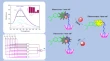
				<p>Electroinfiltration of Co nanoparticles into PSi single- and multi-layers was carried out in a electrochemical bath with a Watt&#8217;s solution at RT (CoSO<sub>4</sub>&#183;7H<sub>2</sub>O 0.2&#8201;M, CoCl<sub>2</sub> 0.05, H<sub>3</sub>BO<sub>3</sub> 0.4&#8201;M, Na-Saccharine 25&#8201;g/l H<sub>2</sub>SO<sub>4</sub> 1&#8201;mM). Boric acid was used as a buffer, to avoid pH fluctuations, sodic saccharine as crystallization catalyzer and sulfuric acid to decrease the pH of the solutions below 3. A well parameterized pulsed current process was used to allow the nucleation of metal nanoparticles into the pores of pulses of 40&#8201;mA/cm<sup>2</sup> and 10&#8201;s. An important parameter in pulsed mode is the equilibrium time or rest time, between pulses, set at 60&#8201;s; estimated by observing the dynamics of the voltage versus time curves (not shown). A overall view of the whole process of PSi single/multi layer fabrication and Co electroinfiltration is summarized in Figure&#8201;
					<figr fid="F2">2</figr>.</p>
				<fig id="F2"><title><p>Figure 2</p></title><caption><p>PSi is obtained by electrochemical anodization of highly conductive p-type Si wafers in HF:ethanol solutions (1:2)</p></caption><text>
   <p><b>PSi is obtained by electrochemical anodization of highly conductive p-type Si wafers in HF:ethanol solutions (1:2).</b> The nucleation of Co inside the matrix is achieved by electroinfiltration of Co in the porous matrix by a pulsed mode.</p>
</text><graphic file="1556-276X-7-495-2"/></fig>
			</sec>
			<sec>
				<st>
					<p>Characterization</p>
				</st>
				<p>
					<b>Field emission scanning electron microscopy (FESEM)</b> images were obtained in a XL 30S-FEG (PHILIPS). No metallization was required to observe the samples. Samples for cross section observation were prepared according to previously optimized protocols for mechanical and ion bean milling 
					<abbrgrp>
						<abbr bid="B9">9</abbr>
					</abbrgrp>. TEM/STEM characterization was carried out using a Jeol JEM 3000F with HAADF (High Angle Annular Dark Field) system included (300kV).</p>
				<sec>
					<st>
						<p>X-ray Absorption Spectroscopy (XAS)</p>
					</st>
					<p>X-Ray Absorption Near-Edge Structure (XANES) and Extended X-ray Absorption Fine Structure (EXAFS) spectroscopy measurements at the Co K-edge energy (7704.9&#8201;eV) were performed at room temperature in fluorescence mode at the BM25 Spanish CRG Beamline (SpLine) of the ESRF (European Synchrotron Radiation Facility). An INCA 13 elements X- Ray detector was used. Bulk metallic Co, plus CoO and Co<sub>3</sub>O<sub>4</sub> powders were measured as references. Data were normalized applying the same normalization parameters for all the spectra by means of Athena Software 
						<abbrgrp>
							<abbr bid="B10">10</abbr>
						</abbrgrp>.</p>
				</sec>
				<sec>
					<st>
						<p>Alternating gradient field magnetometry</p>
					</st>
					<p>Magnetic characterization was performed using a Micromag Model 2900 Alternating Gradient Magnetometer System (Princeton Measurements Corporation). Nine measurements were taken for each sample. Measurements were carried out applying a magnetic field from -100mT to 100mT, a time pass of 100&#8201;ms, and a field pass of 800&#956;T.</p>
				</sec>
				<sec>
					<st>
						<p>Rutherford backscatering spectroscopy</p>
					</st>
					<p>Micro analytical techniques were used to obtain in-depth elemental information. A Cockcroft-Walton tandem accelerator located at Centro de Micro-An&#225;lisis de Materiales (CMAM, Universidad Aut&#243;noma de Madrid, Spain) was used for Rutherford Backscattering Spectroscopy (RBS). RBS was performed with a 3.050&#8201;MeV He<sup>+</sup> beam (incidence angle was 75&#176; with respect to the surface normal). RBS was acquired by using silicon surface barrier detectors placed at scattering angle of 170&#176;. A 13&#8201;&#956;m thick mylar foil was placed in front of the detector on the forward scattering angle to stop the He forward scattered particles and filter the H recoils. All RBS experiments were performed in vacuum (pressure lower than 10E-5 mbar). All spectra were simulated using the SIMNRA code 
						<abbrgrp>
							<abbr bid="B11">11</abbr>
						</abbrgrp> to obtain the element in-depth composition.</p>
				</sec>
			</sec>
		</sec>
		<sec>
			<st>
				<p>Results and discussion</p>
			</st>
			<sec>
				<st>
					<p>PSi single layers</p>
				</st>
				<p>Preliminary structural studies of Co-PSi hybrid structures are carried out by Transmission Electron Microscopy (TEM) in a milled sample of single layer Co-PSi. As Figure&#8201;
					<figr fid="F3">3</figr> shows, Co ions infiltrate inside the PSi matrix and form spherical nanoparticles (NP) into the pores. In this case, nanoparticles of circa 5&#8201;nm are formed. Scanning TEM (STEM) images plus EDX analysis of these Systems (Figure&#8201;
					<figr fid="F3">3</figr>) allow the identification of both elements in the NP.</p>
				<fig id="F3"><title><p>Figure 3</p></title><caption><p>(a,b) <ul>TEM</ul> images of typical Co-PSi structures showing Co NPs into the PSi matrix; (c) STEM image of typical Co-PSi structures, showing the Co NPs in a brighter tone than the matrix, composed by a lighter element (Si and O)</p></caption><text>
   <p>
      <b>(a,b)</b>
      <b>
         <ul>TEM</ul>
      </b>
      <b>images of typical Co-PSi structures showing Co NPs into the PSi matrix; (c) STEM image of typical Co-PSi structures, showing the Co NPs in a brighter tone than the matrix, composed by a lighter element (Si and O).</b>
   </p>
</text><graphic file="1556-276X-7-495-3"/></fig>
				<p>Magnetic properties of single layer PSi-Co are evaluated by Alternating Gradient Field Magnetometry (AGFM). Samples electroinfiltrated at an increasing number of cycles with Co, from 5 to 20&#8201;cycles, are evaluated. Saturation magnetization values normalized to mass increase with increasing number of cycles in the studied range of cycles. Results point to the possibility of tailoring the magnetization of Co-PSi by controlling the amount of Co inside the PSi matrix (Figure&#8201;
					<figr fid="F4">4</figr>). This is achieved by setting the number of electroinfiltration pulses during the synthesis process. Coercivity magnitude of the material depends on the amount of Co in the hybrid material: less concentrated systems present lower coercivity values 
					<abbrgrp>
						<abbr bid="B4">4</abbr>
						<abbr bid="B6">6</abbr>
					</abbrgrp>; systems with higher Co concentration present higher values. This feature can be due to the appearance of inter-particle correlations inside the matrix or by the increase of the size of particles 
					<abbrgrp>
						<abbr bid="B12">12</abbr>
					</abbrgrp> favoured by an increasing density of NPs into the PSi matrix.</p>
				<fig id="F4"><title><p>Figure 4</p></title><caption><p>AGFM magnetization cycle for Co-PSi systems with increasing Co concentration inside the matrix, obtained from increasing number of electroinfiltration pulses: 5, 10 and 20</p></caption><text>
   <p><b>AGFM magnetization curve for Co-PSi systems with increasing Co concentration inside the matrix, obtained from increasing number of electroinfiltration pulses: 5, 10 and 20.</b> Demonstrating the control of the matrix filling with Co. (inset) Axis detail showing coercivity dependence of the magnetic material for increasing amount of internalized Co nanoparticles.</p>
</text><graphic file="1556-276X-7-495-4"/></fig>
			</sec>
			<sec>
				<st>
					<p>PSi multilayers</p>
				</st>
				<p>Once studied the magnetic potential of Co-PSi systems, the protective effect of the PSi matrix against the oxidation of Co is determined. Magnetic properties of Co strongly depend on the oxidation state and therefore determine the possible applications of these hybrid systems 
					<abbrgrp>
						<abbr bid="B13">13</abbr>
					</abbrgrp>. For this purpose a multilayer PSi is fabricated and infiltrated with Co. Two multilayer configurations are made, as Figure&#8201;
					<figr fid="F1">1</figr> shows, one with a negative porosity gradient (Co-PSi-n) and other with a positive one (Co-PSi-p). These systems are studied by XAS 
					<abbrgrp>
						<abbr bid="B14">14</abbr>
						<abbr bid="B15">15</abbr>
						<abbr bid="B16">16</abbr>
					</abbrgrp> (Figure&#8201;
					<figr fid="F5">5</figr>). XANES spectra (Figure&#8201;
					<figr fid="F5">5</figr>a) of both systems show clear differences in oxidation state. Co and Cobalt oxides references are obtained for comparing and adjusting the experimental spectra to known materials. From the fitting of the experimental data to references it can be observed that in Co-PSi-n systems, Co atoms are mainly in metallic state (close to 90% at.) and the remaining 10% at. is in the form Co<sub>3</sub>O<sub>4</sub>. Besides, studying Co-PSi-p systems shows Co to be composed by a mix of Co (40%at.), CoO (50%at.) and Co<sub>3</sub>O<sub>4</sub> (10%at). The EXAFS spectra of the Co-PSi show the element environment and lattice structure in the Fourier space (Figure&#8201;
					<figr fid="F5">5</figr>b). Comparing the EXAFS spectra of the Co-PSi systems with the reference it is straightforward to identify similarities of that of Co-PSi-n with the spectrum of metallic Co. The similarities are clearer if we obtain the transform the spectra to the real space by obtaining the Radial Distribution Function (RDF, Figure&#8201;
					<figr fid="F5">5</figr>c). In this figure the spacial distribution of neighbours around the scattered element is represented and gives an overall situation of the short range environment of the Co. In Figure&#8201;
					<figr fid="F5">5</figr>c the similarities of CoPSi-n with metallic Co are clearer. In case of CoPSi-p, EXAFS spectra has more common features with CoO than with Co<sub>3</sub>O<sub>4</sub>: position and shape of the RDF in the first neighbour matches with the O in the CoO, but the second one matches with the position of Co atoms in the metallic Co, confirming the observations in XANES spectrum.</p>
				<fig id="F5"><title><p>Figure 5</p></title><caption><p>XAS spectra of the Co references and Co-PSi multilayer systems: a) XANES spectra, b) EXAFS spectra of the references and samples; c) Radial Distribution Functions of the referred samples</p></caption><text>
   <p>
      <b>XAS spectra of the Co references and Co-PSi multilayer systems: a) XANES spectra, b) EXAFS spectra of the references and samples; c) Radial Distribution Functions of the referred samples.</b>
   </p>
</text><graphic file="1556-276X-7-495-5"/></fig>
				<p>The elemental concentration profile of these systems is studied by Rutherford Back Scattering (RBS). RBS spectra and elemental profiles of both systems are depicted in Figure&#8201;
					<figr fid="F6">6</figr>. Figure&#8201;
					<figr fid="F6">6</figr>a,b, show the raw RBS spectra of the CoPSi-n and CoPSi-p samples, respectively, and the simulated spectra with the SIMNRA software 
					<abbrgrp>
						<abbr bid="B11">11</abbr>
					</abbrgrp>. A reference of Ta-Ti alternated multilayers was used to perform the energy calibration of the experimental system. By using this reference, a fine adjustment of the set up parameters was achieved. In the analyzed PSi systems, the porosity degree does not contribute significantly to the measured oxygen amount. The void (or porous) part of the samples does not produce backscattering nor energy loss, and a porous material is indistinguishable of a bulk one by this technique. This is a reason to not be able to determine porosity profiles directly by RBS. In this respect, other authors have carried out these calculations by filling pores with hydrocarbon solvents like pentane to obtain porosity profiles in PSi multilayers 
					<abbrgrp>
						<abbr bid="B17">17</abbr>
						<abbr bid="B18">18</abbr>
					</abbrgrp>. In these cases the filling substance can be quantified and an indirect measurement of the porosity can be obtained.</p>
				<fig id="F6"><title><p>Figure 6</p></title><caption><p>(a,b) RBS spectra of Co-PSi-n and Co-PSi-p systems, respectively showing experimental data (dots), and simulation (lines)</p></caption><text>
   <p><b>(a,b) RBS spectra of Co-PSi-n and Co-PSi-p systems, respectively showing experimental data (dots), and simulation (lines). (c</b> and <b>d)</b> Elemental concentration profiles of Co-PSi-n and Co-PSi-p, respectively obtained from simulations of the spectra shown in a and b.</p>
</text><graphic file="1556-276X-7-495-6"/></fig>
				<p>From the raw spectra (Figure&#8201;
					<figr fid="F6">6</figr>a,b) we observe a clear difference in the profiles. The feature in the higher energies region corresponding to the Co presents a localized broad peak in case of Co-PSi-p and an extended region for Co-PSi-n. In a first approximation there should exists differences in the Co distribution along the layer in both configurations. Both spectra present the Si (1600&#8211;1700&#8201;keV) and O (~1000&#8201;keV) edges with subtle differences that require finer calculations. By using the fitting software it has been determined that in Co-PSi-n structures, Co is uniformly distributed along the multilayer, and the oxygen concentrates mainly near the surface. This means that metallic Co is hosted in deeper zones of the multilayer and Co<sub>3</sub>O<sub>4</sub> is concentrated in outer zones of the matrix. For Co-PSi-p systems, Co penetrates to less deep zones and the O concentration keeps fairly constant along the multilayer. This is due both to the presence of O bubbles inside the matrix and the coexistence of a mixture of Co oxides. Figure&#8201;
					<figr fid="F6">6</figr>c,d summarize the elemental in-depth profiles of each systems, CoPSi-n and CoPSi-p, respectively, obtained from the simulations of the experimental spectra.</p>
				<p>A typical cross section of a CoPSi-n system is observed by TEM to study the distribution of the Co deposits along the PSi structure. A representative image is presented in Figure&#8201;
					<figr fid="F7">7</figr>. In this image, the distribution of the Co NPs inside the PSi matrix can be clearly identified and also the porous structure of the PSi layer. An image in the STEM mode (inset to Figure&#8201;
					<figr fid="F7">7</figr>), which enhances the contrast with the differences in atomic weight, facilitates the identification of Co inside the Si matrix. Again, Co NPs of circa 5&#8201;nm and spherical shape are observed inside the PSi matrix, with a roughly uniform distribution of them inside the porous structure.</p>
				<fig id="F7"><title><p>Figure 7</p></title><caption><p>Cross section TEM images of a sample Co-PSi-n showing the Co NPs inside the porous matrix</p></caption><text>
   <p><b>Cross section TEM images of a sample Co-PSi-n showing the Co NPs inside the porous matrix.</b> The inset is a magnification in STEM mode highlighting the atomic weight of the elements.</p>
</text><graphic file="1556-276X-7-495-7"/></fig>
			</sec>
		</sec>
		<sec>
			<st>
				<p>Conclusions</p>
			</st>
			<p>In this work the protective effect of the matrix on the oxidation of electroinfiltrated Co nanoparticles into PSi has been proved. Moreover, a selected multilayer configuration in the matrix allows minimizing the formation of Co oxides that forms an oxidation profile in the whole layer depending on the porosity gradient of the PSi template. The magnetic properties of such Co-PSi systems suggest the possibility to control the magnetization of these hybrid materials by controlling the amount of infiltrated Co. Nevertheless, the influence of the PSi porosity type and degree in the oxidation of the hosted Co need to be further characterized. Future work in this sense should be performed in order to identify the physico-chemical properties of the PSi matrix that minimizes the oxidation in such hybrid materials.</p>
		</sec>
	</bdy>
	<bm>
		<ack>
			<sec>
				<st>
					<p>Acknowledgements</p>
				</st>
				<p>We acknowledge the European Synchrotron Radiation Facility for provision of synchrotron radiation facilities and the MEC and Consejo Superior de Investigaciones Cient&#237;ficas for financial support (PE-2010 6 0E 013). We would like to thank the BM25-SpLine staff for the technical support. This work has been supported by MICINN through projects FIS-2008-06249, MAT2009-14578-C03-02, MAT2008-06858-C02-01, and MAT2008-06858-C02-02, as well as Comunidad de Madrid, project NANOBIOMAGNET (S2009/MAT-1726) and European project MAGNIFYCO (Contract NMP4-SL-2009-228622).Technical support from ICTS Centro Nacional de Microscopia Electr&#243;nica (UCM, Madrid) is gratefully acknowleged.</p>
			</sec>
		</ack>
		<refgrp><bibl id="B1"><title><p>Electroless-deposited soft magnetic underlayer on silicon disk substrate for double-layered perpendicular magnetic recording media</p></title><aug><au><snm>Osaka</snm><fnm>T</fnm></au><au><snm>Asahi</snm><fnm>T</fnm></au><au><snm>Yokoshima</snm><fnm>T</fnm></au><au><snm>Kawaji</snm><fnm>J</fnm></au></aug><source>J Magn Magn Mat</source><pubdate>2005</pubdate><volume>287</volume><fpage>292</fpage></bibl><bibl id="B2"><aug><au><snm>Mart&#237;n-Palma</snm><fnm>RJ</fnm></au><au><snm>Lakhtakia</snm><fnm>A</fnm></au></aug><source>Nanotechnology: A Crash Course</source><publisher>SPIE, Bellingham</publisher><pubdate>2010</pubdate></bibl><bibl id="B3"><title><p>Progress in applications of magnetic nanoparticles in biomedicine</p></title><aug><au><snm>Pankhurst</snm><fnm>A</fnm></au><au><snm>Thanh</snm><fnm>NKT</fnm></au><au><snm>Jones</snm><fnm>SK</fnm></au><au><snm>Dobson</snm><fnm>J</fnm></au></aug><source>J Phys D: Appl Phys</source><pubdate>2009</pubdate><volume>42</volume><fpage>224001</fpage><xrefbib><pubid idtype="doi">10.1088/0022-3727/42/22/224001</pubid></xrefbib></bibl><bibl id="B4"><title><p>Local spin manipulation in ferromagnet-semiconductor hybrids</p></title><aug><au><snm>Halm</snm><fnm>S</fnm></au><au><snm>Bacher</snm><fnm>G</fnm></au><au><snm>Schuster</snm><fnm>E</fnm></au><au><snm>Keune</snm><fnm>W</fnm></au><au><snm>Sperl</snm><fnm>M</fnm></au><au><snm>Puls</snm><fnm>J</fnm></au><au><snm>Henneberger</snm><fnm>F</fnm></au></aug><source>Appl Phys Lett</source><pubdate>2007</pubdate><volume>90</volume><fpage>051916</fpage><xrefbib><pubid idtype="doi">10.1063/1.2436652</pubid></xrefbib></bibl><bibl id="B5"><title><p>Silicon-based hybrid luminescent/magnetic porous nanoparticles for biomedical applications</p></title><aug><au><snm>Mu&#241;oz-Noval</snm><fnm>A</fnm></au><au><snm>Sanchez-Vaquero</snm><fnm>V</fnm></au><au><snm>Torres-Costa</snm><fnm>V</fnm></au><au><snm>Gallach</snm><fnm>D</fnm></au><au><snm>Manso-Silv&#225;n</snm><fnm>M</fnm></au><au><snm>Garcia-Ruiz</snm><fnm>JP</fnm></au><au><snm>Hernando-Perez</snm><fnm>M</fnm></au><au><snm>de Pablo</snm><fnm>PJ</fnm></au><au><snm>Mart&#237;n-Palma</snm><fnm>RJ</fnm></au></aug><source>J Nanophotonics</source><pubdate>2011</pubdate><volume>5</volume><fpage>051505</fpage><lpage>8</lpage><xrefbib><pubid idtype="doi">10.1117/1.3549739</pubid></xrefbib></bibl><bibl id="B6"><title><p>Self-assembled mesoporous silicon in the crossover between irregular and regular arrangement applicable for Ni filling</p></title><aug><au><snm>Granitzer</snm><fnm>P</fnm></au><au><snm>Rumpf</snm><fnm>K</fnm></au><au><snm>P&#246;lt</snm><fnm>P</fnm></au><au><snm>Reichmann</snm><fnm>A</fnm></au><au><snm>Krenn</snm><fnm>H</fnm></au></aug><source>Physica E (Amsterdam)</source><pubdate>2007</pubdate><volume>38</volume><issue>1&#8211;2</issue><fpage>205</fpage></bibl><bibl id="B7"><title><p>Porous silicon: a quantum sponge structure for silicon based optoelectronics</p></title><aug><au><snm>Bisi</snm><fnm>O</fnm></au><au><snm>Ossicini</snm><fnm>S</fnm></au><au><snm>Pavesi</snm><fnm>L</fnm></au></aug><source>Surf Sci Rep</source><pubdate>2000</pubdate><volume>38</volume><fpage>1</fpage><xrefbib><pubid idtype="doi">10.1016/S0167-5729(99)00012-6</pubid></xrefbib></bibl><bibl id="B8"><title><p>Electrochemical metal deposition on silicon</p></title><aug><au><snm>Ogata</snm><fnm>YH</fnm></au><au><snm>Kobayashi</snm><fnm>K</fnm></au><au><snm>Motoyama</snm><fnm>M</fnm></au></aug><source>Current Opin in Solid State and Mater Scie</source><pubdate>2006</pubdate><volume>10</volume><fpage>163</fpage><xrefbib><pubid idtype="doi">10.1016/j.cossms.2007.02.001</pubid></xrefbib></bibl><bibl id="B9"><title><p>Preparation of interfaces for TEM cross-section observation</p></title><aug><au><snm>Silvan</snm><fnm>MM</fnm></au><au><snm>Langlet</snm><fnm>M</fnm></au><au><snm>Duart</snm><fnm>JMM</fnm></au><au><snm>Herrero</snm><fnm>P</fnm></au></aug><source>Nucl Instrum &amp; Methods in Phys Res Section B-Beam Interact with Mater and Atoms</source><pubdate>2007</pubdate><volume>257</volume><fpage>623</fpage><xrefbib><pubidlist><pubid idtype="doi">10.1016/j.nimb.2007.01.262</pubid><pubid idtype="pmpid">22482618</pubid></pubidlist></xrefbib></bibl><bibl id="B10"><title><p>Athena, artemis, hephaestus: data analysis for X-ray absorption spectroscopy using IFEFFIT</p></title><aug><au><snm>Ravel</snm><fnm>B</fnm></au><au><snm>Newville</snm><fnm>M</fnm></au></aug><source>J of Sync Rad</source><pubdate>2005</pubdate><volume>12</volume><fpage>537</fpage><xrefbib><pubid idtype="doi">10.1107/S0909049505012719</pubid></xrefbib></bibl><bibl id="B11"><title><p>SIMNRA, a simulation program for the analysis of NRA, RBS and ERDA</p></title><aug><au><snm>Mayer</snm><fnm>M</fnm></au></aug><source>AIP Conf Proc</source><pubdate>2008</pubdate><volume>475</volume><fpage>541</fpage></bibl><bibl id="B12"><title><p>Superparamagnetism and other magnetic features in granular materials: a review on ideal and real systems</p></title><aug><au><snm>Knobel</snm><fnm>M</fnm></au><au><snm>Nunes</snm><fnm>WC</fnm></au><au><snm>Socolovsky</snm><fnm>LM</fnm></au><au><snm>De Biasi</snm><fnm>E</fnm></au><au><snm>Vargas</snm><fnm>JM</fnm></au><au><snm>Denardin</snm><fnm>JC</fnm></au></aug><source>J Nanosci Nanotech</source><pubdate>2008</pubdate><volume>8</volume><fpage>2836</fpage></bibl><bibl id="B13"><aug><au><snm>Coey</snm><fnm>JMD</fnm></au></aug><source>Magnetism and Magnetic Materials</source><publisher>Cambridge University Press, Cambridge</publisher><pubdate>2010</pubdate></bibl><bibl id="B14"><title><p>Identifying spinel phases in nearly monodisperse iron oxide colloidal nanocrystal</p></title><aug><au><snm>Corrias</snm><fnm>A</fnm></au><au><snm>Mountjoy</snm><fnm>G</fnm></au><au><snm>Loche</snm><fnm>D</fnm></au><au><snm>Puntes</snm><fnm>V</fnm></au><au><snm>Falqui</snm><fnm>A</fnm></au><au><snm>Zanella</snm><fnm>M</fnm></au><au><snm>Parak</snm><fnm>WJ</fnm></au><au><snm>Casula</snm><fnm>MF</fnm></au></aug><source>J Phys Chem C</source><pubdate>2009</pubdate><volume>113</volume><fpage>18667</fpage><xrefbib><pubid idtype="doi">10.1021/jp9047677</pubid></xrefbib></bibl><bibl id="B15"><title><p>An X-ray absorption spectroscopy study of the FeK edge in nanosized maghemite and in Fe2O3&#8211;SiO2nanocomposites</p></title><aug><au><snm>Corrias</snm><fnm>A</fnm></au><au><snm>Ennas</snm><fnm>G</fnm></au><au><snm>Mountjoyb</snm><fnm>G</fnm></au><au><snm>Paschina</snm><fnm>G</fnm></au></aug><source>Phys Chem Chem Phys</source><pubdate>2000</pubdate><volume>2</volume><fpage>1045</fpage></bibl><bibl id="B16"><title><p>Onion-like nanoparticles with &#947;-Fe core surrounded by a &#945;-Fe/Fe-oxide double shell</p></title><aug><au><snm>Fern&#225;ndez-Garc&#237;a</snm><fnm>MP</fnm></au><au><snm>Gorria</snm><fnm>P</fnm></au><au><snm>Sevilla</snm><fnm>M</fnm></au><au><snm>Fuertes</snm><fnm>AB</fnm></au><au><snm>Gren&#232;che</snm><fnm>JM</fnm></au><au><snm>Blanco</snm><fnm>JA</fnm></au></aug><source>J Alloys Comp</source><pubdate>2011</pubdate><volume>509</volume><fpage>S320</fpage></bibl><bibl id="B17"><title><p>Pore structure investigations in porous silicon by ion beam analytical methods</p></title><aug><au><snm>P&#225;szti</snm><fnm>F</fnm></au><au><snm>Szil&#225;gyi</snm><fnm>E</fnm></au></aug><source>Vacuum</source><pubdate>1998</pubdate><volume>50</volume><fpage>451</fpage><xrefbib><pubid idtype="doi">10.1016/S0042-207X(98)00080-3</pubid></xrefbib></bibl><bibl id="B18"><title><p>Porosity profile determination of porous silicon interference filters by RBS</p></title><aug><au><snm>Torres-Costa</snm><fnm>V</fnm></au><au><snm>P&#225;szti</snm><fnm>F</fnm></au><au><snm>Climent-Font</snm><fnm>A</fnm></au><au><snm>Mart&#237;n-Palma</snm><fnm>RJ</fnm></au><au><snm>Mart&#237;nez-Duart</snm><fnm>JM</fnm></au></aug><source>Phys Stat Sol (C)</source><pubdate>2005</pubdate><volume>2</volume><fpage>3208</fpage><xrefbib><pubid idtype="doi">10.1002/pssc.200461115</pubid></xrefbib></bibl></refgrp>
	</bm>
</art>