<?xml version='1.0'?>
<!DOCTYPE art SYSTEM 'http://www.biomedcentral.com/xml/article.dtd'>
<art>
<ui>1556-276X-7-47</ui>
<ji>1556-276X</ji>
<fm>
<dochead>Nano Express</dochead>
<bibl>
<title><p>Catalytic properties of Co<sub>3</sub>O<sub>4 </sub>nanoparticles for rechargeable Li/air batteries</p></title>
<aug>
<au id="A1"><snm>Kim</snm><mnm>Su</mnm><fnm>Kwan</fnm><insr iid="I1"/><email>valdez@nate.com</email></au>
<au id="A2" ca="yes"><snm>Park</snm><mnm>Joon</mnm><fnm>Yong</fnm><insr iid="I1"/><email>yjpark2006@kyonggi.ac.kr</email></au>
</aug>
<insg>
<ins id="I1"><p>Department of Advanced Materials Engineering, Kyonggi University, San 94-6, Yiui-dong, Yeongtong-gu, Suwon, Gyeonggi-do, 443-760, Republic of Korea</p></ins>
</insg>
<source>Nanoscale Research Letters</source>
<issn>1556-276X</issn>
<pubdate>2012</pubdate>
<volume>7</volume>
<issue>1</issue>
<fpage>47</fpage>
<url>http://www.nanoscalereslett.com/content/7/1/47</url>
<xrefbib><pubidlist><pubid idtype="doi">10.1186/1556-276X-7-47</pubid><pubid idtype="pmpid">22222054</pubid></pubidlist></xrefbib></bibl>
<history><rec><date><day>8</day><month>9</month><year>2011</year></date></rec><acc><date><day>5</day><month>1</month><year>2012</year></date></acc><pub><date><day>5</day><month>1</month><year>2012</year></date></pub></history><cpyrt><year>2012</year><collab>Kim and Park; licensee Springer.</collab><note>This is an Open Access article distributed under the terms of the Creative Commons Attribution License (<url>http://creativecommons.org/licenses/by/2.0</url>), which permits unrestricted use, distribution, and reproduction in any medium, provided the original work is properly cited.</note></cpyrt>
<kwdg><kwd>composites</kwd><kwd>nanostructures</kwd><kwd>chemical synthesis</kwd><kwd>electrochemical properties.</kwd></kwdg>
<abs>
<sec><st><p>Abstract</p></st>
<p>Three types of Co<sub>3</sub>O<sub>4 </sub>nanoparticles are synthesized and characterized as a catalyst for the air electrode of a Li/air battery. The shape and size of the nanoparticles are observed using scanning electron microscopy and transmission electron microscopy analyses. The formation of the Co<sub>3</sub>O<sub>4 </sub>phase is confirmed by X-ray diffraction. The electrochemical property of the air electrodes containing Co<sub>3</sub>O<sub>4 </sub>nanoparticles is significantly associated with the shape and size of the nanoparticles. It appears that the capacity of electrodes containing villiform-type Co<sub>3</sub>O<sub>4 </sub>nanoparticles is superior to that of electrodes containing cube- and flower-type Co<sub>3</sub>O<sub>4 </sub>nanoparticles. This is probably due to the sufficient pore spaces of the villiform-type Co<sub>3</sub>O<sub>4 </sub>nanoparticles.</p>
</sec>
</abs>
</fm>
<meta><classifications><classification id="IFFMandAFM2011" subtype="theme_series_title" type="BMC">IFFM&amp;AFM2011 </classification><classification id="IFFMandAFM2011" subtype="theme_series_editor" type="BMC">Jin-Hyo Boo</classification></classifications></meta><bdy>
<sec><st><p>Introduction</p></st>
<p>A significant increase in the energy density of rechargeable batteries is required to satisfy the demands of vehicular applications and energy storage systems. One approach to solving this problem is the introduction of a new battery system having a higher energy density. Li/air batteries are potential candidates for advanced energy storage systems because of their high storage capability <abbrgrp><abbr bid="B1">1</abbr><abbr bid="B2">2</abbr><abbr bid="B3">3</abbr></abbrgrp>. They do not store a 'cathode' in the system, which allows for a higher energy density than any other commercial rechargeable batteries. Instead, oxygen from the environment is reduced by a catalytic surface inside the air electrode. Thus, catalysts are key materials that affect the capacity, cycle life, and rate capability of such batteries.</p>
<p>In this study, the Co<sub>3</sub>O<sub>4 </sub>nanoparticles of various shapes and structures were tested as catalysts of air electrodes for rechargeable Li/air batteries. Co<sub>3</sub>O<sub>4 </sub>with a spinel structure has attracted a considerable interest as a potential catalyst in various application fields <abbrgrp><abbr bid="B4">4</abbr><abbr bid="B5">5</abbr><abbr bid="B6">6</abbr><abbr bid="B7">7</abbr></abbrgrp>. In particular, this study was motivated by the notion that the catalytic efficiency of oxides is highly dependent on their morphology, size, and crystal structure <abbrgrp><abbr bid="B8">8</abbr><abbr bid="B9">9</abbr></abbrgrp>. Herein, three types of Co<sub>3</sub>O<sub>4 </sub>of various shapes and morphologies were synthesized, and the electrochemical properties of the air electrodes containing Co<sub>3</sub>O<sub>4 </sub>nanoparticles were characterized.</p>
</sec>
<sec><st><p>Experimental details</p></st>
<p>Three types of Co<sub>3</sub>O<sub>4 </sub>nanoparticles were prepared by a hydrothermal reaction using cobalt nitrate (cube type, flower type) and cobalt chloride (villiform type), considering previous reports <abbrgrp><abbr bid="B10">10</abbr><abbr bid="B11">11</abbr></abbrgrp>. Surfactants such as urea were also added to obtain nanosized particles. X-ray diffraction [XRD] patterns of powders were measured using a Rigaku X-ray diffractometer (Rigaku Corporation, Tokyo, Japan). The microstructure of the powder was observed by field-emission scanning electron microscopy [FE-SEM] (JEOL-JSM 6500F, JEOL Ltd., Akishima, Tokyo, Japan) and field-emission transmission electron microscopy [FE-TEM] (JEOL-JEM 2100F JEOL Ltd., Akishima, Tokyo, Japan). The electrochemical performance of the air electrode containing Co<sub>3</sub>O<sub>4 </sub>nanoparticles was examined using a modified Swagelok cell, consisting of a cathode, a metallic lithium anode, a glass fiber separator, and an electrolyte of 1 M LiTFSI in EC/PC (1:1 vol.%). The cathode contained carbon (Ketjen black EC600JD, Akzo Nobel, Amsterdam, The Netherlands; approximately 1420 m<sup>2</sup>&#183;g<sup>-1</sup>), catalysts (Co<sub>3</sub>O<sub>4 </sub>nanoparticles), and a binder (PVDF; Sigma-Aldrich, St. Louis, MO, USA). The molar ratio of carbon to catalysts was adjusted to 95:5. The binder accounted for 20 wt.% of the total electrode. The cells were assembled in an Ar-filled glove box and subjected to galvanostatic cycling using a WonATech (WBCS 3000, Seocho-gu, Seoul, Korea) charge-discharge system. Experiments were carried out in 1 atm of O<sub>2 </sub>using an air chamber.</p>
</sec>
<sec><st><p>Results and discussion</p></st>
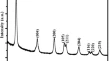
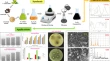
<p>Scanning electron microscopy [SEM] and transmission electron microscopy [TEM] were employed to investigate the shapes of the samples (Figure <figr fid="F1">1</figr>). Cube-type Co<sub>3</sub>O<sub>4 </sub>nanoparticles have a homogeneous cubic morphology (Figure <figr fid="F1">1a</figr>). The length of the nanocube was around 200 nm, and the dominant exposed plane of the cube-type Co<sub>3</sub>O<sub>4 </sub>seemed to be {001}. The villiform-type Co<sub>3</sub>O<sub>4 </sub>particles were formed by a nucleus covered with numerous micrometer-sized nanorods. In comparison with the length, the diameter of the nanorod was very small (less than 100 nm). It is interesting that the villiform-type Co<sub>3</sub>O<sub>4 </sub>has a rough surface. As shown in the TEM image (Figure <figr fid="F1">1b</figr>), the nanorods seemed to be stacked with smaller nanoparticles with a diameter of approximately 80 nm. The flower-type Co<sub>3</sub>O<sub>4 </sub>seemed to have a similar shape and size to those of the villiform-type Co<sub>3</sub>O<sub>4</sub>. However, the nanorods of the flower-type Co<sub>3</sub>O<sub>4 </sub>had a sharper end, smoother surface, and smaller diameter than those of the villiform-type Co<sub>3</sub>O<sub>4</sub>. Moreover, in contrast with the villiform-type Co<sub>3</sub>O<sub>4</sub>, the nanorods of the flower-type Co<sub>3</sub>O<sub>4 </sub>particles were almost separated during the preparation process for the TEM experiments (Figure <figr fid="F1">1c</figr>). This implies that the flower-type Co<sub>3</sub>O<sub>4 </sub>particles may turn to the nanorod type during the electrode fabrication process because of vigorous mixing in making a slurry. The crystallinity of the three types of Co<sub>3</sub>O<sub>4 </sub>nanoparticles was investigated by XRD. As shown in Figure <figr fid="F2">2</figr>, all XRD peaks of the cube-type Co<sub>3</sub>O<sub>4 </sub>nanoparticles can be indexed to the Co<sub>3</sub>O<sub>4 </sub>spinel phase, indicating a single-phase sample. Most diffraction peaks for villiform- and flower-type Co<sub>3</sub>O<sub>4 </sub>particles were also identical to those of the typical Co<sub>3</sub>O<sub>4 </sub>phase; however, small impurities could be detected in the diffraction patterns.</p>
<fig id="F1"><title><p>Figure 1</p></title><caption><p>SEM (left side) and TEM (right side) images of the Co<sub>3</sub>O<sub>4 </sub>nanoparticles</p></caption><text>
   <p><b>SEM (left side) and TEM (right side) images of the Co<sub>3</sub>O<sub>4 </sub>nanoparticles</b>. (<b>a</b>) Cube type, (<b>b</b>) villiform type, and (<b>c</b>) flower type.</p>
</text><graphic file="1556-276X-7-47-1" hint_layout="single"/></fig>
<fig id="F2"><title><p>Figure 2</p></title><caption><p>XRD patterns of the Co<sub>3</sub>O<sub>4 </sub>nanoparticles and reference Co<sub>3</sub>O<sub>4</sub></p></caption><text>
   <p><b>XRD patterns of the Co<sub>3</sub>O<sub>4 </sub>nanoparticles and reference Co<sub>3</sub>O<sub>4</sub></b>.</p>
</text><graphic file="1556-276X-7-47-2" hint_layout="single"/></fig>
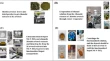
<p>The electrochemical properties of the air electrodes containing Co<sub>3</sub>O<sub>4 </sub>nanoparticles were characterized at a constant current density of 0.4 mA&#183;cm<sup>-2 </sup>at 30&#176;C. Figure <figr fid="F3">3a</figr> shows the initial voltage profile of the electrodes containing the Co<sub>3</sub>O<sub>4 </sub>nanoparticles in the voltage range of 4.35 to 2.3 V. The discharge capacity shown in Figure <figr fid="F3">3</figr> is based on the weight of carbon (Ketjen black) in the air electrode, which has generally been used for expressing the capacity of an air electrode <abbrgrp><abbr bid="B1">1</abbr><abbr bid="B8">8</abbr><abbr bid="B9">9</abbr><abbr bid="B12">12</abbr></abbrgrp>. The average charge and discharge voltages of the air electrode containing the Co<sub>3</sub>O<sub>4 </sub>nanoparticles were approximately 4.2 and 2.6 V, respectively. The initial discharge capacity of the electrode was highly dependent upon the type of Co<sub>3</sub>O<sub>4 </sub>nanoparticles. The electrode containing villiform-type Co<sub>3</sub>O<sub>4 </sub>nanoparticles showed a relatively higher initial discharge capacity (approximately 2, 900 mA h&#183;g<sup>-1</sup>) than with the other electrodes. In contrast, the initial discharge capacities of the electrodes containing flower-type Co<sub>3</sub>O<sub>4 </sub>nanoparticles were just about 1, 800 mA h&#183;g<sup>-1 </sup>although they have a shape very similar to the villiform-type Co<sub>3</sub>O<sub>4 </sub>nanoparticles. As shown in Figure <figr fid="F3">3b</figr>, the cyclic performance of the air electrodes was not satisfactory. Actually, capacity fading has been a typical feature of all previous results about air electrodes <abbrgrp><abbr bid="B8">8</abbr><abbr bid="B12">12</abbr><abbr bid="B13">13</abbr></abbrgrp>. It has been known that cycle degradation is associated with irreversible reaction products, which accumulate in the pores of the electrode at a discharged state <abbrgrp><abbr bid="B13">13</abbr><abbr bid="B14">14</abbr></abbrgrp>. It seems that the practical rechargeability of air electrodes has yet to be achieved before these can be put to practical use.</p>
<fig id="F3"><title><p>Figure 3</p></title><caption><p>Electrochemical properties of the air electrode containing Co<sub>3</sub>O<sub>4 </sub>nanoparticles</p></caption><text>
   <p><b>Electrochemical properties of the air electrode containing Co<sub>3</sub>O<sub>4 </sub>nanoparticles</b>. Air electrode containing Co<sub>3</sub>O<sub>4 </sub>nanoparticles at a constant current density of 0.4 mA&#183;cm<sup>-2 </sup>(voltage range of 4.35 to 2.3 V). (<b>a</b>) Initial voltage profile and (<b>b</b>) cyclic performance.</p>
</text><graphic file="1556-276X-7-47-3" hint_layout="single"/></fig>
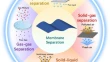
<p>After 10 cycles, the electrode was discharged to 2.3 V, and the surface was observed by SEM to investigate the morphology change during cycling. In the SEM images of the air electrodes before testing, the Co<sub>3</sub>O<sub>4 </sub>nanoparticles and carbon (Ketjen black) could be clearly identified (Figure <figr fid="F4">4</figr>). It was noticeable that the villiform-type Co<sub>3</sub>O<sub>4 </sub>nanoparticles maintained their shape during the electrode-fabrication process. However, the flower-type Co<sub>3</sub>O<sub>4 </sub>nanoparticles were almost separated to become the nanorod type. When they discharged to 2.3 V, it was observed that the surface of the electrode was homogenously covered with precipitates, which appeared to be reaction products such as lithium oxides, and lithium carbonates formed due to electrolyte decomposition <abbrgrp><abbr bid="B15">15</abbr><abbr bid="B16">16</abbr></abbrgrp>. These reaction precipitates could block the catalyst/carbon contact area, thereby preventing O<sub>2 </sub>intake and Li<sup>+ </sup>delivery to the active reaction site and terminating the discharge process. According to previous reports <abbrgrp><abbr bid="B13">13</abbr><abbr bid="B14">14</abbr></abbrgrp>, there was a strong correlation between average pore diameter and discharge capacity. Reaction precipitates are likely to be formed near active sites so that the micropore of a porous electrode would be easily sealed with precipitates of lithium oxides during discharge. Thus, securing enough space between catalytic active sites might increase the discharge capacity of the air electrode. The cube- and flower- (nanorod- in the electrode) type Co<sub>3</sub>O<sub>4 </sub>nanoparticles may be well covered with small carbon particles (Ketjen black) in the air electrode so that a sufficiently small pore space could be obtained. On the other hand, the villiform-type Co<sub>3</sub>O<sub>4 </sub>nanoparticles were composed of a nucleus covered with many nanorods of approximately 100 nm in size, which could offer enough space between active catalytic sites. Thus, a greater amount of lithium oxide precipitation may be needed to block the pore orifices and terminate the discharge process; this could be an explanation for the higher discharge capacity of the air electrode containing villiform-type Co<sub>3</sub>O<sub>4 </sub>nanoparticles in comparison with the air electrode containing other types Co<sub>3</sub>O<sub>4 </sub>nanoparticles.</p>
<fig id="F4"><title><p>Figure 4</p></title><caption><p>SEM images of the air electrodes</p></caption><text>
   <p><b>SEM images of the air electrodes</b>. Air electrodes composed of Co<sub>3</sub>O<sub>4 </sub>nanoparticles, carbon (Ketjen black), and binder before the test and after discharge at 2.3 V. (<b>a</b>) Cube type, (<b>b</b>) villiform type, and (<b>c</b>) flower type.</p>
</text><graphic file="1556-276X-7-47-4" hint_layout="single"/></fig>
</sec>
<sec><st><p>Conclusions</p></st>
<p>Cube-, flower-, and villiform-type Co<sub>3</sub>O<sub>4 </sub>nanoparticles were synthesized and introduced as catalysts for Li/air batteries. The electrochemical properties of the air electrodes containing Co<sub>3</sub>O<sub>4 </sub>nanoparticles were found to be highly dependent on the type of Co<sub>3</sub>O<sub>4 </sub>nanoparticles. The electrode containing villiform-type Co<sub>3</sub>O<sub>4 </sub>nanoparticles showed a higher discharge capacity than the electrodes containing other types of Co<sub>3</sub>O<sub>4 </sub>nanoparticles. This is likely due to the relatively sufficient pore space between active catalytic sites, which stores a large amount of reaction products.</p>
</sec>
<sec><st><p>Abbreviations</p></st>
<p>EC: ethylene carbonate; FE-SEM: field-emission scanning electron microscopy; FE-TEM: field-emission transmission electron microscopy; LiTFSI: lithium bis(trifluoromethanesulfonyl)imide; PC: propylene carbonate; PVDF: polyvinylidene fluoride; XRD: X-ray diffraction.</p>
</sec>
<sec><st><p>Competing interests</p></st>
<p>The authors declare that they have no competing interests.</p>
</sec>
<sec><st><p>Authors' contributions</p></st>
<p>KS did the synthetic and characteristic works in this journal. YJ gave the advice and guided the experiment. All authors read and approved the final manuscript.</p>
</sec>
</bdy>
<bm>
<ack>
<sec><st><p>Acknowledgements</p></st>
<p>This work was supported by the grant of the National Research Foundation of Korea funded by the Korean Government (MEST; NRF-2009-C1AAA001-0094219).</p>
</sec>
</ack>
<refgrp><bibl id="B1"><title><p>Rechargeable Li<sub>2</sub>O<sub>2 </sub>electrode for lithium batteries</p></title><aug><au><snm>Ogasawara</snm><fnm>T</fnm></au><au><snm>D&#233;bart</snm><fnm>A</fnm></au><au><snm>Holzapfel</snm><fnm>M</fnm></au><au><snm>Nov&#225;k</snm><fnm>P</fnm></au><au><snm>Bruce</snm><fnm>PG</fnm></au></aug><source>J Am Chem Soc</source><pubdate>2006</pubdate><volume>128</volume><fpage>1390</fpage><lpage>1393</lpage><xrefbib><pubidlist><pubid idtype="doi">10.1021/ja056811q</pubid><pubid idtype="pmpid" link="fulltext">16433559</pubid></pubidlist></xrefbib></bibl><bibl id="B2"><title><p>Discharge characteristic of a non-aqueous electrolyte Li/O<sub>2 </sub>battery</p></title><aug><au><snm>Zhang</snm><fnm>SS</fnm></au><au><snm>Foster</snm><fnm>D</fnm></au><au><snm>Read</snm><fnm>J</fnm></au></aug><source>J Power Sources</source><pubdate>2010</pubdate><volume>195</volume><fpage>1235</fpage><lpage>1240</lpage><xrefbib><pubid idtype="doi">10.1016/j.jpowsour.2009.08.088</pubid></xrefbib></bibl><bibl id="B3"><title><p>Ambient operation of Li/Air batteries</p></title><aug><au><snm>Zhang</snm><fnm>JG</fnm></au><au><snm>Wang</snm><fnm>DY</fnm></au><au><snm>Xu</snm><fnm>W</fnm></au><au><snm>Xiao</snm><fnm>J</fnm></au><au><snm>Williford</snm><fnm>RE</fnm></au></aug><source>J Power Sources</source><pubdate>2010</pubdate><volume>195</volume><fpage>4332</fpage><lpage>4337</lpage><xrefbib><pubid idtype="doi">10.1016/j.jpowsour.2010.01.022</pubid></xrefbib></bibl><bibl id="B4"><title><p>Synthesis of single-crystalline Co<sub>3</sub>O<sub>4 </sub>octahedral cages with tunable surface aperture and their lithium storage properties</p></title><aug><au><snm>Wang</snm><fnm>X</fnm></au><au><snm>Yu</snm><fnm>L</fnm></au><au><snm>Wu</snm><fnm>XL</fnm></au><au><snm>Yuan</snm><fnm>F</fnm></au><au><snm>Guo</snm><fnm>YG</fnm></au><au><snm>Ma</snm><fnm>Y</fnm></au><au><snm>Yao</snm><fnm>J</fnm></au></aug><source>J Phys Chem C</source><pubdate>2009</pubdate><volume>113</volume><fpage>15553</fpage><lpage>15558</lpage><xrefbib><pubid idtype="doi">10.1021/jp904652m</pubid></xrefbib></bibl><bibl id="B5"><title><p>Facile synthesis of hollow Co<sub>3</sub>O<sub>4 </sub>microspheres and its use as a rapid responsive CL sensor of combustible gases</p></title><aug><au><snm>Teng</snm><fnm>F</fnm></au><au><snm>Yao</snm><fnm>W</fnm></au><au><snm>Zheng</snm><fnm>Y</fnm></au><au><snm>Ma</snm><fnm>Y</fnm></au><au><snm>Xu</snm><fnm>T</fnm></au><au><snm>Gao</snm><fnm>G</fnm></au><au><snm>Liang</snm><fnm>S</fnm></au><au><snm>Teng</snm><fnm>Y</fnm></au><au><snm>Zhu</snm><fnm>Y</fnm></au></aug><source>Talanta</source><pubdate>2008</pubdate><volume>76</volume><fpage>1058</fpage><lpage>1064</lpage><xrefbib><pubidlist><pubid idtype="doi">10.1016/j.talanta.2008.05.011</pubid><pubid idtype="pmpid" link="fulltext">18761155</pubid></pubidlist></xrefbib></bibl><bibl id="B6"><title><p>Shape-controlled synthesis of nanocubic Co<sub>3</sub>O<sub>4 </sub>by hydrothermal oxidation method</p></title><aug><au><snm>Yang</snm><fnm>Y</fnm></au><au><snm>Huang</snm><fnm>K</fnm></au><au><snm>Liu</snm><fnm>R</fnm></au><au><snm>Wang</snm><fnm>L</fnm></au><au><snm>Zeng</snm><fnm>W</fnm></au><au><snm>Zhang</snm><fnm>P</fnm></au></aug><source>Trans Nonferrous Met Soc</source><pubdate>2007</pubdate><volume>17</volume><fpage>1082</fpage><lpage>1086</lpage><xrefbib><pubid idtype="doi">10.1016/S1003-6326(07)60229-5</pubid></xrefbib></bibl><bibl id="B7"><title><p>Morphology-controlled synthesis of Co<sub>3</sub>O<sub>4 </sub>crystals by soft chemical method</p></title><aug><au><snm>Zhang</snm><fnm>Y</fnm></au><au><snm>Liu</snm><fnm>Y</fnm></au><au><snm>Fu</snm><fnm>S</fnm></au><au><snm>Guo</snm><fnm>F</fnm></au><au><snm>Qian</snm><fnm>Y</fnm></au></aug><source>Mater Chem Phys</source><pubdate>2007</pubdate><volume>104</volume><fpage>166</fpage><lpage>171</lpage><xrefbib><pubid idtype="doi">10.1016/j.matchemphys.2007.03.003</pubid></xrefbib></bibl><bibl id="B8"><title><p>Mesoporous crystalline &#946;-MnO<sub>2</sub>--a reversible positive electrode for rechargeable lithium batteries</p></title><aug><au><snm>Jiao</snm><fnm>BF</fnm></au><au><snm>Bruce</snm><fnm>PG</fnm></au></aug><source>Adv Matter</source><pubdate>2007</pubdate><volume>19</volume><fpage>657</fpage><lpage>660</lpage><xrefbib><pubid idtype="doi">10.1002/adma.200602499</pubid></xrefbib></bibl><bibl id="B9"><title><p>a-MnO<sub>2 </sub>nanowires: a catalyst for the O<sub>2 </sub>electrode in rechargeable lithium batteries</p></title><aug><au><snm>D&#233;bart</snm><fnm>A</fnm></au><au><snm>Paterson</snm><fnm>AJ</fnm></au><au><snm>Bao</snm><fnm>J</fnm></au><au><snm>Bruce</snm><fnm>PG</fnm></au></aug><source>Angew Chem</source><pubdate>2008</pubdate><volume>47</volume><fpage>4521</fpage><lpage>4524</lpage><xrefbib><pubid idtype="doi">10.1002/anie.200705648</pubid></xrefbib></bibl><bibl id="B10"><title><p>Moderate temperature synthesis of nanocrystalline Co<sub>3</sub>O<sub>4 </sub>via gel hydrothermal oxidation</p></title><aug><au><snm>Jiang</snm><fnm>A</fnm></au><au><snm>Wu</snm><fnm>Yue</fnm></au><au><snm>Xie</snm><fnm>B</fnm></au><au><snm>Xie</snm><fnm>Y</fnm></au><au><snm>Qian</snm><fnm>Y</fnm></au></aug><source>Mater Chem Phys</source><pubdate>2002</pubdate><volume>74</volume><fpage>234</fpage><lpage>237</lpage><xrefbib><pubid idtype="doi">10.1016/S0254-0584(01)00463-1</pubid></xrefbib></bibl><bibl id="B11"><title><p>Morphology-controlled synthesis of Co<sub>3</sub>O<sub>4 </sub>crystals by soft chemical method</p></title><aug><au><snm>Zhang</snm><fnm>Y</fnm></au><au><snm>Liu</snm><fnm>Y</fnm></au><au><snm>Fu</snm><fnm>S</fnm></au><au><snm>Guo</snm><fnm>F</fnm></au><au><snm>Qian</snm><fnm>Y</fnm></au></aug><source>Mater Chem Phys</source><pubdate>2007</pubdate><volume>104</volume><fpage>166</fpage><lpage>171</lpage><xrefbib><pubid idtype="doi">10.1016/j.matchemphys.2007.03.003</pubid></xrefbib></bibl><bibl id="B12"><title><p>An O<sub>2 </sub>cathode for rechargeable lithium batteries: the effect of a catalyst</p></title><aug><au><snm>D&#233;bart</snm><fnm>A</fnm></au><au><snm>Bao</snm><fnm>J</fnm></au><au><snm>Armstrong</snm><fnm>G</fnm></au><au><snm>Bruce</snm><fnm>PG</fnm></au></aug><source>J Power Sources</source><pubdate>2007</pubdate><volume>174</volume><fpage>1177</fpage><lpage>1182</lpage><xrefbib><pubid idtype="doi">10.1016/j.jpowsour.2007.06.180</pubid></xrefbib></bibl><bibl id="B13"><title><p>Review on Li-air batteries-opportunities, limitations and perspective</p></title><aug><au><snm>Kraytsberg</snm><fnm>A</fnm></au><au><snm>Ein-Eli</snm><fnm>Y</fnm></au></aug><source>J Power Sources</source><pubdate>2011</pubdate><volume>196</volume><fpage>886</fpage><lpage>893</lpage><xrefbib><pubid idtype="doi">10.1016/j.jpowsour.2010.09.031</pubid></xrefbib></bibl><bibl id="B14"><title><p>Investigation of the gas-diffusion-electrode used as lithium/air cathode in non-aqueous electrolyte and the importance of carbon material porosity</p></title><aug><au><snm>Tran</snm><fnm>C</fnm></au><au><snm>Yang</snm><fnm>XQ</fnm></au><au><snm>Qu</snm><fnm>D</fnm></au></aug><source>J Power Sources</source><pubdate>2010</pubdate><volume>195</volume><fpage>2057</fpage><lpage>2063</lpage><xrefbib><pubid idtype="doi">10.1016/j.jpowsour.2009.10.012</pubid></xrefbib></bibl><bibl id="B15"><title><p>Investigation on the charging process of Li<sub>2</sub>O<sub>2</sub>-based air electrodes in Li-O<sub>2 </sub>batteries with organic carbonate electrolytes</p></title><aug><au><snm>Xu</snm><fnm>W</fnm></au><au><snm>Viswanathan</snm><fnm>V</fnm></au><au><snm>Wang</snm><fnm>D</fnm></au><au><snm>Towne</snm><fnm>S</fnm></au><au><snm>Xiao</snm><fnm>J</fnm></au><au><snm>Nie</snm><fnm>Z</fnm></au><au><snm>Hu</snm><fnm>D</fnm></au><au><snm>Zhang</snm><fnm>J</fnm></au></aug><source>J Power Sources</source><pubdate>2011</pubdate><volume>196</volume><fpage>3894</fpage><lpage>3899</lpage><xrefbib><pubid idtype="doi">10.1016/j.jpowsour.2010.12.065</pubid></xrefbib></bibl><bibl id="B16"><title><p>Reactions in the rechargeable lithium-O<sub>2 </sub>battery with alkyl carbonate electrolytes</p></title><aug><au><snm>Freunberger</snm><fnm>SA</fnm></au><au><snm>Chen</snm><fnm>Y</fnm></au><au><snm>Peng</snm><fnm>Z</fnm></au><au><snm>Griffin</snm><fnm>JM</fnm></au><au><snm>Hardwick</snm><fnm>LJ</fnm></au><au><snm>Bard</snm><fnm>F</fnm></au><au><snm>Novak</snm><fnm>P</fnm></au><au><snm>Bruce</snm><fnm>PG</fnm></au></aug><source>J Am Chem Soc</source><pubdate>2011</pubdate><volume>133</volume><fpage>8040</fpage><lpage>8047</lpage><xrefbib><pubidlist><pubid idtype="doi">10.1021/ja2021747</pubid><pubid idtype="pmpid" link="fulltext">21524112</pubid></pubidlist></xrefbib></bibl></refgrp>
</bm>
</art>