<?xml version='1.0'?>
<!DOCTYPE art SYSTEM 'http://www.biomedcentral.com/xml/article.dtd'>
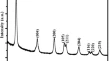
<art><ui>1556-276X-7-425</ui><ji>1556-276X</ji><fm><dochead>Nano Express</dochead><bibl><title><p>Synthesis, characterization, and magnetic properties of monodisperse CeO<sub>2</sub> nanospheres prepared by PVP-assisted hydrothermal method</p></title><aug><au id="A1"><snm>Phokha</snm><fnm>Sumalin</fnm><insr iid="I1"/><email>kaekip@hotmail.com</email></au><au id="A2"><snm>Pinitsoontorn</snm><fnm>Supree</fnm><insr iid="I1"/><email>psupree@kku.ac.th</email></au><au id="A3"><snm>Chirawatkul</snm><fnm>Prae</fnm><insr iid="I2"/><email>prae@slri.or.th</email></au><au id="A4"><snm>Poo-arporn</snm><fnm>Yingyot</fnm><insr iid="I2"/><email>yingyot@slri.or.th</email></au><au id="A5" ca="yes"><snm>Maensiri</snm><fnm>Santi</fnm><insr iid="I3"/><email>santimaensiri@g.sut.ac.th</email></au></aug><insg><ins id="I1"><p>Department of Physics, Faculty of Science, Khon Kaen University, Khon Kaen, 40002, Thailand</p></ins><ins id="I2"><p>Synchrotron Light Research Institute (Public Organization), Suranaree University of Technology, Nakhon Ratchasima, 30000, Thailand</p></ins><ins id="I3"><p>School of Physics, Institute of Science, Suranaree University of Technology, Nakhon Ratchasima, 30000, Thailand</p></ins></insg><source>Nanoscale Research Letters</source><section><title><p>Regular submissions</p></title></section><issn>1556-276X</issn><pubdate>2012</pubdate><volume>7</volume><issue>1</issue><fpage>425</fpage><url>http://www.nanoscalereslett.com/content/7/1/425</url><xrefbib><pubidlist><pubid idtype="doi">10.1186/1556-276X-7-425</pubid><pubid idtype="pmpid">22849756</pubid></pubidlist></xrefbib></bibl><history><rec><date><day>7</day><month>5</month><year>2012</year></date></rec><acc><date><day>14</day><month>7</month><year>2012</year></date></acc><pub><date><day>31</day><month>7</month><year>2012</year></date></pub></history><cpyrt><year>2012</year><collab>Phokha et al.; licensee Springer.</collab><note>This is an Open Access article distributed under the terms of the Creative Commons Attribution License (<url>http://creativecommons.org/licenses/by/2.0</url>), which permits unrestricted use, distribution, and reproduction in any medium, provided the original work is properly cited.</note></cpyrt><kwdg><kwd>CeO<sub>2</sub></kwd><kwd>Nanospheres</kwd><kwd>Dilute magnetic oxide</kwd><kwd>Ferromagnetism</kwd><kwd>Oxygen vacancies</kwd><kwd>Valence states</kwd></kwdg><abs><sec><st><p>Abstract</p></st><p>Ferromagnetism was observed at room temperature in monodisperse CeO<sub>2</sub> nanospheres synthesized by hydrothermal treatment of Ce(NO<sub>3</sub>)<sub>3</sub>&#183;6H<sub>2</sub>O using polyvinylpyrrolidone as a surfactant. The structure and morphology of the products were characterized by X-ray diffraction (XRD), Raman spectroscopy, transmission electron microscopy, high-resolution transmission electron microscopy, and field-emission scanning electron microscopy (FE-SEM). The optical properties of the nanospheres were determined using UV and visible spectroscopy and photoluminescence (PL). The valence states of Ce ions were also determined using X-ray absorption near edge spectroscopy. The XRD results indicated that the synthesized samples had a cubic structure with a crystallite size in the range of approximately 9 to 19&#8201;nm. FE-SEM micrographs showed that the samples had a spherical morphology with a particle size in the range of approximately 100 to 250&#8201;nm. The samples also showed a strong UV absorption and room temperature PL. The emission might be due to charge transfer transitions from the 4<it>f</it> band to the valence band of the oxide. The magnetic properties of the samples were studied using a vibrating sample magnetometer. The samples exhibited room temperature ferromagnetism with a small magnetization of approximately 0.0026 to 0.016&#8201;emu/g at 10&#8201;kOe. Our results indicate that oxygen vacancies could be involved in the ferromagnetic exchange, and the possible mechanism of formation was discussed based on the experimental results.</p></sec></abs></fm><bdy><sec><st><p>Background</p></st><p>Oxide-dilute magnetic semiconductors (O-DMSs) such as ZnO, TiO<sub>2</sub>, SnO<sub>2</sub>, and In<sub>2</sub>O<sub>3</sub> doped with transition metal (TM) ions have recently attracted much attention due to their potential use in magneto-optoelectronic applications <abbrgrp><abbr bid="B1">1</abbr><abbr bid="B2">2</abbr><abbr bid="B3">3</abbr></abbrgrp>. These O-DMSs are optically transparent and exhibit ferromagnetism (FM) at room temperature (RT) and even well above RT. Recently, TM-doped CeO<sub>2</sub> have been also reported to exhibit ferromagnetism at and above room temperature <abbrgrp><abbr bid="B4">4</abbr><abbr bid="B5">5</abbr><abbr bid="B6">6</abbr><abbr bid="B7">7</abbr><abbr bid="B8">8</abbr><abbr bid="B9">9</abbr><abbr bid="B10">10</abbr></abbrgrp>. Unlike other O-DMSs, CeO<sub>2</sub> has a cubic structure with a lattice parameter <it>a</it>&#8201;=&#8201;0.54113&#8201;nm <abbrgrp><abbr bid="B11">11</abbr></abbrgrp> that will facilitate the integration of spintronic devices with advanced silicon microelectronic devices.</p><p>Early work on CeO<sub>2</sub>-based O-DMSs was focused on thin films <abbrgrp><abbr bid="B4">4</abbr><abbr bid="B5">5</abbr><abbr bid="B6">6</abbr></abbrgrp> and only a few works have been carried out on powders, bulk, or nanocrystalline form <abbrgrp><abbr bid="B9">9</abbr><abbr bid="B10">10</abbr><abbr bid="B11">11</abbr><abbr bid="B12">12</abbr></abbrgrp>. Tiwari et al. <abbrgrp><abbr bid="B4">4</abbr></abbrgrp> firstly discovered room temperature ferromagnetism (RT-FM) in Ce<sub>1&#8722;<it>x</it></sub>Co<sub><it>x</it></sub>O<sub>2&#8722;<it>&#948;</it></sub> (<it>x</it>&#8201;&#8804;&#8201;0.05) films deposited on a LaAlO<sub>3</sub> (001) substrate by pulsed laser deposition (PLD) technique. These films are transparent in a visible regime and exhibit a very high Curie temperature (<it>T</it><sub>C</sub>) at approximately 740 to 875&#8201;K with large magnetic moments of 6.1&#8201;&#177;&#8201;0.2 to 8.2&#8201;&#177;&#8201;0.2 <it>&#956;</it><sub><it>B</it></sub>/Co. Following the work by Tiwari et al., Song et al. <abbrgrp><abbr bid="B5">5</abbr></abbrgrp> reported successful fabrication ofCe<sub>1&#8722;<it>x</it></sub>Co<sub><it>x</it></sub>O<sub>2&#8722;<it>&#948;</it></sub> (<it>x</it>&#8201;=&#8201;0.03) thin films with (111) preferential orientation deposited on a Si (111) substrate by a PLD technique. Their deposited films show RT-FM with large magnetic moment of 5.8 <it>&#956;</it><sub><it>B</it></sub>/Co and coercivity of 560&#8201;Oe. The authors also showed that the films could be deposited on glass but with smaller magnetic moment and coercivity. These results suggested that the FM in Co-doped CeO<sub>2</sub> depend not only on the doping concentration of transition element, but also on the microstructure of film, including its crystallization, defects, vacancies, etc. Vodungbo et al. <abbrgrp><abbr bid="B6">6</abbr></abbrgrp> also reported FM in Co-doped CeO<sub>2</sub> thin films grown by PLD on SrTiO<sub>3</sub> and Si substrate. The films were ferromagnetic with a <it>T</it><sub>C</sub> above 400&#8201;K. These authors found that the amount of structural defects had a little effect on FM, but the presence of oxygen during the growth or annealing reduced drastically the FM, suggesting that oxygen vacancies played an important role in the magnetic coupling between Co ions, while Wen et al. <abbrgrp><abbr bid="B9">9</abbr></abbrgrp> reported the ferromagnetism observed in pure and Co-doped CeO<sub>2</sub> powders. The RT-FM in pure CeO<sub>2</sub> originated from oxygen vacancies while a slight Co doping in CeO<sub>2</sub> caused a nearly two-order enhancement of saturation magnetization (<it>M</it><sub>s</sub>) to 0.47&#8201;emu/g as compared with the pure sample. The authors suggested that the large RT-FM observed in Co-doped CeO<sub>2</sub> powder originated from a combination effect of oxygen vacancies and Co doping. Similarly, Ou et al. <abbrgrp><abbr bid="B10">10</abbr></abbrgrp> reported RT-FM for Ce<sub>1&#8722;<it>x</it></sub>Co<sub><it>x</it></sub>O<sub>2</sub> (0&#8201;&lt;&#8201;<it>x</it>&#8201;&lt;&#8201;0.10) nanorods prepared by electrodeposition route. The nanorods were ferromagnetic with a high <it>T</it><sub>C</sub> of about 870&#8201;K and the largest <it>M</it><sub>s</sub> of 0.015&#8201;emu/g. They suggested that the RT-FM observed in Co-doped CeO<sub>2</sub> nanorods was adjusted by the structural defects including oxygen vacancies. The same behavior was found in nanoparticles of Fe-doped CeO<sub>2</sub><abbrgrp><abbr bid="B11">11</abbr></abbrgrp> with an <it>M</it><sub>s</sub> value of 0.0062&#8201;emu/g in 3&#8201;at % Fe prepared by a sol&#8211;gel method and Fe-doped CeO<sub>2</sub><abbrgrp><abbr bid="B12">12</abbr></abbrgrp> with an <it>M</it><sub>s</sub> value of 0.10&#8201;emu/g in 1&#8201;at % Fe prepared by the proteic sol&#8211;gel process. The authors suggested that the RT-FM originated from an exchange of <it>F</it>-center, which involved a combination of oxygen vacancies and TM doping.</p><p>Surprisingly, the researchers report RT-FM of undoping in different oxides, such as thin films of HfO<sub>2</sub><abbrgrp><abbr bid="B13">13</abbr></abbrgrp>, TiO<sub>2</sub> and In<sub>2</sub>O<sub>3</sub><abbrgrp><abbr bid="B14">14</abbr></abbrgrp>, and nanoparticles of CeO<sub>2</sub>, Al<sub>2</sub>O<sub>3</sub>, ZnO, In<sub>2</sub>O<sub>3</sub>, and SnO<sub>2</sub><abbrgrp><abbr bid="B15">15</abbr></abbrgrp>, while the corresponding bulk samples are diamagnetic. Most recently, there are some studies reporting ferromagnetism observed in pure CeO<sub>2</sub> on powders, nanocrystalline, or cubes <abbrgrp><abbr bid="B16">16</abbr><abbr bid="B17">17</abbr><abbr bid="B18">18</abbr></abbrgrp>. Liu et al. <abbrgrp><abbr bid="B16">16</abbr></abbrgrp> studied the size-dependent ferromagnetism in CeO<sub>2</sub> powders synthesized by precipitation route. They found that ferromagnetism was observed only in sub-20-nm powders with an <it>M</it><sub>s</sub> value of 0.08&#8201;emu/g. Similarly, Chen et al. <abbrgrp><abbr bid="B17">17</abbr></abbrgrp> reported RT-FM in CeO<sub>2</sub> nanoparticles prepared by thermal decomposition method with an <it>M</it><sub>s</sub> value of 0.12&#8201;emu/g. The authors showed that its crystallite size in nanometers would be ferromagnetic because of the large value of the surface-to-volume ratio, leading to the exchange interactions between electron spin moments that resulted from oxygen vacancies at the surface <abbrgrp><abbr bid="B4">4</abbr></abbrgrp>. Recently, Ge et al. <abbrgrp><abbr bid="B18">18</abbr></abbrgrp> observed ferromagnetism in CeO<sub>2</sub> nanocubes with an <it>M</it><sub>s</sub> value of 0.0057&#8201;emu/g (an average size of 5.3&#8201;nm) prepared by a chemical method. They suggest that oxygen vacancy is essential for the formation of FM in CeO<sub>2</sub> nanocubes.</p><p>However, magnetic properties of monodisperse nanospheres of pure CeO<sub>2</sub> have not yet been reported. In this work, we report the ferromagnetism observed in monodisperse CeO<sub>2</sub> nanospheres with a particle size of approximately 200&#8201;nm synthesized by hydrothermal treatment of Ce(NO<sub>3</sub>)<sub>3</sub>&#183;6H<sub>2</sub>O using polyvinylpyrrolidone (PVP) as a surfactant. The technique of preparation and the effect of the type of cerium source on the crystallinity and morphology were investigated. The prepared samples were characterized by X-ray diffraction (XRD), Raman spectroscopy, field-emission scanning electron microscopy (FE-SEM), transmission electron microscopy (TEM), high-resolution transmission electron microscopy (HRTEM), UV and visible spectroscopy (UV&#8211;vis), and photoluminescence (PL). The valence states of Ce ions were also investigated by using X-ray absorption near edge spectroscopy (XANES), and the magnetic properties of the samples were determined using a vibrating sample magnetometer (VSM). The origin of RT-FM in this pure CeO<sub>2</sub> is also discussed.</p></sec><sec><st><p>Methods</p></st><p>In this study, cerium (III) nitrate hexahydrate, Ce(NO<sub>3</sub>)<sub>3</sub>&#183;6H<sub>2</sub>O (99.99% purity; Kanto Corporation, Portland, OR, USA); cerium (III) acetate hydrate, Ce(CH<sub>3</sub>CO<sub>2</sub>)<sub>3</sub>&#183;<it>x</it>H<sub>2</sub>O (99.9% purity; Sigma-Aldrich Corporation, St. Louis, MO, USA); cerium (III) chloride heptahydrate, CeCl<sub>3</sub>&#183;7H<sub>2</sub>O (99.9% purity; Sigma-Aldrich Corporation); cerium (III) sulfate octahydrate, Ce<sub>2</sub>(SO<sub>4</sub>)<sub>3</sub>.8H<sub>2</sub>O (99.999% purity; Sigma-Aldrich Corporation); and PVP (Sigma-Aldrich Corporation) were used as starting materials. In a typical procedure, one gram of PVP was mixed with 40&#8201;mL of deionized water under vigorous magnetic stirring at room temperature (27&#176;C) until a homogeneous solution was obtained. Subsequently, 3&#8201;mmol of cerium source was slowly added to the PVP solution under vigorous stirring at room temperature for 2&#8201;h, in order to obtain a well-dissolved solution. Throughout the whole process described, no pH adjustment was made. The homogeneous solution was transferred into a Teflon-lined stainless steel autoclave of 50-mL capacity and prepared at 160&#176;C and 200&#176;C for 12&#8201;h and 160&#176;C and 200&#176;C for 24&#8201;h. After the autoclave was cooled naturally to room temperature, the precipitate was collected and washed several times with distilled water. The final product was then dried in a vacuum at 80&#176;C overnight. In addition, the as-prepared samples were also annealed in argon atmosphere at 400&#176;C for 2&#8201;h to study the effect of oxygen vacancies on magnetic properties of the annealed samples.</p><p>The prepared samples were characterized using XRD, Raman spectroscopy, FE-SEM, TEM, HRTEM, UV&#8211;vis, PL, XANES, and VSM. A Philips X-ray diffractometer (Philips Tecnai, Amsterdam, The Netherlands) with CuK&#945; radiation (<it>&#955;</it>&#8201;=&#8201;0.15406&#8201;nm) was used to study the phases of the pure CeO<sub>2</sub> samples. The Raman spectra were recorded at room temperature using a triple spectrometer (Jobin Yvon/Atago-Bussan T-64000, HORIBA Jobin Yvon S.A.S., Chilly-Mazarin, France). The morphology of the sample was obtained from TEM (JEM 2010 200&#8201;kV, JEOL Ltd., Akishima, Tokyo, Japan). FE-SEM was performed using a JEOL JSM-6335&#8201;F (JEOL Ltd.). The optical absorption spectrum was measured in the range of 200 to 800&#8201;nm using a UV-3101PC UV&#8211;vis-NIR scanning spectrometer (Shimadzu Corporation, Nakagyo-ku, Kyoto, Japan). PL was carried out on a luminescence spectrometer (PerkinElmer LS-55B, PerkinElmer Instrument, Waltham, MA, USA), using a Xenon lamp as the excitation source at room temperature. The Ce L<sub>3</sub> XANES spectrum was studied using XANES in transmission mode at the BL4 Station at Siam Photon Laboratory (Synchrotron Light Research Institute (Public Organization), SLRI) in Nakhon Ratchasima, Thailand. The magnetic measurements were performed at room temperature using a vibrating sample magnetometer (VSM 7403, Lakeshore, Westerville, OH. USA).</p></sec><sec><st><p>Results and discussion</p></st><sec><st><p>XRD analysis</p></st><p>The XRD patterns of the samples prepared by hydrothermal reaction at 160&#176;C for 12&#8201;h are shown in Figure <figr fid="F1">1</figr>a. The sample obtained with CeCl<sub>3</sub>&#183;7H<sub>2</sub>O as the starting agent shows no XRD peaks, indicating that it is amorphous, whereas the sample from Ce(NO<sub>3</sub>)<sub>3</sub>&#183;6H<sub>2</sub>O exhibits XRD peaks that correspond to the (111), (200), (220), (311), (222), and (400) planes, which are consistent with the face-centered cubic fluorite structure of CeO<sub>2</sub> in the standard data from the Joint Committee on Powder Diffraction Standards (JCPDS) 34&#8211;0394, indicating that pure CeO<sub>2</sub> was successfully synthesized via these procedures.</p><fig id="F1"><title><p>Figure 1</p></title><caption><p><b>XRD pattern and FE-SEM images of the cerium source.</b> (<b>a</b>) XRD patterns of cerium source as the starting materials prepared at 160&#8201;&#176;C for 12&#8201;h Ce(NO<sub>3</sub>)<sub>3</sub>&#183;6H<sub>2</sub>O and CeCl<sub>3</sub>&#183;7H<sub>2</sub>O. FE-SEM images of cerium source as the starting materials prepared at 160&#8201;&#176;C for 12&#8201;h (<b>b</b>) Ce(NO<sub>3</sub>)<sub>3</sub>&#183;6H<sub>2</sub>O, (<b>c</b>) CeCl<sub>3</sub>&#183;7H<sub>2</sub>O, (<b>d</b>) Ce(CH<sub>3</sub>CO<sub>2</sub>)<sub>3</sub>&#183;<it>x</it>H<sub>2</sub>O, and (<b>e</b>) Ce<sub>2</sub>(SO<sub>4</sub>)<sub>3</sub>&#183;8H<sub>2</sub>O.</p></caption><text>
   <p><b>XRD pattern and FE-SEM images of the cerium source.</b> (<b>a</b>) XRD patterns of cerium source as the starting materials prepared at 160&#176;C for 12&#8201;h Ce(NO<sub>3</sub>)<sub>3</sub>&#183;6H<sub>2</sub>O and CeCl<sub>3</sub>&#183;7H<sub>2</sub>O. FE-SEM images of cerium source as the starting materials prepared at 160&#176;C for 12&#8201;h (<b>b</b>) Ce(NO<sub>3</sub>)<sub>3</sub>&#183;6H<sub>2</sub>O, (<b>c</b>) CeCl<sub>3</sub>&#183;7H<sub>2</sub>O, (<b>d</b>) Ce(CH<sub>3</sub>CO<sub>2</sub>)<sub>3</sub>&#183;<it>x</it>H<sub>2</sub>O, and (<b>e</b>) Ce<sub>2</sub>(SO<sub>4</sub>)<sub>3</sub>&#183;8H<sub>2</sub>O.</p>
</text><graphic file="1556-276X-7-425-1"/></fig><p>In this study, we found that the type of cerium source has a great effect on the morphology of the final product. The cerium source from Ce(NO<sub>3</sub>)<sub>3</sub>&#183;6H<sub>2</sub>O shows that the sample consisted of sphere-like particles with diameters of 100 to 250&#8201;nm (Figure <figr fid="F1">1</figr>b), whereas other cerium sources such as CeCl<sub>3</sub>&#183;7H<sub>2</sub>O, Ce(CH<sub>3</sub>CO<sub>2</sub>)<sub>3</sub>&#183;<it>x</it>H<sub>2</sub>O, and Ce<sub>2</sub>(SO<sub>4</sub>)<sub>3</sub>&#183;8H<sub>2</sub>O resulted in irregular shapes and agglomerated particles as shown in Figure <figr fid="F1">1</figr>c,d,e, respectively. Therefore, it is clearly seen that cerium source from nitrate is most favorable for the formation of uniformly sized CeO<sub>2</sub> nanospheres. It is possible that the absorption of PVP molecules on various crystallographic planes of cerium source played a major role in determining the product morphology, due to the fact that the supersaturation degree has a significant influence on the crystal nucleation rate and crystal growth rate <abbrgrp><abbr bid="B19">19</abbr></abbrgrp>. However, the real reason for the morphology variation of the cerium source and surfactants has yet to be fully understood.</p><p>Figure <figr fid="F2">2</figr> shows the XRD patterns of the pure CeO<sub>2</sub> from cerium nitrate at various hydrothermal treatment durations and temperatures. All the samples exhibited six typical peaks corresponding to the (111), (200), (220), (311), (222), and (400) planes, which are consistent with the face-centered cubic fluorite structure of CeO<sub>2</sub> in the standard data from JCPDS 34&#8211;0394, and this is in agreement with the selected area electron diffraction (SAED) patterns shown in Figure <figr fid="F3">3</figr>d. The values of the lattice constant calculated from the XRD spectra are shown in Table <tblr tid="T1">1</tblr>. The average crystallite size of all the samples was calculated from X-ray line broadening of the peaks at the (111), (200), (220), and (311) planes using Scherrer&#8217;s equation, (as listed in Table <tblr tid="T1">1</tblr>). We observed that the lattice parameter decreases with increasing crystallite size. This decrease is possibly due to the introduction of Ce<sup>3+</sup> ions into the crystal lattice. Ce<sup>3+</sup> ions have a higher ionic radius (1.034&#8201;&#197;) compared with the Ce<sup>4+</sup> ions (0.92&#8201;&#197;) and introduce oxygen vacancies. Therefore, the concentration of Ce<sup>3+</sup> ions increases, and there is also an increase in the number of oxygen vacancies. It is observed that the pure CeO<sub>2</sub> nanoparticles experience considerable lattice distortion, which is in good agreement with earlier reports on CeO<sub>2</sub> nanoparticles <abbrgrp><abbr bid="B9">9</abbr><abbr bid="B20">20</abbr></abbrgrp>, which indicated that this causes a change in the Ce-O bond length (lattice distortion) and the overall lattice parameter.</p><fig id="F2"><title><p>Figure 2</p></title><caption><p><b>XRD patterns of obtained CeO</b><sub><b>2</b></sub><b>nanospheres.</b> Ce(NO<sub>3</sub>)<sub>3</sub>&#183;6H<sub>2</sub>O was used as starting materials prepared at 160&#8201;&#176;C and 200&#8201;&#176;C for 12 and 24&#8201;h</p></caption><text>
   <p><b>XRD patterns of obtained CeO</b><sub><b>2</b></sub><b>nanospheres.</b> Ce(NO<sub>3</sub>)<sub>3</sub>&#183;6H<sub>2</sub>O was used as starting materials prepared at 160&#176;C and 200&#176;C for 12 and 24&#8201;h.</p>
</text><graphic file="1556-276X-7-425-2"/></fig><fig id="F3"><title><p>Figure 3</p></title><caption><p><b>FE-SEM and TEM bright field images of CeO</b><sub><b>2</b></sub><b>nanospheres.</b> (<b>a</b>) FE-SEM images of CeO<sub>2</sub> nanospheres prepared at 200&#8201;&#176;C for 24&#8201;h; (<b>b</b>) TEM bright field images of CeO<sub>2</sub> nanospheres prepared at 160&#8201;&#176;C for 12&#8201;h; (<b>c</b>) and (<b>d</b>) are TEM bright field images with corresponding SAED patterns (insets) of CeO<sub>2</sub> nanospheres prepared at 200&#8201;&#176;C for 12&#8201;h.</p></caption><text>
   <p><b>FE-SEM and TEM bright field images of CeO</b><sub><b>2</b></sub><b>nanospheres.</b> (<b>a</b>) FE-SEM images of CeO<sub>2</sub> nanospheres prepared at 200&#176;C for 24&#8201;h; (<b>b</b>) TEM bright field images of CeO<sub>2</sub> nanospheres prepared at 160&#176;C for 12&#8201;h; (<b>c</b>) and (<b>d</b>) are TEM bright field images with corresponding SAED patterns (insets) of CeO<sub>2</sub> nanospheres prepared at 200X&#176;C for 12&#8201;h.</p>
</text><graphic file="1556-276X-7-425-3"/></fig><table id="T1"><title><p>Table 1</p></title><caption><p><b>Summary of crystallite sizes, lattice constant, bandgap, and magnetization of pure CeO</b><sub><b>2</b></sub><b>nanospheres</b></p></caption><tgroup align="left" cols="7"><colspec align="left" colname="c1" colnum="1" colwidth="1*"/><colspec align="center" colname="c2" colnum="2" colwidth="1*"/><colspec align="center" colname="c3" colnum="3" colwidth="1*"/><colspec align="left" colname="c4" colnum="4" colwidth="1*"/><colspec align="left" colname="c5" colnum="5" colwidth="1*"/><colspec align="left" colname="c6" colnum="6" colwidth="1*"/><colspec align="left" colname="c7" colnum="7" colwidth="1*"/><thead valign="top"><row rowsep="1"><entry colname="c1" morerows="1"><p><b>Sample</b></p></entry><entry align="center" colname="c2" morerows="1"><p><b>Crystallite size from XRD (nm)</b></p></entry><entry align="center" colname="c3" morerows="1"><p><b>Lattice constant</b> <b><it>a</it></b><b>(nm)</b></p></entry><entry align="center" colname="c4" morerows="1"><p><b><it>E</it></b><sub><b><it>g</it></b></sub><b>(eV)</b></p></entry><entry align="center" colname="c5" morerows="1"><p><b>Crystallite size from Raman spectroscopy (nm)</b></p></entry><entry align="center" colname="c6" nameend="c7" namest="c6"><p><b><it>M</it></b><sub><b>s</b></sub><b>at 10&#8201;kOe (emu/g)</b></p></entry></row><row rowsep="1"><entry align="center" colname="c6"><p><b>Before Ar annealing</b></p></entry><entry align="center" colname="c7"><p><b>After Ar annealing</b></p></entry></row></thead><tfoot><p><it>E</it><sub><it>g</it></sub>, bandgap energy; <it>M</it><sub>s</sub>, saturation magnetization. Data of magnetization of pure CeO<sub>2</sub> nanospheres is before and after Ar annealing.</p></tfoot><tbody valign="top"><row><entry colname="c1"><p>CeO<sub>2</sub> at 160&#8201;&#176;C for 12&#8201;h</p></entry><entry align="center" colname="c2"><p>9.43&#8201;&#177;&#8201;0.41</p></entry><entry align="center" colname="c3"><p>0.5430&#8201;&#177;&#8201;0.0021</p></entry><entry align="center" colname="c4"><p>3.00</p></entry><entry align="center" colname="c5"><p>7.39</p></entry><entry align="center" colname="c6"><p>-</p></entry><entry align="center" colname="c7"><p>-</p></entry></row><row><entry colname="c1"><p>CeO<sub>2</sub> at 200&#8201;&#176;C for 12&#8201;h</p></entry><entry align="center" colname="c2"><p>19.6&#8201;&#177;&#8201;0.53</p></entry><entry align="center" colname="c3"><p>0.5420&#8201;&#177;&#8201;0.0003</p></entry><entry align="center" colname="c4"><p>3.04</p></entry><entry align="center" colname="c5"><p>8.21</p></entry><entry align="center" colname="c6"><p>0.0026</p></entry><entry align="center" colname="c7"><p>0.011</p></entry></row><row><entry colname="c1"><p>CeO<sub>2</sub> at 160&#8201;&#176;C for 24&#8201;h</p></entry><entry align="center" colname="c2"><p>12.2&#8201;&#177;&#8201;0.13</p></entry><entry align="center" colname="c3"><p>0.5430&#8201;&#177;&#8201;0.0003</p></entry><entry align="center" colname="c4"><p>3.06</p></entry><entry align="center" colname="c5"><p>9.23</p></entry><entry align="center" colname="c6"><p>0.0053</p></entry><entry align="center" colname="c7"><p>0.0026</p></entry></row><row rowsep="1"><entry colname="c1"><p>CeO<sub>2</sub> at 200&#8201;&#176;C for 24&#8201;h</p></entry><entry align="center" colname="c2"><p>15.6&#8201;&#177;&#8201;0.20</p></entry><entry align="center" colname="c3"><p>0.5428&#8201;&#177;&#8201;0.0006</p></entry><entry align="center" colname="c4"><p>3.10</p></entry><entry align="center" colname="c5"><p>12.28</p></entry><entry align="center" colname="c6"><p>0.016</p></entry><entry align="center" colname="c7"><p>0.015</p></entry></row></tbody></tgroup></table></sec><sec><st><p>Raman analysis</p></st><p>The formation of a cubic structure in the CeO<sub>2</sub> nanospheres was further supported by the Raman spectra. Figure <figr fid="F4">4</figr> shows typical spectra of CeO<sub>2</sub>. The Raman active modes are shifted from 458 to 461&#8201;cm<sup>&#8722;1</sup> for the CeO<sub>2</sub> samples heated at 160&#176;C to 200&#176;C. These Raman active modes are attributed to a symmetrical stretching mode of the Ce-80 vibrational unit, and therefore, they are very sensitive to any disorder in the oxygen sublattice that resulted from thermal, doping, or grain size <abbrgrp><abbr bid="B21">21</abbr><abbr bid="B22">22</abbr><abbr bid="B23">23</abbr><abbr bid="B24">24</abbr></abbrgrp>. The effect of the microstructure of CeO<sub>2</sub> on the shape of the Raman spectra was observed by the broadening of the line and by increases in its asymmetry, which are attributed to the reduction of the phonon lifetime in the nanocrystalline regime <abbrgrp><abbr bid="B25">25</abbr><abbr bid="B26"> 26</abbr></abbrgrp>. The particle size of the CeO<sub>2</sub> sample can be also estimated from the Raman line broadening using the following Equation 1 <abbrgrp><abbr bid="B23">23</abbr><abbr bid="B24"> 24</abbr><abbr bid="B27"> 27</abbr></abbrgrp>:</p><p><display-formula id="M1"><m:math name="1556-276X-7-425-i1" xmlns:m="http://www.w3.org/1998/Math/MathML"><m:mrow>
   <m:mi>&#915;</m:mi>
   <m:mo stretchy="false">(</m:mo>
   <m:msup>
      <m:mtext>cm</m:mtext>
      <m:mrow>
         <m:mo>&#8722;</m:mo>
         <m:mn>1</m:mn>
      </m:mrow>
   </m:msup>
   <m:mo stretchy="false">)</m:mo>
   <m:mo>=</m:mo>
   <m:mn>10</m:mn>
   <m:mo>+</m:mo>
   <m:mfrac>
      <m:mn>124.7</m:mn>
      <m:msub>
         <m:mi>D</m:mi>
         <m:mi>R</m:mi>
      </m:msub>
   </m:mfrac>
   <m:mtext>,</m:mtext>
</m:mrow>
</m:math></display-formula></p><p>where <inline-formula><m:math name="1556-276X-7-425-i2" xmlns:m="http://www.w3.org/1998/Math/MathML"><m:mrow>
   <m:mi>&#915;</m:mi>
   <m:mo stretchy="false">(</m:mo>
   <m:msup>
      <m:mtext>cm</m:mtext>
      <m:mrow>
         <m:mo>&#8722;</m:mo>
         <m:mn>1</m:mn>
      </m:mrow>
   </m:msup>
   <m:mo stretchy="false">)</m:mo>
</m:mrow>
</m:math></inline-formula> is the full width at half maximum of the Raman active mode peak and <it>D</it><sub><it>R</it></sub> is the particle size of a CeO<sub>2</sub> sample. This relation can be used to determine the crystal size of the CeO<sub>2</sub> samples as shown in Table <tblr tid="T1">1</tblr>. This calculated crystal size is near that obtained from X-ray line broadening.</p><fig id="F4"><title><p>Figure 4</p></title><caption><p><b>Raman spectra of obtained CeO</b><sub><b>2</b></sub><b>nanospheres.</b> Ce(NO<sub>3</sub>)<sub>3</sub>&#183;6H<sub>2</sub>O was used as starting materials prepared at 160&#8201;&#176;C and 200&#8201;&#176;C for 12 and 24&#8201;h</p></caption><text>
   <p><b>Raman spectra of obtained CeO</b><sub><b>2</b></sub><b>nanospheres.</b> Ce(NO<sub>3</sub>)<sub>3</sub>&#183;6H<sub>2</sub>O was used as starting materials prepared at 160&#176;C and 200&#176;C for 12 and 24&#8201;h.</p>
</text><graphic file="1556-276X-7-425-4"/></fig></sec><sec><st><p>FE-SEM, TEM, and HRTEM analyses</p></st><p>The morphology and structure of CeO<sub>2</sub> nanospheres were investigated by FE-SEM and TEM as shown in Figure <figr fid="F3">3</figr>. TEM bright field images show that the samples contain monodisperse nanospheres with a narrow size distribution. The high-magnification TEM image of a single particle (Figure <figr fid="F3">3</figr>b) indicates that the sphere has a diameter of about 218&#8201;nm. This result is similar to the work reported by Zhou et al. <abbrgrp><abbr bid="B28">28</abbr></abbrgrp>, in which spherical CeO<sub>2</sub> crystallites assembled by nanoparticles were synthesized by hydrothermal treatment because small nanoparticles of CeO<sub>2</sub> aggregated and gradually evolved into a spherical assembly, achieving a low surface energy. The corresponding SAED patterns (inset in Figure <figr fid="F3">3</figr>d of the products show spotty ring patterns indicative of a face-centered cubic structure of CeO<sub>2</sub> (JCPDS 34&#8211;0394), which is in agreement with the XRD results. The HRTEM images of the CeO<sub>2</sub> sample prepared at 200&#176;C for 12&#8201;h and the CeO<sub>2</sub> sample prepared at 200&#176;C for 12&#8201;h followed by annealing in Ar at 400&#176;C for 2&#8201;h, are shown in Figure <figr fid="F5">5</figr>a,b, respectively. The <it>d</it> spacings of the lattice fringes of approximately 0.30 and 0.31&#8201;nm for the CeO<sub>2</sub> sample prepared at 200&#176;C for 12&#8201;h (Figure <figr fid="F5">5</figr>a) calculated from the HRTEM images correspond to the (111) plane of CeO<sub>2</sub>, whereas the <it>d</it> spacings of approximately 0.31 and 0.32&#8201;nm (Figure <figr fid="F5">5</figr>b) for the CeO<sub>2</sub> sample prepared at 200&#176;C for 12&#8201;h followed by annealing in Ar at 400&#176;C for 2&#8201;h match with (111) plane of CeO<sub>2</sub>. This is in good agreement with the standard data (JCPDS 34&#8211;0394).</p><fig id="F5"><title><p>Figure 5</p></title><caption><p><b>HRTEM images of CeO</b><sub><b>2</b></sub><b>nanospheres prepared at 200&#8201;&#176;C for 24&#8201;h.</b> (<b>a</b>) As-prepared CeO<sub>2</sub> nanospheres and (<b>b</b>) CeO<sub>2</sub> nanospheres after annealing in Ar at 400&#8201;&#176;C for 2&#8201;h</p></caption><text>
   <p><b>HRTEM images of CeO</b><sub><b>2</b></sub><b>nanospheres prepared at 200&#176;C for 24&#8201;h.</b> (<b>a</b>) As-prepared CeO<sub>2</sub> nanospheres and (<b>b</b>) CeO<sub>2</sub> nanospheres after annealing in Ar at 400&#176;C for 2&#8201;h.</p>
</text><graphic file="1556-276X-7-425-5"/></fig></sec><sec><st><p>Optical properties</p></st><p>The UV&#8211;vis absorption spectra of the pure CeO<sub>2</sub> nanospheres are shown in Figure <figr fid="F6">6</figr>a. All the samples show a strong absorption below 400&#8201;nm (3.10&#8201;eV) with a well-defined absorbance peak at approximately 302&#8201;nm (4.10&#8201;eV). The direct bandgap energy (<it>E</it><sub>g</sub>) is determined by fitting the absorption data to the direct transition as shown in Equation 2:</p><p><display-formula id="M2"><m:math name="1556-276X-7-425-i3" xmlns:m="http://www.w3.org/1998/Math/MathML"><m:mrow>
   <m:mi>&#945;</m:mi>
   <m:mtext>h&#957;</m:mtext>
   <m:mo>=</m:mo>
   <m:mi>A</m:mi>
   <m:msup>
      <m:mfenced open="(" close=")">
         <m:mrow>
            <m:mtext>h&#957;</m:mtext>
            <m:mo>&#8722;</m:mo>
            <m:msub>
               <m:mi>E</m:mi>
               <m:mtext>g</m:mtext>
            </m:msub>
         </m:mrow>
      </m:mfenced>
      <m:mrow>
         <m:mn>1</m:mn>
         <m:mo>/</m:mo>
         <m:mn>2</m:mn>
      </m:mrow>
   </m:msup>
</m:mrow>
</m:math></display-formula></p><p>where <it>&#945;</it> is the optical absorption coefficient, h&#957; is the photon energy, <it>E</it><sub>g</sub> is the direct bandgap, and <it>A</it> is a constant <abbrgrp><abbr bid="B29">29</abbr></abbrgrp>. The extrapolation of the linear portions of the curves towards absorption equal to zero (y&#8201;=&#8201;0) gives <it>E</it><sub>g</sub> for direct transitions (Figure <figr fid="F6">6</figr>b). The estimated direct bandgaps of all the samples are shown in Table <tblr tid="T1">1</tblr>. The bandgap of CeO<sub>2</sub> reported in this work is lower than that reported in the literature. Chen and Chang <abbrgrp><abbr bid="B30">30</abbr></abbrgrp> reported direct bandgap values ranging from 3.56 to 3.71&#8201;eV for CeO<sub>2</sub> nanoparticles synthesized by precipitation method. Maensiri et al. <abbrgrp><abbr bid="B21">21</abbr></abbrgrp> reported direct bandgap values ranging from 3.57 to 3.61&#8201;eV for CeO<sub>2</sub> nanoparticles synthesized by the sol&#8211;gel method using egg white. Similarly, Masui et al. reported direct bandgap values of 4.1 and 2.6&#8201;nm for CeO<sub>2</sub> nanoparticles prepared using reverse micelles to be 3.38 and 3.44&#8201;eV <abbrgrp><abbr bid="B31">31</abbr></abbrgrp>, respectively, due to quantum confinement effect <abbrgrp><abbr bid="B32">32</abbr></abbrgrp>. This phenomenon has been well explained for particle sizes down to less than a few nanometers, but for our results, the bandgaps increased with increasing crystal size, which exhibit blueshifts in the UV absorption spectra inferred from the bandgap calculated for pure CeO<sub>2</sub> nanospheres. This blueshift has been reported to be an electrostatic potential effect due to a cerium valence change when the particle size is larger than a few nanometers (e.g., &#8805;8&#8201;nm). The Ce<sup>4+</sup> ions coexist with Ce<sup>3+</sup> ions, and these ions can be attributed to oxygen vacancies at the surface <abbrgrp><abbr bid="B33">33</abbr></abbrgrp>. Therefore, in our work, the bandgaps increased with increasing crystal size. The crystallite size is in the range of 9 to 19&#8201;nm as indicated by the existence of the blueshift for our CeO<sub>2</sub> nanospheres.</p><fig id="F6"><title><p>Figure 6</p></title><caption><p><b>Room temperature optical absorbance spectra of CeO</b><sub><b>2</b></sub><b>nanospheres and plot of (&#945;</b><b><it>h</it></b><b>v)</b><sup><b>2</b></sup><b>.</b> (<b>a</b>) Room temperature optical absorbance spectra of CeO<sub>2</sub> nanospheres using Ce(NO<sub>3</sub>)<sub>3</sub>&#183;6H<sub>2</sub>O as starting materials. (<b>b</b>) Plot of (<it>&#945;</it>hv)<sup>2</sup> as a function of photon energy for the CeO<sub>2</sub> nanospheres.</p></caption><text>
   <p><b>Room temperature optical absorbance spectra of CeO</b><sub><b>2</b></sub><b>nanospheres and plot of (&#945;</b><b><it>h</it></b><b>v)</b><sup><b>2</b></sup><b>.</b> (<b>a</b>) Room temperature optical absorbance spectra of CeO<sub>2</sub> nanospheres using Ce(NO<sub>3</sub>)<sub>3</sub>&#183;6H<sub>2</sub>O as starting materials. (<b>b</b>) Plot of (<it>&#945;</it>hv)<sup>2</sup> as a function of photon energy for the CeO<sub>2</sub> nanospheres.</p>
</text><graphic file="1556-276X-7-425-6"/></fig></sec><sec><st><p>PL analysis</p></st><p>Figure <figr fid="F7">7</figr> shows the room temperature PL spectra obtained using a Xenon laser of 290&#8201;nm as the excitation source of the CeO<sub>2</sub> nanospheres. The spectra of all the samples are almost identical and mainly consist of five emission bands: a strong blue emission band at 422&#8201;nm (2.93&#8201;eV), a weak blue band at 446&#8201;nm (2.78&#8201;eV), a blue band at 460&#8201;nm (2.69&#8201;eV), a strong blue-green band at 485&#8201;nm (2.55&#8201;eV), and a green band at 529&#8201;nm (2.35&#8201;eV). Our results are consistent with that reported for CeO<sub>2</sub> in the literature. The strong emission peak at 410&#8201;nm <abbrgrp><abbr bid="B34">34</abbr></abbrgrp> and 422&#8201;nm <abbrgrp><abbr bid="B35">35</abbr></abbrgrp> observed for CeO<sub>2</sub> nanoparticles as-prepared at <it>&#955;</it><sub>ex</sub>&#8201;=&#8201;290&#8201;nm. Maensiri et al. <abbrgrp><abbr bid="B21">21</abbr></abbrgrp> reported a blue band at approximately 443&#8201;nm, along with a green band at 529&#8201;nm for 400&#176;C to 500&#176;C calcined sample, and a strong UV emission band at 392&#8201;nm for 600&#176;C calcined sample. The dependence of the PL blueshift peak on CeO<sub>2</sub> particle concentration has also been observed by Sathyamurthy et al. <abbrgrp><abbr bid="B34">34</abbr></abbrgrp> for CeO<sub>2</sub> nanoparticles synthesized by a reverse micelle route. This phenomenon has been explained by charge transitions from the 4<it>f</it> band to the valence band of the CeO<sub>2</sub> in both nanoparticles and thin films <abbrgrp><abbr bid="B36">36</abbr></abbrgrp>. In addition, it is well known that the emission energy from the 4<it>f</it> band to the valence band energy gap of CeO<sub>2</sub> is about 3.0 to 3.38&#8201;eV, as determined from the calculation of the electronic structure of CeO<sub>2</sub><abbrgrp><abbr bid="B35">35</abbr><abbr bid="B37">37</abbr></abbrgrp>. Therefore, the emission in our CeO<sub>2</sub> samples could be assumed to be the transition from the Ce 4<it>f</it> band to the O 2<it>p</it> band (valence band) in CeO<sub>2</sub>. The broad PL band ranging from 300 to 550&#8201;nm of all the samples could be the result of defects, including oxygen vacancies in the crystal with electronic energy levels below the 4<it>f</it> band <abbrgrp><abbr bid="B38">38</abbr></abbrgrp>. This is confirmed by the enhanced absorption tail below 3&#8201;eV in nonstoichiometric CeO<sub>2</sub> that was previously observed and attributed to the presence of oxygen vacancies <abbrgrp><abbr bid="B39">39</abbr></abbrgrp>.</p><fig id="F7"><title><p>Figure 7</p></title><caption><p><b>Room temperature photoluminescence spectrum of CeO</b><sub><b>2</b></sub><b>nanospheres using Ce(NO</b><sub><b>3</b></sub><b>)</b><sub><b>3</b></sub><b>&#183;6H</b><sub><b>2</b></sub><b>O as starting materials.</b> The sample was dispersed in methanol and the excitation wavelength used in PL measurement was 290&#8201;nm</p></caption><text>
   <p><b>Room temperature photoluminescence spectrum of CeO</b><sub><b>2</b></sub><b>nanospheres using Ce(NO</b><sub><b>3</b></sub><b>)</b><sub><b>3</b></sub><b>&#183;6H</b><sub><b>2</b></sub><b>O as starting materials.</b> The sample was dispersed in methanol and the excitation wavelength used in PL measurement was 290&#8201;nm.</p>
</text><graphic file="1556-276X-7-425-7"/></fig></sec><sec><st><p>XANES analysis</p></st><p>The valence state of Ce in pure CeO<sub>2</sub> nanospheres was determined by XANES spectra measured at Ce L<sub>3</sub> edge. Figure <figr fid="F8">8</figr>a shows the edge energies of the Ce(NO<sub>3</sub>)<sub>3</sub>&#183;6H<sub>2</sub>O standard and CeO<sub>2</sub> standard. The standard Ce(NO<sub>3</sub>)<sub>3</sub>&#183;6H<sub>2</sub>O has a single peak illustrated by one intense white line at approximately 5,726.8&#8201;eV, which can be associated with the final state of 2<it><ul>p</ul></it>4<it>f</it><sup>1</sup>5<it>d</it>e<sub>g</sub><ul>L</ul>, where <ul>L</ul> denotes an oxygen ligand 2<it>p</it> hole, corresponding to the Ce<sup>3+</sup> valence state <abbrgrp><abbr bid="B40">40</abbr></abbrgrp>. In the standard CeO<sub>2</sub>, there are four peaks comprising high energy peak A, main peak B, low energy peak C, and pre-edge peak D, which have been reported and assigned previously <abbrgrp><abbr bid="B41">41</abbr><abbr bid="B42">42</abbr><abbr bid="B43">43</abbr></abbrgrp>. Peaks A and B are shifted to higher energies at approximately 5,737.9 and 5,731.3&#8201;eV, respectively, and were assigned as being due to a mixture of the multi-electron with the final state of 2<it><ul>p</ul></it>4<it>f</it><sup>0</sup>5<it>d</it> and 2<it><ul>p</ul></it>4<it>f</it><sup>1</sup>5<it>d</it>t<sub>g</sub><ul>L</ul>, respectively, which characterizes the Ce in the Ce<sup>4+</sup> valence state <abbrgrp><abbr bid="B40">40</abbr></abbrgrp>. Peak C, at approximately 5,726.8&#8201;eV, is observed at the same energy as the white line of a typical Ce(NO<sub>3</sub>)<sub>3</sub>&#183;6H<sub>2</sub>O standard, corresponding to the Ce<sup>3+</sup> valence state. Peak D is assigned to the final states of 2<it><ul>p</ul></it>5<it>d</it> with a delocalized <it>d</it> character at the bottom of the conduction band due to the cubic crystal-field splitting of Ce 5<it>d</it> states <abbrgrp><abbr bid="B44">44</abbr></abbrgrp>.</p><fig id="F8"><title><p>Figure 8</p></title><caption><p><b>XANES spectra for Ce(NO</b><sub><b>3</b></sub><b>)</b><sub><b>3</b></sub><b>&#183;6H</b><sub><b>2</b></sub><b>O and CeO</b><sub><b>2</b></sub><b>standard and pure CeO</b><sub><b>2</b></sub><b>and Gaussian fitting of XANES spectra.</b> (<b>a</b>) XANES spectra at the Ce L<sub>3</sub> absorption edge for Ce(NO<sub>3</sub>)<sub>3</sub>&#183;6H<sub>2</sub>O and CeO<sub>2</sub> standard showing features of A, B, C, and D. (<b>b</b>) XANES spectra of pure CeO<sub>2</sub> at various hydrothermal treatment durations and temperature before and after annealing in Ar. (<b>c</b>) A Gaussian fitting of XANES spectra of pure CeO<sub>2</sub> prepared at 200&#8201;&#176;C for 24&#8201;h</p></caption><text>
   <p><b>XANES spectra for Ce(NO</b><sub><b>3</b></sub><b>)</b><sub><b>3</b></sub><b>&#183;6H</b><sub><b>2</b></sub><b>O and CeO</b><sub><b>2</b></sub><b>standard and pure CeO</b><sub><b>2</b></sub><b>and Gaussian fitting of XANES spectra.</b> (<b>a</b>) XANES spectra at the Ce L<sub>3</sub> absorption edge for Ce(NO<sub>3</sub>)<sub>3</sub>&#183;6H<sub>2</sub>O and CeO<sub>2</sub> standard showing features of A, B, C, and D. (<b>b</b>) XANES spectra of pure CeO<sub>2</sub> at various hydrothermal treatment durations and temperature before and after annealing in Ar. (<b>c</b>) A Gaussian fitting of XANES spectra of pure CeO<sub>2</sub> prepared at 20&#176;C for 24&#8201;h.</p>
</text><graphic file="1556-276X-7-425-8"/></fig><p>Figure <figr fid="F8">8</figr>b shows the XANES spectra of pure CeO<sub>2</sub> for various hydrothermal treatment durations and temperatures before and after annealing in Ar. The quantitative analysis of the valence state of Ce in each of the three states of the CeO<sub>2</sub> nanospheres was performed using multi-peak Gaussian fitting obtained from the XANES spectra, as shown in Figure <figr fid="F8">8</figr>c. The analysis shows that Ce in the samples is in a mixed valence state of Ce<sup>3+</sup> and Ce<sup>4+</sup>. From these results, we can obtain the valence state of Ce according to the fitting parameters of the peak positions and areas listed in Table <tblr tid="T2">2</tblr>. It is observed that the percentage of Ce<sup>3+</sup> ranges from 7% to 13.7% in the pure CeO<sub>2</sub> samples. These results provide confirmation of the formation of oxygen vacancies on the surface of the CeO<sub>2</sub> samples. It is possible that the concentration and distribution of oxygen vacancies play an important role in the magnetism of our CeO<sub>2</sub> nanospheres. The highest percentage of Ce<sup>3+</sup> is 13.7% for CeO<sub>2</sub> prepared at 200&#176;C for 24&#8201;h, with the increase in the number of oxygen vacancies, leading to the highest <it>M</it><sub>s</sub> values. The concentration of Ce<sup>3+</sup> in our pure CeO<sub>2</sub> sample is higher than the values reported in the literature for CeO<sub>2</sub>. Zhang et al. <abbrgrp><abbr bid="B41">41</abbr></abbrgrp> reported the average Ce<sup>3+</sup> concentration of 10- and 6-nm CeO<sub>2</sub> nanoparticles prepared by mixing cerium nitrate and hexamethylenetetramine in aqueous solution at room temperature to be 1% and 6.5%, respectively. Chen et al. <abbrgrp><abbr bid="B17">17</abbr></abbrgrp> reported that the concentration of Ce<sup>3+</sup> was higher than 21% for CeO<sub>2</sub> nanoparticles synthesized by the thermal decomposition method, which is higher than the value for pure CeO<sub>2</sub> nanospheres reported in this study.</p><table id="T2"><title><p>Table 2</p></title><caption><p><b>Gaussian fitting for percentage of Ce</b><sup><b>3+</b></sup><b>of pure CeO</b><sub><b>2</b></sub><b>nanospheres before and after Ar annealing</b></p></caption><tgroup align="left" cols="7"><colspec align="left" colname="c1" colnum="1" colwidth="1*"/><colspec align="left" colname="c2" colnum="2" colwidth="1*"/><colspec align="left" colname="c3" colnum="3" colwidth="1*"/><colspec align="left" colname="c4" colnum="4" colwidth="1*"/><colspec align="left" colname="c5" colnum="5" colwidth="1*"/><colspec align="left" colname="c6" colnum="6" colwidth="1*"/><colspec align="left" colname="c7" colnum="7" colwidth="1*"/><thead valign="top"><row rowsep="1"><entry colname="c1" morerows="1"><p><b>Sample</b></p></entry><entry align="center" colname="c2" nameend="c3" namest="c2"><p><b>Peak position (eV)</b></p></entry><entry align="center" colname="c4" nameend="c5" namest="c4"><p><b>Peak area (eV)</b></p></entry><entry align="center" colname="c6" nameend="c7" namest="c6"><p><b>Percentage of Ce</b><sup><b>3+</b></sup><b>(%)</b></p></entry></row><row rowsep="1"><entry align="center" colname="c2"><p><b>Before Ar annealing</b></p></entry><entry colname="c3"><p><b>After Ar annealing</b></p></entry><entry align="center" colname="c4"><p><b>Before Ar annealing</b></p></entry><entry align="center" colname="c5"><p><b>After Ar annealing</b></p></entry><entry align="center" colname="c6"><p><b>Before Ar annealing</b></p></entry><entry align="center" colname="c7"><p><b>After Ar annealing</b></p></entry></row></thead><tbody valign="top"><row><entry colname="c1" morerows="2"><p>CeO<sub>2</sub> at 200&#8201;&#176;C for 12&#8201;h</p></entry><entry align="center" colname="c2"><p>5737.881</p></entry><entry colname="c3"><p>5738.471</p></entry><entry align="center" colname="c4"><p>5.128</p></entry><entry align="center" colname="c5"><p>5.672</p></entry><entry align="center" colname="c6"><p>7.8</p></entry><entry align="center" colname="c7"><p>12.4</p></entry></row><row><entry align="center" colname="c2"><p>5730.733</p></entry><entry colname="c3"><p>5731.222</p></entry><entry align="center" colname="c4"><p>3.791</p></entry><entry align="center" colname="c5"><p>3.603</p></entry><entry align="center" colname="c6"/><entry align="center" colname="c7"/></row><row><entry align="center" colname="c2"><p>5724.617</p></entry><entry colname="c3"><p>5725.931</p></entry><entry align="center" colname="c4"><p>0.761</p></entry><entry align="center" colname="c5"><p>1.308</p></entry><entry align="center" colname="c6"/><entry align="center" colname="c7"/></row><row><entry colname="c1" morerows="2"><p>CeO<sub>2</sub> at 160&#8201;&#176;C for 24&#8201;h</p></entry><entry align="center" colname="c2"><p>5737.245</p></entry><entry colname="c3"><p>5738.888</p></entry><entry align="center" colname="c4"><p>6.734</p></entry><entry align="center" colname="c5"><p>4.703</p></entry><entry align="center" colname="c6"><p>9.8</p></entry><entry align="center" colname="c7"><p>10.4</p></entry></row><row><entry align="center" colname="c2"><p>5729.911</p></entry><entry colname="c3"><p>5731.695</p></entry><entry align="center" colname="c4"><p>3.549</p></entry><entry align="center" colname="c5"><p>3.427</p></entry><entry align="center" colname="c6"/><entry align="center" colname="c7"/></row><row><entry align="center" colname="c2"><p>5726.128</p></entry><entry colname="c3"><p>5726.769</p></entry><entry align="center" colname="c4"><p>1.013</p></entry><entry align="center" colname="c5"><p>0.949</p></entry><entry align="center" colname="c6"/><entry align="center" colname="c7"/></row><row><entry colname="c1" morerows="1"><p>CeO<sub>2</sub> at 200&#8201;&#176;C for 24&#8201;h</p></entry><entry align="center" colname="c2"><p>5738.440</p></entry><entry colname="c3"><p>5736.924</p></entry><entry align="center" colname="c4"><p>5.154</p></entry><entry align="center" colname="c5"><p>5.713</p></entry><entry align="center" colname="c6"><p>13.7</p></entry><entry align="center" colname="c7"><p>13.3</p></entry></row><row><entry align="center" colname="c2"><p>5731.205</p></entry><entry colname="c3"><p>5729.691</p></entry><entry align="center" colname="c4"><p>3.799</p></entry><entry align="center" colname="c5"><p>3.741</p></entry><entry align="center" colname="c6"/><entry align="center" colname="c7"/></row><row rowsep="1"><entry colname="c1"/><entry align="center" colname="c2"><p>5726.465</p></entry><entry colname="c3"><p>5724.987</p></entry><entry align="center" colname="c4"><p>1.427</p></entry><entry align="center" colname="c5"><p>1.445</p></entry><entry align="center" colname="c6"/><entry align="center" colname="c7"/></row></tbody></tgroup></table></sec><sec><st><p>Magnetic properties</p></st><p>Figure <figr fid="F9">9</figr>a,b shows the field dependence of the specific magnetization (<it>M-H</it> curve) of pure CeO<sub>2</sub> samples prepared at 160&#176;C and 200&#176;C for 12&#8201;h and prepared at 160&#176;C and 200&#176;C for 24&#8201;h, respectively, obtained from room temperature VSM measurements. The sample of CeO<sub>2</sub> prepared at 160&#176;C for 12&#8201;h exhibits mixed behaviors of ferromagnetism and diamagnetism having hysteresis loops at low field. The samples that were prepared at 200&#176;C for 12&#8201;h showed weak RT-FM with magnetization (<it>M</it>) of approximately 0.0026&#8201;emu/g, and the samples that were prepared at 160&#176;C and 200&#176;C for 24&#8201;h showed weak RT-FM with saturation magnetization (<it>M</it><sub>s</sub>) of approximately 0.0053 and 0.016&#8201;emu/g, respectively (as listed in Table <tblr tid="T1">1</tblr>). These values are higher than the <it>M</it><sub>s</sub> values reported in the literature for pure CeO<sub>2</sub> nanospheres <abbrgrp><abbr bid="B15">15</abbr><abbr bid="B17">17</abbr></abbrgrp>. Sundaresan et al. <abbrgrp><abbr bid="B15">15</abbr></abbrgrp> reported an RT-FM with an <it>M</it><sub>s</sub> value of approximately 0.0019&#8201;emu/g for CeO<sub>2</sub> nanoparticles with an average size of approximately 15&#8201;nm. Ge et al. <abbrgrp><abbr bid="B18">18</abbr></abbrgrp> reported weak ferromagnetic behavior at an ambient temperature with an <it>M</it><sub>s</sub> value of approximately 0.0007&#8201;emu/g for pure CeO<sub>2</sub> nanoparticles with an average size of approximately 100&#8201;nm obtained commercially from Sigma-Aldrich Corporation (purity of 99.9%). However, magnetic behavior (<it>M</it><sub>s</sub> of approximately 0.0057&#8201;emu/g) was also observed in monodisperse CeO<sub>2</sub> nanocubes with an average size of approximately 5.3&#8201;nm prepared by a chemical method. The results obtained here (experimental and theoretical) provide evidence that pure CeO<sub>2</sub> samples can indeed have a magnetic moment due to oxygen vacancies. This direct ferromagnetic coupling is called <it>F</it>-center exchange (FCE) <abbrgrp><abbr bid="B45">45</abbr></abbrgrp>, as cerium can have both variable valence states (Ce<sup>4+</sup>/Ce<sup>3+</sup>) and oxygen vacancies on the surface of the CeO<sub>2</sub> nanoparticles. It is possible that oxygen vacancies can create magnetic moments on neighboring Ce ions <abbrgrp><abbr bid="B46">46</abbr></abbrgrp>. In this work, the effect of Ar annealing at 400&#176;C for 2&#8201;h on the magnetic properties was also performed to confirm the effect of oxygen vacancies on magnetic properties of the annealed samples. However, this effect was clearly observed only on the CeO<sub>2</sub> sample prepared at 200&#176;C for 12&#8201;h and followed by annealing in argon atmosphere at 400&#176;C for 2&#8201;h, as its magnetization increased from 0.0025&#8201;emu/g to 0.010&#8201;emu/g as (see inset of Figure <figr fid="F9">9</figr>b). It is noted that for the samples prepared at 160&#176;C and 200&#176;C for 24&#8201;h, annealing did not affect much their magnetic behavior due to the short time of annealing.</p><fig id="F9"><title><p>Figure 9</p></title><caption><p><b>Magnetic properties of monodisperse CeO</b><sub><b>2</b></sub><b>nanospheres.</b> Prepared at (<b>a</b>) 160&#8201;&#176;C and 200&#8201;&#176;C for 12&#8201;h and (<b>b</b>) 160&#8201;&#176;C and 200&#8201;&#176;C for 24&#8201;h. Inset shows CeO<sub>2</sub> samples after annealing in argon atmosphere at 400&#8201;&#176;C for 2&#8201;h</p></caption><text>
   <p><b>Magnetic properties of monodisperse CeO</b><sub><b>2</b></sub><b>nanospheres.</b> Prepared at (<b>a</b>) 160&#176;C and 200&#176;C for 12&#8201;h and (<b>b</b>) 160&#176;C and 200&#176;C for 24&#8201;h. Inset shows CeO<sub>2</sub> samples after annealing in argon atmosphere at 400&#176;C for 2&#8201;h.</p>
</text><graphic file="1556-276X-7-425-9"/></fig><p>To explain the origin of the ferromagnetic contribution in the CeO<sub>2</sub> nanostructures, the following arguments are proposed. The annealing of samples in an Ar atmosphere at 400&#176;C for 2&#8201;h could possibly increase the number of oxygen vacancies and Ce<sup>3+</sup> ions in the samples. The high concentration of Ce<sup>3+</sup> (approximately 13.3% Ce<sup>3+</sup> for the sample prepared at 200&#8201;&#176;C for 24&#8201;h) suggests that defects could be present in the majority of the samples, which activate more coupling between the Ce ions, leading to an increase in <it>M</it><sub>s</sub>. Wen et al. <abbrgrp><abbr bid="B9">9</abbr></abbrgrp> reported the variation of RT-FM in oxygen and H<sub>2</sub> (10%)/Ar (90%) annealed samples of 1% Co-doped CeO<sub>2</sub> powder. They found that the sample showed little hysteresis loop after O<sub>2</sub> annealing and that the FM signal decreased significantly, while the H<sub>2</sub> (10%)/Ar (90%) annealed sample showed an enhanced FM with <it>M</it><sub>s</sub> of about 0.4&#8201;emu/g. However, further work is needed to achieve a thorough understanding, and this will be of great interest to researchers in the field of dilute magnetic oxides.</p></sec></sec><sec><st><p>Conclusions</p></st><p>In summary, spheres of pure CeO<sub>2</sub> with Ce(NO<sub>3</sub>)<sub>3</sub>&#183;6H<sub>2</sub>O using PVP as a surfactant have been successfully synthesized by hydrothermal method, and their structures, valence state, and magnetic properties were investigated. The XRD and Raman spectroscopy results suggested the formation of CeO<sub>2</sub> cubic fluorite structures in the CeO<sub>2</sub> samples, which was in agreement with the SAED patterns. It is observed that there is a decrease in the lattice parameters with increasing crystallite size, possibly due to the formation of structure defects/oxygen vacancies in the CeO<sub>2</sub> lattice. The bandgaps of our CeO<sub>2</sub> nanospheres increased with increasing crystal size indicated by the existence of a blueshift due to a cerium valence change, and this can be attributed to oxygen vacancies at the surface. The surface defects in the CeO<sub>2</sub> nanospheres play an important role in the PL properties of our sample. The XANES results reveal that a fraction of the Ce ions are in the 3+ state, and these cause the samples to show weak RT-FM with an <it>M</it><sub>s</sub> value of 0.0026 to 0.016&#8201;emu/g. A ferromagnetic exchange mechanism in the pure CeO<sub>2</sub> samples is discussed by FCE, and the <it>M</it><sub>s</sub> of samples was shown to change, as well as the proportion of oxygen vacancies.</p></sec><sec><st><p>Competing interests</p></st><p>The authors declare that they have no competing interests.</p></sec><sec><st><p>Authors&#8217; contributions</p></st><p>SP designed and carried out all the experiments and data analysis, and participated in preparing the draft of the manuscript. SP co-supervised the research and offered technical support for TEM. PC and YP offered technical support for XANES measurement and analysis. SM, the project coordinator, supervised the research, designed the experiments, participated in preparing the draft of the manuscript, and revised the manuscript. All authors read and approved the final manuscript.</p></sec></bdy><bm><ack><sec><st><p>Acknowledgments</p></st><p>The authors would like to thank the Department of Chemistry of Khon Kaen University for providing VSM and UV&#8211;vis facilities, Ubon Ratchathani University for providing XRD and PL facilities, and the National Metal and Materials Technology Center (MTEC) for providing TEM facilities. We thank the Synchrotron Light Research Institute (Public Organization), Nakhon Ratchasima, Thailand for the XANES facilities. S. Phokha would like to acknowledge the financial support for her Ph.D. studies from the Thailand Research Fund through the Royal Golden Jubilee Ph.D. program (grant no. PHD/0275/2550) and the Graduate School of Khon Kaen University (grant no. 53142103). This work is supported by the &#8216;Industry/University Cooperative Research Center (I/UCRC) in HDD Component, the Faculty of Engineering, Khon Kaen University, and National Electronics and Computer Technology Center, National Science and Technology Development Agency.&#8217;</p></sec></ack><refgrp><bibl id="B1"><title><p>Oxide-diluted magnetic semiconductors: a review of the experimental status</p></title><aug><au><snm>Prellier</snm><fnm>W</fnm></au><au><snm>Fouchet</snm><fnm>A</fnm></au><au><snm>Mercey</snm><fnm>B</fnm></au></aug><source>J Phys Condens Matter</source><pubdate>2003</pubdate><volume>15</volume><fpage>R1583</fpage><xrefbib><pubid idtype="doi">10.1088/0953-8984/15/37/R01</pubid></xrefbib></bibl><bibl id="B2"><title><p>Dilute magnetic semiconducting oxides</p></title><aug><au><snm>Pearton</snm><fnm>SJ</fnm></au><au><snm>Heo</snm><fnm>WH</fnm></au><au><snm>Ivill</snm><fnm>M</fnm></au><au><snm>Norton</snm><fnm>DP</fnm></au><au><snm>Steiner</snm><fnm>T</fnm></au></aug><source>Semicond Sci Technol</source><pubdate>2004</pubdate><volume>19</volume><fpage>R59</fpage><xrefbib><pubid idtype="doi">10.1088/0268-1242/19/10/R01</pubid></xrefbib></bibl><bibl id="B3"><title><p>Dilute magnetic oxides</p></title><aug><au><snm>Coey</snm><fnm>JMD</fnm></au></aug><source>Curr Opin Solid State Mater Sci</source><pubdate>2006</pubdate><volume>10</volume><fpage>83</fpage><xrefbib><pubid idtype="doi">10.1016/j.cossms.2006.12.002</pubid></xrefbib></bibl><bibl id="B4"><title><p>Ferromagnetism in Co doped CeO2: observation of a giant magnetic moment with a high Curie temperature</p></title><aug><au><snm>Tiwari</snm><fnm>A</fnm></au><au><snm>Bhosle</snm><fnm>VM</fnm></au><au><snm>Ramachandran</snm><fnm>S</fnm></au><au><snm>Sudhakar</snm><fnm>N</fnm></au><au><snm>Narayan</snm><fnm>J</fnm></au><au><snm>Budak</snm><fnm>S</fnm></au><au><snm>Gupta</snm><fnm>A</fnm></au></aug><source>Appl Phys Lett</source><pubdate>2006</pubdate><volume>88</volume><fpage>142511</fpage><xrefbib><pubid idtype="doi">10.1063/1.2193431</pubid></xrefbib></bibl><bibl id="B5"><title><p>Room-temperature ferromagnetism of Co-doped CeO2 thin films on Si(111) substrates</p></title><aug><au><snm>Song</snm><fnm>YQ</fnm></au><au><snm>Zhang</snm><fnm>HW</fnm></au><au><snm>Wen</snm><fnm>QY</fnm></au><au><snm>Li</snm><fnm>YX</fnm></au><au><snm>Xiao</snm><fnm>JQ</fnm></au></aug><source>Chin Phys Lett</source><pubdate>2007</pubdate><volume>24</volume><fpage>218</fpage><xrefbib><pubid idtype="doi">10.1088/0256-307X/24/1/059</pubid></xrefbib></bibl><bibl id="B6"><title><p>Room temperature ferromagnetism of Co doped CeO2-&#948; diluted magnetic oxide: Effect of oxygen and anisotropy</p></title><aug><au><snm>Vodungbo</snm><fnm>B</fnm></au><au><snm>Zheng</snm><fnm>Y</fnm></au><au><snm>Vidal</snm><fnm>F</fnm></au><au><snm>Demaille</snm><fnm>D</fnm></au><au><snm>Etgens</snm><fnm>VH</fnm></au><au><snm>Mosca</snm><fnm>DH</fnm></au></aug><source>Appl Phys Lett</source><pubdate>2007</pubdate><volume>90</volume><fpage>062510</fpage><xrefbib><pubid idtype="doi">10.1063/1.2472520</pubid></xrefbib></bibl><bibl id="B7"><title><p>Room temperature ferromagnetism in Co-doped CeO2 films on Si(001)</p></title><aug><au><snm>Fernandes</snm><fnm>V</fnm></au><au><snm>Klein</snm><fnm>JJ</fnm></au><au><snm>Mattoso</snm><fnm>N</fnm></au><au><snm>Mosca</snm><fnm>DH</fnm></au><au><snm>Silveira</snm><fnm>E</fnm></au><au><snm>Ribeiro</snm><fnm>E</fnm></au><au><snm>Schreiner</snm><fnm>WH</fnm></au><au><snm>Varalda</snm><fnm>J</fnm></au><au><snm>de Oliveira</snm><fnm>AJA</fnm></au></aug><source>Phys Rev B</source><pubdate>2007</pubdate><volume>75</volume><fpage>121304R</fpage></bibl><bibl id="B8"><title><p>Ferromagnetism in chemically synthesized CeO2 nanoparticles by Ni doping</p></title><aug><au><snm>Thurber</snm><fnm>A</fnm></au><au><snm>Reddy</snm><fnm>KM</fnm></au><au><snm>Shutthanandan</snm><fnm>V</fnm></au><au><snm>Engelhard</snm><fnm>MH</fnm></au><au><snm>Wang</snm><fnm>C</fnm></au><au><snm>Hays</snm><fnm>J</fnm></au><au><snm>Punnoose</snm><fnm>A</fnm></au></aug><source>Phys Rev B</source><pubdate>2007</pubdate><volume>76</volume><fpage>165206</fpage></bibl><bibl id="B9"><title><p>Room-temperature ferromagnetism in pure and Co doped CeO2 powders</p></title><aug><au><snm>Wen</snm><fnm>QY</fnm></au><au><snm>Zhang</snm><fnm>HW</fnm></au><au><snm>Song</snm><fnm>YQ</fnm></au><au><snm>Yang</snm><fnm>QH</fnm></au><au><snm>Zhu</snm><fnm>H</fnm></au><au><snm>Xiao</snm><fnm>JQ</fnm></au></aug><source>J Phys Condens Matter</source><pubdate>2007</pubdate><volume>19</volume><fpage>246205</fpage><xrefbib><pubidlist><pubid idtype="doi">10.1088/0953-8984/19/24/246205</pubid><pubid idtype="pmpid" link="fulltext">21694049</pubid></pubidlist></xrefbib></bibl><bibl id="B10"><title><p>Ce1-xCoxO2-&#948; nanorods grown by electrochemical deposition and their magnetic properties</p></title><aug><au><snm>Ou</snm><fnm>YN</fnm></au><au><snm>Li</snm><fnm>GR</fnm></au><au><snm>Liang</snm><fnm>JH</fnm></au><au><snm>Feng</snm><fnm>ZP</fnm></au><au><snm>Tong</snm><fnm>YX</fnm></au></aug><source>J Phys Chem C</source><pubdate>2010</pubdate><volume>114</volume><fpage>13509</fpage><lpage>13514</lpage><xrefbib><pubid idtype="doi">10.1021/jp1038128</pubid></xrefbib></bibl><bibl id="B11"><title><p>Structural and magnetic study of Fe-doped CeO2</p></title><aug><au><snm>Paula</snm><fnm>CAB</fnm></au><au><snm>Daniel</snm><fnm>AAS</fnm></au><au><snm>Jose&#8217;</snm><fnm>GSD</fnm></au><au><snm>Marcelo</snm><fnm>AM</fnm></au></aug><source>Physica B</source><pubdate>2010</pubdate><volume>405</volume><fpage>1821</fpage><lpage>1825</lpage><xrefbib><pubid idtype="doi">10.1016/j.physb.2010.01.054</pubid></xrefbib></bibl><bibl id="B12"><title><p>Room temperature ferromagnetism in Fe-doped CeO2 nanoparticles</p></title><aug><au><snm>Maensiri</snm><fnm>S</fnm></au><au><snm>Phokha</snm><fnm>S</fnm></au><au><snm>Laokul</snm><fnm>P</fnm></au><au><snm>Seraphin</snm><fnm>S</fnm></au></aug><source>J Nanosci Nanotechnol</source><pubdate>2009</pubdate><volume>9</volume><fpage>6415</fpage><lpage>6420</lpage><xrefbib><pubidlist><pubid idtype="doi">10.1166/jnn.2009.1372</pubid><pubid idtype="pmpid">19908543</pubid></pubidlist></xrefbib></bibl><bibl id="B13"><title><p>Thin films: unexpected magnetism in a dielectric oxide</p></title><aug><au><snm>Venkatesan</snm><fnm>M</fnm></au><au><snm>Fitzgerald</snm><fnm>CB</fnm></au><au><snm>Coey</snm><fnm>JMD</fnm></au></aug><source>Nature</source><pubdate>2004</pubdate><volume>430</volume><fpage>630</fpage><xrefbib><pubidlist><pubid idtype="doi">10.1038/430630a</pubid><pubid idtype="pmpid" link="fulltext">15295588</pubid></pubidlist></xrefbib></bibl><bibl id="B14"><title><p>Magnetism in hafnium dioxide</p></title><aug><au><snm>Coey</snm><fnm>JMD</fnm></au><au><snm>Venkatesan</snm><fnm>M</fnm></au><au><snm>Stamenov</snm><fnm>P</fnm></au><au><snm>Fitzgerald</snm><fnm>CB</fnm></au><au><snm>Dorneles</snm><fnm>LS</fnm></au></aug><source>Phys Rev B</source><pubdate>2005</pubdate><volume>72</volume><fpage>024450</fpage></bibl><bibl id="B15"><title><p>Ferromagnetism as a universal feature of nanoparticles of the otherwise nonmagnetic oxides</p></title><aug><au><snm>Sundaresan</snm><fnm>A</fnm></au><au><snm>Bhargavi</snm><fnm>R</fnm></au><au><snm>Rangarajan</snm><fnm>N</fnm></au><au><snm>Siddesh</snm><fnm>U</fnm></au><au><snm>Rao</snm><fnm>CNR</fnm></au></aug><source>Phys Rev B</source><pubdate>2006</pubdate><volume>74</volume><fpage>161306R</fpage></bibl><bibl id="B16"><title><p>Size dependent ferromagnetism in cerium oxide (CeO2) nanostructures independent of oxygen vacancies</p></title><aug><au><snm>Liu</snm><fnm>Y</fnm></au><au><snm>Lockman</snm><fnm>Z</fnm></au><au><snm>Aziz</snm><fnm>A</fnm></au><au><snm>Macmanus</snm><fnm>DJ</fnm></au></aug><source>J Phys Condens Matter</source><pubdate>2008</pubdate><volume>20</volume><fpage>165201</fpage><xrefbib><pubid idtype="doi">10.1088/0953-8984/20/16/165201</pubid></xrefbib></bibl><bibl id="B17"><title><p>Oxygen vacancy dependent magnetism of CeO2 nanoparticles prepared by thermal decomposition method</p></title><aug><au><snm>Chen</snm><fnm>SY</fnm></au><au><snm>Lu</snm><fnm>YH</fnm></au><au><snm>Huang</snm><fnm>TW</fnm></au><au><snm>Yan</snm><fnm>DC</fnm></au><au><snm>Dong</snm><fnm>CL</fnm></au></aug><source>J Phys Chem C</source><pubdate>2010</pubdate><volume>114</volume><fpage>19576</fpage><lpage>19581</lpage><xrefbib><pubid idtype="doi">10.1021/jp1045172</pubid></xrefbib></bibl><bibl id="B18"><title><p>On the origin of ferromagnetism in CeO2 nanocubes</p></title><aug><au><snm>Ge</snm><fnm>MY</fnm></au><au><snm>Wang</snm><fnm>H</fnm></au><au><snm>Liu</snm><fnm>EZ</fnm></au><au><snm>Liu</snm><fnm>JF</fnm></au><au><snm>Jiang</snm><fnm>JZ</fnm></au><au><snm>Li</snm><fnm>YK</fnm></au><au><snm>Xu</snm><fnm>ZA</fnm></au><au><snm>Li</snm><fnm>HY</fnm></au></aug><source>Appl Phys Lett</source><pubdate>2008</pubdate><volume>93</volume><fpage>062505</fpage><xrefbib><pubid idtype="doi">10.1063/1.2972118</pubid></xrefbib></bibl><bibl id="B19"><title><p>Hydrothermal synthesis of prism-like mesocrystal CeO2</p></title><aug><au><snm>Lu</snm><fnm>X</fnm></au><au><snm>Li</snm><fnm>X</fnm></au><au><snm>Chen</snm><fnm>F</fnm></au><au><snm>Ni</snm><fnm>C</fnm></au><au><snm>Chen</snm><fnm>Z</fnm></au></aug><source>J Alloys Comp</source><pubdate>2009</pubdate><volume>476</volume><fpage>958</fpage><lpage>962</lpage><xrefbib><pubid idtype="doi">10.1016/j.jallcom.2008.09.198</pubid></xrefbib></bibl><bibl id="B20"><title><p>Size dependency variation in lattice parameter and valency states in nanocrystalline cerium oxide</p></title><aug><au><snm>Deshpande</snm><fnm>S</fnm></au><au><snm>Patil</snm><fnm>S</fnm></au><au><snm>Kuchibhatla</snm><fnm>SVNT</fnm></au><au><snm>Seal</snm><fnm>S</fnm></au></aug><source>Appl Phys Lett</source><pubdate>2005</pubdate><volume>87</volume><fpage>133113</fpage><xrefbib><pubid idtype="doi">10.1063/1.2061873</pubid></xrefbib></bibl><bibl id="B21"><title><p>Egg white synthesis and photoluminescence of platelike clusters of CeO2 nanoparticles</p></title><aug><au><snm>Maensiri</snm><fnm>S</fnm></au><au><snm>Marsingboon</snm><fnm>C</fnm></au><au><snm>Loakul</snm><fnm>P</fnm></au><au><snm>Jareonboon</snm><fnm>W</fnm></au><au><snm>Promarak</snm><fnm>V</fnm></au><au><snm>Anderson</snm><fnm>PL</fnm></au><au><snm>Seraphin</snm><fnm>S</fnm></au></aug><source>Cryst Growth Des</source><pubdate>2007</pubdate><volume>7</volume><fpage>950</fpage><lpage>955</lpage><xrefbib><pubid idtype="doi">10.1021/cg0608864</pubid></xrefbib></bibl><bibl id="B22"><title><p>Synthesis, structural and optical properties of CeO2 nanoparticles synthesized by a simple polyvinyl pyrrolidone (PVP) solution route</p></title><aug><au><snm>Phoka</snm><fnm>S</fnm></au><au><snm>Laokul</snm><fnm>P</fnm></au><au><snm>Swatsitang</snm><fnm>E</fnm></au><au><snm>Promarak</snm><fnm>V</fnm></au><au><snm>Seraphinc</snm><fnm>S</fnm></au><au><snm>Maensiri</snm><fnm>S</fnm></au></aug><source>Mater Chem Phys</source><pubdate>2009</pubdate><volume>115</volume><fpage>423</fpage><lpage>428</lpage><xrefbib><pubid idtype="doi">10.1016/j.matchemphys.2008.12.031</pubid></xrefbib></bibl><bibl id="B23"><title><p>Raman scattering and lattice defects in nanocrystalline CeO2 thin films</p></title><aug><au><snm>Kosacki</snm><fnm>I</fnm></au><au><snm>Suzuki</snm><fnm>T</fnm></au><au><snm>Petrovsky</snm><fnm>V</fnm></au><au><snm>Anderson</snm><fnm>HU</fnm></au><au><snm>Colomban</snm><fnm>P</fnm></au></aug><source>Solid State Ionics</source><pubdate>2002</pubdate><volume>149</volume><fpage>99</fpage><lpage>105</lpage></bibl><bibl id="B24"><title><p>Raman spectroscopy of nanocrystalline ceria and zirconia thin films</p></title><aug><au><snm>Kosacki</snm><fnm>I</fnm></au><au><snm>Petrovsky</snm><fnm>V</fnm></au><au><snm>Anderson</snm><fnm>HU</fnm></au><au><snm>Colomban</snm><fnm>P</fnm></au></aug><source>J Am Ceram Soc</source><pubdate>2002</pubdate><volume>85</volume><fpage>2646</fpage><lpage>2650</lpage></bibl><bibl id="B25"><title><p>Chemical mechanical polishing of thermal oxide films using silica particles coated with ceria</p></title><aug><au><snm>Lee</snm><fnm>SH</fnm></au><au><snm>Lu</snm><fnm>ZY</fnm></au><au><snm>Babu</snm><fnm>SV</fnm></au><au><snm>Matijevic</snm><fnm>E</fnm></au></aug><source>J Materials Res</source><pubdate>2002</pubdate><volume>7</volume><fpage>2744</fpage></bibl><bibl id="B26"><title><p>Sol&#8211;gel derived ceria nanoarchitectures: synthesis, characterization and electrical</p></title><aug><au><snm>Laberty-Robert</snm><fnm>C</fnm></au><au><snm>Long</snm><fnm>JW</fnm></au><au><snm>Lucas</snm><fnm>EM</fnm></au><au><snm>Pettigrew</snm><fnm>KA</fnm></au><au><snm>Stroud</snm><fnm>RM</fnm></au><au><snm>Doescher</snm><fnm>MS</fnm></au><au><snm>Rolison</snm><fnm>DR</fnm></au></aug><source>Chem Mater</source><pubdate>2006</pubdate><volume>18</volume><fpage>50</fpage><lpage>58</lpage><xrefbib><pubid idtype="doi">10.1021/cm051385t</pubid></xrefbib></bibl><bibl id="B27"><title><p>Raman study of CeO2: second-order scattering, lattice dynamics and particle-size effects</p></title><aug><au><snm>Weber</snm><fnm>WH</fnm></au><au><snm>Hass</snm><fnm>KC</fnm></au><au><snm>McBride</snm><fnm>JR</fnm></au></aug><source>Phys Rev B</source><pubdate>1993</pubdate><volume>48</volume><fpage>178</fpage><lpage>185</lpage><xrefbib><pubid idtype="doi">10.1103/PhysRevB.48.178</pubid></xrefbib></bibl><bibl id="B28"><title><p>Size-controlled synthesis and electrochemical characterization of spherical CeO2 crystallites</p></title><aug><au><snm>Zhou</snm><fnm>F</fnm></au><au><snm>Ni</snm><fnm>X</fnm></au><au><snm>Zhang</snm><fnm>Y</fnm></au><au><snm>Zheng</snm><fnm>H</fnm></au></aug><source>J Coll Interf Sci</source><pubdate>2007</pubdate><volume>307</volume><fpage>135</fpage><lpage>138</lpage><xrefbib><pubid idtype="doi">10.1016/j.jcis.2006.11.005</pubid></xrefbib></bibl><bibl id="B29"><title><p>Electrical properties and non-stoichiometry in ZnO single crystals</p></title><aug><au><snm>Ziegler</snm><fnm>E</fnm></au><au><snm>Heinrich</snm><fnm>A</fnm></au><au><snm>Oppermann</snm><fnm>H</fnm></au><au><snm>Stover</snm><fnm>G</fnm></au></aug><source>Phys Status Solidi A</source><pubdate>1981</pubdate><volume>66</volume><fpage>635</fpage><xrefbib><pubid idtype="doi">10.1002/pssa.2210660228</pubid></xrefbib></bibl><bibl id="B30"><title><p>Synthesis of nanocrystalline cerium oxide particles by the precipitation method</p></title><aug><au><snm>Chen</snm><fnm>HI</fnm></au><au><snm>Chang</snm><fnm>HY</fnm></au></aug><source>Ceram Int</source><pubdate>2005</pubdate><volume>31</volume><fpage>795</fpage><lpage>802</lpage><xrefbib><pubid idtype="doi">10.1016/j.ceramint.2004.09.006</pubid></xrefbib></bibl><bibl id="B31"><title><p>Characterization of cerium(IV) oxide ultrafine particles prepared using reversed micelles</p></title><aug><au><snm>Masui</snm><fnm>T</fnm></au><au><snm>Fujiwara</snm><fnm>K</fnm></au><au><snm>Machida</snm><fnm>K</fnm></au><au><snm>Adachi</snm><fnm>G</fnm></au><au><snm>Sakata</snm><fnm>T</fnm></au><au><snm>Mori</snm><fnm>H</fnm></au></aug><source>Chem Mater</source><pubdate>1997</pubdate><volume>9</volume><fpage>2197</fpage><lpage>2204</lpage><xrefbib><pubid idtype="doi">10.1021/cm970359v</pubid></xrefbib></bibl><bibl id="B32"><title><p>Blueshifts in the ultraviolet absorption spectra of cerium oxide nanocrystallites</p></title><aug><au><snm>Tsunekawa</snm><fnm>S</fnm></au><au><snm>Wang</snm><fnm>JT</fnm></au><au><snm>Kawazoe</snm><fnm>Y</fnm></au><au><snm>Kasuya</snm><fnm>A</fnm></au></aug><source>J Appl Phys</source><pubdate>2003</pubdate><volume>94</volume><fpage>3654</fpage><xrefbib><pubid idtype="doi">10.1063/1.1600520</pubid></xrefbib></bibl><bibl id="B33"><title><p>Nanostructure and optical properties of CeO2 thin films obtained by plasma-enhanced chemical vapor deposition</p></title><aug><au><snm>Barreca</snm><fnm>D</fnm></au><au><snm>Bruno</snm><fnm>G</fnm></au><au><snm>Gasparotto</snm><fnm>A</fnm></au><au><snm>Losurdob</snm><fnm>M</fnm></au><au><snm>Tondello</snm><fnm>E</fnm></au></aug><source>Mater Sci Eng C</source><pubdate>2003</pubdate><volume>23</volume><fpage>1013</fpage><lpage>1016</lpage><xrefbib><pubid idtype="doi">10.1016/j.msec.2003.09.103</pubid></xrefbib></bibl><bibl id="B34"><title><p>Reverse micellar synthesis of cerium oxide nanoparticles</p></title><aug><au><snm>Sathyamurthy</snm><fnm>S</fnm></au><au><snm>Leonard</snm><fnm>KJ</fnm></au><au><snm>Dabestani</snm><fnm>RT</fnm></au><au><snm>Paranthaman</snm><fnm>MP</fnm></au></aug><source>Nanotechnology</source><pubdate>2005</pubdate><volume>16</volume><fpage>1960</fpage><lpage>1964</lpage><xrefbib><pubid idtype="doi">10.1088/0957-4484/16/9/089</pubid></xrefbib></bibl><bibl id="B35"><title><p>High quality CeO2 nanocrystals stabilized by a double hydrophilic block copolymer</p></title><aug><au><snm>Yu</snm><fnm>SH</fnm></au><au><snm>Colfen</snm><fnm>H</fnm></au><au><snm>Fischer</snm><fnm>A</fnm></au></aug><source>Colloids Surfaces A Physicochem Eng Aspects</source><pubdate>2004</pubdate><volume>243</volume><fpage>49</fpage><lpage>52</lpage><xrefbib><pubid idtype="doi">10.1016/j.colsurfa.2004.05.006</pubid></xrefbib></bibl><bibl id="B36"><title><p>Growth and photoluminescence of epitaxial CeO2 films on Si (111) substrate</p></title><aug><au><snm>Gao</snm><fnm>F</fnm></au><au><snm>Li</snm><fnm>GH</fnm></au><au><snm>Zhang</snm><fnm>JH</fnm></au><au><snm>Qin</snm><fnm>FG</fnm></au><au><snm>Yao</snm><fnm>ZY</fnm></au><au><snm>Liu</snm><fnm>ZK</fnm></au><au><snm>Wang</snm><fnm>ZG</fnm></au><au><snm>Lin</snm><fnm>LY</fnm></au></aug><source>Chin Phys Lett</source><pubdate>2001</pubdate><volume>18</volume><fpage>443</fpage><xrefbib><pubid idtype="doi">10.1088/0256-307X/18/3/345</pubid></xrefbib></bibl><bibl id="B37"><title><p>Violet/blue emission from epitaxial cerium oxide films on silicon substrates</p></title><aug><au><snm>Morshed</snm><fnm>AH</fnm></au><au><snm>Moussa</snm><fnm>ME</fnm></au><au><snm>Bedair</snm><fnm>SM</fnm></au><au><snm>Leonard</snm><fnm>R</fnm></au><au><snm>Liu</snm><fnm>SX</fnm></au><au><snm>Masry</snm><fnm>NE</fnm></au></aug><source>Appl Phys Lett</source><pubdate>1997</pubdate><volume>70</volume><fpage>1647</fpage><xrefbib><pubid idtype="doi">10.1063/1.118658</pubid></xrefbib></bibl><bibl id="B38"><title><p>Covalent insulator CeO2: optical reflectivity measurements</p></title><aug><au><snm>Marabelli</snm><fnm>F</fnm></au><au><snm>Wachter</snm><fnm>P</fnm></au></aug><source>Phys Rev B</source><pubdate>1987</pubdate><volume>36</volume><fpage>1238</fpage><lpage>1243</lpage><xrefbib><pubid idtype="doi">10.1103/PhysRevB.36.1238</pubid></xrefbib></bibl><bibl id="B39"><title><p>The electronic structure of CeO2 and PrO2</p></title><aug><au><snm>Koelling</snm><fnm>DD</fnm></au><au><snm>Boring</snm><fnm>AM</fnm></au><au><snm>Wood</snm><fnm>JH</fnm></au></aug><source>Solid State Commun</source><pubdate>1983</pubdate><volume>47</volume><fpage>227</fpage><lpage>232</lpage><xrefbib><pubid idtype="doi">10.1016/0038-1098(83)90550-1</pubid></xrefbib></bibl><bibl id="B40"><title><p>X-ray absorption near edge structure (XANES) measurements of ceria-based solid electrolytes</p></title><aug><au><snm>Hormes</snm><fnm>J</fnm></au><au><snm>Pantelouris</snm><fnm>M</fnm></au><au><snm>Balazs</snm><fnm>GB</fnm></au><au><snm>Rambaby</snm><fnm>B</fnm></au></aug><source>Solid State Ionics</source><pubdate>2000</pubdate><volume>136&#8211;137</volume><fpage>945</fpage><lpage>954</lpage></bibl><bibl id="B41"><title><p>Cerium oxidation state in ceria nanoparticles studied with X-ray photoelectron spectroscopy and absorption near edge spectroscopy</p></title><aug><au><snm>Zhang</snm><fnm>F</fnm></au><au><snm>Wang</snm><fnm>P</fnm></au><au><snm>Koberstein</snm><fnm>J</fnm></au><au><snm>Khalid</snm><fnm>S</fnm></au><au><snm>Chan</snm><fnm>SW</fnm></au></aug><source>Surf Sci</source><pubdate>2004</pubdate><volume>563</volume><fpage>74</fpage><lpage>82</lpage><xrefbib><pubid idtype="doi">10.1016/j.susc.2004.05.138</pubid></xrefbib></bibl><bibl id="B42"><title><p>Determination of Ce valence in Rh-Ce/Al2O3 catalysts by X-ray absorption</p></title><aug><au><snm>Beck</snm><fnm>DD</fnm></au><au><snm>Capehart</snm><fnm>TW</fnm></au><au><snm>Hoffman</snm><fnm>RW</fnm></au></aug><source>Chem Phys Lett</source><pubdate>1989</pubdate><volume>159</volume><fpage>205</fpage><lpage>213</lpage><xrefbib><pubid idtype="doi">10.1016/0009-2614(89)87411-1</pubid></xrefbib></bibl><bibl id="B43"><title><p>Cerium L3-edge XAS investigation of the structure of crystalline and amorphous cerium oxides</p></title><aug><au><snm>Shahin</snm><fnm>AM</fnm></au><au><snm>Grandjean</snm><fnm>F</fnm></au><au><snm>Long</snm><fnm>GJ</fnm></au><au><snm>Schuman</snm><fnm>TP</fnm></au></aug><source>Chem Mater</source><pubdate>2005</pubdate><volume>17</volume><fpage>315</fpage><lpage>321</lpage><xrefbib><pubid idtype="doi">10.1021/cm0492437</pubid></xrefbib></bibl><bibl id="B44"><title><p>XANES study on the valence transitions in cerium oxide nanoparticles</p></title><aug><au><snm>Zhang</snm><fnm>J</fnm></au><au><snm>Wu</snm><fnm>Z</fnm></au><au><snm>Liu</snm><fnm>T</fnm></au><au><snm>Hu</snm><fnm>T</fnm></au><au><snm>Wu</snm><fnm>Z</fnm></au><au><snm>Ju</snm><fnm>X</fnm></au></aug><source>J Synchrotron Rad</source><pubdate>2001</pubdate><volume>8</volume><fpage>531</fpage><lpage>532</lpage><xrefbib><pubid idtype="doi">10.1107/S0909049500016022</pubid></xrefbib></bibl><bibl id="B45"><title><p>Ferromagnetism in Fe-doped SnO2 thin films</p></title><aug><au><snm>Coey</snm><fnm>JMD</fnm></au><au><snm>Douvalis</snm><fnm>AP</fnm></au><au><snm>Fitzgerald</snm><fnm>CB</fnm></au><au><snm>Venkatesan</snm><fnm>M</fnm></au></aug><source>Appl Phys Lett</source><pubdate>2004</pubdate><volume>84</volume><fpage>1332</fpage><xrefbib><pubid idtype="doi">10.1063/1.1650041</pubid></xrefbib></bibl><bibl id="B46"><title><p>Electron localization determines defect formation on ceria substrates</p></title><aug><au><snm>Esch</snm><fnm>F</fnm></au><au><snm>Fabris</snm><fnm>S</fnm></au><au><snm>Zhou</snm><fnm>L</fnm></au><au><snm>Montini</snm><fnm>T</fnm></au><au><snm>Africh</snm><fnm>C</fnm></au><au><snm>Fornasiero</snm><fnm>P</fnm></au><au><snm>Comelli</snm><fnm>G</fnm></au><au><snm>Renzo</snm><fnm>R</fnm></au></aug><source>Science</source><pubdate>2005</pubdate><volume>309</volume><fpage>752</fpage><lpage>755</lpage><xrefbib><pubidlist><pubid idtype="doi">10.1126/science.1111568</pubid><pubid idtype="pmpid" link="fulltext">16051791</pubid></pubidlist></xrefbib></bibl></refgrp></bm></art>