<?xml version='1.0'?>
<!DOCTYPE art SYSTEM 'http://www.biomedcentral.com/xml/article.dtd'>
<art><ui>1556-276X-7-387</ui><ji>1556-276X</ji><fm><dochead>Nano Express</dochead><bibl><title><p>Multi-channel Si-liquid crystal filter with fine tuning capability of individual channels for compensation of fabrication tolerances</p></title><aug><au id="A1" ca="yes"><snm>Baldycheva</snm><fnm>Anna</fnm><insr iid="I1"/><email>baldycha@tcd.ie</email></au><au id="A2"><snm>Tolmachev</snm><mi>A</mi><fnm>Vladimir</fnm><insr iid="I2"/><email>tva@mail.ioffe.ru</email></au><au id="A3"><snm>Berwick</snm><fnm>Kevin</fnm><insr iid="I3"/><email>kevin.berwick@dit.ie</email></au><au id="A4" ca="yes"><snm>Perova</snm><mi>S</mi><fnm>Tatiana</fnm><insr iid="I1"/><email>perovat@tcd.ie</email></au></aug><insg><ins id="I1"><p>Department of Electronic and Electrical Engineering, Trinity College Dublin, College Green, Dublin 2, Ireland</p></ins><ins id="I2"><p>Ioffe Physical Technical Institute, Polytechnicheskaya 26, St. Petersburg, 194021, Russia</p></ins><ins id="I3"><p>Department of Electronic and Communications Engineering, Dublin Institute of Technology, Kevin St, Dublin 8, Ireland</p></ins></insg><source>Nanoscale Research Letters</source><section><title><p>SI: Porous Semiconductors - Science and Technology 2012 (PSST 2012)</p></title></section><issn>1556-276X</issn><pubdate>2012</pubdate><volume>7</volume><issue>1</issue><fpage>387</fpage><url>http://www.nanoscalereslett.com/content/7/1/387</url><xrefbib><pubidlist><pubid idtype="doi">10.1186/1556-276X-7-387</pubid><pubid idtype="pmpid">22788755</pubid></pubidlist></xrefbib></bibl><history><rec><date><day>2</day><month>5</month><year>2012</year></date></rec><acc><date><day>5</day><month>6</month><year>2012</year></date></acc><pub><date><day>12</day><month>7</month><year>2012</year></date></pub></history><cpyrt><year>2012</year><collab>Baldycheva et al.; licensee Springer.</collab><note>This is an Open Access article distributed under the terms of the Creative Commons Attribution License (<url>http://creativecommons.org/licenses/by/2.0</url>), which permits unrestricted use, distribution, and reproduction in any medium, provided the original work is properly cited.</note></cpyrt><kwdg><kwd>Multi-cavity photonic crystal</kwd><kwd>Coupled Fabry-P&#233;rot resonators</kwd><kwd>Liquid crystal devices</kwd><kwd>Integrated optics devices</kwd><kwd>Wavelength filtering devices</kwd><kwd>Lithography error</kwd><kwd>Line-width variation</kwd><kwd>Critical dimension variation</kwd><kwd>42.60.Da</kwd><kwd>Resonators</kwd><kwd>Cavities</kwd><kwd>Amplifiers</kwd><kwd>Arrays</kwd><kwd>Rings</kwd><kwd>42.60.Fc</kwd><kwd>Modulation</kwd><kwd>Tuning</kwd><kwd>Mode locking</kwd><kwd>42.70.Df</kwd><kwd>Liquid crystals</kwd></kwdg><abs><sec><st><p>Abstract</p></st><p>In this study, a technique for the optimization of the optical characteristics of multi-channel filters after fabrication is proposed. The multi-channel filter under consideration is based on a Si photonic crystal (PhC), tunable liquid crystal and opto-fluidic technologies. By filling air grooves in the one-dimensional, Si-Air PhC with a nematic liquid crystal, an efficiently coupled multi-channel filter can be realised in which a wide stop band is used for channel separation over a wide frequency range. By selectively tuning the refractive index in various coupled cavities, continuous individual tuning of the central channel (or edge channels) up to 25% of the total channel spacing is demonstrated. To our knowledge, this is the first report on the electro-optical solution for the compensation of fabrication tolerances in an integrated platform.</p></sec></abs></fm><bdy><sec><st><p>Background</p></st><p>Although Si fabrication technology has significantly developed over the last 20&#8201;years, one of the main problems for optical, nano-scale periodic structures, such as Fabry-Perot interferometers and multi-channel photonic crystal (PhC) filters, remains in defining of the critical dimensions precisely in the system <abbrgrp><abbr bid="B1">1</abbr><abbr bid="B2">2</abbr><abbr bid="B3">3</abbr></abbrgrp>. In general, structural deviations and non-uniformities present in the patterned features on the wafer occur for three principal reasons. First of all, there is the fundamental diffraction limit of the projection optics. Secondly, the mask pattern differs from the original design due to limitations in the mask fabrication process. Finally, random and systematic variations inevitably occur in a multitude of lithographic process parameters, such as focus and exposure <abbrgrp><abbr bid="B4">4</abbr></abbrgrp>. Fabrication tolerances for modern e-beam lithography are usually assumed to be a minimum of about 5% to 10% of the nominal target dimensions. This crucially affects the optical characteristics of multi-channel filter devices <abbrgrp><abbr bid="B5">5</abbr><abbr bid="B6">6</abbr><abbr bid="B7">7</abbr></abbrgrp>. It changes the precise wavelength position of individual channels; it increases the out-of-band reflection and causes an attenuation of the maximum intensity, resulting in a lowering of the quality factor, <it>Q</it>. One of the most promising solutions to these problems may be a filter device with low-power and low-loss capability to compensate for the optical filter deviations. This would allow fine tuning of individual channels in the filter system by varying the temperature or by applying an electric field. However, one of the main challenges in the realisation of tunable multi-channel devices remains the fixed channel spacing or free spectral range which cannot be easily tuned due to the strong coupling between channels. One of the more successful attempts to tackle this problem was presented in <abbrgrp><abbr bid="B8">8</abbr></abbrgrp>, where the authors demonstrated a solution for an integrated platform. This approach requires the incorporation of metallic micro-heaters into large 245&#8201;&#956;m resonators, demanding precise temperature control of the device during operation.</p><p>To our knowledge, there have been no reports in the literature on addressing this problem using electro-tuning for the individual channels in a multi-channel system that is compatible with complementary metal oxide semiconductor technology. The design of the tunable multi-channel filter proposed in this work is based on a one-dimensional (1D) Si photonic crystal (PhC) using opto-fluidics and liquid crystal (LC) technologies <abbrgrp><abbr bid="B2">2</abbr><abbr bid="B5">5</abbr><abbr bid="B9">9</abbr><abbr bid="B10">10</abbr><abbr bid="B11">11</abbr><abbr bid="B12">12</abbr><abbr bid="B13">13</abbr><abbr bid="B14">14</abbr></abbrgrp>. An LC is one of the most attractive tuning material for Si-based integrated devices, enabling tuning of the resonance modes using low applied voltages (from 1.5&#8201;V) with negligible absorption during device operation. By creating optical cavities within the periodic structure by infiltration with LC, the PhC mirror can be transformed into a highly efficient coupled multi-channel filter <abbrgrp><abbr bid="B15">15</abbr></abbrgrp>. A coupled multi-cavity PhC system has significant advantages over other types of coupled resonators in terms of device simplicity, ease of integration on a Si chip, and power consumption. We extended the continuous fine-tuning capability of LC single microcavity to a system of individually tunable coupled multi-cavities. The application of an electric field to each cavity was done individually, and its continuous selective variation across all cavities allows to overcome the problems related to the strong coupling between channels. Using an example of a coupled triple-cavity PhC filter operated using the first SBs, we have developed a simple model for easier manipulation of the LC within individual cavities, enabling the independent fine tuning of each channel in the overall system. We note that the model suggested can be extended to a higher number of coupled cavities (defects) and, therefore, to a higher number of resonances, with an improved <it>Q</it> value.</p></sec><sec><st><p>Methods</p></st><p>A free-spaced, microstructured, grooved Si structure, with quarter-wavelength Si-Air layers of optical thicknesses <inline-formula><m:math name="1556-276X-7-387-i1" xmlns:m="http://www.w3.org/1998/Math/MathML"><m:mrow>
   <m:msub>
      <m:mi>n</m:mi>
      <m:msub>
         <m:mrow/>
         <m:mtext>Si</m:mtext>
      </m:msub>
   </m:msub>
   <m:msub>
      <m:mi>d</m:mi>
      <m:msub>
         <m:mrow/>
         <m:mtext>Si&#8201;</m:mtext>
      </m:msub>
   </m:msub>
   <m:mo>=</m:mo>
   <m:msub>
      <m:mi>n</m:mi>
      <m:msub>
         <m:mrow/>
         <m:mtext>air</m:mtext>
      </m:msub>
   </m:msub>
   <m:msub>
      <m:mi>d</m:mi>
      <m:msub>
         <m:mrow/>
         <m:mtext>air</m:mtext>
      </m:msub>
   </m:msub>
   <m:mo>=</m:mo>
   <m:mi>m</m:mi>
   <m:msub>
      <m:mi>&#955;</m:mi>
      <m:mtext>m</m:mtext>
   </m:msub>
   <m:mo>/</m:mo>
   <m:mn>4</m:mn>
</m:mrow>
</m:math></inline-formula> (where <it>m</it> is the order of the stop bands, SBs), is considered here as a model for an ordinary 1D PhC mirror. The refractive index of air, <it>n</it><sub>air</sub>, is 1, while the refractive index of Si is taken as <it>n</it><sub>Si</sub>&#8201;=&#8201;3.48. The coupled resonators-induced transparency around the wavelength &#955;<sub>m</sub> occurs when optical or geometrical defects are introduced into the perfect periodic structure (Figure&#8201;<figr fid="F1">1</figr>) <abbrgrp><abbr bid="B16">16</abbr><abbr bid="B17">17</abbr></abbrgrp>.</p><fig id="F1"><title><p>Figure 1</p></title><caption><p>Schematic diagram of a 7.5 period, 1D, PhC with triple LC defects.</p></caption><text>
   <p><b>Schematic diagram of a 7.5 period, 1D, PhC with triple LC defects.</b> The defects are realised in the second, fourth, and sixth periods (denoted by numbers). A Si wall thickness with fluctuation&#8201;&#177;&#8201;&#948; <it>d</it><sub>Si</sub> in each lattice period causes a variation of groove thickness <inline-formula><m:math name="1556-276X-7-387-i2" xmlns:m="http://www.w3.org/1998/Math/MathML"><m:mrow>
   <m:msub>
      <m:mi>d</m:mi>
      <m:mtext>air</m:mtext>
   </m:msub>
   <m:mo>=</m:mo>
   <m:mi>a</m:mi>
   <m:mo>&#8722;</m:mo>
   <m:msub>
      <m:mi>d</m:mi>
      <m:mtext>Si</m:mtext>
   </m:msub>
   <m:mo>&#177;</m:mo>
   <m:mi>&#948;</m:mi>
   <m:msub>
      <m:mi>d</m:mi>
      <m:mtext>Si</m:mtext>
   </m:msub>
</m:mrow>
</m:math></inline-formula>. The lattice constant is <inline-formula><m:math name="1556-276X-7-387-i3" xmlns:m="http://www.w3.org/1998/Math/MathML"><m:mrow>
   <m:mi>a</m:mi>
   <m:mo>=</m:mo>
   <m:msub>
      <m:mi>d</m:mi>
      <m:mtext>Si</m:mtext>
   </m:msub>
   <m:mo>+</m:mo>
   <m:msub>
      <m:mi>d</m:mi>
      <m:mtext>air</m:mtext>
   </m:msub>
</m:mrow>
</m:math></inline-formula>. The optical contrast of the defect-free PhC is <it>n</it><sub>Si</sub><it>/n</it><sub>air</sub>.</p>
</text><graphic file="1556-276X-7-387-1"/></fig><p>The creation of a microcavity resonator requires a doubling of the optical thickness of certain grooves, <inline-formula><m:math name="1556-276X-7-387-i4" xmlns:m="http://www.w3.org/1998/Math/MathML"><m:mrow>
   <m:msubsup>
      <m:mi>n</m:mi>
      <m:mtext>def</m:mtext>
      <m:mrow>
         <m:mo stretchy="true">(</m:mo>
         <m:mtext>i</m:mtext>
         <m:mo stretchy="true">)</m:mo>
      </m:mrow>
   </m:msubsup>
   <m:msub>
      <m:mi>d</m:mi>
      <m:msub>
         <m:mrow/>
         <m:mtext>air&#8201;</m:mtext>
      </m:msub>
   </m:msub>
   <m:mo>=</m:mo>
   <m:mi>m</m:mi>
   <m:msub>
      <m:mi>&#955;</m:mi>
      <m:mtext>m</m:mtext>
   </m:msub>
   <m:mo>/</m:mo>
   <m:mn>2</m:mn>
</m:mrow>
</m:math></inline-formula>, where <it>i</it> is the number of the groove. This can be achieved, for example, by infiltration of the groove with filler with a suitable refractive index. By varying the optical thicknesses of the defects simultaneously, the resonance (or channel) peak positions, <it>&#955;</it><sub><it>c</it></sub>, and the <it>Q</it> factor of the coupled resonances obtained can be continuously tuned within the stop band (SB) <abbrgrp><abbr bid="B5">5</abbr><abbr bid="B18">18</abbr><abbr bid="B19">19</abbr></abbrgrp>. For this purpose, the LC is a promising candidate material, with its capability of continuous reverse tuning of the refractive index over a wide range of values by the application of a voltage, <it>V</it><abbrgrp><abbr bid="B20">20</abbr></abbrgrp>. In this study, we use the commercially available nematic LC E7 available by Merck KGaA, Darmstadt, Germany, which demonstrates a high anisotropy of the refractive index <inline-formula><m:math name="1556-276X-7-387-i5" xmlns:m="http://www.w3.org/1998/Math/MathML"><m:mfenced>
   <m:mrow>
      <m:mi>&#916;</m:mi>
      <m:mi>n</m:mi>
      <m:mo>=</m:mo>
      <m:mn>1.7472</m:mn>
      <m:mo>&#8230;</m:mo>
      <m:mn>1.5217</m:mn>
   </m:mrow>
</m:mfenced>
</m:math></inline-formula>under applied voltages, <it>V</it>&#8201;=&#8201;1.5&#8230;15&#8201;V <abbrgrp><abbr bid="B11">11</abbr><abbr bid="B12">12</abbr><abbr bid="B13">13</abbr><abbr bid="B14">14</abbr></abbrgrp>. For clarity, we consider an initial switching position that can achieve the same intermediate orientation of the LC molecules in all cavities. That is, it produces the average refractive index <inline-formula><m:math name="1556-276X-7-387-i6" xmlns:m="http://www.w3.org/1998/Math/MathML"><m:mrow>
   <m:msub>
      <m:mi>n</m:mi>
      <m:mtext>LC</m:mtext>
   </m:msub>
   <m:mo>=</m:mo>
   <m:mfenced open="(" close=")">
      <m:mrow>
         <m:mn>1.7472</m:mn>
         <m:mo>+</m:mo>
         <m:mn>1.5217</m:mn>
      </m:mrow>
   </m:mfenced>
   <m:mo>/</m:mo>
   <m:mn>2</m:mn>
   <m:mo>=</m:mo>
   <m:mn>1.63</m:mn>
</m:mrow>
</m:math></inline-formula> at a switching voltage of approximately 10&#8201;V.</p><p>All modelled results are obtained using numerical simulations based on a transfer matrix method (TMM) <abbrgrp><abbr bid="B21">21</abbr></abbrgrp>. The optimal design parameters for the LC-coupled microcavities, <it>d</it><sub>Si</sub><it>d</it><sub>air</sub> and <it>d</it><sub>def</sub>&#8201;<it>=&#8201;d</it><sub>LC</sub>, which give the highest <it>Q</it> factor and the narrowest equal wavelength spacings between the channels, <it>&#955;</it><sub><it>s</it></sub>, are determined using a graphical engineering approach, based on a Gap Map (GM) presentation <abbrgrp><abbr bid="B22">22</abbr></abbrgrp>. The methodology of this approach is quite general and is described in detail in references <abbrgrp><abbr bid="B5">5</abbr><abbr bid="B15">15</abbr><abbr bid="B20">20</abbr></abbrgrp>. In brief, optimal design parameters are determined by certain range of filling fractions, <inline-formula><m:math name="1556-276X-7-387-i7" xmlns:m="http://www.w3.org/1998/Math/MathML"><m:mrow>
   <m:mi>&#916;</m:mi>
   <m:msub>
      <m:mi>f</m:mi>
      <m:mtext>Si</m:mtext>
   </m:msub>
   <m:mo>=</m:mo>
   <m:msub>
      <m:mi>d</m:mi>
      <m:mtext>Si</m:mtext>
   </m:msub>
   <m:mo>/</m:mo>
   <m:mi>a</m:mi>
</m:mrow>
</m:math></inline-formula>, that correspond to the central part of the resonance lines within the SB on the GM and demonstrate the same improved optical characteristics, <it>&#955;</it><sub><it>s</it></sub> and <it>Q.</it> Depending on the order of the SB and the resonances within it, this &#916; <it>f</it><sub>Si</sub> range varies. For example, for the triple-channel PhC device considered here (Figure&#8201;<figr fid="F1">1</figr>), the filling fractions ranges are <inline-formula><m:math name="1556-276X-7-387-i8" xmlns:m="http://www.w3.org/1998/Math/MathML"><m:mrow>
   <m:mi>&#916;</m:mi>
   <m:msub>
      <m:mi>f</m:mi>
      <m:mtext>Si</m:mtext>
   </m:msub>
   <m:mo>=</m:mo>
   <m:mtext>0.15&#8230;0.25</m:mtext>
</m:mrow>
</m:math></inline-formula> (for the first order SBs), <inline-formula><m:math name="1556-276X-7-387-i9" xmlns:m="http://www.w3.org/1998/Math/MathML"><m:mrow>
   <m:mi>&#916;</m:mi>
   <m:msub>
      <m:mi>f</m:mi>
      <m:mtext>Si</m:mtext>
   </m:msub>
   <m:mo>=</m:mo>
   <m:mn>0.35</m:mn>
   <m:mo>&#8230;</m:mo>
   <m:mn>0.45</m:mn>
</m:mrow>
</m:math></inline-formula> (for the second order SBs) and <inline-formula><m:math name="1556-276X-7-387-i10" xmlns:m="http://www.w3.org/1998/Math/MathML"><m:mrow>
   <m:mi>&#916;</m:mi>
   <m:msub>
      <m:mi>f</m:mi>
      <m:mtext>Si</m:mtext>
   </m:msub>
   <m:mo>=</m:mo>
   <m:mn>0.47</m:mn>
   <m:mo>&#8230;</m:mo>
   <m:mn>0.57</m:mn>
</m:mrow>
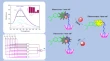
</m:math></inline-formula> (for the third order SBs). Table&#8201;<tblr tid="T1">1</tblr> gives the TMM-simulated optimal design parameters, together with the optical characteristics of the sample triple-channel device <abbrgrp><abbr bid="B5">5</abbr></abbrgrp>.</p><table id="T1"><title><p>Table 1</p></title><caption><p><b>Optimal design parameters and channel characteristics of the first, second, third order SBs of triple-cavity PhC</b></p></caption><tgroup align="left" cols="10"><colspec align="left" colname="c1" colnum="1" colwidth="1*"/><colspec align="left" colname="c2" colnum="2" colwidth="1*"/><colspec align="left" colname="c3" colnum="3" colwidth="1*"/><colspec align="left" colname="c4" colnum="4" colwidth="1*"/><colspec align="left" colname="c5" colnum="5" colwidth="1*"/><colspec align="left" colname="c6" colnum="6" colwidth="1*"/><colspec align="left" colname="c7" colnum="7" colwidth="1*"/><colspec align="left" colname="c8" colnum="8" colwidth="1*"/><colspec align="left" colname="c9" colnum="9" colwidth="1*"/><colspec align="left" colname="c10" colnum="10" colwidth="1*"/><thead valign="top"><row rowsep="1"><entry colname="c1"><p><b><it>m</it></b></p></entry><entry colname="c2"><p><b><it>a&#8201;=&#8201;d</it></b><sub><b>Si</b></sub>&#8201;<b>+</b>&#8201; <b><it>d</it></b><sub><b>air</b></sub><b>(nm)</b></p></entry><entry colname="c3"><p><b><it>f</it></b><sub><b>Si</b></sub></p></entry><entry colname="c4"><p><b><it>d</it></b><sub><b>Si</b></sub><b>(nm)</b></p></entry><entry colname="c5"><p><b><it>&#955;</it></b><sub><b><it>c</it></b> <b>1</b></sub><b>(nm)</b></p></entry><entry colname="c6"><p><b><it>&#955;</it></b><sub><b><it>c</it></b> <b>2</b></sub><b>(nm)</b></p></entry><entry colname="c7"><p><b><it>&#955;</it></b><sub><b><it>c</it></b> <b>3</b></sub><b>(nm)</b></p></entry><entry colname="c8"><p><b><it>&#955;</it></b><sub><b><it>s</it></b></sub>&#8201;<b><it>=&#8201;&#955;</it></b><sub><b>s12</b></sub>&#8201;<b>=</b>&#8201; <b><it>&#955;</it></b><sub><b><it>s</it></b> <b>23</b></sub><b>(nm)</b></p></entry><entry colname="c9"><p><b><it>Q</it></b></p></entry><entry colname="c10"><p><b><it>I</it></b><sub><b>1,2,3</b></sub><b>(%)</b></p></entry></row></thead><tbody valign="top"><row><entry colname="c1"><p>1</p></entry><entry colname="c2"><p>1,400</p></entry><entry colname="c3"><p>0.23</p></entry><entry colname="c4"><p>325</p></entry><entry colname="c5"><p>3,720</p></entry><entry colname="c6"><p>3,875</p></entry><entry colname="c7"><p>4,025</p></entry><entry colname="c8"><p>153.3</p></entry><entry colname="c9"><p>130</p></entry><entry colname="c10"><p>100</p></entry></row><row><entry colname="c1"><p>2</p></entry><entry colname="c2"><p>900</p></entry><entry colname="c3"><p>0.4</p></entry><entry colname="c4"><p>360</p></entry><entry colname="c5"><p>1,670</p></entry><entry colname="c6"><p>1,713</p></entry><entry colname="c7"><p>1,756</p></entry><entry colname="c8"><p>43</p></entry><entry colname="c9"><p>380</p></entry><entry colname="c10"><p>100</p></entry></row><row rowsep="1"><entry colname="c1"><p>3</p></entry><entry colname="c2"><p>900</p></entry><entry colname="c3"><p>0.54</p></entry><entry colname="c4"><p>486</p></entry><entry colname="c5"><p>1,363</p></entry><entry colname="c6"><p>1,383</p></entry><entry colname="c7"><p>1,403</p></entry><entry colname="c8"><p>20</p></entry><entry colname="c9"><p>460</p></entry><entry colname="c10"><p>100</p></entry></row></tbody></tgroup></table></sec><sec><st><p>Results and discussion</p></st><p>Optimal parameters taken from Table&#8201;<tblr tid="T1">1</tblr> were used for the fabrication of integrated triple-channel devices on a &lt;100&#8201;&gt;&#8201;<it>p</it>-type silicon-on-insulator (SOI) wafer with a device layer thickness of 4.5&#8201;&#956;m. The fabrication process involved used e-beam lithography to define the patterns followed by plasma etching down to the buried oxide layer. Scanning electron microscopy (SEM) investigation of the devices fabricated revealed the presence of a random deviation of the Si wall thicknesses, <it>&#948;d</it><sub>Si</sub>, of up to 10.8% of the target thickness. In Figure&#8201;<figr fid="F2">2</figr>a, this deviation is demonstrated on the SEM image of the structure with <it>a</it>&#8201;=&#8201;900&#8201;nm, which operates within the second order SB ( <it>m</it>&#8201;=&#8201;2, Table&#8201;<tblr tid="T1">1</tblr>). This thickness deviation, <it>&#948;d</it><sub>Si</sub>, directly influences the optical thicknesses of the cavities, <inline-formula><m:math name="1556-276X-7-387-i11" xmlns:m="http://www.w3.org/1998/Math/MathML"><m:mrow>
   <m:msubsup>
      <m:mi>n</m:mi>
      <m:mtext>def</m:mtext>
      <m:mrow>
         <m:mo stretchy="true">(</m:mo>
         <m:mi>i</m:mi>
         <m:mo stretchy="true">)</m:mo>
      </m:mrow>
   </m:msubsup>
   <m:mspace width="0.12em"/>
   <m:msub>
      <m:mi>d</m:mi>
      <m:mtext>air</m:mtext>
   </m:msub>
   <m:mo>=</m:mo>
   <m:msubsup>
      <m:mi>n</m:mi>
      <m:mtext>def</m:mtext>
      <m:mrow>
         <m:mo stretchy="true">(</m:mo>
         <m:mi>i</m:mi>
         <m:mo stretchy="true">)</m:mo>
      </m:mrow>
   </m:msubsup>
   <m:mspace width="0.12em"/>
   <m:mfenced open="(" close=")">
      <m:mrow>
         <m:mi>a</m:mi>
         <m:mo>&#8722;</m:mo>
         <m:msub>
            <m:mi>d</m:mi>
            <m:mtext>Si</m:mtext>
         </m:msub>
         <m:mo>&#177;</m:mo>
         <m:mi>&#948;</m:mi>
         <m:msub>
            <m:mi>d</m:mi>
            <m:mtext>Si</m:mtext>
         </m:msub>
      </m:mrow>
   </m:mfenced>
</m:mrow>
</m:math></inline-formula>, and also the optical thicknesses of the spacings between the cavities (or optical thickness of the air grooves),<inline-formula><m:math name="1556-276X-7-387-i12" xmlns:m="http://www.w3.org/1998/Math/MathML"><m:mrow>
   <m:msub>
      <m:mi>n</m:mi>
      <m:mtext>air</m:mtext>
   </m:msub>
   <m:mspace width="0.12em"/>
   <m:msub>
      <m:mi>d</m:mi>
      <m:mtext>air</m:mtext>
   </m:msub>
   <m:mo>=</m:mo>
   <m:msub>
      <m:mi>n</m:mi>
      <m:mtext>air</m:mtext>
   </m:msub>
   <m:mo stretchy="true">(</m:mo>
   <m:msub>
      <m:mi>d</m:mi>
      <m:mtext>air</m:mtext>
   </m:msub>
   <m:mo>&#177;</m:mo>
   <m:mi>&#948;</m:mi>
   <m:msub>
      <m:mi>d</m:mi>
      <m:mtext>Si</m:mtext>
   </m:msub>
   <m:mo stretchy="true">)</m:mo>
</m:mrow>
</m:math></inline-formula>. Variation of the geometrical parameters of a coupled-cavity device results in random shifts, splitting and attenuation of each of the cavity resonances <abbrgrp><abbr bid="B14">14</abbr><abbr bid="B23">23</abbr><abbr bid="B24">24</abbr><abbr bid="B25">25</abbr></abbrgrp>.</p><fig id="F2"><title><p>Figure 2</p></title><caption><p>SEM image and transmission spectra of the ideal and fabricated devices.</p></caption><text>
   <p><b>SEM image and transmission spectra of the ideal and fabricated devices.</b> ( <b>a</b>) SEM image of the fabricated device with the thicknesses of the Si walls denoted by numbers. Transmission spectra of the predicted ideal triple-defect device (black line) and the fabricated device (red line) operating within ( <b>b</b>) the first order SB with <it>d</it><sub>Si</sub>&#8201;=&#8201;325&#8201;nm, (<b>c</b>) the second order SB with <it>d</it><sub>Si</sub>&#8201;=&#8201;360&#8201;nm and (<b>d</b>) the third order SB with <it>d</it><sub>Si</sub>&#8201;=&#8201;486&#8201;nm. The structural deviations for the fabricated device are: (b) <it>&#177;&#8201;&#948; d</it><sub>Si</sub>&#8201;<it>=</it>&#8201;10.8% (35&#8201;nm), (c) 5.6% (20&#8201;nm) and (d) 4% (20&#8201;nm). The refractive index of allcavities is <inline-formula><m:math name="1556-276X-7-387-i13" xmlns:m="http://www.w3.org/1998/Math/MathML"><m:mrow>
   <m:msubsup>
      <m:mi>n</m:mi>
      <m:mtext>def</m:mtext>
      <m:mrow>
         <m:mo stretchy="true">(</m:mo>
         <m:mn mathvariant="bold">2</m:mn>
         <m:mo mathvariant="bold">,</m:mo>
         <m:mn mathvariant="bold">4</m:mn>
         <m:mo mathvariant="bold">,</m:mo>
         <m:mn mathvariant="bold">6</m:mn>
         <m:mo stretchy="true">)</m:mo>
      </m:mrow>
   </m:msubsup>
   <m:mo>=</m:mo>
   <m:mn>1.63</m:mn>
</m:mrow>
</m:math></inline-formula>.</p>
</text><graphic file="1556-276X-7-387-2"/></fig><p>Simulated transmission spectra for the devices originally designed and fabricated are demonstrated in Figure&#8201;<figr fid="F2">2</figr>b,c,d. Although the attenuation of the maximum transmission intensities is only about 3% to 5% resulting in a negligible reduction in the parameter <it>Q</it>, the precise wavelength position of each channel, &#955;<sub>c</sub>, was affected significantly. All of the channels are unequally blue/red-shifted by&#8201;approximately&#8201;0.3% to 1.2% from the originally designed operational wavelengths, which is more than the target channel bandwidth (Figure&#8201;<figr fid="F2">2</figr>b,c,d, red lines). A summary of the TMM analysis for the three fabricated structures, operating within the first three SBs along with data on the SEM registered thickness deviations, <it>&#177;&#948;d</it><sub>Si</sub>, and the corresponding random shifts of the resonant peak wavelengths, &#177;&#916;<it>&#955;</it><sub><it>c</it>1,2,3</sub>, are reported in Table&#8201;<tblr tid="T2">2</tblr>.</p><table id="T2"><title><p>Table 2</p></title><caption><p><b>Deviation of the Si wall thicknesses and channel characteristics for the fabricated triple-cavity PhC</b></p></caption><tgroup align="left" cols="7"><colspec align="left" colname="c1" colnum="1" colwidth="1*"/><colspec align="left" colname="c2" colnum="2" colwidth="1*"/><colspec align="left" colname="c3" colnum="3" colwidth="1*"/><colspec align="left" colname="c4" colnum="4" colwidth="1*"/><colspec align="left" colname="c5" colnum="5" colwidth="1*"/><colspec align="left" colname="c6" colnum="6" colwidth="1*"/><colspec align="left" colname="c7" colnum="7" colwidth="1*"/><thead valign="top"><row rowsep="1"><entry colname="c1"><p><b><it>m</it></b></p></entry><entry colname="c2"><p><b><it>d</it></b><sub><b>Si</b></sub>&#8201;<b>+</b>&#8201; <b><it>d</it></b><sub><b>air</b></sub><b>(nm)</b></p></entry><entry colname="c3"><p><b><it>d</it></b><sub><b>Si</b></sub>&#8201;<b><it>&#177;&#8201;&#948; d</it></b><sub><b>Si</b></sub><b>(nm)</b></p></entry><entry colname="c4"><p><b>&#177;&#916;</b> <b><it>&#955;</it></b><sub><b><it>c</it></b> <b>1</b></sub><b>(nm)</b></p></entry><entry colname="c5"><p><b>&#177;&#916;</b> <b><it>&#955;</it></b><sub><b><it>c</it></b> <b>2</b></sub><b>(nm)</b></p></entry><entry colname="c6"><p><b>&#177;&#916;</b> <b><it>&#955;</it></b><sub><b><it>c</it></b> <b>3</b></sub><b>(nm)</b></p></entry><entry colname="c7"><p><b><it>&#955;</it></b><sub><b><it>s</it></b></sub>&#8201;<b>&#177;&#8201;&#916;</b> <b><it>&#955;</it></b><sub><b><it>s</it></b> <b>12</b></sub><b>(nm)</b> <b><it>&#955;</it></b><sub><b><it>s</it></b></sub>&#8201;<b>&#177;&#8201;&#916;</b> <b><it>&#955;</it></b><sub><b><it>s</it></b> <b>23</b></sub><b>(nm)</b></p></entry></row></thead><tbody valign="top"><row><entry colname="c1"><p>1</p></entry><entry colname="c2"><p>1,400</p></entry><entry colname="c3"><p>325&#8201;<it>&#177;</it>&#8201;35</p></entry><entry colname="c4"><p>&#8722;22</p></entry><entry colname="c5"><p>&#8722;46.8</p></entry><entry colname="c6"><p>&#8722;18.5</p></entry><entry colname="c7"><p>153.3&#8201;&#8722;&#8201;24.3</p></entry></row><row><entry colname="c1"/><entry colname="c2"/><entry colname="c3"><p>(<b><it>&#177;</it></b>10.8&#8201;%)</p></entry><entry colname="c4"/><entry colname="c5"/><entry colname="c6"/><entry colname="c7"><p>153.3&#8201;+&#8201;27.7</p></entry></row><row><entry colname="c1"><p>2</p></entry><entry colname="c2"><p>900</p></entry><entry colname="c3"><p>360&#8201;<it>&#177;</it>&#8201;20</p></entry><entry colname="c4"><p>+12.5</p></entry><entry colname="c5"><p>+7.7</p></entry><entry colname="c6"><p>+12.5</p></entry><entry colname="c7"><p>43&#8201;&#8722;&#8201;6</p></entry></row><row><entry colname="c1"/><entry colname="c2"/><entry colname="c3"><p>(<b><it>&#177;</it></b>5.6&#8201;%)</p></entry><entry colname="c4"/><entry colname="c5"/><entry colname="c6"/><entry colname="c7"><p>43&#8201;+&#8201;6</p></entry></row><row><entry colname="c1"><p>3</p></entry><entry colname="c2"><p>900</p></entry><entry colname="c3"><p>486&#8201;<it>&#177;</it>&#8201;20</p></entry><entry colname="c4"><p>+4</p></entry><entry colname="c5"><p>+5.6</p></entry><entry colname="c6"><p>+5.3</p></entry><entry colname="c7"><p>20&#8201;&#8722;&#8201;1</p></entry></row><row><entry colname="c1"/><entry colname="c2"/><entry colname="c3"/><entry colname="c4"/><entry colname="c5"/><entry colname="c6"/><entry colname="c7"><p>20&#8201;+&#8201;2</p></entry></row><row rowsep="1"><entry colname="c1"/><entry colname="c2"/><entry colname="c3"><p>(<b><it>&#177;</it></b>4&#8201;%)</p></entry><entry colname="c4"/><entry colname="c5"/><entry colname="c6"/><entry colname="c7"/></row></tbody></tgroup></table><p>The simplest way to compensate for these errors, post-fabrication (<it>d</it><sub>air</sub>&#8201;&#177;&#8201;<it>&#948;d</it><sub>Si</sub>), is to adjust the refractive indices of the coupled cavities individually to their optimised values, <inline-formula><m:math name="1556-276X-7-387-i14" xmlns:m="http://www.w3.org/1998/Math/MathML"><m:mrow>
   <m:msubsup>
      <m:mi>n</m:mi>
      <m:mtext>def</m:mtext>
      <m:mrow>
         <m:mo stretchy="true">(</m:mo>
         <m:mn mathvariant="bold">2</m:mn>
         <m:mo mathvariant="bold">,</m:mo>
         <m:mn mathvariant="bold">4</m:mn>
         <m:mo mathvariant="bold">,</m:mo>
         <m:mn mathvariant="bold">6</m:mn>
         <m:mo stretchy="true">)</m:mo>
      </m:mrow>
   </m:msubsup>
   <m:mo>&#177;</m:mo>
   <m:mi>&#948;</m:mi>
   <m:mspace width="0.12em"/>
   <m:msubsup>
      <m:mi>n</m:mi>
      <m:mtext>def</m:mtext>
      <m:mrow>
         <m:mo stretchy="true">(</m:mo>
         <m:mn mathvariant="bold">2</m:mn>
         <m:mo mathvariant="bold">,</m:mo>
         <m:mn mathvariant="bold">4</m:mn>
         <m:mo mathvariant="bold">,</m:mo>
         <m:mn mathvariant="bold">6</m:mn>
         <m:mo stretchy="true">)</m:mo>
      </m:mrow>
   </m:msubsup>
</m:mrow>
</m:math></inline-formula>. This can be achieved by fabrication of the device on SOI platform and by applying a different voltage to each individual cavity. Then, by increasing or decreasing the applied voltage by &#916;<it>V</it> in the various cavities, different variations in the LC refractive indices can be obtained, <inline-formula><m:math name="1556-276X-7-387-i15" xmlns:m="http://www.w3.org/1998/Math/MathML"><m:mrow>
   <m:msubsup>
      <m:mi>n</m:mi>
      <m:mtext>def</m:mtext>
      <m:mrow>
         <m:mo stretchy="true">(</m:mo>
         <m:mn mathvariant="bold">2</m:mn>
         <m:mo mathvariant="bold">,</m:mo>
         <m:mn mathvariant="bold">4</m:mn>
         <m:mo mathvariant="bold">,</m:mo>
         <m:mn mathvariant="bold">6</m:mn>
         <m:mo stretchy="true">)</m:mo>
      </m:mrow>
   </m:msubsup>
   <m:mo>=</m:mo>
   <m:msub>
      <m:mi>n</m:mi>
      <m:mtext>LC</m:mtext>
   </m:msub>
   <m:mo>&#177;</m:mo>
   <m:mi>&#916;</m:mi>
   <m:mi>n</m:mi>
</m:mrow>
</m:math></inline-formula>. For the example of a triple-cavity PhC, we focus on the two most obvious relationships between <inline-formula><m:math name="1556-276X-7-387-i16" xmlns:m="http://www.w3.org/1998/Math/MathML"><m:mrow>
   <m:msubsup>
      <m:mi>n</m:mi>
      <m:mtext>def</m:mtext>
      <m:mrow>
         <m:mo stretchy="true">(</m:mo>
         <m:mn mathvariant="bold">2</m:mn>
         <m:mo stretchy="true">)</m:mo>
      </m:mrow>
   </m:msubsup>
   <m:mtext>,</m:mtext>
   <m:mspace width="0.12em"/>
   <m:msubsup>
      <m:mi>n</m:mi>
      <m:mtext>def</m:mtext>
      <m:mrow>
         <m:mo stretchy="true">(</m:mo>
         <m:mn mathvariant="bold">4</m:mn>
         <m:mo stretchy="true">)</m:mo>
      </m:mrow>
   </m:msubsup>
   <m:mtext>  and  </m:mtext>
   <m:mspace width="0.12em"/>
   <m:msubsup>
      <m:mi>n</m:mi>
      <m:mtext>def</m:mtext>
      <m:mrow>
         <m:mo stretchy="true">(</m:mo>
         <m:mn mathvariant="bold">6</m:mn>
         <m:mo stretchy="true">)</m:mo>
      </m:mrow>
   </m:msubsup>
</m:mrow>
</m:math></inline-formula><sub>,</sub> allowing precise manipulation of the central channel position, <it>&#955;</it><sub><it>c</it>2,</sub> or the edge-channel positions, <it>&#955;</it><sub><it>c</it>1</sub> and <it>&#955;</it><sub>3</sub>.</p><p>Let us gradually increase the refractive index of the central cavity, <inline-formula><m:math name="1556-276X-7-387-i17" xmlns:m="http://www.w3.org/1998/Math/MathML"><m:mrow>
   <m:msubsup>
      <m:mi>n</m:mi>
      <m:mtext>def</m:mtext>
      <m:mrow>
         <m:mo stretchy="true">(</m:mo>
         <m:mn mathvariant="bold">4</m:mn>
         <m:mo stretchy="true">)</m:mo>
      </m:mrow>
   </m:msubsup>
   <m:mo>=</m:mo>
   <m:msub>
      <m:mi>n</m:mi>
      <m:mtext>LC</m:mtext>
   </m:msub>
   <m:mo>+</m:mo>
   <m:mi>&#916;</m:mi>
   <m:mi>n</m:mi>
</m:mrow>
</m:math></inline-formula>, by <it>&#916;n</it>&#8201;=&#8201;0.001, while decreasing the refractive indices of the two edge cavities, <inline-formula><m:math name="1556-276X-7-387-i18" xmlns:m="http://www.w3.org/1998/Math/MathML"><m:mrow>
   <m:msubsup>
      <m:mi>n</m:mi>
      <m:mtext>def</m:mtext>
      <m:mrow>
         <m:mo stretchy="true">(</m:mo>
         <m:mn mathvariant="bold">2</m:mn>
         <m:mo stretchy="true">)</m:mo>
      </m:mrow>
   </m:msubsup>
   <m:mo>=</m:mo>
   <m:msubsup>
      <m:mi>n</m:mi>
      <m:mtext>def</m:mtext>
      <m:mrow>
         <m:mo stretchy="true">(</m:mo>
         <m:mn mathvariant="bold">6</m:mn>
         <m:mo stretchy="true">)</m:mo>
      </m:mrow>
   </m:msubsup>
   <m:mo>=</m:mo>
   <m:msub>
      <m:mi>n</m:mi>
      <m:mtext>LC</m:mtext>
   </m:msub>
   <m:mo>+</m:mo>
   <m:mi>&#916;</m:mi>
   <m:mi>n</m:mi>
</m:mrow>
</m:math></inline-formula> by the same value of &#916;<it>n</it> (Figure&#8201;<figr fid="F3">3</figr>a). In this case, the central cavity has the strongest coupling, <inline-formula><m:math name="1556-276X-7-387-i19" xmlns:m="http://www.w3.org/1998/Math/MathML"><m:mrow>
   <m:msubsup>
      <m:mi>n</m:mi>
      <m:mtext>def</m:mtext>
      <m:mrow>
         <m:mo stretchy="true">(</m:mo>
         <m:mn mathvariant="bold">2</m:mn>
         <m:mo mathvariant="bold">,</m:mo>
         <m:mn mathvariant="bold">6</m:mn>
         <m:mo stretchy="true">)</m:mo>
      </m:mrow>
   </m:msubsup>
   <m:mo>=</m:mo>
   <m:msubsup>
      <m:mi>n</m:mi>
      <m:mtext>def</m:mtext>
      <m:mrow>
         <m:mo stretchy="true">(</m:mo>
         <m:mn mathvariant="bold">2</m:mn>
         <m:mo mathvariant="bold">,</m:mo>
         <m:mn mathvariant="bold">6</m:mn>
         <m:mo stretchy="true">)</m:mo>
      </m:mrow>
   </m:msubsup>
   <m:mo>+</m:mo>
   <m:mn>2</m:mn>
   <m:mspace width="0.12em"/>
   <m:mi>&#916;</m:mi>
   <m:mi>n</m:mi>
</m:mrow>
</m:math></inline-formula>, and acts as the primary cavity in the system, while the edge cavities represent variable mirrors on both sides of the central cavity. At the same time, the overall optical thickness of the system <inline-formula><m:math name="1556-276X-7-387-i20" xmlns:m="http://www.w3.org/1998/Math/MathML"><m:mrow>
   <m:msubsup>
      <m:mi>n</m:mi>
      <m:mtext>def</m:mtext>
      <m:mrow>
         <m:mo stretchy="true">(</m:mo>
         <m:mn mathvariant="bold">2</m:mn>
         <m:mo mathvariant="bold">,</m:mo>
         <m:mn mathvariant="bold">4</m:mn>
         <m:mo mathvariant="bold">,</m:mo>
         <m:mn mathvariant="bold">6</m:mn>
         <m:mo stretchy="true">)</m:mo>
      </m:mrow>
   </m:msubsup>
   <m:mspace width="0.12em"/>
   <m:msub>
      <m:mi>d</m:mi>
      <m:mtext>air</m:mtext>
   </m:msub>
   <m:mo>=</m:mo>
   <m:msub>
      <m:mi>&#955;</m:mi>
      <m:mi>m</m:mi>
   </m:msub>
   <m:mo>/</m:mo>
   <m:mn>2</m:mn>
</m:mrow>
</m:math></inline-formula> decreases which leads to a blue shift of its resonance peaks <abbrgrp><abbr bid="B15">15</abbr></abbrgrp>. Let us monitor the positions of the triple resonances during these refractive index variations. We use normalised wavelength units, NW&#8201;=&#8201;<it>&#955;/a</it>, and therefore, the results obtained can be applied to a variety of nano- and micro- structures, operating over a wide wavelength range. In Figure&#8201;<figr fid="F3">3</figr>b, we demonstrate transmission spectra for <it>&#916;n</it>&#8201;=&#8201;0.013 (thin blue line) and <it>&#916;n</it>&#8201;=&#8201;0.026 (thick blue line). The central channel is blue-shifted, while the edge resonances have retained their positions. For the example considered, the maximum refractive index difference, 2 <it>&#916;n</it>&#8201;=&#8201;0.052 (which is only 24% of the birefringence value for the LC E7, &#916; <it>n</it><sub>E7</sub>&#8201;<it>=</it>&#8201;0.2255), allows us to achieve a maximum relative independent shift of the central channel, &#916; <it>&#955;</it><sub><it>s</it></sub>, of up to 25% of the channel spacing, <it>&#955;</it><sub><it>s</it></sub>. However, further increases in the overall difference, 2<it>&#916;n</it>, will break the symmetry of the system and initiate a coupling effect between all of the cavities, resulting in a shift of all the resonances simultaneously.</p><fig id="F3"><title><p>Figure 3</p></title><caption><p>Cavity refractive indices versus relative channel shift and continuous tuning of the central channel.</p></caption><text>
   <p><b>Cavity refractive indices versus relative channel shift and continuous tuning of the central channel.</b> ( <b>a</b>) The cavity refractive indices, <inline-formula><m:math name="1556-276X-7-387-i21" xmlns:m="http://www.w3.org/1998/Math/MathML"><m:msubsup>
   <m:mi>n</m:mi>
   <m:mtext>def</m:mtext>
   <m:mrow>
      <m:mo stretchy="true">(</m:mo>
      <m:mn mathvariant="bold">2</m:mn>
      <m:mo mathvariant="bold">,</m:mo>
      <m:mn mathvariant="bold">4</m:mn>
      <m:mo mathvariant="bold">,</m:mo>
      <m:mn mathvariant="bold">6</m:mn>
      <m:mo stretchy="true">)</m:mo>
   </m:mrow>
</m:msubsup>
</m:math></inline-formula>, versus relative channel position shift normalised to the original channel spacing. (<b>b</b>) Continuous tuning of the central channel for <it>&#8710;n</it>&#8201;=&#8201;&#8722;0.026 (red dashed line), <it>&#8710;n</it>&#8201;=&#8201;&#8722;0.013 (red dashed dotted line), <it>&#8710;n</it>&#8201;=&#8201;0 (black line), <it>&#8710;n</it>&#8201;=&#8201;0.013 (thin blue line) and <it>&#8710;n</it>&#8201;=&#8201;0.026 (thick blue line).</p>
</text><graphic file="1556-276X-7-387-3"/></fig><p>The opposite manipulation of the refractive indices, i.e. reducing <inline-formula><m:math name="1556-276X-7-387-i22" xmlns:m="http://www.w3.org/1998/Math/MathML"><m:mrow>
   <m:msubsup>
      <m:mi>n</m:mi>
      <m:mtext>def</m:mtext>
      <m:mrow>
         <m:mo stretchy="true">(</m:mo>
         <m:mn mathvariant="bold">4</m:mn>
         <m:mo stretchy="true">)</m:mo>
      </m:mrow>
   </m:msubsup>
   <m:mo>=</m:mo>
   <m:msub>
      <m:mi>n</m:mi>
      <m:mtext>LC</m:mtext>
   </m:msub>
   <m:mo>&#8722;</m:mo>
   <m:mi>&#916;</m:mi>
   <m:mi>n</m:mi>
</m:mrow>
</m:math></inline-formula> while increasing <inline-formula><m:math name="1556-276X-7-387-i23" xmlns:m="http://www.w3.org/1998/Math/MathML"><m:mrow>
   <m:msubsup>
      <m:mi>n</m:mi>
      <m:mtext>def</m:mtext>
      <m:mrow>
         <m:mo stretchy="true">(</m:mo>
         <m:mn mathvariant="bold">2</m:mn>
         <m:mo stretchy="true">)</m:mo>
      </m:mrow>
   </m:msubsup>
   <m:mo>=</m:mo>
   <m:msubsup>
      <m:mi>n</m:mi>
      <m:mtext>def</m:mtext>
      <m:mrow>
         <m:mo stretchy="true">(</m:mo>
         <m:mn mathvariant="bold">6</m:mn>
         <m:mo stretchy="true">)</m:mo>
      </m:mrow>
   </m:msubsup>
   <m:mo>=</m:mo>
   <m:msub>
      <m:mi>n</m:mi>
      <m:mtext>LC</m:mtext>
   </m:msub>
   <m:mo>+</m:mo>
   <m:mi>&#916;</m:mi>
   <m:mi>n</m:mi>
</m:mrow>
</m:math></inline-formula>, results in an individual red shift of the central channel (Figure&#8201;<figr fid="F3">3</figr>b, red dashed dotted and dashed lines). Note that the maximum intensity of <it>T</it>&#8201;=&#8201;100% and the initial bandwidths are unaffected for all switching positions of the triple-channel system.</p><p>We now consider the effect of varying the refractive index of the central cavity only in <inline-formula><m:math name="1556-276X-7-387-i24" xmlns:m="http://www.w3.org/1998/Math/MathML"><m:mrow>
   <m:msubsup>
      <m:mi>n</m:mi>
      <m:mtext>def</m:mtext>
      <m:mrow>
         <m:mo stretchy="true">(</m:mo>
         <m:mn mathvariant="bold">2</m:mn>
         <m:mo stretchy="true">)</m:mo>
      </m:mrow>
   </m:msubsup>
   <m:mo>=</m:mo>
   <m:msubsup>
      <m:mi>n</m:mi>
      <m:mtext>def</m:mtext>
      <m:mrow>
         <m:mo stretchy="true">(</m:mo>
         <m:mn mathvariant="bold">6</m:mn>
         <m:mo stretchy="true">)</m:mo>
      </m:mrow>
   </m:msubsup>
   <m:mo>=</m:mo>
   <m:msub>
      <m:mi>n</m:mi>
      <m:mtext>LC</m:mtext>
   </m:msub>
   <m:mo>=</m:mo>
   <m:mn>1.63.</m:mn>
</m:mrow>
</m:math></inline-formula>The refractive indices of the edge cavities are considered to be fixed at the initial value, <inline-formula><m:math name="1556-276X-7-387-i25" xmlns:m="http://www.w3.org/1998/Math/MathML"><m:mrow>
   <m:msubsup>
      <m:mi>n</m:mi>
      <m:mtext>def</m:mtext>
      <m:mrow>
         <m:mo stretchy="true">(</m:mo>
         <m:mn mathvariant="bold">2</m:mn>
         <m:mo stretchy="true">)</m:mo>
      </m:mrow>
   </m:msubsup>
   <m:mo>=</m:mo>
   <m:msubsup>
      <m:mi>n</m:mi>
      <m:mtext>def</m:mtext>
      <m:mrow>
         <m:mo stretchy="true">(</m:mo>
         <m:mn mathvariant="bold">6</m:mn>
         <m:mo stretchy="true">)</m:mo>
      </m:mrow>
   </m:msubsup>
   <m:mo>=</m:mo>
   <m:msub>
      <m:mi>n</m:mi>
      <m:mtext>LC</m:mtext>
   </m:msub>
   <m:mo>=</m:mo>
   <m:mn>1.63</m:mn>
</m:mrow>
</m:math></inline-formula> (Figure&#8201;<figr fid="F4">4</figr>a). In this case, the central cavity plays the role of a variable intermediate mirror between two strongly coupled edge cavities. The decrease by <it>&#916;n</it> of the overall optical thickness of the system <inline-formula><m:math name="1556-276X-7-387-i26" xmlns:m="http://www.w3.org/1998/Math/MathML"><m:mrow>
   <m:msubsup>
      <m:mi>n</m:mi>
      <m:mtext>def</m:mtext>
      <m:mrow>
         <m:mo stretchy="true">(</m:mo>
         <m:mn mathvariant="bold">2</m:mn>
         <m:mo mathvariant="bold">,</m:mo>
         <m:mn mathvariant="bold">4</m:mn>
         <m:mo mathvariant="bold">,</m:mo>
         <m:mn mathvariant="bold">6</m:mn>
         <m:mo stretchy="true">)</m:mo>
      </m:mrow>
   </m:msubsup>
   <m:msub>
      <m:mi>d</m:mi>
      <m:mtext>air</m:mtext>
   </m:msub>
   <m:mo>=</m:mo>
   <m:msub>
      <m:mi>&#955;</m:mi>
      <m:mi>m</m:mi>
   </m:msub>
   <m:mo>/</m:mo>
   <m:mn>2</m:mn>
</m:mrow>
</m:math></inline-formula> results in a blue shift of the edge channels, while the central channel retains its wavelength position. This is clearly demonstrated in Figure&#8201;<figr fid="F4">4</figr>b for <it>&#916;n</it>&#8201;=&#8201;0, 0.02, 0.052 and 0.11 for the structure under consideration. The increase of the channel spacing, <it>&#955;</it><sub><it>s</it></sub>&#8201;<it>+&#8201;&#916;&#955;</it><sub>s</sub>, results in a decrease of the channel spacing between the central channel and the right edge channel, <it>&#955;</it><sub><it>s2,3</it></sub>&#8201;=&#8201;<it>&#955;</it><sub><it>s</it></sub>&#8201;<it>&#8722;&#8201;&#916;&#955;</it><sub><it>s</it></sub>, lowering the out-of-band reflection between them.</p><fig id="F4"><title><p>Figure 4</p></title><caption><p>The cavity refractive indices versus relative channel spacings and continuous tuning of the edge channels.</p></caption><text>
   <p><b>The cavity refractive indices versus relative channel spacings and continuous tuning of the edge channels.</b> ( <b>a</b>) The cavity refractive indices <inline-formula><m:math name="1556-276X-7-387-i27" xmlns:m="http://www.w3.org/1998/Math/MathML"><m:msubsup>
   <m:mi>n</m:mi>
   <m:mtext>def</m:mtext>
   <m:mrow>
      <m:mo stretchy="true">(</m:mo>
      <m:mn mathvariant="bold">2</m:mn>
      <m:mo mathvariant="bold">,</m:mo>
      <m:mn mathvariant="bold">4</m:mn>
      <m:mo mathvariant="bold">,</m:mo>
      <m:mn mathvariant="bold">6</m:mn>
      <m:mo stretchy="true">)</m:mo>
   </m:mrow>
</m:msubsup>
</m:math></inline-formula> versus the ratio of the channel spacings, <it>&#955;</it><sub><it>s</it>12</sub>/<it>&#955;</it><sub><it>s</it>23</sub>. (<b>b</b>) Continuous blue shift of the edge channels with a linear decrease in the central cavity refractive index, <inline-formula><m:math name="1556-276X-7-387-i28" xmlns:m="http://www.w3.org/1998/Math/MathML"><m:mrow>
   <m:msubsup>
      <m:mi>n</m:mi>
      <m:mtext>def</m:mtext>
      <m:mrow>
         <m:mo stretchy="true">(</m:mo>
         <m:mn mathvariant="bold">4</m:mn>
         <m:mo stretchy="true">)</m:mo>
      </m:mrow>
   </m:msubsup>
   <m:mtext>,</m:mtext>
</m:mrow>
</m:math></inline-formula> by <it>&#8710;n</it>&#8201;=&#8201;0.02 (thin black line), <it>&#8710;n</it>&#8201;=&#8201;0.052 (dashed blue line) and <it>&#8710;n</it>&#8201;=&#8201;0.11 (dashed dotted blue line). The triple transmission channels, for <it>&#8710;n</it>&#8201;=&#8201;0, are also demonstrated (thick black line). ( <b>c</b>) Continuous red shift of the edge transmission channels with a linear increase in the central cavity refractive index, <inline-formula><m:math name="1556-276X-7-387-i29" xmlns:m="http://www.w3.org/1998/Math/MathML"><m:mrow>
   <m:msubsup>
      <m:mi>n</m:mi>
      <m:mtext>def</m:mtext>
      <m:mrow>
         <m:mo stretchy="true">(</m:mo>
         <m:mn mathvariant="bold">4</m:mn>
         <m:mo stretchy="true">)</m:mo>
      </m:mrow>
   </m:msubsup>
   <m:mtext>,</m:mtext>
</m:mrow>
</m:math></inline-formula> by <it>&#8710;n</it>&#8201;=&#8201;0.02 (thin black line), <it>&#8710;n</it>&#8201;=&#8201;0.052 (red dashed line) and <it>&#8710;n</it>&#8201;=&#8201;0.11 (red dashed dotted line).</p>
</text><graphic file="1556-276X-7-387-4"/></fig><p>As in the previous model, the overall increase in the refractive index, <it>&#916;n</it> up to 0.052, for the example considered, leads to a linear change in the channel spacings of up to 25% or <it>&#955;</it><sub><it>s</it>12</sub>/<it>&#955;</it><sub><it>s</it>23</sub>&#8201;=&#8201;1.5 (Figure&#8201;<figr fid="F4">4</figr>a, b). Although the out-of-band reflection between the central and right edge channel is decreased, it still reaches 95%. Further increases in <it>&#916;n</it> up to the limiting case of <it>&#916;n&#8201;=</it>&#8201;0.11, will result in a rapidly growing difference between channel spacings, <it>&#955;</it><sub><it>s</it>12</sub>/<it>&#955;</it><sub><it>s</it>23</sub> of up to 2.7 with a decrease of the out-of-band reflection between the central and left-edge channel to 90% (Figure&#8201;<figr fid="F4">4</figr>b, blue dashed dotted line).</p><p>For significantly higher values of <it>&#916;n</it> &gt;&#8201;&gt;&#8201;0.11 than those considered in this paper, the central cavity acts as a single cavity, independent of the edge cavities. The left-edge channel will be shifted out of the SB, and the right edge channel will be merged with the central channel, thus changing the resonator mode from triple mode to single mode. Obviously, the opposite manipulation of the refractive indices, i.e. increasing the <inline-formula><m:math name="1556-276X-7-387-i30" xmlns:m="http://www.w3.org/1998/Math/MathML"><m:mrow>
   <m:msubsup>
      <m:mi>n</m:mi>
      <m:mtext>def</m:mtext>
      <m:mrow>
         <m:mo stretchy="true">(</m:mo>
         <m:mn mathvariant="bold">4</m:mn>
         <m:mo stretchy="true">)</m:mo>
      </m:mrow>
   </m:msubsup>
   <m:mo>=</m:mo>
   <m:msub>
      <m:mi>n</m:mi>
      <m:mtext>LC</m:mtext>
   </m:msub>
   <m:mo>+</m:mo>
   <m:mi>&#916;</m:mi>
   <m:mi>n</m:mi>
</m:mrow>
</m:math></inline-formula> and fixed <inline-formula><m:math name="1556-276X-7-387-i31" xmlns:m="http://www.w3.org/1998/Math/MathML"><m:msubsup>
   <m:mi>n</m:mi>
   <m:mtext>def</m:mtext>
   <m:mrow>
      <m:mo stretchy="true">(</m:mo>
      <m:mn mathvariant="bold">2</m:mn>
      <m:mo stretchy="true">)</m:mo>
   </m:mrow>
</m:msubsup>
</m:math></inline-formula> = <inline-formula><m:math name="1556-276X-7-387-i32" xmlns:m="http://www.w3.org/1998/Math/MathML"><m:mrow>
   <m:msubsup>
      <m:mi>n</m:mi>
      <m:mtext>def</m:mtext>
      <m:mrow>
         <m:mo stretchy="true">(</m:mo>
         <m:mn mathvariant="bold">6</m:mn>
         <m:mo stretchy="true">)</m:mo>
      </m:mrow>
   </m:msubsup>
   <m:mo>=</m:mo>
   <m:msub>
      <m:mi>n</m:mi>
      <m:mtext>LC</m:mtext>
   </m:msub>
</m:mrow>
</m:math></inline-formula>, results in the individual red shift of the edge channels with the same &#916;<it>&#955;</it><sub><it>s</it></sub> value (Figure&#8201;<figr fid="F4">4</figr>c). Again, as for the central tuning combination, the maximum intensity of <it>T</it>&#8201;=&#8201;100% is not affected for all switching positions of the triple-channel system.</p><p>The tuning approach demonstrated here can be applied to the real devices (Table&#8201;<tblr tid="T2">2</tblr>) as previously considered, allowing their actual characteristics to approach those in the original design (Table&#8201;<tblr tid="T1">1</tblr>). In Figure&#8201;<figr fid="F5">5</figr>, this is demonstrated for a sample fabricated structure with <it>m</it>&#8201;=&#8201;2 (Figure&#8201;<figr fid="F2">2</figr>a). First, we reduce the refractive index of all cavities, <inline-formula><m:math name="1556-276X-7-387-i33" xmlns:m="http://www.w3.org/1998/Math/MathML"><m:mrow>
   <m:msubsup>
      <m:mi>n</m:mi>
      <m:mtext>def</m:mtext>
      <m:mrow>
         <m:mo stretchy="true">(</m:mo>
         <m:mn mathvariant="bold">2</m:mn>
         <m:mo mathvariant="bold">,</m:mo>
         <m:mn mathvariant="bold">4</m:mn>
         <m:mo mathvariant="bold">,</m:mo>
         <m:mn mathvariant="bold">6</m:mn>
         <m:mo stretchy="true">)</m:mo>
      </m:mrow>
   </m:msubsup>
   <m:mo>=</m:mo>
   <m:msub>
      <m:mi>n</m:mi>
      <m:mtext>LC</m:mtext>
   </m:msub>
   <m:mo>&#8722;</m:mo>
   <m:mi>&#916;</m:mi>
   <m:mi>n</m:mi>
</m:mrow>
</m:math></inline-formula>, in order to blue shift all three channels. The edge channels are precisely adjusted to the ideal positions when <inline-formula><m:math name="1556-276X-7-387-i34" xmlns:m="http://www.w3.org/1998/Math/MathML"><m:mrow>
   <m:msubsup>
      <m:mi>n</m:mi>
      <m:mtext>def</m:mtext>
      <m:mrow>
         <m:mo stretchy="true">(</m:mo>
         <m:mn mathvariant="bold">2</m:mn>
         <m:mo mathvariant="bold">,</m:mo>
         <m:mn mathvariant="bold">4</m:mn>
         <m:mo mathvariant="bold">,</m:mo>
         <m:mn mathvariant="bold">6</m:mn>
         <m:mo stretchy="true">)</m:mo>
      </m:mrow>
   </m:msubsup>
   <m:mo>=</m:mo>
   <m:mn>1.63</m:mn>
   <m:mo>&#8722;</m:mo>
   <m:mn>0.03</m:mn>
   <m:mo>=</m:mo>
   <m:mn>1.60</m:mn>
</m:mrow>
</m:math></inline-formula> (Figure&#8201;<figr fid="F5">5</figr>b, red line)<it>.</it> Now, we fine tune the central channel by increasing the refractive index of the edge cavities <inline-formula><m:math name="1556-276X-7-387-i35" xmlns:m="http://www.w3.org/1998/Math/MathML"><m:mrow>
   <m:msubsup>
      <m:mi>n</m:mi>
      <m:mtext>def</m:mtext>
      <m:mrow>
         <m:mo stretchy="true">(</m:mo>
         <m:mn mathvariant="bold">2</m:mn>
         <m:mo mathvariant="bold">,</m:mo>
         <m:mn mathvariant="bold">6</m:mn>
         <m:mo stretchy="true">)</m:mo>
      </m:mrow>
   </m:msubsup>
   <m:mo>=</m:mo>
   <m:mn>1.61</m:mn>
   <m:mo>+</m:mo>
   <m:mi>&#916;</m:mi>
   <m:mi>n</m:mi>
   <m:mo>=</m:mo>
   <m:mn>1.6</m:mn>
   <m:mo>+</m:mo>
   <m:mn>0.01</m:mn>
   <m:mo>=</m:mo>
   <m:mn>1.61</m:mn>
</m:mrow>
</m:math></inline-formula> and reducing the refractive index of the central cavity <inline-formula><m:math name="1556-276X-7-387-i36" xmlns:m="http://www.w3.org/1998/Math/MathML"><m:mrow>
   <m:msubsup>
      <m:mi>n</m:mi>
      <m:mtext>def</m:mtext>
      <m:mrow>
         <m:mo stretchy="true">(</m:mo>
         <m:mn mathvariant="bold">4</m:mn>
         <m:mo stretchy="true">)</m:mo>
      </m:mrow>
   </m:msubsup>
   <m:mo>=</m:mo>
   <m:mn>1.59</m:mn>
</m:mrow>
</m:math></inline-formula> (Figure&#8201;<figr fid="F5">5</figr>c). The system is now operating at the nominal values in the original design.</p><fig id="F5"><title><p>Figure 5</p></title><caption><p>Precise adjustment of the channel wavelength positions of the fabricated device to the originally designed.</p></caption><text>
   <p><b>Precise adjustment of the channel wavelength positions of the fabricated device to the originally designed</b>. Transmission spectra of the originally designed triple-defect device operating within the second SB ( <it>m</it>&#8201;=&#8201;2, Table&#8201;<tblr tid="T1">1</tblr>) (black line) and of the fabricated device with structural deviations of&#8201;<it>&#177;&#8201;&#948; d</it><sub>Si</sub>&#8201;<it>=</it>&#8201;20&#8201;nm&#8201;=&#8201;5.6% ( <it>m</it>&#8201;=&#8201;2, Table&#8201;<tblr tid="T2">2</tblr>) (red line). (<b>a</b>) The refractive index of all cavities <inline-formula><m:math name="1556-276X-7-387-i37" xmlns:m="http://www.w3.org/1998/Math/MathML"><m:mrow>
   <m:msubsup>
      <m:mi>n</m:mi>
      <m:mtext>def</m:mtext>
      <m:mrow>
         <m:mo stretchy="true">(</m:mo>
         <m:mn mathvariant="bold">2</m:mn>
         <m:mo mathvariant="bold">,</m:mo>
         <m:mn mathvariant="bold">4</m:mn>
         <m:mo mathvariant="bold">,</m:mo>
         <m:mn mathvariant="bold">6</m:mn>
         <m:mo stretchy="true">)</m:mo>
      </m:mrow>
   </m:msubsup>
   <m:mo>=</m:mo>
   <m:mn>1.63</m:mn>
</m:mrow>
</m:math></inline-formula>. (<b>b</b>) Precise adjustment of the edge channel wavelength positions of the fabricated device to match those in the original design by decreasing the refractive index to <inline-formula><m:math name="1556-276X-7-387-i38" xmlns:m="http://www.w3.org/1998/Math/MathML"><m:mrow>
   <m:msubsup>
      <m:mi>n</m:mi>
      <m:mtext>def</m:mtext>
      <m:mrow>
         <m:mo stretchy="true">(</m:mo>
         <m:mn mathvariant="bold">2</m:mn>
         <m:mo mathvariant="bold">,</m:mo>
         <m:mn mathvariant="bold">4</m:mn>
         <m:mo mathvariant="bold">,</m:mo>
         <m:mn mathvariant="bold">6</m:mn>
         <m:mo stretchy="true">)</m:mo>
      </m:mrow>
   </m:msubsup>
   <m:mo>=</m:mo>
   <m:mn>1.60</m:mn>
</m:mrow>
</m:math></inline-formula>. (<b>c</b>) Final adjustment of the central channel with <inline-formula><m:math name="1556-276X-7-387-i39" xmlns:m="http://www.w3.org/1998/Math/MathML"><m:mrow>
   <m:msubsup>
      <m:mi>n</m:mi>
      <m:mtext>def</m:mtext>
      <m:mrow>
         <m:mo stretchy="true">(</m:mo>
         <m:mn mathvariant="bold">4</m:mn>
         <m:mo stretchy="true">)</m:mo>
      </m:mrow>
   </m:msubsup>
   <m:mo>&#8722;</m:mo>
   <m:mi>&#8710;</m:mi>
   <m:mi>n</m:mi>
   <m:mo>=</m:mo>
   <m:mn>1.60</m:mn>
   <m:mo>&#8722;</m:mo>
   <m:mn>0.01</m:mn>
</m:mrow>
</m:math></inline-formula> and <inline-formula><m:math name="1556-276X-7-387-i40" xmlns:m="http://www.w3.org/1998/Math/MathML"><m:mrow>
   <m:msubsup>
      <m:mi>n</m:mi>
      <m:mtext>def</m:mtext>
      <m:mrow>
         <m:mo stretchy="true">(</m:mo>
         <m:mn mathvariant="bold">4</m:mn>
         <m:mo stretchy="true">)</m:mo>
      </m:mrow>
   </m:msubsup>
   <m:mo>&#8722;</m:mo>
   <m:mi>&#8710;</m:mi>
   <m:mi>n</m:mi>
   <m:mo>=</m:mo>
   <m:mn>1.60</m:mn>
   <m:mo>&#8722;</m:mo>
   <m:mn>0.01</m:mn>
</m:mrow>
</m:math></inline-formula>.</p>
</text><graphic file="1556-276X-7-387-5"/></fig></sec><sec><st><p>Conclusion</p></st><p>To summarise, an approach based on the individual tunability of multi-channel filters has been proposed for the compensation of optical parameter deviations caused by structural fluctuations. Electro-optical tuning of individual central (or edge) channels was demonstrated by up to 25% of the channel spacings, which is sufficient for the optimization of devices with fabrication tolerances of up to 20%. The approach suggested here can be utilised for the optimization of multi-channel silicon devices over a wide infrared range.</p></sec><sec><st><p>Abbreviations</p></st><p>LC, liquid crystal; PhC, photonic crystal; SB, stop band; SEM, scanning electron microscopy; TMM, transfer matrix method.</p></sec><sec><st><p>Competing interests</p></st><p>The authors declare that they have no competing interests.</p></sec><sec><st><p>Authors&#8217; contributions</p></st><p>AB is a principle investigator of the project and carried out the simulations, modelling and fabrication of the devices under supervision of TS-P. AB and TS-P designed the manuscript layout. VA-T, KB and TS-P participated in the drafting of the manuscript and helped with the analyses and interpretation of the data. All authors read and approved the final manuscript.</p></sec><sec><st><p>Authors&#8217; information</p></st><p>AB is a final year PhD student doing research under supervision of TS-P, professor and director of Microelectronics Technology Group in Trinity College Dublin, Ireland. VA-T is a senior researcher at Ioffe Physical Technical Institute, Russia, and KB is a lecturer at Dublin Institute of Technology, Ireland.</p></sec></bdy><bm><ack><sec><st><p>Acknowledgments</p></st><p>This work has been supported by the ICGEE Programme (Ireland) and NAP-368 (Science Foundation Ireland). AB wishes to express the appreciation to Alan Blake (Tyndall Institute Ireland) for the useful discussions.</p></sec></ack><refgrp><bibl id="B1"><aug><au><snm>Reed</snm><fnm>GT</fnm></au></aug><source>Silicon Photonics: The State of the Art</source><publisher>Wiley, West Sussex</publisher><pubdate>2008</pubdate></bibl><bibl id="B2"><aug><au><snm>Wehrspohn</snm><fnm>RB</fnm></au><au><snm>Kitzerow</snm><fnm>HS</fnm></au><au><snm>Busch</snm><fnm>K</fnm></au></aug><source>Nanophotonic Materials: Photonic Crystals, Plasmonics, and Metamaterials</source><publisher>Weinheim, Wiley-VCH</publisher><pubdate>2008</pubdate></bibl><bibl id="B3"><aug><au><snm>Pavesi</snm><fnm>L</fnm></au></aug><source>Lockwood DJ: Silicon Photonics</source><publisher>Springer, Heidelberg</publisher><pubdate>2004</pubdate></bibl><bibl id="B4"><title><p>Critical dimension control in optical lithography</p></title><aug><au><snm>Postnikov</snm><fnm>S</fnm></au><au><snm>Hector</snm><fnm>S</fnm></au><au><snm>Garza</snm><fnm>C</fnm></au><au><snm>Peters</snm><fnm>R</fnm></au><au><snm>Ivin</snm><fnm>V</fnm></au></aug><source>Microelectron Eng</source><pubdate>2003</pubdate><volume>69</volume><fpage>452</fpage><lpage>458</lpage><xrefbib><pubid idtype="doi">10.1016/S0167-9317(03)00334-4</pubid></xrefbib></bibl><bibl id="B5"><title><p>Fine tunable multi-cavity Si photonic crystal filter</p></title><aug><au><snm>Baldycheva</snm><fnm>A</fnm></au><au><snm>Tolmachev</snm><fnm>VA</fnm></au><au><snm>Perova</snm><fnm>TS</fnm></au></aug><source>Proceedings of SPIE2012, 8431, April 16 2012</source><publisher>SPIE Digital Library, Brussels</publisher><editor>Laurent V, Seppo KH, Pavesi L, Pelli S</editor><pubdate>2012</pubdate><fpage>84310H</fpage><lpage>84310H-13</lpage></bibl><bibl id="B6"><title><p>Porous silicon free-standing coupled microcavities</p></title><aug><au><snm>Ghulinyan</snm><fnm>M</fnm></au><au><snm>Oton</snm><fnm>CJ</fnm></au><au><snm>Gaburro</snm><fnm>Z</fnm></au><au><snm>Bettotti</snm><fnm>P</fnm></au><au><snm>Pavesi</snm><fnm>L</fnm></au></aug><source>Appl Phys Lett</source><pubdate>2003</pubdate><volume>82</volume><fpage>1550</fpage><lpage>1552</lpage><xrefbib><pubid idtype="doi">10.1063/1.1559949</pubid></xrefbib></bibl><bibl id="B7"><title><p>Coupled-resonator-induced-transparency concept for wavelength routing applications</p></title><aug><au><snm>Mancinelli</snm><fnm>M</fnm></au><au><snm>Guider</snm><fnm>R</fnm></au><au><snm>Bettotti</snm><fnm>P</fnm></au><au><snm>Masi</snm><fnm>M</fnm></au><au><snm>Vanacharla</snm><fnm>MR</fnm></au><au><snm>Pavesi</snm><fnm>L</fnm></au></aug><source>Opt Express</source><pubdate>2011</pubdate><volume>19</volume><fpage>12227</fpage><lpage>12240</lpage><xrefbib><pubidlist><pubid idtype="doi">10.1364/OE.19.012227</pubid><pubid idtype="pmpid">21716460</pubid></pubidlist></xrefbib></bibl><bibl id="B8"><title><p>Tuning of resonance-spacing in a traveling-wave resonator device</p></title><aug><au><snm>Atabaki</snm><fnm>AH</fnm></au><au><snm>Momeni</snm><fnm>B</fnm></au><au><snm>Eftekhar</snm><fnm>AA</fnm></au><au><snm>Hosseini</snm><fnm>ES</fnm></au><au><snm>Yegnanarayanan</snm><fnm>S</fnm></au><au><snm>Adibi</snm><fnm>A</fnm></au></aug><source>Opt Express</source><pubdate>2010</pubdate><volume>18</volume><fpage>9447</fpage><lpage>9455</lpage><xrefbib><pubidlist><pubid idtype="doi">10.1364/OE.18.009447</pubid><pubid idtype="pmpid" link="fulltext">20588791</pubid></pubidlist></xrefbib></bibl><bibl id="B9"><title><p>Integrated optofluidics: a new river of light</p></title><aug><au><snm>Monat</snm><fnm>C</fnm></au><au><snm>Domachuk</snm><fnm>P</fnm></au><au><snm>Eggleton</snm><fnm>BJ</fnm></au></aug><source>Nat Photon</source><pubdate>2007</pubdate><volume>1</volume><fpage>106</fpage><lpage>114</lpage><xrefbib><pubid idtype="doi">10.1038/nphoton.2006.96</pubid></xrefbib></bibl><bibl id="B10"><title><p>Flat top liquid crystal tunable filter using coupled Fabry-Perot cavities</p></title><aug><au><snm>Alboon</snm><fnm>SA</fnm></au><au><snm>Lindquist</snm><fnm>RG</fnm></au></aug><source>Opt Express</source><pubdate>2008</pubdate><volume>16</volume><fpage>231</fpage><lpage>236</lpage><xrefbib><pubidlist><pubid idtype="doi">10.1364/OE.16.000231</pubid><pubid idtype="pmpid" link="fulltext">18521153</pubid></pubidlist></xrefbib></bibl><bibl id="B11"><title><p>Electrical and thermal modulation of silicon photonic bandgap microcavities containing liquid crystals</p></title><aug><au><snm>Weiss</snm><fnm>S</fnm></au><au><snm>Ouyang</snm><fnm>H</fnm></au><au><snm>Zhang</snm><fnm>J</fnm></au><au><snm>Fauchet</snm><fnm>P</fnm></au></aug><source>Opt Express</source><pubdate>2005</pubdate><volume>13</volume><fpage>1090</fpage><lpage>1097</lpage><xrefbib><pubidlist><pubid idtype="doi">10.1364/OPEX.13.001090</pubid><pubid idtype="pmpid" link="fulltext">19494976</pubid></pubidlist></xrefbib></bibl><bibl id="B12"><title><p>Design, fabrication, and optical characterization of Fabry-Prot tunable resonator based on microstructured Si and liquid crystal</p></title><aug><au><snm>Tolmachev</snm><fnm>VA</fnm></au><au><snm>Melnikov</snm><fnm>VA</fnm></au><au><snm>Baldycheva</snm><fnm>AV</fnm></au><au><snm>Perova</snm><fnm>TS</fnm></au><au><snm>Fedulova</snm><fnm>GI</fnm></au></aug><source>Proceedings of SPIE 2010, April 12 2010</source><publisher>SPIE Digital Library, Brussels, Belgium</publisher><editor>Miguez HR, Romanov SG, Andreani LC, Seassal C</editor><pubdate>2010</pubdate><fpage>771320</fpage><lpage>771312</lpage></bibl><bibl id="B13"><title><p>Silicon-based near-infrared tunable filters filled with positive or negative dielectric anisotropic liquid crystals</p></title><aug><au><snm>Pucker</snm><fnm>G</fnm></au><au><snm>Mezzetti</snm><fnm>A</fnm></au><au><snm>Crivellari</snm><fnm>M</fnm></au><au><snm>Bellutti</snm><fnm>P</fnm></au><au><snm>Lui</snm><fnm>A</fnm></au><au><snm>Daldosso</snm><fnm>N</fnm></au><au><snm>Pavesi</snm><fnm>L</fnm></au></aug><source>J Appl Phys</source><pubdate>2004</pubdate><volume>95</volume><fpage>767</fpage><lpage>769</lpage><xrefbib><pubid idtype="doi">10.1063/1.1630692</pubid></xrefbib></bibl><bibl id="B14"><title><p>Double-cavity Fabry&#8211;P&#233;rot tunable equalizer based on 1D photonic crystals</p></title><aug><au><snm>Cos</snm><fnm>J</fnm></au><au><snm>Ferr&#233;-Borrull</snm><fnm>J</fnm></au><au><snm>Pallar&#232;s</snm><fnm>J</fnm></au><au><snm>Marsal</snm><fnm>LF</fnm></au></aug><source>Int J Numerical Model: Electron Netw, Devices and Fields</source><pubdate>2010</pubdate><volume>23</volume><fpage>400</fpage><lpage>410</lpage></bibl><bibl id="B15"><title><p>Transformation of one-dimensional silicon photonic crystal into Fabry-Perot resonator</p></title><aug><au><snm>Tolmachev</snm><fnm>VA</fnm></au><au><snm>Perova</snm><fnm>TS</fnm></au><au><snm>Baldycheva</snm><fnm>AV</fnm></au></aug><source>Proceedings of SPIE 2011, 7943 January 22 2011</source><publisher>SPIE Digital Library, San Francisco</publisher><editor>Kubby JA, Reed GT</editor><pubdate>2011</pubdate><fpage>79430E</fpage><lpage>79410</lpage></bibl><bibl id="B16"><aug><au><snm>Gaponenko</snm><fnm>SV</fnm></au></aug><source>Introduction to Nanophotonics</source><publisher>Cambridge University Press, Cambridge</publisher><pubdate>2010</pubdate></bibl><bibl id="B17"><aug><au><snm>Pavesi</snm><fnm>L</fnm></au></aug><source>Gaponenko SV Negro LD: Towards the First Silicon Laser</source><publisher>Kluwer Academic Publishers, Dordretcht</publisher><pubdate>2003</pubdate></bibl><bibl id="B18"><title><p>Selectable-frequency and tunable-Q perfect transmissions of electromagnetic waves in dielectric heterostructures</p></title><aug><au><snm>Wang</snm><fnm>Z</fnm></au><au><snm>Peng</snm><fnm>RW</fnm></au><au><snm>Qiu</snm><fnm>F</fnm></au><au><snm>Huang</snm><fnm>XQ</fnm></au><au><snm>Wang</snm><fnm>M</fnm></au><au><snm>Hu</snm><fnm>A</fnm></au><au><snm>Jiang</snm><fnm>SS</fnm></au><au><snm>Feng</snm><fnm>D</fnm></au></aug><source>Appl Phys Lett</source><pubdate>2004</pubdate><volume>84</volume><fpage>3969</fpage><lpage>3971</lpage><xrefbib><pubid idtype="doi">10.1063/1.1748848</pubid></xrefbib></bibl><bibl id="B19"><title><p>Low-voltage widely tunable photonic crystal channel drop filter in SOI wafer</p></title><aug><au><snm>Mudachathi</snm><fnm>R</fnm></au><au><snm>Nair</snm><fnm>P</fnm></au></aug><source>Microelectromechanical Syst, J</source><pubdate>2012</pubdate><volume>21</volume><fpage>190</fpage><lpage>197</lpage></bibl><bibl id="B20"><title><p>Electrically tunable Fabry-Perot resonator based on microstructured Si containing liquid crystal</p></title><aug><au><snm>Tolmachev</snm><fnm>VA</fnm></au><au><snm>Melnikov</snm><fnm>VA</fnm></au><au><snm>Baldycheva</snm><fnm>&#1040;V</fnm></au><au><snm>Berwick</snm><fnm>K</fnm></au><au><snm>Perova</snm><fnm>TS</fnm></au></aug><source>Prog In Electromagnetics Res</source><pubdate>2012</pubdate><volume>122</volume><fpage>293</fpage><lpage>309</lpage></bibl><bibl id="B21"><aug><au><snm>Azzam</snm><fnm>RMA</fnm></au><au><snm>Bashara</snm><fnm>NM</fnm></au></aug><source>Ellipsometry and polarized light</source><publisher>North-Holland, Elsevier Science Publisher</publisher><pubdate>1987</pubdate></bibl><bibl id="B22"><aug><au><snm>Joannopoulos</snm><fnm>JD</fnm></au></aug><source>Photonic Crystals: Molding The Flow Of Light</source><publisher>Princeton, Princeton University Press</publisher><pubdate>2008</pubdate></bibl><bibl id="B23"><title><p>All-porous silicon-coupled microcavities: Experiment versus theory</p></title><aug><au><snm>Pavesi</snm><fnm>L</fnm></au><au><snm>Panzarini</snm><fnm>G</fnm></au><au><snm>Andreani</snm><fnm>LC</fnm></au></aug><source>Phys Rev B</source><pubdate>1998</pubdate><volume>58</volume><fpage>15794</fpage><lpage>15800</lpage><xrefbib><pubid idtype="doi">10.1103/PhysRevB.58.15794</pubid></xrefbib></bibl><bibl id="B24"><title><p>Coupled mode theory of optical resonant cavities</p></title><aug><au><snm>Marcuse</snm><fnm>D</fnm></au></aug><source>Quantum Electron, IEEE J</source><pubdate>1985</pubdate><volume>21</volume><fpage>1819</fpage><lpage>1826</lpage><xrefbib><pubid idtype="doi">10.1109/JQE.1985.1072590</pubid></xrefbib></bibl><bibl id="B25"><title><p>Coupled semiconductor microcavities</p></title><aug><au><snm>Stanley</snm><fnm>RP</fnm></au><au><snm>Houdre</snm><fnm>R</fnm></au><au><snm>Oesterle</snm><fnm>U</fnm></au><au><snm>Ilegems</snm><fnm>M</fnm></au><au><snm>Weisbuch</snm><fnm>C</fnm></au></aug><source>Appl Phys Lett</source><pubdate>1994</pubdate><volume>65</volume><fpage>2093</fpage><lpage>2095</lpage><xrefbib><pubid idtype="doi">10.1063/1.112803</pubid></xrefbib></bibl></refgrp></bm></art>