<?xml version='1.0'?>
<!DOCTYPE art SYSTEM 'http://www.biomedcentral.com/xml/article.dtd'>
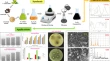
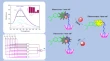
<art><ui>1556-276X-7-369</ui><ji>1556-276X</ji><fm><dochead>Nano Express</dochead><bibl><title><p>Synthesis of new type of Au-magnetic nanocomposite and application for protein separation thereof</p></title><aug><au id="A1"><snm>Song</snm><fnm>Yu</fnm><insr iid="I1"/><insr iid="I2"/><email>songyu891@163.com</email></au><au id="A2"><snm>Tao</snm><fnm>Ling</fnm><insr iid="I2"/><email>taoling1977@163.com</email></au><au id="A3" ca="yes"><snm>Shen</snm><fnm>Xiangchun</fnm><insr iid="I2"/><email>shenxiangchun1@163.com</email></au></aug><insg><ins id="I1"><p>Department of Pharmacy, Third Affiliated Hospital of Southern Medical University, Guangzhou 510630, China</p></ins><ins id="I2"><p>Research Division of Pharmacology, Guiyang Medical College, Guiyang 550004, China</p></ins></insg><source>Nanoscale Research Letters</source><issn>1556-276X</issn><pubdate>2012</pubdate><volume>7</volume><issue>1</issue><fpage>369</fpage><url>http://www.nanoscalereslett.com/content/7/1/369</url><xrefbib><pubidlist><pubid idtype="doi">10.1186/1556-276X-7-369</pubid><pubid idtype="pmpid">22759882</pubid></pubidlist></xrefbib></bibl><history><rec><date><day>17</day><month>5</month><year>2012</year></date></rec><acc><date><day>3</day><month>7</month><year>2012</year></date></acc><pub><date><day>3</day><month>7</month><year>2012</year></date></pub></history><cpyrt><year>2012</year><collab>Song et al.; licensee Springer.</collab><note>This is an Open Access article distributed under the terms of the Creative Commons Attribution License (<url>http://creativecommons.org/licenses/by/2.0</url>), which permits unrestricted use, distribution, and reproduction in any medium, provided the original work is properly cited.</note></cpyrt><kwdg><kwd>Gold</kwd><kwd>Magnetic</kwd><kwd>Bifunctional</kwd><kwd>Protein separation</kwd><kwd>Nanoparticle</kwd></kwdg><abs><sec><st><p>Abstract</p></st><p>We present a different strategy for synthesizing the Au-&#947;-Fe<sub>2</sub>O<sub>3</sub> bifunctional nanoparticle by using a larger (50&#8201;nm) Au nanoparticle as the core surrounded by smaller (10&#8201;nm) &#947;-Fe<sub>2</sub>O<sub>3</sub> nanoparticles. The synthesis of the composite nanoparticles is quite facile based on a simple redox process whereby Fe<sup>2+</sup> is used to reduce Au<sup>3+</sup>. The morphology and composition of the product is measured by transmission electron microscopy, X-ray powder diffraction and UV&#8211;vis spectroscopy. We demonstrate the utility of these as-prepared Au-&#947;-Fe<sub>2</sub>O<sub>3</sub> nanoparticles by showing they can be used to separate proteins in solution. For example, bovine serum is efficiently removed from an aqueous solution with the simple addition of the NPs and application of a small magnet. Sodium dodecyl sulfate-polyacrylamide gel electrophoresis is performed to evaluate the fidelity and efficiency of the protein separation procedure.</p></sec></abs></fm><bdy><sec><st><p>Background</p></st><p>Nanoparticles (NPs) containing two completely different elemental compositions (i.e., bifunctional nanomaterials) enable a single particle to have physical properties vastly superior to those made solely from the individual elements. Due to their increased versatility, such bifunctional nanomaterials have enhanced potential for the development of new applications in many different areas, especially in biotechnology. For example, a single composite nanoparticle derived from gold (Au) and iron oxide nanoparticle subunits is quite versatile, having excellent surface chemistry, superior optical characteristics of gold and superparamagnetic properties of iron oxide <abbrgrp><abbr bid="B1">1</abbr><abbr bid="B2">2</abbr><abbr bid="B3">3</abbr><abbr bid="B4">4</abbr><abbr bid="B5">5</abbr><abbr bid="B6">6</abbr><abbr bid="B7">7</abbr></abbrgrp>.</p><p>Commonly, such Au-maghemite (&#947;-Fe<sub>2</sub>O<sub>3</sub>) bifunctional nanoparticles have a &#947;-Fe<sub>2</sub>O<sub>3</sub> core, either a solid Au shell or smaller Au nanoparticles surrounding the core <abbrgrp><abbr bid="B8">8</abbr><abbr bid="B9">9</abbr></abbrgrp>. We present a different strategy for synthesizing the Au-&#947;-Fe<sub>2</sub>O<sub>3</sub> bifunctional nanoparticle by using a larger (50&#8201;nm) Au nanoparticle as the core surrounded by smaller (10&#8201;nm) &#947;-Fe<sub>2</sub>O<sub>3</sub> nanoparticles. The synthesis of the composite nanoparticles is quite facile based on an easy redox process whereby Fe<sup>2+</sup> was used to reduce Au<sup>3+</sup>. One advantage of this composition is that the size of the bifunctional nanoparticle is easily tuned by changing the size of the Au nanoparticle core while still maintaining a strong magnetic response since a significant amount of magnetic material composes the single particle.</p><p>We demonstrate the utility of these as-prepared Au-&#947;-Fe<sub>2</sub>O<sub>3</sub> nanoparticles by showing they can be used to separate proteins in solution. For example, bovine serum is efficiently removed from an aqueous solution with the simple addition of the NPs and application of an external magnetic field. Sodium dodecyl sulfate-polyacrylamide gel electrophoresis (SDS-PAGE) is performed to evaluate the fidelity and efficiency of the protein separation procedure.</p></sec><sec><st><p>Methods</p></st><p>All chemicals were purchased from Sigma-Aldrich Corporation (MO, USA) and used as received without further purification. Deionized water was used throughout. The TEM images were taken using a JEOL 2000EX transmission electron microscope (JEOL Ltd., Tokyo, Japan) at an accelerating voltage of 200 kv. The UV&#8211;vis spectra were taken by Lambda 950 UV&#8211;vis spectrometer (PerkinElmer, MA, USA).</p><p>In this method, magnetite nanoparticles were prepared first in water solvent by the chemical precipitation method. Then, gold precursor was added in the solution and reduced by Fe<sup>2+</sup> which was oxidized to Fe<sup>3+</sup>. Magnetite change to maghemite and attach on gold nanoparticles (as shown in Figure <figr fid="F1">1</figr>). In a typical process, a mixture of 0.1&#8201;mmol of FeCl<sub>2</sub>&#183;3H<sub>2</sub>O, 0.2&#8201;mmol of FeCl<sub>3</sub>&#183;6H<sub>2</sub>O and 0.1&#8201;mmol D-lysine in 50&#8201;ml deionized water was stirred and bubbled with N<sub>2</sub> for 30&#8201;min, and then, 0.6&#8201;ml of 5&#8201;N ammonium was added in the mixture under N<sub>2</sub> protection. The color of the mixture changed to black immediately while the mixture was continually stirred for another 30&#8201;min and added with 2&#8201;ml of 0.05&#8201;M HAuCl<sub>4</sub> aqueous solution drop by drop into the black mixture. The color changed to purple black slowly while on continuous stirring for 60&#8201;min. Separated by external magnate, the liquid was almost colorless, and the paste was purple black which was washed by deionized water and separated by external magnate three times. The final product, which was purple black solution, was redispersed in deionized water for further measurement. Figure <figr fid="F1">1</figr> shows the procedure of formation of maghemite-gold bifunctional nanomaterials. Inset photo is the final product in water, which shows the purple-black solution.</p><fig id="F1"><title><p>Figure 1</p></title><caption><p>Schematic of the formation of maghemite-gold bifunctional nanomaterials.</p></caption><text>
   <p>
      <b>Schematic of the formation of maghemite-gold bifunctional nanomaterials.</b>
   </p>
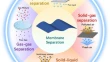
</text><graphic file="1556-276X-7-369-1"/></fig><p>Protein separation is one of the basic applications of this kind of bifunctional nanomaterials. To use these materials for protein separation, the sample was washed several times to make sure there is no free gold nanoparticle in the solution, and bovine serum solution was added in the sample. Then, by using external magnetic separation, the sample was divided to liquid and paste, which was redispersed in water, for SDS-PAGE electrophoresis gel stained by Coomassie blue. Figure <figr fid="F2">2</figr> shows the mechanism for protein separation by the bifunctional nanocomposite.</p><fig id="F2"><title><p>Figure 2</p></title><caption><p>Schematic of the protein separation by the nanocomposite.</p></caption><text>
   <p>
      <b>Schematic of the protein separation by the nanocomposite.</b>
   </p>
</text><graphic file="1556-276X-7-369-2"/></fig></sec><sec><st><p>Results and discussion</p></st><p>To compare with the bifunctional nanocomposite, gold (50&#8201;nm) and magnetite (10&#8201;nm) nanoparticles were synthesized and characterized separately. From TEM images and AFM image (Figure <figr fid="F3">3</figr>), the morphology of Fe<sub>3</sub>O<sub>4</sub> (magnetite) and Au nanoparticle is shown clearly. After the addition of gold precursor to the magnetite solution, the structure of 50-nm gold nanoparticle surrounded by 10-nm maghemite nanoparticles was formed (Figure <figr fid="F4">4</figr>). Due to this kind of structure, the UV peak for gold shifted to 565&#8201;nm.</p><fig id="F3"><title><p>Figure 3</p></title><caption><p>TEM images for 10-nm magnetite (left) and 50-nm gold (right) nanoparticles.</p></caption><text>
   <p>
      <b>TEM images for 10-nm magnetite (left) and 50-nm gold (right) nanoparticles.</b>
   </p>
</text><graphic file="1556-276X-7-369-3"/></fig><fig id="F4"><title><p>Figure 4</p></title><caption><p>TEM images for 10-nm maghemite attached on 50-nm gold nanoparticles and UV&#8211;vis spectrum.</p></caption><text>
   <p>
      <b>TEM images for 10-nm maghemite attached on 50-nm gold nanoparticles and UV&#8211;vis spectrum.</b>
   </p>
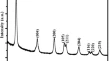
</text><graphic file="1556-276X-7-369-4"/></fig><p>The composition of the synthesized materials was identified by XRD, as shown in Figure <figr fid="F5">5</figr>. The left pattern is the data for magnetite (Fe<sub>3</sub>O<sub>4</sub>) (black line in left figure), which is before the addition of Au precursor, and the right pattern is the data for Au-&#947;-Fe<sub>2</sub>O<sub>3</sub> composite (black line in right figure). The results match the data in the 2003 JCPDS-International Centre for Diffraction Data for magnetite (89&#8211;0951) (red line in left figure), maghemite (89&#8211;5894) (blue line in right figure) and gold (89&#8211;3697) (red line in right figure). These results can provide two facts: first is after magnetic separation; the gold is still in the sample. Second is that magnetite was reduced to maghemite.</p><fig id="F5"><title><p>Figure 5</p></title><caption><p>XRD patterns of Fe<sub>3</sub>O<sub>4</sub> (left) and Au-&#947;-Fe<sub>2</sub>O<sub>3</sub> (right).</p></caption><text>
   <p>
      <b>XRD patterns of Fe</b>
      <sub>
         <b>3</b>
      </sub>
      <b>O</b>
      <sub>
         <b>4 </b>
      </sub>
      <b>(left) and Au-&#947;-Fe</b>
      <sub>
         <b>2</b>
      </sub>
      <b>O</b>
      <sub>
         <b>3 </b>
      </sub>
      <b>(right).</b>
   </p>
</text><graphic file="1556-276X-7-369-5"/></fig><p>To test these materials for protein separation, bovine serum solution was added in the sample. Then, by using external magnetic separation, the sample was divided to liquid and paste which was redispersed in water for SDS-PAGE electrophoresis gel.</p><p>The Bradford protein assay protocol (Coomassie Blue G-250) was used as an instant method to examine for the existence of protein in those two parts of sample <abbrgrp><abbr bid="B10">10</abbr></abbrgrp>. If a certain part contains proteins, it will turn the originally brown Coomassie Blue G-250 solution into a blue color, while the part without protein in it will leaves Coomassie Blue G-250 brown. As shown in the above photos of Figure <figr fid="F6">6</figr>, sample 1 is the original sample solution which was before the magnetic separation. It contained protein since the color of Coomassie Blue solution was turned into blue. Sample 2 is the supernatant part after magnetic separation. It contained no protein since the color of Coomassie Blue solution remained brown. Sample 3 is the solid part after magnetic separation which was redissolved in buffer. It contains proteins since it turned the solution into blue.</p><fig id="F6"><title><p>Figure 6</p></title><caption><p>Bradford protein assay of the separation efficiency (top photos).</p></caption><text>
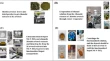
   <p><b>Bradford protein assay of the separation efficiency (top photos).</b> SDS-PAGE analysis of the separated protein: lane 0, marker; lane 1, original protein and particle mixture solution; lane 2, supernatant part after separation; lane 3, solid part after separation, which was redissolved in buffer.</p>
</text><graphic file="1556-276X-7-369-6"/></fig><p>Sodium dodecyl sulfate-&#8201;polyacrylamide gel electrophoresis was then applied according to the literature <abbrgrp><abbr bid="B11">11</abbr></abbrgrp>. As shown in Figure <figr fid="F6">6</figr>, compared to the marker in lane 0, the original mixture solution (as shown in lane 1) contained proteins of various molecular sizes. After magnetic separation, those proteins were removed from the solution (lane 2). For the solid sample after separation, the proteins were obtained again (lane 3), so the protein was effectively separated and collected.</p></sec><sec><st><p>Conclusions</p></st><p>We reported the synthesis of gold-maghemite nanoparticles and their use in separating proteins. The as-prepared nanocomposites combined the merits of both gold and magnetic nanoparticles, and were produced by a very easy method. Furthermore, this experiment has also suggested a new way to synthesize various bifunctional or multifunctional composite nanomaterials through simple redox process.</p></sec><sec><st><p>Competing interests</p></st><p>The authors declare that they have no competing interests.</p></sec><sec><st><p>Authors' contributions</p></st><p>YS carried out the synthesis, TEM and XRD measurements. LT carried out Bradford protein assay and SDS&#8201;&#8722;&#8201;PAGE, and participated in the design of the study. XS conceived of the study, participated in its design and coordination, and drafted the manuscript. All authors read and approved the final manuscript.</p></sec><sec><st><p>Authors' information</p></st><p>YS is a an MD and a pharmacist-in-charge. YS's research areas are pharmaceutics and Chinese medicine pharmacology, and is affiliated to Department of Pharmacy, Third Affiliated Hospital of Southern Medical University, Guangzhou, 510630, China. LT is an MD whose research is on pharmaceutics and Chinese medicine pharmacology, and is affiliated to the Research Division of Pharmacology, Guiyang Medical College, Guiyang, 550004, China. XS is also an MD and PI whose research areas are on nanotechnology, pharmaceutics and Chinese medicine pharmacology. XS is affiliated to the Research Division of Pharmacology, Guiyang Medical College, Guiyang, 550004, China.</p></sec></bdy><bm><ack><sec><st><p>Acknowledgments</p></st><p>This research is funded by the National Natural Science Foundation of China (grant no.: 30701024), Guizhou Province Special Assistant to Funding High-Level Talent (TZJF-2006-13), Guizhou International Technology Cooperation Fund (grant no.: G [2009] 700115); and the Provincial Key Technologies R&amp;D Program of Guizhou (grant no.: S [2011] 3010).</p></sec></ack><refgrp><bibl id="B1"><title><p>Three-layer composite magnetic nanoparticle probes for DNA</p></title><aug><au><snm>Stoeva</snm><fnm>SI</fnm></au><au><snm>Huo</snm><fnm>F</fnm></au><au><snm>Lee</snm><fnm>JS</fnm></au><au><snm>Mirkin</snm><fnm>CA</fnm></au></aug><source>J Am Chem Soc</source><pubdate>2005</pubdate><volume>127</volume><fpage>15362</fpage><lpage>15363</lpage><xrefbib><pubidlist><pubid idtype="doi">10.1021/ja055056d</pubid><pubid idtype="pmpid" link="fulltext">16262387</pubid></pubidlist></xrefbib></bibl><bibl id="B2"><title><p>Bifunctional Au-Fe3O4 nanoparticles for protein separation</p></title><aug><au><snm>Bao</snm><fnm>J</fnm></au><au><snm>Chen</snm><fnm>W</fnm></au><au><snm>Liu</snm><fnm>T</fnm></au><au><snm>Zhu</snm><fnm>Y</fnm></au><au><snm>Jin</snm><fnm>P</fnm></au><au><snm>Wang</snm><fnm>L</fnm></au><au><snm>Liu</snm><fnm>J</fnm></au><au><snm>Wei</snm><fnm>Y</fnm></au><au><snm>Li</snm><fnm>Y</fnm></au></aug><source>ACS Nano</source><pubdate>2007</pubdate><volume>1</volume><issue>4</issue><fpage>293</fpage><lpage>298</lpage><xrefbib><pubidlist><pubid idtype="doi">10.1021/nn700189h</pubid><pubid idtype="pmpid" link="fulltext">19206679</pubid></pubidlist></xrefbib></bibl><bibl id="B3"><title><p>Fabrication of magnetic core@shell Fe oxide@Au nanoparticles for interfacial bioactivity and bio-separation</p></title><aug><au><snm>Park</snm><fnm>H</fnm></au><au><snm>Schadt</snm><fnm>MJ</fnm></au><au><snm>Wang</snm><fnm>L</fnm></au><au><snm>Lim</snm><fnm>S</fnm></au><au><snm>Njoki</snm><fnm>PN</fnm></au><au><snm>Kim</snm><fnm>SH</fnm></au><au><snm>Jang</snm><fnm>M</fnm></au><au><snm>Luo</snm><fnm>J</fnm></au><au><snm>Zhong</snm><fnm>C</fnm></au></aug><source>Langmuir</source><pubdate>2007</pubdate><volume>23</volume><issue>17</issue><fpage>9050</fpage><lpage>9056</lpage><xrefbib><pubidlist><pubid idtype="doi">10.1021/la701305f</pubid><pubid idtype="pmpid" link="fulltext">17629315</pubid></pubidlist></xrefbib></bibl><bibl id="B4"><title><p>Biofunctional magnetic nanoparticles for protein separation and pathogen detection</p></title><aug><au><snm>Gu</snm><fnm>H</fnm></au><au><snm>Xu</snm><fnm>KM</fnm></au><au><snm>Xu</snm><fnm>CJ</fnm></au><au><snm>Xu</snm><fnm>B</fnm></au></aug><source>Chem Commun</source><pubdate>2006</pubdate><volume>9</volume><fpage>941</fpage><lpage>949</lpage></bibl><bibl id="B5"><title><p>Discrete nanostructures of quantum dots/Au with DNA</p></title><aug><au><snm>Fu</snm><fnm>A</fnm></au><au><snm>Micheel</snm><fnm>CM</fnm></au><au><snm>Cha</snm><fnm>J</fnm></au><au><snm>Chang</snm><fnm>H</fnm></au><au><snm>Yang</snm><fnm>H</fnm></au><au><snm>Alivisatos</snm><fnm>AP</fnm></au></aug><source>J Am Chem Soc</source><pubdate>2004</pubdate><volume>126</volume><fpage>10832</fpage><lpage>10833</lpage><xrefbib><pubidlist><pubid idtype="doi">10.1021/ja046747x</pubid><pubid idtype="pmpid" link="fulltext">15339154</pubid></pubidlist></xrefbib></bibl><bibl id="B6"><title><p>Poly(vinylpyrrolidone) coated iron nanoparticles in polar aprotic solvent</p></title><aug><au><snm>Ban</snm><fnm>Z</fnm></au><au><snm>Cushing</snm><fnm>BL</fnm></au><au><snm>O&apos;Connor</snm><fnm>CJ</fnm></au></aug><source>J Nanosci Nanotech</source><pubdate>2008</pubdate><volume>8</volume><issue>4</issue><fpage>2091</fpage><lpage>2095</lpage><xrefbib><pubid idtype="doi">10.1166/jnn.2008.064</pubid></xrefbib></bibl><bibl id="B7"><title><p>The synthesis of core-shell iron@gold nanoparticles and their characterization</p></title><aug><au><snm>Ban</snm><fnm>Z</fnm></au><au><snm>Barnakov</snm><fnm>YA</fnm></au><au><snm>Li</snm><fnm>F</fnm></au><au><snm>Golub</snm><fnm>VO</fnm></au><au><snm>O&apos;Connor</snm><fnm>CJ</fnm></au></aug><source>J Mater Chem</source><pubdate>2005</pubdate><volume>15</volume><issue>43</issue><fpage>4660</fpage><lpage>4666</lpage><xrefbib><pubid idtype="doi">10.1039/b504304b</pubid></xrefbib></bibl><bibl id="B8"><title><p>Monodispersed core-shell Fe3O4@Au nanoparticles</p></title><aug><au><snm>Wang</snm><fnm>L</fnm></au><au><snm>Luo</snm><fnm>J</fnm></au><au><snm>Fan</snm><fnm>Q</fnm></au><au><snm>Suzuki</snm><fnm>M</fnm></au><au><snm>Suzuki</snm><fnm>SI</fnm></au><au><snm>Engelhard</snm><fnm>HM</fnm></au><au><snm>Lin</snm><fnm>Y</fnm></au><au><snm>Wang</snm><fnm>J</fnm></au><au><snm>Zhong</snm><fnm>CJ</fnm></au></aug><source>J Phys Chem B</source><pubdate>2005</pubdate><volume>109</volume><issue>46</issue><fpage>21593</fpage><lpage>21601</lpage><xrefbib><pubidlist><pubid idtype="doi">10.1021/jp0543429</pubid><pubid idtype="pmpid" link="fulltext">16853803</pubid></pubidlist></xrefbib></bibl><bibl id="B9"><title><p>Magnetic core/shell Fe3O4/Au and Fe3O4/Au/Ag nanoparticles with tunable plasmonic properties</p></title><aug><au><snm>Xu</snm><fnm>Z</fnm></au><au><snm>Hou</snm><fnm>Y</fnm></au><au><snm>Sun</snm><fnm>S</fnm></au></aug><source>J Am Chem Soc</source><pubdate>2007</pubdate><volume>129</volume><issue>28</issue><fpage>8698</fpage><lpage>8699</lpage><xrefbib><pubidlist><pubid idtype="doi">10.1021/ja073057v</pubid><pubid idtype="pmpid" link="fulltext">17590000</pubid></pubidlist></xrefbib></bibl><bibl id="B10"><title><p>Adenosine 5&#180;-triphosphate&#8211;arginine phosphotransferase from lobster muscle: purification and properties</p></title><aug><au><snm>Virden</snm><fnm>BR</fnm></au><au><snm>Watts</snm><fnm>DC</fnm></au><au><snm>Baldwin</snm><fnm>E</fnm></au></aug><source>Biochem J</source><pubdate>1965</pubdate><volume>94</volume><fpage>536</fpage><lpage>544</lpage><xrefbib><pubidlist><pubid idtype="pmcid">1206586</pubid><pubid idtype="pmpid" link="fulltext">14340045</pubid></pubidlist></xrefbib></bibl><bibl id="B11"><title><p>Wet Chemical synthesis of high aspect ratio cylindrical gold nanorods</p></title><aug><au><snm>Jana</snm><fnm>NR</fnm></au><au><snm>Gearheart</snm><fnm>L</fnm></au><au><snm>Murphy</snm><fnm>CJ</fnm></au></aug><source>J Phys Chem B</source><pubdate>2001</pubdate><volume>105</volume><fpage>4065</fpage><lpage>4067</lpage></bibl></refgrp></bm></art>