<?xml version='1.0'?>
<!DOCTYPE art SYSTEM 'http://www.biomedcentral.com/xml/article.dtd'>
<art><ui>1556-276X-7-286</ui><ji>1556-276X</ji><fm><dochead>Nano Express</dochead><bibl><title><p>Thickness dependency of field emission in amorphous and nanostructured carbon thin films</p></title><aug><au id="A1"><snm>Shakerzadeh</snm><fnm>Maziar</fnm><insr iid="I1"/><email>Maziar_s@dsi.a-star.edu.sg</email></au><au id="A2"><snm>Teo</snm><mnm>Tong</mnm><fnm>Edwin Hang</fnm><insr iid="I2"/><email>htteo@ntu.edu.sg</email></au><au id="A3" ca="yes"><snm>Tay</snm><mnm>Kang</mnm><fnm>Beng</fnm><insr iid="I1"/><insr iid="I3"/><email>ebktay@ntu.edu.sg</email></au></aug><insg><ins id="I1"><p>School of Electrical and Electronic Engineering, Nanyang Technological University, 50 Nanyang Avenue, Singapore, 639798, Singapore</p></ins><ins id="I2"><p>Temasek Laboratories, Nanyang Technological University, 50 Nanyang Avenue, Singapore, 639798, Singapore</p></ins><ins id="I3"><p>CINTRA, CNRS/NTU/THALES, UMI 3288, Research Techno Plaza, 50 Nanyang Drive, Border X Block, Level 6, Singapore, 637553, Singapore</p></ins></insg><source>Nanoscale Research Letters</source><issn>1556-276X</issn><pubdate>2012</pubdate><volume>7</volume><issue>1</issue><fpage>286</fpage><url>http://www.nanoscalereslett.com/content/7/1/286</url><xrefbib><pubidlist><pubid idtype="doi">10.1186/1556-276X-7-286</pubid><pubid idtype="pmpid">22655860</pubid></pubidlist></xrefbib></bibl><history><rec><date><day>29</day><month>11</month><year>2011</year></date></rec><acc><date><day>1</day><month>6</month><year>2012</year></date></acc><pub><date><day>1</day><month>6</month><year>2012</year></date></pub></history><cpyrt><year>2012</year><collab>Shakerzadeh et al.; licensee Springer.</collab><note>This is an Open Access article distributed under the terms of the Creative Commons Attribution License (<url>http://creativecommons.org/licenses/by/2.0</url>), which permits unrestricted use, distribution, and reproduction in any medium, provided the original work is properly cited.</note></cpyrt><kwdg><kwd>Carbon films</kwd><kwd>Preferred orientation</kwd><kwd>Field emission</kwd></kwdg><abs><sec><st><p>Abstract</p></st><p>Thickness dependency of the field emission of amorphous and nanostructured carbon thin films has been studied. It is found that in amorphous and carbon films with nanometer-sized <it>sp</it><sup>2</sup> clusters, the emission does not depend on the film thickness. This further proves that the emission happens from the surface <it>sp</it><sup>2</sup> sites due to large enhancement of electric field on these sites. However, in the case of carbon films with nanocrystals of preferred orientation, the emission strongly depends on the film thickness. <it>sp</it><sup>2</sup>-bonded nanocrystals have higher aspect ratio in thicker films which in turn results in higher field enhancement and hence easier electron emission.</p></sec></abs></fm><meta><classifications><classification id="IEEE_INEC2011" subtype="theme_series_title" type="BMC">INEC 2011</classification><classification id="IEEE_INEC2011" subtype="theme_series_editor" type="BMC"/></classifications></meta><bdy><sec><st><p>Background</p></st><p>Field emission (FE) from amorphous and nanostructured carbon thin films is widely studied in the past few years <abbrgrp><abbr bid="B1">1</abbr><abbr bid="B2">2</abbr><abbr bid="B3">3</abbr><abbr bid="B4">4</abbr><abbr bid="B5">5</abbr><abbr bid="B6">6</abbr><abbr bid="B7">7</abbr></abbrgrp>. Understanding the emission mechanism and reducing the threshold field at which the emission occurs (<it>F</it><sub>th</sub>) are the main two subjects of interest. Amorphous carbon (a-C) films are formed from carbon atoms of <it>sp</it><sup>2</sup> and <it>sp</it><sup>3</sup> hybridization <abbrgrp><abbr bid="B8">8</abbr></abbrgrp>. Mechanical and physical properties of a-C films strongly depend on the <it>sp</it><sup>2</sup> percentage as well as the presence and size of <it>sp</it><sup>2</sup> (sub) nanoclusters embedded in <it>sp</it><sup>3</sup> matrix.</p><p>Different field enhancement mechanisms have been proposed for easy electron emission from carbon thin films. Robertson found that for different types of carbon films (hydrogenated, nitrogenated, etc.), there is an optimum <it>sp</it><sup>2</sup> cluster size at which the emission occurs at the lowest possible <it>F</it><sub>th</sub><abbrgrp><abbr bid="B8">8</abbr></abbrgrp>. Based on this observation, Carey et al. <abbrgrp><abbr bid="B2">2</abbr></abbrgrp> have proposed that the large field enhancement of carbon films is mainly due to the presence and distribution of conductive <it>sp</it><sup>2</sup> nanoclusters embedded in insulative <it>sp</it><sup>3</sup> matrix. The presence of a conductive sphere embedded in an insulating matrix leads to small field enhancement. However, the presence of two or more such spheres can further increase the enhancement; for instance, the field enhancement of two conductive spheres in the bispherical coordination system was studied, and it was found that the presence of two gold spheres which are placed 5&#8201;nm apart from each other results in enhancements of 56 which can be increased to 400 for a 1-nm separation <abbrgrp><abbr bid="B9">9</abbr></abbrgrp>. Based on this theory, the emission only occurs from the surface clusters and hence is independent of the thickness.</p><p>Despite the above-mentioned theory, Forrest et al. <abbrgrp><abbr bid="B3">3</abbr></abbrgrp> studied the effect of different parameters including film thickness on FE of pure, nitrogenated, and hydrogenated a-C thin films. They found an optimum thickness for the lowest <it>F</it><sub>th</sub> in hydrogenated and nitrogenated carbon films. Since there is no correlation between the surface microstructure and the film thickness, this finding is obviously in contradiction with the mechanism proposed by Carey et al. <abbrgrp><abbr bid="B2">2</abbr></abbrgrp>. The only mechanism which can be used to describe the thickness dependency of FE is space-charge interlayer-induced band bending for semiconductors <abbrgrp><abbr bid="B10">10</abbr></abbrgrp>. Carrier depletion across the film thickness results in field enhancement at the Si/C interface; therefore, the electrons will be emitted from the conduction band of the silicon substrate to highly curved conduction band of the film. At very thin samples, although emitted electrons possess very high energies, they still cannot overcome the emission barrier (the work function of the film). At very thick films, on the other hand, the electrons will lose energy while they are passing the film, and hence they cannot overcome the emission barrier. Therefore, there is an optimum film thickness at which the emission occurs at the lowest possible field.</p><p>In another study, Zhao et al. <abbrgrp><abbr bid="B11">11</abbr></abbrgrp> studied the thickness dependency of FE of a-C films. It was found that for a pure a-C film deposited at 200-V substrate bias, the <it>F</it><sub>th</sub> does not strongly depend on the film thickness. By challenging the space-charge interlayer-induced band bending model proposed by Forrest, they suggest that the F-N tunneling theory is the most suitable model to describe the emission from a-C films.</p><p>More recently, the formation of preferred orientation <abbrgrp><abbr bid="B12">12</abbr><abbr bid="B13">13</abbr><abbr bid="B14">14</abbr><abbr bid="B15">15</abbr></abbrgrp> and the effect of this texture on properties of carbon films <abbrgrp><abbr bid="B16">16</abbr><abbr bid="B17">17</abbr><abbr bid="B18">18</abbr></abbrgrp> attract lots of theoretical and experimental attentions. In our previous work, we have shown that the formation of preferred orientation in the microstructure of the film results in an abrupt decrease in the <it>F</it><sub>th</sub>. It was discussed that the formation of conductive <it>sp</it><sup>2</sup> channels throughout the thickness of the film results in the formation of high-aspect-ratio filaments which enhances the local field significantly.</p><p>In this paper, in order to reconfirm the mechanisms mentioned above, the thickness dependency of FE in amorphous (with different bonding structures) carbon films with <it>sp</it><sup>2</sup>-bonded (sub) nanocrystals has been studied. Besides, the thickness dependency of carbon films with nanocrystals of preferred orientation has been studied.</p></sec><sec><st><p>Methods</p></st><p>Filtered cathodic vacuum arc <abbrgrp><abbr bid="B19">19</abbr></abbrgrp> was used to prepare different types of amorphous and nanocrystalline carbon films. Bonding structure of the films was controlled through controlling the negative substrate bias during the deposition. In order to fabricate carbon thin films with nanocrystals of preferred orientation, a carbon film deposited at 300-V substrate bias was irradiated by a single pulse of a 248-nm excimer laser with a pulse width of 23&#8201;ns. The laser energy was kept at 460&#8201;mJ/cm<sup>2</sup>. FE was tested in a parallel plate configuration with an indium tin oxide-coated glass as the cathode with an anode-cathode spacing of 100&#8201;&#956;m in a pressure lower than 5&#8201;&#215;&#8201;10<sup>&#8722;6</sup>&#8201;Torr. In order to check the repeatability of the data, two samples were prepared at each condition. FE tests have been done on two different positions of every individual sample. More than ten measurements have been done on each test spot.</p></sec><sec><st><p>Results and discussion</p></st><p>Figure&#8201;<figr fid="F1">1</figr> shows the Raman spectra and thickness dependency of field emission from three different a-C films. The first film (Figure&#8201;<figr fid="F1">1</figr>A,B) is a tetrahedral amorphous carbon film deposited at 100-V substrate film. As it can be deduced from the Raman spectra (Figure&#8201;<figr fid="F1">1</figr>B) which can be fitted by a single Breit-Wigner-Fano (BWF) curve centered at 1,560&#8201;cm<sup>&#8722;1</sup>, the <it>sp</it><sup>3</sup> content of the film can be estimated to be about 75%. Moreover, there are no <it>sp</it><sup>2</sup> clusters formed in the microstructure as no D band is required to fit the spectra <abbrgrp><abbr bid="B20">20</abbr></abbrgrp>. Therefore, the film can be considered as a pure amorphous film. As it is shown in Figure&#8201;<figr fid="F1">1</figr>A, there is no distinct relation between the film thickness and emission <it>F</it><sub>th</sub>, and the average <it>F</it><sub>th</sub> for all thicknesses is about 32 to 35&#8201;V/&#956;m. Very high <it>F</it><sub>th</sub> can be understood by considering the high <it>sp</it><sup>3</sup> content of the films. Increasing the substrate bias to 1,000&#8201;V increases the <it>sp</it><sup>2</sup> content of the film to 60% (Figure&#8201;<figr fid="F1">1</figr>D). However, since the Raman spectra can still be fitted by a single BWF curve centered at 1,531&#8201;cm<sup>&#8722;1</sup>, no clustering of <it>sp</it><sup>2</sup> bonded atoms is formed in the microstructure. As it is shown in Figure&#8201;<figr fid="F1">1</figr>C, the emission from this film is still independent of the thickness. However, it is noticeable that compared to the film deposited at the 100-V bias, an increase in the <it>sp</it><sup>2</sup> content of the film decreases the <it>F</it><sub>th</sub> dramatically. The average <it>F</it><sub>th</sub> in 1,000-V deposited films is found to be 13&#8201;V/&#956;m. However, increasing the deposition bias to 2,000&#8201;V results in the formation of <it>sp</it><sup>2</sup> clusters embedded in the amorphous matrix with an in-plane cluster size of about 1&#8201;nm in diameter. The Raman spectra can be fitted by a G band centered at 1,542&#8201;cm<sup>&#8722;1</sup> and a D band with an <it>I</it><sub>D</sub>/<it>I</it><sub>G</sub> of 0.35. The in-plane <it>sp</it><sup>2</sup> cluster size can be estimated considering the <it>I</it><sub>D</sub>/<it>I</it><sub>G</sub>:</p><p><display-formula id="M1"><m:math name="1556-276X-7-286-i1" xmlns:m="http://www.w3.org/1998/Math/MathML"><m:mrow>
   <m:mfrac>
      <m:msub>
         <m:mi>I</m:mi>
         <m:mi>D</m:mi>
      </m:msub>
      <m:msub>
         <m:mi>I</m:mi>
         <m:mi>G</m:mi>
      </m:msub>
   </m:mfrac>
   <m:mo>=</m:mo>
   <m:msubsup>
      <m:mi>C</m:mi>
      <m:mi>&#955;</m:mi>
      <m:mo>/</m:mo>
   </m:msubsup>
   <m:mspace width="0.5em"/>
   <m:msubsup>
      <m:mi>L</m:mi>
      <m:mi>a</m:mi>
      <m:mn>2</m:mn>
   </m:msubsup>
</m:mrow>
</m:math></display-formula></p><p>where <inline-formula><m:math name="1556-276X-7-286-i2" xmlns:m="http://www.w3.org/1998/Math/MathML"><m:msubsup>
   <m:mi>C</m:mi>
   <m:mi>&#955;</m:mi>
   <m:mo>/</m:mo>
</m:msubsup>
</m:math></inline-formula> is 0.0055 for the 514-nm laser which was used in this study. As it can be observed, similar to previous purely amorphous films, there is still no correlation between the film thickness and <it>F</it><sub>th</sub>. Moreover, the presence of <it>sp</it><sup>2</sup> nanoclusters results in the reduction of average <it>F</it><sub>th</sub> to 10 to 11&#8201;V/&#956;m.</p><fig id="F1"><title><p>Figure 1</p></title><caption><p>Thickness dependency of field emission and Raman spectra of carbon films.</p></caption><text>
   <p><b>Thickness dependency of field emission and Raman spectra of carbon films.</b> Deposited at (<b>A</b>, <b>B</b>) 100, (<b>C</b>, <b>D</b>) 1,000, and (<b>E</b>, <b>F</b>) 2,000&#8201;V.</p>
</text><graphic file="1556-276X-7-286-1"/></fig><p>Figure&#8201;<figr fid="F2">2</figr> shows the high-resolution transmission electron microscope (HRTEM) image of the carbon film deposited at 300-V substrate bias and irradiated by a single pulse of 460-mJ/cm<sup>2</sup> excimer laser. As it can be observed from the HRTEM image and the respective diffraction pattern, (002) graphitic basal planes are oriented perpendicular to the substrate. The formation and propagation of preferred orientation in the microstructure of the carbon films can be explained using the high internal stress and also the anisotropic nature of graphite crystal structure. McKenzie and Bilek <abbrgrp><abbr bid="B12">12</abbr></abbrgrp> have shown that during the graphitization of a-C films, the system possesses its lowest free energy (and hence the most stable phase) when the basal planes are oriented in the direction perpendicular to the stress plane (in this case, the growth plane).</p><fig id="F2"><title><p>Figure 2</p></title><caption><p>HRTEM images and the respective diffraction pattern (inset) of carbon films.</p></caption><text>
   <p><b>HRTEM images and the respective diffraction pattern (inset) of carbon films.</b> Deposited at 300&#8201;V and irradiated by a 462.5-mJ/cm<sup>2</sup> laser.</p>
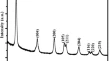
</text><graphic file="1556-276X-7-286-2"/></fig><p>Figure&#8201;<figr fid="F3">3</figr> shows the evolution of <it>F</it><sub>th</sub> of the 460-mJ/cm<sup>2</sup> single pulse laser-irradiated carbon film as a function of film thickness. Despite the amorphous films, there is a direct relation between the film thickness and the <it>F</it><sub>th</sub>. Films of 25-nm thick show relatively high <it>F</it><sub>th</sub> of about 12&#8201;V/&#956;m. Increasing the film thickness to 150&#8201;nm decreases the <it>F</it><sub>th</sub> to about 4&#8201;V/&#956;m. Further increase in film thickness (250&#8201;nm) does not alter the emission threshold significantly. High-energy laser irradiation results in the formation of conductive channels throughout the thickness of the film which decreases the <it>F</it><sub>th</sub> through the formation of high-aspect-ratio filaments. Increasing the film thickness increases the aspect ratio of the filaments, and as it is shown in Figure&#8201;<figr fid="F3">3</figr>A, the <it>F</it><sub>th</sub> decreases. The film shows its lowest <it>F</it><sub>th</sub> at about 150&#8201;nm. However, further increase in film thickness does not affect the <it>F</it><sub>th</sub> noticeably. This can be due to the fact that although the film thickness is increased, the average filament length and hence the aspect ratio is kept constant. This, in turn, is due to the non-homogeneity and non-continuity of conductive filaments throughout the thickness of the film.</p><fig id="F3"><title><p>Figure 3</p></title><caption><p>Thickness dependency of field emission and respective Raman spectra.</p></caption><text>
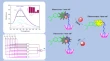
   <p><b>Thickness dependency of field emission and respective Raman spectra.</b> (<b>A</b>) Thickness dependency of field emission of carbon film irradiated by a single pulse of 460&#8201;mJ/cm<sup>2</sup> and (<b>B</b>) respective Raman spectra of the film.</p>
</text><graphic file="1556-276X-7-286-3"/></fig></sec><sec><st><p>Conclusions</p></st><p>Thickness dependency of the field emission of amorphous and nanostructured carbon thin films has been studied in this work. It was found that regardless of the bonding structure and clustering of <it>sp</it><sup>2</sup>-bonded atoms, emission threshold field is independent of the film thickness. However, the field emission from carbon films with nanocrystals of preferred orientation strongly depends on the film thickness. Increasing the film thickness results in the increase in the aspect ratio of conductive <it>sp</it><sup>2</sup>-bonded filaments and hence decreases the threshold field through increasing the enhancement factor.</p></sec><sec><st><p>Competing interests</p></st><p>The authors declare that they have no competing interests.</p></sec><sec><st><p>Authors&#8217; contributions</p></st><p>MS and EHTT contributed on performing the experiments and writing the paper. Professor TBK contributed as the scientific advisor of the project upon performing the experiments. All authors read and approved the final manuscript.</p></sec><sec><st><p>Authors&#8217; information</p></st><p>MS is currently working as a research scientist in the Data Storage Institute (DSI). He is studying the mechanical electrical and thermal properties of carbon thin films and nanostructures. EHTT is working as NTU-DSO postdoc fellow studying electrical mechanical and thermal properties of nanomaterials. TBK is a professor in the School of Electrical and Electronic Engineering, NTU. His team is working on the synthesis, characterization, and applications of nanomaterials and thin films.</p></sec></bdy><bm><ack><sec><st><p>Acknowledgments</p></st><p>This work was supported by the Singapore Ministry of Education (MoE) grant no. T208B1204 (ARC13/08).</p></sec></ack><refgrp><bibl id="B1"><title><p>Influence of sp2 clusters on the field emission properties of amorphous carbon thin films</p></title><aug><au><snm>Carey</snm><fnm>JD</fnm></au><au><snm>Forrest</snm><fnm>RD</fnm></au><au><snm>Khan</snm><fnm>RUA</fnm></au><au><snm>Silva</snm><fnm>SRP</fnm></au></aug><source>Appl Phys Lett</source><pubdate>2000</pubdate><volume>77</volume><fpage>2006</fpage><lpage>2008</lpage><xrefbib><pubid idtype="doi">10.1063/1.1312202</pubid></xrefbib></bibl><bibl id="B2"><title><p>Origin of electric field enhancement in field emission from amorphous carbon thin films</p></title><aug><au><snm>Carey</snm><fnm>JD</fnm></au><au><snm>Forrest</snm><fnm>RD</fnm></au><au><snm>Silva</snm><fnm>SRP</fnm></au></aug><source>Appl Phys Lett</source><pubdate>2001</pubdate><volume>78</volume><fpage>2339</fpage><lpage>2341</lpage><xrefbib><pubid idtype="doi">10.1063/1.1366369</pubid></xrefbib></bibl><bibl id="B3"><title><p>A study of electron field emission as a function of film thickness from amorphous carbon films</p></title><aug><au><snm>Forrest</snm><fnm>RD</fnm></au><au><snm>Burden</snm><fnm>AP</fnm></au><au><snm>Silva</snm><fnm>SRP</fnm></au><au><snm>Cheah</snm><fnm>LK</fnm></au><au><snm>Shi</snm><fnm>X</fnm></au></aug><source>Appl Phys Lett</source><pubdate>1998</pubdate><volume>73</volume><fpage>3784</fpage><lpage>3786</lpage><xrefbib><pubid idtype="doi">10.1063/1.122894</pubid></xrefbib></bibl><bibl id="B4"><title><p>Field emission from tetrahedral amorphous carbon as a function of surface treatment and substrate material</p></title><aug><au><snm>Hart</snm><fnm>A</fnm></au><au><snm>Satyanarayana</snm><fnm>BS</fnm></au><au><snm>Milne</snm><fnm>WI</fnm></au><au><snm>Robertson</snm><fnm>J</fnm></au></aug><source>Appl Phys Lett</source><pubdate>1999</pubdate><volume>74</volume><fpage>1594</fpage><xrefbib><pubid idtype="doi">10.1063/1.123627</pubid></xrefbib></bibl><bibl id="B5"><title><p>Effect of sp2-phase nanostructure on field emission from amorphous carbons</p></title><aug><au><snm>Ilie</snm><fnm>A</fnm></au><au><snm>Ferrari</snm><fnm>AC</fnm></au><au><snm>Yagi</snm><fnm>T</fnm></au><au><snm>Robertson</snm><fnm>J</fnm></au></aug><source>Appl Phys Lett</source><pubdate>2000</pubdate><volume>76</volume><fpage>2627</fpage><xrefbib><pubid idtype="doi">10.1063/1.126430</pubid></xrefbib></bibl><bibl id="B6"><title><p>Effect of work function and surface microstructure on field emission of tetrahedral amorphous carbon</p></title><aug><au><snm>Ilie</snm><fnm>A</fnm></au><au><snm>Hart</snm><fnm>A</fnm></au><au><snm>Flewitt</snm><fnm>AJ</fnm></au><au><snm>Robertson</snm><fnm>J</fnm></au><au><snm>Milne</snm><fnm>WI</fnm></au></aug><source>J Appl Phys</source><pubdate>2000</pubdate><volume>88</volume><fpage>6002</fpage><lpage>6010</lpage><xrefbib><pubid idtype="doi">10.1063/1.1314874</pubid></xrefbib></bibl><bibl id="B7"><title><p>Field emission from tetrahedral amorphous carbon</p></title><aug><au><snm>Satyanarayana</snm><fnm>BS</fnm></au><au><snm>Hart</snm><fnm>A</fnm></au><au><snm>Milne</snm><fnm>WI</fnm></au><au><snm>Robertson</snm><fnm>J</fnm></au></aug><source>Appl Phys Lett</source><pubdate>1997</pubdate><volume>71</volume><fpage>1430</fpage><xrefbib><pubid idtype="doi">10.1063/1.119915</pubid></xrefbib></bibl><bibl id="B8"><title><p>Diamond-like amorphous carbon</p></title><aug><au><snm>Robertson</snm><fnm>J</fnm></au></aug><source>Materials Science and Engineering: R: Reports</source><pubdate>2002</pubdate><volume>37</volume><fpage>129</fpage><lpage>281</lpage><xrefbib><pubid idtype="doi">10.1016/S0927-796X(02)00005-0</pubid></xrefbib></bibl><bibl id="B9"><title><p>Electric potential and field between two different spheres</p></title><aug><au><snm>Chaumet</snm><fnm>PC</fnm></au><au><snm>Dufour</snm><fnm>JP</fnm></au></aug><source>J Electrost</source><pubdate>1998</pubdate><volume>43</volume><fpage>145</fpage><lpage>159</lpage><xrefbib><pubid idtype="doi">10.1016/S0304-3886(97)00170-8</pubid></xrefbib></bibl><bibl id="B10"><title><p>Nitrogen containing hydrogenated amorphous carbon for thin-film field emission cathodes</p></title><aug><au><snm>Amaratunga</snm><fnm>GAJ</fnm></au><au><snm>Silva</snm><fnm>SRP</fnm></au></aug><source>Applied Physics Letters</source><pubdate>1996</pubdate><volume>68</volume><fpage>2529</fpage><lpage>2531</lpage><xrefbib><pubid idtype="doi">10.1063/1.116173</pubid></xrefbib></bibl><bibl id="B11"><title><p>Thickness-independent electron field emission from tetrahedral amorphous carbon films</p></title><aug><au><snm>Zhao</snm><fnm>JP</fnm></au><au><snm>Chen</snm><fnm>ZY</fnm></au><au><snm>Wang</snm><fnm>X</fnm></au><au><snm>Shi</snm><fnm>TS</fnm></au><au><snm>Yano</snm><fnm>T</fnm></au></aug><source>Appl Phys Lett</source><pubdate>2000</pubdate><volume>76</volume><fpage>191</fpage><lpage>193</lpage><xrefbib><pubid idtype="doi">10.1063/1.125699</pubid></xrefbib></bibl><bibl id="B12"><title><p>Thermodynamic theory for preferred orientation in materials prepared by energetic condensation</p></title><aug><au><snm>McKenzie</snm><fnm>DR</fnm></au><au><snm>Bilek</snm><fnm>MMM</fnm></au></aug><source>Thin Solid Films</source><pubdate>2001</pubdate><volume>382</volume><fpage>280</fpage><lpage>287</lpage><xrefbib><pubid idtype="doi">10.1016/S0040-6090(00)01702-8</pubid></xrefbib></bibl><bibl id="B13"><title><p>Plasma density induced formation of nanocrystals in physical vapor deposited carbon films</p></title><aug><au><snm>Shakerzadeh</snm><fnm>M</fnm></au><au><snm>Teo</snm><fnm>EHT</fnm></au><au><snm>Sorkin</snm><fnm>A</fnm></au><au><snm>Bosman</snm><fnm>M</fnm></au><au><snm>Tay</snm><fnm>BK</fnm></au><au><snm>Su</snm><fnm>H</fnm></au></aug><source>Carbon</source><pubdate>2011</pubdate><volume>49</volume><fpage>1733</fpage><lpage>1744</lpage><xrefbib><pubid idtype="doi">10.1016/j.carbon.2010.12.059</pubid></xrefbib></bibl><bibl id="B14"><title><p>The structural phases of non-crystalline carbon prepared by physical vapour deposition</p></title><aug><au><snm>Lau</snm><fnm>DWM</fnm></au><au><snm>Moafi</snm><fnm>A</fnm></au><au><snm>Taylor</snm><fnm>MB</fnm></au><au><snm>Partridge</snm><fnm>JG</fnm></au><au><snm>McCulloch</snm><fnm>DG</fnm></au><au><snm>Powles</snm><fnm>RC</fnm></au><au><snm>McKenzie</snm><fnm>DR</fnm></au></aug><source>Carbon</source><pubdate>2009</pubdate><volume>47</volume><fpage>3263</fpage><lpage>3270</lpage><xrefbib><pubid idtype="doi">10.1016/j.carbon.2009.07.044</pubid></xrefbib></bibl><bibl id="B15"><title><p>Nano-patterning of through-film conductivity in anisotropic amorphous carbon induced using conductive atomic force microscopy</p></title><aug><au><snm>Teo</snm><fnm>EHT</fnm></au><au><snm>Bolker</snm><fnm>A</fnm></au><au><snm>Kalish</snm><fnm>R</fnm></au><au><snm>Saguy</snm><fnm>C</fnm></au></aug><source>Carbon</source><pubdate>2011</pubdate><volume>49</volume><fpage>2679</fpage><lpage>2682</lpage><xrefbib><pubid idtype="doi">10.1016/j.carbon.2011.02.055</pubid></xrefbib></bibl><bibl id="B16"><title><p>Field emission enhancement and microstructural changes of carbon films by single pulse laser irradiation</p></title><aug><au><snm>Shakerzadeh</snm><fnm>M</fnm></au><au><snm>Xu</snm><fnm>N</fnm></au><au><snm>Bosman</snm><fnm>M</fnm></au><au><snm>Tay</snm><fnm>BK</fnm></au><au><snm>Wang</snm><fnm>X</fnm></au><au><snm>Teo</snm><fnm>EHT</fnm></au><au><snm>Zheng</snm><fnm>H</fnm></au><au><snm>Yu</snm><fnm>H</fnm></au></aug><source>Carbon</source><pubdate>2011</pubdate><volume>49</volume><fpage>1018</fpage><lpage>1024</lpage><xrefbib><pubid idtype="doi">10.1016/j.carbon.2010.11.010</pubid></xrefbib></bibl><bibl id="B17"><title><p>Microstructure and through-film electrical characteristics of vertically aligned amorphous carbon films</p></title><aug><au><snm>Tan</snm><fnm>CW</fnm></au><au><snm>Maziar</snm><fnm>S</fnm></au><au><snm>Teo</snm><fnm>EHT</fnm></au><au><snm>Tay</snm><fnm>BK</fnm></au></aug><source>Diamond Relat Mater</source><pubdate>2011</pubdate><volume>20</volume><fpage>290</fpage><lpage>293</lpage><xrefbib><pubid idtype="doi">10.1016/j.diamond.2011.01.010</pubid></xrefbib></bibl><bibl id="B18"><title><p>Thermal conductivity of nanocrystalline carbon films studied by pulsed photothermal reflectance</p></title><aug><au><snm>Shakerzadeh</snm><fnm>M</fnm></au><au><snm>Samani</snm><fnm>MK</fnm></au><au><snm>Khosravian</snm><fnm>N</fnm></au><au><snm>Teo</snm><fnm>EHT</fnm></au><au><snm>Bosman</snm><fnm>M</fnm></au><au><snm>Tay</snm><fnm>BK</fnm></au></aug><source>Carbon</source><pubdate>2012</pubdate><volume>50</volume><fpage>1428</fpage><lpage>1431</lpage><xrefbib><pubid idtype="doi">10.1016/j.carbon.2011.10.015</pubid></xrefbib></bibl><bibl id="B19"><title><p>Review of metal oxide films deposited by filtered cathodic vacuum arc technique</p></title><aug><au><snm>Tay</snm><fnm>BK</fnm></au><au><snm>Zhao</snm><fnm>ZW</fnm></au><au><snm>Chua</snm><fnm>DHC</fnm></au></aug><source>Materials Science and Engineering: R: Reports</source><pubdate>2006</pubdate><volume>52</volume><fpage>1</fpage><lpage>48</lpage><xrefbib><pubid idtype="doi">10.1016/j.mser.2006.04.003</pubid></xrefbib></bibl><bibl id="B20"><title><p>Density, sp3 fraction, and cross-sectional structure of amorphous carbon films determined by X-ray reflectivity and electron energy-loss spectroscopy</p></title><aug><au><snm>Ferrari</snm><fnm>AC</fnm></au><au><snm>Libassi</snm><fnm>A</fnm></au><au><snm>Tanner</snm><fnm>BK</fnm></au><au><snm>Stolojan</snm><fnm>V</fnm></au><au><snm>Yuan</snm><fnm>J</fnm></au><au><snm>Brown</snm><fnm>LM</fnm></au><au><snm>Ridil</snm><fnm>SE</fnm></au><au><snm>Kleinsorge</snm><fnm>B</fnm></au><au><snm>Robertson</snm><fnm>J</fnm></au></aug><source>Phys Rev B: Condens Matter</source><pubdate>2000</pubdate><volume>62</volume><fpage>11089</fpage><lpage>11103</lpage><xrefbib><pubid idtype="doi">10.1103/PhysRevB.62.11089</pubid></xrefbib></bibl></refgrp></bm></art>