<?xml version='1.0'?>
<!DOCTYPE art SYSTEM 'http://www.biomedcentral.com/xml/article.dtd'>
<art>
	<ui>1556-276X-7-277</ui>
	<ji>1556-276X</ji>
	<fm>
		<dochead>Nano Express</dochead>
		<bibl>
			<title>
				<p>Controlled reduction for size selective synthesis of thiolate-protected gold nanoclusters Au<sub>n</sub>(n&#8201;=&#8201;20, 24, 39, 40)</p>
			</title>
			<aug>
				<au id="A1"><snm>Meng</snm><fnm>Xiangming</fnm><insr iid="I1"/><email>mengxm@ahu.edu.cn</email></au>
				<au id="A2"><snm>Liu</snm><fnm>Zhao</fnm><insr iid="I1"/><email>liuzhao2006@163.com</email></au>
				<au id="A3" ca="yes"><snm>Zhu</snm><fnm>Manzhou</fnm><insr iid="I1"/><email>zmz@ahu.edu.cn</email></au>
				<au id="A4" ca="yes"><snm>Jin</snm><fnm>Rongchao</fnm><insr iid="I1"/><insr iid="I2"/><email>rongchao@andrew.cmu.edu</email></au>
			</aug>
			<insg>
				<ins id="I1"><p>Department of Chemistry, Anhui University, Hefei, Anhui, 230026, People&#8217;s Republic of China</p></ins>
				<ins id="I2"><p>Department of Chemistry, Carnegie Mellon University, Pittsburgh, PA, 15213, USA</p></ins>
			</insg>
			<source>Nanoscale Research Letters</source>
			<issn>1556-276X</issn>
			<pubdate>2012</pubdate>
			<volume>7</volume>
			<issue>1</issue>
			<fpage>277</fpage>
			<url>http://www.nanoscalereslett.com/content/7/1/277</url>
			<xrefbib><pubidlist><pubid idtype="doi">10.1186/1556-276X-7-277</pubid><pubid idtype="pmpid">22647455</pubid></pubidlist></xrefbib>
		</bibl>
		<history><rec><date><day>5</day><month>2</month><year>2012</year></date></rec><acc><date><day>30</day><month>5</month><year>2012</year></date></acc><pub><date><day>30</day><month>5</month><year>2012</year></date></pub></history>
		<cpyrt><year>2012</year><collab>Meng et al.; licensee Springer.</collab><note>This is an Open Access article distributed under the terms of the Creative Commons Attribution License (<url>http://creativecommons.org/licenses/by/2.0</url>), which permits unrestricted use, distribution, and reproduction in any medium, provided the original work is properly cited.</note></cpyrt>
		<kwdg>
			<kwd>Gold nanoclusters</kwd>
			<kwd>Size selective synthesis</kwd>
			<kwd>Controlled reduction</kwd>
		</kwdg>
		<abs>
			<sec>
				<st>
					<p>Abstract</p>
				</st><p>This work presents a controlled reduction method for the selective synthesis of different sized gold nanoclusters protected by thiolate (SR&#8201;=&#8201;SC<sub>2</sub>H<sub>4</sub>Ph). Starting with Au(III) salt, all the syntheses of Au<sub>
						<it>n</it>
					</sub>(SR)<sub>
						<it>m</it>
					</sub> nanoclusters with (<it>n</it>, <it>m</it>)&#8201;=&#8201;(20, 16), (24, 20), (39, 29), and (40, 30) necessitate experimental conditions of slow stirring and slow reduction of Au(I) intermediate species. By controlling the reaction kinetics for the reduction of Au(I) into clusters by NaBH<sub>4</sub>, different sized gold nanoclusters are selectively obtained. Two factors are identified to be important for the selective growth of Au<sub>20</sub>, Au<sub>24</sub>, and Au<sub>39/40</sub> nanoclusters, including the stirring speed of the Au(I) solution and the NaBH<sub>4</sub> addition speed during the step of Au(I) reduction to clusters. When comparing with the synthesis of Au<sub>25</sub>(SC<sub>2</sub>H<sub>4</sub>Ph)<sub>18</sub> nanoclusters, we further identified that the reduction degree of Au(I) by NaBH<sub>4</sub> also plays an important role in controlling cluster size. Overall, our results demonstrate the feasibility of attaining new sizes of gold nanoclusters via a controlled reduction route.</p>
			</sec>
		</abs>
	</fm>
	<bdy>
		<sec>
			<st>
				<p>Background</p>
			</st><p>Gold nanoclusters <abbrgrp>
					<abbr bid="B1">1</abbr>
					<abbr bid="B2">2</abbr>
					<abbr bid="B3">3</abbr>
					<abbr bid="B4">4</abbr>
					<abbr bid="B5">5</abbr>
					<abbr bid="B6">6</abbr>
				</abbrgrp> have received extensive attention owing to their interesting optical properties <abbrgrp>
					<abbr bid="B6">6</abbr>
					<abbr bid="B7">7</abbr>
					<abbr bid="B8">8</abbr>
					<abbr bid="B9">9</abbr>
				</abbrgrp>, magnetism <abbrgrp>
					<abbr bid="B10">10</abbr>
					<abbr bid="B11">11</abbr>
				</abbrgrp>, fluorescence <abbrgrp>
					<abbr bid="B12">12</abbr>
					<abbr bid="B13">13</abbr>
					<abbr bid="B14">14</abbr>
					<abbr bid="B15">15</abbr>
					<abbr bid="B16">16</abbr>
				</abbrgrp>, chirality <abbrgrp>
					<abbr bid="B17">17</abbr>
					<abbr bid="B18">18</abbr>
					<abbr bid="B19">19</abbr>
					<abbr bid="B20">20</abbr>
				</abbrgrp>, redox properties <abbrgrp>
					<abbr bid="B21">21</abbr>
					<abbr bid="B22">22</abbr>
					<abbr bid="B23">23</abbr>
					<abbr bid="B24">24</abbr>
					<abbr bid="B25">25</abbr>
					<abbr bid="B26">26</abbr>
					<abbr bid="B27">27</abbr>
				</abbrgrp>, as well as potential applications in many fields such as catalysis and biological labeling <abbrgrp>
					<abbr bid="B28">28</abbr>
					<abbr bid="B29">29</abbr>
					<abbr bid="B30">30</abbr>
					<abbr bid="B31">31</abbr>
					<abbr bid="B32">32</abbr>
					<abbr bid="B33">33</abbr>
				</abbrgrp>. The new physicochemical properties of gold nanoclusters are largely imparted by the discrete electronic structure of the metal core due to quantum confinement effects. The surface of the cluster may also influence some of the material properties, such as chirality <abbrgrp>
					<abbr bid="B18">18</abbr>
					<abbr bid="B19">19</abbr>
				</abbrgrp>.</p><p>Recently, major advances in wet chemical synthesis of nanoclusters have been achieved, and it has been possible to control nanoclusters at the atomic level. A number of well-defined nanoclusters have been reported; however, only a few can be obtained in bulk quantities and in high yields via facile synthetic methods <abbrgrp>
					<abbr bid="B34">34</abbr>
				</abbrgrp>. Among the various thiolate-protected gold nanoclusters, Au<sub>25</sub>(SR)<sub>18</sub> has been extensively studied <abbrgrp>
					<abbr bid="B21">21</abbr>
					<abbr bid="B22">22</abbr>
					<abbr bid="B23">23</abbr>
					<abbr bid="B24">24</abbr>
					<abbr bid="B25">25</abbr>
					<abbr bid="B26">26</abbr>
					<abbr bid="B27">27</abbr>
					<abbr bid="B35">35</abbr>
					<abbr bid="B36">36</abbr>
					<abbr bid="B37">37</abbr>
					<abbr bid="B38">38</abbr>
					<abbr bid="B39">39</abbr>
					<abbr bid="B40">40</abbr>
					<abbr bid="B41">41</abbr>
				</abbrgrp>. Other well-defined nanoclusters have also been attained, such as Au<sub>36</sub>
				<abbrgrp>
					<abbr bid="B42">42</abbr>
				</abbrgrp>, Au<sub>38</sub>
				<abbrgrp>
					<abbr bid="B43">43</abbr>
					<abbr bid="B44">44</abbr>
				</abbrgrp>, Au<sub>102</sub>
				<abbrgrp>
					<abbr bid="B45">45</abbr>
				</abbrgrp>, and Au<sub>144</sub>
				<abbrgrp>
					<abbr bid="B46">46</abbr>
					<abbr bid="B47">47</abbr>
				</abbrgrp>.</p><p>We previously reported a kinetically controlled synthetic approach for the synthesis of highly pure Au<sub>25</sub>(SR)<sub>18</sub> nanoclusters <abbrgrp>
					<abbr bid="B48">48</abbr>
					<abbr bid="B49">49</abbr>
				</abbrgrp>. The method involves a size focusing mechanism, that is, the initial cluster product of mixed sizes is converged to a specific size of highest stability under appropriate conditions <abbrgrp>
					<abbr bid="B34">34</abbr>
				</abbrgrp>. By controlling the size range of the initial nanoclusters, one can achieve atomic monidispersity of nanoclusters <abbrgrp>
					<abbr bid="B34">34</abbr>
				</abbrgrp>. This synthetic approach constitutes a versatile strategy for gold nanocluster synthesis <abbrgrp>
					<abbr bid="B49">49</abbr>
				</abbrgrp> and has been demonstrated in the synthesis of quite a number of atomically precise Au<sub>
					<it>n</it>
				</sub>(SR)<sub>
					<it>m</it>
				</sub> nanoclusters, such as Au<sub>25</sub>, Au<sub>38</sub>, and Au<sub>144</sub>
				<abbrgrp>
					<abbr bid="B34">34</abbr>
				</abbrgrp>.</p><p>Herein, we demonstrate that a controlled reduction method can lead to different sizes of gold nanoclusters. By making a modification of the synthetic method of Au<sub>24</sub> nanoclusters <abbrgrp>
					<abbr bid="B50">50</abbr>
				</abbrgrp>, we have obtained two new sizes, including Au<sub>39</sub>(SC<sub>2</sub>H<sub>4</sub>Ph)<sub>29</sub> and Au<sub>40</sub>(SC<sub>2</sub>H<sub>4</sub>Ph)<sub>30</sub>. Our results explicitly show that the initial growth stage of nanoclusters is critical and can be largely influenced by experimental conditions. This method of controlled reduction has expanded the synthetic approaches for preparing nanoclusters with size control.</p>
		</sec>
		<sec>
			<st>
				<p>Methods</p>
			</st>
			<sec>
				<st>
					<p>Materials</p>
				</st><p>The following chemicals were used: tetrachloroauric(III) acid (HAuCl<sub>4</sub>&#183;3H<sub>2</sub>O, &gt;99.99&#8201;% metals basis, Sigma-Aldrich Corporation, St. Louis, MO, USA), tetraoctylammonium bromide (TOAB, &#8805;98%, Fluka Chemicals Limited, Gillingham, Medway, UK), phenylethanethiol (PhC<sub>2</sub>H<sub>4</sub>SH, 99%, Acros Organics, Thermo Fisher Scientific, NJ, USA), and sodium borohydride (99.99%, metals basis, Sigma-Aldrich). The solvents include toluene (HPLC grade, &#8805;99.9%, Sigma-Aldrich), ethanol (absolute, 200 proof, PHARMCO-AAPER, Shelbyville, KY, USA). Pure water was from Wahaha Co. LTD (Hangzhou, China). All glassware was thoroughly cleaned with <it>aqua regia</it> (HCl: HNO<sub>3</sub>&#8201;=&#8201;3:1 vol), rinsed with copious pure water, and then dried in an oven prior to use.</p>
			</sec>
			<sec>
				<st>
					<p>Analysis tools</p>
				</st><p>All UV-visible (vis) absorption spectra of Au nanoclusters in either toluene or methylene chloride were recorded using a Hewlett-Packard (HP, Palo Alto, CA, USA) 8453 diode array spectrophotometer. Electrospray ionization mass spectra were acquired using a Waters Q-TOF (Waters Corporation, Milford, MA, USA) mass spectrometer equipped with a Z-spray source. The sample solution (approximately 1&#8201;mg/mL) dissolved in toluene was diluted in dry methanol (50&#8201;mM cesium acetate CsAc, 1:2 vol). The sample was directly infused at 5 &#956;L/min. The source temperature was kept at 70&#176;C. The spray voltage was kept at 2.20&#8201;kV; the cone voltage, at 60&#8201;V.</p>
			</sec>
			<sec>
				<st>
					<p>Synthesis of Au<sub>
							<it>n</it>
						</sub> nanoclusters (<it>n</it>&#8201;=&#8201;39 and 40)</p>
				</st><p>HAuCl<sub>4</sub>&#183;3H<sub>2</sub>O&#8201;(0.1612&#8201;g, 0.41&#8201;mmol) was dissolved in 5&#8201;mL water, and tetraoctylammonium bromide (TOAB, 0.2541&#8201;g, 0.465&#8201;mmol) was dissolved in 10&#8201;mL toluene. These two solutions were combined in a 25-mL tri-neck, round-bottom flask. The solution was vigorously stirred (approximately 1,100&#8201;rpm) with a magnetic stir bar to facilitate phase transfer of Au(III) salt into the toluene phase. After approximately 15&#8201;min, phase transfer was completed; the clear aqueous phase was then removed. The toluene solution was cooled down to 0&#8201;&#176;C in an ice bath over a period of approximately 30&#8201;min under constant magnetic stirring. After that, magnetic stirring was reduced to a slow speed (approximately&#8201;100&#8201;rpm), PhC<sub>2</sub>H<sub>4</sub>SH (0.20&#8201;mL, approximately threefold the moles of gold) was added, and the solution was kept under slow stirring. The solution color changed slowly from deep red to faint yellow and to colorless over approximately 1&#8201;h. After that, the speed of magnetic stirring was increased from approximately 100 to 400&#8201;rpm. At the same time, 1&#8201;mL aqueous solution of NaBH<sub>4</sub> (0.44&#8201;mol/L, freshly made with ice-cold water) was dropwise added to the toluene solution over a 15-min period using a 1-mL syringe. The color of the solution turned black gradually. After the dropwise addition of NaBH<sub>4</sub>, the reaction was allowed to further proceed overnight. The optical absorption spectrum of the crude reaction product (diluted with toluene) shows a distinct absorption band at approximately 800&#8201;nm.</p>
			</sec>
			<sec>
				<st>
					<p>Post-synthetic treatment of the crude product</p>
				</st><p>The aqueous layer at the bottom of the flask was removed using a syringe, and the toluene solution was concentrated by rotary evaporation at room temperature. Ethanol (approximately 50&#8201;mL) was added to precipitate the Au nanoclusters. The brown, turbid solution was allowed to stand on bench for several hours. The precipitate was collected and redissolved in toluene. This precipitation/dissolution process was repeated with ethanol. The crude mixture was extracted with methylene chloride/acetonitrile (1:9 vol) to remove a small amount of Au<sub>20</sub>(SC<sub>2</sub>H<sub>4</sub>Ph)<sub>16</sub> (its optical absorption band at approximately 485&#8201;nm) <abbrgrp>
						<abbr bid="B51">51</abbr>
					</abbrgrp>. After Au<sub>20</sub> was removed from the product, Au<sub>24</sub>(SC<sub>2</sub>H<sub>4</sub>Ph)<sub>20</sub> nanoclusters were removed by a second extraction with methylene chloride/acetonitrile (1:2 vol) <abbrgrp>
						<abbr bid="B50">50</abbr>
					</abbrgrp>. The final remaining product was collected and characterized by mass spectrometry.</p>
			</sec>
		</sec>
		<sec>
			<st>
				<p>Results and discussion</p>
			</st>
			<sec>
				<st>
					<p>Identification of Au<sub>39</sub>(SC<sub>2</sub>H<sub>4</sub>Ph)<sub>29</sub> and Au<sub>40</sub>(SC<sub>2</sub>H<sub>4</sub>Ph)<sub>30</sub>
					</p>
				</st><p>Starting with an Au(III) salt precursor, the synthesis of gold nanoclusters involves two primary stages: (a) reduction of Au(III) to Au(I) by HSR, during which the formed Au(I) intermediate species spontaneously aggregates into polymeric Au(I) species (unknown structure), and (b) reduction of Au(I) to Au<sub>
						<it>n</it>
					</sub>(SR)<sub>
						<it>m</it>
					</sub> nanoclusters by NaBH<sub>4</sub>.</p><p>In this work, we have identified several important factors for the synthesis of nanoclusters Au<sub>39</sub> and Au<sub>40</sub>, including the stirring speed of the reaction mixture, the addition speed, and the amount of NaBH<sub>4</sub> solution to reduce Au(I) into clusters. The synthetic conditions reported in this work differ from the previous syntheses of Au<sub>19</sub>(SC<sub>2</sub>H<sub>4</sub>Ph)<sub>13</sub>, Au<sub>20</sub>(SC<sub>2</sub>H<sub>4</sub>Ph)<sub>16</sub> and Au<sub>24</sub>(SC<sub>2</sub>H<sub>4</sub>Ph)<sub>20</sub> (see &#8216;Methods&#8217; section) <abbrgrp>
						<abbr bid="B50">50</abbr>
						<abbr bid="B51">51</abbr>
						<abbr bid="B52">52</abbr>
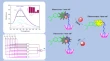
					</abbrgrp>. Specifically, in the present work, our major modification lies in the <it>stirring speed</it> of the Au(I) intermediate solution when reduced by NaBH<sub>4</sub>. In a previous work, Au<sub>20</sub>(SC<sub>2</sub>H<sub>4</sub>Ph)<sub>16</sub> and Au<sub>24</sub>(SC<sub>2</sub>H<sub>4</sub>Ph)<sub>20</sub> were synthesized by controlling the stirring speed for the reduction step of Au(I) by NaBH<sub>4</sub>; for example, approximately 50&#8201;rpm for Au<sub>20</sub>(SC<sub>2</sub>H<sub>4</sub>Ph)<sub>16</sub> and approximately 100&#8201;rpm for Au<sub>24</sub>(SC<sub>2</sub>H<sub>4</sub>Ph)<sub>20</sub>.</p><p>To synthesize larger-sized nanoclusters, we rationalize that the kinetics of the reduction reaction of Au(I) intermediate species by NaBH<sub>4</sub> may be important for potential size control. Motivated by that, we systematically varied the synthetic conditions and also compared with the typical method for Au<sub>25</sub>(SC<sub>2</sub>H<sub>4</sub>Ph)<sub>18</sub> synthesis. Interestingly, we found that with the stirring speed being increased to approximately 400&#8201;rpm, the crude product (Figure <figr fid="F1">1</figr>A) shows an optical spectrum different from that of Au<sub>24</sub>(SC<sub>2</sub>H<sub>4</sub>Ph)<sub>20</sub> or Au<sub>20</sub>(SC<sub>2</sub>H<sub>4</sub>Ph)<sub>16</sub> (Figure <figr fid="F1">1</figr>B,C). A new absorption peak centered at approximately 800&#8201;nm was observed (Figure <figr fid="F1">1</figr>A), indicating that some new species have been formed in this controlled reduction process. Of note, the small peak at approximately 700&#8201;nm (Figure <figr fid="F1">1</figr>A) is due to the concurrent formation of a small amount of Au<sub>24</sub>(SC<sub>2</sub>H<sub>4</sub>Ph)<sub>20</sub> clusters as impurities in the synthesis of the new clusters. To remove Au<sub>24</sub> and possible Au<sub>20</sub> impurities from the product, the clusters in the crude product were precipitated by adding ethanol, and the crude product was then extracted with CH<sub>2</sub>Cl<sub>2</sub>/CH<sub>3</sub>CN (1:9 vol) to selectively dissolve Au<sub>20</sub>(SC<sub>2</sub>H<sub>4</sub>Ph)<sub>16</sub> from the product. The remained undissolved produce was followed by a second extraction with CH<sub>2</sub>Cl<sub>2</sub>/CH<sub>3</sub>CN (1:2 vol) to remove Au<sub>24</sub>(SC<sub>2</sub>H<sub>4</sub>Ph)<sub>20</sub>. The final remaining product is largely free of Au<sub>24</sub> and Au<sub>20</sub> impurities, as evidenced in the disappearance of the 700-nm band in the optical spectrum (Figure <figr fid="F1">1</figr>A, red profile). The relatively pure product is subject to further characterization for cluster formula determination.</p>
				<fig id="F1"><title><p>Figure 1</p></title><caption><p>UV-vis absorption spectra.</p></caption><text>
   <p><b>UV-vis absorption spectra.</b> (<b>A</b>) The new cluster product (black profile, crude product without any extraction; red, after two extractions), (<b>B</b>) pure Au<sub>24</sub>(SC<sub>2</sub>H<sub>4</sub>Ph)<sub>20</sub>, and (<b>C</b>) pure Au<sub>20</sub>(SC<sub>2</sub>H<sub>4</sub>Ph)<sub>16.</sub></p>
</text><graphic file="1556-276X-7-277-1"/></fig><p>We employ electrospray ionization mass spectrometry (ESI-MS) to determine the composition of the new gold cluster product. A solution of cesium acetate (CsAc, 50&#8201;mM, in dry methanol) was added to a toluene solution of gold clusters at 1:1 or 1:2 (vol). ESI-MS detects the cluster-Cs adducts that are positively charged due to Cs<sup>+</sup> addition to the cluster surface.</p><p>The low-mass portion of the spectrum consists of all [CsAc]<sub>
						<it>x</it>
					</sub>Cs<sup>+</sup> signals (Figure S1 in Additional file <supplr sid="S1">1</supplr>), and residual Au<sub>24</sub>(SC<sub>2</sub>H<sub>4</sub>Ph)<sub>20</sub>Cs was also observed at <it>m</it>/<it>z</it> 7,603 (calculated FW&#8201;=&#8201;7604 for mono-Cs adduct). The high-mass portion (Figure <figr fid="F2">2</figr>) shows two peaks at <it>m</it>/<it>z</it> 11,793 and 12,127 (Figure <figr fid="F2">2</figr>A, unsmoothed spectrum; Figure <figr fid="F2">2</figr>B, smoothed). These two signals are corresponding to the new clusters formed in the controlled reduction process. Both peaks indicate +1 ions, evidenced by the unity spacing of the isotope-resolved peaks (see Figure <figr fid="F2">2</figr>A inset, for <it>m</it>/<it>z</it> 11,793). After subtracting one Cs<sup>+</sup> ion (FW&#8201;=&#8201;133), the masses of the two new clusters are determined to be 11,660 and 11,994&#8201;Da. Unfortunately, isolation of these two mixed clusters into pure ones has not been successful so far.</p>
				<suppl id="S1">
					<title>
						<p>Additional file 1</p>
					</title>
					<text>
						<p>
							<b>Mass spectrum in the range of </b><b>
								<it>m</it>
							</b><b>/</b><b>
								<it>z </it>
							</b><b>2,000 to 8,000 and comparison of the UV-vis spectrum.</b> Figure S1 shows the ESI mass spectrum in the range of <it>m</it>/<it>z</it> 2,000 to 8,000. Residual Au<sub>24</sub>(SC<sub>2</sub>H<sub>4</sub>Ph)<sub>20</sub> clusters (in mono-Cs adducts) were observed at <it>m</it>/<it>z</it> 7603. The low mass portion contains all (CsAc)<it>n</it>Cs&#8201;+&#8201;signals with equal spacing of 191.9 (=CsAc), for example, the <it>m</it>/<it>z</it> 2,051.99 is assigned to (CsAc)<sub>10</sub>Cs<sup>+</sup>. Figure S2 shows the comparison of the UV-vis spectrum of the crude products (profile a) and of the purified Au<sub>25</sub>(SC<sub>2</sub>H<sub>4</sub>Ph)<sub>18</sub> nanoclusters (profile b).</p>
					</text>
					<file name="1556-276X-7-277-S1.pdf">
   <p>Click here for file</p>
</file>
				</suppl>
				<fig id="F2"><title><p>Figure 2</p></title><caption><p>ESI-MS spectra of the new nanolcusters</p></caption><text>
   <p><b>ESI-MS spectra of the new nanolcusters.</b> (<b>A </b>) Unsmoothed spectrum in the range of <it>m</it>/<it>z</it> 8,000 to 14,000 (inset, isotope pattern of <it>m</it>/<it>z</it> 11,793) and (<b>B</b>) zoom-in spectrum (smoothed).</p>
</text><graphic file="1556-276X-7-277-2"/></fig><p>To deduce the formulas of the two new Au<sub>
						<it>n</it>
					</sub>(SC<sub>2</sub>H<sub>4</sub>Ph)<sub>
						<it>m</it>
					</sub> clusters based upon the ESI-MS data, we first determine the minimum value of the gold atom number (<it>n</it>), which corresponds to the limiting case of Au(I):SR complexes, i.e., when <it>n</it>&#8201;=&#8201;<it>m</it>. This gives rise to 11,660/337&#8201;approximately&#8201;35 for the peak of <it>m</it>/<it>z</it> 11,660. We then construct candidate formulas by systematically increasing <it>n</it> starting from 35. For example, for <it>n</it>&#8201;=&#8201;36, we list two closest matches to the ESI-determined mass of 11,660&#8201;Da, one with the smallest negative deviation, i.e., (<it>n</it>, <it>m</it>)&#8201;=&#8201;(36, 33), and the other with the smallest positive deviation, i.e., (<it>n</it>, <it>m</it>)&#8201;=&#8201;(36, 34), see Table&#8201;<tblr tid="T1">1</tblr>; note that other <it>m</it> values for <it>n</it>&#8201;=&#8201;36 are not pursued since they deviate more from the ESI mass of 11,660&#8201;Da. Following this method, one can list all the possible formulas until the limiting case of 11,660&#8201;Da consisting of all gold atoms, which is the upper limiting case since a certain number of thiolate ligands must be present to protect the metal core. By comparing the candidate formulas with the ESI-MS-determined precise mass of 11,660&#8201;Da, we readily obtain the Au<sub>39</sub>(SC<sub>2</sub>H<sub>4</sub>Ph)<sub>29</sub> formula (calculated FW&#8201;=&#8201;11661; deviation, 1&#8201;Da), as reflected in Table&#8201;<tblr tid="T1">1</tblr>. Similarly, the cluster of 11,993&#8201;Da is determined to be Au<sub>40</sub>(SC<sub>2</sub>H<sub>4</sub>Ph)<sub>30</sub> (calculated FW&#8201;=&#8201;11,995; deviation, 2&#8201;Da). A deviation of 0.5 to 2&#8201;Da is reasonable at this high mass range.</p>
				<table id="T1">
					<title>
						<p>Table 1</p>
					</title>
					<caption>
						<p>
							<b>List of candidate formulas for the two clusters</b>
						</p>
					</caption>
					<tgroup align="left" cols="6">
						<colspec align="left" colname="c1" colnum="1" colwidth="1*"/>
						<colspec align="left" colname="c2" colnum="2" colwidth="1*"/>
						<colspec align="left" colname="c3" colnum="3" colwidth="1*"/>
						<colspec align="left" colname="c4" colnum="4" colwidth="1*"/>
						<colspec align="left" colname="c5" colnum="5" colwidth="1*"/>
						<colspec align="left" colname="c6" colnum="6" colwidth="1*"/>
						<thead valign="top">
							<row>
								<entry colname="c1" nameend="c3" namest="c1" rowsep="1">
									<p>
										<b>(</b><b>
											<it>n</it>
										</b><b>,</b><b>
											<it>m</it>
										</b><b>) Candidate formulas for </b><b>
											<it>m</it>
										</b><b>/</b><b>
											<it>z </it>
										</b><b>11,660</b>
									</p>
								</entry>
								<entry colname="c4" nameend="c6" namest="c4" rowsep="1">
									<p>
										<b>(</b><b>
											<it>n</it>
										</b><b>,</b><b>
											<it>m</it>
										</b><b>) Candidate formulas for </b><b>
											<it>m</it>
										</b><b>/</b><b>
											<it>z </it>
										</b><b>11,993</b>
									</p>
								</entry>
							</row>
							<row rowsep="1">
								<entry colname="c1">
									<p>
										<b>Formula</b>
									</p>
								</entry>
								<entry colname="c2">
									<p>
										<b>Mass</b>
									</p>
								</entry>
								<entry colname="c3">
									<p>
										<b>Deviation from 11,660&#8201;Da</b>
									</p>
								</entry>
								<entry colname="c4">
									<p>
										<b>Formula</b>
									</p>
								</entry>
								<entry colname="c5">
									<p>
										<b>Mass</b>
									</p>
								</entry>
								<entry colname="c6">
									<p>
										<b>Deviation from 11,993&#8201;Da</b>
									</p>
								</entry>
							</row>
						</thead>
						<tbody valign="top">
							<row>
								<entry colname="c1">
									<p>(35, 35)</p>
								</entry>
								<entry colname="c2">
									<p>11696.3</p>
								</entry>
								<entry colname="c3">
									<p>+36.3</p>
								</entry>
								<entry colname="c4">
									<p>(36, 36)</p>
								</entry>
								<entry colname="c5">
									<p>12030.5</p>
								</entry>
								<entry colname="c6">
									<p>+37.5</p>
								</entry>
							</row>
							<row>
								<entry colname="c1">
									<p>(36, 33)</p>
								</entry>
								<entry colname="c2">
									<p>11618.8</p>
								</entry>
								<entry colname="c3">
									<p>&#8722;41.2</p>
								</entry>
								<entry colname="c4">
									<p>(37, 34)</p>
								</entry>
								<entry colname="c5">
									<p>11952.9</p>
								</entry>
								<entry colname="c6">
									<p>&#8722;40.1</p>
								</entry>
							</row>
							<row>
								<entry colname="c1">
									<p>(36, 34)</p>
								</entry>
								<entry colname="c2">
									<p>11756.0</p>
								</entry>
								<entry colname="c3">
									<p>+90.0</p>
								</entry>
								<entry colname="c4">
									<p>(37, 35)</p>
								</entry>
								<entry colname="c5">
									<p>12090.2</p>
								</entry>
								<entry colname="c6">
									<p>+97.2</p>
								</entry>
							</row>
							<row>
								<entry colname="c1">
									<p>(37, 31)</p>
								</entry>
								<entry colname="c2">
									<p>11541.3</p>
								</entry>
								<entry colname="c3">
									<p>&#8722;118.7</p>
								</entry>
								<entry colname="c4">
									<p>(38, 32)</p>
								</entry>
								<entry colname="c5">
									<p>11875.5</p>
								</entry>
								<entry colname="c6">
									<p>&#8722;117.5</p>
								</entry>
							</row>
							<row>
								<entry colname="c1">
									<p>(37, 32)</p>
								</entry>
								<entry colname="c2">
									<p>11678.5</p>
								</entry>
								<entry colname="c3">
									<p>+18.5</p>
								</entry>
								<entry colname="c4">
									<p>(38, 33)</p>
								</entry>
								<entry colname="c5">
									<p>12012.7</p>
								</entry>
								<entry colname="c6">
									<p>+19.7</p>
								</entry>
							</row>
							<row>
								<entry colname="c1">
									<p>(38, 30)</p>
								</entry>
								<entry colname="c2">
									<p>11601.1</p>
								</entry>
								<entry colname="c3">
									<p>&#8722;58.9</p>
								</entry>
								<entry colname="c4">
									<p>(39, 31)</p>
								</entry>
								<entry colname="c5">
									<p>11935.3</p>
								</entry>
								<entry colname="c6">
									<p>&#8722;57.7</p>
								</entry>
							</row>
							<row>
								<entry colname="c1">
									<p>(38, 31)</p>
								</entry>
								<entry colname="c2">
									<p>11738.3</p>
								</entry>
								<entry colname="c3">
									<p>+78.3</p>
								</entry>
								<entry colname="c4">
									<p>(39, 32)</p>
								</entry>
								<entry colname="c5">
									<p>12072.4</p>
								</entry>
								<entry colname="c6">
									<p>+79.4</p>
								</entry>
							</row>
							<row>
								<entry colname="c1">
									<p>
										<b>(39, 29)</b>
									</p>
								</entry>
								<entry colname="c2">
									<p>
										<b>11660.8</b>
									</p>
								</entry>
								<entry colname="c3">
									<p>
										<b>&#8722;0.8</b>
									</p>
								</entry>
								<entry colname="c4">
									<p>(40, 29)</p>
								</entry>
								<entry colname="c5">
									<p>11875.7</p>
								</entry>
								<entry colname="c6">
									<p>&#8722;117.3</p>
								</entry>
							</row>
							<row>
								<entry colname="c1">
									<p>(39, 30)</p>
								</entry>
								<entry colname="c2">
									<p>11798.0</p>
								</entry>
								<entry colname="c3">
									<p>+138</p>
								</entry>
								<entry colname="c4">
									<p>
										<b>(40, 30)</b>
									</p>
								</entry>
								<entry colname="c5">
									<p>
										<b>11994.9</b>
									</p>
								</entry>
								<entry colname="c6">
									<p>
										<b>+1.9</b>
									</p>
								</entry>
							</row>
							<row>
								<entry colname="c1">
									<p>(40, 27)</p>
								</entry>
								<entry colname="c2">
									<p>11583.4</p>
								</entry>
								<entry colname="c3">
									<p>&#8722;76.6</p>
								</entry>
								<entry colname="c4">
									<p>(41, 28)</p>
								</entry>
								<entry colname="c5">
									<p>11917.5</p>
								</entry>
								<entry colname="c6">
									<p>&#8722;75.5</p>
								</entry>
							</row>
							<row>
								<entry colname="c1">
									<p>(40, 28)</p>
								</entry>
								<entry colname="c2">
									<p>11720.6</p>
								</entry>
								<entry colname="c3">
									<p>+60.6</p>
								</entry>
								<entry colname="c4">
									<p>(41, 29)</p>
								</entry>
								<entry colname="c5">
									<p>12054.7</p>
								</entry>
								<entry colname="c6">
									<p>+61.7</p>
								</entry>
							</row>
							<row>
								<entry colname="c1">
									<p>(41, 26)</p>
								</entry>
								<entry colname="c2">
									<p>11643.1</p>
								</entry>
								<entry colname="c3">
									<p>&#8722;16.9</p>
								</entry>
								<entry colname="c4">
									<p>(42, 27)</p>
								</entry>
								<entry colname="c5">
									<p>11977.2</p>
								</entry>
								<entry colname="c6">
									<p>&#8722;15.8</p>
								</entry>
							</row>
							<row>
								<entry colname="c1">
									<p>(41, 27)</p>
								</entry>
								<entry colname="c2">
									<p>11780.3</p>
								</entry>
								<entry colname="c3">
									<p>+120.3</p>
								</entry>
								<entry colname="c4">
									<p>(42, 28)</p>
								</entry>
								<entry colname="c5">
									<p>12114.4</p>
								</entry>
								<entry colname="c6">
									<p>+121.4</p>
								</entry>
							</row>
							<row>
								<entry colname="c1">
									<p>(42, 24)</p>
								</entry>
								<entry colname="c2">
									<p>11565.6</p>
								</entry>
								<entry colname="c3">
									<p>&#8722;94.4</p>
								</entry>
								<entry colname="c4">
									<p>(43, 25)</p>
								</entry>
								<entry colname="c5">
									<p>11899.7</p>
								</entry>
								<entry colname="c6">
									<p>&#8722;93.3</p>
								</entry>
							</row>
							<row>
								<entry colname="c1">
									<p>(42, 25)</p>
								</entry>
								<entry colname="c2">
									<p>11702.8</p>
								</entry>
								<entry colname="c3">
									<p>+42.8</p>
								</entry>
								<entry colname="c4">
									<p>(43, 26)</p>
								</entry>
								<entry colname="c5">
									<p>12036.9</p>
								</entry>
								<entry colname="c6">
									<p>+43.9</p>
								</entry>
							</row>
							<row>
								<entry colname="c1">
									<p>(43, 23)</p>
								</entry>
								<entry colname="c2">
									<p>11625.4</p>
								</entry>
								<entry colname="c3">
									<p>&#8722;34.6</p>
								</entry>
								<entry colname="c4">
									<p>(44, 24)</p>
								</entry>
								<entry colname="c5">
									<p>11959.5</p>
								</entry>
								<entry colname="c6">
									<p>&#8722;33.5</p>
								</entry>
							</row>
							<row>
								<entry colname="c1">
									<p>(43, 24)</p>
								</entry>
								<entry colname="c2">
									<p>11762.6</p>
								</entry>
								<entry colname="c3">
									<p>+102.3</p>
								</entry>
								<entry colname="c4">
									<p>(44, 25)</p>
								</entry>
								<entry colname="c5">
									<p>12096.7</p>
								</entry>
								<entry colname="c6">
									<p>+103.7</p>
								</entry>
							</row>
							<row>
								<entry colname="c1">
									<p>(44, 21)</p>
								</entry>
								<entry colname="c2">
									<p>11547.9</p>
								</entry>
								<entry colname="c3">
									<p>&#8722;112.1</p>
								</entry>
								<entry colname="c4">
									<p>(45, 22)</p>
								</entry>
								<entry colname="c5">
									<p>11882.0</p>
								</entry>
								<entry colname="c6">
									<p>&#8722;111</p>
								</entry>
							</row>
							<row>
								<entry colname="c1">
									<p>(44, 22)</p>
								</entry>
								<entry colname="c2">
									<p>11685.1</p>
								</entry>
								<entry colname="c3">
									<p>+25.1</p>
								</entry>
								<entry colname="c4">
									<p>(45, 23)</p>
								</entry>
								<entry colname="c5">
									<p>12019.2</p>
								</entry>
								<entry colname="c6">
									<p>+26.2</p>
								</entry>
							</row>
							<row>
								<entry colname="c1">
									<p>(45, 20)</p>
								</entry>
								<entry colname="c2">
									<p>11607.7</p>
								</entry>
								<entry colname="c3">
									<p>&#8722;52.3</p>
								</entry>
								<entry colname="c4">
									<p>(46, 21)</p>
								</entry>
								<entry colname="c5">
									<p>11941.9</p>
								</entry>
								<entry colname="c6">
									<p>&#8722;51.1</p>
								</entry>
							</row>
							<row rowsep="1">
								<entry colname="c1">
									<p>(45, 21)</p>
								</entry>
								<entry colname="c2">
									<p>11744.9</p>
								</entry>
								<entry colname="c3">
									<p>+84.9</p>
								</entry>
								<entry colname="c4">
									<p>(46, 22)</p>
								</entry>
								<entry colname="c5">
									<p>12078.9</p>
								</entry>
								<entry colname="c6">
									<p>+85.9</p>
								</entry>
							</row>
						</tbody>
					</tgroup>
				</table>
			</sec>
			<sec>
				<st>
					<p>Insight into the size-controlled synthesis of Au<sub>39/40</sub> nanoclusters</p>
				</st><p>The attainment of two new nanoclusters, Au<sub>39</sub>(SC<sub>2</sub>H<sub>4</sub>Ph)<sub>29</sub> and Au<sub>40</sub>(SC<sub>2</sub>H<sub>4</sub>Ph)<sub>30</sub>, demonstrates the feasibility of controlling cluster size via controlled reduction. Herein, we discuss some insights obtained regarding the synthetic processes of Au<sub>20</sub>, Au<sub>24</sub>, and Au<sub>39/40</sub>. These four cluster species belong to a new series, as Au<sub>20</sub> and Au<sub>24</sub> are formed concurrently, albeit in small amounts, in the synthesis of Au<sub>39/40</sub> nanoclusters. However, by controlling the reaction process, one may selectively produce Au<sub>20</sub>, Au<sub>24</sub>, or Au<sub>39/40</sub>. When using Au(III) as the starting material for nanocluster synthesis, two primary stages include (a) the reduction of Au(III) to Au(I) by HSR and (b) the conversion of Au(I) to Au<sub>
						<it>n</it>
					</sub>(SR)<sub>
						<it>m</it>
					</sub> clusters by reduction with NaBH<sub>4</sub>. Factors that are important for Au<sub>
						<it>n</it>
					</sub> size control with <it>n</it>&#8201;=&#8201;20, 24, 39 and 40 include (a) the stirring speed of the reaction mixture, (b) the addition speed of NaBH<sub>4</sub>, and (c) the amount of NaBH<sub>4</sub> added (<it>vide infra</it>).</p>
			</sec>
			<sec>
				<st>
					<p>Stirring speed and effect on cluster size</p>
				</st><p>We found the stirring speed is quite important for controlling the size and monodispersity of gold clusters. As listed in Table&#8201;<tblr tid="T2">2</tblr>, during stage I, the stationary condition favors the formation of Au<sub>20</sub>(SR)<sub>16</sub> nanoclusters, while slow stirring (50 to 100&#8201;rpm) favors the formation of Au<sub>24</sub>(SR)<sub>20</sub>, Au<sub>39</sub>(SR)<sub>29</sub>, and Au<sub>40</sub>(SR)<sub>30</sub>.</p>
				<table id="T2">
					<title>
						<p>Table 2</p>
					</title>
					<caption>
						<p>
							<b>The respective conditions for the syntheses of Au</b>
							<sub>
								<b>20</b>
							</sub><b>, Au</b>
							<sub>
								<b>24,</b>
							</sub><b>and mixed Au</b>
							<sub>
								<b>39/40</b>
							</sub>
						</p>
					</caption>
					<tgroup align="left" cols="6">
						<colspec align="left" colname="c1" colnum="1" colwidth="1*"/>
						<colspec align="left" colname="c2" colnum="2" colwidth="1*"/>
						<colspec align="left" colname="c3" colnum="3" colwidth="1*"/>
						<colspec align="left" colname="c4" colnum="4" colwidth="1*"/>
						<colspec align="left" colname="c5" colnum="5" colwidth="1*"/>
						<colspec align="left" colname="c6" colnum="6" colwidth="1*"/>
						<thead valign="top">
							<row>
								<entry colname="c1"/>
								<entry colname="c2">
									<p>
										<b>Cluster size</b>
									</p>
								</entry>
								<entry colname="c3" rowsep="1">
									<p>
										<b>Stage I</b>
									</p>
								</entry>
								<entry colname="c4" rowsep="1">
									<p>
										<b>Stage II</b>
									</p>
								</entry>
								<entry colname="c5">
									<p>
										<b>Amount of NaBH</b>
										<sub>
											<b>4</b>
										</sub><b>(concentration, 0.44&#8201;M) per mole of gold and speed of addition</b>
									</p>
								</entry>
								<entry colname="c6">
									<p>
										<b>Aging time</b>
									</p>
								</entry>
							</row>
							<row rowsep="1">
								<entry colname="c1"/>
								<entry colname="c2"/>
								<entry colname="c3">
									<p>
										<b>Stirring speed at the stage of Au(III) reduction to Au(I) by 3X HSC</b>
										<sub>
											<b>2</b>
										</sub><b>H</b>
										<sub>
											<b>4</b>
										</sub><b>Ph</b>
									</p>
								</entry>
								<entry colname="c4">
									<p>
										<b>Stirring speed at the stage of Au(I) reduction to clusters by NaBH</b>
										<sub>
											<b>4</b>
										</sub>
									</p>
								</entry>
								<entry colname="c5"/>
								<entry colname="c6"/>
							</row>
						</thead>
						<tbody valign="top">
							<row>
								<entry colname="c1">
									<p>1</p>
								</entry>
								<entry colname="c2">
									<p>Au<sub>20</sub>
									</p>
								</entry>
								<entry colname="c3">
									<p>Stationary</p>
								</entry>
								<entry colname="c4">
									<p>Approximately 50&#8201;rpm</p>
								</entry>
								<entry colname="c5">
									<p>1&#8201;mL (1&#215;), dropwise added over a 30-min period</p>
								</entry>
								<entry colname="c6">
									<p>Approximately 6&#8201;hrs</p>
								</entry>
							</row>
							<row>
								<entry colname="c1">
									<p>2</p>
								</entry>
								<entry colname="c2">
									<p>Au<sub>24</sub>
									</p>
								</entry>
								<entry colname="c3">
									<p>50 to 100&#8201;rpm</p>
								</entry>
								<entry colname="c4">
									<p>Approximately 100&#8201;rpm</p>
								</entry>
								<entry colname="c5">
									<p>1&#8201;mL (1&#215;), dropwise added over a 15-min period</p>
								</entry>
								<entry colname="c6">
									<p>Overnight</p>
								</entry>
							</row>
							<row>
								<entry colname="c1">
									<p>3</p>
								</entry>
								<entry colname="c2">
									<p>Au<sub>39/40</sub>
									</p>
								</entry>
								<entry colname="c3">
									<p>50 to 100&#8201;rpm</p>
								</entry>
								<entry colname="c4">
									<p>Approximately 400&#8201;rpm</p>
								</entry>
								<entry colname="c5">
									<p>1&#8201;mL (1&#215;), dropwise added over a 15-min period</p>
								</entry>
								<entry colname="c6">
									<p>Overnight</p>
								</entry>
							</row>
							<row rowsep="1">
								<entry colname="c1">
									<p>4</p>
								</entry>
								<entry colname="c2">
									<p>Au<sub>25</sub>
									</p>
								</entry>
								<entry colname="c3">
									<p>50 to 100&#8201;rpm</p>
								</entry>
								<entry colname="c4">
									<p>50 to 400&#8201;rpm</p>
								</entry>
								<entry colname="c5">
									<p>5&#8201;mL (5&#215;), Dropwise added over a 50-min period</p>
								</entry>
								<entry colname="c6">
									<p>Overnight</p>
								</entry>
							</row>
						</tbody>
					</tgroup>
				</table><p>During stage II (the reduction of Au(I) by NaBH<sub>4</sub>), the stirring speed is even critical for the selective formation of Au<sub>20</sub>, Au<sub>24</sub>, or Au<sub>39/40</sub>. A slow stirring (approximately 50&#8201;rpm) during stage II favors the formation of Au<sub>20</sub>(SC<sub>2</sub>H<sub>4</sub>Ph)<sub>16</sub>, while a slightly higher speed of stirring (approximately 100&#8201;rpm) favored the formation of Au<sub>24</sub>(SC<sub>2</sub>H<sub>4</sub>Ph)<sub>20</sub>, and with further increased speed to approximately 400&#8201;rpm, we obtained new clusters of Au<sub>39</sub>(SC<sub>2</sub>H<sub>4</sub>Ph)<sub>29</sub> and Au<sub>40</sub>(SC<sub>2</sub>H<sub>4</sub>Ph)<sub>30</sub>. This controlled reaction process for tuning cluster size is quite interesting. We believe that the aggregated Au(I)SR species are broken into small fragments upon reduction or partial reduction by NaBH<sub>4</sub>. Different stirring speed for stage II would influence the kinetics of the reduction reaction of Au(I)SR, and the different stirring speeds also give rise to different sheering forces that would break polymeric Au(I)SR into different sized fragments; such different sized fragments seem to subsequently grow into different sized clusters based upon our results.</p><p>Regarding the aggregated Au(I)SC<sub>2</sub>H<sub>4</sub>Ph species in the solution, structural characterization (e.g., by NMR or X-ray diffraction) is still difficult to carry out as the Au(I) intermediate species is poorly soluble in common solvents. Thermal gravimetric analysis determined the composition of Au(I):SR to be 1:1, but the aggregation degree (e.g., how many repeat units in [Au(I)SC<sub>2</sub>H<sub>4</sub>Ph]<sub>
						<it>x</it>
					</sub>) and what structures [Au(I)SC<sub>2</sub>H<sub>4</sub>Ph]<sub>
						<it>x</it>
					</sub> may adopt are all unknown yet. Possible structures of [Au(I)SC<sub>2</sub>H<sub>4</sub>Ph]<sub>
						<it>x</it>
					</sub> include linear chains, ring <abbrgrp>
						<abbr bid="B53">53</abbr>
						<abbr bid="B54">54</abbr>
						<abbr bid="B55">55</abbr>
						<abbr bid="B56">56</abbr>
						<abbr bid="B57">57</abbr>
					</abbrgrp>, or lamellar structures. The characterization of Au(I)SR still need major efforts in future work.</p>
			</sec>
			<sec>
				<st>
					<p>Dropwise addition speed of NaBH<sub>4</sub> and effect on cluster size</p>
				</st><p>In addition to the stirring speed during stage II, the addition speed of NaBH<sub>4</sub> (aqueous solution) to reduce Au(I) into clusters also plays an important role in controlling the final cluster size. We have tested that, in the synthesis of Au<sub>20</sub>(SC<sub>2</sub>H<sub>4</sub>Ph)<sub>16</sub>, if the initial drops of NaBH<sub>4</sub> solution (0.44&#8201;mol/L, 1&#8201;mL) were added <it>rapidly</it>, the light yellow solution of Au(I) aggregates would rapidly become brown or deep black, and the product would contain more Au<sub>24</sub> and Au<sub>39/40</sub> clusters, instead of the predominant Au<sub>20</sub> as the case of very slow addition of NaBH<sub>4</sub> (over a period of approximately 30&#8201;min) (entry 1, Table&#8201;<tblr tid="T2">2</tblr>). After optimization, we found that adding NaBH<sub>4</sub> (0.44&#8201;mol/L, 1&#8201;mL, same concentration and amount as the Au<sub>20</sub> synthesis) over a period of approximately 15&#8201;min gave rise to predominant Au<sub>24</sub> (under approximately 100&#8201;rpm stirring condition) or Au<sub>39/40</sub> (under approximately 400&#8201;rpm stirring condition); see entries 2 and 3 of Table&#8201;<tblr tid="T2">2</tblr>. Thus, controlled reduction of Au(I) is very important for size selective formation of Au<sub>20</sub>, Au<sub>24</sub>, or Au<sub>39/40</sub>. The selective formation of Au<sub>39/40</sub> over Au<sub>24</sub> - which differ only in the stirring speed during stage II (i.e., 400 vs 100&#8201;rpm, Table&#8201;<tblr tid="T2">2</tblr>) - should be due to the different reaction kinetics in the reduction process of Au(I) species into clusters. In a recent synthetical work on gold/phosphine nanocluster synthesis, Pettibone and Hudgens identified a growth-etching cyclic process that occurs around the most stable cluster species to form monodisperse product <abbrgrp>
						<abbr bid="B4">4</abbr>
						<abbr bid="B58">58</abbr>
						<abbr bid="B59">59</abbr>
					</abbrgrp>. This size selective growth mechanism provides important information on the gold/phosphine system. The reaction kinetics of the gold/thiol system, however, still needs significant input in order to unravel the details of the kinetic process. Mass spectrometric monitoring of the reaction intermediates would provide valuable information and should be pursued in future work.</p>
			</sec>
			<sec>
				<st>
					<p>Degree of reduction of Au(I) and effect on cluster size</p>
				</st><p>With respect to the growth of Au<sub>20</sub>, Au<sub>24</sub>, and Au<sub>39/40</sub> nanoclusters, an interesting question arises naturally: why the ubiquitous Au<sub>25</sub> nanocluster is not formed under these conditions (entries 1 to 3, Table&#8201;<tblr tid="T2">2</tblr>). The synthesis of Au<sub>25</sub>(SC<sub>2</sub>H<sub>4</sub>Ph)<sub>18</sub> is typically done under experimental conditions of fast stirring and rapid reduction of Au(I) with large excess of NaBH<sub>4</sub> (approximately 10 equivalents (eq) of NaBH<sub>4</sub> per mole of gold). An important difference lies in that the syntheses of Au<sub>20</sub>, Au<sub>24</sub>, and Au<sub>39/40</sub> clusters all involve <it>1&#8201;eq</it> of NaBH<sub>4</sub> per gold, i.e., 1&#8201;mL of NaBH<sub>4</sub> solution (0.44&#8201;mol/L), Table&#8201;<tblr tid="T2">2</tblr>. This implies that the degree of reduction of Au(I) might affect the cluster size, and the formation of Au<sub>25</sub> clusters might necessitate over reduction of Au(I) with a large excess of NaBH<sub>4</sub>.</p><p>To find out whether the reduction degree of Au(I) species affect the final cluster size, we adopt the same stirring conditions as the synthesis of Au<sub>24</sub> and Au<sub>39/40</sub> (see entry 4, Table&#8201;<tblr tid="T2">2</tblr>), but we add more NaBH<sub>4</sub> (e.g., 5&#8201;eq, rather than 1&#8201;eq for the synthesis of Au<sub>24</sub> and Au<sub>39/40</sub>). The addition speed of NaBH<sub>4</sub> solution is kept comparable to the syntheses of Au<sub>24</sub> and Au<sub>39/40</sub> clusters. Interestingly, dropwise addition of 5&#8201;eq of NaBH<sub>4</sub> does result in selective formation of Au<sub>25</sub>, instead of Au<sub>24</sub> or Au<sub>39/40</sub>, evidenced by its characteristic spectroscopic features (see Figure S2 in Additional file <supplr sid="S1">1</supplr>). Thus, the growth of Au<sub>25</sub> nanoclusters does require a rich reductant (NaBH<sub>4</sub>), as opposed to lean NaBH<sub>4</sub> for Au<sub>20</sub>, Au<sub>24</sub>, and Au<sub>39/40</sub> synthesis. The fast stirring and rapid addition of NaBH<sub>4</sub> seem not the key to the synthesis of Au<sub>25</sub> nanoclusters.</p>
			</sec>
		</sec>
		<sec>
			<st>
				<p>Conclusions</p>
			</st><p>This work has demonstrated the effectiveness of controlled reduction for synthesizing different sized gold nanoclusters. Specifically, slow stirring and slow addition of 1&#8201;eq NaBH<sub>4</sub>/mol of gold are critical to effect the preferential growth of the series of Au<sub>20</sub>, Au<sub>24</sub>, and Au<sub>39/40</sub> nanoclusters. In addition to the reaction kinetics, controlling the degree of reduction also leads to different sized nanoclusters, as demonstrated in the selective formation of Au<sub>25</sub> over Au<sub>
					<it>n</it>
				</sub> (<it>n</it>&#8201;=&#8201;20, 24, 39/40). Future work is hoped to offer deeper mechanistic understanding of the Au(I) formation and the Au(I) reduction process by NaBH<sub>4</sub>. Mechanistic understanding of the cluster growth process will eventually permit high yielding synthesis of a full series of monodisperse gold nanoclusters.</p>
		</sec>
		<sec>
			<st>
				<p>Abbreviations</p>
			</st><p>NaBH<sub>4</sub>: sodium borohydride; TOAB: tetraoctylammonium bromide.</p>
		</sec>
		<sec>
			<st>
				<p>Competing interests</p>
			</st><p>The authors declare that they have no competing interests.</p>
		</sec>
		<sec>
			<st>
				<p>Authors&#8217; contributions</p>
			</st><p>XM and ZL participated in all the studies and in writing this paper. MZ and RJ supervised in the concept of the study and participated in its design and in the revision of the manuscript. All authors read and approved the final manuscript.</p>
		</sec>
		<sec>
			<st>
				<p>Authors&#8217; information</p>
			</st><p>XM is presently working at Anhui University (China). He received his PhD in Chemistry from the University of Science and Technology of China in 2007. His research interest focuses on chemosensors. ZL is a graduate student in the Zhu group at Anhui University (China). He obtained his BS in Chemistry (2010) from Anhui University. His research interest is noble metal nanoparticles. MZ presently works at Anhui University (China). He received his PhD in Chemistry from the University of Science and Technology of China in 2000. Before joining the Jin group as a postdoctoral researcher in February 2007, he worked at the University of Science and Technology of China. His research interests focus on photoinduced electron transfer, sensors, and nanomaterials. RJ received his BS in Chemical Physics from the University of Science and Technology of China (Hefei, China) in 1995, MS in Physical Chemistry/Catalysis from Dalian Institute of Chemical Physics (Dalian, China) in 1998, and PhD in Chemistry from Northwestern University (Evanston, Illinois) in 2003. After 3&#8201;years of postdoctoral research at the University of Chicago (Illinois), he joined the Chemistry faculty of Carnegie Mellon University in September 2006. His current research interests focus on atomically precise noble metal nanoparticles, evolution of their structure, electronic and optical properties, and utilizing these well-defined nanoparticles in catalysis, optics, sensing, and so forth.</p>
		</sec>
	</bdy>
	<bm>
		<ack>
			<sec>
				<st>
					<p>Acknowledgements</p>
				</st><p>Manzhou Zhu acknowledges financial support by NSFC (20871112, 21072001), 211 Project of Anhui University. Rongchao Jin acknowledges the support by the Air Force Office of Scientific Research under AFOSR award no. FA9550-11-1-9999 (FA9550-11-1-0147).</p>
			</sec>
		</ack>
		<refgrp><bibl id="B1"><title><p>Quantum-sized gold nanoclusters: bridging the gap between organometallics and nanocrystals</p></title><aug><au><snm>Jin</snm><fnm>R</fnm></au><au><snm>Zhu</snm><fnm>Y</fnm></au><au><snm>Qian</snm><fnm>H</fnm></au></aug><source>Chem Eur J</source><pubdate>2011</pubdate><volume>17</volume><fpage>6584</fpage><lpage>6593</lpage><xrefbib><pubidlist><pubid idtype="doi">10.1002/chem.201002390</pubid><pubid idtype="pmpid" link="fulltext">21590819</pubid></pubidlist></xrefbib></bibl><bibl id="B2"><title><p>Magic-numbered Aunclusters protected by glutathione monolayers (n&#8201;=&#8201;18, 21, 25, 28, 32, 39): isolation and spectroscopic characterization.</p></title><aug><au><snm>Negishi</snm><fnm>Y</fnm></au><au><snm>Takasugi</snm><fnm>Y</fnm></au><au><snm>Sato</snm><fnm>S</fnm></au><au><snm>Yao</snm><fnm>H</fnm></au><au><snm>Kimura</snm><fnm>K</fnm></au><au><snm>Tsukuda</snm><fnm>T</fnm></au></aug><source>J Am Chem Soc</source><pubdate>2004</pubdate><volume>126</volume><fpage>6518</fpage><lpage>6519</lpage><xrefbib><pubidlist><pubid idtype="doi">10.1021/ja0483589</pubid><pubid idtype="pmpid" link="fulltext">15161256</pubid></pubidlist></xrefbib></bibl><bibl id="B3"><title><p>The colours of nanometric gold-optical response functions of selected gold-cluster thiolates</p></title><aug><au><snm>Wyrwas</snm><fnm>RB</fnm></au><au><snm>Alvarez</snm><fnm>MM</fnm></au><au><snm>Khoury</snm><fnm>JT</fnm></au><au><snm>Price</snm><fnm>RC</fnm></au><au><snm>Schaaff</snm><fnm>TG</fnm></au><au><snm>Whetten</snm><fnm>RL</fnm></au></aug><source>Eur Phys J D</source><pubdate>2007</pubdate><volume>43</volume><fpage>91</fpage><lpage>95</lpage><xrefbib><pubid idtype="doi">10.1140/epjd/e2007-00117-6</pubid></xrefbib></bibl><bibl id="B4"><title><p>Reaction mechanism governing formation of 1,3-Bis(diphenylphosphino)propane-protected gold nanoclusters</p></title><aug><au><snm>Hudgens</snm><fnm>JW</fnm></au><au><snm>Pettibone</snm><fnm>JM</fnm></au><au><snm>Senftle</snm><fnm>TP</fnm></au><au><snm>Bratton</snm><fnm>RN</fnm></au></aug><source>Inorg Chem</source><pubdate>2011</pubdate><volume>50</volume><fpage>10178</fpage><lpage>10189</lpage><xrefbib><pubidlist><pubid idtype="doi">10.1021/ic2018506</pubid><pubid idtype="pmpid" link="fulltext">21928777</pubid></pubidlist></xrefbib></bibl><bibl id="B5"><title><p>Experimental and density functional theory analysis of serial introductions of electron-withdrawing ligands into the ligand shell of a thiolate-protected Au25 nanoparticle</p></title><aug><au><snm>Parker</snm><fnm>JF</fnm></au><au><snm>Kacprzak</snm><fnm>KA</fnm></au><au><snm>Lopez-Acevedo</snm><fnm>O</fnm></au><au><snm>H&#228;kkinen</snm><fnm>H</fnm></au><au><snm>Murray</snm><fnm>RW</fnm></au></aug><source>J Phys Chem C</source><pubdate>2010</pubdate><volume>114</volume><fpage>8276</fpage><lpage>8281</lpage><xrefbib><pubid idtype="doi">10.1021/jp101265v</pubid></xrefbib></bibl><bibl id="B6"><title><p>Organogold clusters protected by phenylacetylene</p></title><aug><au><snm>Maity</snm><fnm>P</fnm></au><au><snm>Tsunoyama</snm><fnm>H</fnm></au><au><snm>Yamauchi</snm><fnm>M</fnm></au><au><snm>Xie</snm><fnm>S</fnm></au><au><snm>Tsukuda</snm><fnm>T</fnm></au></aug><source>J Am Chem Soc</source><pubdate>2011</pubdate><volume>133</volume><fpage>20123</fpage><lpage>20125</lpage><xrefbib><pubidlist><pubid idtype="doi">10.1021/ja209236n</pubid><pubid idtype="pmpid" link="fulltext">22082045</pubid></pubidlist></xrefbib></bibl><bibl id="B7"><title><p>Correlating the crystal structure of a thiol-protected Au25 cluster and optical properties</p></title><aug><au><snm>Zhu</snm><fnm>M</fnm></au><au><snm>Aikens</snm><fnm>CM</fnm></au><au><snm>Hollander</snm><fnm>FJ</fnm></au><au><snm>Schatz</snm><fnm>GC</fnm></au><au><snm>Jin</snm><fnm>R</fnm></au></aug><source>J Am Chem Soc</source><pubdate>2008</pubdate><volume>130</volume><fpage>5883</fpage><lpage>5885</lpage><xrefbib><pubidlist><pubid idtype="doi">10.1021/ja801173r</pubid><pubid idtype="pmpid" link="fulltext">18407639</pubid></pubidlist></xrefbib></bibl><bibl id="B8"><title><p>Quantum-sized gold clusters as efficient two-photon absorbers</p></title><aug><au><snm>Ramakrishna</snm><fnm>G</fnm></au><au><snm>Varnavski</snm><fnm>O</fnm></au><au><snm>Kim</snm><fnm>J</fnm></au><au><snm>Lee</snm><fnm>D</fnm></au><au><snm>Goodson</snm><fnm>T</fnm></au></aug><source>J Am Chem Soc</source><pubdate>2008</pubdate><volume>130</volume><fpage>5032</fpage><lpage>5033</lpage><xrefbib><pubidlist><pubid idtype="doi">10.1021/ja800341v</pubid><pubid idtype="pmpid" link="fulltext">18357982</pubid></pubidlist></xrefbib></bibl><bibl id="B9"><title><p>Gold nanocluster-based light-controlled fluorescence molecular switch</p></title><aug><au><snm>Liao</snm><fnm>B</fnm></au><au><snm>Chen</snm><fnm>JA</fnm></au><au><snm>Huang</snm><fnm>HW</fnm></au><au><snm>Li</snm><fnm>XF</fnm></au><au><snm>He</snm><fnm>BQ</fnm></au></aug><source>J Mater Chem</source><pubdate>2011</pubdate><volume>21</volume><fpage>5867</fpage><lpage>5869</lpage><xrefbib><pubid idtype="doi">10.1039/c0jm04146g</pubid></xrefbib></bibl><bibl id="B10"><title><p>X-ray magnetic circular dichroism of size-selected, thiolated gold clusters</p></title><aug><au><snm>Negishi</snm><fnm>Y</fnm></au><au><snm>Tsunoyama</snm><fnm>H</fnm></au><au><snm>Suzuki</snm><fnm>M</fnm></au><au><snm>Kawamura</snm><fnm>N</fnm></au><au><snm>Matsushita</snm><fnm>MM</fnm></au><au><snm>Maruyama</snm><fnm>K</fnm></au><au><snm>Sugawara</snm><fnm>T</fnm></au><au><snm>Yokoyama</snm><fnm>T</fnm></au><au><snm>Tsukuda</snm><fnm>T</fnm></au></aug><source>J Am Chem Soc</source><pubdate>2006</pubdate><volume>128</volume><fpage>12034</fpage><lpage>12035</lpage><xrefbib><pubidlist><pubid idtype="doi">10.1021/ja062815z</pubid><pubid idtype="pmpid" link="fulltext">16967930</pubid></pubidlist></xrefbib></bibl><bibl id="B11"><title><p>Reversible switching of magnetism in thiolate-protected Au25 superatoms</p></title><aug><au><snm>Zhu</snm><fnm>M</fnm></au><au><snm>Aikens</snm><fnm>CM</fnm></au><au><snm>Hendrich</snm><fnm>MP</fnm></au><au><snm>Gupta</snm><fnm>R</fnm></au><au><snm>Qian</snm><fnm>H</fnm></au><au><snm>Schatz</snm><fnm>GC</fnm></au><au><snm>Jin</snm><fnm>R</fnm></au></aug><source>J Am Chem Soc</source><pubdate>2009</pubdate><volume>131</volume><fpage>2490</fpage><lpage>2492</lpage><xrefbib><pubidlist><pubid idtype="doi">10.1021/ja809157f</pubid><pubid idtype="pmpid" link="fulltext">19178295</pubid></pubidlist></xrefbib></bibl><bibl id="B12"><title><p>Near-infrared luminescence from small gold nanocrystals</p></title><aug><au><snm>Bigioni</snm><fnm>TP</fnm></au><au><snm>Whetten</snm><fnm>RL</fnm></au></aug><source>J Phys Chem B</source><pubdate>2000</pubdate><volume>104</volume><fpage>6983</fpage><lpage>6986</lpage></bibl><bibl id="B13"><title><p>Near-IR luminescence of monolayer-protected metal clusters</p></title><aug><au><snm>Wang</snm><fnm>G</fnm></au><au><snm>Huang</snm><fnm>T</fnm></au><au><snm>Murray</snm><fnm>RW</fnm></au><au><snm>Menard</snm><fnm>L</fnm></au><au><snm>Nuzzo</snm><fnm>RG</fnm></au></aug><source>J Am Chem Soc</source><pubdate>2005</pubdate><volume>127</volume><fpage>812</fpage><lpage>813</lpage><xrefbib><pubidlist><pubid idtype="doi">10.1021/ja0452471</pubid><pubid idtype="pmpid" link="fulltext">15656600</pubid></pubidlist></xrefbib></bibl><bibl id="B14"><title><p>Understanding the evolution of luminescent gold quantum clusters in protein templates</p></title><aug><au><snm>Chaudhari</snm><fnm>K</fnm></au><au><snm>Xavier</snm><fnm>PL</fnm></au><au><snm>Pradeep</snm><fnm>T</fnm></au></aug><source>ACS Nano</source><pubdate>2011</pubdate><volume>5</volume><fpage>8816</fpage><lpage>8827</lpage><xrefbib><pubidlist><pubid idtype="doi">10.1021/nn202901a</pubid><pubid idtype="pmpid" link="fulltext">22010989</pubid></pubidlist></xrefbib></bibl><bibl id="B15"><title><p>Unique ultrafast visible luminescence in monolayer-protected Au25 clusters</p></title><aug><au><snm>Devadas</snm><fnm>MS</fnm></au><au><snm>Kim</snm><fnm>J</fnm></au><au><snm>Sinn</snm><fnm>E</fnm></au><au><snm>Lee</snm><fnm>D</fnm></au><au><snm>Goodson</snm><fnm>T</fnm></au><au><snm>Ramakrishna</snm><fnm>G</fnm></au></aug><source>J Phys Chem C</source><pubdate>2010</pubdate><volume>114</volume><fpage>22417</fpage><lpage>22423</lpage><xrefbib><pubid idtype="doi">10.1021/jp107033n</pubid></xrefbib></bibl><bibl id="B16"><title><p>On the ligand&#8217;s role in the fluorescence of gold nanoclusters</p></title><aug><au><snm>Wu</snm><fnm>Z</fnm></au><au><snm>Jin</snm><fnm>R</fnm></au></aug><source>Nano Lett</source><pubdate>2010</pubdate><volume>10</volume><fpage>2568</fpage><lpage>2573</lpage><xrefbib><pubidlist><pubid idtype="doi">10.1021/nl101225f</pubid><pubid idtype="pmpid" link="fulltext">20550101</pubid></pubidlist></xrefbib></bibl><bibl id="B17"><title><p>Chiral gold nanoparticles</p></title><aug><au><snm>Gautier</snm><fnm>C</fnm></au><au><snm>B&#252;rgi</snm><fnm>T</fnm></au></aug><source>Chemphyschem</source><pubdate>2009</pubdate><volume>10</volume><fpage>483</fpage><lpage>492</lpage><xrefbib><pubidlist><pubid idtype="doi">10.1002/cphc.200800709</pubid><pubid idtype="pmpid" link="fulltext">19142928</pubid></pubidlist></xrefbib></bibl><bibl id="B18"><title><p>Chiral Au25 nanospheres and nanorods: synthesis and insight into the origin of chirality</p></title><aug><au><snm>Zhu</snm><fnm>M</fnm></au><au><snm>Qian</snm><fnm>H</fnm></au><au><snm>Meng</snm><fnm>X</fnm></au><au><snm>Jin</snm><fnm>S</fnm></au><au><snm>Wu</snm><fnm>Z</fnm></au><au><snm>Jin</snm><fnm>R</fnm></au></aug><source>Nano Lett</source><pubdate>2011</pubdate><volume>11</volume><fpage>3963</fpage><lpage>3969</lpage><xrefbib><pubidlist><pubid idtype="doi">10.1021/nl202288j</pubid><pubid idtype="pmpid" link="fulltext">21834520</pubid></pubidlist></xrefbib></bibl><bibl id="B19"><title><p>Chirality in gold nanoclusters probed by NMR spectroscopy</p></title><aug><au><snm>Qian</snm><fnm>H</fnm></au><au><snm>Zhu</snm><fnm>M</fnm></au><au><snm>Gayathri</snm><fnm>C</fnm></au><au><snm>Gil</snm><fnm>RR</fnm></au><au><snm>Jin</snm><fnm>R</fnm></au></aug><source>ACS Nano</source><pubdate>2011</pubdate><volume>5</volume><fpage>8935</fpage><lpage>8942</lpage><xrefbib><pubidlist><pubid idtype="doi">10.1021/nn203113j</pubid><pubid idtype="pmpid" link="fulltext">21981416</pubid></pubidlist></xrefbib></bibl><bibl id="B20"><title><p>Do thiols merely passivate gold nanoclusters?</p></title><aug><au><snm>Garz&#243;n</snm><fnm>IL</fnm></au><au><snm>Rovira</snm><fnm>C</fnm></au><au><snm>Michaelian</snm><fnm>K</fnm></au><au><snm>Beltr&#225;n</snm><fnm>MR</fnm></au><au><snm>Junquera</snm><fnm>J</fnm></au><au><snm>Ordej&#243;n</snm><fnm>P</fnm></au><au><snm>Artacho</snm><fnm>E</fnm></au><au><snm>S&#225;nchez-Portal</snm><fnm>D</fnm></au><au><snm>Soler</snm><fnm>JM</fnm></au></aug><source>Phys Rev Lett</source><pubdate>2000</pubdate><volume>85</volume><fpage>5250</fpage><lpage>5251</lpage><xrefbib><pubidlist><pubid idtype="doi">10.1103/PhysRevLett.85.5250</pubid><pubid idtype="pmpid" link="fulltext">11102233</pubid></pubidlist></xrefbib></bibl><bibl id="B21"><title><p>Conversion of anionic [Au25(SCH2CH2Ph)18]&#8722; cluster to charge neutral cluster via air oxidation</p></title><aug><au><snm>Zhu</snm><fnm>MZ</fnm></au><au><snm>Eckenhoff</snm><fnm>WT</fnm></au><au><snm>Pintauer</snm><fnm>T</fnm></au><au><snm>Jin</snm><fnm>R</fnm></au></aug><source>J Phys Chem C</source><pubdate>2008</pubdate><volume>112</volume><fpage>14221</fpage><lpage>14224</lpage><xrefbib><pubid idtype="doi">10.1021/jp805786p</pubid></xrefbib></bibl><bibl id="B22"><title><p>Persistent multilayer electrode adsorption of polycationic Au nanoparticles</p></title><aug><au><snm>Beasley</snm><fnm>CA</fnm></au><au><snm>Sardar</snm><fnm>R</fnm></au><au><snm>Barnes</snm><fnm>NM</fnm></au><au><snm>Murray</snm><fnm>RW</fnm></au></aug><source>J Phys Chem C</source><pubdate>2010</pubdate><volume>114</volume><fpage>18384</fpage><lpage>18389</lpage><xrefbib><pubid idtype="doi">10.1021/jp1065665</pubid></xrefbib></bibl><bibl id="B23"><title><p>Origin of magic stability of thiolated gold clusters: a case study on Au25(SC6H13)18</p></title><aug><au><snm>Negishi</snm><fnm>Y</fnm></au><au><snm>Chaki</snm><fnm>NK</fnm></au><au><snm>Shichibu</snm><fnm>Y</fnm></au><au><snm>Whetten</snm><fnm>RL</fnm></au><au><snm>Tsukuda</snm><fnm>T</fnm></au></aug><source>J Am Chem Soc</source><pubdate>2007</pubdate><volume>129</volume><fpage>11322</fpage><lpage>11323</lpage><xrefbib><pubidlist><pubid idtype="doi">10.1021/ja073580+</pubid><pubid idtype="pmpid" link="fulltext">17715923</pubid></pubidlist></xrefbib></bibl><bibl id="B24"><title><p>Unexpected reactivity of Au25(SCH2CH2Ph)18 nanoclusters with salts</p></title><aug><au><snm>Zhu</snm><fnm>MZ</fnm></au><au><snm>Chan</snm><fnm>GR</fnm></au><au><snm>Qian</snm><fnm>HF</fnm></au><au><snm>Jin</snm><fnm>R</fnm></au></aug><source>Nanoscale</source><pubdate>2011</pubdate><volume>3</volume><fpage>1703</fpage><lpage>1707</lpage><xrefbib><pubidlist><pubid idtype="doi">10.1039/c0nr00878h</pubid><pubid idtype="pmpid" link="fulltext">21321757</pubid></pubidlist></xrefbib></bibl><bibl id="B25"><title><p>Reactivity of [Au25(SCH2CH2Ph)18]1&#8722; nanoparticles with metal ions</p></title><aug><au><snm>Choi</snm><fnm>JP</fnm></au><au><snm>Fields-Zinna</snm><fnm>CA</fnm></au><au><snm>Stiles</snm><fnm>RL</fnm></au><au><snm>Balasubramanian</snm><fnm>R</fnm></au><au><snm>Douglas</snm><fnm>AD</fnm></au><au><snm>Crowe</snm><fnm>MC</fnm></au><au><snm>Murray</snm><fnm>RW</fnm></au></aug><source>J Phys Chem C</source><pubdate>2010</pubdate><volume>114</volume><fpage>15890</fpage><lpage>15896</lpage><xrefbib><pubid idtype="doi">10.1021/jp9101114</pubid></xrefbib></bibl><bibl id="B26"><title><p>Effect of the charge state (z&#8201;=&#8201;&#8722;1, 0, +1) on the nuclear magnetic resonance of monodisperse Au25[S(CH2)2Ph]18z clusters</p></title><aug><au><snm>Venzo</snm><fnm>A</fnm></au><au><snm>Antonello</snm><fnm>S</fnm></au><au><snm>Gasc&#243;n</snm><fnm>JA</fnm></au><au><snm>Guryanov</snm><fnm>I</fnm></au><au><snm>Leapman</snm><fnm>RD</fnm></au><au><snm>Perera</snm><fnm>NV</fnm></au><au><snm>Sousa</snm><fnm>A</fnm></au><au><snm>Zamuner</snm><fnm>M</fnm></au><au><snm>Zanella</snm><fnm>A</fnm></au><au><snm>Maran</snm><fnm>F</fnm></au></aug><source>Anal Chem</source><pubdate>2011</pubdate><volume>83</volume><fpage>6355</fpage><lpage>6362</lpage><xrefbib><pubidlist><pubid idtype="doi">10.1021/ac2012653</pubid><pubid idtype="pmpid" link="fulltext">21718063</pubid></pubidlist></xrefbib></bibl><bibl id="B27"><title><p>Electron transfer between [Au25(SC2H4Ph)18]&#8722;TOA+ and oxoammonium cations</p></title><aug><au><snm>Liu</snm><fnm>Z</fnm></au><au><snm>Zhu</snm><fnm>MZ</fnm></au><au><snm>Meng</snm><fnm>XM</fnm></au><au><snm>Xu</snm><fnm>GY</fnm></au><au><snm>Jin</snm><fnm>R</fnm></au></aug><source>J Phys Chem Lett</source><pubdate>2011</pubdate><volume>2</volume><fpage>2104</fpage><lpage>2109</lpage><xrefbib><pubid idtype="doi">10.1021/jz200925h</pubid></xrefbib></bibl><bibl id="B28"><title><p>Size-specific catalytic activity of polymer-stabilized gold nanoclusters for aerobic alcohol oxidation in water</p></title><aug><au><snm>Tsunoyama</snm><fnm>H</fnm></au><au><snm>Sakurai</snm><fnm>H</fnm></au><au><snm>Negishi</snm><fnm>Y</fnm></au><au><snm>Tsukuda</snm><fnm>T</fnm></au></aug><source>J Am Chem Soc</source><pubdate>2005</pubdate><volume>127</volume><fpage>9374</fpage><lpage>9375</lpage><xrefbib><pubidlist><pubid idtype="doi">10.1021/ja052161e</pubid><pubid idtype="pmpid" link="fulltext">15984857</pubid></pubidlist></xrefbib></bibl><bibl id="B29"><title><p>Efficient and selective epoxidation of styrene with TBHP catalyzed by Au25 clusters on hydroxyapatite</p></title><aug><au><snm>Liu</snm><fnm>Y</fnm></au><au><snm>Tsunoyama</snm><fnm>H</fnm></au><au><snm>Akita</snm><fnm>T</fnm></au><au><snm>Tsukuda</snm><fnm>T</fnm></au></aug><source>Chem Commun</source><pubdate>2010</pubdate><volume>46</volume><fpage>550</fpage><lpage>552</lpage><xrefbib><pubid idtype="doi">10.1039/b921082b</pubid></xrefbib></bibl><bibl id="B30"><title><p>Thiolate-protected Aun nanoclusters as catalysts for selective oxidation and hydrogenation processes</p></title><aug><au><snm>Zhu</snm><fnm>Y</fnm></au><au><snm>Qian</snm><fnm>H</fnm></au><au><snm>Zhu</snm><fnm>M</fnm></au><au><snm>Jin</snm><fnm>R</fnm></au></aug><source>Adv Mater</source><pubdate>2010</pubdate><volume>22</volume><fpage>1915</fpage><lpage>1920</lpage><xrefbib><pubidlist><pubid idtype="doi">10.1002/adma.200903934</pubid><pubid idtype="pmpid" link="fulltext">20526994</pubid></pubidlist></xrefbib></bibl><bibl id="B31"><title><p>Exploring stereoselectivity of Au25 nanoparticle catalyst for hydrogenation of cyclic ketone</p></title><aug><au><snm>Zhu</snm><fnm>Y</fnm></au><au><snm>Wu</snm><fnm>Z</fnm></au><au><snm>Gayathri</snm><fnm>GC</fnm></au><au><snm>Qian</snm><fnm>H</fnm></au><au><snm>Gil</snm><fnm>RR</fnm></au><au><snm>Jin</snm><fnm>R</fnm></au></aug><source>J Catal</source><pubdate>2010</pubdate><volume>271</volume><fpage>155</fpage><lpage>160</lpage><xrefbib><pubid idtype="doi">10.1016/j.jcat.2010.02.027</pubid></xrefbib></bibl><bibl id="B32"><title><p>Catalysis opportunities of atomically precise gold nanoclusters</p></title><aug><au><snm>Zhu</snm><fnm>Y</fnm></au><au><snm>Qian</snm><fnm>H</fnm></au><au><snm>Jin</snm><fnm>R</fnm></au></aug><source>J Mater Chem</source><pubdate>2011</pubdate><volume>21</volume><fpage>6793</fpage><lpage>6799</lpage><xrefbib><pubid idtype="doi">10.1039/c1jm10082c</pubid></xrefbib></bibl><bibl id="B33"><title><p>Synthesis, characterization, and bioconjugation of fluorescent gold nanoclusters toward biological labeling applications</p></title><aug><au><snm>Lin</snm><fnm>CAJ</fnm></au><au><snm>Yang</snm><fnm>TY</fnm></au><au><snm>Lee</snm><fnm>CH</fnm></au><au><snm>Huang</snm><fnm>SH</fnm></au><au><snm>Sperling</snm><fnm>RA</fnm></au><au><snm>Zanella</snm><fnm>M</fnm></au><au><snm>Li</snm><fnm>JK</fnm></au><au><snm>Shen</snm><fnm>JL</fnm></au><au><snm>Wang</snm><fnm>HH</fnm></au><au><snm>Yeh</snm><fnm>HI</fnm></au><au><snm>Parak</snm><fnm>WJ</fnm></au><au><snm>Chang</snm><fnm>WH</fnm></au></aug><source>ACS Nano</source><pubdate>2009</pubdate><volume>3</volume><fpage>395</fpage><lpage>401</lpage><xrefbib><pubidlist><pubid idtype="doi">10.1021/nn800632j</pubid><pubid idtype="pmpid" link="fulltext">19236077</pubid></pubidlist></xrefbib></bibl><bibl id="B34"><title><p>Size focusing: a methodology for synthesizing atomically precise gold nanoclusters</p></title><aug><au><snm>Jin</snm><fnm>R</fnm></au><au><snm>Qian</snm><fnm>H</fnm></au><au><snm>Wu</snm><fnm>Z</fnm></au><au><snm>Zhu</snm><fnm>Y</fnm></au><au><snm>Zhu</snm><fnm>M</fnm></au><au><snm>Mohanty</snm><fnm>A</fnm></au><au><snm>Garg</snm><fnm>N</fnm></au></aug><source>J Phys Chem Lett</source><pubdate>2010</pubdate><volume>1</volume><fpage>2903</fpage><lpage>2910</lpage><xrefbib><pubid idtype="doi">10.1021/jz100944k</pubid></xrefbib></bibl><bibl id="B35"><title><p>Extremely high stability of glutathionate-protected Au25 clusters against core etching</p></title><aug><au><snm>Shichibu</snm><fnm>Y</fnm></au><au><snm>Negishi</snm><fnm>Y</fnm></au><au><snm>Tsunoyama</snm><fnm>H</fnm></au><au><snm>Kanehara</snm><fnm>M</fnm></au><au><snm>Teranishi</snm><fnm>T</fnm></au><au><snm>Tsukuda</snm><fnm>T</fnm></au></aug><source>Small</source><pubdate>2007</pubdate><volume>3</volume><fpage>835</fpage><lpage>389</lpage><xrefbib><pubidlist><pubid idtype="doi">10.1002/smll.200600611</pubid><pubid idtype="pmpid" link="fulltext">17352431</pubid></pubidlist></xrefbib></bibl><bibl id="B36"><title><p>The Story of a monodisperse gold nanoparticle: Au25L18</p></title><aug><au><snm>Parker</snm><fnm>JF</fnm></au><au><snm>Fields-Zinna</snm><fnm>CA</fnm></au><au><snm>Murray</snm><fnm>RW</fnm></au></aug><source>Acc Chem Res</source><pubdate>2010</pubdate><volume>43</volume><fpage>1289</fpage><lpage>1296</lpage><xrefbib><pubidlist><pubid idtype="doi">10.1021/ar100048c</pubid><pubid idtype="pmpid" link="fulltext">20597498</pubid></pubidlist></xrefbib></bibl><bibl id="B37"><title><p>Isolation, structure, and stability of a dodecanethiolate-protected Pd1Au24 cluster</p></title><aug><au><snm>Negishi</snm><fnm>Y</fnm></au><au><snm>Kurashige</snm><fnm>W</fnm></au><au><snm>Niihori</snm><fnm>Y</fnm></au><au><snm>Iwasa</snm><fnm>T</fnm></au><au><snm>Nobusada</snm><fnm>K</fnm></au></aug><source>Phys Chem Chem Phys</source><pubdate>2010</pubdate><volume>12</volume><fpage>6219</fpage><lpage>6225</lpage><xrefbib><pubid idtype="pmpid" link="fulltext">20393641</pubid></xrefbib></bibl><bibl id="B38"><title><p>From superatomic Au25(SR)18&#8722; to superatomic M@Au24(SR)18q core-shell clusters</p></title><aug><au><snm>Jiang</snm><fnm>DE</fnm></au><au><snm>Dai</snm><fnm>S</fnm></au></aug><source>Inorg Chem</source><pubdate>2009</pubdate><volume>48</volume><fpage>2720</fpage><lpage>2722</lpage><xrefbib><pubidlist><pubid idtype="doi">10.1021/ic8024588</pubid><pubid idtype="pmpid" link="fulltext">19236016</pubid></pubidlist></xrefbib></bibl><bibl id="B39"><title><p>Nanocluster size evolution studied by mass spectrometry in room temperature Au25(SR)18 synthesis</p></title><aug><au><snm>Dharmaratne</snm><fnm>AC</fnm></au><au><snm>Krick</snm><fnm>T</fnm></au><au><snm>Dass</snm><fnm>A</fnm></au></aug><source>J Am Chem Soc</source><pubdate>2009</pubdate><volume>131</volume><fpage>13604</fpage><lpage>13605</lpage><xrefbib><pubidlist><pubid idtype="doi">10.1021/ja906087a</pubid><pubid idtype="pmpid" link="fulltext">19725520</pubid></pubidlist></xrefbib></bibl><bibl id="B40"><title><p>Ultrafast relaxation dynamics of rod-shaped 25-atom gold nanoclusters</p></title><aug><au><snm>Sfeir</snm><fnm>MY</fnm></au><au><snm>Qian</snm><fnm>H</fnm></au><au><snm>Nobusada</snm><fnm>K</fnm></au><au><snm>Jin</snm><fnm>R</fnm></au></aug><source>J Phys Chem C</source><pubdate>2011</pubdate><volume>115</volume><fpage>6200</fpage><lpage>6207</lpage><xrefbib><pubid idtype="doi">10.1021/jp110703e</pubid></xrefbib></bibl><bibl id="B41"><title><p>The structure and bonding of Au25(SR)18 nanoclusters from EXAFS: the interplay of metallic and molecular behavior</p></title><aug><au><snm>MacDonald</snm><fnm>MA</fnm></au><au><snm>Chevrier</snm><fnm>DM</fnm></au><au><snm>Zhang</snm><fnm>P</fnm></au><au><snm>Qian</snm><fnm>H</fnm></au><au><snm>Jin</snm><fnm>R</fnm></au></aug><source>J Phys Chem C</source><pubdate>2011</pubdate><volume>115</volume><fpage>15282</fpage><lpage>15287</lpage><xrefbib><pubid idtype="doi">10.1021/jp204922m</pubid></xrefbib></bibl><bibl id="B42"><title><p>Au36(SPh)23 nanomolecules</p></title><aug><au><snm>Nimmala</snm><fnm>PR</fnm></au><au><snm>Dass</snm><fnm>A</fnm></au></aug><source>J Am Chem Soc</source><pubdate>2011</pubdate><volume>133</volume><fpage>9175</fpage><lpage>9177</lpage><xrefbib><pubidlist><pubid idtype="doi">10.1021/ja201685f</pubid><pubid idtype="pmpid" link="fulltext">21627117</pubid></pubidlist></xrefbib></bibl><bibl id="B43"><title><p>Total structure determination of thiolate-protected Au38 nanoparticles</p></title><aug><au><snm>Qian</snm><fnm>H</fnm></au><au><snm>Eckenhoff</snm><fnm>WT</fnm></au><au><snm>Zhu</snm><fnm>Y</fnm></au><au><snm>Pintauer</snm><fnm>T</fnm></au><au><snm>Jin</snm><fnm>R</fnm></au></aug><source>J Am Chem Soc</source><pubdate>2010</pubdate><volume>132</volume><fpage>8280</fpage><lpage>8281</lpage><xrefbib><pubidlist><pubid idtype="doi">10.1021/ja103592z</pubid><pubid idtype="pmpid" link="fulltext">20515047</pubid></pubidlist></xrefbib></bibl><bibl id="B44"><title><p>Size-focusing synthesis, optical and electrochemical properties of monodisperse Au38(SC2H4Ph)24 nanoclusters</p></title><aug><au><snm>Qian</snm><fnm>H</fnm></au><au><snm>Zhu</snm><fnm>Y</fnm></au><au><snm>Jin</snm><fnm>R</fnm></au></aug><source>ACS Nano</source><pubdate>2009</pubdate><volume>3</volume><fpage>3795</fpage><lpage>3803</lpage><xrefbib><pubidlist><pubid idtype="doi">10.1021/nn901137h</pubid><pubid idtype="pmpid" link="fulltext">19860401</pubid></pubidlist></xrefbib></bibl><bibl id="B45"><title><p>Electronic and vibrational signatures of the Au102(p-MBA)44 cluster</p></title><aug><au><snm>Hulkko</snm><fnm>E</fnm></au><au><snm>Lopez-Acevedo</snm><fnm>O</fnm></au><au><snm>Koivisto</snm><fnm>J</fnm></au><au><snm>Levi-Kalisman</snm><fnm>Y</fnm></au><au><snm>Kornberg</snm><fnm>RD</fnm></au><au><snm>Pettersson</snm><fnm>M</fnm></au><au><snm>Hakkinen</snm><fnm>H</fnm></au></aug><source>J Am Chem Soc</source><pubdate>2011</pubdate><volume>133</volume><fpage>3752</fpage><lpage>3755</lpage><xrefbib><pubidlist><pubid idtype="doi">10.1021/ja111077e</pubid><pubid idtype="pmpid" link="fulltext">21348523</pubid></pubidlist></xrefbib></bibl><bibl id="B46"><title><p>Controlling nanoparticles with atomic precision: the case of Au144(SCH2CH2Ph)60</p></title><aug><au><snm>Qian</snm><fnm>H</fnm></au><au><snm>Jin</snm><fnm>R</fnm></au></aug><source>Nano Lett</source><pubdate>2009</pubdate><volume>9</volume><fpage>4083</fpage><lpage>4087</lpage><xrefbib><pubidlist><pubid idtype="doi">10.1021/nl902300y</pubid><pubid idtype="pmpid" link="fulltext">19995083</pubid></pubidlist></xrefbib></bibl><bibl id="B47"><title><p>Ubiquitous 8 and 29&#8201;kDa gold: alkanethiolate cluster compounds: mass-spectrometric determination of molecular formulas and structural implications</p></title><aug><au><snm>Chaki</snm><fnm>NK</fnm></au><au><snm>Negishi</snm><fnm>Y</fnm></au><au><snm>Tsunoyama</snm><fnm>H</fnm></au><au><snm>Shichibu</snm><fnm>Y</fnm></au><au><snm>Tsukuda</snm><fnm>T</fnm></au></aug><source>J Am Chem Soc</source><pubdate>2008</pubdate><volume>130</volume><fpage>8608</fpage><lpage>8610</lpage><xrefbib><pubidlist><pubid idtype="doi">10.1021/ja8005379</pubid><pubid idtype="pmpid" link="fulltext">18547044</pubid></pubidlist></xrefbib></bibl><bibl id="B48"><title><p>Kinetically controlled, high-yield synthesis of Au25 clusters</p></title><aug><au><snm>Zhu</snm><fnm>M</fnm></au><au><snm>Lanni</snm><fnm>E</fnm></au><au><snm>Garg</snm><fnm>N</fnm></au><au><snm>Bier</snm><fnm>ME</fnm></au><au><snm>Jin</snm><fnm>R</fnm></au></aug><source>J Am Chem Soc</source><pubdate>2008</pubdate><volume>130</volume><fpage>1138</fpage><lpage>1139</lpage><xrefbib><pubidlist><pubid idtype="doi">10.1021/ja0782448</pubid><pubid idtype="pmpid" link="fulltext">18183983</pubid></pubidlist></xrefbib></bibl><bibl id="B49"><title><p>One-pot synthesis of atomically monodisperse, thiol-functionalized Au25 nanoclusters</p></title><aug><au><snm>Wu</snm><fnm>Z</fnm></au><au><snm>Suhan</snm><fnm>J</fnm></au><au><snm>Jin</snm><fnm>R</fnm></au></aug><source>J Mater Chem</source><pubdate>2009</pubdate><volume>19</volume><fpage>622</fpage><lpage>626</lpage><xrefbib><pubid idtype="doi">10.1039/b815983a</pubid></xrefbib></bibl><bibl id="B50"><title><p>Thiolate-protected Au24(SC2H4Ph)20 nanoclusters: superatoms or not?</p></title><aug><au><snm>Zhu</snm><fnm>MZ</fnm></au><au><snm>Qian</snm><fnm>HF</fnm></au><au><snm>Jin</snm><fnm>R</fnm></au></aug><source>J Phys Chem Lett</source><pubdate>2010</pubdate><volume>1</volume><fpage>1003</fpage><lpage>1007</lpage><xrefbib><pubid idtype="doi">10.1021/jz100133n</pubid></xrefbib></bibl><bibl id="B51"><title><p>Thiolate-protected Au20 clusters with a large energy gap of 2.1 eV</p></title><aug><au><snm>Zhu</snm><fnm>M</fnm></au><au><snm>Qian</snm><fnm>H</fnm></au><au><snm>Jin</snm><fnm>R</fnm></au></aug><source>J Am Chem Soc</source><pubdate>2009</pubdate><volume>131</volume><fpage>7220</fpage><lpage>7221</lpage><xrefbib><pubidlist><pubid idtype="doi">10.1021/ja902208h</pubid><pubid idtype="pmpid" link="fulltext">19432453</pubid></pubidlist></xrefbib></bibl><bibl id="B52"><title><p>Kinetic control and thermodynamic selection in the synthesis of atomically precise gold nanoclusters</p></title><aug><au><snm>Wu</snm><fnm>Z</fnm></au><au><snm>MacDonald</snm><fnm>MA</fnm></au><au><snm>Chen</snm><fnm>J</fnm></au><au><snm>Zhang</snm><fnm>P</fnm></au><au><snm>Jin</snm><fnm>R</fnm></au></aug><source>J Am Chem Soc</source><pubdate>2011</pubdate><volume>133</volume><fpage>9670</fpage><lpage>9673</lpage><xrefbib><pubidlist><pubid idtype="doi">10.1021/ja2028102</pubid><pubid idtype="pmpid" link="fulltext">21634375</pubid></pubidlist></xrefbib></bibl><bibl id="B53"><title><p>Theoretical characterization of cyclic thiolated gold clusters</p></title><aug><au><snm>Gronbeck</snm><fnm>H</fnm></au><au><snm>Walter</snm><fnm>M</fnm></au><au><snm>Hakkinen</snm><fnm>H</fnm></au></aug><source>J Am Chem Soc</source><pubdate>2006</pubdate><volume>128</volume><fpage>10268</fpage><lpage>10275</lpage><xrefbib><pubidlist><pubid idtype="doi">10.1021/ja062584w</pubid><pubid idtype="pmpid" link="fulltext">16881657</pubid></pubidlist></xrefbib></bibl><bibl id="B54"><title><p>Onset of double helical structure in small-sized homoleptic gold thiolate clusters</p></title><aug><au><snm>Shao</snm><fnm>N</fnm></au><au><snm>Pei</snm><fnm>Y</fnm></au><au><snm>Gao</snm><fnm>Y</fnm></au><au><snm>Zeng</snm><fnm>XC</fnm></au></aug><source>J Phys Chem A</source><pubdate>2009</pubdate><volume>113</volume><fpage>629</fpage><lpage>632</lpage><xrefbib><pubidlist><pubid idtype="doi">10.1021/jp810447k</pubid><pubid idtype="pmpid" link="fulltext">19132848</pubid></pubidlist></xrefbib></bibl><bibl id="B55"><title><p>Theoretical characterization of cyclic thiolated copper, silver, and gold clusters</p></title><aug><au><snm>Kacprzak</snm><fnm>KA</fnm></au><au><snm>Lopez-Acevedo</snm><fnm>O</fnm></au><au><snm>H&#228;kkinen</snm><fnm>H</fnm></au><au><snm>Gr&#246;nbeck</snm><fnm>H</fnm></au></aug><source>J Phys Chem C</source><pubdate>2010</pubdate><volume>114</volume><fpage>13571</fpage><lpage>13576</lpage><xrefbib><pubid idtype="doi">10.1021/jp1045436</pubid></xrefbib></bibl><bibl id="B56"><title><p>A chiral luminescent Au16 ring self-assembled from achiral components</p></title><aug><au><snm>Yu</snm><fnm>SY</fnm></au><au><snm>Zhang</snm><fnm>ZX</fnm></au><au><snm>Cheng</snm><fnm>EC</fnm></au><au><snm>Li</snm><fnm>YZ</fnm></au><au><snm>Yam</snm><fnm>VW</fnm></au><au><snm>Huang</snm><fnm>HP</fnm></au><au><snm>Zhang</snm><fnm>R</fnm></au></aug><source>J Am Chem Soc</source><pubdate>2005</pubdate><volume>127</volume><fpage>17994</fpage><lpage>17995</lpage><xrefbib><pubidlist><pubid idtype="doi">10.1021/ja0565727</pubid><pubid idtype="pmpid" link="fulltext">16366537</pubid></pubidlist></xrefbib></bibl><bibl id="B57"><title><p>Tiopronin gold nanoparticle precursor forms aurophilic ring tetramer</p></title><aug><au><snm>Simpson</snm><fnm>CA</fnm></au><au><snm>Farrow</snm><fnm>CL</fnm></au><au><snm>Tian</snm><fnm>P</fnm></au><au><snm>Billinge</snm><fnm>SJL</fnm></au><au><snm>Huffman</snm><fnm>BJ</fnm></au><au><snm>Harkness</snm><fnm>KM</fnm></au><au><snm>Cliffel</snm><fnm>DE</fnm></au></aug><source>Inorg Chem</source><pubdate>2010</pubdate><volume>49</volume><fpage>10858</fpage><lpage>10866</lpage><xrefbib><pubidlist><pubid idtype="doi">10.1021/ic101146e</pubid><pubid idtype="pmcid">2993808</pubid><pubid idtype="pmpid" link="fulltext">21067183</pubid></pubidlist></xrefbib></bibl><bibl id="B58"><title><p>Synthetic approach for tunable, size-selective formation of monodisperse, diphosphine-protected gold nanoclusters</p></title><aug><au><snm>Pettibone</snm><fnm>JM</fnm></au><au><snm>Hudgens</snm><fnm>JW</fnm></au></aug><source>J Phys Chem Lett</source><pubdate>2010</pubdate><volume>1</volume><fpage>2536</fpage><lpage>2540</lpage><xrefbib><pubid idtype="doi">10.1021/jz1009339</pubid></xrefbib></bibl><bibl id="B59"><title><p>Gold cluster formation with phosphine ligands: etching as a size-selective synthetic pathway for small clusters?</p></title><aug><au><snm>Pettibone</snm><fnm>JM</fnm></au><au><snm>Hudgens</snm><fnm>JW</fnm></au></aug><source>ACS Nano</source><pubdate>2011</pubdate><volume>5</volume><fpage>2989</fpage><lpage>3002</lpage><xrefbib><pubidlist><pubid idtype="doi">10.1021/nn200053b</pubid><pubid idtype="pmpid" link="fulltext">21381761</pubid></pubidlist></xrefbib></bibl></refgrp>
	</bm>
</art>