<?xml version='1.0'?>
<!DOCTYPE art SYSTEM 'http://www.biomedcentral.com/xml/article.dtd'>
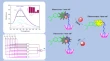
<art><ui>1556-276X-7-255</ui><ji>1556-276X</ji><fm><dochead>Nano Express</dochead><bibl><title><p>Scanning tunneling spectroscopy of epitaxial graphene nanoisland on Ir(111)</p></title><aug><au id="A1" ca="yes"><snm>Phark</snm><fnm>Soo-hyon</fnm><insr iid="I1"/><email>phark@mpi-halle.mpg.de</email></au><au id="A2"><snm>Borme</snm><fnm>J&#233;r&#244;me</fnm><insr iid="I1"/><insr iid="I2"/><email>jerome.borme@inl.int</email></au><au id="A3"><snm>Vanegas</snm><mnm>Le&#243;n</mnm><fnm>Augusto</fnm><insr iid="I1"/><email>lvanegas@mpi-halle.mpg.de</email></au><au id="A4"><snm>Corbetta</snm><fnm>Marco</fnm><insr iid="I1"/><email>corbetta@mpi-halle.mpg.de</email></au><au id="A5"><snm>Sander</snm><fnm>Dirk</fnm><insr iid="I1"/><email>sander@mpi-halle.mpg.de</email></au><au id="A6"><snm>Kirschner</snm><fnm>J&#252;rgen</fnm><insr iid="I1"/><email>sekrki@mpi-halle.mpg.de</email></au></aug><insg><ins id="I1"><p>Max-Planck-Institut f&#252;r Mikrostrukturphysik, Weinberg 2, Halle, 06120, Germany</p></ins><ins id="I2"><p>International Iberian Nanotechnology Laboratory, Avenida Mestre Jos&#233; Veiga,, Braga, 4715-310, Portugal</p></ins></insg><source>Nanoscale Research Letters</source><issn>1556-276X</issn><pubdate>2012</pubdate><volume>7</volume><issue>1</issue><fpage>255</fpage><url>http://www.nanoscalereslett.com/content/7/1/255</url><xrefbib><pubidlist><pubid idtype="doi">10.1186/1556-276X-7-255</pubid><pubid idtype="pmpid">22587725</pubid></pubidlist></xrefbib></bibl><history><rec><date><day>9</day><month>1</month><year>2012</year></date></rec><acc><date><day>17</day><month>4</month><year>2012</year></date></acc><pub><date><day>15</day><month>5</month><year>2012</year></date></pub></history><cpyrt><year>2012</year><collab>Phark et al.; licensee Springer.</collab><note>This is an Open Access article distributed under the terms of the Creative Commons Attribution License (<url>http://creativecommons.org/licenses/by/2.0</url>), which permits unrestricted use, distribution, and reproduction in any medium, provided the original work is properly cited.</note></cpyrt><abs><sec><st><p>Abstract</p></st><p>Scanning tunneling spectroscopy (STS) was used to measure local differential conductance (d<it>I</it>/d<it>V</it>) spectra on nanometer-size graphene islands on an Ir(111) surface. Energy resolved d<it>I</it>/d<it>V</it> maps clearly show a spatial modulation, which we ascribe to a modulated local density of states due to quantum confinement. STS near graphene edges indicates a position dependence of the d<it>I</it>/d<it>V</it> signals, which suggests a reduced density of states near the edges of graphene islands on Ir(111).</p></sec></abs></fm><bdy><sec><st><p>Background</p></st><p>Graphene (G) has attracted significant attention because of its special and unique physical properties which make it a promising future material for nanoelectronics <abbrgrp><abbr bid="B1">1</abbr></abbrgrp>. In nanosize G structures, confinement geometry and increased edge-to-area ratio are expected to influence the electronic properties of G significantly. Previous studies showed how confinement of carriers in a G nanostructure affects the electrical conductivity <abbrgrp><abbr bid="B2">2</abbr></abbrgrp> and the energy gap <abbrgrp><abbr bid="B3">3</abbr></abbrgrp>. Edge-localized electrons near the zigzag edge of a freestanding G nanoribbon were proposed by Nakada et al. <abbrgrp><abbr bid="B4">4</abbr></abbrgrp>. Recently, C. Tao et al. <abbrgrp><abbr bid="B5">5</abbr></abbrgrp> reported electronic edge states dependent on the edge atomic orientations in G nanoribbons.</p><p>A theoretical study <abbrgrp><abbr bid="B6">6</abbr></abbrgrp> predicted a small binding energy of&#8201;<it>&#8776;</it>&#8201;50&#8201;meV per C atom in G/Ir(111). G <it>&#960;</it>-band related features were observed in angle-resolved photoemission spectroscopy studies of G/Ir(111) <abbrgrp><abbr bid="B7">7</abbr></abbrgrp>. However, a strong edge-substrate interaction in G nanoislands on Ir(111) has been proposed <abbrgrp><abbr bid="B8">8</abbr></abbrgrp>. This motivates a spatially resolved investigation of spectroscopic features of G/Ir(111) nanostructures to elucidate the spatial dependent electronic properties and the influence of the substrate on the electronic states near a G edge, and corresponding results are presented here.</p><p>We present scanning tunneling microscopy (STM) and scanning tunneling spectroscopy (STS) measurements on G nanoislands on Ir(111). The d<it>I</it>/d<it>V</it> spectra and maps show a spatial modulation, indicative of a modulated local density of states (DOS), which is ascribed to electronic quantum confinement <abbrgrp><abbr bid="B9">9</abbr></abbrgrp>. STS near the edge of a G island on Ir(111) shows a reduction of the differential conductance d<it>I</it>/d<it>V</it>. This reflects a change of the G electronic structure, which we ascribe to the different G-Ir interaction near the edge as compared to the central region of the G island.</p></sec><sec><st><p>Methods</p></st><p>Monolayer G islands were grown by exposing a clean and atomically flat Ir(111) surface to C<sub>2</sub>H<sub>4</sub> at 300&#8201;K at a pressure of 2&#8201;<it>&#215;</it>&#8201;10<sup><it>&#8722;</it>9</sup>&#8201;mbar, followed by subsequent heating of the substrate to 1,320&#8201;K. STM and STS measurements were performed at 8&#8201;K <abbrgrp><abbr bid="B9">9</abbr></abbrgrp>. Constant current (CC)-STM images showed that the island diameter ranges from 6 to 50&#8201;nm. We employed a lock-in technique with a modulation bias voltage at a frequency <it>&#957;</it>&#8201;=&#8201;4&#8201;kHz and root-mean square amplitude of 20&#8201;mV to detect <it>I</it>(<it>V</it>) and d<it>I</it>/d<it>V</it> simultaneously.</p></sec><sec><st><p>Results and discussion</p></st><p>Figure&#8201;<figr fid="F1">1</figr>a,b shows G islands grown on an Ir(111) surface and a nanoisland used for a STS measurement, respectively. The CC-STM image measured on the central part of the G island shows a clear honeycomb structure as shown in the inset of Figure&#8201;<figr fid="F1">1</figr>a. The line profile of the island reveals an apparent height of approximately 0.2&#8201;nm, as shown in Figure&#8201;<figr fid="F1">1</figr>c, which identifies the island as single layer G. Figure&#8201;<figr fid="F1">1</figr>g shows d<it>I</it>/d<it>V</it> curves measured at different positions of the island shown in Figure&#8201;<figr fid="F1">1</figr>b. The curve measured at position <it>a</it> (the center of the island) shows two prominent peaks at a sample bias <it>V</it><sub><it>S</it></sub>&#8201;<it>&#8776;&#8201;&#8722;</it>0.44 and <it>&#8722;</it>0.85&#8201;V. However, the curve measured at position <it>b</it> shows a smaller d<it>I</it>/d<it>V</it> signal at those <it>Vs</it> values and a larger signal at an intermediate <it>V</it><sub><it>S</it></sub>. These <it>V</it><sub><it>S</it></sub>-dependent and spatially modulated d<it>I</it>/d<it>V</it> signals are ascribed to electron confinement, which induces a corresponding spatial modulation of local DOS <abbrgrp><abbr bid="B9">9</abbr><abbr bid="B10">10</abbr><abbr bid="B11">11</abbr></abbrgrp>. This can qualitatively be understood by the inspection of the energy-dependent d<it>I</it>/d<it>V</it> maps.</p><fig id="F1"><title><p>Figure 1</p></title><caption><p></p></caption><text>
   <p><b>STS on a graphene nanoisland on Ir(111).</b> (<b>a</b>) A 70&#8201;<it>&#215;</it>&#8201;70&#8201;nm<sup>2</sup> CC-STM image of G islands on Ir(111) (<it>V</it><sub><it>S</it></sub>&#8201;=&#8201;<it>&#8722;</it>0.05&#8201;V, <it>I</it><sub>set</sub>&#8201;=&#8201;1&#8201;nA). The inset is a CC-STM image of a zoom-in of the G lattice with an illustration of the hexagonal C ring (red circles) and lattice vectors (black arrows) (<it>V</it><sub><it>S</it></sub>&#8201;=&#8201;0.05&#8201;V, <it>I</it><sub>set</sub>&#8201;=&#8201;1&#8201;nA). Crystallographic directions of the Ir substrate are denoted at the bottom-left side, as deduced from atomically resolved STM images of the substrate. (<b>b</b>) The G island indicated by the dashed circle in (a). (<b>c</b>) It gives the line profile along the long axis of the island in (b). (<b>d,e,f</b>) The d<it>I</it>/d<it>V</it> maps of the island in (b), measured at <it>V</it><sub><it>S</it></sub> denoted at the bottom-left corner of each image. (<b>g</b>) STS spectra measured at the positions <it>a</it> to <it>c</it> in (b).</p>
</text><graphic file="1556-276X-7-255-1"/></fig><p>We measured the d<it>I</it>/d<it>V</it> maps of the G island in Figure&#8201;<figr fid="F1">1</figr>b as a function of <it>V</it><sub><it>S</it></sub>. Figure&#8201;<figr fid="F1">1</figr>d,e,f shows the d<it>I</it>/d<it>V</it> maps at <it>V</it><sub><it>S</it></sub> denoted by the gray arrows in Figure&#8201;<figr fid="F1">1</figr>g. As we lower <it>V</it><sub><it>S</it></sub> from zero bias, the first modulation pattern (Figure&#8201;<figr fid="F1">1</figr>d) is observed at <it>V</it><sub><it>S</it></sub>&#8201;<it>&#8776;&#8201;&#8722;</it>0.44&#8201;V of peak &#8216;1&#8217; of the d<it>I</it>/d<it>V</it> curve measured at position <it>a</it>. Here, the d<it>I</it>/d<it>V</it> signal shows a maximum at the center of the island and a monotonic decrease towards the edges. For larger negative <it>V</it><sub><it>S</it></sub>, the maps at two other <it>V</it><sub><it>S</it></sub> values (peaks &#8216;2&#8217; and &#8216;3&#8217;) show different spatial distributions of the d<it>I</it>/d<it>V</it> signals as compared with that of the first one. These results can be understood as standing wave patterns which resulted from the interference of electron waves. The energy-dependent variation of the spatially modulated d<it>I</it>/d<it>V</it> signal suggests a variation of the electron wavelength as a function of electron energy in the G nanoisland. Thus, the position-dependent STS spectra and spatially modulated d<it>I</it>/d<it>V</it> signals provide a clear evidence for electron confinement in the G nanoisland. The energy eigenvalues of the confined electron states are determined by the geometry of the confinement potential (the size and shape of the island). This is also true for the graphene nanoislands <abbrgrp><abbr bid="B12">12</abbr></abbrgrp>. We observed a different onset energy of the lowest quantum-confined state (the first peak) in other graphene islands with different shape and size. We performed an extensive quantitative analysis of modulation patterns on G islands and extracted the electron dispersion relation <abbrgrp><abbr bid="B9">9</abbr></abbrgrp>.</p><p>We also performed spatially resolved STS measurements near G edges. Figure&#8201;<figr fid="F2">2</figr>a is an atomically resolved CC-STM image of the top-left region of the island of Figure&#8201;<figr fid="F1">1</figr>b. Figure&#8201;<figr fid="F2">2</figr>b shows the d<it>I</it>/d<it>V</it> spectra measured along different positions from G towards Ir. For negative <it>V</it><sub><it>S</it></sub>, the d<it>I</it>/d<it>V</it> signal of G is larger than that of Ir(111) by a factor of 2. However, the overall similarity of the d<it>I</it>/d<it>V</it> signals of Ir and G/Ir is striking. We may ascribe this to the electronic hybridization between G and Ir <abbrgrp><abbr bid="B6">6</abbr></abbrgrp>. The inset of Figure&#8201;<figr fid="F2">2</figr>b shows the d<it>I</it>/d<it>V</it> signals at <it>V</it><sub><it>S</it></sub>&#8201;=&#8201;&#8722;1.0&#8201;V as a function of positions from A to B in Figure&#8201;<figr fid="F2">2</figr>a. As the measurement positions move from G to Ir, we find a monotonic decrease of the d<it>I/</it>d<it>V</it> signal without the appearance of additional features within the distance of approximately 1&#8201;nm from the edge. We do not observe peculiar edge-related states, which were discussed for other systems <abbrgrp><abbr bid="B5">5</abbr></abbrgrp> or have been described in theory <abbrgrp><abbr bid="B4">4</abbr></abbrgrp>.</p><fig id="F2"><title><p>Figure 2</p></title><caption><p></p></caption><text>
   <p><b>STS near an edge of graphene nanoisland.</b> (<b>a</b>) Atomic resolution CC-STM image of top-left side of the island in Figure&#8201;<figr fid="F1">1</figr>b (<it>V</it><sub><it>S</it></sub>&#8201;=&#8201;<it>&#8722;</it>0.05&#8201;V, <it>I</it><sub>set</sub>&#8201;=&#8201;1&#8201;nA). The hexagons denote the honeycomb lattice structure of G. (<b>b</b>) STS spectra measured at nine positions along the line <it>AB</it> across the G edge towards the Ir region. The inset shows the d<it>I</it>/d<it>V</it> signal height at <it>V</it><sub><it>S</it></sub>&#8201;=&#8201;<it>&#8722;</it>1.0&#8201;V as a function of distance from the edge. The d<it>I</it>/d<it>V</it> signal decreases from the position of approximately 1.0&#8201;nm inside the island towards the edge.</p>
</text><graphic file="1556-276X-7-255-2"/></fig><p>Lacovig et al. <abbrgrp><abbr bid="B8">8</abbr></abbrgrp> discussed, based on <it>ab initio</it> calculations, that the interaction between a G edge and Ir is strong enough to induce a considerable reduction (approximately 50%) of the C-substrate distance near the edges as compared with that of the central region of a G island on Ir(111). This structural relaxation should also impact the electronic DOS near an edge as compared to the central region of an island. The reduction of the d<it>I</it>/d<it>V</it> signal in Figure&#8201;<figr fid="F2">2</figr>, which can be attributed to the reduction of the G DOS at the edges, possibly reflects this. We speculate that an unsaturated <it>&#963;</it> orbital at the edge tends to bond to the Ir atoms with a covalent character, which would reduce the edge energy and deplete the DOS near <it>E</it><sub><it>F</it></sub>. This could explain the decrease of d<it>I</it>/d<it>V</it> signals in Figure&#8201;<figr fid="F2">2</figr>. In addition, the electronic relaxation due to a C-Ir interaction at the edge could be the reason why our STS measurements do not show peculiar electronic states in the edge region, in contrast to the prediction of theory for the edge of freestanding G <abbrgrp><abbr bid="B4">4</abbr></abbrgrp>.</p></sec><sec><st><p>Conclusions</p></st><p>We investigated electronic properties of G nanoislands on Ir(111) by STM and STS. The d<it>I</it>/d<it>V</it> spectra and maps show a pronounced spatial modulation, indicative of a modulated local DOS. We ascribe this to a quantum confinement of electrons in G nanoislands. We also performed STS near the edge of a G island on Ir(111). Spatially resolved tunnel spectroscopy indicates a considerably reduced density of states. This reflects a change of the G electronic structure, which we ascribe to the different G-Ir interaction near the edge as compared to the central region of the G island.</p></sec><sec><st><p>Competing interests</p></st><p>The authors declare that they have no competing interests.</p></sec><sec><st><p>Authors' contributions</p></st><p>S-HP, DS, and JK conceived and designed the experiments. S-HP, JB, ALV, and MC prepared samples and performed STM and STS measurements. S-HP, JB, and ALV analyzed STM and STS data. All authors discussed the results and wrote the paper. All authors read and approved the final manuscript.</p></sec></bdy><bm><ack><sec><st><p>Acknowledgments</p></st><p>This work was partially supported by Deutsche Forschungsgemeinschaft grant SFB 762. We thank N Kurowsky for the expert technical support.</p></sec></ack><refgrp><bibl id="B1"><title><p>The electronic properties of graphene</p></title><aug><au><snm>Castro Neto</snm><fnm>AH</fnm></au><au><snm>Guinea</snm><fnm>F</fnm></au><au><snm>Peres</snm><fnm>NMR</fnm></au><au><snm>Novoselov</snm><fnm>KS</fnm></au><au><snm>Geim</snm><fnm>AK</fnm></au></aug><source>Rev Mod Phys</source><pubdate>2009</pubdate><volume>81</volume><fpage>109</fpage><lpage>162</lpage><xrefbib><pubid idtype="doi">10.1103/RevModPhys.81.109</pubid></xrefbib></bibl><bibl id="B2"><title><p>Electronic confinement and coherence in patterned epitaxial graphene</p></title><aug><au><snm>Berger</snm><fnm>C</fnm></au><au><snm>Song</snm><fnm>Z</fnm></au><au><snm>Li</snm><fnm>X</fnm></au><au><snm>Wu</snm><fnm>X</fnm></au><au><snm>Brown</snm><fnm>N</fnm></au><au><snm>Naud</snm><fnm>C</fnm></au><au><snm>Mayou</snm><fnm>D</fnm></au><au><snm>Li</snm><fnm>T</fnm></au><au><snm>Hass</snm><fnm>J</fnm></au><au><snm>Marchenkov</snm><fnm>AN</fnm></au><au><snm>Conrad</snm><fnm>EH</fnm></au><au><snm>First</snm><fnm>PN</fnm></au><au><snm>de Heer</snm><fnm>WA</fnm></au></aug><source>Science</source><pubdate>2006</pubdate><volume>312</volume><fpage>1191</fpage><lpage>1196</lpage><xrefbib><pubidlist><pubid idtype="doi">10.1126/science.1125925</pubid><pubid idtype="pmpid" link="fulltext">16614173</pubid></pubidlist></xrefbib></bibl><bibl id="B3"><title><p>The influence of edge structure on the electronic properties of graphene quantum dots and nanoribbons</p></title><aug><au><snm>Ritter</snm><fnm>KA</fnm></au><au><snm>Lyding</snm><fnm>JW</fnm></au></aug><source>Nat Mater</source><pubdate>2009</pubdate><volume>8</volume><fpage>235</fpage><lpage>242</lpage><xrefbib><pubidlist><pubid idtype="doi">10.1038/nmat2378</pubid><pubid idtype="pmpid" link="fulltext">19219032</pubid></pubidlist></xrefbib></bibl><bibl id="B4"><title><p>Edge state in graphene ribbons: nanometer size effect and edge shape dependence</p></title><aug><au><snm>Nakada</snm><fnm>K</fnm></au><au><snm>Fujita</snm><fnm>M</fnm></au><au><snm>Dresselhaus</snm><fnm>G</fnm></au><au><snm>Dresselhaus</snm><fnm>MS</fnm></au></aug><source>Phys Rev B</source><pubdate>1996</pubdate><volume>54</volume><fpage>17954</fpage><lpage>17961</lpage><xrefbib><pubid idtype="doi">10.1103/PhysRevB.54.17954</pubid></xrefbib></bibl><bibl id="B5"><title><p>Spatially resolving edge states of chiral graphene nanoribbons</p></title><aug><au><snm>Tao</snm><fnm>C</fnm></au><au><snm>Jiao</snm><fnm>L</fnm></au><au><snm>Yazyev</snm><fnm>OV</fnm></au><au><snm>Chen</snm><fnm>YZ</fnm></au><au><snm>Feng</snm><fnm>J</fnm></au><au><snm>Zhang</snm><fnm>X</fnm></au><au><snm>Capaz</snm><fnm>RB</fnm></au><au><snm>Tour</snm><fnm>JM</fnm></au><au><snm>Zettl</snm><fnm>A</fnm></au><au><snm>Louie</snm><fnm>SG</fnm></au><au><snm>Dai</snm><fnm>H</fnm></au><au><snm>Crommie</snm><fnm>MF</fnm></au></aug><source>Nat Phys</source><pubdate>2011</pubdate><volume>7</volume><fpage>616</fpage><lpage>620</lpage><xrefbib><pubid idtype="doi">10.1038/nphys1991</pubid></xrefbib></bibl><bibl id="B6"><title><p>Graphene on Ir(111): physisorption with chemical modulation</p></title><aug><au><snm>Busse</snm><fnm>C</fnm></au><au><snm>Lazi&#263;</snm><fnm>P</fnm></au><au><snm>Djemour</snm><fnm>R</fnm></au><au><snm>Coraux</snm><fnm>J</fnm></au><au><snm>Gerber</snm><fnm>T</fnm></au><au><snm>Atodiresei</snm><fnm>N</fnm></au><au><snm>Caciuc</snm><fnm>V</fnm></au><au><snm>Brako</snm><fnm>R</fnm></au><au><snm>N&#8217;Diaye</snm><fnm>AT</fnm></au><au><snm>Bl&#252;gel</snm><fnm>S</fnm></au><au><snm>Zegenhagen</snm><fnm>J</fnm></au><au><snm>Michely</snm><fnm>T</fnm></au></aug><source>Phys Rev Lett</source><pubdate>2011</pubdate><volume>107</volume><fpage>036101</fpage><xrefbib><pubid idtype="pmpid" link="fulltext">21838377</pubid></xrefbib></bibl><bibl id="B7"><title><p>Graphene on Ir(111) characterized by angle-resolved photoemission</p></title><aug><au><snm>Kralj</snm><fnm>M</fnm></au><au><snm>Pletikosi&#263;</snm><fnm>I</fnm></au><au><snm>Petrovi&#263;</snm><fnm>M</fnm></au><au><snm>Pervan</snm><fnm>P</fnm></au><au><snm>Milun</snm><fnm>M</fnm></au><au><snm>N&#8217;Diaye</snm><fnm>AT</fnm></au><au><snm>Busse</snm><fnm>C</fnm></au><au><snm>Michely</snm><fnm>T</fnm></au><au><snm>Fujii</snm><fnm>J</fnm></au><au><snm>Vobornik</snm><fnm>I</fnm></au></aug><source>Phys Rev B</source><pubdate>2011</pubdate><volume>84</volume><fpage>075427</fpage></bibl><bibl id="B8"><title><p>Growth of dome-shaped carbon nanoislands on Ir(111): the intermediate between carbidic clusters and quasi-free-standing graphene</p></title><aug><au><snm>Lacovig</snm><fnm>P</fnm></au><au><snm>Pozzo</snm><fnm>M</fnm></au><au><snm>Alf&#233;</snm><fnm>D</fnm></au><au><snm>Vilmercati</snm><fnm>P</fnm></au><au><snm>Baraldi</snm><fnm>A</fnm></au><au><snm>Lizzit</snm><fnm>S</fnm></au></aug><source>Phys Rev Lett</source><pubdate>2009</pubdate><volume>103</volume><fpage>166101</fpage><xrefbib><pubid idtype="pmpid" link="fulltext">19905709</pubid></xrefbib></bibl><bibl id="B9"><title><p>Direct observation of electron confinement in epitaxial graphene nanoislands</p></title><aug><au><snm>Phark</snm><fnm>S</fnm></au><au><snm>Borme</snm><fnm>J</fnm></au><au><snm>Le&#243;n Vanegas</snm><fnm>A</fnm></au><au><snm>Corbetta</snm><fnm>M</fnm></au><au><snm>Sander</snm><fnm>D</fnm></au><au><snm>Kirschner</snm><fnm>J</fnm></au></aug><source>ACS Nano</source><pubdate>2011</pubdate><volume>5</volume><fpage>8162</fpage><lpage>8166</lpage><xrefbib><pubidlist><pubid idtype="doi">10.1021/nn2028105</pubid><pubid idtype="pmpid" link="fulltext">21942619</pubid></pubidlist></xrefbib></bibl><bibl id="B10"><title><p>Tunneling spectroscopy of surface state scattering and confinement</p></title><aug><au><snm>Li</snm><fnm>J</fnm></au><au><snm>Schneider</snm><fnm>WD</fnm></au><au><snm>Crampin</snm><fnm>S</fnm></au><au><snm>Berndt</snm><fnm>R</fnm></au></aug><source>Surf Sci</source><pubdate>1999</pubdate><volume>422</volume><fpage>95</fpage><lpage>106</lpage><xrefbib><pubid idtype="doi">10.1016/S0039-6028(98)00890-5</pubid></xrefbib></bibl><bibl id="B11"><title><p>Scanning tunneling spectroscopy of electron resonators</p></title><aug><au><snm>Kliewer</snm><fnm>J</fnm></au><au><snm>Berndt</snm><fnm>R</fnm></au><au><snm>Crampin</snm><fnm>S</fnm></au></aug><source>New J Phys</source><pubdate>2001</pubdate><volume>3</volume><fpage>22</fpage></bibl><bibl id="B12"><title><p>Quantum-confined electronic states in atomically well-defined graphene nanostructures</p></title><aug><au><snm>H&#228;malainen</snm><fnm>SK</fnm></au><au><snm>Sun</snm><fnm>Z</fnm></au><au><snm>Boneschanscher</snm><fnm>MP</fnm></au><au><snm>Uppstu</snm><fnm>A</fnm></au><au><snm>Ij&#228;s</snm><fnm>M</fnm></au><au><snm>Harju</snm><fnm>A</fnm></au><au><snm>Vanmaekelbergh</snm><fnm>D</fnm></au><au><snm>Liljeroth</snm><fnm>P</fnm></au></aug><source>Phys Rev Lett</source><pubdate>2011</pubdate><volume>107</volume><fpage>236803</fpage><xrefbib><pubid idtype="pmpid" link="fulltext">22182115</pubid></xrefbib></bibl></refgrp></bm></art>