<?xml version='1.0'?>
<!DOCTYPE art SYSTEM 'http://www.biomedcentral.com/xml/article.dtd'>
<art><ui>1556-276X-7-253</ui><ji>1556-276X</ji><fm><dochead>Nano Express</dochead><bibl><title><p>Fabrication and characterization of WO<sub>3</sub>/Ag/WO<sub>3</sub> multilayer transparent anode with solution-processed WO<sub>3</sub> for polymer light-emitting diodes</p></title><aug><au id="A1"><snm>Jeon</snm><fnm>Kangmin</fnm><insr iid="I1"/><email>junkm@kaist.ac.kr</email></au><au id="A2"><snm>Youn</snm><fnm>Hongseok</fnm><insr iid="I1"/><email>walkway@kaist.ac.kr</email></au><au id="A3"><snm>Kim</snm><fnm>Seongbeom</fnm><insr iid="I1"/><email>kimseongbeom@kaist.ac.kr</email></au><au id="A4"><snm>Shin</snm><fnm>Seongbeom</fnm><insr iid="I1"/><email>tigerwow@kaist.ac.kr</email></au><au id="A5" ca="yes"><snm>Yang</snm><fnm>Minyang</fnm><insr iid="I1"/><email>myyang@kaist.ac.kr</email></au></aug><insg><ins id="I1"><p>Department of Mechanical Engineering, Korea Advanced Institute of Science and Technology, 373-1 Guseong-dong, Yuseong-gu, Deajeon, 305-701, South Korea</p></ins></insg><source>Nanoscale Research Letters</source><issn>1556-276X</issn><pubdate>2012</pubdate><volume>7</volume><issue>1</issue><fpage>253</fpage><url>http://www.nanoscalereslett.com/content/7/1/253</url><xrefbib><pubidlist><pubid idtype="doi">10.1186/1556-276X-7-253</pubid><pubid idtype="pmpid">22587669</pubid></pubidlist></xrefbib></bibl><history><rec><date><day>12</day><month>2</month><year>2012</year></date></rec><acc><date><day>20</day><month>4</month><year>2012</year></date></acc><pub><date><day>15</day><month>5</month><year>2012</year></date></pub></history><cpyrt><year>2012</year><collab>Jeon et al.; licensee Springer.</collab><note>This is an Open Access article distributed under the terms of the Creative Commons Attribution License (<url>http://creativecommons.org/licenses/by/2.0</url>), which permits unrestricted use, distribution, and reproduction in any medium, provided the original work is properly cited.</note></cpyrt><kwdg><kwd>Multilayer</kwd><kwd>Transparent anode</kwd><kwd>WO<sub>3</sub></kwd><kwd>Polymer light-emitting diodes</kwd></kwdg><abs><sec><st><p>Abstract</p></st><p>The dielectric/metal/dielectric multilayer is suitable for a transparent electrode because of its high-optical and high-electrical properties; however, it is fabricated by an expensive and inefficient multistep vacuum process. We present a WO<sub>3</sub>/Ag/WO<sub>3</sub> (WAW) multilayer transparent anode with solution-processed WO<sub>3</sub> for polymer light-emitting diodes (PLEDs). This WAW multilayer not only has high transmittance and low resistance but also can be easily and rapidly fabricated. We devised a novel method to deposit a thin WO<sub>3</sub> layer by a solution process in an air environment. A tungstic acid solution was prepared from an aqueous solution of Na<sub>2</sub>WO<sub>4</sub> and then converted to WO<sub>3</sub> nanoparticles (NPs) by a thermal treatment. Thin WO<sub>3</sub> NP layers form WAW multilayer with a thermal-evaporated Ag layer, and they improve the transmittance of the WAW multilayer because of its high transmittance and refractive index. Moreover, the surface of the WO<sub>3</sub> layer is homogeneous and flat with low roughness because of the WO<sub>3</sub> NP generation from the tungstic acid solution without aggregation. We performed optical simulation and experiments, and the optimized WAW multilayer had a high transmittance of 85% with a sheet resistance of 4 &#937;/sq. Finally, PLEDs based on the WAW multilayer anode achieved a maximum luminance of 35,550 cd/m<sup>2</sup> at 8 V, and this result implies that the solution-processed WAW multilayer is appropriate for use as a transparent anode in PLEDs.</p></sec></abs></fm><bdy><sec><st><p>Background</p></st><p>Recently, polymer light-emitting diodes (PLEDs) have been studied as next-generation light sources because they have high luminous efficiency and can be fabricated by an efficient solution process for high productivity <abbrgrp><abbr bid="B1">1</abbr><abbr bid="B2">2</abbr><abbr bid="B3">3</abbr></abbrgrp>. However some layers of PELDs (the electron injection layer, cathode and anode) must be deposited by an expensive vacuum process; only the emitting and hole injection layers are coated by a solution process. Therefore, researchers have investigated extending the solution-processed layers <abbrgrp><abbr bid="B4">4</abbr><abbr bid="B5">5</abbr><abbr bid="B6">6</abbr></abbrgrp>. The development of a solution-processed transparent electrode is particularly important because it is a fundamental component of organic electronics.</p><p>Indium tin oxide (ITO) is commonly used as the transparent anode for PLEDs because of its combination of high optical transmittance (&gt;85% in the wavelength range of visible light) and low resistance (approximately 10&#8201;&#8486;/sq) <abbrgrp><abbr bid="B7">7</abbr></abbrgrp>. However, ITO has some disadvantages. The supply of indium is constrained by both mining and geopolitical issues, and ITO must be deposited by a vacuum process that is expensive to set up and maintain. Therefore, researchers have investigated solution-processed transparent anodes such as conducting polymers and carbon nanotube films <abbrgrp><abbr bid="B8">8</abbr><abbr bid="B9">9</abbr><abbr bid="B10">10</abbr><abbr bid="B11">11</abbr><abbr bid="B12">12</abbr></abbrgrp>. These anodes can be inexpensively coated by a solution process in an air environment, but their sheet resistances are ten times higher than that of ITO while their transmittance is similar <abbrgrp><abbr bid="B8">8</abbr><abbr bid="B11">11</abbr></abbrgrp>. Thus, conducting polymers and carbon nanotube films are unsuitable as transparent anodes for PLEDs.</p><p>Fan et al. reported dielectric/metal/dielectric (DMD) multilayers such as TiO<sub>2</sub>/Ag/TiO<sub>2</sub><abbrgrp><abbr bid="B13">13</abbr></abbrgrp>, InZnO/Ag/InZnO <abbrgrp><abbr bid="B14">14</abbr></abbrgrp>, ZnS/Ag/ZnS <abbrgrp><abbr bid="B15">15</abbr><abbr bid="B16">16</abbr><abbr bid="B17">17</abbr></abbrgrp>, WO<sub>3</sub>/Ag/WO<sub>3</sub> (WAW) <abbrgrp><abbr bid="B18">18</abbr></abbrgrp>, or ZnS/Ag/WO<sub>3</sub><abbrgrp><abbr bid="B19">19</abbr><abbr bid="B20">20</abbr></abbrgrp> as transparent anodes. A DMD multilayer has low sheet resistance in the metal layer (approximately 5&#8201;&#8486;/sq) and high transmittance (&gt;85%) because the refractive index discrepancy between the dielectric layers and the thin metal layer improves the transmittance of the metal layer <abbrgrp><abbr bid="B21">21</abbr></abbrgrp>. However, it has low productivity because the vacuum process for a conventional DMD multilayer requires a high-degree vacuum for an extended time and has a limited chamber volume. This problem could be overcome by using a solution process. When dielectric layers are coated by a solution process, the productivity of the DMD multilayer is greatly improved, because the dielectrics form two layers in a DMD multilayer consisting of three layers. However, it is difficult to coat a thin and uniform dielectric layer using conventional sol-gel or nanoparticle (NP) solutions <abbrgrp><abbr bid="B22">22</abbr><abbr bid="B23">23</abbr><abbr bid="B24">24</abbr></abbrgrp>.</p><p>WO<sub>3</sub> is one of the most suitable dielectric materials for the DMD multilayer. It has a high refractive index (<it>n</it>&#8201;=&#8201;2.0 at wavelength of 580&#8201;nm) and high transmittance (&gt;90% in the wavelength range of visible light) as well as high electrical conductivity <abbrgrp><abbr bid="B20">20</abbr></abbrgrp>. However, in the conventional solution process WO<sub>3</sub> has high surface roughness and too large particle size to form a dielectric layer thinner than 100&#8201;nm <abbrgrp><abbr bid="B25">25</abbr><abbr bid="B26">26</abbr></abbrgrp>.</p><p>In this work, we develop a WO<sub>3</sub>/Ag/WO<sub>3</sub> multilayer transparent anode with solution-processed WO<sub>3</sub> for PLEDs. To coat thin WO<sub>3</sub> layers by a solution process, we devise a novel method wherein WO<sub>3</sub> NPs are synthesized from a precursor solution by rapid conversion that obstructs the growth of particles. Thin WO<sub>3</sub> NP layers form WAW multilayer with a thermal evaporated Ag layer, and they improve the transmittance of the WAW multilayer without degradation of the Ag conductivity. The solution-processed WAW multilayer has excellent optical and electrical properties and higher productivity than the conventional multilayer because it can be fabricated by a high volume printing technologies. The optimal structure of the WAW multilayer is calculated by optical simulation, and the results are verified by comparison with experimental values. Finally, we evaluate the luminance of PLEDs based on the WAW multilayer transparent anode.</p></sec><sec><st><p>Methods</p></st><sec><st><p>Fabrication of solution-processed WAW multilayer</p></st><p>To synthesize WO<sub>3</sub>, sodium tungstate (Na<sub>2</sub>WO<sub>4</sub>) was dissolved in deionized water without further purification. Its aqueous solution was passed at a fixed rate through a glass column packed with protonated cation exchange resin (TRILRTE SCR-BH), and the yellow effluent containing tungstic acid (H<sub>2</sub>WO<sub>4</sub>) was collected in a beaker, as shown in Figure <figr fid="F1">1</figr><abbrgrp><abbr bid="B27">27</abbr><abbr bid="B28">28</abbr></abbrgrp>. The tungstic acid solution was mixed with isopropyl alcohol to improve the coating quality and then spin-coated on a glass substrate. The resulting thin layer was baked at 200&#176;C to convert the tungstic acid to WO<sub>3</sub>. Subsequently, Ag (99.99%) was thermally evaporated on the WO<sub>3</sub> layer in a high-vacuum chamber with a base pressure of 2 &#215; 10<sup>&#8722;6</sup> Torr. Finally, the tungstic acid solution was spin-coated on the Ag layer again and baked to complete the WAW multilayer as shown in Figure <figr fid="F2">2</figr>a. The thicknesses of the layers were measured by a surface profiler (Ahpha-Step 500, KLA-Tencor, Milpitas, CA, USA). The sheet resistance and optical transmittance were measured by the four-point probe technique (CMT-SR2000N, AIT, Gyeongi, South Korea) and a UV-VIS-NIR spectrophotometer (V-570, JASCO Inc., Easton, MD, USA), respectively.</p><fig id="F1"><title><p>Figure 1</p></title><caption><p>Synthesis of WO<sub>3</sub> nanoparticles from aqueous solution of Na<sub>2</sub>WO<sub>4</sub>.</p></caption><text>
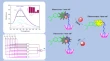
   <p><b> Synthesis of WO</b><sub><b>3</b></sub><b>nanoparticles from aqueous solution of Na</b><sub><b>2</b></sub><b>WO</b><sub><b>4</b></sub><b>.</b> Surface of WO<sub>3</sub> layer was investigated through field emission scanning electron microscope (FESEM).</p>
</text><graphic file="1556-276X-7-253-1"/></fig><fig id="F2"><title><p>Figure 2</p></title><caption><p>Illustrations of WAW multilayer and WAW-based PLEDs</p></caption><text>
   <p><b> Illustrations of WAW multilayer and WAW-based PLEDs.</b> (<b>a</b>) Cross-sectional transmission electron microscope (TEM) image of solution-processed WAW multilayer. (<b>b</b>) Schematic structure of WAW/PEDOT:PSS/Super Yellow/ZnO NPs and ionic interlayer/Al PLEDs.</p>
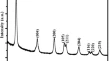
</text><graphic file="1556-276X-7-253-2"/></fig></sec><sec><st><p>Fabrication of PLEDs on WAW multilayer anode</p></st><p>The PLEDs on the WAW multilayer anode were composed of layers of glass, the WAW multilayer, poly(3,4-ethylenedioxythiophene) poly(styrenesulfonate) (50 nm, PEDOT:PSS; Clevios P VP AI4083, Heraeus Precious Metal, Hanau, Germany), yellow light-emitting polymer (60 nm, &#8216;super yellow&#8217; (SY), Merck &amp; Co., Inc., Whitehouse Station, NJ, USA), ZnO NPs and ionic interlayer (20 nm, polyethylene oxide + tetra-n-butylammonium tetrafluoroborate), and Al, as shown in Figure <figr fid="F2">2</figr>b. The layers of WO<sub>3</sub>, PEDOT:PSS, super yellow, and ZnO NPs and the ionic interlayer were all fabricated by spin-coating, whereas the Ag and Al electrodes were thermally evaporated. PLEDs on a conventional ITO anode were fabricated as control devices for comparison. The resulting active area of each PLED is approximately 4.4 mm<sup>2</sup>. After the fabrication, the devices were measured without further encapsulations in air. The device characteristics of the current density, voltage, and luminance (J-V-L) curves were recorded with a source-measure unit (Keithley 2400, Keithley Instruments Inc., Cleveland, OH, USA) and a calibrated photodiode (CS-100A, Konica Minolta Optics, Inc., Tokyo, Japan).</p></sec></sec><sec><st><p>Results and discussion</p></st><sec><st><p>Preparation of solution-processed WO<sub>3</sub></p></st><p>We passed an aqueous solution of Na<sub>2</sub>WO<sub>4</sub> through a protonated cation exchange resin. The Na<sup>+</sup> ions were replaced with H<sup>+</sup> ions by the exchange resin, and we collected tungstic acid consisting of H<sup>+</sup> and WO<sub>4</sub><sup>2&#8722;</sup> ions. The tungstic acid was converted to WO<sub>3</sub> &#183;2H<sub>2</sub>O as a primary product, and then WO<sub>3</sub> &#183;2H<sub>2</sub>O was calcined at 200&#176;C for conversion to WO<sub>3</sub> as a secondary product <abbrgrp><abbr bid="B28">28</abbr></abbrgrp>.</p><p>The WO<sub>3</sub> &#183;2H<sub>2</sub>O particles were slowly synthesized from tungstic acid at room temperature, and the slow synthesis increased the particle size. Hence, the WO<sub>3</sub> derived from these WO<sub>3</sub> &#183;2H<sub>2</sub>O particles had irregular square plates with widths of 500 to 1,000 nm and thicknesses of 200 to 500 nm. Figure <figr fid="F3">3</figr>a shows a FESEM image of the WO<sub>3</sub> particles. These large WO<sub>3</sub> particles cannot form thin dielectric layers; a DMD multilayer is generally required to be thinner than 100 nm. To form a thin WO<sub>3</sub> layer, we devised a new method that synthesized tiny WO<sub>3</sub> NPs. The tungstic acid solution was coated on a glass and then baked at 200&#176;C for rapid conversion and calcination. The rapid conversion obstructed the growth of WO<sub>3</sub> &#183;2H<sub>2</sub>O particles, and WO<sub>3</sub> NPs were synthesized from the WO<sub>3</sub> &#183;2H<sub>2</sub>O particles after a calcination process. Figure <figr fid="F3">3</figr>b shows a TEM image of WO<sub>3</sub> NPs less than 2 nm in size synthesized by the new synthesis method. Because these WO<sub>3</sub> NPs are sufficiently small, the thickness of the WO<sub>3</sub> layer can be controlled by adjusting the concentration and the coating condition of the tungstic acid solution in an air environment. Therefore, these WO<sub>3</sub> NPs can form a thin dielectric layer to optimize the optical properties of the WAW multilayer.</p><fig id="F3"><title><p>Figure 3</p></title><caption><p>Comparison of WO<sub>3</sub> particles.</p></caption><text>
   <p><b> Comparison of WO</b><sub><b>3</b></sub><b>particles.</b> (<b>a</b>) FESEM image of WO<sub>3</sub> particles from conventional synthesis method. (<b>b</b>) TEM image of WO<sub>3</sub> NPs less than 2&#8201;nm in size by the rapid conversion.</p>
</text><graphic file="1556-276X-7-253-3"/></fig><p>This method has another advantage. Because the WO<sub>4</sub><sup>2&#8722;</sup> ions in tungstic acid were completely dissolved in deionized water, this aqueous solution could coat a uniform thin layer on the substrate without aggregation. The morphology of the WO<sub>3</sub> layer was investigated by atomic force microscope (AFM; XE-100, Park Systems Corporation, Suwon, South Korea). Figure <figr fid="F4">4</figr>a shows that the surface of the WO<sub>3</sub> layer was homogeneous and flat, with a low roughness (root mean square (rms) roughness = 0.457 nm, peak-to-valley roughness = 3.778 nm]. This WO<sub>3</sub> layer with excellent surface quality can form WAW multilayer which has lower surface roughness than conventional transparent anode.</p><fig id="F4"><title><p>Figure 4</p></title><caption><p>Properties of WO<sub>3</sub> layer.</p></caption><text>
   <p><b> Properties of WO</b><sub><b>3</b></sub><b> layer.</b> (<b>a</b>) Atomic force microscope (AFM) image of solution-processed WO<sub>3</sub> layer surface. (<b>b</b>) Comparison of XRD patterns of WO<sub>3</sub> NPs synthesized from an aqueous solution of Na<sub>2</sub>WO<sub>4</sub> and monoclinic phase of WO<sub>3</sub>. (<b>c</b>) Real part (<it>n</it>) and imaginary part (<it>k</it>) of complex refractive index of WO<sub>3</sub> layer.</p>
</text><graphic file="1556-276X-7-253-4"/></fig><p>To verify the conversion of WO<sub>3</sub> &#183;2H<sub>2</sub>O to WO<sub>3</sub>, we observed the crystallization of the WO<sub>3</sub> NPs using an X-ray diffractometer (RIGAKU D/MAX-2500, Rigaku Corporation, Tokyo Japan). Solution-processed WO<sub>3</sub> should be pure without WO<sub>3</sub> &#183;2H<sub>2</sub>O. WO<sub>3</sub> &#183;2H<sub>2</sub>O reduces the hole and the electron mobility of the dielectric layer of the WAW multilayer anode as impurity, and the low hole and electron mobility cause high turn-on voltage of PLEDs <abbrgrp><abbr bid="B16">16</abbr></abbrgrp>. Figure <figr fid="F4">4</figr>b shows the XRD pattern of the solution-processed WO<sub>3</sub>. The typical sharp peaks of the monoclinic phase of WO<sub>3</sub> are recognizable in the XRD pattern. This suggests that most of the WO<sub>3</sub> &#183;2H<sub>2</sub>O is converted to WO<sub>3</sub>, and solution-processed WO<sub>3</sub> is formed as a crystalline phase. Figure <figr fid="F4">4</figr>c shows the real part (<it>n</it>) and imaginary part (<it>k</it>) of complex refractive indices of the solution-processed WO<sub>3</sub> layer. A 45-nm thick WO<sub>3</sub> layer has higher refractive index than 2.0 in the wavelength range of visible light as in the case of a WO<sub>3</sub> layer deposited using the evaporation process <abbrgrp><abbr bid="B19">19</abbr></abbrgrp>.</p></sec><sec><st><p>Properties of WAW multilayer</p></st><p>We fabricated a WAW multilayer with solution-processed WO<sub>3</sub> and investigated its optical and electrical properties as a transparent electrode. The transmittance of the multilayer is a function of the thicknesses and refractive indices of the materials <abbrgrp><abbr bid="B21">21</abbr></abbrgrp>. Since the refractive indices of WO<sub>3</sub> and Ag are fixed, the transmittance is determined by the thicknesses of the layers. It has been reported that a Ag layer has optimal electrical and optical properties when its thickness is 15&#8201;nm <abbrgrp><abbr bid="B14">14</abbr><abbr bid="B16">16</abbr><abbr bid="B19">19</abbr></abbrgrp>. Therefore, the transmittance of the WAW multilayer should be optimized by controlling the thickness of the bottom and top WO<sub>3</sub> layers.</p><p>To optimize the structure of the WAW multilayer, we calculated its transmittance by a transfer matrix method. Figure <figr fid="F5">5</figr>a shows the calculated transmittance at a wavelength of 580 nm for different thicknesses of the bottom and top WO<sub>3</sub> layers. The WAW multilayer had a maximum transmittance of 85% when the bottom and top WO<sub>3</sub> layers were 49 and 45 nm, respectively. Table&#8201;<tblr tid="T1">1</tblr> shows the measured sheet resistance and transmittance of the Ag, ITO, and WAW multilayers. As the thickness of the top WO<sub>3</sub> layer increased from 0 to 60 nm with the thickness of the bottom WO<sub>3</sub> layer kept constant, the optical properties of samples 1 to 5 changed; however, all the samples had the same sheet resistance. These results indicate that the WO<sub>3</sub> layers improve the transmittance without decreasing the Ag conductivity by the tungstic acid solution. Figure <figr fid="F5">5</figr>b shows the transmittance spectra of the samples of Table&#8201;<tblr tid="T1">1</tblr> in the visible range, and Figure <figr fid="F5">5</figr>c shows the transmittance variation of the calculated and experimental results at a wavelength of 580 nm. Sample 4 with WO<sub>3</sub> (45 nm)/Ag (15 nm)/WO<sub>3</sub> (45 nm) had the best transmittance (85%). This result indicates that the experimental transmittance is consistent with the calculated result.</p><fig id="F5"><title><p>Figure 5</p></title><caption><p>Transmittance of WAW multilayer</p></caption><text>
   <p><b> Transmittance of WAW multilayer.</b> (<b>a</b>) Calculated transmittance of WAW multilayers at wavelength of 580&#8201;nm for different thicknesses of bottom and top WO<sub>3</sub> layers. (<b>b</b>) Transmittance spectra of WAW multilayers of Table&#8201;<tblr tid="T1">1</tblr> in visible range. (<b>c</b>) Transmittance variation of calculated and experimental results at wavelength of 580&#8201;nm.</p>
</text><graphic file="1556-276X-7-253-5"/></fig><table id="T1"><title><p>Table 1</p></title><caption><p>Transmittance and sheet resistance of Ag, ITO, and WAW multilayers.</p></caption><tgroup align="left" cols="4"><colspec align="left" colname="c1" colnum="1" colwidth="1*"/><colspec align="left" colname="c2" colnum="2" colwidth="1*"/><colspec align="center" colname="c3" colnum="3" colwidth="1*"/><colspec align="center" colname="c4" colnum="4" colwidth="1*"/><thead valign="top"><row rowsep="1"><entry colname="c1"><p><b>Number</b></p></entry><entry colname="c2"><p><b>Conditions</b></p></entry><entry align="center" colname="c3"><p><b>Transmittance (% at 580&#8201;nm)</b></p></entry><entry align="center" colname="c4"><p><b>Sheet resistance (&#937;/sq)</b></p></entry></row></thead><tbody valign="top"><row><entry colname="c1"><p>1</p></entry><entry colname="c2"><p>Ag 15&#8201;nm</p></entry><entry align="center" colname="c3"><p>50</p></entry><entry align="center" colname="c4"><p>approximately 4</p></entry></row><row><entry colname="c1"><p>2</p></entry><entry colname="c2"><p>WO<sub>3</sub> 45&#8201;nm/Ag 15&#8201;nm/WO<sub>3</sub> 15&#8201;nm</p></entry><entry align="center" colname="c3"><p>58</p></entry><entry align="center" colname="c4"><p>approximately 4</p></entry></row><row><entry colname="c1"><p>3</p></entry><entry colname="c2"><p>WO<sub>3</sub> 45&#8201;nm/Ag 15&#8201;nm/WO<sub>3</sub> 30&#8201;nm</p></entry><entry align="center" colname="c3"><p>71</p></entry><entry align="center" colname="c4"><p>approximately 4</p></entry></row><row><entry colname="c1"><p>4</p></entry><entry colname="c2"><p>WO<sub>3</sub> 45&#8201;nm/Ag 15&#8201;nm/WO<sub>3</sub> 45&#8201;nm</p></entry><entry align="center" colname="c3"><p>85</p></entry><entry align="center" colname="c4"><p>approximately 4</p></entry></row><row><entry colname="c1"><p>5</p></entry><entry colname="c2"><p>WO<sub>3</sub> 45&#8201;nm/Ag 15&#8201;nm/WO<sub>3</sub> 60&#8201;nm</p></entry><entry align="center" colname="c3"><p>74</p></entry><entry align="center" colname="c4"><p>approximately 4</p></entry></row><row rowsep="1"><entry colname="c1"><p>6</p></entry><entry colname="c2"><p>ITO 150&#8201;nm</p></entry><entry align="center" colname="c3"><p>94</p></entry><entry align="center" colname="c4"><p>approximately 13</p></entry></row></tbody></tgroup></table><p>Figure <figr fid="F6">6</figr> shows the morphologies of the WAW multilayer and ITO measured by AFM. The rms surface roughness and peak-to-valley roughness of the WAW multilayer were 0.588 and 5.290 nm, respectively, and those of ITO were 2.773 and 22.548 nm, respectively. The WAW multilayer had a homogeneous and flat surface which is quite smooth compared to the surface of ITO. The surface roughness of the WAW multilayer anode is an important factor limiting the performance of PLEDs because thin layers of PEDOT:PSS and a light-emitting polymer (SY) must be in direct contact on the anode <abbrgrp><abbr bid="B6">6</abbr></abbrgrp>.</p><fig id="F6"><title><p>Figure 6</p></title><caption><p>Comparison of morphologies of WAW multilayer and ITO</p></caption><text>
   <p><b> Comparison of morphologies of WAW multilayer and ITO.</b> AFM image and surface roughness (root mean square and peak-to-valley) of solution-processed WAW multilayer and conventional ITO. R<sub>rms</sub>, rms surface roughness; R<sub>pv</sub>, peak-to-valley roughness.</p>
</text><graphic file="1556-276X-7-253-6"/></fig><p>Consequently, the solution-processed WAW multilayer had a sheet resistance of 4 &#8486;/sq, an rms of 0.588 nm, and a transmittance of 85%, which is considerably high as compared to the 50% transmittance of a Ag layer. As a transparent anode for PLEDs, the solution-processed WAW multilayer is superior to ITO. This is because the WAW multilayer has better electrical conductivity and surface roughness than ITO, although its transmittance is slightly lower.</p></sec><sec><st><p>Performance of PLEDs based on solution-processed WAW anodes</p></st><p>To evaluate the electrical and optical properties of the WAW multilayer as a transparent anode, we fabricated PLEDs based on the optimized WAW multilayer anode and the conventional ITO anode. The layer structure of the PLEDs was as follows: WAW multilayer/PEDOT:PSS/Super Yellow/ZnO NPs and ionic interlayer/Al. Figure <figr fid="F7">7</figr> shows J-V-L characteristics of the WAW-based and ITO-based PLEDs. The turn-on voltages were identical (2.1 V). This implies that the hole-injection behavior of the solution-processed WAW multilayer was as good as that of ITO with the vacuum process because the turn-on voltage is one of the factors measuring the hole-injection property of an electrode <abbrgrp><abbr bid="B15">15</abbr><abbr bid="B20">20</abbr></abbrgrp>. The maximum luminance of the WAW-based PLEDs reached 35,550 cd/m<sup>2</sup> at 8 V, whereas ITO-based PLEDs had a maximum luminance of 15,095 cd/m<sup>2</sup> at 8 V. The maximum luminous efficiency of the WAW-based PLEDs (6.24 cd/A) was also higher than that of the ITO-based PLEDs (6.10 cd/A) as shown in Figure <figr fid="F8">8</figr>. These results indicate that the solution-processed WAW multilayer transparent anode is superior to ITO anode. The high conductivity of the WAW multilayer and the good contact quality of the WAW/PEDOT:PSS interface resulting from the low surface roughness of the WAW multilayer improve the performance of PLEDs <abbrgrp><abbr bid="B14">14</abbr></abbrgrp>.</p><fig id="F7"><title><p>Figure 7</p></title><caption><p>Luminance characteristics of PLEDs. Comparison of (a) luminance-voltage (L&#8211;V) and (b) current density-voltage (J&#8211;V) characteristics of ITO-based and WAW-based PLEDs</p></caption><text>
   <p><b> Luminance characteristics of PLEDs.</b> Comparison of (<b>a</b>) luminance-voltage (L&#8211;V) and (<b>b</b>) current density-voltage (J&#8211;V) characteristics of ITO-based and WAW-based PLEDs.</p>
</text><graphic file="1556-276X-7-253-7"/></fig><fig id="F8"><title><p>Figure 8</p></title><caption><p>Comparison of luminous efficiency of ITO-based and WAW-based PLEDs</p></caption><text>
   <p><b> Comparison of luminous efficiency of ITO-based and WAW-based PLEDs.</b> Inset shows photograph of WAW-based PLED in operation.</p>
</text><graphic file="1556-276X-7-253-8"/></fig></sec></sec><sec><st><p>Conclusions</p></st><p>We have demonstrated the applicability of a highly productive WAW multilayer anode formed by a solution process as an alternative to conventional ITO anodes for PLEDs. To coat a thin and uniform WO<sub>3</sub> layer by a solution process, we devised a new method in which WO<sub>3</sub> NPs less than 2 nm in size were synthesized from an aqueous solution of Na<sub>2</sub>WO<sub>4</sub>. We then analyzed the crystallization characteristics of the WO<sub>3</sub> NPs and the morphology of the WO<sub>3</sub> NP layer. The solution-processed WAW multilayer, which was optimized via a simulations and experiments, had a sheet resistance of 4 &#8486;/sq and a transmittance of 85% at a wavelength of 580 nm. Moreover, WAW-based PLEDs had a maximum luminance of 35,550 cd/m<sup>2</sup> at 8 V and a luminous efficiency of 6.24 cd/A. They were superior to ITO-based PLEDs because of the high conductivity of the WAW multilayer and the good contact quality of the WAW/PEDOT:PSS interface. Therefore, a solution-processed WAW multilayer is appropriate for both large-area displays and lighting applications because of its high productivity and excellent performance as a transparent electrode.</p></sec><sec><st><p>Competing interests</p></st><p>The authors declare that they have no competing interests.</p></sec><sec><st><p>Authors&#8217; contributions</p></st><p>KJ participated in the fabrication of WAW multilayer and WAW-based PLEDs, and the analysis of their characteristics. HY participated in the analysis of current density, voltage, and luminance characteristics for PLEDs. SK and SS were involved in the FESEM, TEM, and XRD analysis of WO<sub>3</sub> NPs and WAW multilayer. MY is the thesis director. All authors read and approved the final manuscript.</p></sec></bdy><bm><ack><sec><st><p>Acknowledgment</p></st><p>This work was supported by grant no. EEWS-2011-N01110035 from Energy, Environment, Water, and Sustainability (EEWS) Research Project of the office of KAIST EEWS Initiative.</p></sec></ack><refgrp><bibl id="B1"><title><p>Solution processed multilayer polymer light-emitting diodes based on different molecular weight host</p></title><aug><au><snm>Al-Attar</snm><fnm>HA</fnm></au><au><snm>Monkman</snm><fnm>AP</fnm></au></aug><source>J Appl Phys</source><pubdate>2011</pubdate><volume>109</volume><fpage>074516</fpage><xrefbib><pubid idtype="doi">10.1063/1.3569831</pubid></xrefbib></bibl><bibl id="B2"><title><p>Multilayer polymer light-emitting diodes by blade coating method</p></title><aug><au><snm>Tseng</snm><fnm>S</fnm></au><au><snm>Meng</snm><fnm>H</fnm></au><au><snm>Lee</snm><fnm>K</fnm></au><au><snm>Horng</snm><fnm>S</fnm></au></aug><source>Appl Phys Lett</source><pubdate>2008</pubdate><volume>93</volume><fpage>153308</fpage><xrefbib><pubid idtype="doi">10.1063/1.2999541</pubid></xrefbib></bibl><bibl id="B3"><title><p>High performance, flexible polymer light-emitting diodes (PLEDs) with gravure contact printed hole injection and light emitting layers</p></title><aug><au><snm>Chung</snm><fnm>D</fnm></au><au><snm>Huang</snm><fnm>J</fnm></au><au><snm>Bradley</snm><fnm>DDC</fnm></au><au><snm>Campbell</snm><fnm>AJ</fnm></au></aug><source>Org Electron</source><pubdate>2010</pubdate><volume>11</volume><fpage>1088</fpage><lpage>1095</lpage><xrefbib><pubid idtype="doi">10.1016/j.orgel.2010.03.010</pubid></xrefbib></bibl><bibl id="B4"><title><p>Solution processed polymer light-emitting diodes utilizing a ZnO/organic ionic interlayer with Al cathode</p></title><aug><au><snm>Youn</snm><fnm>H</fnm></au><au><snm>Yang</snm><fnm>M</fnm></au></aug><source>Appl Phys Lett</source><pubdate>2010</pubdate><volume>97</volume><fpage>243302</fpage><xrefbib><pubid idtype="doi">10.1063/1.3526308</pubid></xrefbib></bibl><bibl id="B5"><title><p>Achieving high-efficiency polymer white-light-emitting devices</p></title><aug><au><snm>Huang</snm><fnm>J</fnm></au><au><snm>Li</snm><fnm>G</fnm></au><au><snm>Wu</snm><fnm>E</fnm></au><au><snm>Xu</snm><fnm>Q</fnm></au><au><snm>Yang</snm><fnm>Y</fnm></au></aug><source>Adv Mater</source><pubdate>2006</pubdate><volume>18</volume><fpage>114</fpage><lpage>117</lpage><xrefbib><pubid idtype="doi">10.1002/adma.200501105</pubid></xrefbib></bibl><bibl id="B6"><title><p>Inverted solution processable OLEDs using a metal oxide as an electron injection contact</p></title><aug><au><snm>Bolink</snm><fnm>HJ</fnm></au><au><snm>Coronado</snm><fnm>E</fnm></au><au><snm>Repetto</snm><fnm>D</fnm></au><au><snm>Sessolo</snm><fnm>M</fnm></au><au><snm>Barea</snm><fnm>EM</fnm></au><au><snm>Bisquert</snm><fnm>J</fnm></au><au><snm>Garcia-Belmonte</snm><fnm>G</fnm></au><au><snm>Prochazka</snm><fnm>J</fnm></au><au><snm>Kavan</snm><fnm>L</fnm></au></aug><source>Adv Funct Mater</source><pubdate>2008</pubdate><volume>18</volume><fpage>145</fpage><lpage>150</lpage><xrefbib><pubid idtype="doi">10.1002/adfm.200700686</pubid></xrefbib></bibl><bibl id="B7"><title><p>Correlation between the Indium Tin Oxide morphology and the performances of polymer light-emitting diodes</p></title><aug><au><snm>Wantz</snm><fnm>G</fnm></au><au><snm>Hirsch</snm><fnm>L</fnm></au><au><snm>Huby</snm><fnm>N</fnm></au><au><snm>Vignau</snm><fnm>L</fnm></au><au><snm>Silvain</snm><fnm>JF</fnm></au><au><snm>Barri&#233;re</snm><fnm>AS</fnm></au><au><snm>Parneix</snm><fnm>JP</fnm></au></aug><source>Thin Solid Films</source><pubdate>2005</pubdate><volume>485</volume><fpage>247</fpage><lpage>251</lpage><xrefbib><pubid idtype="doi">10.1016/j.tsf.2005.03.022</pubid></xrefbib></bibl><bibl id="B8"><title><p>Polymer light-emitting diodes with polyethylene dioxythiophene&#8211;polystyrene sulfonate as the transparent anode</p></title><aug><au><snm>Cao</snm><fnm>Y</fnm></au><au><snm>Yu</snm><fnm>G</fnm></au><au><snm>Zhang</snm><fnm>C</fnm></au><au><snm>Menon</snm><fnm>R</fnm></au><au><snm>Heeger</snm><fnm>AJ</fnm></au></aug><source>Synth Met</source><pubdate>1997</pubdate><volume>87</volume><fpage>171</fpage><lpage>174</lpage><xrefbib><pubid idtype="doi">10.1016/S0379-6779(97)03823-X</pubid></xrefbib></bibl><bibl id="B9"><title><p>Flexible organic light-emitting diodes with a polymeric nanocomposite anode</p></title><aug><au><snm>Wang</snm><fnm>G</fnm></au><au><snm>Tao</snm><fnm>X</fnm></au><au><snm>Wang</snm><fnm>R</fnm></au></aug><source>Nanotechnology</source><pubdate>2008</pubdate><volume>19</volume><fpage>145201</fpage><xrefbib><pubidlist><pubid idtype="doi">10.1088/0957-4484/19/14/145201</pubid><pubid idtype="pmpid" link="fulltext">21817753</pubid></pubidlist></xrefbib></bibl><bibl id="B10"><title><p>Efficient and flexible ITO-free organic solar cells using highly conductive polymer anodes</p></title><aug><au><snm>Na</snm><fnm>S</fnm></au><au><snm>Kim</snm><fnm>S</fnm></au><au><snm>Jo</snm><fnm>J</fnm></au><au><snm>Kim</snm><fnm>D</fnm></au></aug><source>Adv Mater</source><pubdate>2008</pubdate><volume>20</volume><fpage>4061</fpage><lpage>4067</lpage><xrefbib><pubid idtype="doi">10.1002/adma.200800338</pubid></xrefbib></bibl><bibl id="B11"><title><p>Transparent, conductive, and flexible carbon nanotube films and their application in organic light-emitting diodes</p></title><aug><au><snm>Zhang</snm><fnm>D</fnm></au><au><snm>Ryu</snm><fnm>K</fnm></au><au><snm>Liu</snm><fnm>X</fnm></au><au><snm>Polikarpov</snm><fnm>E</fnm></au><au><snm>Ly</snm><fnm>J</fnm></au><au><snm>Tompson</snm><fnm>ME</fnm></au><au><snm>Zhou</snm><fnm>C</fnm></au></aug><source>Nano Lett</source><pubdate>2006</pubdate><volume>6</volume><fpage>1880</fpage><lpage>1886</lpage><xrefbib><pubidlist><pubid idtype="doi">10.1021/nl0608543</pubid><pubid idtype="pmpid" link="fulltext">16967995</pubid></pubidlist></xrefbib></bibl><bibl id="B12"><title><p>Fabrication, charge carrier transport, and application of printable nanocomposites based on indium tin oxide nanoparticles and conducting polymer 3,4-ethylenedioxythiophene/polystyrene sulfonic acid</p></title><aug><au><snm>Maksimenko</snm><fnm>I</fnm></au><au><snm>Kilian</snm><fnm>D</fnm></au><au><snm>Mehringer</snm><fnm>C</fnm></au><au><snm>Voigt</snm><fnm>M</fnm></au><au><snm>Peukert</snm><fnm>W</fnm></au><au><snm>Wellmann</snm><fnm>PJ</fnm></au></aug><source>J Appl Phys</source><pubdate>2011</pubdate><volume>110</volume><fpage>104301</fpage><xrefbib><pubid idtype="doi">10.1063/1.3658634</pubid></xrefbib></bibl><bibl id="B13"><title><p>Transparent heat-mirror films of TiO2/Ag/TiO2 for solar energy collection and radiation insulation</p></title><aug><au><snm>Fan</snm><fnm>JCC</fnm></au><au><snm>Bachner</snm><fnm>FJ</fnm></au><au><snm>Foley</snm><fnm>GH</fnm></au><au><snm>Zavracky</snm><fnm>PM</fnm></au></aug><source>Appl Phys Lett</source><pubdate>1974</pubdate><volume>25</volume><fpage>693</fpage><lpage>695</lpage><xrefbib><pubid idtype="doi">10.1063/1.1655364</pubid></xrefbib></bibl><bibl id="B14"><title><p>Inverted OLED with Low Resistance IZO&#8211;Ag&#8211;IZO top anode prepared by linear FTS system at room temperature</p></title><aug><au><snm>Jeong</snm><fnm>J</fnm></au><au><snm>Lee</snm><fnm>J</fnm></au><au><snm>Kim</snm><fnm>H</fnm></au></aug><source>Electrochem. Solid-State Lett</source><pubdate>2009</pubdate><volume>12</volume><fpage>J105</fpage><lpage>J108</lpage><xrefbib><pubid idtype="doi">10.1149/1.3207874</pubid></xrefbib></bibl><bibl id="B15"><title><p>ZnS/Ag/ZnS coating as transparent anode for organic light emitting diodes</p></title><aug><au><snm>Pang</snm><fnm>H</fnm></au><au><snm>Yuan</snm><fnm>Y</fnm></au><au><snm>Zhou</snm><fnm>Y</fnm></au><au><snm>Lian</snm><fnm>J</fnm></au><au><snm>Cao</snm><fnm>L</fnm></au><au><snm>Zhang</snm><fnm>J</fnm></au><au><snm>Zhou</snm><fnm>X</fnm></au></aug><source>J Lumin</source><pubdate>2007</pubdate><volume>122&#8211;123</volume><fpage>587</fpage><lpage>589</lpage></bibl><bibl id="B16"><title><p>The design of ZnS/Ag/ZnS transparent conductive multilayer films</p></title><aug><au><snm>Liu</snm><fnm>X</fnm></au><au><snm>Cai</snm><fnm>X</fnm></au><au><snm>Qiao</snm><fnm>J</fnm></au><au><snm>Mao</snm><fnm>J</fnm></au><au><snm>Jiang</snm><fnm>N</fnm></au></aug><source>Thin Solid Films</source><pubdate>2003</pubdate><volume>441</volume><fpage>200</fpage><lpage>206</lpage><xrefbib><pubid idtype="doi">10.1016/S0040-6090(03)00141-X</pubid></xrefbib></bibl><bibl id="B17"><title><p>Influence of Ag thickness on structural, optical, and electrical properties of ZnS/Ag/ZnS multilayers prepared by ion beam assisted deposition</p></title><aug><au><snm>Leng</snm><fnm>J</fnm></au><au><snm>Yu</snm><fnm>Z</fnm></au><au><snm>Xue</snm><fnm>W</fnm></au><au><snm>Zhang</snm><fnm>T</fnm></au><au><snm>Jiang</snm><fnm>Y</fnm></au><au><snm>Zhang</snm><fnm>J</fnm></au><au><snm>Zhang</snm><fnm>D</fnm></au></aug><source>J Appl Phys</source><pubdate>2010</pubdate><volume>108</volume><fpage>073109</fpage><xrefbib><pubid idtype="doi">10.1063/1.3490787</pubid></xrefbib></bibl><bibl id="B18"><title><p>Transparent organic light-emitting diodes consisting of a metal oxide multilayer cathode</p></title><aug><au><snm>Ryu</snm><fnm>SY</fnm></au><au><snm>Noh</snm><fnm>JH</fnm></au><au><snm>Hwang</snm><fnm>BH</fnm></au><au><snm>Kim</snm><fnm>CS</fnm></au><au><snm>Jo</snm><fnm>SJ</fnm></au><au><snm>Kim</snm><fnm>JT</fnm></au><au><snm>Hwang</snm><fnm>HS</fnm></au><au><snm>Baik</snm><fnm>HK</fnm></au><au><snm>Jeong</snm><fnm>HS</fnm></au><au><snm>Lee</snm><fnm>CH</fnm></au><au><snm>Song</snm><fnm>SY</fnm></au><au><snm>Choi</snm><fnm>SH</fnm></au><au><snm>Park</snm><fnm>SY</fnm></au></aug><source>Appl Phys Lett</source><pubdate>2008</pubdate><volume>92</volume><fpage>023306</fpage><xrefbib><pubid idtype="doi">10.1063/1.2835044</pubid></xrefbib></bibl><bibl id="B19"><title><p>Multilayer transparent electrode for organic light-emitting diodes: tuning its optical characteristics</p></title><aug><au><snm>Cho</snm><fnm>H</fnm></au><au><snm>Yun</snm><fnm>C</fnm></au><au><snm>Yoo</snm><fnm>S</fnm></au></aug><source>Opt Express</source><pubdate>2010</pubdate><volume>18</volume><fpage>3404</fpage><lpage>3414</lpage><xrefbib><pubidlist><pubid idtype="doi">10.1364/OE.18.003404</pubid><pubid idtype="pmpid">20389350</pubid></pubidlist></xrefbib></bibl><bibl id="B20"><title><p>Highly flexible organic light-emitting diodes based on ZnS/Ag/WO3 multilayer transparent electrodes</p></title><aug><au><snm>Cho</snm><fnm>H</fnm></au><au><snm>Yun</snm><fnm>C</fnm></au><au><snm>Park</snm><fnm>JW</fnm></au><au><snm>Yoo</snm><fnm>S</fnm></au></aug><source>Org Electron</source><pubdate>2009</pubdate><volume>10</volume><fpage>1163</fpage><lpage>1169</lpage><xrefbib><pubid idtype="doi">10.1016/j.orgel.2009.06.004</pubid></xrefbib></bibl><bibl id="B21"><aug><au><snm>Macleod</snm><fnm>HA</fnm></au></aug><source>Thin-Film Optical Filters</source><publisher>Macmillan Publisher Company, New York</publisher><pubdate>1986</pubdate></bibl><bibl id="B22"><title><p>Anti-reflecting light-scattering coating via the sol&#8211;gel procedure</p></title><aug><au><snm>Hinz</snm><fnm>P</fnm></au><au><snm>Dislich</snm><fnm>H</fnm></au></aug><source>J Non-Cryst Solids</source><pubdate>1986</pubdate><volume>82</volume><fpage>411</fpage><lpage>416</lpage><xrefbib><pubid idtype="doi">10.1016/0022-3093(86)90158-4</pubid></xrefbib></bibl><bibl id="B23"><title><p>Optical and electrochemical characteristics of sol&#8211;gel deposited tungsten oxide films: a comparison</p></title><aug><au><snm>&#214;zer</snm><fnm>N</fnm></au></aug><source>Thin Solid Films</source><pubdate>1997</pubdate><volume>304</volume><fpage>310</fpage><lpage>314</lpage><xrefbib><pubid idtype="doi">10.1016/S0040-6090(97)00218-6</pubid></xrefbib></bibl><bibl id="B24"><title><p>Optical properties and characteristics of ZnS nano-particles with homogeneous Mn distribution</p></title><aug><au><snm>Yu</snm><fnm>I</fnm></au><au><snm>Isobe</snm><fnm>T</fnm></au><au><snm>Senna</snm><fnm>M</fnm></au></aug><source>J Phys Chem Solids</source><pubdate>1996</pubdate><volume>57</volume><fpage>373</fpage><lpage>379</lpage><xrefbib><pubid idtype="doi">10.1016/0022-3697(95)00285-5</pubid></xrefbib></bibl><bibl id="B25"><title><p>Structure and properties of WO3-doped Pb0.97 La0.03(Zr0.52Ti0.48)O3 ferroelectric thin films prepared by a sol&#8211;gel process</p></title><aug><au><snm>Shannigrahi</snm><fnm>S</fnm></au><au><snm>Yao</snm><fnm>K</fnm></au></aug><source>J Appl Phys</source><pubdate>2005</pubdate><volume>98</volume><fpage>034104</fpage><xrefbib><pubid idtype="doi">10.1063/1.1999834</pubid></xrefbib></bibl><bibl id="B26"><title><p>WO3 thin film coating from H2O-controlled peroxotungstic acid and its electrochromic properties</p></title><aug><au><snm>Kim</snm><fnm>C</fnm></au><au><snm>Lee</snm><fnm>M</fnm></au><au><snm>Kim</snm><fnm>E</fnm></au></aug><source>J Sol&#8211;gel, Sci Technol</source><pubdate>2010</pubdate><volume>53</volume><fpage>176</fpage><lpage>183</lpage><xrefbib><pubidlist><pubid idtype="doi">10.1007/s10971-009-2074-3</pubid><pubid idtype="pmpid" link="fulltext">22902529</pubid></pubidlist></xrefbib></bibl><bibl id="B27"><title><p>Preparation of aqueous sols of tungsten oxide dihydrate from sodium tungstate by an ion exchange method</p></title><aug><au><snm>Choi</snm><fnm>YG</fnm></au><au><snm>Sakai</snm><fnm>G</fnm></au><au><snm>Shimanoe</snm><fnm>K</fnm></au><au><snm>Miura</snm><fnm>N</fnm></au><au><snm>Yamazoe</snm><fnm>N</fnm></au></aug><source>Sens. Actuators B</source><pubdate>2002</pubdate><volume>87</volume><fpage>63</fpage><lpage>72</lpage><xrefbib><pubid idtype="doi">10.1016/S0925-4005(02)00218-6</pubid></xrefbib></bibl><bibl id="B28"><title><p>Wet process-based fabrication of WO3 thin film for NO2 detection</p></title><aug><au><snm>Choi</snm><fnm>YG</fnm></au><au><snm>Sakai</snm><fnm>G</fnm></au><au><snm>Shimanoe</snm><fnm>K</fnm></au><au><snm>Yamazoe</snm><fnm>N</fnm></au></aug><source>Sens. Actuators B</source><pubdate>2004</pubdate><volume>101</volume><fpage>107</fpage><lpage>111</lpage><xrefbib><pubid idtype="doi">10.1016/j.snb.2004.02.031</pubid></xrefbib></bibl></refgrp></bm></art>