<?xml version='1.0'?>
<!DOCTYPE art SYSTEM 'http://www.biomedcentral.com/xml/article.dtd'>
<art><ui>1556-276X-7-237</ui><ji>1556-276X</ji><fm><dochead>Nano Express</dochead><bibl><title><p>Ultra-long Pt nanolawns supported on TiO<sub>2</sub>-coated carbon fibers as 3D hybrid catalyst for methanol oxidation</p></title><aug><au id="A1"><snm>Shen</snm><fnm>Yu-Lin</fnm><insr iid="I1"/><email>d9714003@mail.ntust.edu.tw</email></au><au id="A2"><snm>Chen</snm><fnm>Shih-Yun</fnm><insr iid="I2"/><email>SYChen@mail.ntust.edu.tw</email></au><au ca="yes" id="A3"><snm>Song</snm><fnm>Jenn-Ming</fnm><insr iid="I3"/><email>samsong@nchu.edu.tw</email></au><au id="A4"><snm>Chen</snm><fnm>In-Gann</fnm><insr iid="I4"/><email>ingann@mail.ncku.edu.tw</email></au></aug><insg><ins id="I1"><p>Graduate Institute of Applied Science and Technology, National Taiwan University of Science and Technology, Taipei, 106, Taiwan</p></ins><ins id="I2"><p>Department of Materials Science and Engineering, National Taiwan University of Science and Technology, Taipei, 106, Taiwan</p></ins><ins id="I3"><p>Department of Materials Science and Engineering, National Chung Hsing University, Taichung, 402, Taiwan</p></ins><ins id="I4"><p>Department of Materials Science and Engineering, National Cheng Kung University, Tainan, 701, Taiwan</p></ins></insg><source>Nanoscale Research Letters</source><issn>1556-276X</issn><pubdate>2012</pubdate><volume>7</volume><issue>1</issue><fpage>237</fpage><url>http://www.nanoscalereslett.com/content/7/1/237</url><xrefbib><pubidlist><pubid idtype="doi">10.1186/1556-276X-7-237</pubid><pubid idtype="pmpid">22546416</pubid></pubidlist></xrefbib></bibl><history><rec><date><day>14</day><month>1</month><year>2012</year></date></rec><acc><date><day>30</day><month>4</month><year>2012</year></date></acc><pub><date><day>26</day><month>6</month><year>2012</year></date></pub></history><cpyrt><year>2012</year><collab>Shen et al.; licensee Springer.</collab><note>This is an Open Access article distributed under the terms of the Creative Commons Attribution License (<url>http://creativecommons.org/licenses/by/2.0</url>), which permits unrestricted use, distribution, and reproduction in any medium, provided the original work is properly cited.</note></cpyrt><kwdg><kwd>Pt nanowires</kwd><kwd>Hybrid catalyst</kwd><kwd>Methanol oxidation</kwd><kwd>Thermally activated photoreduction</kwd></kwdg><abs><sec><st><p>Abstract</p></st><p>In this study, TiO<sub>2</sub> thin film photocatalyst on carbon fibers was used to synthesize ultra-long single crystalline Pt nanowires via a simple photoreduction route (thermally activated photoreduction). It also acted as a co-catalytic material with Pt. Taking advantage of the high-aspect ratio of the Pt nanostructure as well as the excellent catalytic activity of TiO<sub>2</sub>, this hybrid structure has the great potential as the active anode in direct methanol fuel cells. The electrochemical results indicate that TiO<sub>2</sub> is capable of transforming CO-like poisoning species on the Pt surface during methanol oxidation and contributes to a high CO tolerance of this Pt nanowire/TiO<sub>2</sub> hybrid structure.</p></sec></abs></fm><bdy><sec><st><p>Background</p></st><p>In recent years, direct methanol fuel cell (DMFC) has attracted great attention as an alternative power source because of their many advantages, including light weight, high power density, portability, and storage of liquid fuel <abbrgrp><abbr bid="B1">1</abbr><abbr bid="B2">2</abbr></abbrgrp>. For most of the common DMFC devices, Pt-based catalysts have been used as an anode because of their outstanding performance in catalyzing the dehydrogenation of methanol. However, the commercialization of DMFC device still faces some problems, such as CO adsorption on Pt catalysts and thus poisoning <abbrgrp><abbr bid="B3">3</abbr><abbr bid="B4">4</abbr></abbrgrp>. Even a low concentration of CO will cause a remarkable decrease in catalytic activity of Pt-based electrodes. Therefore, the majority of the Pt-based electrocatalyst research has focused on this topic.</p><p>In addition to alloying <abbrgrp><abbr bid="B5">5</abbr><abbr bid="B6">6</abbr></abbrgrp>, there are two other strategies for improving the Pt-based catalyst's performance. The first is to modify the morphology of Pt nanostructure, including the shape as well as the dimension. It has been demonstrated that changing the morphology of the Pt nanostructure from nanoparticle (NP) to nanowire (NW) can enhance the electrocatalytic activity of the catalysts, due to the large side surface which is able to provide additional catalytic active facets <abbrgrp><abbr bid="B7">7</abbr><abbr bid="B8">8</abbr></abbrgrp>. A great deal of effort has been devoted to the synthesis of one-dimensional Pt nanostructures; however, it still remains a huge challenge to synthesize long and oriented single-crystalline Pt NWs without temperates and surfactants. Lee et al. <abbrgrp><abbr bid="B9">9</abbr><abbr bid="B10">10</abbr></abbrgrp> have demonstrated the synthesis of single crystalline Pt NWs on polymeric, ceramic, or metallic substrate by a polyol process, combined with a trace addition of iron species (Fe<sup>2+</sup> or Fe<sup>3+</sup>) and poly(vinylpyrrolidone) (PVP) as the surfactant. Cetyltrimethylammonium bromide (CTAB) has also been applied in the reduction of Pt ions to Pt NWs <abbrgrp><abbr bid="B7">7</abbr><abbr bid="B11">11</abbr></abbrgrp>. Moreover, without using templates and surfactants, HCOOH <abbrgrp><abbr bid="B12">12</abbr><abbr bid="B13">13</abbr><abbr bid="B14">14</abbr><abbr bid="B15">15</abbr></abbrgrp> and vitamin B<sub>2</sub><abbrgrp><abbr bid="B16">16</abbr></abbrgrp> have been suggested respectively to act as reductant agents in the chemical routes for the synthesis of Pt NWs. Through the above processes, the Pt NWs produced are extremely fine (mostly less than 10 nm in diameter) but exhibit a limit in length of about 200 nm so that their aspect ratios do not exceed 50.</p><p>The next tactic to enhance the catalyst activity and CO-tolerance is the development of new composites and catalytic supporting materials. In the last decade, the addition of oxides has been generally accepted as an efficient way to improve catalytic activity of platinum and its CO-tolerance for methanol electro-oxidation. For example, Cui et al. <abbrgrp><abbr bid="B17">17</abbr></abbrgrp> found that the Pt-WO<sub>3</sub>/C composite catalysts exhibit excellent catalytic activity and stability for methanol electro-oxidation because WO<sub>3</sub> is able to form the hydrogen-tungsten-bronze compound, which facilitates dehydrogenation during methanol oxidation reaction. RuO<sub>2</sub>, ZrO<sub>2</sub>, and MgO have also been studied and it was found that they can improve the catalytic performance of Pt <abbrgrp><abbr bid="B18">18</abbr><abbr bid="B19">19</abbr><abbr bid="B20">20</abbr></abbrgrp>. A promising breakthrough is that the composites of Pt or Pt-Ru nanoparticles and semiconductor catalysts such as TiO<sub>2</sub> and CeO<sub>2</sub> have been developed as the anode for oxidation of methanol or ethanol <abbrgrp><abbr bid="B21">21</abbr><abbr bid="B22">22</abbr><abbr bid="B23">23</abbr><abbr bid="B24">24</abbr></abbrgrp>. It has been proposed that the Pt-CeO<sub>2</sub> composite catalyst has a higher activity than Pt catalyst because CeO<sub>2</sub> makes CO electro-oxidation easier. The redox reaction on the surface of CeO<sub>2</sub> mixing with Pt particles causes the oxidation of CO to CO<sub>2</sub> and thus gives rise to a better performance. Drew et al. <abbrgrp><abbr bid="B22">22</abbr></abbrgrp> verified that TiO<sub>2</sub> can enhance the current generation especially under ultraviolet (UV) light irradiation during the electrochemical testing and suggested that the holes formed upon UV illumination are consumed in methanol oxidation and bring about the additional current.</p><p>In view of the above description, this study aims to develop highly efficient three-dimensional composite electrode catalysts with Pt NWs grown on oxide-coated carbon fibers. A recently developed process, thermally assisted photoreduction (TAP) <abbrgrp><abbr bid="B25">25</abbr><abbr bid="B26">26</abbr></abbrgrp>, was applied to prepare ultra-long metallic nanowires through the photocatalysis of TiO<sub>2</sub>. According to the Honda-Fujishima effect <abbrgrp><abbr bid="B27">27</abbr></abbrgrp>, electrons and holes on the surface of TiO<sub>2</sub> films can be activated by UV light, which enables the reduction of metallic ions from the solution. The photoreduction process of metallic ions (M<sup><it>+</it></sup>) can be expressed briefly as follows,</p><p><display-formula id="M1"><m:math xmlns:m="http://www.w3.org/1998/Math/MathML" name="1556-276X-7-237-i1"><m:mrow>
   <m:mi>T</m:mi>
   <m:mi>i</m:mi>
   <m:msub>
      <m:mi>O</m:mi>
      <m:mn>2</m:mn>
   </m:msub>
   <m:mover>
      <m:mo>&#8594;</m:mo>
      <m:mrow>
         <m:mi>h</m:mi>
         <m:mi>&#957;</m:mi>
      </m:mrow>
   </m:mover>
   <m:msup>
      <m:mi>h</m:mi>
      <m:mo>+</m:mo>
   </m:msup>
   <m:mo>+</m:mo>
   <m:msup>
      <m:mi>e</m:mi>
      <m:mo>&#8722;</m:mo>
   </m:msup>
</m:mrow>
</m:math></display-formula></p><p><display-formula id="M2"><m:math xmlns:m="http://www.w3.org/1998/Math/MathML" name="1556-276X-7-237-i2"><m:mrow>
   <m:msup>
      <m:mi>M</m:mi>
      <m:mo>+</m:mo>
   </m:msup>
   <m:mo>+</m:mo>
   <m:msup>
      <m:mi>e</m:mi>
      <m:mo>&#8722;</m:mo>
   </m:msup>
   <m:mover>
      <m:mo>&#8594;</m:mo>
      <m:mrow/>
   </m:mover>
   <m:msup>
      <m:mi>M</m:mi>
      <m:mi>o</m:mi>
   </m:msup>
</m:mrow>
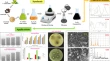
</m:math></display-formula></p><p>Based on this, metallic nanowires can be formed on the surface of thin-film TiO<sub>2</sub> via the photoreduction of metallic ions under certain irradiating and heating conditions. Instead of commonly used H<sub>2</sub>PtCl<sub>6</sub>, Na<sub>2</sub>Pt(OH)<sub>6</sub> was selected as the precursor in this work.</p></sec><sec><st><p>Methods</p></st><p>The whole route for the synthesis of Pt NWs was illustrated in Figure <figr fid="F1">1</figr>. To make gel coating TiO<sub>2</sub> films, the carbon fibers sheet in the size of 1&#8201;&#215;&#8201;1 cm was dipped into the TiO<sub>2</sub> solution. The carbon fiber sheets used were with a thickness of 360 &#956;m and basis weight of 125 g/m<sup>2</sup>. After dipping, the weight gain per sample by absorption of TiO<sub>2</sub> solution was 0.035 g. The dipped samples were then annealed at 500&#176;C for 8 h in an oxygen atmosphere to obtain well crystallized anatase TiO<sub>2</sub> (step 1 in Figure <figr fid="F1">1</figr>). The TiO<sub>2</sub> solution used was prepared with isopropylalcohol (IPA)/titanium isopropoxide (TTIP)/hydrogen chloride (HCl) with the volume ratio 170:12:0.4 and stirred for 10 min at room temperature (20&#176;C) before aging for 2 days. The weight of TiO<sub>2</sub> on a 1 cm<sup>2</sup> carbon fiber sample after annealing was measured to be 0.012 g (3.1&#8201;&#215;&#8201;10<sup>&#8722;3</sup> cm<sup>3</sup> in volume). Fifteen microliters of 0.05 M Na<sub>2</sub>Pt(OH)<sub>6</sub> aqueous salt solution was dropped on the TiO<sub>2</sub> coated substrates (step 2). Afterward, the samples were isothermally heated at 300&#176;C for 3 h in air by an infrared furnace, followed by a furnace-cooling to the ambient temperature (namely, the post thermal treatment, step 3 in Figure <figr fid="F1">1</figr>).</p><fig id="F1"><title><p>Figure 1</p></title><caption><p>Schematic illustration of the main steps for forming Pt nanowires by thermally assisted photoreduction.</p></caption><text>
   <p>
      <b>Schematic illustration of the main steps for forming Pt nanowires by thermally assisted photoreduction.</b>
   </p>
</text><graphic file="1556-276X-7-237-1"/></fig><p>It has been demonstrated that the extent of UV exposure on the TiO<sub>2</sub> film affects the degree of excitation and thus strongly influences the shape and dimension of the reduced metallic structure <abbrgrp><abbr bid="B25">25</abbr></abbrgrp>. In order to obtain reduced Pt with different morphologies and sizes, we varied the conditions of pre-UV exposure treatment performed on the annealed TiO<sub>2</sub>-coated carbon cloths before the growth of the nanowires (between the step 1 and step 2). The conditions included (1) no pre-UV light exposure, (2) pre-UV exposure on only one side of the carbon cloths for 48 h, and (3) pre-UV exposure on each side of carbon cloths for 12 h alternately to reach a total exposure time of 48 h. It is assumed that on the exposed side of the carbon cloth the TiO<sub>2</sub> was excited. Therefore, the whole TiO<sub>2</sub> film was presumed to be fully excited.</p><p>Electrochemical measurements of the hybrid electrocatalysts were performed in a three-electrode cell using an Autolab PG302N work station (Metrohm, Autolab BV, Utrecht, The Netherlands) at room temperature to evaluate their catalytic performance. Carbon cloths (0.25 cm<sup>2</sup>) with Pt-TiO<sub>2</sub> catalysts were the working electrode. A Pt rod and Ag/AgCl were used as counter and reference electrodes, respectively. A solution of 1 M CH<sub>3</sub>OH and 0.5 M H<sub>2</sub>SO<sub>4</sub> was used as the electrolyte. All the reagents used were of analytical grade. The cyclic voltammetry data for methanol electro-oxidation were recorded in the potential range of &#8722;0.2 to 1.0 V vs. Ag/AgCl with a scan rate of 20 mVs<sup>&#8722;1</sup>.</p></sec><sec><st><p>Results and discussion</p></st><p>After heating Na<sub>2</sub>Pt(OH)<sub>6</sub> solution at 300&#176;C for 3 h, the scanning electron microscopy image shown in Figure <figr fid="F2">2a</figr> illustrates that all the Pt salt was transformed into Pt NWs grown radially on both sides of the carbon cloths under no pre-UV exposure condition (condition 1), with an average diameter of about 40 nm and remarkable length of 1&#8201;to approximately&#8201;2 &#956;m. Most of the NWs exhibit an aspect ratio ranging from 25 to 50. Of particular interest is, after long duration of pre-UV irradiation, microsized Pt nodules formed on the UV-exposed portion of the carbon cloths instead of nanowires. Figure <figr fid="F2">2b</figr> indicates that the samples under the condition 2 showed a Janus feature. That is, Pt microparticles (MP) grew on the exposed side (the upper side) of the carbon cloth, while the unexposed side (the underneath side) was with Pt nanowires. Furthermore, the surface of the two-side exposed carbon cloths in the condition 3 was completely covered with Pt microparticles (Figure <figr fid="F2">2c</figr>). Accordingly, these three structures are designated as NW/TiO<sub>2</sub>, NW&#8201;+&#8201;MP/TiO<sub>2</sub>, and MP/TiO<sub>2</sub>, respectively.</p><fig id="F2"><title><p>Figure 2</p></title><caption><p>Morphologies of the reduced Pt on TiO<sub>2</sub> coated carbon cloths with different UV exposure conditions.</p></caption><text>
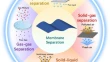
   <p><b>Morphologies of the reduced Pt on TiO</b><sub><b>2</b></sub><b>coated carbon cloths with different UV exposure conditions.</b> (<b>a</b>) no pre-UV-irradiated (<b>b</b>) one side-UV irradiated, (<b>c</b>) both side-UV irradiated.</p>
</text><graphic file="1556-276X-7-237-2"/></fig><p>The grazing angle X-ray diffraction (XRD) patterns, in Figure <figr fid="F3">3a</figr>, verify that those reduced structures on the TiO<sub>2</sub> coating were all platinum. Figure <figr fid="F3">3b</figr> shows a high-resolution transmission electron microscopy (HR-TEM) image and energy dispersive spectrometer (EDS) spectrum of a Pt nanowire. The HR-TEM image shows the lattice spacing between the {111} planes to be 0.228 nm, which was in agreement with the value in the bulk Pt crystal, suggesting the Pt NWs grew along &lt;111&gt; axes, and the EDS spectrum demonstrates that the NWs thus produced were pure Pt without any detectable impurity. The inserted electron diffraction pattern constructed by the fast Fourier transform also verifies the preferred growth direction to be &lt;111&gt;. Similar results have been reported in our previous work <abbrgrp><abbr bid="B28">28</abbr></abbrgrp>.</p><fig id="F3"><title><p>Figure 3</p></title><caption><p>XRD patterns of Pt/TiO<sub>2</sub> hybrid structures, the HR-TEM image and EDS analytical results of a Pt nanowire.</p></caption><text>
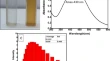
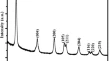
   <p><b>XRD patterns of Pt/TiO</b><sub><b>2</b></sub><b>hybrid structures, the HR-TEM image and EDS analytical results of a Pt nanowire.</b> (<b>a</b>) XRD patterns of Pt/TiO<sub>2</sub> hybrid structures shown in Figure <figr fid="F2">2</figr>, (<b>b</b>) the HR-TEM image and EDS analysis of a Pt nanowire (the Cu signal comes from the Cu grids).</p>
</text><graphic file="1556-276X-7-237-3"/></fig><p>Figure <figr fid="F4">4a</figr> illustrates the standard cyclic voltammogram curves (the 5th cycle) for methanol electro-oxidation on carbon fiber-supported Pt-TiO<sub>2</sub> structures. For all the samples, a methanol oxidation peak appeared in the forward scan and a reoxidation peak was detected on the reverse sweep. Obtained from the cyclic voltammetry (CV) curves in Figure <figr fid="F4">4a</figr>, the maximum current density of the forward peak (<it>I</it><sub>f</sub>) and that of the backward peak (<it>I</it><sub>b</sub>), as well as their ratio, <it>I</it><sub>f</sub>/<it>I</it><sub>b</sub>, are given in Table <tblr tid="T1">1</tblr>, indicating the differences in electrochemical behavior. The forward and backward peak current densities (<it>I</it><sub>f</sub> and <it>I</it><sub>b</sub>) of the MP/TiO<sub>2</sub> samples were greater than NW&#8201;+&#8201;MP/TiO<sub>2</sub>, which was in turn higher than NW/TiO<sub>2</sub> samples. Also, the onset potential in the forward scan of the MP/TiO<sub>2</sub> samples was 0.349, slightly lower than the others. Remarkably, the <it>I</it><sub>f</sub>/<it>I</it><sub>b</sub> value, which could be used to infer the CO tolerance of the catalysts, in a decreasing order was NW/TiO<sub>2</sub> (2.00), NW&#8201;+&#8201;MP/TiO<sub>2</sub> (1.52), and then MP/TiO<sub>2</sub> (1.19). According to the results of Figure <figr fid="F4">4a</figr>, Figure <figr fid="F4">4b</figr> combines the data distribution of the forward peak current density and corresponding CO tolerance, indicating that NW/TiO<sub>2</sub> catalysts exhibited higher CO tolerance but inferior current generation ability compared to MP/TiO<sub>2</sub> mainly due to the limited amount of reduced Pt.</p><fig id="F4"><title><p>Figure 4</p></title><caption><p>Electrochemical performance of the Pt/TiO<sub>2</sub> hybrid structures with different morphologies</p></caption><text>
   <p><b>Electrochemical performance of the Pt/TiO</b><sub><b>2</b></sub><b>hybrid structures with different morphologies.</b> Electrochemical performance of the Pt/TiO<sub>2</sub> hybrid structures with different morphologies in the solution of 1 M CH<sub>3</sub>OH and 0.5 M H<sub>2</sub>SO<sub>4</sub> with a scan rate of 20 mVs<sup>&#8722;1</sup>: (<b>a</b>) cyclic voltammograms and (<b>b</b>) CO tolerance vs. forward peak current density.</p>
</text><graphic file="1556-276X-7-237-4"/></fig><table id="T1"><title><p>Table 1</p></title><caption><p><b>Electrochemical characteristics of the specimens during CV analysis (derived from the CV curves in Figure</b><figr fid="F4">4</figr><b>a)</b></p></caption><tgroup align="left" cols="4"><colspec align="left" colname="c1" colnum="1" colwidth="25*"/><colspec align="left" colname="c2" colnum="2" colwidth="25*"/><colspec align="left" colname="c3" colnum="3" colwidth="25*"/><colspec align="left" colname="c4" colnum="4" colwidth="25*"/><thead valign="top"><row rowsep="1"><entry colname="c1"><p><b>Catalysts</b></p></entry><entry colname="c2"><p><b>Pt NW/TiO</b><sub><b>2</b></sub></p></entry><entry colname="c3"><p><b>Pt NW&#8201;+&#8201;MP/TiO</b><sub><b>2</b></sub></p></entry><entry colname="c4"><p><b>Pt MP/TiO</b><sub><b>2</b></sub></p></entry></row></thead><tbody valign="top"><row rowsep="1"><entry colname="c1"><p><it>I</it><sub>f</sub> current density (mA)</p></entry><entry align="center" colname="c2"><p>12.37</p></entry><entry align="center" colname="c3"><p>18.14</p></entry><entry align="center" colname="c4"><p>21.21</p></entry></row><row><entry colname="c1"><p><it>I</it><sub>b</sub> current density (mA)</p></entry><entry align="center" colname="c2"><p>6.18</p></entry><entry align="center" colname="c3"><p>11.93</p></entry><entry align="center" colname="c4"><p>17.82</p></entry></row><row><entry colname="c1"><p><it>I</it><sub>f</sub>/<it>I</it><sub>b</sub></p></entry><entry align="center" colname="c2"><p>2.00</p></entry><entry align="center" colname="c3"><p>1.52</p></entry><entry align="center" colname="c4"><p>1.19</p></entry></row><row rowsep="1"><entry colname="c1"><p>Onset potential (V)</p></entry><entry align="center" colname="c2"><p>0.385</p></entry><entry align="center" colname="c3"><p>0.383</p></entry><entry align="center" colname="c4"><p>0.349</p></entry></row></tbody></tgroup></table><p>The excellent performance in CO tolerance of the NW/TiO<sub>2</sub> samples can be explained that the high aspect ratio of the NWs leaving most of the TiO<sub>2</sub> film uncovered and allowing for subsequent reactions <abbrgrp><abbr bid="B22">22</abbr></abbrgrp>, which were similar to those in the CeO<sub>2</sub>-Pt composites <abbrgrp><abbr bid="B29">29</abbr></abbrgrp>.</p><p><display-formula id="M3"><m:math xmlns:m="http://www.w3.org/1998/Math/MathML" name="1556-276X-7-237-i3"><m:mrow>
   <m:msub>
      <m:mtext>TiO</m:mtext>
      <m:mn>2</m:mn>
   </m:msub>
   <m:mo>+</m:mo>
   <m:msub>
      <m:mtext>H</m:mtext>
      <m:mn>2</m:mn>
   </m:msub>
   <m:mtext>O</m:mtext>
   <m:mo>&#8594;</m:mo>
   <m:msub>
      <m:mtext>TiO</m:mtext>
      <m:mn>2</m:mn>
   </m:msub>
   <m:mo>&#8722;</m:mo>
   <m:msub>
      <m:mtext>OH</m:mtext>
      <m:mtext>ads</m:mtext>
   </m:msub>
   <m:mo>+</m:mo>
   <m:msup>
      <m:mtext>H</m:mtext>
      <m:mo>+</m:mo>
   </m:msup>
   <m:mo>+</m:mo>
   <m:msup>
      <m:mtext> e</m:mtext>
      <m:mo>&#8722;</m:mo>
   </m:msup>
</m:mrow>
</m:math></display-formula></p><p><display-formula id="M4"><m:math xmlns:m="http://www.w3.org/1998/Math/MathML" name="1556-276X-7-237-i4"><m:mrow>
   <m:mtext>Pt</m:mtext>
   <m:mo>&#8722;</m:mo>
   <m:msub>
      <m:mtext>CO</m:mtext>
      <m:mtext>ads</m:mtext>
   </m:msub>
   <m:mo>+</m:mo>
   <m:msub>
      <m:mtext>TiO</m:mtext>
      <m:mn>2</m:mn>
   </m:msub>
   <m:mo>&#8722;</m:mo>
   <m:msub>
      <m:mtext>OH</m:mtext>
      <m:mtext>ads</m:mtext>
   </m:msub>
   <m:mo>&#8594;</m:mo>
   <m:mtext>Pt</m:mtext>
   <m:mo>+</m:mo>
   <m:msub>
      <m:mtext>TiO</m:mtext>
      <m:mn>2</m:mn>
   </m:msub>
   <m:mo>+</m:mo>
   <m:msub>
      <m:mtext>CO</m:mtext>
      <m:mn>2</m:mn>
   </m:msub>
   <m:mo>+</m:mo>
   <m:msup>
      <m:mtext>H</m:mtext>
      <m:mo>+</m:mo>
   </m:msup>
   <m:mo>+</m:mo>
   <m:msup>
      <m:mtext> e</m:mtext>
      <m:mo>&#8722;</m:mo>
   </m:msup>
</m:mrow>
</m:math></display-formula></p><p>The OH<sub>ads</sub> species (ads, adsorbed) on TiO<sub>2</sub>, obtained through the activation of water, can transform CO-like poisoning species (CO<sub>ads</sub>) on the Pt surface, produced by the methanol dehydrogenation, to CO<sub>2</sub> and release active Pt for further catalysis.</p><p>The TAP process needs to be improved to obtain a higher population of Pt NWs and thus raises the catalytic activity for methanol oxidation. If this is done, it can be expected that the excellent performance in CO tolerance can be maintained because the high-aspect-ratio Pt NWs occupy only a small part of the fiber surface and leave most the TiO<sub>2</sub> film free for oxidation of CO.</p></sec><sec><st><p>Conclusions</p></st><p>By means of templateless and surfactant-free method, TAP, this study successfully prepared carbon fibers supported Pt nanowires/TiO<sub>2</sub> composite electrocatalysts, which show great potential for use as active anode in direct methanol fuel cells. Analytical results suggest that the Pt nanowires were single crystalline with a preferred &lt;111&gt; growth direction and exhibited an aspect ratio ranged between 25 and 50. This Pt nanowire/TiO<sub>2</sub> hybrid structure possessed high CO tolerance because TiO<sub>2</sub> enhances CO electro-oxidation and thus increases CO poisoning resistance. An optimal performance in catalytic activity for methanol oxidation and CO tolerance can be expected if the density of the Pt nanowires is increased further.</p></sec><sec><st><p>Competing interests</p></st><p>The authors declare that they have no competing interests.</p></sec><sec><st><p>Authors&#8217; contributions</p></st><p>Y-LS carried out the main part of synthetic and analytical works, participated in the sequence alignment and drafted the manuscript. S-YC participated in the discussion of the growth mechanism. J-MS participated in the design of the study, draft preparation and coordination. I-GC conceived of the study and participated in its design. All authors read and approved the final manuscript.</p></sec><sec><st><p>Authors&#8217; information</p></st><p>YLS is a PHD student at Graduate Institute of Applied Science and Technology, National Taiwan University of Science and Technology, Taipei 106, Taiwan. SYC is an associate professor in the Department of Materials Science and Engineering, National Taiwan University of Science and Technology, Taipei 106, Taiwan. JMS is an associate professor in the Department of Materials Science and Engineering, National Chung Hsing University, Taichung 402, Taiwan. IGC is a distinguished professor from the Department of Materials Science and Engineering, National Cheng Kung University, Tainan 701, Taiwan.</p></sec></bdy><bm><ack><sec><st><p>Acknowledgments</p></st><p>We thank the National Science Council of Taiwan for funding NSC 100-2120-M-006-006 and National Cheng Kung University Project of Promoting Academic Excellence and Developing World Class Research Center: D98-R048 for support of this work.</p></sec></ack><refgrp><bibl id="B1"><title><p>Direct methanol fuel cells</p></title><aug><au><snm>Hogarth</snm><fnm>MP</fnm></au><au><snm>Hards</snm><fnm>GA</fnm></au></aug><source>Platinum Metals Rev</source><pubdate>1996</pubdate><volume>40</volume><fpage>150</fpage></bibl><bibl id="B2"><title><p>Low methanol crossover and high efficiency direct methanol fuel cell: the influence of diffusion layers</p></title><aug><au><snm>Casalegno</snm><fnm>A</fnm></au><au><snm>Santoro</snm><fnm>C</fnm></au><au><snm>Rinaldi</snm><fnm>F</fnm></au><au><snm>Marchesi</snm><fnm>R</fnm></au></aug><source>J Power Sources</source><pubdate>2011</pubdate><volume>196</volume><fpage>2669</fpage><xrefbib><pubid idtype="doi">10.1016/j.jpowsour.2010.11.050</pubid></xrefbib></bibl><bibl id="B3"><title><p>Methanol electro-oxidation on Pt/C modified by polyaniline nanofibers for DMFC applications</p></title><aug><au><snm>Zhiani</snm><fnm>M</fnm></au><au><snm>Rezaei</snm><fnm>B</fnm></au><au><snm>Jalili</snm><fnm>J</fnm></au></aug><source>Int J Hydrog Energy</source><pubdate>2010</pubdate><volume>35</volume><fpage>9298</fpage><xrefbib><pubid idtype="doi">10.1016/j.ijhydene.2010.03.050</pubid></xrefbib></bibl><bibl id="B4"><title><p>Mechanism and electrocatalysis in the direct methanol fuel cell</p></title><aug><au><snm>Hamnett</snm><fnm>A</fnm></au></aug><source>Catal Today</source><pubdate>1997</pubdate><volume>38</volume><fpage>445</fpage><xrefbib><pubid idtype="doi">10.1016/S0920-5861(97)00054-0</pubid></xrefbib></bibl><bibl id="B5"><title><p>Effect of overoxidation treatment of Pt-Co/polypyrrole-carbon nanotube catalysts on methanol oxidation</p></title><aug><au><snm>Zhao</snm><fnm>HB</fnm></au><au><snm>Yang</snm><fnm>J</fnm></au><au><snm>Li</snm><fnm>L</fnm></au><au><snm>Li</snm><fnm>H</fnm></au><au><snm>Wang</snm><fnm>JL</fnm></au><au><snm>Zhang</snm><fnm>YM</fnm></au></aug><source>Int J Hydrog Energy</source><pubdate>2009</pubdate><volume>34</volume><fpage>3908</fpage><xrefbib><pubid idtype="doi">10.1016/j.ijhydene.2009.02.079</pubid></xrefbib></bibl><bibl id="B6"><title><p>Characterization of alloy electrocatalysts for direct oxidation of methanol: new methods</p></title><aug><au><snm>Ross</snm><fnm>PN</fnm></au></aug><source>Electrochim Acta</source><pubdate>2053</pubdate><volume>1991</volume><fpage>36</fpage></bibl><bibl id="B7"><title><p>Synthesis of platinum nanowire networks using a soft template</p></title><aug><au><snm>Song</snm><fnm>Y</fnm></au><au><snm>Garcia</snm><fnm>RM</fnm></au><au><snm>Dorin</snm><fnm>RM</fnm></au><au><snm>Wang</snm><fnm>H</fnm></au><au><snm>Qiu</snm><fnm>Y</fnm></au><au><snm>Coker</snm><fnm>EN</fnm></au><au><snm>Steen</snm><fnm>WA</fnm></au><au><snm>Miller</snm><fnm>JE</fnm></au><au><snm>Shelnutt</snm><fnm>J</fnm></au></aug><source>Nano Lett</source><pubdate>2007</pubdate><volume>7</volume><fpage>3650</fpage><xrefbib><pubidlist><pubid idtype="doi">10.1021/nl0719123</pubid><pubid idtype="pmpid" link="fulltext">17999549</pubid></pubidlist></xrefbib></bibl><bibl id="B8"><title><p>Tin/platinum bimetallic nanotube array and its electrocatalytic activity for methanol oxidation</p></title><aug><au><snm>Guo</snm><fnm>YG</fnm></au><au><snm>Hu</snm><fnm>JS</fnm></au><au><snm>Zhang</snm><fnm>HM</fnm></au><au><snm>Liang</snm><fnm>HP</fnm></au><au><snm>Wan</snm><fnm>LJ</fnm></au><au><snm>Bai</snm><fnm>CL</fnm></au></aug><source>Adv Mater</source><pubdate>2005</pubdate><volume>17</volume><fpage>746</fpage><xrefbib><pubid idtype="doi">10.1002/adma.200400486</pubid></xrefbib></bibl><bibl id="B9"><title><p>Pd-catalyzed growth of Pt nanoparticles or nanowires as dense coatings on polymeric and ceramic particulate supports</p></title><aug><au><snm>Lee</snm><fnm>EP</fnm></au><au><snm>Chen</snm><fnm>J</fnm></au><au><snm>Yin</snm><fnm>Y</fnm></au><au><snm>Campbell</snm><fnm>CT</fnm></au><au><snm>Xia</snm><fnm>Y</fnm></au></aug><source>Adv Mater</source><pubdate>2006</pubdate><volume>18</volume><fpage>3271</fpage><xrefbib><pubid idtype="doi">10.1002/adma.200601070</pubid></xrefbib></bibl><bibl id="B10"><title><p>Growing Pt nanowires as a densely packed array on metal gauze</p></title><aug><au><snm>Lee</snm><fnm>EP</fnm></au><au><snm>Peng</snm><fnm>Z</fnm></au><au><snm>Cate</snm><fnm>DM</fnm></au><au><snm>Yang</snm><fnm>H</fnm></au><au><snm>Campbell</snm><fnm>CT</fnm></au><au><snm>Xia</snm><fnm>Y</fnm></au></aug><source>J Am Chem Soc</source><pubdate>2007</pubdate><volume>129</volume><fpage>10634</fpage><xrefbib><pubidlist><pubid idtype="doi">10.1021/ja074312e</pubid><pubid idtype="pmpid" link="fulltext">17685620</pubid></pubidlist></xrefbib></bibl><bibl id="B11"><title><p>Synthesis of single-crystalline platinum nanorods within a soft crystalline surfactant-PtII complex</p></title><aug><au><snm>Krishnawamy</snm><fnm>R</fnm></au><au><snm>Remita</snm><fnm>H</fnm></au><au><snm>Imperor-Clerc</snm><fnm>M</fnm></au><au><snm>Even</snm><fnm>C</fnm></au><au><snm>Davidson</snm><fnm>P</fnm></au><au><snm>Pansu</snm><fnm>B</fnm></au></aug><source>Chem Phys Chem</source><pubdate>2006</pubdate><volume>7</volume><fpage>1510</fpage><xrefbib><pubidlist><pubid idtype="doi">10.1002/cphc.200600127</pubid><pubid idtype="pmpid" link="fulltext">16810723</pubid></pubidlist></xrefbib></bibl><bibl id="B12"><title><p>Direct growth of single crystal Pt nanowires on Sn@CNT nanocable: 3D electrodes for highly active electrocatalysts</p></title><aug><au><snm>Sun</snm><fnm>S</fnm></au><au><snm>Zang</snm><fnm>G</fnm></au><au><snm>Geng</snm><fnm>D</fnm></au><au><snm>Chen</snm><fnm>Y</fnm></au><au><snm>Banis</snm><fnm>MN</fnm></au><au><snm>Li</snm><fnm>R</fnm></au><au><snm>Cai</snm><fnm>M</fnm></au><au><snm>Sun</snm><fnm>X</fnm></au></aug><source>Chem Eur J</source><pubdate>2010</pubdate><volume>16</volume><fpage>829</fpage><xrefbib><pubid idtype="pmpid" link="fulltext">20024993</pubid></xrefbib></bibl><bibl id="B13"><title><p>Controlled growth of Pt nanowires on carbon nanospheres and their enhanced performance as electrocatalysts in PEM fuel cells</p></title><aug><au><snm>Sun</snm><fnm>S</fnm></au><au><snm>Jaouen</snm><fnm>F</fnm></au><au><snm>Dodelet</snm><fnm>J</fnm></au></aug><source>Adv Mater</source><pubdate>2008</pubdate><volume>20</volume><fpage>3900</fpage><xrefbib><pubid idtype="doi">10.1002/adma.200800491</pubid></xrefbib></bibl><bibl id="B14"><title><p>Template- and surfactant-free room temperature synthesis of self-assembled 3D Pt nanoflowers from single-crystal nanowires</p></title><aug><au><snm>Sun</snm><fnm>SH</fnm></au><au><snm>Yang</snm><fnm>DQ</fnm></au><au><snm>Villers</snm><fnm>D</fnm></au><au><snm>Zhang</snm><fnm>GX</fnm></au><au><snm>Sacher</snm><fnm>E</fnm></au><au><snm>Dodelet</snm><fnm>JP</fnm></au></aug><source>Adv Mater</source><pubdate>2008</pubdate><volume>20</volume><fpage>571</fpage><xrefbib><pubid idtype="doi">10.1002/adma.200701408</pubid></xrefbib></bibl><bibl id="B15"><title><p>Synthesis and characterization of platinum nanowire-carbon nanotube heterostructures</p></title><aug><au><snm>Sun</snm><fnm>S</fnm></au><au><snm>Yang</snm><fnm>D</fnm></au><au><snm>Zhang</snm><fnm>G</fnm></au><au><snm>Sacher</snm><fnm>E</fnm></au><au><snm>Dodelet</snm><fnm>J</fnm></au></aug><source>Chem Mater</source><pubdate>2007</pubdate><volume>19</volume><fpage>6376</fpage><xrefbib><pubid idtype="doi">10.1021/cm7022949</pubid></xrefbib></bibl><bibl id="B16"><title><p>Green and controlled synthesis of gold and platinum nanomaterials using vitamin B2: density-assisted self-assembly of nanospheres, wires and rods</p></title><aug><au><snm>Nadagouda</snm><fnm>MN</fnm></au><au><snm>Varma</snm><fnm>RS</fnm></au></aug><source>Green Chem</source><pubdate>2006</pubdate><volume>8</volume><fpage>516</fpage><xrefbib><pubid idtype="doi">10.1039/b601271j</pubid></xrefbib></bibl><bibl id="B17"><title><p>Pt nanoparticles supported on WO3/C hybrid materials and their electrocatalytic activity for methanol electro-oxidation</p></title><aug><au><snm>Cui</snm><fnm>Z</fnm></au><au><snm>Feng</snm><fnm>L</fnm></au><au><snm>Liu</snm><fnm>C</fnm></au><au><snm>Xing</snm><fnm>W</fnm></au></aug><source>J Power Sources</source><pubdate>2011</pubdate><volume>196</volume><fpage>2621</fpage><xrefbib><pubid idtype="doi">10.1016/j.jpowsour.2010.08.118</pubid></xrefbib></bibl><bibl id="B18"><title><p>The role of RuO2 in the electrocatalytic oxidation of methanol for direct methanol fuel cell</p></title><aug><au><snm>Peng</snm><fnm>F</fnm></au><au><snm>Zhou</snm><fnm>C</fnm></au><au><snm>Wang</snm><fnm>H</fnm></au><au><snm>Yu</snm><fnm>H</fnm></au><au><snm>Liang</snm><fnm>J</fnm></au><au><snm>Yang</snm><fnm>J</fnm></au></aug><source>Catal Commun</source><pubdate>2009</pubdate><volume>10</volume><fpage>533</fpage><xrefbib><pubid idtype="doi">10.1016/j.catcom.2008.10.037</pubid></xrefbib></bibl><bibl id="B19"><title><p>Proton electrolyte membrane properties and direct methanol fuel cell performance</p></title><aug><au><snm>Silva</snm><fnm>VS</fnm></au><au><snm>Schirmer</snm><fnm>J</fnm></au><au><snm>Reissner</snm><fnm>R</fnm></au><au><snm>Ruffmann</snm><fnm>B</fnm></au><au><snm>Silva</snm><fnm>H</fnm></au></aug><source>J Power Sources</source><pubdate>2005</pubdate><volume>140</volume><fpage>41</fpage><xrefbib><pubid idtype="doi">10.1016/j.jpowsour.2004.08.012</pubid></xrefbib></bibl><bibl id="B20"><title><p>Enhanced activity for ethanol electrooxidation on Pt-MgO/C catalysts</p></title><aug><au><snm>Xu</snm><fnm>C</fnm></au><au><snm>Shen</snm><fnm>P</fnm></au><au><snm>Ji</snm><fnm>X</fnm></au><au><snm>Zeng</snm><fnm>R</fnm></au><au><snm>Liu</snm><fnm>Y</fnm></au></aug><source>Electrochem Commun</source><pubdate>2005</pubdate><volume>7</volume><fpage>1305</fpage><xrefbib><pubid idtype="doi">10.1016/j.elecom.2005.09.015</pubid></xrefbib></bibl><bibl id="B21"><title><p>Enhanced electrocatalytic performance for methanol oxidation on Pt/TiO2/ITO electrode under UV illumination</p></title><aug><au><snm>Zhang</snm><fnm>H</fnm></au><au><snm>Zhou</snm><fnm>W</fnm></au><au><snm>Du</snm><fnm>Y</fnm></au><au><snm>Yang</snm><fnm>P</fnm></au><au><snm>Wang</snm><fnm>C</fnm></au><au><snm>Xu</snm><fnm>J</fnm></au></aug><source>Int J Hydrog Energy</source><pubdate>2010</pubdate><volume>35</volume><fpage>13290</fpage><xrefbib><pubid idtype="doi">10.1016/j.ijhydene.2010.09.025</pubid></xrefbib></bibl><bibl id="B22"><title><p>Boosting fuel cell performance with a semiconductor photocatalyst: TiO2/Pt-Ru hybrid catalyst for methanol oxidation</p></title><aug><au><snm>Drew</snm><fnm>K</fnm></au><au><snm>Girishkumar</snm><fnm>G</fnm></au><au><snm>Vinodgopal</snm><fnm>K</fnm></au><au><snm>Kamat</snm><fnm>PV</fnm></au></aug><source>J Phys Chem B</source><pubdate>2005</pubdate><volume>109</volume><fpage>11851</fpage><xrefbib><pubidlist><pubid idtype="doi">10.1021/jp051073d</pubid><pubid idtype="pmpid" link="fulltext">16852456</pubid></pubidlist></xrefbib></bibl><bibl id="B23"><title><p>Development of high quality Pt-CeO2 composite anode for direct methanol fuel cell applications</p></title><aug><au><snm>Mori</snm><fnm>T</fnm></au><au><snm>Takahashi</snm><fnm>M</fnm></au><au><snm>Suga</snm><fnm>T</fnm></au><au><snm>Drennan</snm><fnm>J</fnm></au></aug><source>In Proceeding of Polymers and Adhesives in Microelectronics and Photonics, 2007</source><publisher>Polytronic:Tokyo, Tokyo</publisher><pubdate>2007</pubdate><fpage>51</fpage></bibl><bibl id="B24"><title><p>Development of high quality Pt-CeO2 composite anode for direct methanol fuel cell applications</p></title><aug><au><snm>Wang</snm><fnm>XY</fnm></au><au><snm>Jiang</snm><fnm>YS</fnm></au><au><snm>Zhang</snm><fnm>HZ</fnm></au><au><snm/><fnm>JC</fnm></au></aug><source>Chem Res Chinese Universities</source><pubdate>2011</pubdate><volume>27</volume><fpage>486</fpage></bibl><bibl id="B25"><title><p>Thermal-assisted photoreduction of vertical silver nanowires</p></title><aug><au><snm>Tung</snm><fnm>HT</fnm></au><au><snm>Chen</snm><fnm>IG</fnm></au><au><snm>Song</snm><fnm>JM</fnm></au><au><snm>Yen</snm><fnm>CW</fnm></au></aug><source>J Mater Chem</source><pubdate>2009</pubdate><volume>19</volume><fpage>2386</fpage><xrefbib><pubid idtype="doi">10.1039/b817482b</pubid></xrefbib></bibl><bibl id="B26"><title><p>Synthesis of surfactant-free aligned single crystal copper nanowires by thermal-assisted photoreduction</p></title><aug><au><snm>Tung</snm><fnm>HT</fnm></au><au><snm>Song</snm><fnm>JM</fnm></au><au><snm>Dong</snm><fnm>TY</fnm></au><au><snm>Hwang</snm><fnm>WS</fnm></au><au><snm>Chen</snm><fnm>IG</fnm></au></aug><source>Cryst Growth Des</source><pubdate>2008</pubdate><volume>8</volume><fpage>3415</fpage><xrefbib><pubid idtype="doi">10.1021/cg8003596</pubid></xrefbib></bibl><bibl id="B27"><title><p>Electrochemical photolysis of water at a semiconductor electrode</p></title><aug><au><snm>Fujishima</snm><fnm>A</fnm></au><au><snm>Honda</snm><fnm>K</fnm></au></aug><source>Nature</source><pubdate>1972</pubdate><volume>238</volume><fpage>37</fpage><xrefbib><pubidlist><pubid idtype="doi">10.1038/238037a0</pubid><pubid idtype="pmpid">12635268</pubid></pubidlist></xrefbib></bibl><bibl id="B28"><title><p>Direct growth of ultra-long platinum nanolawns on a semiconductor photocatalyst</p></title><aug><au><snm>Shen</snm><fnm>YL</fnm></au><au><snm>Chen</snm><fnm>SY</fnm></au><au><snm>Song</snm><fnm>JM</fnm></au><au><snm>Chin</snm><fnm>TK</fnm></au><au><snm>Lin</snm><fnm>CH</fnm></au><au><snm>Chen</snm><fnm>IG</fnm></au></aug><source>Nanoscale Res Lett</source><pubdate>2011</pubdate><volume>6</volume><fpage>380</fpage><xrefbib><pubidlist><pubid idtype="doi">10.1186/1556-276X-6-380</pubid><pubid idtype="pmcid">3211474</pubid><pubid idtype="pmpid" link="fulltext">21711914</pubid></pubidlist></xrefbib></bibl><bibl id="B29"><title><p>Pt-CeO2/C anode catalyst for direct methanol fuel cells</p></title><aug><au><snm>Scibioh</snm><fnm>MA</fnm></au><au><snm>Kim</snm><fnm>SK</fnm></au><au><snm>Cho</snm><fnm>EA</fnm></au><au><snm>Lim</snm><fnm>TH</fnm></au><au><snm>Hong</snm><fnm>SA</fnm></au><au><snm>Ha</snm><fnm>HY</fnm></au></aug><source>Appl Catal B</source><pubdate>2008</pubdate><volume>84</volume><fpage>773</fpage><xrefbib><pubid idtype="doi">10.1016/j.apcatb.2008.06.017</pubid></xrefbib></bibl></refgrp></bm></art>