<?xml version='1.0'?>
<!DOCTYPE art SYSTEM 'http://www.biomedcentral.com/xml/article.dtd'>
<art>
<ui>1556-276X-7-142</ui>
<ji>1556-276X</ji>
<fm>
<dochead>Nano Express</dochead>
<bibl>
<title><p>Improvement in the photoelectrochemical responses of PCBM/TiO<sub>2 </sub>electrode by electron irradiation</p></title>
<aug>
<au id="A1"><snm>Yoo</snm><mnm>Hwa</mnm><fnm>Seung</fnm><insr iid="I1"/><email>yoo3841@kaist.ac.kr</email></au>
<au id="A2"><snm>Kum</snm><mnm>Min</mnm><fnm>Jong</fnm><insr iid="I1"/><email>hhh@kaist.ac.kr</email></au>
<au id="A3"><snm>Ali</snm><fnm>Ghafar</fnm><insr iid="I1"/><insr iid="I2"/><email>ghafarali@gmail.com</email></au>
<au id="A4"><snm>Heo</snm><mnm>Hwan</mnm><fnm>Sung</fnm><insr iid="I3"/><email>shheo@kaist.ac.kr</email></au>
<au id="A5" ca="yes"><snm>Cho</snm><mnm>Oh</mnm><fnm>Sung</fnm><insr iid="I1"/><email>socho@kaist.ac.kr</email></au>
</aug>
<insg>
<ins id="I1"><p>Department of Nuclear and Quantum Engineering, Korea Advanced Institute of Science and Technology, Daejeon, 305-701, South Korea</p></ins>
<ins id="I2"><p>Nanomaterials Research Group, Physics Division, PINSTECH, Islamabad, 45650, Pakistan</p></ins>
<ins id="I3"><p>Particla Co. Ltd., Daejeon, 306-220, South Korea</p></ins>
</insg>
<source>Nanoscale Research Letters</source>
<issn>1556-276X</issn>
<pubdate>2012</pubdate>
<volume>7</volume>
<issue>1</issue>
<fpage>142</fpage>
<url>http://www.nanoscalereslett.com/content/7/1/142</url>
<xrefbib><pubidlist><pubid idtype="doi">10.1186/1556-276X-7-142</pubid><pubid idtype="pmpid">22348621</pubid></pubidlist></xrefbib></bibl>
<history><rec><date><day>21</day><month>10</month><year>2011</year></date></rec><acc><date><day>20</day><month>2</month><year>2012</year></date></acc><pub><date><day>20</day><month>2</month><year>2012</year></date></pub></history><cpyrt><year>2012</year><collab>Yoo et al; licensee Springer.</collab><note>This is an Open Access article distributed under the terms of the Creative Commons Attribution License (<url>http://creativecommons.org/licenses/by/2.0</url>), which permits unrestricted use, distribution, and reproduction in any medium, provided the original work is properly cited.</note></cpyrt>
<kwdg><kwd>photoelectrochemical cell</kwd><kwd>TiO<sub>2</sub></kwd><kwd>electron irradiation</kwd><kwd>PCBM</kwd><kwd>band-edge tuning</kwd></kwdg>
<abs>
<sec><st><p>Abstract</p></st>
<p>The photoelectrochemical (PEC) responses of electron-irradiated <abbrgrp><abbr bid="B6">6</abbr><abbr bid="B6">6</abbr></abbrgrp>-phenyl-C61-butyric acid methyl ester (PCBM)/TiO<sub>2 </sub>electrodes were evaluated in a PEC cell. By coating PCBM on TiO<sub>2 </sub>nanoparticle film, the light absorption of PCBM/TiO<sub>2 </sub>electrode has expanded to the visible light region and improved the PEC responses compared to bare TiO<sub>2 </sub>electrode. The PEC responses were further improved by irradiating an electron beam on PCBM/TiO<sub>2 </sub>electrodes. Compared to non-irradiated PCBM/TiO<sub>2 </sub>electrodes, electron irradiation increased the photocurrent density and the open-circuit potential of PEC cells by approximately 90% and approximately 36%, respectively at an optimum electron irradiation condition. The PEC responses are carefully evaluated correlating with the optical and electronic properties of electron-irradiated PCBM/TiO<sub>2 </sub>electrodes.</p>
</sec>
</abs>
</fm>
<bdy>
<sec><st><p>Introduction</p></st>
<p>TiO<sub>2 </sub>has been widely used for photocatalysts because of its good chemical- and photostabilities to convert photon energy to electrical and chemical energies <abbrgrp><abbr bid="B1">1</abbr></abbrgrp>. However, due to its wide bandgap, the light absorption is limited only to the ultraviolet (UV) region of the solar spectrum. Hence, sensitizing TiO<sub>2 </sub>with small bandgap semiconductors, such as quantum dots or organic dyes, has been extensively studied to harvest more photons in the visible light region of solar spectrum for the applications to quantum dot-sensitized solar cells <abbrgrp><abbr bid="B2">2</abbr><abbr bid="B3">3</abbr><abbr bid="B4">4</abbr></abbrgrp>, dye-sensitized solar cells <abbrgrp><abbr bid="B5">5</abbr><abbr bid="B6">6</abbr><abbr bid="B7">7</abbr></abbrgrp>, and photoelectrochemical (PEC) cells <abbrgrp><abbr bid="B8">8</abbr><abbr bid="B9">9</abbr><abbr bid="B10">10</abbr></abbrgrp>.</p>
<p>Along with this current research trends, combining TiO<sub>2 </sub>with carbonaceous nanomaterials has attracted much interest, and studies on these materials are increasing exponentially these days <abbrgrp><abbr bid="B11">11</abbr></abbrgrp>. For instance, high performance photocatalysts such as carbon nanotube-TiO<sub>2 </sub><abbrgrp><abbr bid="B12">12</abbr><abbr bid="B13">13</abbr><abbr bid="B14">14</abbr></abbrgrp>, fullerene-TiO<sub>2 </sub>(C<sub>60</sub>-TiO<sub>2</sub>) <abbrgrp><abbr bid="B15">15</abbr><abbr bid="B16">16</abbr><abbr bid="B17">17</abbr></abbrgrp>, and graphene-TiO<sub>2 </sub><abbrgrp><abbr bid="B18">18</abbr><abbr bid="B19">19</abbr></abbrgrp> composites have been introduced by several groups and have shown enhanced photocatalytic activities. Notably, C<sub>60 </sub>has shown interesting effects when combined with TiO<sub>2</sub>: facilitating the separation of photo-generated charge carriers from TiO<sub>2 </sub>to C<sub>60 </sub><abbrgrp><abbr bid="B15">15</abbr><abbr bid="B16">16</abbr></abbrgrp> or sensitizing TiO<sub>2 </sub>to absorb visible light <abbrgrp><abbr bid="B17">17</abbr></abbrgrp>. However, the band-edge position of C<sub>60 </sub>is unfavorable for a sensitizer of TiO<sub>2 </sub>because the lowest unoccupied molecular orbital (LUMO) level of C<sub>60 </sub>is lower than the conduction band of TiO<sub>2 </sub><abbrgrp><abbr bid="B17">17</abbr></abbrgrp>. From the viewpoint of energy levels, <abbrgrp><abbr bid="B6">6</abbr><abbr bid="B6">6</abbr></abbrgrp>-phenyl-C61-butyric acid methyl ester (PCBM) is a better candidate than C<sub>60 </sub>for the sensitization of TiO<sub>2</sub>. We expect that the photo-excited electrons of PCBM can be transferred to TiO<sub>2 </sub>more efficiently because the LUMO level of PCBM is slightly higher than the conduction band of TiO<sub>2 </sub><abbrgrp><abbr bid="B20">20</abbr></abbrgrp>. In our previous study, we have found that the band-edge positions as well as the bandgap of PCBM can be tuned by electron irradiation at different fluences <abbrgrp><abbr bid="B21">21</abbr></abbrgrp>. We believe that electron irradiation technique can be an alternative and unique method to modify the molecular structure and tune the bandgap <abbrgrp><abbr bid="B22">22</abbr><abbr bid="B23">23</abbr></abbrgrp> compared to the conventional methods such as adjusting the particle size of quantum dots <abbrgrp><abbr bid="B24">24</abbr><abbr bid="B25">25</abbr></abbrgrp> or modifying the molecular structure of the dyes <abbrgrp><abbr bid="B26">26</abbr></abbrgrp> for larger light absorption. In addition to the bandgap, the band-edge positions can also be tuned by electron irradiation compared to the conventional methods such as ionic adsorption for specific quantum dots <abbrgrp><abbr bid="B27">27</abbr></abbrgrp> or by varying the conjugation linkers in organic dyes <abbrgrp><abbr bid="B28">28</abbr></abbrgrp>.</p>
<p>Based on our previous findings, we present here a novel approach to improve the PEC performance of PCBM/TiO<sub>2 </sub>electrodes using electron beam irradiation. The photocurrent density and open-circuit potential of PCBM/TiO<sub>2 </sub>were respectively improved by 90% and 36% by electron irradiation. The effects of the electron irradiation on the PEC performances of PCBM/TiO<sub>2 </sub>were systematically analyzed in this study.</p>
</sec>
<sec><st><p>Methods</p></st>
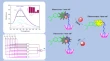
<p>Figure <figr fid="F1">1</figr> shows the schematic representation of the preparation of PCBM/TiO<sub>2 </sub>electrode and subsequent electron irradiation. The as-received TiO<sub>2 </sub>nanoparticle paste (DSL 18NR-T, Dyesol Industries Pty Ltd., Queanbeyan, New South Wales, Australia) was deposited on a fluorine-doped tin oxide (FTO) glass substrate (8 &#937;m<sup>-2</sup>, Dyesol) by a doctor blade technique. Before the deposition of TiO<sub>2 </sub>paste, FTO glass substrates were cut by 1.0 &#215; 2.5 cm<sup>2 </sup>in dimension and were sonicated successively in acetone, isopropanol, ethanol, and deionized water for thorough cleaning and dried in N<sub>2 </sub>gas stream. After the deposition of TiO<sub>2 </sub>paste, subsequent annealing process was performed at 450&#176;C for 30 min with a temperature increase rate of 1&#176;C min<sup>-1</sup>. After the annealing, TiO<sub>2 </sub>nanoparticle film was formed. The as-prepared TiO<sub>2 </sub>electrodes were immersed vertically in a chlorobenzene solution containing 1.5 mM PCBM for 5 h while stirring. PCBM solution was prepared by dissolving PCBM (99.5% purity, Nano-C, Inc., Westwood, MA, USA) powder into chlorobenzene (&#8805;99.5% purity, Sigma-Aldrich, St. Luois, MO, USA) solvent. After the immersion, the electrodes were washed in pure chlorobenzene several times and dried at ambient condition. As a result, PCBM/TiO<sub>2 </sub>electrodes, where a thin layer of PCBM was coated on the TiO<sub>2 </sub>nanoparticle electrodes, were prepared. Coating process of PCBM was carried out in darkness. The irradiation of an electron beam on PCBM/TiO<sub>2 </sub>electrodes was carried out at room temperature and in vacuum lower than 2 &#215; 10<sup>-5 </sup>Torr. An electron beam was generated from a thermionic electron gun with electron energy of 50 keV, and current density of the electron beam was 1.6 &#956;A cm<sup>-2</sup>. The electron fluence was varied by adjusting the irradiation time. PCBM/TiO<sub>2 </sub>electrodes were irradiated by 1, 2, and 4 h which correspond to electron fluence of 3.6 &#215; 10<sup>16</sup>, 7.2 &#215; 10<sup>16</sup>, and 1.44 &#215; 10<sup>17 </sup>cm<sup>-2</sup>, respectively. Diffuse reflectance UV-visible (VIS) spectra of electron-irradiated PCBM/TiO<sub>2 </sub>powders were measured on a spectrometer (S-4100, SCINCO CO., LTD., Seoul, South Korea) by scratching the nanoparticle film off the FTO glass substrate.</p>
<fig id="F1"><title><p>Figure 1</p></title><caption><p>Schematic representation of the preparation of PCBM/TiO<sub>2 </sub>electrode and subsequent electron irradiation</p></caption><text>
   <p><b>Schematic representation of the preparation of PCBM/TiO<sub>2 </sub>electrode and subsequent electron irradiation</b>. (<b>A</b>) Deposition of TiO<sub>2 </sub>paste by doctor blade technique. (<b>B</b>) Formation of TiO<sub>2 </sub>nanoparticle film by annealing the as-deposited TiO<sub>2 </sub>paste at 450&#176;C for 30 min. (<b>C</b>) Fabrication of PCBM/TiO<sub>2 </sub>electrode by immersing TiO<sub>2 </sub>electrode in 1.5 mM PCBM solution for 5 h. (<b>D</b>) Electron irradiation on PCBM/TiO<sub>2 </sub>electrode at different fluences.</p>
</text><graphic file="1556-276X-7-142-1"/></fig>
<p>After electron irradiation of PCBM/TiO<sub>2 </sub>electrodes, a custom-made PEC cell was constructed to measure the PEC responses of electron-irradiated PCBM/TiO<sub>2 </sub>electrodes, which act as photo-anodes of PEC cells. The PEC cell has a three-electrode configuration comprising a photo-anode, a Pt wire as a cathode, and a saturated calomel electrode (SCE) (0.242 V vs. NHE, BAS Inc., West Lafayette, IN, USA) as a reference electrode. An aqueous solution of 1 M NaOH (Junsei Chemical Co., Ltd., Chuo-ku, Tokyo, Japan) was used as a supporting electrolyte after 30 min purging with N<sub>2 </sub>gas. The PEC response of the electrodes was recorded on a potentiostat (Model SP-50, BioLogic, Claix, France) by sweeping the potential from -1.2 to 0.5 V (vs. SCE) at a sweep rate of 100 mV s<sup>-1</sup>. The photo-anodes were illuminated with a solar simulator (Model LS-150, Abet Technologies, Inc., Milford, CT, USA) equipped with AM 1.5 filter. The illumination power was estimated as 80 mW cm<sup>-2 </sup>at the photo-anode surface by a digital photometer (ILT1400-A, International Light Technologies, Inc., Peabody, MA, USA).</p>
</sec>
<sec><st><p>Results and discussion</p></st>
<p>Figure <figr fid="F1">1</figr> displays the schematic representation for the preparation of the PCBM/TiO<sub>2 </sub>photo-anodes of PEC cells. TiO<sub>2 </sub>nanoparticles (NPs) were firstly deposited to form a film on a FTO glass substrate. A uniform TiO<sub>2 </sub>NP film was formed by annealing the as-deposited TiO<sub>2 </sub>paste at 450&#176;C for 30 min. The TiO<sub>2 </sub>NP film was submerged in a PCBM solution for 5 h, and consequently, the TiO<sub>2 </sub>NP film was coated with PCBM. Subsequently, the PCBM/TiO<sub>2 </sub>electrodes were irradiated with an electron beam. The energy of the electron beam was 50 keV, and the electron fluence was changed by controlling the irradiation time. These electron-irradiated PCBM/TiO<sub>2 </sub>films on FTO glass substrates were used as photo-anodes of PEC cells for water splitting. Figure <figr fid="F2">2</figr> shows the field emission scanning electron microscopy (FESEM) images of the fabricated PCBM/TiO<sub>2 </sub>film. TiO<sub>2 </sub>NPs with the diameter of approximately 20 nm were deposited on a FTO glass substrate (see details in the 'Methods' section). As shown in the FESEM image, the TiO<sub>2 </sub>NPs were well interconnected with one another, forming a rigid film that is strongly attached to the FTO glass substrate. The thickness of the TiO<sub>2 </sub>NP film was approximately 16.5 &#956;m.</p>
<fig id="F2"><title><p>Figure 2</p></title><caption><p>FESEM images</p></caption><text>
   <p><b>FESEM images</b>. (<b>A</b>) Top view and higher magnification (inset) and (<b>B</b>) cross-sectional view of TiO<sub>2 </sub>nanoparticle film.</p>
</text><graphic file="1556-276X-7-142-2"/></fig>
<p>We observed that transparent TiO<sub>2 </sub>NP film became slightly yellowish after the PCBM coating. The UV-VIS absorption spectra shown in Figure <figr fid="F3">3</figr> more clearly characterize the optical properties of the TiO<sub>2 </sub>NP films. When PCBM was coated on TiO<sub>2</sub>, visible light absorption of TiO<sub>2 </sub>in the wavelength range of 390 to 800 nm was increased, while absorption of UV in the range of 300 to 360 nm was decreased. In addition, when PCBM/TiO<sub>2 </sub>was irradiated with an electron beam, the absorbance in both UV and visible light region decreased gradually as the electron fluence increased. In our previous work, we reported that the bandgap of electron-irradiated PCBM increased as the electron fluence was increased. The modification of the bandgap was attributed to the change in the molecular structure of PCBM by electron irradiation. From these facts, we could conclude that the effective bandgap of electron-irradiated PCBM/TiO<sub>2 </sub>also increased as the electron fluence increased (Figure <figr fid="F4">4</figr>).</p>
<fig id="F3"><title><p>Figure 3</p></title><caption><p>Diffuse reflectance UV-VIS spectra</p></caption><text>
   <p><b>Diffuse reflectance UV-VIS spectra</b>. (a) TiO<sub>2 </sub>and (b) PCBM/TiO<sub>2</sub>. PCBM/TiO<sub>2 </sub>irradiated at (c) 3.6 &#215; 10<sup>16</sup>, (d) 7.2 &#215; 10<sup>16</sup>, and (e) 1.44 &#215; 10<sup>17 </sup>cm<sup>-2</sup>.</p>
</text><graphic file="1556-276X-7-142-3"/></fig>
<fig id="F4"><title><p>Figure 4</p></title><caption><p>Band structure of PCBM after electron beam irradiation of different fluences</p></caption><text>
   <p><b>Band structure of PCBM after electron beam irradiation of different fluences</b>. (a) Non-irradiated PCBM. (b) Irradiated PCBM at 3.6 &#215; 10<sup>16</sup>, (c) 7.2 &#215; 10<sup>16</sup>, and (d) 1.44 &#215; 10<sup>17 </sup>cm<sup>-2</sup>.</p>
</text><graphic file="1556-276X-7-142-4"/></fig>
<p>In order to investigate the band-tuning effect caused by the electron irradiation, we tried to characterize the PEC cell device performances using the electron-irradiated PCBM/TiO<sub>2 </sub>electrodes. The measurement results of the PEC responses of bare TiO<sub>2</sub>, PCBM/TiO<sub>2</sub>, and electron-irradiated PCBM/TiO<sub>2 </sub>electrodes are listed on Table <tblr tid="T1">1</tblr>, and the typical current density-potential curves of the electrodes are shown in Figure <figr fid="F5">5</figr>. The saturated current density at 0 V vs. saturated calomel electrode under dark conditions of all the electrodes was less than 15 &#956;A cm<sup>-2</sup>. Under illumination of simulated solar light, bare TiO<sub>2 </sub>nanoparticle electrode shows saturated photocurrent density (<it>J</it><sub>ph</sub>) of 176 &#956;A cm<sup>-2 </sup>and open-circuit potential (<it>E</it><sub>ocp</sub>) of -0.85 V vs. SCE. After coating PCBM on TiO<sub>2 </sub>nanoparticles, the PEC performance was improved: <it>J</it><sub>ph </sub>and <it>E</it><sub>ocp </sub>of PCBM/TiO<sub>2 </sub>electrode increased to 234 &#956;A cm<sup>-2 </sup>and -1.05 V vs. SCE, respectively. The improvement in <it>J</it><sub>ph </sub>and <it>E</it><sub>ocp </sub>is attributed to the increment of visible light absorption of PCBM compared to that of TiO<sub>2</sub>. After electron irradiation of PCBM/TiO<sub>2 </sub>electrode at electron fluence of 3.6 &#215; 10<sup>16 </sup>cm<sup>-2</sup>, <it>J</it><sub>ph </sub>and <it>E</it><sub>ocp </sub>increased from 234 to 306 &#956;A cm<sup>-2 </sup>and -1.05 to -1.16 V vs. SCE, respectively. The PEC performance of PCBM/TiO<sub>2 </sub>electrode was further improved through electron irradiation of increased electron fluence. Both <it>J</it><sub>ph </sub>and <it>E</it><sub>ocp </sub>of electron-irradiated PCBM/TiO<sub>2 </sub>were increased with increasing the electron fluence. <it>J</it><sub>ph </sub>increased to 333 &#956;A cm<sup>-2</sup>, and <it>E</it><sub>ocp </sub>increased to -1.16 V vs. SCE at the electron fluence of 7.2 &#215; 10<sup>16 </sup>cm<sup>-2</sup>.</p>
<tbl id="T1"><title><p>Table 1</p></title><caption><p>Photoelectrochemical performance of various electrodes investigated</p></caption><tblbdy cols="3">
      <r>
         <c>
            <p/>
         </c>
         <c ca="center">
            <p>
               <b><it>J</it><sub>ph </sub>(&#956;A cm<sup>-2</sup>)</b>
            </p>
         </c>
         <c ca="center">
            <p>
               <b><it>E</it><sub>ocp </sub>(V) vs. SCE</b>
            </p>
         </c>
      </r>
      <r>
         <c cspan="3">
            <hr/>
         </c>
      </r>
      <r>
         <c ca="left">
            <p>TiO<sub>2</sub></p>
         </c>
         <c ca="center">
            <p>176</p>
         </c>
         <c ca="center">
            <p>-0.85</p>
         </c>
      </r>
      <r>
         <c ca="left">
            <p>PCBM/TiO<sub>2</sub></p>
         </c>
         <c ca="center">
            <p>234</p>
         </c>
         <c ca="center">
            <p>-1.05</p>
         </c>
      </r>
      <r>
         <c ca="left">
            <p>PCBM/TiO<sub>2</sub></p>
            <p>(3.6 &#215; 10<sup>16 </sup>cm<sup>-2</sup>)</p>
         </c>
         <c ca="center">
            <p>306</p>
         </c>
         <c ca="center">
            <p>-1.16</p>
         </c>
      </r>
      <r>
         <c ca="left">
            <p>PCBM/TiO<sub>2</sub></p>
            <p>(7.2 &#215; 10<sup>16 </sup>cm<sup>-2</sup>)</p>
         </c>
         <c ca="center">
            <p>333</p>
         </c>
         <c ca="center">
            <p>-1.16</p>
         </c>
      </r>
      <r>
         <c ca="left">
            <p>PCBM/TiO<sub>2</sub></p>
            <p>(1.44 &#215; 10<sup>17 </sup>cm<sup>-2</sup>)</p>
         </c>
         <c ca="center">
            <p>285</p>
         </c>
         <c ca="center">
            <p>-1.10</p>
         </c>
      </r>
   </tblbdy></tbl>
<fig id="F5"><title><p>Figure 5</p></title><caption><p>Current density-potential curves of TiO<sub>2 </sub>and PCBM/TiO<sub>2 </sub>electrodes irradiated at different electron fluences under illumination</p></caption><text>
   <p><b>Current density-potential curves of TiO<sub>2 </sub>and PCBM/TiO<sub>2 </sub>electrodes irradiated at different electron fluences under illumination</b>. (a) Non-irradiated TiO<sub>2 </sub>and (b) PCBM/TiO<sub>2</sub>. PCBM/TiO<sub>2 </sub>irradiated at (c) 3.6 &#215; 10<sup>16</sup>, (d) 7.2 &#215; 10<sup>16</sup>, and (e) 1.44 &#215; 10<sup>17 </sup>cm<sup>-2</sup>.</p>
</text><graphic file="1556-276X-7-142-5"/></fig>
<p>The fact that the PEC performance of PCBM/TiO<sub>2 </sub>electrode was improved by electron fluence is interesting because electron irradiation increases the bandgap of PCBM and accordingly decreases the light absorption. As verified in our previous work, the LUMO level of PCBM shifts upward to the vacuum energy level as electron fluence increases. Since the bandgap of PCBM is much lower than that of TiO<sub>2</sub>, electron-hole pairs produced in PCBM can contribute to the increase in the photo-current of TiO<sub>2</sub>. However, the energy difference between the LUMO energy level of PCBM and the conduction band edge minimum of pure TiO<sub>2 </sub>is 0.2 eV, which might not be high enough for efficient electron transfer from PCBM to TiO<sub>2 </sub><abbrgrp><abbr bid="B29">29</abbr></abbrgrp>. Since LUMO energy level of PCBM is up-shifted by electron irradiation, electron-irradiated PCBM provides higher driving force of electron injection from PCBM to TiO<sub>2 </sub><abbrgrp><abbr bid="B25">25</abbr></abbrgrp>. This can explain why <it>J</it><sub>ph </sub>of electron-irradiated PCBM/TiO<sub>2 </sub>electrodes was increased by increasing the electron fluence. Moreover, the increase in the energy difference between the LUMO energy level of electron-irradiated PCBM and the conduction band edge minimum of TiO<sub>2 </sub>provides efficient charge separation of the photo-excited electron-hole pairs, thereby improving <it>E</it><sub>ocp </sub><abbrgrp><abbr bid="B30">30</abbr></abbrgrp>.</p>
<p>However, when the electron fluence was further increased to 1.44 &#215; 10<sup>17 </sup>cm<sup>-2</sup>, the PEC performance of electron-irradiated PCBM/TiO<sub>2 </sub>became worse. As shown in Figure <figr fid="F4">4</figr>, the LUMO energy level of PCBM was constantly up-shifted toward the vacuum energy level as the electron fluence was increased. The up-shift in the LUMO energy level of electron-irradiated PCBM increases the driving force of electron injection from PCBM to TiO<sub>2</sub>. With the up-shift in the LUMO energy level, the bandgap of the electron-irradiated PCBM also increases with increasing the electron fluence. The increase in the bandgap reduces the light absorption of PCBM and consequently deteriorates the PEC performance. Therefore, electron irradiation induces the two contradictory effects on the PEC performance of the electron-irradiated PCBM/TiO<sub>2</sub>, and this suggests that there is an optimum electron fluence at which the PEC performance is maximized. In our experiments, <it>J</it><sub>ph </sub>increased by approximately 90% and <it>E</it><sub>ocp </sub>increased by approximately 36% compared to bare TiO<sub>2 </sub>at an optimum electron fluence at 7.2 &#215; 10<sup>16 </sup>cm<sup>-2</sup>.</p>
</sec>
<sec><st><p>Conclusions</p></st>
<p>Using the fact that the electronic band structure of PCBM can be modified by electron irradiation, PCBM/TiO<sub>2 </sub>electrodes were fabricated and tested in a PEC cell. We observed that electron irradiation on PCBM/TiO<sub>2 </sub>electrodes led to an increase in <it>J</it><sub>ph </sub>by approximately 90% and <it>E</it><sub>ocp </sub>by approximately 36% at an optimum electron irradiation condition. These results show that electron irradiation approach can be a good tool to tune the bandgap and the band-edge positions of PCBM and provide an evidence that the approach is useful for PEC device application. We believe that the electron irradiation strategy can also control the electronic band structures of other organic semiconducting materials, and thus, this strategy can improve the performances of PEC and photocatalytic devices.</p>
</sec>
<sec><st><p>Competing interests</p></st>
<p>The authors declare that they have no competing interests.</p>
</sec>
<sec><st><p>Authors' contributions</p></st>
<p>The work was carried out by the collaboration between all authors. SOC initiated the idea of electron irradiation on PCBM/TiO<sub>2 </sub>electrodes. SHY performed the electron irradiation experiments. SHY and GA performed the construction of PEC cell and measurement of PEC responses of electron-irradiated PCBM/TiO<sub>2 </sub>electrodes. JMK and SHH carried out the diffuse reflectance UV-VIS spectroscopy measurements of electron-irradiated PCBM/TiO<sub>2</sub>. SOC and SHY analyzed the data and suggested the mechanism of improvement of electron-irradiated PCBM/TiO<sub>2 </sub>electrodes. All authors read and approved the final manuscript.</p>
</sec>
</bdy>
<bm>
<ack>
<sec><st><p>Acknowledgements</p></st>
<p>This work was supported by the National Research Foundation of Korea (NRF) grant funded by the Korean government (MEST) (no. 2011-0020764).</p>
</sec>
</ack>
<refgrp><bibl id="B1"><title><p>Environmental applications of semiconductor photocatalysis</p></title><aug><au><snm>Hoffmann</snm><fnm>MR</fnm></au><au><snm>Martin</snm><fnm>ST</fnm></au><au><snm>Choi</snm><fnm>W</fnm></au><au><snm>Bahnemann</snm><fnm>DW</fnm></au></aug><source>Chem Rev</source><pubdate>1995</pubdate><volume>95</volume><fpage>69</fpage><xrefbib><pubid idtype="doi">10.1021/cr00033a004</pubid></xrefbib></bibl><bibl id="B2"><title><p>Highly efficient CdSe-sensitized TiO<sub>2 </sub>photoelectrode for quantum-dot-sensitized solar cell applications</p></title><aug><au><snm>Lee</snm><fnm>YL</fnm></au><au><snm>Huang</snm><fnm>BM</fnm></au><au><snm>Chien</snm><fnm>HT</fnm></au></aug><source>Chem Mater</source><pubdate>2009</pubdate><volume>20</volume><fpage>6903</fpage></bibl><bibl id="B3"><title><p>Sonication-assisted synthesis of CdS quantum-dot-sensitized TiO<sub>2 </sub>nanotube arrays with enhanced photoelectrochemical and photocatalytic activity</p></title><aug><au><snm>Xie</snm><fnm>Y</fnm></au><au><snm>Ali</snm><fnm>G</fnm></au><au><snm>Yoo</snm><fnm>SH</fnm></au><au><snm>Cho</snm><fnm>SO</fnm></au></aug><source>ACS Appl Mater Interfaces</source><pubdate>2010</pubdate><volume>2</volume><fpage>2910</fpage><xrefbib><pubidlist><pubid idtype="doi">10.1021/am100605a</pubid><pubid idtype="pmpid" link="fulltext">20849087</pubid></pubidlist></xrefbib></bibl><bibl id="B4"><title><p>Improved conversion efficiency of CdS quantum dot-sensitized TiO<sub>2 </sub>nanotube-arrays using CuInS<sub>2 </sub>as a co-sensitizer and an energy barrier layer</p></title><aug><au><snm>Chen</snm><fnm>C</fnm></au><au><snm>Ali</snm><fnm>G</fnm></au><au><snm>Yoo</snm><fnm>SH</fnm></au><au><snm>Kum</snm><fnm>JM</fnm></au><au><snm>Cho</snm><fnm>SO</fnm></au></aug><source>J Mater Chem</source><pubdate>2011</pubdate><volume>21</volume><fpage>16430</fpage><xrefbib><pubid idtype="doi">10.1039/c1jm13616j</pubid></xrefbib></bibl><bibl id="B5"><title><p>A low-cost, high-efficiency solar cell based on dye-sensitized colloidal TiO<sub>2 </sub>films</p></title><aug><au><snm>O&apos;regan</snm><fnm>B</fnm></au><au><snm>Gr&#228;tzel</snm><fnm>M</fnm></au></aug><source>Nature</source><pubdate>1991</pubdate><volume>353</volume><fpage>737</fpage><xrefbib><pubid idtype="doi">10.1038/353737a0</pubid></xrefbib></bibl><bibl id="B6"><title><p>Solid-state dye-sensitized mesoporous TiO<sub>2 </sub>solar cells with high photon-to-electron conversion efficiencies</p></title><aug><au><snm>Bach</snm><fnm>J</fnm></au><au><snm>Lupo</snm><fnm>D</fnm></au><au><snm>Comte</snm><fnm>P</fnm></au><au><snm>Moser</snm><fnm>JE</fnm></au><au><snm>Weiss&#246;rtel</snm><fnm>F</fnm></au><au><snm>Salbeck</snm><fnm>J</fnm></au><au><snm>Spreitzer</snm><fnm>H</fnm></au><au><snm>Gr&#228;tzel</snm><fnm>M</fnm></au></aug><source>Nature</source><pubdate>1998</pubdate><volume>395</volume><fpage>583</fpage><xrefbib><pubid idtype="doi">10.1038/26936</pubid></xrefbib></bibl><bibl id="B7"><title><p>Nanowire dye-sensitized solar cells</p></title><aug><au><snm>Law</snm><fnm>M</fnm></au><au><snm>Greene</snm><fnm>LE</fnm></au><au><snm>Johnson</snm><fnm>JC</fnm></au><au><snm>Saykally</snm><fnm>R</fnm></au><au><snm>Yang</snm><fnm>P</fnm></au></aug><source>Nature Mater</source><pubdate>2005</pubdate><volume>4</volume><fpage>455</fpage><xrefbib><pubid idtype="doi">10.1038/nmat1387</pubid></xrefbib></bibl><bibl id="B8"><title><p>A thin-film polycrystalline photoelectrochemical cell with 8% solar conversion efficiency</p></title><aug><au><snm>Hodes</snm><fnm>G</fnm></au></aug><source>Nature</source><pubdate>1980</pubdate><volume>285</volume><fpage>29</fpage><xrefbib><pubid idtype="doi">10.1038/285029a0</pubid></xrefbib></bibl><bibl id="B9"><title><p>Conversion of sunlight into electrical power and photoassisted electrolysis of water in photoelectrochemical cells</p></title><aug><au><snm>Heller</snm><fnm>A</fnm></au></aug><source>Acc Chem Res</source><pubdate>1981</pubdate><volume>14</volume><fpage>154</fpage><xrefbib><pubid idtype="doi">10.1021/ar00065a004</pubid></xrefbib></bibl><bibl id="B10"><title><p>Photoelectrochemical cells</p></title><aug><au><snm>Gr&#228;tzel</snm><fnm>M</fnm></au></aug><source>Nature</source><pubdate>2001</pubdate><volume>414</volume><fpage>338</fpage><xrefbib><pubidlist><pubid idtype="doi">10.1038/35104607</pubid><pubid idtype="pmpid" link="fulltext">11713540</pubid></pubidlist></xrefbib></bibl><bibl id="B11"><title><p>Carbonaceous nanomaterials for the enhancement of TiO<sub>2 </sub>photocatalysis</p></title><aug><au><snm>Leary</snm><fnm>R</fnm></au><au><snm>Westwood</snm><fnm>A</fnm></au></aug><source>Carbon</source><pubdate>2011</pubdate><volume>49</volume><fpage>741</fpage><xrefbib><pubid idtype="doi">10.1016/j.carbon.2010.10.010</pubid></xrefbib></bibl><bibl id="B12"><title><p>Photoreactive TiO<sub>2</sub>/carbon nanotube composites: synthesis and reactivity</p></title><aug><au><snm>Yao</snm><fnm>Y</fnm></au><au><snm>Li</snm><fnm>G</fnm></au><au><snm>Ciston</snm><fnm>S</fnm></au><au><snm>Lueptow</snm><fnm>RM</fnm></au><au><snm>Gray</snm><fnm>KA</fnm></au></aug><source>Environ Sci Technol</source><pubdate>2008</pubdate><volume>42</volume><fpage>4952</fpage><xrefbib><pubidlist><pubid idtype="doi">10.1021/es800191n</pubid><pubid idtype="pmpid">18678032</pubid></pubidlist></xrefbib></bibl><bibl id="B13"><title><p>Photo-electro-catalysis enhancement on carbon nanotubes/titanium dioxide (CNTs/TiO<sub>2</sub>) composite prepared by a novel surfactant wrapping sol-gel method</p></title><aug><au><snm>Gao</snm><fnm>B</fnm></au><au><snm>Peng</snm><fnm>C</fnm></au><au><snm>Chen</snm><fnm>GZ</fnm></au><au><snm>Li Puma</snm><fnm>G</fnm></au></aug><source>Appl Catal B</source><pubdate>2008</pubdate><volume>85</volume><fpage>17</fpage><xrefbib><pubid idtype="doi">10.1016/j.apcatb.2008.06.027</pubid></xrefbib></bibl><bibl id="B14"><title><p>Preparation of multi-walled carbon nanotube supported TiO<sub>2 </sub>and its photocatalytic activity in the reduction of CO<sub>2 </sub>with H<sub>2</sub>O</p></title><aug><au><snm>Xia</snm><fnm>XH</fnm></au><au><snm>Jia</snm><fnm>ZJ</fnm></au><au><snm>Yu</snm><fnm>Y</fnm></au><au><snm>Liang</snm><fnm>Y</fnm></au><au><snm>Wang</snm><fnm>Z</fnm></au><au><snm>Ma</snm><fnm>LL</fnm></au></aug><source>Carbon</source><pubdate>2007</pubdate><volume>45</volume><fpage>717</fpage><xrefbib><pubid idtype="doi">10.1016/j.carbon.2006.11.028</pubid></xrefbib></bibl><bibl id="B15"><title><p>Enhancement of titanium dioxide photocatalysis by water-soluble fullerenes</p></title><aug><au><snm>Krishna</snm><fnm>V</fnm></au><au><snm>Noguchi</snm><fnm>N</fnm></au><au><snm>Koopman</snm><fnm>B</fnm></au><au><snm>Moudgil</snm><fnm>B</fnm></au></aug><source>J Colloid Interface Sci</source><pubdate>2006</pubdate><volume>304</volume><fpage>166</fpage><xrefbib><pubidlist><pubid idtype="doi">10.1016/j.jcis.2006.08.041</pubid><pubid idtype="pmpid" link="fulltext">16989848</pubid></pubidlist></xrefbib></bibl><bibl id="B16"><title><p>Effect of C<sub>60 </sub>on the photocatalytic activity of TiO<sub>2 </sub>nanorods</p></title><aug><au><snm>Long</snm><fnm>Y</fnm></au><au><snm>Lu</snm><fnm>Y</fnm></au><au><snm>Huang</snm><fnm>Y</fnm></au><au><snm>Peng</snm><fnm>Y</fnm></au><au><snm>Lu</snm><fnm>Y</fnm></au><au><snm>Kang</snm><fnm>SZ</fnm></au><au><snm>Mu</snm><fnm>J</fnm></au></aug><source>J Phys Chem C</source><pubdate>2009</pubdate><volume>113</volume><fpage>13899</fpage><xrefbib><pubid idtype="doi">10.1021/jp902417j</pubid></xrefbib></bibl><bibl id="B17"><title><p>Effect of Pt treated fullerene/TiO<sub>2 </sub>on the photocatalytic degradation of MO under visible light</p></title><aug><au><snm>Meng</snm><fnm>ZD</fnm></au><au><snm>Zhu</snm><fnm>L</fnm></au><au><snm>Choi</snm><fnm>JG</fnm></au><au><snm>Chen</snm><fnm>ML</fnm></au><au><snm>Oh</snm><fnm>WC</fnm></au></aug><source>J Mater Chem</source><pubdate>2011</pubdate><volume>21</volume><fpage>7596</fpage><xrefbib><pubid idtype="doi">10.1039/c1jm10301f</pubid></xrefbib></bibl><bibl id="B18"><title><p>P25-graphene composite as a high performance photocatalyst</p></title><aug><au><snm>Zhang</snm><fnm>H</fnm></au><au><snm>Lv</snm><fnm>X</fnm></au><au><snm>Li</snm><fnm>Y</fnm></au><au><snm>Wang</snm><fnm>Y</fnm></au><au><snm>Li</snm><fnm>J</fnm></au></aug><source>ACS Nano</source><pubdate>2010</pubdate><volume>4</volume><fpage>380</fpage><xrefbib><pubidlist><pubid idtype="doi">10.1021/nn901221k</pubid><pubid idtype="pmpid" link="fulltext">20041631</pubid></pubidlist></xrefbib></bibl><bibl id="B19"><title><p>Preparation of graphene-TiO<sub>2 </sub>composites with enhanced photocatalytic activity</p></title><aug><au><snm>Zhou</snm><fnm>K</fnm></au><au><snm>Zhu</snm><fnm>Y</fnm></au><au><snm>Yang</snm><fnm>X</fnm></au><au><snm>Jiang</snm><fnm>X</fnm></au><au><snm>Li</snm><fnm>C</fnm></au></aug><source>New J Chem</source><pubdate>2011</pubdate><volume>35</volume><fpage>353</fpage><xrefbib><pubid idtype="doi">10.1039/c0nj00623h</pubid></xrefbib></bibl><bibl id="B20"><title><p>C<sub>60 </sub>cluster as an electron shuttle in a Ru(II)-polypyridyl sensitizer-based photochemical solar cell</p></title><aug><au><snm>Kamat</snm><fnm>PV</fnm></au><au><snm>Haria</snm><fnm>M</fnm></au><au><snm>Hotchandani</snm><fnm>S</fnm></au></aug><source>J Phys Chem B</source><pubdate>2004</pubdate><volume>108</volume><fpage>5166</fpage><xrefbib><pubid idtype="doi">10.1021/jp0496699</pubid></xrefbib></bibl><bibl id="B21"><title><p>Tuning the electronic band structure of PCBM by electron irradiation</p></title><aug><au><snm>Yoo</snm><fnm>SH</fnm></au><au><snm>Kum</snm><fnm>JM</fnm></au><au><snm>Cho</snm><fnm>SO</fnm></au></aug><source>Nanoscale Research Letters</source><pubdate>2011</pubdate><volume>6</volume><fpage>545</fpage><xrefbib><pubidlist><pubid idtype="doi">10.1186/1556-276X-6-545</pubid><pubid idtype="pmcid">3212083</pubid><pubid idtype="pmpid" link="fulltext">21970617</pubid></pubidlist></xrefbib></bibl><bibl id="B22"><title><p>Fabrication of luminescent nanoarchitectures by electron irradiation of polystyrene</p></title><aug><au><snm>Lee</snm><fnm>HM</fnm></au><au><snm>Kim</snm><fnm>YN</fnm></au><au><snm>Kim</snm><fnm>BH</fnm></au><au><snm>Kim</snm><fnm>SO</fnm></au><au><snm>Cho</snm><fnm>SO</fnm></au></aug><source>Adv Mater</source><pubdate>2005</pubdate><volume>17</volume><fpage>120</fpage><xrefbib><pubid idtype="doi">10.1002/adma.200400376</pubid></xrefbib></bibl><bibl id="B23"><title><p>Unconventional method for morphology-controlled carbonaceous nanoarrays based on electron irradiation of polystyrene colloidal monolayer</p></title><aug><au><snm>Li</snm><fnm>Y</fnm></au><au><snm>Lee</snm><fnm>EJ</fnm></au><au><snm>Cai</snm><fnm>W</fnm></au><au><snm>Kim</snm><fnm>KY</fnm></au><au><snm>Cho</snm><fnm>SO</fnm></au></aug><source>ACS Nano</source><pubdate>2008</pubdate><volume>2</volume><fpage>1108</fpage><xrefbib><pubidlist><pubid idtype="doi">10.1021/nn8001483</pubid><pubid idtype="pmpid" link="fulltext">19206326</pubid></pubidlist></xrefbib></bibl><bibl id="B24"><title><p>Quantum dot solar cells. Tuning photoresponse through size and shape control of CdSe-TiO<sub>2 </sub>architecture</p></title><aug><au><snm>Kongkanand</snm><fnm>A</fnm></au><au><snm>Tvrdy</snm><fnm>K</fnm></au><au><snm>Takechi</snm><fnm>K</fnm></au><au><snm>Kuno</snm><fnm>M</fnm></au><au><snm>Kamat</snm><fnm>PV</fnm></au></aug><source>J Phys Chem C</source><pubdate>2008</pubdate><volume>112</volume><fpage>18737</fpage></bibl><bibl id="B25"><title><p>Quantum dot solar cells. Semiconductor nanocrystals as light harvesters</p></title><aug><au><snm>Kamat</snm><fnm>PV</fnm></au></aug><source>J Phys Chem C</source><pubdate>2008</pubdate><volume>112</volume><fpage>18737</fpage></bibl><bibl id="B26"><title><p>Optimizing dyes for dye-sensitized solar cells</p></title><aug><au><snm>Robertson</snm><fnm>N</fnm></au></aug><source>Angew Chem Int Ed</source><pubdate>2006</pubdate><volume>45</volume><fpage>2338</fpage><xrefbib><pubid idtype="doi">10.1002/anie.200503083</pubid></xrefbib></bibl><bibl id="B27"><title><p>Band-edge tuning in self-assembled layers of Bi<sub>2</sub>S<sub>3 </sub>nanoparticles used to photosensitize nanocrystalline TiO<sub>2</sub></p></title><aug><au><snm>Peter</snm><fnm>LM</fnm></au><au><snm>Wijayantha</snm><fnm>KGU</fnm></au><au><snm>Riley</snm><fnm>DJ</fnm></au><au><snm>Waggett</snm><fnm>JP</fnm></au></aug><source>J Phys Chem B</source><pubdate>2003</pubdate><volume>107</volume><fpage>8378</fpage><xrefbib><pubid idtype="doi">10.1021/jp030334l</pubid></xrefbib></bibl><bibl id="B28"><title><p>Tuning the HOMO and LUMO energy levels of organic chromophores for dye sensitized solar cells</p></title><aug><au><snm>Hagberg</snm><fnm>DP</fnm></au><au><snm>Marinado</snm><fnm>T</fnm></au><au><snm>Karlsson</snm><fnm>KM</fnm></au><au><snm>Nonomura</snm><fnm>K</fnm></au><au><snm>Qin</snm><fnm>P</fnm></au><au><snm>Boschloo</snm><fnm>G</fnm></au><au><snm>Brinck</snm><fnm>T</fnm></au><au><snm>Hagfeldt</snm><fnm>A</fnm></au><au><snm>Sun</snm><fnm>L</fnm></au></aug><source>J Org Chem</source><pubdate>2007</pubdate><volume>72</volume><fpage>9550</fpage><xrefbib><pubidlist><pubid idtype="doi">10.1021/jo701592x</pubid><pubid idtype="pmpid" link="fulltext">17979286</pubid></pubidlist></xrefbib></bibl><bibl id="B29"><title><p>Significant efficiency improvement of the black dye-sensitized solar cell through protonation of TiO<sub>2 </sub>films</p></title><aug><au><snm>Wang</snm><fnm>ZS</fnm></au><au><snm>Yamaguchi</snm><fnm>T</fnm></au><au><snm>Sugihara</snm><fnm>H</fnm></au><au><snm>Arakawa</snm><fnm>H</fnm></au></aug><source>Langmuir</source><pubdate>2005</pubdate><volume>21</volume><fpage>4272</fpage><xrefbib><pubidlist><pubid idtype="doi">10.1021/la050134w</pubid><pubid idtype="pmpid">16032834</pubid></pubidlist></xrefbib></bibl><bibl id="B30"><title><p>Surface modification of highly ordered TiO<sub>2 </sub>nanotube arrays for efficient photoelectrocatalytic water splitting</p></title><aug><au><snm>Lin</snm><fnm>CJ</fnm></au><au><snm>Lu</snm><fnm>YT</fnm></au><au><snm>Hsieh</snm><fnm>CH</fnm></au><au><snm>Chien</snm><fnm>SH</fnm></au></aug><source>Appl Phys Lett</source><pubdate>2009</pubdate><volume>94</volume><fpage>113102</fpage><xrefbib><pubid idtype="doi">10.1063/1.3099338</pubid></xrefbib></bibl></refgrp>
</bm>
</art>