<?xml version='1.0'?>
<!DOCTYPE art SYSTEM 'http://www.biomedcentral.com/xml/article.dtd'>
<art>
<ui>1556-276X-7-130</ui>
<ji>1556-276X</ji>
<fm>
<dochead>Nano Express</dochead>
<bibl>
<title><p>One-pot synthesis of Bi-Ni nanowire and nanocable arrays by coelectrodeposition approach</p></title>
<aug>
<au id="A1"><snm>Jia</snm><fnm>Yuying</fnm><insr iid="I1"/><email>jiayy@nanoctr.cn</email></au>
<au id="A2"><snm>Yang</snm><fnm>Dachi</fnm><insr iid="I1"/><email>yangdc@nanoctr.cn</email></au>
<au id="A3"><snm>Luo</snm><fnm>Bin</fnm><insr iid="I1"/><email>luob@nanoctr.cn</email></au>
<au id="A4"><snm>Liu</snm><fnm>Shaomin</fnm><insr iid="I2"/><email>shaomin.Liu@curtin.edu.au</email></au>
<au id="A5"><snm>Tade</snm><mi>O</mi><fnm>Moses</fnm><insr iid="I2"/><email>m.o.tade@curtin.edu.au</email></au>
<au ca="yes" id="A6"><snm>Zhi</snm><fnm>Linjie</fnm><insr iid="I1"/><email>zhilj@nanoctr.cn</email></au>
</aug>
<insg>
<ins id="I1"><p>National Center for Nanoscience and Technology, No.11, Beiyitiao Zhongguancun, Beijing, 100190, People's Republic of China</p></ins>
<ins id="I2"><p>Department of Chemical Engineering, Curtin University, Perth, Western Australia, 6102, Australia</p></ins>
</insg>
<source>Nanoscale Research Letters</source>
<issn>1556-276X</issn>
<pubdate>2012</pubdate>
<volume>7</volume>
<issue>1</issue>
<fpage>130</fpage>
<url>http://www.nanoscalereslett.com/content/7/1/130</url>
<xrefbib><pubidlist><pubid idtype="pmpid">22336749</pubid><pubid idtype="doi">10.1186/1556-276X-7-130</pubid></pubidlist></xrefbib></bibl>
<history><rec><date><day>26</day><month>9</month><year>2011</year></date></rec><acc><date><day>15</day><month>2</month><year>2012</year></date></acc><pub><date><day>15</day><month>2</month><year>2012</year></date></pub></history><cpyrt><year>2012</year><collab>Jia et al; licensee Springer.</collab><note>This is an Open Access article distributed under the terms of the Creative Commons Attribution License (<url>http://creativecommons.org/licenses/by/2.0</url>), which permits unrestricted use, distribution, and reproduction in any medium, provided the original work is properly cited.</note></cpyrt>
<kwdg><kwd>Bi-Ni nanocables</kwd><kwd>Bi-Ni nanowires</kwd><kwd>AAO</kwd><kwd>coelectrodeposition</kwd></kwdg>
<abs>
<sec><st><p>Abstract</p></st>
<p>A novel and convenient one-pot electrodeposition approach has been developed for precisely controlled fabrication of large-scale Bi-Ni nanowire and nanocable arrays. Using porous anodic aluminum oxide as a shape-directing template, by simply changing the electrochemical deposition mode, desired Bi-Ni hybrid nanowires and Bi-Ni core-shell nanocables have been obtained in the CV and CC modes, respectively. The structure, morphology, and composition of the as-prepared samples were characterized using X-ray powder diffraction, transmission electron microscopy, elemental mapping, and energy-dispersive X-ray spectrometry.</p>
</sec>
</abs>
</fm>
<bdy>
<sec><st><p>Introduction</p></st>
<p>One-dimensional hetero-nanostructures, such as nanocables <abbrgrp><abbr bid="B1">1</abbr><abbr bid="B2">2</abbr><abbr bid="B3">3</abbr></abbrgrp>, nanowires <abbrgrp><abbr bid="B4">4</abbr><abbr bid="B5">5</abbr><abbr bid="B6">6</abbr></abbrgrp>, superlattice nanowires <abbrgrp><abbr bid="B7">7</abbr><abbr bid="B8">8</abbr><abbr bid="B9">9</abbr></abbrgrp>, and nanobelts <abbrgrp><abbr bid="B10">10</abbr><abbr bid="B11">11</abbr><abbr bid="B12">12</abbr><abbr bid="B13">13</abbr></abbrgrp>, have attracted great interest in recent years. Among various fabrication strategies, electrochemical template deposition is a simple and versatile method because the well-defined templates allow us to control the length, diameter, and component of one-dimensional [1D] nanostructures. Recently, Xue et al. <abbrgrp><abbr bid="B14">14</abbr></abbrgrp> developed a pulsed electrodeposition technique for the synthesis of Bi/Sb superlattice nanowire arrays with longitudinally ordered heterostructures. They synthesized four kinds of a modulated structure of Bi/Sb superlattice nanocables with different periods. Almost at the same time, Wang et al. <abbrgrp><abbr bid="B15">15</abbr></abbrgrp> demonstrated the synthesis of Cu/Ni nanocables by codepositing nickel and copper atoms into the pores of anodic alumina membranes. Other heterostructures, such as Pd/Fe <abbrgrp><abbr bid="B16">16</abbr></abbrgrp>, Pd/Ni <abbrgrp><abbr bid="B17">17</abbr></abbrgrp>, ZnO/Cu<sub>2</sub>O <abbrgrp><abbr bid="B18">18</abbr></abbrgrp>, CdS/SnS <abbrgrp><abbr bid="B19">19</abbr></abbrgrp>, and CdS/TiO<sub>2 </sub><abbrgrp><abbr bid="B20">20</abbr></abbrgrp>, have also been prepared by electrodeposition. However, since a depositing metal is different from a depositing semiconductor, it is still a critical challenge to controllably produce metal/semiconductor nanostructures with a designed morphology in one-step electrodeposition.</p>
<p>Bismuth (Bi) is a semimetal with unusual electronic properties that result from its highly anisotropic Fermi surface, low carrier concentration, small effective mass, and long mean free path of the carriers <abbrgrp><abbr bid="B21">21</abbr></abbrgrp>. Because of these unique features, Bi has been extensively investigated for quantum transport, finite-size effects, and giant magnetoresistance effects <abbrgrp><abbr bid="B22">22</abbr></abbrgrp>. Furthermore, Lee et al. <abbrgrp><abbr bid="B23">23</abbr></abbrgrp> observed a semimetal-to-semiconductor transition when the diameter of Bi nanowire was smaller than 63 nm. The Bi-Ni heterojunction formation is therefore highly attractive not only for the incorporation of a magnetic property <abbrgrp><abbr bid="B24">24</abbr></abbrgrp>, but also for the introduction of semimetal and semiconductive behaviors into the structures. However, due to the relatively low conductivity of semimetal and semiconductive species, the one-step preparation of a metal/semiconductor heterojunction is challenging, particularly for the controllable formation of 1D nanocables. In this paper, we report a facile one-pot electrodeposition and anodic aluminum oxide [AAO] template-assisted method for growing uniform and well-aligned 1D Bi-Ni heterojunctions at a low temperature. 1D Bi-Ni hybrid nanowires and Bi-Ni core-shell nanocables have been successfully fabricated in a controlled fashion just by simply changing the electrodeposition conditions.</p>
</sec>
<sec><st><p>Experimental details</p></st>
<sec><st><p>Fabrication process of the AAO template</p></st>
<p>All reagent are of analytical grade and used without further purification. AAO template was prepared by a two-step anodization method. A high-purity Al foil (99.999%, Beijing Mengtai Technology Development Co., Ltd., Beijing, China) was first annealed at 500&#176;C for 4 h under nitrogen atmosphere followed by electropolishing with a voltage of 5 V in a mixture of HClO<sub>4 </sub>and C<sub>2</sub>H<sub>5</sub>OH (1:3 <it>v</it>/<it>v</it>). The electropolished Al foils were subjected to the first-step anodization for 4 h in a solution of 0.3 M oxalic acid (40 V, 0&#176;C, graphite as a cathode). The first-step anodized layer was removed by etching in a mixture of phosphoric acid and chromic acid at 60&#176;C for 8 to 10 h. The samples were thoroughly rinsed in distilled water and anodized again in 0.3 M oxalic acid (40 V, 0&#176;C, graphite as a cathode). After the second-step anodization, the unwanted aluminum matrix was dissolved in a saturated CuCl<sub>2 </sub>solution at room temperature. Finally, the template was rinsed with distilled water and immersed in 5% phosphoric acid for about 20 to 40 min at 65&#176;C to adjust the pore diameter and remove the barrier layer at the bottom of nanoholes.</p>
</sec>
<sec><st><p>One-step synthesis of Bi-Ni nanowire and nanocable arrays</p></st>
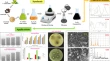
<p>A CHI 660C electrochemical workstation with a standard three-electrode system (Chenhua Instruments, Shanghai, China) was used for the one-step electrodeposition. A saturated calomel electrode in a saturated KCl solution and a platinum foil were used as the reference electrode and the counter electrode, respectively. Figure <figr fid="F1">1</figr> shows a schematic diagram of the synthesis processes. A thin layer of Au was deposited by evaporation onto one side of the through-hole AAO template to serve as the working electrode. Bi-Ni nanowire and nanocable arrays were electrodeposited into the AAO template from a solution containing 50 g/L NiSO<sub>4</sub>&#183;6H<sub>2</sub>O, 20 g/L H<sub>3</sub>BO<sub>3</sub>, 37.5 g/L Bi(NO<sub>3</sub>)<sub>3</sub>&#183;5H<sub>2</sub>O, 125 g/L C<sub>3</sub>H<sub>5</sub>(OH)<sub>3</sub>, 50 g/L C<sub>4</sub>H<sub>6</sub>O<sub>6</sub>, and 65 g/L KOH under constant voltage [CV] and constant current [CC] modes, respectively.</p>
<fig id="F1"><title><p>Figure 1</p></title><caption><p>Schematic for the synthesis of nanowires (top) and nanocables (bottom) via nanochannel-confined electrodeposition</p></caption><text>
   <p><b>Schematic for the synthesis of nanowires (top) and nanocables (bottom) via nanochannel-confined electrodeposition</b>. (<b>a</b>) Sputtering an Au layer on the bottom side of an AAO template. Electrodeposition process under (<b>b</b>) CV and (<b>c</b>) CC modes.</p>
</text><graphic file="1556-276X-7-130-1"/></fig>
</sec>
<sec><st><p>Characterization</p></st>
<p>The morphology of the oriented Bi-Ni nanowire and nanocable arrays was characterized using an S-4800 field-emission scanning electron microscope [FE-SEM] (Hitachi, Chiyoda-ku, Tokyo, Japan). Prior to SEM observation, several drops of a 1-M NaOH aqueous solution were added onto the sample to dissolve the AAO template. The residual solution on the surface of the template was rinsed with distilled water. The structure of the resulting material was characterized by X-ray diffraction [XRD] (Rigaku, Shibuya-ku, Tokyo, Japan) with Cu K&#945; radiation at room temperature. Further detailed structural information of the oriented Bi-Ni nanowire and nanocable arrays was obtained using a Tecnai G2 F20 U-TWIN field-emission transmission electron microscope [TEM] (FEI, Shanghai, China) equipped with an energy-dispersive X-ray spectroscopy [EDS] system, digital scanning attachment, and high-angle annular dark field [HAADF] detector. In this paper, we have focused on the structural and compositional analyses of the nanowire and nanocable distribution using a combination of EDS in a scanning electron transmission microscopy [STEM] mode. For TEM observation, the template was completely dissolved in a 2-M NaOH aqueous solution. The product was centrifuged, thoroughly washed with distilled water to remove residual NaOH, and then dispersed in alcohol with the aid of ultrasonic agitation for 30 min. After that, a drop of solution was dropped onto a copper grid covered by porous carbon.</p>
</sec>
</sec>
<sec><st><p>Results and discussion</p></st>
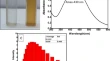
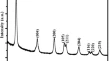
<p>Typical XRD patterns of the as-prepared Bi-Ni nanostructure product embedded in AAO pores are shown in Figure <figr fid="F2">2</figr>. All diffraction peaks can be indexed to rhombohedral-structured Bi and cubic-structured Ni, which match very well with the reported values for Bi and Ni crystals (PDF card, Bi 44-1246, Ni 04-0850). No signals of impurities or side products were detected in the product. Influenced by the diffraction of the amorphous AAO template, an increasing background at 2<it>&#952; </it>between 20&#176; and 30&#176; can be observed in the XRD pattern <abbrgrp><abbr bid="B25">25</abbr></abbrgrp>. Furthermore, the relative intensities of the peaks of nanowires are completely different from those of nanocables, implying that the different electrodeposition modes (CV or CC) have their own preferential crystal plane alignment when Bi and Ni nanostructures grow in the porous templates. It can be deduced that the reason may be that the growth orientation between the process of CV electrodeposition and that of CC electrodeposition is different <abbrgrp><abbr bid="B26">26</abbr></abbrgrp>.</p>
<fig id="F2"><title><p>Figure 2</p></title><caption><p>A representative XRD pattern of the as-prepared Bi-Ni nanostructures, nanowire (a) and nanocable (b)</p></caption><text>
   <p><b>A representative XRD pattern of the as-prepared Bi-Ni nanostructures, nanowire (a) and nanocable (b)</b>.</p>
</text><graphic file="1556-276X-7-130-2"/></fig>
<p>Figure <figr fid="F3">3</figr> shows typical SEM images of the Bi-Ni nanowire and nanocable products after the AAO template was removed. Large-area, continuous, smooth, highly ordered, and dense nanowire and nanocable arrays can be seen in Figure <figr fid="F3">3a, c</figr>, respectively. These arrays are all straight and parallel to each other and oriented vertically to the surface of the AAO template. The magnified images in Figure <figr fid="F3">3b, d</figr> show the morphologies of the nanowire/nanocables in a more distinguishable way. The size distribution of the as-prepared nanowires and nanocables are all uniform over the entire area observed, and the average diameter of the nanowires is about 50 nm in excellent consistency with the pore size dimension provided by the AAO template (as shown in Figure <figr fid="F3">3e, f</figr>).</p>
<fig id="F3"><title><p>Figure 3</p></title><caption><p>SEM images of the as-prepared Bi-Ni nanostructure arrays and AAO template</p></caption><text>
   <p><b>SEM images of the as-prepared Bi-Ni nanostructure arrays and AAO template</b>. Side views of (<b>a</b>, <b>b</b>) nanowires and (<b>c</b>, <b>d</b>) nanocables. (b) and (d) are the magnified images of (a) and (c), respectively. (<b>e</b>) and (<b>f</b>) are the front and cross section of the AAO template, respectively.</p>
</text><graphic file="1556-276X-7-130-3"/></fig>
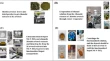
<p>Elemental mapping is one of the principal advantages of X-ray analysis as it provides clear and direct information regarding the distribution and quantity of each element in the sample. EDS image scanning across the whole nanostructure in the STEM mode was carried out to analyze the distribution of the chemical composition. Figure <figr fid="F4">4</figr> shows STEM images and elemental maps of the Bi-Ni nanowire (Figure <figr fid="F4">4a</figr>) and nanocable (Figure <figr fid="F4">4b</figr>) specimens pasted on a holey carbon film. It displays a uniform distribution of bismuth and nickel in the whole wire range (Figure <figr fid="F4">4aiii, aiv</figr>). Figure <figr fid="F4">4ai</figr> exhibits the corresponding STEM HAADF image of the nanowire. The acquisition of an EDS image scan was approximately 36 min, and the drift was corrected by the FEI acquisition software. Hence, all HAADF images after an EDS scan showed a noticeable beam damage (Figure <figr fid="F4">4ii</figr>) and also some sample drift.</p>
<fig id="F4"><title><p>Figure 4</p></title><caption><p>Images of a Bi-Ni nanowire (a) and nanocable (b) obtained using STEM</p></caption><text>
   <p><b>Images of a Bi-Ni nanowire (a) and nanocable (b) obtained using STEM</b>. STEM HAADF images of (i) a Bi-Ni nanowire and nanocable and (ii) after an EDS image scan of the marked area in (i). Elemental mapping of the (iii) nickel and (iv) bismuth X-ray intensities compositing along the nanowire and nanocable.</p>
</text><graphic file="1556-276X-7-130-4"/></fig>
<p>Figure <figr fid="F4">4b</figr> depicts the STEM images and elemental maps of the Bi-Ni nanocable specimen. As can be seen, nickel distribution is very uniform over the entire cable area (Figure <figr fid="F4">4biii</figr>); in contrast, bismuth tends to populate in the center of the cables (Figure <figr fid="F4">4biv</figr>). Figure <figr fid="F4">4bi</figr> gives the corresponding STEM HAADF image of the nanocable. Again, a minor amount of beam damage (Figure <figr fid="F4">4bii</figr>) and a sample drifting phenomenon were detected after the EDS scanning of these HAADF images.</p>
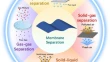
<p>To explain the preferential growth of Bi and Ni in the nanopores of an alumina template, we propose that the preferential deposition of nickel on the pore walls could be a consequence of a chemical complexation of the Ni metal ions through hydroxyl groups on the pore wall <abbrgrp><abbr bid="B27">27</abbr><abbr bid="B28">28</abbr></abbrgrp>, as shown in Figure <figr fid="F5">5a</figr>. Since the coupling constant of Bi<sup>3+</sup>/OH<sup>- </sup>(15.8) is almost two times bigger than that of Ni<sup>2+</sup>/OH<sup>- </sup>(8.55), Bi<sup>3+ </sup>ions are thermodynamically more stable than Ni<sup>2+ </sup>ions in a base solution. Therefore, in a CC mode, the Ni<sup>2+ </sup>ions are push aside by Bi<sup>3+ </sup>ions to the inner surface of AAO pores and deposited preferentially on the wall. This approach enables us to fabricate Bi-Ni core-shell nanocables by only one-step electrodeposition, and the ratio of Ni and Bi components in the nanocables can be easily controlled by varying the electrodeposition current density. The wall thickness and wall surface morphology of the nanotubes is also controllable since it simply depends on the Ni fraction. However, in the CV mode, both Ni<sup>2+ </sup>and Bi<sup>3+ </sup>were adsorbed on the pore wall due to the constant overpotential <abbrgrp><abbr bid="B29">29</abbr></abbrgrp> (shown in Figure <figr fid="F5">5b</figr>). As a result, Bi-Ni hybrid nanowires were obtained.</p>
<fig id="F5"><title><p>Figure 5</p></title><caption><p>The mechanism of forming Bi-Ni nanostructures under CC mode (a) and CV mode (b)</p></caption><text>
   <p><b>The mechanism of forming Bi-Ni nanostructures under CC mode (a) and CV mode (b)</b>.</p>
</text><graphic file="1556-276X-7-130-5"/></fig>
</sec>
<sec><st><p>Conclusions</p></st>
<p>In summary, a novel and convenient one-pot electrodeposition approach has been developed for precisely controlled fabrication of large-scale Bi-Ni hybrid nanowire and Bi-Ni core-shell nanocable arrays. During the reaction process, AAO is used as a shape-directing template. By simply changing the electrochemical deposition mode, desired Bi-Ni hybrid nanowires and Bi-Ni core-shell nanocables have been obtained in the CV and CC modes, respectively. The present synthesis strategy may be extended to controllable fabrication of other 1D metal/semiconductor heterojunctions and their arrays.</p>
</sec>
<sec><st><p>Abbreviations</p></st>
<p>AAO: anodic aluminum oxide; CC: constant current; CV: constant voltage; EDS: energy-dispersive X-ray spectroscopy; FE-SEM: field-emission scanning electron microscope; HAADF: high-angle annular dark field; STEM: scanning electron transmission microscopy; TEM: transmission electron microscope; XRD: X-ray diffraction.</p>
</sec>
<sec><st><p>Competing interests</p></st>
<p>The authors declare that they have no competing interests.</p>
</sec>
<sec><st><p>Authors' contributions</p></st>
<p>YJ carried out the nanowire and nanocable array experiment and prepared the manuscript. DY fabricated the anodic aluminum oxide membrane and participated in drafting the manuscript. BL provided the ideas on fabricated nanowire and nanocable arrays. SL provided the ideas on XRD analysis and participated in drafting the manuscript. MOT participated in drafting the manuscript. LZ conceived the study, participated in the experimental design and coordination, and helped draft the manuscript. All authors read and approved the final manuscript.</p>
</sec>
</bdy>
<bm>
<ack>
<sec><st><p>Acknowledgements</p></st>
<p>This work was supported by the National Natural Science Foundation of China (grant no. 20973044), the Ministry of Science and Technology of China (no. 2009AA03Z328 and no. 2009DPA41220), and the Chinese Academy of Sciences (no. KJCX2-YW-H21).</p>
</sec>
</ack>
<refgrp><bibl id="B1"><title><p>Aligned nanocables: controlled sheathing of CuO nanowires by a self-assembled tubular glycolipid</p></title><aug><au><snm>Zhou</snm><fnm>Y</fnm></au><au><snm>Kamiya</snm><fnm>S</fnm></au><au><snm>Minamikawa</snm><fnm>H</fnm></au><au><snm>Shimizu</snm><fnm>T</fnm></au></aug><source>Adv Mater</source><pubdate>2007</pubdate><volume>19</volume><fpage>4194</fpage><lpage>4197</lpage><xrefbib><pubid idtype="doi">10.1002/adma.200701189</pubid></xrefbib></bibl><bibl id="B2"><title><p>Conducting performance of individual Ag@C coaxial nanocables: ideal building blocks for interconnects in nanoscale devices</p></title><aug><au><snm>Xu</snm><fnm>WH</fnm></au><au><snm>Yu</snm><fnm>SH</fnm></au></aug><source>Small</source><pubdate>2009</pubdate><volume>5</volume><fpage>460</fpage><lpage>465</lpage><xrefbib><pubidlist><pubid idtype="doi">10.1002/smll.200801236</pubid><pubid idtype="pmpid" link="fulltext">19152360</pubid></pubidlist></xrefbib></bibl><bibl id="B3"><title><p>Selective tuning of the electronic properties of coaxial nanocables through exohedral doping</p></title><aug><au><snm>Souza</snm><fnm>AG</fnm></au><au><snm>Meunier</snm><fnm>V</fnm></au><au><snm>Terrones</snm><fnm>M</fnm></au><au><snm>Sumpter</snm><fnm>BG</fnm></au><au><snm>Barros</snm><fnm>EB</fnm></au><au><snm>Villalpando-Paez</snm><fnm>F</fnm></au><au><snm>Mendes</snm><fnm>J</fnm></au><au><snm>Kim</snm><fnm>YA</fnm></au><au><snm>Muramatsu</snm><fnm>H</fnm></au><au><snm>Hayashi</snm><fnm>T</fnm></au><au><snm>Endo</snm><fnm>M</fnm></au><au><snm>Dresselhaus</snm><fnm>MS</fnm></au></aug><source>Nano Lett</source><pubdate>2007</pubdate><volume>7</volume><fpage>2383</fpage><lpage>2388</lpage><xrefbib><pubidlist><pubid idtype="doi">10.1021/nl0710351</pubid><pubid idtype="pmpid" link="fulltext">17602599</pubid></pubidlist></xrefbib></bibl><bibl id="B4"><title><p>Devices and chemical sensing applications of metal oxide nanowires</p></title><aug><au><snm>Shen</snm><fnm>G</fnm></au><au><snm>Chen</snm><fnm>PC</fnm></au><au><snm>Ryu</snm><fnm>K</fnm></au><au><snm>Zhou</snm><fnm>C</fnm></au></aug><source>J Mater Chem</source><pubdate>2009</pubdate><volume>19</volume><fpage>828</fpage><lpage>839</lpage><xrefbib><pubid idtype="doi">10.1039/b816543b</pubid></xrefbib></bibl><bibl id="B5"><title><p>Diameter-dependent electron mobility of InAs nanowires</p></title><aug><au><snm>Ford</snm><fnm>AC</fnm></au><au><snm>Ho</snm><fnm>JC</fnm></au><au><snm>Chueh</snm><fnm>YL</fnm></au><au><snm>Tseng</snm><fnm>YC</fnm></au><au><snm>Fan</snm><fnm>ZY</fnm></au><au><snm>Guo</snm><fnm>J</fnm></au><au><snm>Bokor</snm><fnm>J</fnm></au><au><snm>Javey</snm><fnm>A</fnm></au></aug><source>Nano Lett</source><pubdate>2009</pubdate><volume>9</volume><fpage>360</fpage><lpage>365</lpage><xrefbib><pubidlist><pubid idtype="doi">10.1021/nl803154m</pubid><pubid idtype="pmpid" link="fulltext">19143505</pubid></pubidlist></xrefbib></bibl><bibl id="B6"><title><p>Semiconductor nanowires for energy conversion</p></title><aug><au><snm>Hochbaum</snm><fnm>AI</fnm></au><au><snm>Yang</snm><fnm>PD</fnm></au></aug><source>Chem Rev</source><pubdate>2010</pubdate><volume>110</volume><fpage>527</fpage><lpage>546</lpage><xrefbib><pubidlist><pubid idtype="doi">10.1021/cr900075v</pubid><pubid idtype="pmpid" link="fulltext">19817361</pubid></pubidlist></xrefbib></bibl><bibl id="B7"><title><p>Sub-20 nm Si/Ge superlattice nanowires by metal-assisted etching</p></title><aug><au><snm>Geyer</snm><fnm>N</fnm></au><au><snm>Huang</snm><fnm>ZP</fnm></au><au><snm>Fuhrmann</snm><fnm>B</fnm></au><au><snm>Grimm</snm><fnm>S</fnm></au><au><snm>Reiche</snm><fnm>M</fnm></au><au><snm>Nguyen-Duc</snm><fnm>TK</fnm></au><au><snm>de Boor</snm><fnm>J</fnm></au><au><snm>Leipner</snm><fnm>HS</fnm></au><au><snm>Werner</snm><fnm>P</fnm></au><au><snm>Gosele</snm><fnm>U</fnm></au></aug><source>Nano Lett</source><pubdate>2009</pubdate><volume>9</volume><fpage>3106</fpage><lpage>3110</lpage><xrefbib><pubidlist><pubid idtype="doi">10.1021/nl900751g</pubid><pubid idtype="pmpid" link="fulltext">19655719</pubid></pubidlist></xrefbib></bibl><bibl id="B8"><title><p>Synthesis and photoluminescence of InGaO<sub>3</sub>(ZnO)(m) nanowires with perfect superlattice structure</p></title><aug><au><snm>Li</snm><fnm>DP</fnm></au><au><snm>Wang</snm><fnm>GZ</fnm></au><au><snm>Yang</snm><fnm>QH</fnm></au><au><snm>Xie</snm><fnm>X</fnm></au></aug><source>J Phys Chem C</source><pubdate>2009</pubdate><volume>113</volume><fpage>21512</fpage><lpage>21515</lpage><xrefbib><pubid idtype="doi">10.1021/jp906381h</pubid></xrefbib></bibl><bibl id="B9"><title><p>Template epitaxial growth of thermoelectric Bi/BiSb superlattice nanowires by charge-controlled pulse electrodeposition</p></title><aug><au><snm>Dou</snm><fnm>XC</fnm></au><au><snm>Li</snm><fnm>GH</fnm></au><au><snm>Lei</snm><fnm>HC</fnm></au><au><snm>Huang</snm><fnm>XH</fnm></au><au><snm>Li</snm><fnm>L</fnm></au><au><snm>Boyd</snm><fnm>IW</fnm></au></aug><source>J Electrochem Soc</source><pubdate>2009</pubdate><volume>156</volume><fpage>K149</fpage><lpage>K154</lpage><xrefbib><pubid idtype="doi">10.1149/1.3156639</pubid></xrefbib></bibl><bibl id="B10"><title><p>Nanobelts of semiconducting oxides</p></title><aug><au><snm>Pan</snm><fnm>ZW</fnm></au><au><snm>Dai</snm><fnm>ZR</fnm></au><au><snm>Wang</snm><fnm>ZL</fnm></au></aug><source>Science</source><pubdate>2001</pubdate><volume>291</volume><fpage>1947</fpage><lpage>1949</lpage><xrefbib><pubidlist><pubid idtype="doi">10.1126/science.1058120</pubid><pubid idtype="pmpid">11239151</pubid></pubidlist></xrefbib></bibl><bibl id="B11"><title><p>Single-crystal nanorings formed by epitaxial self-coiling of polar nanobelts</p></title><aug><au><snm>Kong</snm><fnm>XY</fnm></au><au><snm>Ding</snm><fnm>Y</fnm></au><au><snm>Yang</snm><fnm>R</fnm></au><au><snm>Wang</snm><fnm>ZL</fnm></au></aug><source>Science</source><pubdate>2004</pubdate><volume>303</volume><fpage>1348</fpage><lpage>1351</lpage><xrefbib><pubidlist><pubid idtype="doi">10.1126/science.1092356</pubid><pubid idtype="pmpid">14988559</pubid></pubidlist></xrefbib></bibl><bibl id="B12"><title><p>Spontaneous polarization-induced nanohelixes, nanosprings, and nanorings of piezoelectric nanobelts</p></title><aug><au><snm>Kong</snm><fnm>XY</fnm></au><au><snm>Wang</snm><fnm>ZL</fnm></au></aug><source>Nano Lett</source><pubdate>2003</pubdate><volume>3</volume><fpage>1625</fpage><lpage>1631</lpage><xrefbib><pubid idtype="doi">10.1021/nl034463p</pubid></xrefbib></bibl><bibl id="B13"><title><p>Stable and highly sensitive gas sensors based on semiconducting oxide nanobelts</p></title><aug><au><snm>Comini</snm><fnm>E</fnm></au><au><snm>Faglia</snm><fnm>G</fnm></au><au><snm>Sberveglieri</snm><fnm>G</fnm></au><au><snm>Pan</snm><fnm>ZW</fnm></au><au><snm>Wang</snm><fnm>ZL</fnm></au></aug><source>Appl Phys Lett</source><pubdate>2002</pubdate><volume>81</volume><fpage>1869</fpage><lpage>1871</lpage><xrefbib><pubid idtype="doi">10.1063/1.1504867</pubid></xrefbib></bibl><bibl id="B14"><title><p>Direct electrodeposition of highly dense Bi/Sb superlattice nanowire arrays</p></title><aug><au><snm>Xue</snm><fnm>FH</fnm></au><au><snm>Fei</snm><fnm>GT</fnm></au><au><snm>Wu</snm><fnm>B</fnm></au><au><snm>Cui</snm><fnm>P</fnm></au><au><snm>Zhang</snm><fnm>LD</fnm></au></aug><source>J Am Chem Soc</source><pubdate>2005</pubdate><volume>127</volume><fpage>15348</fpage><lpage>15349</lpage><xrefbib><pubidlist><pubid idtype="doi">10.1021/ja0547073</pubid><pubid idtype="pmpid" link="fulltext">16262380</pubid></pubidlist></xrefbib></bibl><bibl id="B15"><title><p>Controllable template synthesis of Ni/Cu nanocable and Ni nanotube arrays: a one-step coelectrodeposition and electrochemical etching method</p></title><aug><au><snm>Wang</snm><fnm>QT</fnm></au><au><snm>Wang</snm><fnm>GZ</fnm></au><au><snm>Han</snm><fnm>XH</fnm></au><au><snm>Wang</snm><fnm>XP</fnm></au><au><snm>Hou</snm><fnm>JG</fnm></au></aug><source>J Phys Chem B</source><pubdate>2005</pubdate><volume>109</volume><fpage>23326</fpage><lpage>23329</lpage><xrefbib><pubidlist><pubid idtype="doi">10.1021/jp0530202</pubid><pubid idtype="pmpid" link="fulltext">16375302</pubid></pubidlist></xrefbib></bibl><bibl id="B16"><title><p>Fabrication of Pd-Fe nanowires with a high aspect ratio by AAO template-assisted electrodeposition</p></title><aug><au><snm>Tasaltin</snm><fnm>N</fnm></au><au><snm>Ozturk</snm><fnm>S</fnm></au><au><snm>Kilinc</snm><fnm>N</fnm></au><au><snm>Yuzer</snm><fnm>H</fnm></au><au><snm>Ozturk</snm><fnm>ZZ</fnm></au></aug><source>J Alloy Compd</source><pubdate>2011</pubdate><volume>509</volume><fpage>3894</fpage><lpage>3898</lpage><xrefbib><pubid idtype="doi">10.1016/j.jallcom.2010.12.153</pubid></xrefbib></bibl><bibl id="B17"><title><p>Voltammetric behavior of Pd(II) and Ni(II) ions and electrodeposition of PdNi bimetal in <it>N</it>-butyl-<it>N</it>-methylpyrrolidinium dicyanamide ionic liquid</p></title><aug><au><snm>Huang</snm><fnm>HY</fnm></au><au><snm>Chen</snm><fnm>PY</fnm></au></aug><source>Electrochim Acta</source><pubdate>2011</pubdate><volume>56</volume><fpage>2336</fpage><lpage>2343</lpage><xrefbib><pubid idtype="doi">10.1016/j.electacta.2010.11.042</pubid></xrefbib></bibl><bibl id="B18"><title><p>Photoinduced charge transfer in ZnO/Cu<sub>2</sub>O heterostructure films studied by surface photovoltage technique</p></title><aug><au><snm>Jiang</snm><fnm>TF</fnm></au><au><snm>Xie</snm><fnm>TF</fnm></au><au><snm>Zhang</snm><fnm>Y</fnm></au><au><snm>Chen</snm><fnm>LP</fnm></au><au><snm>Peng</snm><fnm>LL</fnm></au><au><snm>Li</snm><fnm>HY</fnm></au><au><snm>Wang</snm><fnm>DJ</fnm></au></aug><source>Phys Chem Chem Phys</source><pubdate>2010</pubdate><volume>12</volume><fpage>15476</fpage><lpage>15481</lpage><xrefbib><pubid idtype="pmpid" link="fulltext">20972495</pubid></xrefbib></bibl><bibl id="B19"><title><p>Synthesis of SnS thin films via galvanostatic electrodeposition and fabrication of CdS/SnS heterostructure for photovoltaic applications</p></title><aug><au><snm>Ghosh</snm><fnm>B</fnm></au><au><snm>Roy</snm><fnm>R</fnm></au><au><snm>Chowdhury</snm><fnm>S</fnm></au><au><snm>Banerjee</snm><fnm>P</fnm></au><au><snm>Das</snm><fnm>S</fnm></au></aug><source>Appl Surf Sci</source><pubdate>2010</pubdate><volume>256</volume><fpage>4328</fpage><lpage>4333</lpage><xrefbib><pubid idtype="doi">10.1016/j.apsusc.2010.02.025</pubid></xrefbib></bibl><bibl id="B20"><title><p>Enhanced solar water-splitting efficiency using core/sheath heterostructure CdS/TiO<sub>2 </sub>nanotube arrays</p></title><aug><au><snm>Yin</snm><fnm>YX</fnm></au><au><snm>Jin</snm><fnm>ZG</fnm></au><au><snm>Hou</snm><fnm>F</fnm></au></aug><source>Nanotechnology</source><pubdate>2007</pubdate><volume>18</volume><fpage>495608</fpage><xrefbib><pubidlist><pubid idtype="doi">10.1088/0957-4484/18/49/495608</pubid><pubid idtype="pmpid" link="fulltext">20442481</pubid></pubidlist></xrefbib></bibl><bibl id="B21"><title><p>Large magnetoresistance of electrodeposited single-crystal bismuth thin films</p></title><aug><au><snm>Yang</snm><fnm>FY</fnm></au><au><snm>Liu</snm><fnm>K</fnm></au><au><snm>Hong</snm><fnm>KM</fnm></au><au><snm>Reich</snm><fnm>DH</fnm></au><au><snm>Searson</snm><fnm>PC</fnm></au><au><snm>Chien</snm><fnm>CL</fnm></au></aug><source>Science</source><pubdate>1999</pubdate><volume>284</volume><fpage>1335</fpage><lpage>1337</lpage><xrefbib><pubidlist><pubid idtype="doi">10.1126/science.284.5418.1335</pubid><pubid idtype="pmpid">10334983</pubid></pubidlist></xrefbib></bibl><bibl id="B22"><title><p>Structural and magneto-transport properties of electrodeposited bismuth nanowires</p></title><aug><au><snm>Liu</snm><fnm>K</fnm></au><au><snm>Chien</snm><fnm>CL</fnm></au><au><snm>Searson</snm><fnm>PC</fnm></au><au><snm>Kui</snm><fnm>YZ</fnm></au></aug><source>Appl Phys Lett</source><pubdate>1998</pubdate><volume>73</volume><fpage>1436</fpage><lpage>1438</lpage><xrefbib><pubid idtype="doi">10.1063/1.122378</pubid></xrefbib></bibl><bibl id="B23"><title><p>Direct observation of the semimetal-to-semiconductor transition of individual single-crystal bismuth nanowires grown by on-film formation of nanowires</p></title><aug><au><snm>Lee</snm><fnm>S</fnm></au><au><snm>Ham</snm><fnm>J</fnm></au><au><snm>Jeon</snm><fnm>K</fnm></au><au><snm>Noh</snm><fnm>JS</fnm></au><au><snm>Lee</snm><fnm>W</fnm></au></aug><source>Nanotechnology</source><pubdate>2010</pubdate><volume>21</volume><fpage>405701</fpage><xrefbib><pubidlist><pubid idtype="doi">10.1088/0957-4484/21/40/405701</pubid><pubid idtype="pmpid" link="fulltext">20823499</pubid></pubidlist></xrefbib></bibl><bibl id="B24"><title><p>Ferromagnetic resonance studies of Ni nanowire arrays</p></title><aug><au><snm>Ebels</snm><fnm>U</fnm></au><au><snm>Duvail</snm><fnm>JL</fnm></au><au><snm>Wigen</snm><fnm>PE</fnm></au><au><snm>Piraux</snm><fnm>L</fnm></au><au><snm>Buda</snm><fnm>LD</fnm></au><au><snm>Ounadjela</snm><fnm>K</fnm></au></aug><source>Phys Rev B</source><pubdate>2001</pubdate><volume>64</volume><fpage>144421</fpage></bibl><bibl id="B25"><title><p>Controlled fabrication of SnO<sub>2 </sub>arrays of well-aligned nanotubes and nanowires</p></title><aug><au><snm>Shi</snm><fnm>LA</fnm></au><au><snm>Xu</snm><fnm>YM</fnm></au><au><snm>Li</snm><fnm>QA</fnm></au></aug><source>Nanoscale</source><pubdate>2010</pubdate><volume>2</volume><fpage>2104</fpage><lpage>2108</lpage><xrefbib><pubidlist><pubid idtype="doi">10.1039/c0nr00279h</pubid><pubid idtype="pmpid" link="fulltext">20689879</pubid></pubidlist></xrefbib></bibl><bibl id="B26"><title><p>Large-scale fabrication of single crystalline tin nanowire arrays</p></title><aug><au><snm>Luo</snm><fnm>B</fnm></au><au><snm>Yang</snm><fnm>DC</fnm></au><au><snm>Liang</snm><fnm>MH</fnm></au><au><snm>Zhi</snm><fnm>LJ</fnm></au></aug><source>Nanoscale</source><pubdate>2010</pubdate><volume>2</volume><fpage>1661</fpage><lpage>1664</lpage><xrefbib><pubidlist><pubid idtype="doi">10.1039/c0nr00206b</pubid><pubid idtype="pmpid" link="fulltext">20820696</pubid></pubidlist></xrefbib></bibl><bibl id="B27"><aug><au><snm>Dzombach</snm><fnm>DA</fnm></au><au><snm>Morel</snm><fnm>FMM</fnm></au></aug><source>Surface Complexation Modeling: Hydrous Ferric Oxide</source><publisher>New York: Wiley</publisher><pubdate>1990</pubdate></bibl><bibl id="B28"><aug><au><snm>Stumm</snm><fnm>W</fnm></au></aug><source>Chemistry of Solid Water Interface</source><publisher>New York: Wiley</publisher><pubdate>1992</pubdate></bibl><bibl id="B29"><title><p>Electrochemical growth of single-crystal metal nanowires via a two-dimensional nucleation and growth mechanism</p></title><aug><au><snm>Tian</snm><fnm>ML</fnm></au><au><snm>Wang</snm><fnm>JU</fnm></au><au><snm>Kurtz</snm><fnm>J</fnm></au><au><snm>Mallouk</snm><fnm>TE</fnm></au><au><snm>Chan</snm><fnm>MHW</fnm></au></aug><source>Nano Lett</source><pubdate>2003</pubdate><volume>3</volume><fpage>919</fpage><lpage>923</lpage><xrefbib><pubid idtype="doi">10.1021/nl034217d</pubid></xrefbib></bibl></refgrp>
</bm>
</art>