<?xml version='1.0'?>
<!DOCTYPE art SYSTEM 'http://www.biomedcentral.com/xml/article.dtd'>
<art>
<ui>1556-276X-6-604</ui>
<ji>1556-276X</ji>
<fm>
<dochead>Nano Express</dochead>
<bibl>
<title><p>Analytical expression of Kondo temperature in quantum dot embedded in Aharonov-Bohm ring</p></title>
<aug>
<au ca="yes" id="A1"><snm>Yoshii</snm><fnm>Ryosuke</fnm><insr iid="I1"/><email>festina.lente@a3.keio.jp</email></au>
<au id="A2"><snm>Eto</snm><fnm>Mikio</fnm><insr iid="I1"/><email>eto@rk.phys.keio.ac.jp</email></au>
</aug>
<insg>
<ins id="I1"><p>Faculty of Science and Technology, Keio University, 3-14-1 Hiyoshi, Kohoku-ku, Yokohama 223-8522, Japan</p></ins>
</insg>
<source>Nanoscale Research Letters</source>
<issn>1556-276X</issn>
<pubdate>2011</pubdate>
<volume>6</volume>
<issue>1</issue>
<fpage>604</fpage>
<url>http://www.nanoscalereslett.com/content/6/1/604</url>
<xrefbib><pubidlist><pubid idtype="doi">10.1186/1556-276X-6-604</pubid><pubid idtype="pmpid">22112300</pubid></pubidlist></xrefbib></bibl>
<history><rec><date><day>3</day><month>9</month><year>2010</year></date></rec><acc><date><day>23</day><month>11</month><year>2011</year></date></acc><pub><date><day>23</day><month>11</month><year>2011</year></date></pub></history><cpyrt><year>2011</year><collab>Yoshii and Eto; licensee Springer.</collab><note>This is an Open Access article distributed under the terms of the Creative Commons Attribution License (<url>http://creativecommons.org/licenses/by/2.0</url>), which permits unrestricted use, distribution, and reproduction in any medium, provided the original work is properly cited.</note></cpyrt>
<abs>
<sec><st><p>Abstract</p></st>
<p>We theoretically study the Kondo effect in a quantum dot embedded in an Aharonov-Bohm ring, using the "poor man's" scaling method. Analytical expressions of the Kondo temperature <it>T</it><sub>K </sub>are given as a function of magnetic flux &#934; penetrating the ring. In this Kondo problem, there are two characteristic lengths, <inline-formula><m:math name="1556-276X-6-604-i1" xmlns:m="http://www.w3.org/1998/Math/MathML"><m:msub>
   <m:mrow>
      <m:mi>L</m:mi>
   </m:mrow>
   <m:mrow>
      <m:mstyle class="text">
         <m:mtext class="textsf" mathvariant="sans-serif">c</m:mtext>
      </m:mstyle>
   </m:mrow>
</m:msub>
<m:mo class="MathClass-rel">=</m:mo>
<m:mi>&#8463;</m:mi>
<m:msub>
   <m:mrow>
      <m:mi>v</m:mi>
   </m:mrow>
   <m:mrow>
      <m:mstyle class="text">
         <m:mtext class="textsf" mathvariant="sans-serif">F</m:mtext>
      </m:mstyle>
   </m:mrow>
</m:msub>
<m:mo class="MathClass-bin">&#8725;</m:mo>
<m:mo class="MathClass-rel">|</m:mo>
<m:msub>
   <m:mrow>
      <m:mover accent="true">
         <m:mrow>
            <m:mi>&#949;</m:mi>
         </m:mrow>
         <m:mo class="MathClass-op">&#771;</m:mo>
      </m:mover>
   </m:mrow>
   <m:mrow>
      <m:mn>0</m:mn>
   </m:mrow>
</m:msub>
<m:mo class="MathClass-rel">|</m:mo>
</m:math>
</inline-formula> and <it>L</it><sub>K </sub>= <it>&#295;v</it><sub>F </sub>= <it>T</it><sub>K</sub>, where <it>v</it><sub>F </sub>is the Fermi velocity and <inline-formula><m:math name="1556-276X-6-604-i2" xmlns:m="http://www.w3.org/1998/Math/MathML"><m:msub>
   <m:mrow>
      <m:mover accent="true">
         <m:mrow>
            <m:mi>&#949;</m:mi>
         </m:mrow>
         <m:mo class="MathClass-op">&#771;</m:mo>
      </m:mover>
   </m:mrow>
   <m:mrow>
      <m:mn>0</m:mn>
   </m:mrow>
</m:msub>
</m:math>
</inline-formula> is the renormalized energy level in the quantum dot. The former is the screening length of the charge fluctuation and the latter is that of the spin fluctuation, i.e., size of Kondo screening cloud. We obtain diferent expressions of <it>T</it><sub>K</sub>(&#934;) for (i) <it>L</it><sub>c </sub>&#8810; <it>L</it><sub>K </sub>&#8810; <it>L</it>, (ii) <it>L</it><sub>c </sub>&#8810; <it>L </it>&#8810; <it>L</it><sub>K</sub>, and (iii) <it>L </it>&#8810; <it>L</it><sub>c </sub>&#8810; <it>L</it><sub>K</sub>, where <it>L </it>is the size of the ring. <it>T</it><sub>K </sub>is remarkably modulated by &#934; in cases (ii) and (iii), whereas it hardly depends on &#934; in case (i).</p>
<p>PACS numbers:</p>
</sec>
</abs>
</fm>
<meta><classifications><classification id="ICSNN_2010" subtype="theme_series_title" type="BMC">International Conference on Superlattices, Nanostructures and Nanodevices (ICSNN 2010)</classification><classification id="ICSNN_2010" subtype="theme_series_editor" type="BMC"/></classifications></meta><bdy>
<sec><st><p>Introduction</p></st>
<p>Since the first observation of the Kondo effect in semiconductor quantum dots <abbrgrp><abbr bid="B1">1</abbr><abbr bid="B2">2</abbr><abbr bid="B3">3</abbr></abbrgrp>, various aspects of Kondo physics have been revealed, owing to the artificial tunability and flexibility of the systems, e.g., an enhanced Kondo effect with an even number of electrons at the spin-singlet-triplet degeneracy <abbrgrp><abbr bid="B4">4</abbr></abbrgrp>, the SU(4) Kondo effect with <it>S </it>= 1/2 and orbital degeneracy <abbrgrp><abbr bid="B5">5</abbr></abbrgrp>, and the bonding and antibonding states between the Kondo resonant levels in coupled quantum dots <abbrgrp><abbr bid="B6">6</abbr><abbr bid="B7">7</abbr></abbrgrp>. One of the major issues which still remain unsolved in the Kondo physics is the observation of the Kondo singlet state, so-called Kondo screening cloud. The size of the screening cloud is evaluated as <it>L</it><sub>K </sub>= <it>&#295;v</it><sub>F</sub>/<it>T</it><sub>K</sub>, where <it>v</it><sub>F </sub>is the Fermi velocity and <it>T</it><sub>K </sub>is the Kondo temperature. There have been several theoretical works on <it>L</it><sub>K</sub>, e.g., ring-size dependence of the persistent current in an isolated ring with an embedded quantum dot <abbrgrp><abbr bid="B8">8</abbr></abbrgrp>, Friedel oscillation around a magnetic impurity in metal <abbrgrp><abbr bid="B9">9</abbr></abbrgrp>, and spin-spin correlation function <abbrgrp><abbr bid="B10">10</abbr><abbr bid="B11">11</abbr></abbrgrp>.</p>
<p>We focus on the Kondo effect in a quantum dot embedded in an Aharonov-Bohm (AB) ring. In this system, the conductance shows an asymmetric resonance as a function of energy level in the quantum dot, so-called Fano-Kondo effect. This is due to the coexistence of one-body interference effect and many-body Kondo effect, which was studied by the equation-of-motion method with the Green function <abbrgrp><abbr bid="B12">12</abbr></abbrgrp>, the numerical renormalization group method <abbrgrp><abbr bid="B13">13</abbr></abbrgrp>, the Bethe ansatz <abbrgrp><abbr bid="B14">14</abbr></abbrgrp>, the density-matrix renormalization group method <abbrgrp><abbr bid="B15">15</abbr></abbrgrp>, etc. This Fano-Kondo resonance was observed experimentally <abbrgrp><abbr bid="B16">16</abbr></abbrgrp>. The interference effect on the value of <it>T</it><sub>K</sub>, however, has not been fully understood <abbrgrp><abbr bid="B17">17</abbr><abbr bid="B18">18</abbr></abbrgrp>.</p>
<p>In our previous work <abbrgrp><abbr bid="B19">19</abbr></abbrgrp>, we examined this problem in the small limit of AB ring using the scaling method <abbrgrp><abbr bid="B20">20</abbr></abbrgrp>. Our theoretical method is as follows. First, we create an equivalent model in which a quantum dot is coupled to a single lead. The AB interference effect is involved in the flux-dependent density of states in the lead. Second, the two-stage scaling method is applied to the reduced model, to renormalize the energy level in the quantum dot by taking into account the charge fluctuation and evaluate <it>T</it><sub>K </sub>by taking spin fluctuation <abbrgrp><abbr bid="B21">21</abbr></abbrgrp>. This method yields <it>T</it><sub>K </sub>in an analytical form.</p>
<p>The purpose of this article is to derive an analytical expression of <it>T</it><sub>K </sub>for the finite size of the AB ring, using our theoretical method. We find two characteristic lengths. One is the screening length of the charge fluctuation, <inline-formula><m:math xmlns:m="http://www.w3.org/1998/Math/MathML" name="1556-276X-6-604-i1"><m:msub><m:mrow><m:mi>L</m:mi></m:mrow><m:mrow><m:mstyle class="text"><m:mtext class="textsf" mathvariant="sans-serif">c</m:mtext></m:mstyle></m:mrow></m:msub> <m:mo class="MathClass-rel">=</m:mo> <m:mi>&#8463;</m:mi><m:msub><m:mrow><m:mi>v</m:mi></m:mrow><m:mrow><m:mstyle class="text"><m:mtext class="textsf" mathvariant="sans-serif">F</m:mtext></m:mstyle></m:mrow></m:msub><m:mo class="MathClass-bin">&#8725;</m:mo><m:mo class="MathClass-rel">|</m:mo><m:msub><m:mrow><m:mover accent="true"><m:mrow><m:mi>&#949;</m:mi></m:mrow><m:mo class="MathClass-op">&#771;</m:mo></m:mover></m:mrow><m:mrow><m:mn>0</m:mn></m:mrow></m:msub><m:mo class="MathClass-rel">|</m:mo></m:math>
</inline-formula> with <inline-formula><m:math xmlns:m="http://www.w3.org/1998/Math/MathML" name="1556-276X-6-604-i2"><m:msub><m:mrow><m:mover accent="true"><m:mrow><m:mi>&#949;</m:mi></m:mrow><m:mo class="MathClass-op">&#771;</m:mo></m:mover></m:mrow><m:mrow><m:mn>0</m:mn></m:mrow></m:msub></m:math>
</inline-formula> being the renormalized energy level in the quantum dot, which appears in the first stage of the scaling. The other is the size of Kondo screening cloud, <it>L</it><sub>K</sub>, which is naturally obtained in the second stage. In consequence, the analytical expression of <it>T</it><sub>K </sub>is different for situations (i) <it>L</it><sub>c </sub>&#8810; <it>L</it><sub>K </sub>&#8810; <it>L</it>, (ii) <it>L</it><sub>c </sub>&#8810; <it>L </it>&#8810; <it>L</it><sub>K</sub>, and (iii) <it>L </it>&#8810; <it>L</it><sub>c </sub>&#8810; <it>L</it><sub>K</sub>, where <it>L </it>is the size of the ring. We show that <it>T</it><sub>K </sub>strongly depends on the magnetic flux &#934; penetrating the AB ring in cases (ii) and (iii), whereas it hardly depends on &#934; in case (i).</p>
</sec>
<sec><st><p>Model</p></st>
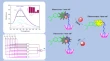
<p>Our model is shown in Figure <figr fid="F1">1a</figr>. A quantum dot with an energy level <it>&#949;</it><sub>0 </sub>is connected to two external leads by tunnel couplings, <it>V</it><sub>L </sub>and <it>V</it><sub>R</sub>. Another arm of the AB ring (reference arm) and external leads are represented by a one-dimensional tight-binding model with transfer integral -<it>t </it>and lattice constant <it>a</it>. The size of the ring is given by <it>L </it>= (2<it>l </it>+ 1)<it>a</it>. The reference arm includes a tunnel barrier with transmission probability of <it>T</it><sub>b </sub>= 4<it>x</it>/(1 + <it>x</it>)<sup>2 </sup>with <it>x </it>= (<it>W</it>/<it>t</it>)<sup>2</sup>. The AB phase is denoted by <it>&#981; </it>= 2<it>&#960;</it>&#934;/&#934;<sub>0</sub>, with flux quantum &#934;<sub>0 </sub>= <it>h</it>/<it>e</it>. The Hamiltonian is</p>
<fig id="F1"><title><p>Figure 1</p></title><caption><p>(a) Model for an Aharonov-Bohm (AB) ring with an embedded quantum dot</p></caption><text>
   <p><b>(a) Model for an Aharonov-Bohm (AB) ring with an embedded quantum dot</b>. A quantum dot with an energy level <it>&#949;</it><sub>0 </sub>is connected to two external leads by tunnel couplings, <it>V<sub>L </sub></it>and <it>V<sub>R</sub></it>. Another arm of the AB ring (reference arm) and external leads are represented by a one-dimensional tight-binding model. The reference arm includes a tunnel barrier with transfer integral <it>W</it>. The magnetic flux &#934; penetrating the ring is considered as an AB phase <it>&#981; </it>= 2<it>&#960;</it>&#934;/&#934;<sub>0 </sub>with flux quantum &#934;<sub>0 </sub>= <it>h</it>/<it>e</it>. <b>(b) </b>The density of states in the lead for the reduced model, <it>&#957;</it>(<it>&#949;<sub>k</sub></it>) in Eq. (6). <it>&#957;</it>(<it>&#949;<sub>k</sub></it>) oscillates with the period of <it>&#949;</it><sub>T</sub>, the Thouless energy for the ballistic systems. Its amplitude and phase depend on the AB phase <it>&#981;</it>.</p>
</text><graphic file="1556-276X-6-604-1"/></fig>
<p><display-formula id="M1"><m:math name="1556-276X-6-604-i3" xmlns:m="http://www.w3.org/1998/Math/MathML"><m:mrow>
   <m:msup>
      <m:mrow>
         <m:mi>H</m:mi>
      </m:mrow>
      <m:mrow>
         <m:mrow>
            <m:mo class="MathClass-open">(</m:mo>
            <m:mrow>
               <m:mn>0</m:mn>
            </m:mrow>
            <m:mo class="MathClass-close">)</m:mo>
         </m:mrow>
      </m:mrow>
   </m:msup>
   <m:mo class="MathClass-rel">=</m:mo>
   <m:msub>
      <m:mrow>
         <m:mi>H</m:mi>
      </m:mrow>
      <m:mrow>
         <m:mstyle class="text">
            <m:mtext class="textsf" mathvariant="sans-serif">dot</m:mtext>
         </m:mstyle>
      </m:mrow>
   </m:msub>
   <m:mo class="MathClass-bin">+</m:mo>
   <m:msub>
      <m:mrow>
         <m:mi>H</m:mi>
      </m:mrow>
      <m:mrow>
         <m:mstyle class="text">
            <m:mtext class="textsf" mathvariant="sans-serif">leads&#160;+&#160;ring</m:mtext>
         </m:mstyle>
      </m:mrow>
   </m:msub>
   <m:mo class="MathClass-bin">+</m:mo>
   <m:msub>
      <m:mrow>
         <m:mi>H</m:mi>
      </m:mrow>
      <m:mrow>
         <m:mstyle class="text">
            <m:mtext class="textsf" mathvariant="sans-serif">T</m:mtext>
         </m:mstyle>
      </m:mrow>
   </m:msub>
   <m:mo class="MathClass-punc">,</m:mo>
</m:mrow>
</m:math>
</display-formula></p>
<p><display-formula id="M2"><m:math name="1556-276X-6-604-i4" xmlns:m="http://www.w3.org/1998/Math/MathML"><m:mrow>
   <m:msub>
      <m:mrow>
         <m:mi>H</m:mi>
      </m:mrow>
      <m:mrow>
         <m:mstyle class="text">
            <m:mtext class="textsf" mathvariant="sans-serif">dot</m:mtext>
         </m:mstyle>
      </m:mrow>
   </m:msub>
   <m:mo class="MathClass-rel">=</m:mo>
   <m:munder class="msub">
      <m:mrow>
         <m:mo mathsize="big"> &#8721;</m:mo>
      </m:mrow>
      <m:mrow>
         <m:mi>&#963;</m:mi>
      </m:mrow>
   </m:munder>
   <m:msub>
      <m:mrow>
         <m:mi>&#949;</m:mi>
      </m:mrow>
      <m:mrow>
         <m:mn>0</m:mn>
      </m:mrow>
   </m:msub>
   <m:msubsup>
      <m:mrow>
         <m:mi>d</m:mi>
      </m:mrow>
      <m:mrow>
         <m:mi>&#963;</m:mi>
      </m:mrow>
      <m:mrow>
         <m:mo class="MathClass-bin">&#8224;</m:mo>
      </m:mrow>
   </m:msubsup>
   <m:msub>
      <m:mrow>
         <m:mi>d</m:mi>
      </m:mrow>
      <m:mrow>
         <m:mi>&#963;</m:mi>
      </m:mrow>
   </m:msub>
   <m:mo class="MathClass-bin">+</m:mo>
   <m:mi>U</m:mi>
   <m:msub>
      <m:mrow>
         <m:mover accent="true">
            <m:mrow>
               <m:mi>n</m:mi>
            </m:mrow>
            <m:mo>^</m:mo>
         </m:mover>
      </m:mrow>
      <m:mrow>
         <m:mi mathvariant="normal">&#8593;</m:mi>
      </m:mrow>
   </m:msub>
   <m:msub>
      <m:mrow>
         <m:mover accent="true">
            <m:mrow>
               <m:mi>n</m:mi>
            </m:mrow>
            <m:mo>^</m:mo>
         </m:mover>
      </m:mrow>
      <m:mrow>
         <m:mi mathvariant="normal">&#8595;</m:mi>
      </m:mrow>
   </m:msub>
   <m:mo class="MathClass-punc">,</m:mo>
</m:mrow>
</m:math>
</display-formula></p>
<p><display-formula id="M3"><m:math name="1556-276X-6-604-i5" xmlns:m="http://www.w3.org/1998/Math/MathML"><m:mtable columnalign="left" class="align-star">
   <m:mtr>
      <m:mtd columnalign="right" class="align-odd">
         <m:msub>
            <m:mrow>
               <m:mi>H</m:mi>
            </m:mrow>
            <m:mrow>
               <m:mstyle class="text">
                  <m:mtext class="textsf" mathvariant="sans-serif">leads&#160;+&#160;ring</m:mtext>
               </m:mstyle>
            </m:mrow>
         </m:msub>
         <m:mo class="MathClass-rel">=</m:mo>
      </m:mtd>
      <m:mtd class="align-even">
         <m:munder class="msub">
            <m:mrow>
               <m:mo mathsize="big">&#8721;</m:mo>
            </m:mrow>
            <m:mrow>
               <m:mi>i</m:mi>
               <m:mo class="MathClass-rel">&#8800;</m:mo>
               <m:mn>0</m:mn>
            </m:mrow>
         </m:munder>
         <m:munder class="msub">
            <m:mrow>
               <m:mo mathsize="big">&#8721;</m:mo>
            </m:mrow>
            <m:mrow>
               <m:mi>&#963;</m:mi>
            </m:mrow>
         </m:munder>
         <m:mrow>
            <m:mo class="MathClass-open">(</m:mo>
            <m:mrow>
               <m:mo class="MathClass-bin">-</m:mo>
               <m:mi>t</m:mi>
               <m:msubsup>
                  <m:mrow>
                     <m:mi>a</m:mi>
                  </m:mrow>
                  <m:mrow>
                     <m:mi>i</m:mi>
                     <m:mo class="MathClass-bin">+</m:mo>
                     <m:mn>1</m:mn>
                     <m:mo class="MathClass-punc">,</m:mo>
                     <m:mi>&#963;</m:mi>
                  </m:mrow>
                  <m:mrow>
                     <m:mo class="MathClass-bin">&#8224;</m:mo>
                  </m:mrow>
               </m:msubsup>
               <m:msub>
                  <m:mrow>
                     <m:mi>a</m:mi>
                  </m:mrow>
                  <m:mrow>
                     <m:mi>i</m:mi>
                     <m:mo class="MathClass-punc">,</m:mo>
                     <m:mi>&#963;</m:mi>
                  </m:mrow>
               </m:msub>
               <m:mo class="MathClass-bin">+</m:mo>
               <m:mstyle class="text">
                  <m:mtext class="textsf" mathvariant="sans-serif">h</m:mtext>
               </m:mstyle>
               <m:mo class="MathClass-punc">.</m:mo>
               <m:mstyle class="text">
                  <m:mtext class="textsf" mathvariant="sans-serif">c</m:mtext>
               </m:mstyle>
               <m:mo class="MathClass-punc">.</m:mo>
            </m:mrow>
            <m:mo class="MathClass-close">)</m:mo>
         </m:mrow>
         <m:mspace width="2em"/>
      </m:mtd>
      <m:mtd columnalign="right" class="align-label"/>
      <m:mtd class="align-label">
         <m:mspace width="2em"/>
      </m:mtd>
   </m:mtr>
   <m:mtr>
      <m:mtd columnalign="right" class="align-odd"/>
      <m:mtd class="align-even">
         <m:mo class="MathClass-bin">+</m:mo>
         <m:munder class="msub">
            <m:mrow>
               <m:mo mathsize="big"> &#8721;</m:mo>
            </m:mrow>
            <m:mrow>
               <m:mi>&#963;</m:mi>
            </m:mrow>
         </m:munder>
         <m:mrow>
            <m:mo class="MathClass-open">(</m:mo>
            <m:mrow>
               <m:mi>W</m:mi>
               <m:msup>
                  <m:mrow>
                     <m:mi>e</m:mi>
                  </m:mrow>
                  <m:mrow>
                     <m:mi>i</m:mi>
                     <m:mi>&#981;</m:mi>
                  </m:mrow>
               </m:msup>
               <m:msubsup>
                  <m:mrow>
                     <m:mi>a</m:mi>
                  </m:mrow>
                  <m:mrow>
                     <m:mn>1</m:mn>
                     <m:mo class="MathClass-punc">,</m:mo>
                     <m:mi>&#963;</m:mi>
                  </m:mrow>
                  <m:mrow>
                     <m:mo class="MathClass-bin">&#8224;</m:mo>
                  </m:mrow>
               </m:msubsup>
               <m:msub>
                  <m:mrow>
                     <m:mi>a</m:mi>
                  </m:mrow>
                  <m:mrow>
                     <m:mn>0</m:mn>
                     <m:mo class="MathClass-punc">,</m:mo>
                     <m:mi>&#963;</m:mi>
                  </m:mrow>
               </m:msub>
               <m:mo class="MathClass-bin">+</m:mo>
               <m:mstyle class="text">
                  <m:mtext class="textsf" mathvariant="sans-serif">h</m:mtext>
               </m:mstyle>
               <m:mo class="MathClass-punc">.</m:mo>
               <m:mstyle class="text">
                  <m:mtext class="textsf" mathvariant="sans-serif">c</m:mtext>
               </m:mstyle>
               <m:mo class="MathClass-punc">.</m:mo>
            </m:mrow>
            <m:mo class="MathClass-close">)</m:mo>
         </m:mrow>
         <m:mo class="MathClass-punc">,</m:mo>
         <m:mspace width="2em"/>
      </m:mtd>
      <m:mtd columnalign="right" class="align-label"/>
      <m:mtd class="align-label">
         <m:mspace width="2em"/>
      </m:mtd>
   </m:mtr>
   <m:mtr>
      <m:mtd columnalign="right" class="align-odd"/>
      <m:mtd class="align-even">
         <m:mspace width="2em"/>
      </m:mtd>
      <m:mtd columnalign="right" class="align-label"/>
   </m:mtr>
</m:mtable>
</m:math>
</display-formula></p>
<p><display-formula id="M4"><m:math name="1556-276X-6-604-i6" xmlns:m="http://www.w3.org/1998/Math/MathML"><m:mrow>
   <m:msub>
      <m:mrow>
         <m:mi>H</m:mi>
      </m:mrow>
      <m:mrow>
         <m:mstyle class="text">
            <m:mtext class="textsf" mathvariant="sans-serif">T</m:mtext>
         </m:mstyle>
      </m:mrow>
   </m:msub>
   <m:mo class="MathClass-rel">=</m:mo>
   <m:munder class="msub">
      <m:mrow>
         <m:mo mathsize="big"> &#8721;</m:mo>
      </m:mrow>
      <m:mrow>
         <m:mi>&#963;</m:mi>
      </m:mrow>
   </m:munder>
   <m:mrow>
      <m:mo class="MathClass-open">(</m:mo>
      <m:mrow>
         <m:msub>
            <m:mrow>
               <m:mi>V</m:mi>
            </m:mrow>
            <m:mrow>
               <m:mstyle class="text">
                  <m:mtext class="textsf" mathvariant="sans-serif">L</m:mtext>
               </m:mstyle>
            </m:mrow>
         </m:msub>
         <m:msubsup>
            <m:mrow>
               <m:mi>d</m:mi>
            </m:mrow>
            <m:mrow>
               <m:mi>&#963;</m:mi>
            </m:mrow>
            <m:mrow>
               <m:mo class="MathClass-bin">&#8224;</m:mo>
            </m:mrow>
         </m:msubsup>
         <m:msub>
            <m:mrow>
               <m:mi>a</m:mi>
            </m:mrow>
            <m:mrow>
               <m:mo class="MathClass-bin">-</m:mo>
               <m:mi>l</m:mi>
               <m:mo class="MathClass-punc">,</m:mo>
               <m:mi>&#963;</m:mi>
            </m:mrow>
         </m:msub>
         <m:mo class="MathClass-bin">+</m:mo>
         <m:msub>
            <m:mrow>
               <m:mi>V</m:mi>
            </m:mrow>
            <m:mrow>
               <m:mstyle class="text">
                  <m:mtext class="textsf" mathvariant="sans-serif">R</m:mtext>
               </m:mstyle>
            </m:mrow>
         </m:msub>
         <m:msubsup>
            <m:mrow>
               <m:mi>d</m:mi>
            </m:mrow>
            <m:mrow>
               <m:mi>&#963;</m:mi>
            </m:mrow>
            <m:mrow>
               <m:mo class="MathClass-bin">&#8224;</m:mo>
            </m:mrow>
         </m:msubsup>
         <m:msub>
            <m:mrow>
               <m:mi>a</m:mi>
            </m:mrow>
            <m:mrow>
               <m:mi>l</m:mi>
               <m:mo class="MathClass-bin">+</m:mo>
               <m:mn>1</m:mn>
               <m:mo class="MathClass-punc">,</m:mo>
               <m:mi>&#963;</m:mi>
            </m:mrow>
         </m:msub>
         <m:mo class="MathClass-bin">+</m:mo>
         <m:mstyle class="text">
            <m:mtext class="textsf" mathvariant="sans-serif">h</m:mtext>
         </m:mstyle>
         <m:mo class="MathClass-punc">.</m:mo>
         <m:mstyle class="text">
            <m:mtext class="textsf" mathvariant="sans-serif">c</m:mtext>
         </m:mstyle>
         <m:mo class="MathClass-punc">.</m:mo>
      </m:mrow>
      <m:mo class="MathClass-close">)</m:mo>
   </m:mrow>
   <m:mo class="MathClass-punc">,</m:mo>
</m:mrow>
</m:math>
</display-formula></p>
<p>where <inline-formula><m:math name="1556-276X-6-604-i7" xmlns:m="http://www.w3.org/1998/Math/MathML"><m:msubsup>
   <m:mrow>
      <m:mi>d</m:mi>
   </m:mrow>
   <m:mrow>
      <m:mi>&#963;</m:mi>
   </m:mrow>
   <m:mrow>
      <m:mo class="MathClass-bin">&#8224;</m:mo>
   </m:mrow>
</m:msubsup>
</m:math>
</inline-formula> and <it>d<sub>&#963; </sub></it>are creation and annihilation operators, respectively, of an electron in the quantum dot with spin &#963;. <inline-formula><m:math name="1556-276X-6-604-i8" xmlns:m="http://www.w3.org/1998/Math/MathML"><m:mrow>
   <m:msubsup>
      <m:mrow>
         <m:mi>a</m:mi>
      </m:mrow>
      <m:mrow>
         <m:mi>i</m:mi>
         <m:mo class="MathClass-punc">,</m:mo>
         <m:mi>&#963;</m:mi>
      </m:mrow>
      <m:mrow>
         <m:mo class="MathClass-bin">&#8224;</m:mo>
      </m:mrow>
   </m:msubsup>
</m:mrow>
</m:math>
</inline-formula> and <it>a</it><sub><it>i</it>,<it>&#963; </it></sub>are those at site <it>i </it>with spin <it>&#963; </it>in the leads and the reference arm of the ring. <inline-formula><m:math name="1556-276X-6-604-i9" xmlns:m="http://www.w3.org/1998/Math/MathML"><m:msub>
   <m:mrow>
      <m:mover accent="true">
         <m:mrow>
            <m:mi>n</m:mi>
         </m:mrow>
         <m:mo class="MathClass-op">^</m:mo>
      </m:mover>
   </m:mrow>
   <m:mrow>
      <m:mi>&#963;</m:mi>
   </m:mrow>
</m:msub>
<m:mo class="MathClass-rel">=</m:mo>
<m:msubsup>
   <m:mrow>
      <m:mi>d</m:mi>
   </m:mrow>
   <m:mrow>
      <m:mi>&#963;</m:mi>
   </m:mrow>
   <m:mrow>
      <m:mo class="MathClass-bin">&#8224;</m:mo>
   </m:mrow>
</m:msubsup>
<m:msub>
   <m:mrow>
      <m:mi>d</m:mi>
   </m:mrow>
   <m:mrow>
      <m:mi>&#963;</m:mi>
   </m:mrow>
</m:msub>
</m:math>
</inline-formula> is the number operator in the dot with spin <it>&#963;</it>. <it>U </it>is the charging energy in the dot.</p>
<p>We consider the Coulomb blockade regime with one electron in the dot, -<it>&#949;</it><sub>0</sub>, <it>&#949;</it><sub>0 </sub>+ <it>U </it>&#8811; &#915;, where &#915; = &#915;<sub>L </sub>+ &#915; is the level broadening. <inline-formula><m:math name="1556-276X-6-604-i10" xmlns:m="http://www.w3.org/1998/Math/MathML"><m:msub>
   <m:mrow>
      <m:mi>&#915;</m:mi>
   </m:mrow>
   <m:mrow>
      <m:mi>&#945;</m:mi>
   </m:mrow>
</m:msub>
<m:mo class="MathClass-rel">=</m:mo>
<m:mi>&#960;</m:mi>
<m:msub>
   <m:mrow>
      <m:mi>&#957;</m:mi>
   </m:mrow>
   <m:mrow>
      <m:mn>0</m:mn>
   </m:mrow>
</m:msub>
<m:msubsup>
   <m:mrow>
      <m:mi>V</m:mi>
   </m:mrow>
   <m:mrow>
      <m:mi>&#945;</m:mi>
   </m:mrow>
   <m:mrow>
      <m:mn>2</m:mn>
   </m:mrow>
</m:msubsup>
</m:math>
</inline-formula>, with <it>&#957;</it><sub>0 </sub>being the local density of states at the end of semi-infinite leads. We analyze the vicinity of the electron-hole symmetry of -<it>&#949;</it><sub>0 </sub>&#8776; <it>&#949;</it><sub>0 </sub>+ <it>U</it>.</p>
<p>We create an equivalent model to the Hamiltonian (1), following Ref. <abbrgrp><abbr bid="B19">19</abbr></abbrgrp>. First, we diagonalize the Hamiltonian <it>H</it><sub>leads+ring </sub>for the outer region of the quantum dot. There are two eigenstates for a given wavenumber <it>k</it>; |<it>&#968;k</it>,&#8594;&#9002; represents an incident wave from the left and partly reflected to the left and partly transmitted to the right, whereas |<it>&#968;<sub>k</sub></it>,&#8592;&#9002; represents an incident wave from the right and partly reflected to the right and partly transmitted to the left. Next, we perform a unitary transformation for these eigenstates</p>
<p><display-formula><m:math name="1556-276X-6-604-i11" xmlns:m="http://www.w3.org/1998/Math/MathML"><m:mrow>
   <m:mo stretchy="false">(</m:mo>
   <m:mo>&#8739;</m:mo>
   <m:msub>
      <m:mover accent="true">
         <m:mi>&#968;</m:mi>
         <m:mo>&#176;</m:mo>
      </m:mover>
      <m:mi>k</m:mi>
   </m:msub>
   <m:mo>&#9002;</m:mo>
   <m:mtext>&#8195;</m:mtext>
   <m:mo>&#8739;</m:mo>
   <m:msub>
      <m:mi>&#968;</m:mi>
      <m:mi>k</m:mi>
   </m:msub>
   <m:mo>&#9002;</m:mo>
   <m:mo stretchy="false">)</m:mo>
   <m:mo>=</m:mo>
   <m:mo stretchy="false">(</m:mo>
   <m:mo>&#8739;</m:mo>
   <m:msub>
      <m:mi>&#968;</m:mi>
      <m:mrow>
         <m:mi>k</m:mi>
         <m:mo>,</m:mo>
         <m:mo>&#8594;</m:mo>
      </m:mrow>
   </m:msub>
   <m:mo>&#9002;</m:mo>
   <m:mtext>&#8195;</m:mtext>
   <m:mo>&#8739;</m:mo>
   <m:msub>
      <m:mi>&#968;</m:mi>
      <m:mrow>
         <m:mi>k</m:mi>
         <m:mo>,</m:mo>
         <m:mo>&#8592;</m:mo>
      </m:mrow>
   </m:msub>
   <m:mo>&#9002;</m:mo>
   <m:mo stretchy="false">)</m:mo>
   <m:mtext>&#8201;</m:mtext>
   <m:mrow>
      <m:mo>(</m:mo>
      <m:mrow>
         <m:mtable>
            <m:mtr>
               <m:mtd>
                  <m:mrow>
                     <m:msub>
                        <m:mi>A</m:mi>
                        <m:mi>k</m:mi>
                     </m:msub>
                  </m:mrow>
               </m:mtd>
               <m:mtd>
                  <m:mrow>
                     <m:msubsup>
                        <m:mi>B</m:mi>
                        <m:mi>k</m:mi>
                        <m:mo>*</m:mo>
                     </m:msubsup>
                  </m:mrow>
               </m:mtd>
            </m:mtr>
            <m:mtr>
               <m:mtd>
                  <m:mrow>
                     <m:msub>
                        <m:mi>B</m:mi>
                        <m:mi>k</m:mi>
                     </m:msub>
                  </m:mrow>
               </m:mtd>
               <m:mtd>
                  <m:mrow>
                     <m:mo>&#8722;</m:mo>
                     <m:msubsup>
                        <m:mi>A</m:mi>
                        <m:mi>k</m:mi>
                        <m:mo>*</m:mo>
                     </m:msubsup>
                  </m:mrow>
               </m:mtd>
            </m:mtr>
         </m:mtable>
      </m:mrow>
      <m:mo>)</m:mo>
   </m:mrow>
   <m:mo>,</m:mo>
</m:mrow>
</m:math></display-formula></p>
<p>where <it>A<sub>k </sub></it>and <it>B<sub>k </sub></it>are determined so that <inline-formula><m:math name="1556-276X-6-604-i12" xmlns:m="http://www.w3.org/1998/Math/MathML"><m:mrow>
   <m:mo class="MathClass-open">&#9001;</m:mo>
   <m:mrow>
      <m:mi>d</m:mi>
      <m:mo class="MathClass-rel">|</m:mo>
      <m:msub>
         <m:mrow>
            <m:mi>H</m:mi>
         </m:mrow>
         <m:mrow>
            <m:mstyle class="text">
               <m:mtext class="textsf" mathvariant="sans-serif">T</m:mtext>
            </m:mstyle>
         </m:mrow>
      </m:msub>
      <m:mo class="MathClass-rel">|</m:mo>
      <m:msub>
         <m:mrow>
            <m:mover accent="true">
               <m:mrow>
                  <m:mi>&#968;</m:mi>
               </m:mrow>
               <m:mo class="MathClass-op">&#772;</m:mo>
            </m:mover>
         </m:mrow>
         <m:mrow>
            <m:mi>k</m:mi>
         </m:mrow>
      </m:msub>
   </m:mrow>
   <m:mo class="MathClass-close">&#9002;</m:mo>
</m:mrow>
<m:mo class="MathClass-rel">=</m:mo>
<m:mn>0</m:mn>
</m:math>
</inline-formula> with dot state |<it>d</it>&#9002;. In consequence, mode |<it>&#968;<sub>k</sub></it>&#9002; is coupled to the dot via <it>H</it><sub>T</sub>, whereas <inline-formula><m:math name="1556-276X-6-604-i13" xmlns:m="http://www.w3.org/1998/Math/MathML"><m:mrow>
   <m:mo>&#8739;</m:mo>
   <m:msub>
      <m:mover accent="true">
         <m:mi>&#968;</m:mi>
         <m:mo>&#176;</m:mo>
      </m:mover>
      <m:mi>k</m:mi>
   </m:msub>
   <m:mo>&#9002;</m:mo>
</m:mrow>
</m:math></inline-formula> is completely decoupled.</p>
<p>Neglecting the decoupled mode, we obtain the equivalent model in which a quantum dot is coupled to a single lead. In a wide-band limit, the Hamiltonian is written as</p>
<p><display-formula id="M5"><m:math name="1556-276X-6-604-i14" xmlns:m="http://www.w3.org/1998/Math/MathML"><m:mtable columnalign="left" class="align-star">
   <m:mtr>
      <m:mtd columnalign="right" class="align-odd">
         <m:mi>H</m:mi>
         <m:mo class="MathClass-rel">=</m:mo>
      </m:mtd>
      <m:mtd class="align-even">
         <m:munder class="msub">
            <m:mrow>
               <m:mo mathsize="big">&#8721;</m:mo>
            </m:mrow>
            <m:mrow>
               <m:mi>&#963;</m:mi>
            </m:mrow>
         </m:munder>
         <m:msub>
            <m:mrow>
               <m:mi>&#949;</m:mi>
            </m:mrow>
            <m:mrow>
               <m:mn>0</m:mn>
            </m:mrow>
         </m:msub>
         <m:msubsup>
            <m:mrow>
               <m:mi>d</m:mi>
            </m:mrow>
            <m:mrow>
               <m:mi>&#963;</m:mi>
            </m:mrow>
            <m:mrow>
               <m:mo class="MathClass-bin">&#8224;</m:mo>
            </m:mrow>
         </m:msubsup>
         <m:msub>
            <m:mrow>
               <m:mi>d</m:mi>
            </m:mrow>
            <m:mrow>
               <m:mi>&#963;</m:mi>
            </m:mrow>
         </m:msub>
         <m:mo class="MathClass-bin">+</m:mo>
         <m:mi>U</m:mi>
         <m:msub>
            <m:mrow>
               <m:mover accent="true">
                  <m:mrow>
                     <m:mi>n</m:mi>
                  </m:mrow>
                  <m:mo>^</m:mo>
               </m:mover>
            </m:mrow>
            <m:mrow>
               <m:mi mathvariant="normal">&#8593;</m:mi>
            </m:mrow>
         </m:msub>
         <m:msub>
            <m:mrow>
               <m:mover accent="true">
                  <m:mrow>
                     <m:mi>n</m:mi>
                  </m:mrow>
                  <m:mo>^</m:mo>
               </m:mover>
            </m:mrow>
            <m:mrow>
               <m:mi mathvariant="normal">&#8595;</m:mi>
            </m:mrow>
         </m:msub>
         <m:mo class="MathClass-bin">+</m:mo>
         <m:munder class="msub">
            <m:mrow>
               <m:mo mathsize="big"> &#8721;</m:mo>
            </m:mrow>
            <m:mrow>
               <m:mi>k</m:mi>
               <m:mo class="MathClass-punc">,</m:mo>
               <m:mi>&#963;</m:mi>
            </m:mrow>
         </m:munder>
         <m:msub>
            <m:mrow>
               <m:mi>&#949;</m:mi>
            </m:mrow>
            <m:mrow>
               <m:mi>k</m:mi>
            </m:mrow>
         </m:msub>
         <m:msubsup>
            <m:mrow>
               <m:mi>a</m:mi>
            </m:mrow>
            <m:mrow>
               <m:mi>k</m:mi>
               <m:mo class="MathClass-punc">,</m:mo>
               <m:mi>&#963;</m:mi>
            </m:mrow>
            <m:mrow>
               <m:mo class="MathClass-bin">&#8224;</m:mo>
            </m:mrow>
         </m:msubsup>
         <m:msub>
            <m:mrow>
               <m:mi>a</m:mi>
            </m:mrow>
            <m:mrow>
               <m:mi>k</m:mi>
               <m:mo class="MathClass-punc">,</m:mo>
               <m:mi>&#963;</m:mi>
            </m:mrow>
         </m:msub>
         <m:mspace width="2em"/>
      </m:mtd>
      <m:mtd columnalign="right" class="align-label"/>
      <m:mtd class="align-label">
         <m:mspace width="2em"/>
      </m:mtd>
   </m:mtr>
   <m:mtr>
      <m:mtd columnalign="right" class="align-odd"/>
      <m:mtd class="align-even">
         <m:mo class="MathClass-bin">+</m:mo>
         <m:munder class="msub">
            <m:mrow>
               <m:mo mathsize="big"> &#8721;</m:mo>
            </m:mrow>
            <m:mrow>
               <m:mi>k</m:mi>
               <m:mo class="MathClass-punc">,</m:mo>
               <m:mi>&#963;</m:mi>
            </m:mrow>
         </m:munder>
         <m:mi>V</m:mi>
         <m:mrow>
            <m:mo class="MathClass-open">(</m:mo>
            <m:mrow>
               <m:msubsup>
                  <m:mrow>
                     <m:mi>d</m:mi>
                  </m:mrow>
                  <m:mrow>
                     <m:mi>&#963;</m:mi>
                  </m:mrow>
                  <m:mrow>
                     <m:mo class="MathClass-bin">&#8224;</m:mo>
                  </m:mrow>
               </m:msubsup>
               <m:msub>
                  <m:mrow>
                     <m:mi>a</m:mi>
                  </m:mrow>
                  <m:mrow>
                     <m:mi>k</m:mi>
                     <m:mo class="MathClass-punc">,</m:mo>
                     <m:mi>&#963;</m:mi>
                  </m:mrow>
               </m:msub>
               <m:mo class="MathClass-bin">+</m:mo>
               <m:mstyle class="text">
                  <m:mtext class="textsf" mathvariant="sans-serif">h</m:mtext>
               </m:mstyle>
               <m:mo class="MathClass-punc">.</m:mo>
               <m:mstyle class="text">
                  <m:mtext class="textsf" mathvariant="sans-serif">c</m:mtext>
               </m:mstyle>
               <m:mo class="MathClass-punc">.</m:mo>
            </m:mrow>
            <m:mo class="MathClass-close">)</m:mo>
         </m:mrow>
         <m:mo class="MathClass-punc">,</m:mo>
         <m:mspace width="2em"/>
      </m:mtd>
      <m:mtd columnalign="right" class="align-label"/>
      <m:mtd class="align-label">
         <m:mspace width="2em"/>
      </m:mtd>
   </m:mtr>
   <m:mtr>
      <m:mtd columnalign="right" class="align-odd"/>
      <m:mtd class="align-even">
         <m:mspace width="2em"/>
      </m:mtd>
      <m:mtd columnalign="right" class="align-label"/>
   </m:mtr>
</m:mtable>
</m:math>
</display-formula></p>
<p>with <inline-formula><m:math name="1556-276X-6-604-i15" xmlns:m="http://www.w3.org/1998/Math/MathML"><m:mi>V</m:mi>
<m:mo class="MathClass-rel">=</m:mo>
<m:msqrt>
   <m:mrow>
      <m:msubsup>
         <m:mrow>
            <m:mi>V</m:mi>
         </m:mrow>
         <m:mrow>
            <m:mstyle class="text">
               <m:mtext class="textsf" mathvariant="sans-serif">L</m:mtext>
            </m:mstyle>
         </m:mrow>
         <m:mrow>
            <m:mn>2</m:mn>
         </m:mrow>
      </m:msubsup>
      <m:mo class="MathClass-bin">+</m:mo>
      <m:msubsup>
         <m:mrow>
            <m:mi>V</m:mi>
         </m:mrow>
         <m:mrow>
            <m:mstyle class="text">
               <m:mtext class="textsf" mathvariant="sans-serif">R</m:mtext>
            </m:mstyle>
         </m:mrow>
         <m:mrow>
            <m:mn>2</m:mn>
         </m:mrow>
      </m:msubsup>
   </m:mrow>
</m:msqrt>
</m:math>
</inline-formula> and density of states in the lead</p>
<p><display-formula id="M6"><m:math name="1556-276X-6-604-i16" xmlns:m="http://www.w3.org/1998/Math/MathML"><m:mrow>
   <m:mi>&#957;</m:mi>
   <m:mrow>
      <m:mo class="MathClass-open">(</m:mo>
      <m:mrow>
         <m:msub>
            <m:mrow>
               <m:mi>&#949;</m:mi>
            </m:mrow>
            <m:mrow>
               <m:mi>k</m:mi>
            </m:mrow>
         </m:msub>
      </m:mrow>
      <m:mo class="MathClass-close">)</m:mo>
   </m:mrow>
   <m:mo class="MathClass-rel">=</m:mo>
   <m:msub>
      <m:mrow>
         <m:mi>&#957;</m:mi>
      </m:mrow>
      <m:mrow>
         <m:mn>0</m:mn>
      </m:mrow>
   </m:msub>
   <m:mfenced separators="" open="[" close="]">
      <m:mrow>
         <m:mn>1</m:mn>
         <m:mo class="MathClass-bin">-</m:mo>
         <m:msub>
            <m:mrow>
               <m:mi>R</m:mi>
            </m:mrow>
            <m:mrow>
               <m:mstyle class="text">
                  <m:mtext class="textsf" mathvariant="sans-serif">b</m:mtext>
               </m:mstyle>
            </m:mrow>
         </m:msub>
         <m:mo class="qopname">cos</m:mo>
         <m:mfrac>
            <m:mrow>
               <m:msub>
                  <m:mrow>
                     <m:mi>&#949;</m:mi>
                  </m:mrow>
                  <m:mrow>
                     <m:mi>k</m:mi>
                  </m:mrow>
               </m:msub>
               <m:mo class="MathClass-bin">+</m:mo>
               <m:msub>
                  <m:mrow>
                     <m:mi>D</m:mi>
                  </m:mrow>
                  <m:mrow>
                     <m:mn>0</m:mn>
                  </m:mrow>
               </m:msub>
            </m:mrow>
            <m:mrow>
               <m:msub>
                  <m:mrow>
                     <m:mi>&#949;</m:mi>
                  </m:mrow>
                  <m:mrow>
                     <m:mstyle class="text">
                        <m:mtext class="textsf" mathvariant="sans-serif">T</m:mtext>
                     </m:mstyle>
                  </m:mrow>
               </m:msub>
            </m:mrow>
         </m:mfrac>
         <m:mo class="MathClass-bin">-</m:mo>
         <m:mi>P</m:mi>
         <m:mrow>
            <m:mo class="MathClass-open">(</m:mo>
            <m:mrow>
               <m:mi>&#981;</m:mi>
            </m:mrow>
            <m:mo class="MathClass-close">)</m:mo>
         </m:mrow>
         <m:mo class="qopname">sin</m:mo>
         <m:mfrac>
            <m:mrow>
               <m:msub>
                  <m:mrow>
                     <m:mi>&#949;</m:mi>
                  </m:mrow>
                  <m:mrow>
                     <m:mi>k</m:mi>
                  </m:mrow>
               </m:msub>
               <m:mo class="MathClass-bin">+</m:mo>
               <m:msub>
                  <m:mrow>
                     <m:mi>D</m:mi>
                  </m:mrow>
                  <m:mrow>
                     <m:mn>0</m:mn>
                  </m:mrow>
               </m:msub>
            </m:mrow>
            <m:mrow>
               <m:msub>
                  <m:mrow>
                     <m:mi>&#949;</m:mi>
                  </m:mrow>
                  <m:mrow>
                     <m:mstyle class="text">
                        <m:mtext class="textsf" mathvariant="sans-serif">T</m:mtext>
                     </m:mstyle>
                  </m:mrow>
               </m:msub>
            </m:mrow>
         </m:mfrac>
      </m:mrow>
   </m:mfenced>
   <m:mo class="MathClass-punc">.</m:mo>
</m:mrow>
</m:math>
</display-formula></p>
<p>Here, <it>D</it><sub>0 </sub>is the half of the band width, <it>k</it><sub>F </sub>is the Fermi wavenumber, <it>R</it><sub>b </sub>= 1 - <it>T</it><sub>b</sub>, and</p>
<p><display-formula id="M7"><m:math name="1556-276X-6-604-i17" xmlns:m="http://www.w3.org/1998/Math/MathML"><m:mrow>
   <m:mi>P</m:mi>
   <m:mrow>
      <m:mo class="MathClass-open">(</m:mo>
      <m:mrow>
         <m:mi>&#981;</m:mi>
      </m:mrow>
      <m:mo class="MathClass-close">)</m:mo>
   </m:mrow>
   <m:mo class="MathClass-rel">=</m:mo>
   <m:msqrt>
      <m:mrow>
         <m:mi>&#945;</m:mi>
         <m:msub>
            <m:mrow>
               <m:mi>T</m:mi>
            </m:mrow>
            <m:mrow>
               <m:mstyle class="text">
                  <m:mtext class="textsf" mathvariant="sans-serif">b</m:mtext>
               </m:mstyle>
            </m:mrow>
         </m:msub>
         <m:mrow>
            <m:mo class="MathClass-open">(</m:mo>
            <m:mrow>
               <m:mn>1</m:mn>
               <m:mo class="MathClass-bin">-</m:mo>
               <m:msub>
                  <m:mrow>
                     <m:mi>T</m:mi>
                  </m:mrow>
                  <m:mrow>
                     <m:mstyle class="text">
                        <m:mtext class="textsf" mathvariant="sans-serif">b</m:mtext>
                     </m:mstyle>
                  </m:mrow>
               </m:msub>
            </m:mrow>
            <m:mo class="MathClass-close">)</m:mo>
         </m:mrow>
      </m:mrow>
   </m:msqrt>
   <m:mo class="qopname">cos</m:mo>
   <m:mi>&#981;</m:mi>
   <m:mo class="MathClass-punc">,</m:mo>
</m:mrow>
</m:math>
</display-formula></p>
<p>where <it>&#945; </it>= 4&#915;<sub>L</sub>&#915;<sub>R</sub>/(&#915;<sub>L </sub>+ &#915;<sub>R</sub>)<sup>2 </sup>is the asymmetric factor for the tunnel couplings of quantum dot.</p>
<p>The AB interference effect is involved in the flux-dependent density of states in the lead, <it>&#965;</it>(<it>&#949;<sub>k</sub></it>) in Eq. (6). As schematically shown in Figure <figr fid="F1">1(b</figr>), <it>&#965;</it>(<it>&#949;<sub>k</sub></it>) oscillates with the period of <it>&#949;</it><sub>T</sub>, where <it>&#949;</it><sub>T </sub>= <it>&#295;v</it><sub>F</sub>/<it>L </it>is the Thouless energy for the ballistic systems. We assume that <it>&#949;</it><sub>T </sub>&#8810; <it>D</it><sub>0</sub>.</p>
</sec>
<sec><st><p>Scaling analysis</p></st>
<p>We apply the two-stage scaling method to the reduced model. In the first stage, we consider the charge fluctuation at energies of <it>D </it>&#8811; |<it>&#949;</it><sub>0</sub>|. In this region, the number of electrons in the quantum dot is 0, 1, or 2. We reduce the energy scale from bandwidth <it>D</it><sub>0 </sub>to <it>D</it><sub>1 </sub>where the charge fluctuation is quenched. By integrating out the excitations in the energy range of <it>D</it><sub>1 </sub><it>&lt; D &lt; D</it><sub>0</sub>, we renormalize the energy level in the quantum dot <it>&#949;</it><sub>0</sub>. In the second stage of scaling, we consider the spin fluctuation at low energies of <it>D &lt; D</it><sub>1</sub>. We make the Kondo Hamiltonian and evaluate the Kondo temperature.</p>
</sec>
<sec><st><p>Renormalization of energy level</p></st>
<p>In the first stage, the charge fluctuation is taken into account. We denote <it>E</it><sub>0</sub>, <it>E</it><sub>1</sub>, and <it>E</it><sub>2 </sub>for the energies of the empty state, singly occupied state, and doubly occupied state in the quantum dot, respectively. Then the energy levels in the quantum dot are given by <it>&#949;</it><sub>0 </sub>= <it>E</it><sub>1 </sub>- <it>E</it><sub>0 </sub>for the first electron and <it>&#949;</it><sub>1 </sub>= <it>E</it><sub>2 </sub>- <it>E</it><sub>1 </sub>for the second electron. When the bandwidth is reduced from <it>D </it>to <it>D </it>- |d<it>D</it>|, <it>E</it><sub>0</sub>, <it>E</it><sub>1</sub>, and <it>E</it><sub>2 </sub>are renormalized to <it>E</it><sub>0 </sub>+ d<it>E</it><sub>0</sub>, <it>E</it><sub>1 </sub>+ d<it>E</it><sub>1</sub>, and <it>E</it><sub>2 </sub>+ d<it>E</it><sub>2</sub>, where</p>
<p><display-formula><m:math name="1556-276X-6-604-i18" xmlns:m="http://www.w3.org/1998/Math/MathML"><m:mrow>
   <m:mtable class="gathered">
      <m:mtr>
         <m:mtd>
            <m:mstyle class="text">
               <m:mtext class="textsf" mathvariant="sans-serif">d</m:mtext>
            </m:mstyle>
            <m:msub>
               <m:mrow>
                  <m:mi>E</m:mi>
               </m:mrow>
               <m:mrow>
                  <m:mn>0</m:mn>
               </m:mrow>
            </m:msub>
            <m:mo class="MathClass-rel">=</m:mo>
            <m:mo class="MathClass-bin">-</m:mo>
            <m:mfrac>
               <m:mrow>
                  <m:mn>2</m:mn>
                  <m:msup>
                     <m:mrow>
                        <m:mi>V</m:mi>
                     </m:mrow>
                     <m:mrow>
                        <m:mn>2</m:mn>
                     </m:mrow>
                  </m:msup>
                  <m:mi>&#957;</m:mi>
                  <m:mrow>
                     <m:mo class="MathClass-open">(</m:mo>
                     <m:mrow>
                        <m:mo class="MathClass-bin">-</m:mo>
                        <m:mi>D</m:mi>
                     </m:mrow>
                     <m:mo class="MathClass-close">)</m:mo>
                  </m:mrow>
               </m:mrow>
               <m:mrow>
                  <m:mi>D</m:mi>
                  <m:mo class="MathClass-bin">+</m:mo>
                  <m:msub>
                     <m:mrow>
                        <m:mi>E</m:mi>
                     </m:mrow>
                     <m:mrow>
                        <m:mn>1</m:mn>
                     </m:mrow>
                  </m:msub>
                  <m:mo class="MathClass-bin">-</m:mo>
                  <m:msub>
                     <m:mrow>
                        <m:mi>E</m:mi>
                     </m:mrow>
                     <m:mrow>
                        <m:mn>0</m:mn>
                     </m:mrow>
                  </m:msub>
               </m:mrow>
            </m:mfrac>
            <m:mo class="MathClass-rel">|</m:mo>
            <m:mstyle class="text">
               <m:mtext class="textsf" mathvariant="sans-serif">d</m:mtext>
            </m:mstyle>
            <m:mi>D</m:mi>
            <m:mo class="MathClass-rel">|</m:mo>
            <m:mo class="MathClass-punc">,</m:mo>
         </m:mtd>
      </m:mtr>
      <m:mtr>
         <m:mtd>
            <m:mstyle class="text">
               <m:mtext class="textsf" mathvariant="sans-serif">d</m:mtext>
            </m:mstyle>
            <m:msub>
               <m:mrow>
                  <m:mi>E</m:mi>
               </m:mrow>
               <m:mrow>
                  <m:mn>1</m:mn>
               </m:mrow>
            </m:msub>
            <m:mo class="MathClass-rel">=</m:mo>
            <m:mo class="MathClass-bin">-</m:mo>
            <m:mfenced separators="" open="[" close="]">
               <m:mrow>
                  <m:mfrac>
                     <m:mrow>
                        <m:msup>
                           <m:mrow>
                              <m:mi>V</m:mi>
                           </m:mrow>
                           <m:mrow>
                              <m:mn>2</m:mn>
                           </m:mrow>
                        </m:msup>
                        <m:mi>&#957;</m:mi>
                        <m:mrow>
                           <m:mo class="MathClass-open">(</m:mo>
                           <m:mrow>
                              <m:mi>D</m:mi>
                           </m:mrow>
                           <m:mo class="MathClass-close">)</m:mo>
                        </m:mrow>
                     </m:mrow>
                     <m:mrow>
                        <m:mi>D</m:mi>
                        <m:mo class="MathClass-bin">+</m:mo>
                        <m:msub>
                           <m:mrow>
                              <m:mi>E</m:mi>
                           </m:mrow>
                           <m:mrow>
                              <m:mn>0</m:mn>
                           </m:mrow>
                        </m:msub>
                        <m:mo class="MathClass-bin">-</m:mo>
                        <m:msub>
                           <m:mrow>
                              <m:mi>E</m:mi>
                           </m:mrow>
                           <m:mrow>
                              <m:mn>1</m:mn>
                           </m:mrow>
                        </m:msub>
                     </m:mrow>
                  </m:mfrac>
                  <m:mo class="MathClass-bin">+</m:mo>
                  <m:mfrac>
                     <m:mrow>
                        <m:msup>
                           <m:mrow>
                              <m:mi>V</m:mi>
                           </m:mrow>
                           <m:mrow>
                              <m:mn>2</m:mn>
                           </m:mrow>
                        </m:msup>
                        <m:mi>&#957;</m:mi>
                        <m:mrow>
                           <m:mo class="MathClass-open">(</m:mo>
                           <m:mrow>
                              <m:mo class="MathClass-bin">-</m:mo>
                              <m:mi>D</m:mi>
                           </m:mrow>
                           <m:mo class="MathClass-close">)</m:mo>
                        </m:mrow>
                     </m:mrow>
                     <m:mrow>
                        <m:mi>D</m:mi>
                        <m:mo class="MathClass-bin">+</m:mo>
                        <m:msub>
                           <m:mrow>
                              <m:mi>E</m:mi>
                           </m:mrow>
                           <m:mrow>
                              <m:mn>2</m:mn>
                           </m:mrow>
                        </m:msub>
                        <m:mo class="MathClass-bin">-</m:mo>
                        <m:msub>
                           <m:mrow>
                              <m:mi>E</m:mi>
                           </m:mrow>
                           <m:mrow>
                              <m:mn>1</m:mn>
                           </m:mrow>
                        </m:msub>
                     </m:mrow>
                  </m:mfrac>
               </m:mrow>
            </m:mfenced>
            <m:mo class="MathClass-rel">|</m:mo>
            <m:mstyle class="text">
               <m:mtext class="textsf" mathvariant="sans-serif">d</m:mtext>
            </m:mstyle>
            <m:mi>D</m:mi>
            <m:mo class="MathClass-rel">|</m:mo>
            <m:mo class="MathClass-punc">,</m:mo>
         </m:mtd>
      </m:mtr>
      <m:mtr>
         <m:mtd>
            <m:mstyle class="text">
               <m:mtext class="textsf" mathvariant="sans-serif">d</m:mtext>
            </m:mstyle>
            <m:msub>
               <m:mrow>
                  <m:mi>E</m:mi>
               </m:mrow>
               <m:mrow>
                  <m:mn>2</m:mn>
               </m:mrow>
            </m:msub>
            <m:mo class="MathClass-rel">=</m:mo>
            <m:mo class="MathClass-bin">-</m:mo>
            <m:mfrac>
               <m:mrow>
                  <m:mn>2</m:mn>
                  <m:msup>
                     <m:mrow>
                        <m:mi>V</m:mi>
                     </m:mrow>
                     <m:mrow>
                        <m:mn>2</m:mn>
                     </m:mrow>
                  </m:msup>
                  <m:mi>&#957;</m:mi>
                  <m:mrow>
                     <m:mo class="MathClass-open">(</m:mo>
                     <m:mrow>
                        <m:mi>D</m:mi>
                     </m:mrow>
                     <m:mo class="MathClass-close">)</m:mo>
                  </m:mrow>
               </m:mrow>
               <m:mrow>
                  <m:mi>D</m:mi>
                  <m:mo class="MathClass-bin">+</m:mo>
                  <m:msub>
                     <m:mrow>
                        <m:mi>E</m:mi>
                     </m:mrow>
                     <m:mrow>
                        <m:mn>1</m:mn>
                     </m:mrow>
                  </m:msub>
                  <m:mo class="MathClass-bin">-</m:mo>
                  <m:msub>
                     <m:mrow>
                        <m:mi>E</m:mi>
                     </m:mrow>
                     <m:mrow>
                        <m:mn>2</m:mn>
                     </m:mrow>
                  </m:msub>
               </m:mrow>
            </m:mfrac>
            <m:mo class="MathClass-rel">|</m:mo>
            <m:mstyle class="text">
               <m:mtext class="textsf" mathvariant="sans-serif">d</m:mtext>
            </m:mstyle>
            <m:mi>D</m:mi>
            <m:mo class="MathClass-rel">|</m:mo>
            <m:mo class="MathClass-punc">,</m:mo>
         </m:mtd>
      </m:mtr>
      <m:mtr>
         <m:mtd/>
      </m:mtr>
   </m:mtable>
</m:mrow>
</m:math>
</display-formula></p>
<p>within the second-order perturbation with respect to tunnel coupling <it>V</it>. For <it>D </it>&#8811; |<it>E</it><sub>1 </sub>- <it>E</it><sub>0</sub>|, |<it>E</it><sub>2 </sub>- <it>E</it><sub>1</sub>|, they yield the scaling equations for the energy levels</p>
<p><display-formula id="M8"><m:math name="1556-276X-6-604-i19" xmlns:m="http://www.w3.org/1998/Math/MathML"><m:mrow>
   <m:mfrac>
      <m:mrow>
         <m:mstyle class="text">
            <m:mtext class="textsf" mathvariant="sans-serif">d</m:mtext>
         </m:mstyle>
         <m:msub>
            <m:mrow>
               <m:mi>&#949;</m:mi>
            </m:mrow>
            <m:mrow>
               <m:mi>i</m:mi>
            </m:mrow>
         </m:msub>
      </m:mrow>
      <m:mrow>
         <m:mi>d</m:mi>
         <m:mo class="qopname">ln</m:mo>
         <m:mi>D</m:mi>
      </m:mrow>
   </m:mfrac>
   <m:mo class="MathClass-rel">=</m:mo>
   <m:mn>2</m:mn>
   <m:msub>
      <m:mrow>
         <m:mi>&#957;</m:mi>
      </m:mrow>
      <m:mrow>
         <m:mn>0</m:mn>
      </m:mrow>
   </m:msub>
   <m:msup>
      <m:mrow>
         <m:mi>V</m:mi>
      </m:mrow>
      <m:mrow>
         <m:mn>2</m:mn>
      </m:mrow>
   </m:msup>
   <m:mi>f</m:mi>
   <m:mrow>
      <m:mo class="MathClass-open">(</m:mo>
      <m:mrow>
         <m:msub>
            <m:mrow>
               <m:mi>k</m:mi>
            </m:mrow>
            <m:mrow>
               <m:mstyle class="text">
                  <m:mtext class="textsf" mathvariant="sans-serif">F</m:mtext>
               </m:mstyle>
            </m:mrow>
         </m:msub>
         <m:mi>L</m:mi>
         <m:mo class="MathClass-punc">,</m:mo>
         <m:mi>&#981;</m:mi>
      </m:mrow>
      <m:mo class="MathClass-close">)</m:mo>
   </m:mrow>
   <m:mo class="qopname">sin</m:mo>
   <m:mfrac>
      <m:mrow>
         <m:mi>D</m:mi>
      </m:mrow>
      <m:mrow>
         <m:msub>
            <m:mrow>
               <m:mi>&#949;</m:mi>
            </m:mrow>
            <m:mrow>
               <m:mstyle class="text">
                  <m:mtext class="textsf" mathvariant="sans-serif">T</m:mtext>
               </m:mstyle>
            </m:mrow>
         </m:msub>
      </m:mrow>
   </m:mfrac>
   <m:mo class="MathClass-punc">,</m:mo>
</m:mrow>
</m:math>
</display-formula></p>
<p>where <it>i </it>= 0, 1 and</p>
<p><display-formula id="M9"><m:math name="1556-276X-6-604-i20" xmlns:m="http://www.w3.org/1998/Math/MathML"><m:mrow>
   <m:mi>f</m:mi>
   <m:mrow>
      <m:mo class="MathClass-open">(</m:mo>
      <m:mrow>
         <m:msub>
            <m:mrow>
               <m:mi>k</m:mi>
            </m:mrow>
            <m:mrow>
               <m:mstyle class="text">
                  <m:mtext class="textsf" mathvariant="sans-serif">F</m:mtext>
               </m:mstyle>
            </m:mrow>
         </m:msub>
         <m:mi>L</m:mi>
         <m:mo class="MathClass-punc">,</m:mo>
         <m:mi>&#981;</m:mi>
      </m:mrow>
      <m:mo class="MathClass-close">)</m:mo>
   </m:mrow>
   <m:mo class="MathClass-rel">=</m:mo>
   <m:msub>
      <m:mrow>
         <m:mi>R</m:mi>
      </m:mrow>
      <m:mrow>
         <m:mstyle class="text">
            <m:mtext class="textsf" mathvariant="sans-serif">b</m:mtext>
         </m:mstyle>
      </m:mrow>
   </m:msub>
   <m:mo class="qopname">sin</m:mo>
   <m:msub>
      <m:mrow>
         <m:mi>k</m:mi>
      </m:mrow>
      <m:mrow>
         <m:mstyle class="text">
            <m:mtext class="textsf" mathvariant="sans-serif">F</m:mtext>
         </m:mstyle>
      </m:mrow>
   </m:msub>
   <m:mi>L</m:mi>
   <m:mo class="MathClass-bin">-</m:mo>
   <m:mi>P</m:mi>
   <m:mrow>
      <m:mo class="MathClass-open">(</m:mo>
      <m:mrow>
         <m:mi>&#981;</m:mi>
      </m:mrow>
      <m:mo class="MathClass-close">)</m:mo>
   </m:mrow>
   <m:mo class="qopname">cos</m:mo>
   <m:msub>
      <m:mrow>
         <m:mi>k</m:mi>
      </m:mrow>
      <m:mrow>
         <m:mstyle class="text">
            <m:mtext class="textsf" mathvariant="sans-serif">F</m:mtext>
         </m:mstyle>
      </m:mrow>
   </m:msub>
   <m:mi>L</m:mi>
   <m:mo class="MathClass-punc">.</m:mo>
</m:mrow>
</m:math>
</display-formula></p>
<p>By the integration of the scaling equation from <it>D</it><sub>0 </sub>to <inline-formula><m:math name="1556-276X-6-604-i21" xmlns:m="http://www.w3.org/1998/Math/MathML"><m:msub>
   <m:mrow>
      <m:mi>D</m:mi>
   </m:mrow>
   <m:mrow>
      <m:mn>1</m:mn>
   </m:mrow>
</m:msub>
<m:mo class="MathClass-rel">&#8771;</m:mo>
<m:mo class="MathClass-rel">|</m:mo>
<m:msub>
   <m:mrow>
      <m:mover accent="true">
         <m:mrow>
            <m:mi>&#949;</m:mi>
         </m:mrow>
         <m:mo class="MathClass-op">&#771;</m:mo>
      </m:mover>
   </m:mrow>
   <m:mrow>
      <m:mn>0</m:mn>
   </m:mrow>
</m:msub>
<m:mo class="MathClass-rel">|</m:mo>
</m:math>
</inline-formula>, we renormalize the energy levels in the quantum dot <it>&#949;<sub>i </sub></it>to <inline-formula><m:math name="1556-276X-6-604-i22" xmlns:m="http://www.w3.org/1998/Math/MathML"><m:msub>
   <m:mrow>
      <m:mover accent="true">
         <m:mrow>
            <m:mi>&#949;</m:mi>
         </m:mrow>
         <m:mo class="MathClass-op">&#771;</m:mo>
      </m:mover>
   </m:mrow>
   <m:mrow>
      <m:mn>1</m:mn>
   </m:mrow>
</m:msub>
</m:math>
</inline-formula>:</p>
<p><display-formula id="M10"><m:math name="1556-276X-6-604-i23" xmlns:m="http://www.w3.org/1998/Math/MathML"><m:mrow>
   <m:msub>
      <m:mrow>
         <m:mover accent="true">
            <m:mrow>
               <m:mi>&#949;</m:mi>
            </m:mrow>
            <m:mo class="MathClass-op">&#771;</m:mo>
         </m:mover>
      </m:mrow>
      <m:mrow>
         <m:mi>i</m:mi>
      </m:mrow>
   </m:msub>
   <m:mo class="MathClass-bin">-</m:mo>
   <m:msub>
      <m:mrow>
         <m:mi>&#949;</m:mi>
      </m:mrow>
      <m:mrow>
         <m:mi>i</m:mi>
      </m:mrow>
   </m:msub>
   <m:mo class="MathClass-rel">&#8771;</m:mo>
   <m:mn>2</m:mn>
   <m:msub>
      <m:mrow>
         <m:mi>&#957;</m:mi>
      </m:mrow>
      <m:mrow>
         <m:mn>0</m:mn>
      </m:mrow>
   </m:msub>
   <m:msup>
      <m:mrow>
         <m:mi>V</m:mi>
      </m:mrow>
      <m:mrow>
         <m:mn>2</m:mn>
      </m:mrow>
   </m:msup>
   <m:mi>f</m:mi>
   <m:mrow>
      <m:mo class="MathClass-open">(</m:mo>
      <m:mrow>
         <m:msub>
            <m:mrow>
               <m:mi>k</m:mi>
            </m:mrow>
            <m:mrow>
               <m:mstyle class="text">
                  <m:mtext class="textsf" mathvariant="sans-serif">F</m:mtext>
               </m:mstyle>
            </m:mrow>
         </m:msub>
         <m:mi>L</m:mi>
         <m:mo class="MathClass-punc">,</m:mo>
         <m:mi>&#981;</m:mi>
      </m:mrow>
      <m:mo class="MathClass-close">)</m:mo>
   </m:mrow>
   <m:mfenced separators="" open="[" close="]">
      <m:mrow>
         <m:mstyle class="text">
            <m:mtext class="textsf" mathvariant="sans-serif">Si</m:mtext>
         </m:mstyle>
         <m:mfenced separators="" open="(" close=")">
            <m:mrow>
               <m:mfrac>
                  <m:mrow>
                     <m:mo class="MathClass-rel">|</m:mo>
                     <m:msub>
                        <m:mrow>
                           <m:mi>&#949;</m:mi>
                        </m:mrow>
                        <m:mrow>
                           <m:mn>0</m:mn>
                        </m:mrow>
                     </m:msub>
                     <m:mo class="MathClass-rel">|</m:mo>
                  </m:mrow>
                  <m:mrow>
                     <m:msub>
                        <m:mrow>
                           <m:mi>&#949;</m:mi>
                        </m:mrow>
                        <m:mrow>
                           <m:mstyle class="text">
                              <m:mtext class="textsf" mathvariant="sans-serif">T</m:mtext>
                           </m:mstyle>
                        </m:mrow>
                     </m:msub>
                  </m:mrow>
               </m:mfrac>
            </m:mrow>
         </m:mfenced>
         <m:mo class="MathClass-bin">-</m:mo>
         <m:mstyle class="text">
            <m:mtext class="textsf" mathvariant="sans-serif">Si</m:mtext>
         </m:mstyle>
         <m:mfenced separators="" open="(" close=")">
            <m:mrow>
               <m:mfrac>
                  <m:mrow>
                     <m:msub>
                        <m:mrow>
                           <m:mi>D</m:mi>
                        </m:mrow>
                        <m:mrow>
                           <m:mn>0</m:mn>
                        </m:mrow>
                     </m:msub>
                  </m:mrow>
                  <m:mrow>
                     <m:msub>
                        <m:mrow>
                           <m:mi>&#949;</m:mi>
                        </m:mrow>
                        <m:mrow>
                           <m:mstyle class="text">
                              <m:mtext class="textsf" mathvariant="sans-serif">T</m:mtext>
                           </m:mstyle>
                        </m:mrow>
                     </m:msub>
                  </m:mrow>
               </m:mfrac>
            </m:mrow>
         </m:mfenced>
      </m:mrow>
   </m:mfenced>
   <m:mo class="MathClass-punc">,</m:mo>
</m:mrow>
</m:math>
</display-formula></p>
<p>where</p>
<p><display-formula><m:math name="1556-276X-6-604-i24" xmlns:m="http://www.w3.org/1998/Math/MathML"><m:mrow>
   <m:mstyle class="text">
      <m:mtext class="textsf" mathvariant="sans-serif">Si</m:mtext>
   </m:mstyle>
   <m:mrow>
      <m:mo class="MathClass-open">(</m:mo>
      <m:mrow>
         <m:mi>x</m:mi>
      </m:mrow>
      <m:mo class="MathClass-close">)</m:mo>
   </m:mrow>
   <m:mo class="MathClass-rel">=</m:mo>
   <m:munderover accentunder="false" accent="false">
      <m:mrow>
         <m:mo class="MathClass-op"> &#8747; </m:mo>
      </m:mrow>
      <m:mrow>
         <m:mn>0</m:mn>
      </m:mrow>
      <m:mrow>
         <m:mi>x</m:mi>
      </m:mrow>
   </m:munderover>
   <m:mfrac>
      <m:mrow>
         <m:mo class="qopname">sin</m:mo>
         <m:mi>&#958;</m:mi>
      </m:mrow>
      <m:mrow>
         <m:mi>&#958;</m:mi>
      </m:mrow>
   </m:mfrac>
   <m:mstyle class="text">
      <m:mtext class="textsf" mathvariant="sans-serif">d</m:mtext>
   </m:mstyle>
   <m:mi>&#958;</m:mi>
   <m:mo class="MathClass-punc">.</m:mo>
</m:mrow>
</m:math>
</display-formula></p>
<p>Si(<it>x</it>) goes to 0 as <it>x </it>&#8594; 0 and <it>&#960;</it>/2 as <it>x </it>&#8594; &#8734;.</p>
<p>From Equation 10, we conclude that</p>
<p><display-formula id="M11"><m:math name="1556-276X-6-604-i25" xmlns:m="http://www.w3.org/1998/Math/MathML"><m:mrow>
   <m:msub>
      <m:mrow>
         <m:mover accent="true">
            <m:mrow>
               <m:mi>&#949;</m:mi>
            </m:mrow>
            <m:mo class="MathClass-op">&#771;</m:mo>
         </m:mover>
      </m:mrow>
      <m:mrow>
         <m:mi>i</m:mi>
      </m:mrow>
   </m:msub>
   <m:mo class="MathClass-rel">&#8771;</m:mo>
   <m:msub>
      <m:mrow>
         <m:mi>&#949;</m:mi>
      </m:mrow>
      <m:mrow>
         <m:mi>i</m:mi>
      </m:mrow>
   </m:msub>
   <m:mo class="MathClass-bin">-</m:mo>
   <m:mi>&#960;</m:mi>
   <m:msub>
      <m:mrow>
         <m:mi>&#957;</m:mi>
      </m:mrow>
      <m:mrow>
         <m:mn>0</m:mn>
      </m:mrow>
   </m:msub>
   <m:msup>
      <m:mrow>
         <m:mi>V</m:mi>
      </m:mrow>
      <m:mrow>
         <m:mn>2</m:mn>
      </m:mrow>
   </m:msup>
   <m:mi>f</m:mi>
   <m:mrow>
      <m:mo class="MathClass-open">(</m:mo>
      <m:mrow>
         <m:msub>
            <m:mrow>
               <m:mi>k</m:mi>
            </m:mrow>
            <m:mrow>
               <m:mstyle class="text">
                  <m:mtext class="textsf" mathvariant="sans-serif">F</m:mtext>
               </m:mstyle>
            </m:mrow>
         </m:msub>
         <m:mi>L</m:mi>
         <m:mo class="MathClass-punc">,</m:mo>
         <m:mi>&#981;</m:mi>
      </m:mrow>
      <m:mo class="MathClass-close">)</m:mo>
   </m:mrow>
   <m:mo class="MathClass-punc">,</m:mo>
</m:mrow>
</m:math>
</display-formula></p>
<p>when <inline-formula><m:math name="1556-276X-6-604-i26" xmlns:m="http://www.w3.org/1998/Math/MathML"><m:msub>
   <m:mrow>
      <m:mi>&#949;</m:mi>
   </m:mrow>
   <m:mrow>
      <m:mstyle class="text">
         <m:mtext class="textsf" mathvariant="sans-serif">T</m:mtext>
      </m:mstyle>
   </m:mrow>
</m:msub>
<m:mo class="MathClass-rel">&#8811;</m:mo>
<m:mo class="MathClass-rel">|</m:mo>
<m:msub>
   <m:mrow>
      <m:mover accent="true">
         <m:mrow>
            <m:mi>&#949;</m:mi>
         </m:mrow>
         <m:mo class="MathClass-op">&#771;</m:mo>
      </m:mover>
   </m:mrow>
   <m:mrow>
      <m:mn>0</m:mn>
   </m:mrow>
</m:msub>
<m:mo class="MathClass-rel">|</m:mo>
</m:math>
</inline-formula>, and <inline-formula><m:math name="1556-276X-6-604-i27" xmlns:m="http://www.w3.org/1998/Math/MathML"><m:msub>
   <m:mrow>
      <m:mover accent="true">
         <m:mrow>
            <m:mi>&#949;</m:mi>
         </m:mrow>
         <m:mo class="MathClass-op">&#771;</m:mo>
      </m:mover>
   </m:mrow>
   <m:mrow>
      <m:mi>i</m:mi>
   </m:mrow>
</m:msub>
<m:mo class="MathClass-rel">=</m:mo>
<m:msub>
   <m:mrow>
      <m:mi>&#949;</m:mi>
   </m:mrow>
   <m:mrow>
      <m:mi>i</m:mi>
   </m:mrow>
</m:msub>
</m:math>
</inline-formula> when <inline-formula><m:math name="1556-276X-6-604-i28" xmlns:m="http://www.w3.org/1998/Math/MathML"><m:msub>
   <m:mrow>
      <m:mi>&#949;</m:mi>
   </m:mrow>
   <m:mrow>
      <m:mstyle class="text">
         <m:mtext class="textsf" mathvariant="sans-serif">T</m:mtext>
      </m:mstyle>
   </m:mrow>
</m:msub>
<m:mo class="MathClass-rel">&#8810;</m:mo>
<m:mo class="MathClass-rel">|</m:mo>
<m:msub>
   <m:mrow>
      <m:mover accent="true">
         <m:mrow>
            <m:mi>&#949;</m:mi>
         </m:mrow>
         <m:mo class="MathClass-op">&#771;</m:mo>
      </m:mover>
   </m:mrow>
   <m:mrow>
      <m:mn>0</m:mn>
   </m:mrow>
</m:msub>
<m:mo class="MathClass-rel">|</m:mo>
</m:math>
</inline-formula>. These results can be rewritten in terms of length scale. We introduce <inline-formula><m:math xmlns:m="http://www.w3.org/1998/Math/MathML" name="1556-276X-6-604-i1"><m:msub><m:mrow><m:mi>L</m:mi></m:mrow><m:mrow><m:mstyle class="text"><m:mtext class="textsf" mathvariant="sans-serif">c</m:mtext></m:mstyle></m:mrow></m:msub> <m:mo class="MathClass-rel">=</m:mo> <m:mi>&#8463;</m:mi><m:msub><m:mrow><m:mi>v</m:mi></m:mrow><m:mrow><m:mstyle class="text"><m:mtext class="textsf" mathvariant="sans-serif">F</m:mtext></m:mstyle></m:mrow></m:msub><m:mo class="MathClass-bin">&#8725;</m:mo><m:mo class="MathClass-rel">|</m:mo><m:msub><m:mrow><m:mover accent="true"><m:mrow><m:mi>&#949;</m:mi></m:mrow><m:mo class="MathClass-op">&#771;</m:mo></m:mover></m:mrow><m:mrow><m:mn>0</m:mn></m:mrow></m:msub><m:mo class="MathClass-rel">|</m:mo></m:math>
</inline-formula>, which corresponds to the screening length of charge fluctuation. When <it>L </it>&#8810; <it>L</it><sub>c</sub>, the renormalized level <inline-formula><m:math name="1556-276X-6-604-i29" xmlns:m="http://www.w3.org/1998/Math/MathML"><m:msub>
   <m:mrow>
      <m:mover accent="true">
         <m:mrow>
            <m:mi>&#949;</m:mi>
         </m:mrow>
         <m:mo class="MathClass-op">&#771;</m:mo>
      </m:mover>
   </m:mrow>
   <m:mrow>
      <m:mi>i</m:mi>
   </m:mrow>
</m:msub>
</m:math>
</inline-formula> is given by Equation 11. When <it>L </it>&#8811; <it>L</it><sub>c</sub>, the energy level is hardly renormalized and is independent of <it>&#981;</it>.</p>
</sec>
<sec><st><p>Renormalization of exchange coupling</p></st>
<p>In the second stage, we consider the spin fluctuation at low energies of <it>D &lt; D</it><sub>1</sub>. For the purpose, we make the Kondo Hamiltonian via the Schrieffer-Wolff transformation,</p>
<p><display-formula id="M12"><m:math name="1556-276X-6-604-i30" xmlns:m="http://www.w3.org/1998/Math/MathML"><m:mrow>
   <m:msub>
      <m:mrow>
         <m:mi>H</m:mi>
      </m:mrow>
      <m:mrow>
         <m:mstyle class="text">
            <m:mtext class="textsf" mathvariant="sans-serif">Kondo</m:mtext>
         </m:mstyle>
      </m:mrow>
   </m:msub>
   <m:mo class="MathClass-rel">=</m:mo>
   <m:munder class="msub">
      <m:mrow>
         <m:mo mathsize="big"> &#8721;</m:mo>
      </m:mrow>
      <m:mrow>
         <m:mi>k</m:mi>
         <m:mo class="MathClass-punc">,</m:mo>
         <m:mi>&#963;</m:mi>
      </m:mrow>
   </m:munder>
   <m:msub>
      <m:mrow>
         <m:mi>&#949;</m:mi>
      </m:mrow>
      <m:mrow>
         <m:mi>k</m:mi>
         <m:mi>&#963;</m:mi>
      </m:mrow>
   </m:msub>
   <m:msubsup>
      <m:mrow>
         <m:mi>a</m:mi>
      </m:mrow>
      <m:mrow>
         <m:mi>k</m:mi>
         <m:mi>&#963;</m:mi>
      </m:mrow>
      <m:mrow>
         <m:mo class="MathClass-bin">&#8224;</m:mo>
      </m:mrow>
   </m:msubsup>
   <m:msub>
      <m:mrow>
         <m:mi>a</m:mi>
      </m:mrow>
      <m:mrow>
         <m:mi>k</m:mi>
         <m:mi>&#963;</m:mi>
      </m:mrow>
   </m:msub>
   <m:mo class="MathClass-bin">+</m:mo>
   <m:msub>
      <m:mrow>
         <m:mi>H</m:mi>
      </m:mrow>
      <m:mrow>
         <m:mi>J</m:mi>
      </m:mrow>
   </m:msub>
   <m:mo class="MathClass-bin">+</m:mo>
   <m:msub>
      <m:mrow>
         <m:mi>H</m:mi>
      </m:mrow>
      <m:mrow>
         <m:mi>K</m:mi>
      </m:mrow>
   </m:msub>
   <m:mo class="MathClass-punc">,</m:mo>
</m:mrow>
</m:math>
</display-formula></p>
<p><display-formula id="M13"><m:math name="1556-276X-6-604-i31" xmlns:m="http://www.w3.org/1998/Math/MathML"><m:mtable>
   <m:mtr>
      <m:mtd>
         <m:msub>
            <m:mi>H</m:mi>
            <m:mi>J</m:mi>
         </m:msub>
         <m:mo>=</m:mo>
         <m:mi>J</m:mi>
         <m:mstyle displaystyle="true">
            <m:munder>
               <m:mo>&#8721;</m:mo>
               <m:mrow>
                  <m:msup>
                     <m:mi>k</m:mi>
                     <m:mo>&#8242;</m:mo>
                  </m:msup>
                  <m:mo>,</m:mo>
                  <m:mi>k</m:mi>
               </m:mrow>
            </m:munder>
            <m:mrow>
               <m:mo stretchy="false">[</m:mo>
               <m:msup>
                  <m:mi>S</m:mi>
                  <m:mo>+</m:mo>
               </m:msup>
               <m:msubsup>
                  <m:mi>a</m:mi>
                  <m:mrow>
                     <m:msup>
                        <m:mi>k</m:mi>
                        <m:mo>&#8242;</m:mo>
                     </m:msup>
                     <m:mo>&#8595;</m:mo>
                  </m:mrow>
                  <m:mo>&#8224;</m:mo>
               </m:msubsup>
               <m:msub>
                  <m:mi>a</m:mi>
                  <m:mrow>
                     <m:mi>k</m:mi>
                     <m:mo>&#8593;</m:mo>
                  </m:mrow>
               </m:msub>
               <m:mo>+</m:mo>
               <m:msup>
                  <m:mi>S</m:mi>
                  <m:mo>&#8722;</m:mo>
               </m:msup>
               <m:msubsup>
                  <m:mi>a</m:mi>
                  <m:mrow>
                     <m:msup>
                        <m:mi>k</m:mi>
                        <m:mo>&#8242;</m:mo>
                     </m:msup>
                     <m:mo>&#8593;</m:mo>
                  </m:mrow>
                  <m:mo>&#8224;</m:mo>
               </m:msubsup>
               <m:msubsup>
                  <m:mi>a</m:mi>
                  <m:mrow>
                     <m:mi>k</m:mi>
                     <m:mo>&#8595;</m:mo>
                  </m:mrow>
                  <m:mo>&#8224;</m:mo>
               </m:msubsup>
            </m:mrow>
         </m:mstyle>
      </m:mtd>
   </m:mtr>
   <m:mtr>
      <m:mtd>
         <m:mtext>&#8195;</m:mtext>
         <m:mo>+</m:mo>
         <m:msub>
            <m:mi>S</m:mi>
            <m:mi>z</m:mi>
         </m:msub>
         <m:mo stretchy="false">(</m:mo>
         <m:msubsup>
            <m:mi>a</m:mi>
            <m:mrow>
               <m:msup>
                  <m:mi>k</m:mi>
                  <m:mo>&#8242;</m:mo>
               </m:msup>
               <m:mo>&#8593;</m:mo>
            </m:mrow>
            <m:mo>&#8224;</m:mo>
         </m:msubsup>
         <m:msub>
            <m:mi>a</m:mi>
            <m:mrow>
               <m:mi>k</m:mi>
               <m:mo>&#8593;</m:mo>
            </m:mrow>
         </m:msub>
         <m:mo>&#8722;</m:mo>
         <m:msubsup>
            <m:mi>a</m:mi>
            <m:mrow>
               <m:msup>
                  <m:mi>k</m:mi>
                  <m:mo>&#8242;</m:mo>
               </m:msup>
               <m:mo>&#8595;</m:mo>
            </m:mrow>
            <m:mo>&#8224;</m:mo>
         </m:msubsup>
         <m:msub>
            <m:mi>a</m:mi>
            <m:mrow>
               <m:mi>k</m:mi>
               <m:mo>&#8595;</m:mo>
            </m:mrow>
         </m:msub>
         <m:mo stretchy="false">)</m:mo>
         <m:mo stretchy="false">]</m:mo>
         <m:mo>,</m:mo>
      </m:mtd>
   </m:mtr>
</m:mtable>
</m:math></display-formula></p>
<p><display-formula id="M14"><m:math name="1556-276X-6-604-i32" xmlns:m="http://www.w3.org/1998/Math/MathML"><m:mrow>
   <m:msub>
      <m:mrow>
         <m:mi>H</m:mi>
      </m:mrow>
      <m:mrow>
         <m:mi>k</m:mi>
      </m:mrow>
   </m:msub>
   <m:mo class="MathClass-rel">=</m:mo>
   <m:mi>K</m:mi>
   <m:munder class="msub">
      <m:mrow>
         <m:mo mathsize="big">&#8721;</m:mo>
      </m:mrow>
      <m:mrow>
         <m:msup>
            <m:mrow>
               <m:mi>k</m:mi>
            </m:mrow>
            <m:mrow>
               <m:mi>&#8242;</m:mi>
            </m:mrow>
         </m:msup>
         <m:mo class="MathClass-punc">,</m:mo>
         <m:mi>k</m:mi>
      </m:mrow>
   </m:munder>
   <m:munder class="msub">
      <m:mrow>
         <m:mo mathsize="big">&#8721;</m:mo>
      </m:mrow>
      <m:mrow>
         <m:mi>&#963;</m:mi>
      </m:mrow>
   </m:munder>
   <m:msubsup>
      <m:mrow>
         <m:mi>&#963;</m:mi>
      </m:mrow>
      <m:mrow>
         <m:msup>
            <m:mrow>
               <m:mi>k</m:mi>
            </m:mrow>
            <m:mrow>
               <m:mi>&#8242;</m:mi>
            </m:mrow>
         </m:msup>
         <m:mi>&#963;</m:mi>
      </m:mrow>
      <m:mrow>
         <m:mo class="MathClass-bin">&#8224;</m:mo>
      </m:mrow>
   </m:msubsup>
   <m:msub>
      <m:mrow>
         <m:mi>a</m:mi>
      </m:mrow>
      <m:mrow>
         <m:mi>k</m:mi>
         <m:mi>&#963;</m:mi>
      </m:mrow>
   </m:msub>
   <m:mo class="MathClass-punc">,</m:mo>
</m:mrow>
</m:math>
</display-formula></p>
<p>where <inline-formula><m:math name="1556-276X-6-604-i33" xmlns:m="http://www.w3.org/1998/Math/MathML"><m:msup>
   <m:mrow>
      <m:mi>S</m:mi>
   </m:mrow>
   <m:mrow>
      <m:mo class="MathClass-bin">+</m:mo>
   </m:mrow>
</m:msup>
<m:mo class="MathClass-rel">=</m:mo>
<m:msubsup>
   <m:mrow>
      <m:mi>d</m:mi>
   </m:mrow>
   <m:mrow>
      <m:mi mathvariant="normal">&#8593;</m:mi>
   </m:mrow>
   <m:mrow>
      <m:mo class="MathClass-bin">&#8224;</m:mo>
   </m:mrow>
</m:msubsup>
<m:msub>
   <m:mrow>
      <m:mi>d</m:mi>
   </m:mrow>
   <m:mrow>
      <m:mi mathvariant="normal">&#8595;</m:mi>
   </m:mrow>
</m:msub>
</m:math>
</inline-formula>, <inline-formula><m:math name="1556-276X-6-604-i34" xmlns:m="http://www.w3.org/1998/Math/MathML"><m:msup>
   <m:mrow>
      <m:mi>S</m:mi>
   </m:mrow>
   <m:mrow>
      <m:mo class="MathClass-bin">-</m:mo>
   </m:mrow>
</m:msup>
<m:mo class="MathClass-rel">=</m:mo>
<m:msubsup>
   <m:mrow>
      <m:mi>d</m:mi>
   </m:mrow>
   <m:mrow>
      <m:mi mathvariant="normal">&#8595;</m:mi>
   </m:mrow>
   <m:mrow>
      <m:mo class="MathClass-bin">&#8224;</m:mo>
   </m:mrow>
</m:msubsup>
<m:msub>
   <m:mrow>
      <m:mi>d</m:mi>
   </m:mrow>
   <m:mrow>
      <m:mi mathvariant="normal">&#8593;</m:mi>
   </m:mrow>
</m:msub>
</m:math>
</inline-formula> and <inline-formula><m:math name="1556-276X-6-604-i35" xmlns:m="http://www.w3.org/1998/Math/MathML"><m:msub>
   <m:mrow>
      <m:mi>S</m:mi>
   </m:mrow>
   <m:mrow>
      <m:mi>z</m:mi>
   </m:mrow>
</m:msub>
<m:mo class="MathClass-rel">=</m:mo>
<m:mrow>
   <m:mo class="MathClass-open">(</m:mo>
   <m:mrow>
      <m:msubsup>
         <m:mrow>
            <m:mi>d</m:mi>
         </m:mrow>
         <m:mrow>
            <m:mi mathvariant="normal">&#8593;</m:mi>
         </m:mrow>
         <m:mrow>
            <m:mo class="MathClass-bin">&#8224;</m:mo>
         </m:mrow>
      </m:msubsup>
      <m:msub>
         <m:mrow>
            <m:mi>d</m:mi>
         </m:mrow>
         <m:mrow>
            <m:mi mathvariant="normal">&#8593;</m:mi>
         </m:mrow>
      </m:msub>
      <m:mo class="MathClass-bin">-</m:mo>
      <m:msubsup>
         <m:mrow>
            <m:mi>d</m:mi>
         </m:mrow>
         <m:mrow>
            <m:mi mathvariant="normal">&#8595;</m:mi>
         </m:mrow>
         <m:mrow>
            <m:mo class="MathClass-bin">&#8224;</m:mo>
         </m:mrow>
      </m:msubsup>
      <m:msub>
         <m:mrow>
            <m:mi>d</m:mi>
         </m:mrow>
         <m:mrow>
            <m:mi mathvariant="normal">&#8595;</m:mi>
         </m:mrow>
      </m:msub>
   </m:mrow>
   <m:mo class="MathClass-close">)</m:mo>
</m:mrow>
<m:mo class="MathClass-bin">&#8725;</m:mo>
<m:mn>2</m:mn>
</m:math>
</inline-formula> are the spin operators in the quantum dot. The density of states in the lead is given by Equation 6 and half of the band width is now <inline-formula><m:math name="1556-276X-6-604-i36" xmlns:m="http://www.w3.org/1998/Math/MathML"><m:msub>
   <m:mrow>
      <m:mi>D</m:mi>
   </m:mrow>
   <m:mrow>
      <m:mn>1</m:mn>
   </m:mrow>
</m:msub>
<m:mo class="MathClass-rel">&#8771;</m:mo>
<m:mo class="MathClass-rel">|</m:mo>
<m:msub>
   <m:mrow>
      <m:mover accent="true">
         <m:mrow>
            <m:mi>&#949;</m:mi>
         </m:mrow>
         <m:mo class="MathClass-op">&#771;</m:mo>
      </m:mover>
   </m:mrow>
   <m:mrow>
      <m:mn>0</m:mn>
   </m:mrow>
</m:msub>
<m:mo class="MathClass-rel">|</m:mo>
</m:math>
</inline-formula>. <it>H<sub>J </sub></it>represents the exchange coupling between spin 1/2 in the dot and spin of conduction electrons, whereas <it>H<sub>K </sub></it>represents the potential scattering of the conduction electrons by the quantum dot. The coupling constants are given by</p>
<p><display-formula><m:math name="1556-276X-6-604-i37" xmlns:m="http://www.w3.org/1998/Math/MathML"><m:mrow>
   <m:mi>J</m:mi>
   <m:mo class="MathClass-rel">=</m:mo>
   <m:msup>
      <m:mrow>
         <m:mi>V</m:mi>
      </m:mrow>
      <m:mrow>
         <m:mn>2</m:mn>
      </m:mrow>
   </m:msup>
   <m:mfenced separators="" open="(" close=")">
      <m:mrow>
         <m:mfrac>
            <m:mrow>
               <m:mn>1</m:mn>
            </m:mrow>
            <m:mrow>
               <m:mo class="MathClass-rel">|</m:mo>
               <m:msub>
                  <m:mrow>
                     <m:mover accent="true">
                        <m:mrow>
                           <m:mi>&#949;</m:mi>
                        </m:mrow>
                        <m:mo class="MathClass-op">&#771;</m:mo>
                     </m:mover>
                  </m:mrow>
                  <m:mrow>
                     <m:mn>0</m:mn>
                  </m:mrow>
               </m:msub>
               <m:mo class="MathClass-rel">|</m:mo>
            </m:mrow>
         </m:mfrac>
         <m:mo class="MathClass-bin">+</m:mo>
         <m:mfrac>
            <m:mrow>
               <m:mn>1</m:mn>
            </m:mrow>
            <m:mrow>
               <m:msub>
                  <m:mrow>
                     <m:mover accent="true">
                        <m:mrow>
                           <m:mi>&#949;</m:mi>
                        </m:mrow>
                        <m:mo class="MathClass-op">&#771;</m:mo>
                     </m:mover>
                  </m:mrow>
                  <m:mrow>
                     <m:mn>1</m:mn>
                  </m:mrow>
               </m:msub>
            </m:mrow>
         </m:mfrac>
      </m:mrow>
   </m:mfenced>
   <m:mo class="MathClass-punc">,</m:mo>
   <m:mspace width="1em" class="quad"/>
   <m:mi>K</m:mi>
   <m:mo class="MathClass-rel">=</m:mo>
   <m:mfrac>
      <m:mrow>
         <m:msup>
            <m:mrow>
               <m:mi>V</m:mi>
            </m:mrow>
            <m:mrow>
               <m:mn>2</m:mn>
            </m:mrow>
         </m:msup>
      </m:mrow>
      <m:mrow>
         <m:mn>2</m:mn>
      </m:mrow>
   </m:mfrac>
   <m:mfenced separators="" open="(" close=")">
      <m:mrow>
         <m:mfrac>
            <m:mrow>
               <m:mn>1</m:mn>
            </m:mrow>
            <m:mrow>
               <m:mo class="MathClass-rel">|</m:mo>
               <m:msub>
                  <m:mrow>
                     <m:mover accent="true">
                        <m:mrow>
                           <m:mi>&#949;</m:mi>
                        </m:mrow>
                        <m:mo class="MathClass-op">&#771;</m:mo>
                     </m:mover>
                  </m:mrow>
                  <m:mrow>
                     <m:mn>0</m:mn>
                  </m:mrow>
               </m:msub>
               <m:mo class="MathClass-rel">|</m:mo>
            </m:mrow>
         </m:mfrac>
         <m:mo class="MathClass-bin">-</m:mo>
         <m:mfrac>
            <m:mrow>
               <m:mn>1</m:mn>
            </m:mrow>
            <m:mrow>
               <m:msub>
                  <m:mrow>
                     <m:mover accent="true">
                        <m:mrow>
                           <m:mi>&#949;</m:mi>
                        </m:mrow>
                        <m:mo class="MathClass-op">&#771;</m:mo>
                     </m:mover>
                  </m:mrow>
                  <m:mrow>
                     <m:mn>1</m:mn>
                  </m:mrow>
               </m:msub>
            </m:mrow>
         </m:mfrac>
      </m:mrow>
   </m:mfenced>
   <m:mo class="MathClass-punc">.</m:mo>
</m:mrow>
</m:math>
</display-formula></p>
<p>By changing the bandwidth, we renormalize the coupling constants <it>J </it>and <it>K </it>so as not to change the low-energy physics within the second-order perturbation with respect to <it>H<sub>J </sub></it>and <it>H<sub>K</sub></it>. Then we obtain the scaling equations of</p>
<p><display-formula id="M15"><m:math name="1556-276X-6-604-i38" xmlns:m="http://www.w3.org/1998/Math/MathML"><m:mtable columnalign="left" class="align-star">
   <m:mtr>
      <m:mtd columnalign="right" class="align-odd">
         <m:mfrac>
            <m:mrow>
               <m:mi>d</m:mi>
               <m:mi>J</m:mi>
            </m:mrow>
            <m:mrow>
               <m:mi>d</m:mi>
               <m:mo class="qopname">ln</m:mo>
               <m:mi>D</m:mi>
            </m:mrow>
         </m:mfrac>
         <m:mo class="MathClass-rel">=</m:mo>
      </m:mtd>
      <m:mtd class="align-even">
         <m:mo class="MathClass-bin">-</m:mo>
         <m:mn>2</m:mn>
         <m:msub>
            <m:mrow>
               <m:mi>&#957;</m:mi>
            </m:mrow>
            <m:mrow>
               <m:mn>0</m:mn>
            </m:mrow>
         </m:msub>
         <m:msup>
            <m:mrow>
               <m:mi>J</m:mi>
            </m:mrow>
            <m:mrow>
               <m:mn>2</m:mn>
            </m:mrow>
         </m:msup>
         <m:mfenced separators="" open="[" close="]">
            <m:mrow>
               <m:mn>1</m:mn>
               <m:mo class="MathClass-bin">-</m:mo>
               <m:mi>f</m:mi>
               <m:mrow>
                  <m:mo class="MathClass-open">(</m:mo>
                  <m:mrow>
                     <m:msub>
                        <m:mrow>
                           <m:mi>k</m:mi>
                        </m:mrow>
                        <m:mrow>
                           <m:mstyle class="text">
                              <m:mtext class="textsf" mathvariant="sans-serif">F</m:mtext>
                           </m:mstyle>
                        </m:mrow>
                     </m:msub>
                     <m:mi>L</m:mi>
                     <m:mo class="MathClass-bin">+</m:mo>
                     <m:mi>&#960;</m:mi>
                     <m:mfenced separators="" open="/" close="">
                        <m:mrow/>
                     </m:mfenced>
                     <m:mn>2</m:mn>
                     <m:mo class="MathClass-punc">,</m:mo>
                     <m:mi>&#966;</m:mi>
                  </m:mrow>
                  <m:mo class="MathClass-close">)</m:mo>
               </m:mrow>
               <m:mi>c</m:mi>
               <m:mi>o</m:mi>
               <m:mi>s</m:mi>
               <m:mfrac>
                  <m:mrow>
                     <m:mi>D</m:mi>
                  </m:mrow>
                  <m:mrow>
                     <m:msub>
                        <m:mrow>
                           <m:mi>&#949;</m:mi>
                        </m:mrow>
                        <m:mrow>
                           <m:mstyle class="text">
                              <m:mtext class="textsf" mathvariant="sans-serif">T</m:mtext>
                           </m:mstyle>
                        </m:mrow>
                     </m:msub>
                  </m:mrow>
               </m:mfrac>
            </m:mrow>
         </m:mfenced>
         <m:mspace width="2em"/>
      </m:mtd>
      <m:mtd columnalign="right" class="align-label"/>
      <m:mtd class="align-label">
         <m:mspace width="2em"/>
      </m:mtd>
   </m:mtr>
   <m:mtr>
      <m:mtd columnalign="right" class="align-odd"/>
      <m:mtd class="align-even">
         <m:mo class="MathClass-bin">-</m:mo>
         <m:mn>4</m:mn>
         <m:msub>
            <m:mrow>
               <m:mi>&#957;</m:mi>
            </m:mrow>
            <m:mrow>
               <m:mn>0</m:mn>
            </m:mrow>
         </m:msub>
         <m:mi>J</m:mi>
         <m:mi>K</m:mi>
         <m:mi>f</m:mi>
         <m:mrow>
            <m:mo class="MathClass-open">(</m:mo>
            <m:mrow>
               <m:msub>
                  <m:mrow>
                     <m:mi>k</m:mi>
                  </m:mrow>
                  <m:mrow>
                     <m:mstyle class="text">
                        <m:mtext class="textsf" mathvariant="sans-serif">F</m:mtext>
                     </m:mstyle>
                  </m:mrow>
               </m:msub>
               <m:mi>L</m:mi>
               <m:mo class="MathClass-punc">,</m:mo>
               <m:mi>&#966;</m:mi>
            </m:mrow>
            <m:mo class="MathClass-close">)</m:mo>
         </m:mrow>
         <m:mi>s</m:mi>
         <m:mi>i</m:mi>
         <m:mi>n</m:mi>
         <m:mfrac>
            <m:mrow>
               <m:mi>D</m:mi>
            </m:mrow>
            <m:mrow>
               <m:msub>
                  <m:mrow>
                     <m:mi>&#949;</m:mi>
                  </m:mrow>
                  <m:mrow>
                     <m:mstyle class="text">
                        <m:mtext class="textsf" mathvariant="sans-serif">T</m:mtext>
                     </m:mstyle>
                  </m:mrow>
               </m:msub>
            </m:mrow>
         </m:mfrac>
         <m:mo class="MathClass-punc">,</m:mo>
         <m:mspace width="2em"/>
      </m:mtd>
      <m:mtd columnalign="right" class="align-label"/>
      <m:mtd class="align-label">
         <m:mspace width="2em"/>
      </m:mtd>
   </m:mtr>
   <m:mtr>
      <m:mtd columnalign="right" class="align-odd"/>
      <m:mtd class="align-even">
         <m:mspace width="2em"/>
      </m:mtd>
      <m:mtd columnalign="right" class="align-label"/>
   </m:mtr>
</m:mtable>
</m:math>
</display-formula></p>
<p><display-formula id="M16"><m:math name="1556-276X-6-604-i39" xmlns:m="http://www.w3.org/1998/Math/MathML"><m:mrow>
   <m:mfrac>
      <m:mrow>
         <m:mi>d</m:mi>
         <m:mi>K</m:mi>
      </m:mrow>
      <m:mrow>
         <m:mi>d</m:mi>
         <m:mo class="qopname">ln</m:mo>
         <m:mi>D</m:mi>
      </m:mrow>
   </m:mfrac>
   <m:mo class="MathClass-rel">=</m:mo>
   <m:mo class="MathClass-bin">-</m:mo>
   <m:mn>2</m:mn>
   <m:msub>
      <m:mrow>
         <m:mi>&#957;</m:mi>
      </m:mrow>
      <m:mrow>
         <m:mn>0</m:mn>
      </m:mrow>
   </m:msub>
   <m:mfenced separators="" open="(" close=")">
      <m:mrow>
         <m:mfrac>
            <m:mrow>
               <m:mn>3</m:mn>
            </m:mrow>
            <m:mrow>
               <m:mn>4</m:mn>
            </m:mrow>
         </m:mfrac>
         <m:msup>
            <m:mrow>
               <m:mi>J</m:mi>
            </m:mrow>
            <m:mrow>
               <m:mn>2</m:mn>
            </m:mrow>
         </m:msup>
         <m:mo class="MathClass-bin">+</m:mo>
         <m:mn>4</m:mn>
         <m:msup>
            <m:mrow>
               <m:mi>K</m:mi>
            </m:mrow>
            <m:mrow>
               <m:mn>2</m:mn>
            </m:mrow>
         </m:msup>
      </m:mrow>
   </m:mfenced>
   <m:mi>f</m:mi>
   <m:mrow>
      <m:mo class="MathClass-open">(</m:mo>
      <m:mrow>
         <m:msub>
            <m:mrow>
               <m:mi>k</m:mi>
            </m:mrow>
            <m:mrow>
               <m:mstyle class="text">
                  <m:mtext class="textsf" mathvariant="sans-serif">F</m:mtext>
               </m:mstyle>
            </m:mrow>
         </m:msub>
         <m:mi>L</m:mi>
         <m:mo class="MathClass-punc">,</m:mo>
         <m:mi>&#966;</m:mi>
      </m:mrow>
      <m:mo class="MathClass-close">)</m:mo>
   </m:mrow>
   <m:mi>s</m:mi>
   <m:mi>i</m:mi>
   <m:mi>n</m:mi>
   <m:mfrac>
      <m:mrow>
         <m:mi>D</m:mi>
      </m:mrow>
      <m:mrow>
         <m:msub>
            <m:mrow>
               <m:mi>&#949;</m:mi>
            </m:mrow>
            <m:mrow>
               <m:mstyle class="text">
                  <m:mtext class="textsf" mathvariant="sans-serif">T</m:mtext>
               </m:mstyle>
            </m:mrow>
         </m:msub>
      </m:mrow>
   </m:mfrac>
   <m:mo class="MathClass-punc">,</m:mo>
</m:mrow>
</m:math>
</display-formula></p>
<p>The energy scale <it>D </it>where the fixed point (<it>J </it>&#8594; &#8734;) is reached yields the Kondo temperature.</p>
<p>Scaling equations (15) and (16) are analyzed in two extreme cases. In the case of <it>D </it>&#8811; <it>&#949;</it><sub>T</sub>, the oscillating part of the density of states <it>&#957;</it>(<it>&#949;<sub>k</sub></it>) is averaged out in the integration <abbrgrp><abbr bid="B22">22</abbr></abbrgrp>. Then the scaling equations are effectively rewritten as</p>
<p><display-formula id="M17"><m:math name="1556-276X-6-604-i40" xmlns:m="http://www.w3.org/1998/Math/MathML"><m:mrow>
   <m:mfrac>
      <m:mrow>
         <m:mi>d</m:mi>
         <m:mi>J</m:mi>
      </m:mrow>
      <m:mrow>
         <m:mi>d</m:mi>
         <m:mo class="qopname">ln</m:mo>
         <m:mi>D</m:mi>
      </m:mrow>
   </m:mfrac>
   <m:mo class="MathClass-rel">&#8771;</m:mo>
   <m:mo class="MathClass-bin">-</m:mo>
   <m:mn>2</m:mn>
   <m:msub>
      <m:mrow>
         <m:mi>&#957;</m:mi>
      </m:mrow>
      <m:mrow>
         <m:mn>0</m:mn>
      </m:mrow>
   </m:msub>
   <m:msup>
      <m:mrow>
         <m:mi>J</m:mi>
      </m:mrow>
      <m:mrow>
         <m:mn>2</m:mn>
      </m:mrow>
   </m:msup>
   <m:mo class="MathClass-punc">,</m:mo>
</m:mrow>
</m:math>
</display-formula></p>
<p><display-formula id="M18"><m:math name="1556-276X-6-604-i41" xmlns:m="http://www.w3.org/1998/Math/MathML"><m:mrow>
   <m:mfrac>
      <m:mrow>
         <m:mi>d</m:mi>
         <m:mi>K</m:mi>
      </m:mrow>
      <m:mrow>
         <m:mi>d</m:mi>
         <m:mo class="qopname">ln</m:mo>
         <m:mi>D</m:mi>
      </m:mrow>
   </m:mfrac>
   <m:mo class="MathClass-rel">&#8771;</m:mo>
   <m:mn>0</m:mn>
   <m:mo class="MathClass-punc">.</m:mo>
</m:mrow>
</m:math>
</display-formula></p>
<p>In the case of <it>D </it>&#8810; <it>&#949;</it><sub>T</sub>, the expansion around the fixed point <abbrgrp><abbr bid="B23">23</abbr></abbrgrp> yields</p>
<p><display-formula id="M19"><m:math name="1556-276X-6-604-i42" xmlns:m="http://www.w3.org/1998/Math/MathML"><m:mrow>
   <m:mfrac>
      <m:mrow>
         <m:mi>K</m:mi>
      </m:mrow>
      <m:mrow>
         <m:mi>J</m:mi>
      </m:mrow>
   </m:mfrac>
   <m:mo class="MathClass-rel">&#8771;</m:mo>
   <m:mfrac>
      <m:mrow>
         <m:mn>3</m:mn>
      </m:mrow>
      <m:mrow>
         <m:mn>8</m:mn>
      </m:mrow>
   </m:mfrac>
   <m:mi>c</m:mi>
   <m:mo class="MathClass-punc">,</m:mo>
</m:mrow>
</m:math>
</display-formula></p>
<p><display-formula id="M20"><m:math name="1556-276X-6-604-i43" xmlns:m="http://www.w3.org/1998/Math/MathML"><m:mrow>
   <m:mn>2</m:mn>
   <m:mi>&#957;</m:mi>
   <m:mrow>
      <m:mo class="MathClass-open">(</m:mo>
      <m:mrow>
         <m:mi>D</m:mi>
      </m:mrow>
      <m:mo class="MathClass-close">)</m:mo>
   </m:mrow>
   <m:mi>J</m:mi>
   <m:mo class="MathClass-rel">=</m:mo>
   <m:mfrac>
      <m:mrow>
         <m:mfenced separators="" open="[" close="]">
            <m:mrow>
               <m:mn>1</m:mn>
               <m:mo class="MathClass-bin">+</m:mo>
               <m:mi>O</m:mi>
               <m:mrow>
                  <m:mo class="MathClass-open">(</m:mo>
                  <m:mrow>
                     <m:msup>
                        <m:mrow>
                           <m:mi>c</m:mi>
                        </m:mrow>
                        <m:mrow>
                           <m:mn>2</m:mn>
                        </m:mrow>
                     </m:msup>
                  </m:mrow>
                  <m:mo class="MathClass-close">)</m:mo>
               </m:mrow>
            </m:mrow>
         </m:mfenced>
      </m:mrow>
      <m:mrow>
         <m:mo class="qopname">ln</m:mo>
         <m:mrow>
            <m:mo class="MathClass-open">(</m:mo>
            <m:mrow>
               <m:mn>1</m:mn>
               <m:mo class="MathClass-bin">+</m:mo>
               <m:mi>&#958;</m:mi>
            </m:mrow>
            <m:mo class="MathClass-close">)</m:mo>
         </m:mrow>
      </m:mrow>
   </m:mfrac>
   <m:mo class="MathClass-punc">,</m:mo>
</m:mrow>
</m:math>
</display-formula></p>
<p>where <it>&#958; </it>= <it>D</it>/<it>T</it><sub>K </sub>- 1 and</p>
<p><display-formula id="M21"><m:math name="1556-276X-6-604-i44" xmlns:m="http://www.w3.org/1998/Math/MathML"><m:mrow>
   <m:mi>c</m:mi>
   <m:mo class="MathClass-rel">&#8771;</m:mo>
   <m:mfrac>
      <m:mrow>
         <m:mn>2</m:mn>
         <m:mi>f</m:mi>
         <m:mrow>
            <m:mo class="MathClass-open">(</m:mo>
            <m:mrow>
               <m:msub>
                  <m:mrow>
                     <m:mi>k</m:mi>
                  </m:mrow>
                  <m:mrow>
                     <m:mstyle class="text">
                        <m:mtext class="textsf" mathvariant="sans-serif">F</m:mtext>
                     </m:mstyle>
                  </m:mrow>
               </m:msub>
               <m:mi>L</m:mi>
               <m:mo class="MathClass-punc">,</m:mo>
               <m:mi>&#981;</m:mi>
            </m:mrow>
            <m:mo class="MathClass-close">)</m:mo>
         </m:mrow>
      </m:mrow>
      <m:mrow>
         <m:mn>1</m:mn>
         <m:mo class="MathClass-bin">-</m:mo>
         <m:mi>f</m:mi>
         <m:mrow>
            <m:mo class="MathClass-open">(</m:mo>
            <m:mrow>
               <m:msub>
                  <m:mrow>
                     <m:mi>k</m:mi>
                  </m:mrow>
                  <m:mrow>
                     <m:mstyle class="text">
                        <m:mtext class="textsf" mathvariant="sans-serif">F</m:mtext>
                     </m:mstyle>
                  </m:mrow>
               </m:msub>
               <m:mi>L</m:mi>
               <m:mo class="MathClass-punc">,</m:mo>
               <m:mi>&#981;</m:mi>
            </m:mrow>
            <m:mo class="MathClass-close">)</m:mo>
         </m:mrow>
      </m:mrow>
   </m:mfrac>
   <m:mfrac>
      <m:mrow>
         <m:mi>D</m:mi>
      </m:mrow>
      <m:mrow>
         <m:msub>
            <m:mrow>
               <m:mi>&#949;</m:mi>
            </m:mrow>
            <m:mrow>
               <m:mstyle class="text">
                  <m:mtext class="textsf" mathvariant="sans-serif">T</m:mtext>
               </m:mstyle>
            </m:mrow>
         </m:msub>
      </m:mrow>
   </m:mfrac>
   <m:mo class="MathClass-punc">.</m:mo>
</m:mrow>
</m:math>
</display-formula></p>
<p>Now we evaluate the Kondo temperature in situations (i) <it>L</it><sub>c </sub>&#8810; <it>L</it><sub>K </sub>&#8810; <it>L</it>, (ii) <it>L</it><sub>c </sub>&#8810; <it>L </it>&#8810; <it>L</it><sub>K</sub>, and (iii) <it>L </it>&#8810; <it>L</it><sub>c </sub>&#8810; <it>L</it><sub>K</sub>, where <it>L</it><sub>K </sub>= <it>&#957;</it><sub>F</sub><it>&#295;</it>/<it>T</it><sub>K</sub>. In situation (i), <it>&#949;</it><sub>T </sub>&#8810; <it>T</it><sub>K </sub>and thus <it>J </it>and <it>K </it>follow Equations 17 and 18 until the scaling ends at <it>D </it>&#8771; <it>T</it><sub>K</sub>. Integration of Equation 17 from <it>D</it><sub>1 </sub>to <it>T</it><sub>K </sub>yields</p>
<p><display-formula id="M22"><m:math name="1556-276X-6-604-i45" xmlns:m="http://www.w3.org/1998/Math/MathML"><m:mrow>
   <m:msub>
      <m:mrow>
         <m:mi>T</m:mi>
      </m:mrow>
      <m:mrow>
         <m:mstyle class="text">
            <m:mtext class="textsf" mathvariant="sans-serif">K</m:mtext>
         </m:mstyle>
      </m:mrow>
   </m:msub>
   <m:mo class="MathClass-rel">&#8771;</m:mo>
   <m:mo class="MathClass-rel">|</m:mo>
   <m:msub>
      <m:mrow>
         <m:mi>&#949;</m:mi>
      </m:mrow>
      <m:mrow>
         <m:mn>0</m:mn>
      </m:mrow>
   </m:msub>
   <m:mo class="MathClass-rel">|</m:mo>
   <m:mo class="qopname">exp</m:mo>
   <m:mrow>
      <m:mo class="MathClass-open">(</m:mo>
      <m:mrow>
         <m:mo class="MathClass-bin">-</m:mo>
         <m:mn>1</m:mn>
         <m:mfenced separators="" open="/" close="">
            <m:mrow/>
         </m:mfenced>
         <m:mn>2</m:mn>
         <m:msub>
            <m:mrow>
               <m:mi>&#957;</m:mi>
            </m:mrow>
            <m:mrow>
               <m:mn>0</m:mn>
            </m:mrow>
         </m:msub>
         <m:mi>J</m:mi>
      </m:mrow>
      <m:mo class="MathClass-close">)</m:mo>
   </m:mrow>
   <m:mo class="MathClass-rel">&#8801;</m:mo>
   <m:msubsup>
      <m:mrow>
         <m:mi>T</m:mi>
      </m:mrow>
      <m:mrow>
         <m:mstyle class="text">
            <m:mtext class="textsf" mathvariant="sans-serif">K</m:mtext>
         </m:mstyle>
      </m:mrow>
      <m:mrow>
         <m:mrow>
            <m:mo class="MathClass-open">(</m:mo>
            <m:mrow>
               <m:mn>0</m:mn>
            </m:mrow>
            <m:mo class="MathClass-close">)</m:mo>
         </m:mrow>
      </m:mrow>
   </m:msubsup>
   <m:mo class="MathClass-punc">,</m:mo>
</m:mrow>
</m:math>
</display-formula></p>
<p>where <inline-formula><m:math name="1556-276X-6-604-i46" xmlns:m="http://www.w3.org/1998/Math/MathML"><m:mi>J</m:mi>
<m:mo class="MathClass-rel">=</m:mo>
<m:msup>
   <m:mrow>
      <m:mi>V</m:mi>
   </m:mrow>
   <m:mrow>
      <m:mn>2</m:mn>
   </m:mrow>
</m:msup>
<m:mrow>
   <m:mo class="MathClass-open">(</m:mo>
   <m:mrow>
      <m:mo class="MathClass-rel">|</m:mo>
      <m:msub>
         <m:mrow>
            <m:mi>&#949;</m:mi>
         </m:mrow>
         <m:mrow>
            <m:mn>0</m:mn>
         </m:mrow>
      </m:msub>
      <m:msup>
         <m:mrow>
            <m:mo class="MathClass-rel">|</m:mo>
         </m:mrow>
         <m:mrow>
            <m:mo class="MathClass-bin">-</m:mo>
            <m:mn>1</m:mn>
         </m:mrow>
      </m:msup>
      <m:mo class="MathClass-bin">+</m:mo>
      <m:msubsup>
         <m:mrow>
            <m:mi>&#949;</m:mi>
         </m:mrow>
         <m:mrow>
            <m:mn>1</m:mn>
         </m:mrow>
         <m:mrow>
            <m:mo class="MathClass-bin">-</m:mo>
            <m:mn>1</m:mn>
         </m:mrow>
      </m:msubsup>
   </m:mrow>
   <m:mo class="MathClass-close">)</m:mo>
</m:mrow>
</m:math>
</inline-formula>.</p>
<p>In situation (iii), <it>D</it><sub>1 </sub>&#8810; <it>&#949;</it><sub>T</sub>. Then the scaling equations (19) and (20) are valid in the whole scaling region (<it>T</it><sub>K </sub>&lt; <it>D </it>&lt; <it>D</it><sub>1</sub>). From the equations, we obtain</p>
<p><display-formula id="M23"><m:math name="1556-276X-6-604-i47" xmlns:m="http://www.w3.org/1998/Math/MathML"><m:mrow>
   <m:msub>
      <m:mrow>
         <m:mi>T</m:mi>
      </m:mrow>
      <m:mrow>
         <m:mstyle class="text">
            <m:mtext class="textsf" mathvariant="sans-serif">K</m:mtext>
         </m:mstyle>
      </m:mrow>
   </m:msub>
   <m:mrow>
      <m:mo class="MathClass-open">(</m:mo>
      <m:mrow>
         <m:mi>&#981;</m:mi>
      </m:mrow>
      <m:mo class="MathClass-close">)</m:mo>
   </m:mrow>
   <m:mo class="MathClass-rel">&#8771;</m:mo>
   <m:mo class="MathClass-rel">|</m:mo>
   <m:msub>
      <m:mrow>
         <m:mi>&#949;</m:mi>
      </m:mrow>
      <m:mrow>
         <m:mn>0</m:mn>
      </m:mrow>
   </m:msub>
   <m:mo class="MathClass-rel">|</m:mo>
   <m:msup>
      <m:mrow>
         <m:mfenced separators="" open="(" close=")">
            <m:mrow>
               <m:msubsup>
                  <m:mrow>
                     <m:mi>T</m:mi>
                  </m:mrow>
                  <m:mrow>
                     <m:mstyle class="text">
                        <m:mtext class="textsf" mathvariant="sans-serif">K</m:mtext>
                     </m:mstyle>
                  </m:mrow>
                  <m:mrow>
                     <m:mrow>
                        <m:mo class="MathClass-open">(</m:mo>
                        <m:mrow>
                           <m:mn>0</m:mn>
                        </m:mrow>
                        <m:mo class="MathClass-close">)</m:mo>
                     </m:mrow>
                  </m:mrow>
               </m:msubsup>
               <m:mfenced separators="" open="/" close="">
                  <m:mrow/>
               </m:mfenced>
               <m:mo class="MathClass-rel">|</m:mo>
               <m:msub>
                  <m:mrow>
                     <m:mi>&#949;</m:mi>
                  </m:mrow>
                  <m:mrow>
                     <m:mn>0</m:mn>
                  </m:mrow>
               </m:msub>
               <m:mo class="MathClass-rel">|</m:mo>
            </m:mrow>
         </m:mfenced>
      </m:mrow>
      <m:mrow>
         <m:mi>f</m:mi>
         <m:mrow>
            <m:mo class="MathClass-open">(</m:mo>
            <m:mrow>
               <m:mi>&#981;</m:mi>
            </m:mrow>
            <m:mo class="MathClass-close">)</m:mo>
         </m:mrow>
      </m:mrow>
   </m:msup>
   <m:mo class="MathClass-punc">,</m:mo>
</m:mrow>
</m:math>
</display-formula></p>
<p>where <it>f</it>(<it>&#981;</it>) = [1 - <it>f</it>(<it>k</it><sub>F</sub><it>L </it>+ <it>&#960;</it>/2, <it>&#981;</it>)]<sup>-1</sup>.</p>
<p>In situation (ii), <it>T</it><sub>K </sub>&#8810; <it>&#949;</it><sub>T </sub>&#8810; <it>D</it><sub>1</sub>. The coupling constants, <it>J </it>and <it>K</it>, are renormalized following Equations 17 and 18 when <it>D </it>is reduced from <it>D</it><sub>1 </sub>to <it>&#949;</it><sub>T </sub>and following Equations 19 and 20 when <it>D </it>is reduced from <it>&#949;</it><sub>T </sub>to <it>T</it><sub>K</sub>. We match the solutions of the respective equations around <it>D </it>= <it>&#949;</it><sub>T </sub>and obtain</p>
<p><display-formula id="M24"><m:math name="1556-276X-6-604-i48" xmlns:m="http://www.w3.org/1998/Math/MathML"><m:mrow>
   <m:msub>
      <m:mrow>
         <m:mi>T</m:mi>
      </m:mrow>
      <m:mrow>
         <m:mstyle class="text">
            <m:mtext class="textsf" mathvariant="sans-serif">K</m:mtext>
         </m:mstyle>
      </m:mrow>
   </m:msub>
   <m:mrow>
      <m:mo class="MathClass-open">(</m:mo>
      <m:mrow>
         <m:mi>&#981;</m:mi>
      </m:mrow>
      <m:mo class="MathClass-close">)</m:mo>
   </m:mrow>
   <m:mo class="MathClass-rel">&#8771;</m:mo>
   <m:msub>
      <m:mrow>
         <m:mi>&#949;</m:mi>
      </m:mrow>
      <m:mrow>
         <m:mstyle class="text">
            <m:mtext class="textsf" mathvariant="sans-serif">T</m:mtext>
         </m:mstyle>
      </m:mrow>
   </m:msub>
   <m:msup>
      <m:mrow>
         <m:mi>e</m:mi>
      </m:mrow>
      <m:mrow>
         <m:mi>&#947;</m:mi>
      </m:mrow>
   </m:msup>
   <m:msup>
      <m:mrow>
         <m:mfenced separators="" open="(" close=")">
            <m:mrow>
               <m:msubsup>
                  <m:mrow>
                     <m:mi>T</m:mi>
                  </m:mrow>
                  <m:mrow>
                     <m:mstyle class="text">
                        <m:mtext class="textsf" mathvariant="sans-serif">K</m:mtext>
                     </m:mstyle>
                  </m:mrow>
                  <m:mrow>
                     <m:mrow>
                        <m:mo class="MathClass-open">(</m:mo>
                        <m:mrow>
                           <m:mn>0</m:mn>
                        </m:mrow>
                        <m:mo class="MathClass-close">)</m:mo>
                     </m:mrow>
                  </m:mrow>
               </m:msubsup>
               <m:mfenced separators="" open="/" close="">
                  <m:mrow/>
               </m:mfenced>
               <m:msub>
                  <m:mrow>
                     <m:mi>&#949;</m:mi>
                  </m:mrow>
                  <m:mrow>
                     <m:mstyle class="text">
                        <m:mtext class="textsf" mathvariant="sans-serif">T</m:mtext>
                     </m:mstyle>
                  </m:mrow>
               </m:msub>
               <m:msup>
                  <m:mrow>
                     <m:mi>e</m:mi>
                  </m:mrow>
                  <m:mrow>
                     <m:mi>&#947;</m:mi>
                  </m:mrow>
               </m:msup>
            </m:mrow>
         </m:mfenced>
      </m:mrow>
      <m:mrow>
         <m:mi>f</m:mi>
         <m:mrow>
            <m:mo class="MathClass-open">(</m:mo>
            <m:mrow>
               <m:mi>&#981;</m:mi>
            </m:mrow>
            <m:mo class="MathClass-close">)</m:mo>
         </m:mrow>
      </m:mrow>
   </m:msup>
   <m:mo class="MathClass-punc">,</m:mo>
</m:mrow>
</m:math>
</display-formula></p>
<p>where <it>&#947; </it>&#8776; 0.57721 is the Euler constant.</p>
<p>The different expressions of <it>T</it><sub>K</sub>(<it>&#981;</it>) in the three situations can be explained intuitively. In situation (i), <it>&#949;</it><sub>T </sub>&#8810; <it>T</it><sub>K</sub>. Then the oscillating part of the density of states <it>&#957;</it>(<it>&#949;<sub>k</sub></it>) with period <it>&#949;</it><sub>T </sub>is averaged out in the scaling procedure (Figure <figr fid="F2">2a</figr>). As a result, the magnetic-flux dependence of <it>T</it><sub>K </sub>disappears. In situation (iii), <it>T</it><sub>K </sub>&#8810; <it>&#949;</it><sub>T</sub>. Then <it>&#957;</it>(<it>&#949;<sub>k</sub></it>) is almost constant in the scaling (Figure <figr fid="F2">2c</figr>). The Kondo temperature significantly depends on the magnetic flux through the constant value of <it>&#957;</it>(0) at the Fermi level.</p>
<fig id="F2"><title><p>Figure 2</p></title><caption><p>Schematic drawing of the density of states in the lead for the reduced model, in situations (a) <it>L</it><sub>c </sub>&#8810; <it>L</it><sub>K </sub>&#8810; <it>L</it>, (b) <it>L</it><sub>c </sub>&#8810; <it>L </it>&#8810; <it>L</it><sub>K</sub>, and (c) <it>L </it>&#8810; <it>L</it><sub>c </sub>&#8810; <it>L</it><sub>K</sub>, where <it>L </it>is the size of the AB ring, <it>L</it><sub>c </sub>is the screening length of charge fluctuation, and <it>L</it><sub>K </sub>is that of spin fluctuation, i.e., size of Kondo screening cloud</p></caption><text>
   <p><b>Schematic drawing of the density of states in the lead for the reduced model, in situations (a) <it>L</it><sub>c </sub>&#8810; <it>L</it><sub>K </sub>&#8810; <it>L</it>, (b) <it>L</it><sub>c </sub>&#8810; <it>L </it>&#8810; <it>L</it><sub>K</sub>, and (c) <it>L </it>&#8810; <it>L</it><sub>c </sub>&#8810; <it>L</it><sub>K</sub>, where <it>L </it>is the size of the AB ring, <it>L</it><sub>c </sub>is the screening length of charge fluctuation, and <it>L</it><sub>K </sub>is that of spin fluctuation, i.e., size of Kondo screening cloud</b>. The half of band width is <it>D</it><sub>1 </sub>&#8771; |<it>&#949;</it><sub>0</sub>| in the second stage of scaling. In situation (a), <it>&#949;</it><sub>T </sub>&#8810; <it>T</it><sub>K </sub>&#8810; |<it>&#949;</it><sub>0</sub>|. The oscillating part of <it>&#957;</it>(<it>&#949;<sub>k</sub></it>) is averaged out in the integration of scaling equations. In consequence, the Kondo temperature <it>T</it><sub>K </sub>does not depend on the ring size nor AB phase <it>&#981; </it>of the magnetic flux penetrating the ring. In situation (b), <it>T</it><sub>K </sub>&#8810; <it>&#949;</it><sub>T </sub>&#8810; |<it>&#949;</it><sub>0</sub>|. Then the Thouless energy <it>&#949;</it><sub>T </sub>acts as the high energy cut off. <it>&#981;</it>-dependence of <it>T</it><sub>K </sub>is determined by the ratio of <it>&#949;</it><sub>T </sub>to <it>T</it><sub>K</sub>. In situation (c), <it>T</it><sub>K </sub>&#8810; |<it>&#949;</it><sub>0</sub>| &#8810; <it>&#949;</it><sub>T</sub>. The density of states is almost constant. In this case, <it>T</it><sub>K </sub>reflects the density of states at the Fermi level, <it>&#957;</it>(0).</p>
</text><graphic file="1556-276X-6-604-2"/></fig>
</sec>
<sec><st><p>Conclusions</p></st>
<p>We have theoretically studied the Kondo effect in a quantum dot embedded in an AB ring. The two-stage scaling method yields an analytical expression of the Kondo temperature <it>T</it><sub>K </sub>as a function of AB phase <it>&#981; </it>of the magnetic flux penetrating the ring. We have obtained different expressions of <it>T</it><sub>K</sub>(<it>&#981;</it>) for (i) <it>L</it><sub>c </sub>&#8810; <it>L</it><sub>K </sub>&#8810; <it>L</it>, (ii) <it>L</it><sub>c </sub>&#8810; <it>L </it>&#8810; <it>L</it><sub>K</sub>, and (iii) <it>L </it>&#8810; <it>L</it><sub>c </sub>&#8810; <it>L</it><sub>K</sub>, where <it>L </it>is the size of the ring, <inline-formula><m:math xmlns:m="http://www.w3.org/1998/Math/MathML" name="1556-276X-6-604-i1"><m:msub><m:mrow><m:mi>L</m:mi></m:mrow><m:mrow><m:mstyle class="text"><m:mtext class="textsf" mathvariant="sans-serif">c</m:mtext></m:mstyle></m:mrow></m:msub> <m:mo class="MathClass-rel">=</m:mo> <m:mi>&#8463;</m:mi><m:msub><m:mrow><m:mi>v</m:mi></m:mrow><m:mrow><m:mstyle class="text"><m:mtext class="textsf" mathvariant="sans-serif">F</m:mtext></m:mstyle></m:mrow></m:msub><m:mo class="MathClass-bin">&#8725;</m:mo><m:mo class="MathClass-rel">|</m:mo><m:msub><m:mrow><m:mover accent="true"><m:mrow><m:mi>&#949;</m:mi></m:mrow><m:mo class="MathClass-op">&#771;</m:mo></m:mover></m:mrow><m:mrow><m:mn>0</m:mn></m:mrow></m:msub><m:mo class="MathClass-rel">|</m:mo></m:math>
</inline-formula> is the screening length of the charge fluctuation, and <it>L</it><sub>K </sub>= <it>&#295;&#957;</it><sub>F</sub>/<it>T</it><sub>K </sub>is the screening length of the charge fluctuation, i.e., size of Kondo screening cloud. <it>T</it><sub>K </sub>strongly depends on <it>&#981; </it>in cases (ii) and (iii), whereas it hardly depends on <it>&#981; </it>in case (i).</p>
</sec>
<sec><st><p>Abbreviation</p></st>
<p>AB: Aharonov-Bohm.</p>
</sec>
<sec><st><p>Competing interests</p></st>
<p>The authors declare that they have no competing interests.</p>
</sec>
<sec><st><p>Authors' contributions</p></st>
<p>All authors read and approved the final manuscript.</p>
</sec>
</bdy>
<bm>
<ack>
<sec><st><p>Acknowledgements</p></st>
<p>This study was partly supported by a Grant-in-Aid for Scientific Research from the Japan Society for the Promotion of Science, and by Global COE Program "High-Level Global Cooperation for Leading-Edge Platform on Access Space (C12)."</p>
</sec>
</ack>
<refgrp><bibl id="B1"><title><p>Kondo effect in a single-electron transistor</p></title><aug><au><snm>Goldhaber-Gordon</snm><fnm>D</fnm></au><au><snm>Shtrikman</snm><fnm>H</fnm></au><au><snm>Mahalu</snm><fnm>D</fnm></au><au><snm>Abusch-Magder</snm><fnm>D</fnm></au><au><snm>Meirav</snm><fnm>U</fnm></au><au><snm>Kastner</snm><fnm>MA</fnm></au></aug><source>Nature</source><pubdate>1998</pubdate><volume>391</volume><fpage>156</fpage><xrefbib><pubid idtype="doi">10.1038/34373</pubid></xrefbib></bibl><bibl id="B2"><title><p>A tunable Kondo effect in quantum dots</p></title><aug><au><snm>Cronenwett</snm><fnm>SM</fnm></au><au><snm>Oosterkamp</snm><fnm>TH</fnm></au><au><snm>Kouwenhoven</snm><fnm>LP</fnm></au></aug><source>Science</source><pubdate>1998</pubdate><volume>281</volume><fpage>540</fpage><xrefbib><pubid idtype="pmpid">9677192</pubid></xrefbib></bibl><bibl id="B3"><aug><au><snm>van der Wiel</snm><fnm>WG</fnm></au><au><snm>De Franceschi</snm><fnm>S</fnm></au><au><snm>Fujisawa</snm><fnm>T</fnm></au><au><snm>Elzerman</snm><fnm>JM</fnm></au><au><snm>Tarucha</snm><fnm>S</fnm></au><au><snm>Kouwenhoven</snm><fnm>LP</fnm></au></aug><source>Science</source><pubdate>2000</pubdate><volume>289</volume><fpage>2105</fpage><xrefbib><pubidlist><pubid idtype="doi">10.1126/science.289.5487.2105</pubid><pubid idtype="pmpid">11000108</pubid></pubidlist></xrefbib></bibl><bibl id="B4"><title><p>Kondo effect in an integer-spin quantum dot</p></title><aug><au><snm>Sasaki</snm><fnm>S</fnm></au><au><snm>De Franceschi</snm><fnm>S</fnm></au><au><snm>Elzerman</snm><fnm>JM</fnm></au><au><snm>van der Wiel</snm><fnm>WG</fnm></au><au><snm>Eto</snm><fnm>M</fnm></au><au><snm>Tarucha</snm><fnm>S</fnm></au><au><snm>Kouwenhoven</snm><fnm>LP</fnm></au></aug><source>Nature</source><pubdate>2000</pubdate><volume>405</volume><fpage>764</fpage><xrefbib><pubidlist><pubid idtype="doi">10.1038/35015509</pubid><pubid idtype="pmpid" link="fulltext">10866190</pubid></pubidlist></xrefbib></bibl><bibl id="B5"><title><p>Enhanced Kondo effect via tuned orbital degeneracy in a spin 1/2 artificial atom</p></title><aug><au><snm>Sasaki</snm><fnm>S</fnm></au><au><snm>Amaha</snm><fnm>S</fnm></au><au><snm>Asakawa</snm><fnm>N</fnm></au><au><snm>Eto</snm><fnm>M</fnm></au><au><snm>Tarucha</snm><fnm>S</fnm></au></aug><source>Phys Rev Lett</source><pubdate>2004</pubdate><volume>93</volume><fpage>17205</fpage></bibl><bibl id="B6"><title><p>Conductance through quantum dot dimer below the Kondo temperature</p></title><aug><au><snm>Aono</snm><fnm>T</fnm></au><au><snm>Eto</snm><fnm>M</fnm></au><au><snm>Kawamura</snm><fnm>K</fnm></au></aug><source>J Phys Soc Jpn</source><pubdate>1998</pubdate><volume>67</volume><fpage>1860</fpage><xrefbib><pubid idtype="doi">10.1143/JPSJ.67.1860</pubid></xrefbib></bibl><bibl id="B7"><title><p>The Kondo effect in an artificial quantum dot molecule</p></title><aug><au><snm>Jeong</snm><fnm>H</fnm></au><au><snm>Chang</snm><fnm>AM</fnm></au><au><snm>Melloch</snm><fnm>MR</fnm></au></aug><source>Science</source><pubdate>2001</pubdate><volume>293</volume><fpage>2221</fpage><xrefbib><pubidlist><pubid idtype="doi">10.1126/science.1063182</pubid><pubid idtype="pmpid">11567130</pubid></pubidlist></xrefbib></bibl><bibl id="B8"><title><p>Detecting the Kondo screening cloud around a quantum dot</p></title><aug><au><snm>Affleck</snm><fnm>I</fnm></au><au><snm>Simon</snm><fnm>P</fnm></au></aug><source>it Phys Rev Lett</source><pubdate>2001</pubdate><volume>86</volume><fpage>432</fpage><xrefbib><pubid idtype="doi">10.1103/PhysRevLett.86.432</pubid></xrefbib></bibl><bibl id="B9"><title><p>Friedel oscillations and the Kondo screening cloud</p></title><aug><au><snm>Affleck</snm><fnm>I</fnm></au><au><snm>Borda</snm><fnm>L</fnm></au><au><snm>Saleur</snm><fnm>H</fnm></au></aug><source>Phys Rev B</source><pubdate>2008</pubdate><volume>77</volume><fpage>180404(R)</fpage></bibl><bibl id="B10"><title><p>Kondo screening cloud in a one-dimensional wire: Numerical renormalization group study</p></title><aug><au><snm>Borda</snm><fnm>L</fnm></au></aug><source>Phys Rev B</source><pubdate>2008</pubdate><volume>75</volume><fpage>041307(R)</fpage></bibl><bibl id="B11"><title><p>Kondo screening cloud in the single-impurity Anderson model: A density matrix renormalization group study</p></title><aug><au><snm>Holzner</snm><fnm>A</fnm></au><au><snm>McCulloch</snm><fnm>I</fnm></au><au><snm>Schollwock</snm><fnm>U</fnm></au><au><snm>Delft</snm><fnm>J</fnm></au><au><snm>Heidrich-Meisner</snm><fnm>F</fnm></au></aug><source>Phys Rev B</source><pubdate>2009</pubdate><volume>80</volume><fpage>205114</fpage></bibl><bibl id="B12"><title><p>Fano and Kondo resonance in electronic current through nanodevices</p></title><aug><au><snm>Bulka</snm><fnm>BR</fnm></au><au><snm>Stefa&#324;ski</snm><fnm>P</fnm></au></aug><source>Phys Rev Lett</source><pubdate>2001</pubdate><volume>86</volume><fpage>5128</fpage><xrefbib><pubidlist><pubid idtype="doi">10.1103/PhysRevLett.86.5128</pubid><pubid idtype="pmpid" link="fulltext">11384438</pubid></pubidlist></xrefbib></bibl><bibl id="B13"><title><p>Kondo Correlations and the Fano Effect in Closed Aharonov-Bohm Interferometers</p></title><aug><au><snm>Hofstetter</snm><fnm>W</fnm></au><au><snm>K&#246;nig</snm><fnm>J</fnm></au><au><snm>Schoeller</snm><fnm>H</fnm></au></aug><source>Phys Rev Lett</source><pubdate>2001</pubdate><volume>87</volume><fpage>156803</fpage><xrefbib><pubid idtype="pmpid" link="fulltext">11580718</pubid></xrefbib></bibl><bibl id="B14"><title><p>Kondo-Fano resonances in quantum dots; results from the Bethe ansatz</p></title><aug><au><snm>Konik</snm><fnm>RM</fnm></au></aug><source>J Stat Mech: Theor Exp</source><pubdate>2004</pubdate><volume>2004</volume><fpage>L11001</fpage><xrefbib><pubid idtype="doi">10.1088/1742-5468/2004/11/L11001</pubid></xrefbib></bibl><bibl id="B15"><title><p>Theory of Fano-Kondo effect of transport properties through quantum dots</p></title><aug><au><snm>Maruyama</snm><fnm>I</fnm></au><au><snm>Shibata</snm><fnm>N</fnm></au><au><snm>Ueda</snm><fnm>K</fnm></au></aug><source>J Phys Soc Jpn</source><pubdate>2004</pubdate><volume>73</volume><fpage>3239</fpage><xrefbib><pubid idtype="doi">10.1143/JPSJ.73.3239</pubid></xrefbib></bibl><bibl id="B16"><title><p>Tunable Fano]Kondo effect in a quantum dot with an Aharonov]Bohmring</p></title><aug><au><snm>Katsumoto</snm><fnm>S</fnm></au><au><snm>Aikawa</snm><fnm>H</fnm></au><au><snm>Eto</snm><fnm>M</fnm></au><au><snm>Iye</snm><fnm>Y</fnm></au></aug><source>Phys Status Solidi C</source><pubdate>2006</pubdate><volume>3</volume><fpage>4208</fpage><xrefbib><pubid idtype="doi">10.1002/pssc.200672880</pubid></xrefbib></bibl><bibl id="B17"><title><p>Finite-size effects in conductance measurements on quantum dots</p></title><aug><au><snm>Simon</snm><fnm>P</fnm></au><au><snm>Affleck</snm><fnm>I</fnm></au></aug><source>Phys Rev Lett</source><pubdate>2002</pubdate><volume>89</volume><fpage>206602</fpage><xrefbib><pubid idtype="pmpid" link="fulltext">12443494</pubid></xrefbib></bibl><bibl id="B18"><title><p>Flux-dependent Kondo temperature in an Aharonov-Bohm interferometer with an in-line quantum dot</p></title><aug><au><snm>Simon</snm><fnm>P</fnm></au><au><snm>Entin-Wohlman</snm><fnm>O</fnm></au><au><snm>Aharony</snm><fnm>A</fnm></au></aug><source>Phys Rev B</source><pubdate>2005</pubdate><volume>72</volume><fpage>245313</fpage></bibl><bibl id="B19"><title><p>Scaling Analysis for Kondo Effect in Quantum Dot Embedded in Aharonov-Bohm Ring</p></title><aug><au><snm>Yoshii</snm><fnm>R</fnm></au><au><snm>Eto</snm><fnm>M</fnm></au></aug><source>J Phys Soc Jpn</source><pubdate>2008</pubdate><volume>77</volume><fpage>123714</fpage><xrefbib><pubid idtype="doi">10.1143/JPSJ.77.123714</pubid></xrefbib></bibl><bibl id="B20"><title><p>A poor man's derivation of scaling laws for the Kondo problem</p></title><aug><au><snm>Anderson</snm><fnm>PW</fnm></au></aug><source>J Phys C</source><pubdate>1970</pubdate><volume>3</volume><fpage>2439</fpage></bibl><bibl id="B21"><title><p>Scaling theory of the asymmetric Anderson model</p></title><aug><au><snm>Haldane</snm><fnm>FDM</fnm></au></aug><source>Phys Rev Lett</source><pubdate>1978</pubdate><volume>40</volume><fpage>416</fpage><xrefbib><pubid idtype="doi">10.1103/PhysRevLett.40.416</pubid></xrefbib></bibl><bibl id="B22"><title><p>Scaling analysis of Kondo screening cloud in a mesoscopic ring with an embedded quantum dot</p></title><aug><au><snm>Yoshii</snm><fnm>R</fnm></au><au><snm>Eto</snm><fnm>M</fnm></au></aug><source>Phys Rev B</source><pubdate>2011</pubdate><volume>83</volume><fpage>165310</fpage></bibl><bibl id="B23"><title><p>Enhancement of Kondo Effect in Multilevel Quantum Dots</p></title><aug><au><snm>Eto</snm><fnm>M</fnm></au></aug><source>J Phys Soc Jpn</source><pubdate>2005</pubdate><volume>74</volume><fpage>95</fpage><xrefbib><pubid idtype="doi">10.1143/JPSJ.74.95</pubid></xrefbib></bibl></refgrp>
</bm>
</art>