<?xml version='1.0'?>
<!DOCTYPE art SYSTEM 'http://www.biomedcentral.com/xml/article.dtd'>
<art><ui>1556-276X-6-570</ui><ji>1556-276X</ji><fm>
<dochead>Nano Express</dochead>
<bibl>
<title>
<p>Mass spectrometry based on a coupled Cooper-pair box and nanomechanical resonator system</p>
</title>
<aug>
<au id="A1"><snm>Jiang</snm><fnm>Cheng</fnm><insr iid="I1"/><email>jc334519@sjtu.edu.cn</email></au>
<au id="A2"><snm>Chen</snm><fnm>Bin</fnm><insr iid="I1"/><email>chasechenbin@sjtu.edu.cn</email></au>
<au id="A3"><snm>Li</snm><fnm>Jin-Jin</fnm><insr iid="I1"/><email>lijinjin@sjtu.edu.cn</email></au>
<au ca="yes" id="A4"><snm>Zhu</snm><fnm>Ka-Di</fnm><insr iid="I1"/><email>zhukadi@sjtu.edu.cn</email></au>
</aug>
<insg>
<ins id="I1"><p>Key Laboratory of Artificial Structures and Quantum Control (MOE), Department of Physics, Shanghai Jiao Tong University, 800 Dong Chuan Road, Shanghai 200240, China</p></ins>
</insg>
<source>Nanoscale Research Letters</source>
<issn>1556-276X</issn>
<pubdate>2011</pubdate>
<volume>6</volume>
<issue>1</issue>
<fpage>570</fpage>
<url>http://www.nanoscalereslett.com/content/6/1/570</url>
<xrefbib><pubidlist><pubid idtype="doi">10.1186/1556-276X-6-570</pubid><pubid idtype="pmpid">22039926</pubid></pubidlist></xrefbib>
</bibl>
<history><rec><date><day>20</day><month>8</month><year>2011</year></date></rec><acc><date><day>31</day><month>10</month><year>2011</year></date></acc><pub><date><day>31</day><month>10</month><year>2011</year></date></pub></history>
<cpyrt><year>2011</year><collab>Jiang et al; licensee Springer.</collab><note>This is an Open Access article distributed under the terms of the Creative Commons Attribution License (<url>http://creativecommons.org/licenses/by/2.0</url>), which permits unrestricted use, distribution, and reproduction in any medium, provided the original work is properly cited.</note></cpyrt>
<abs>
<sec>
<st>
<p>Abstract</p>
</st>
<p>Nanomechanical resonators (NRs) with very high frequency have a great potential for mass sensing with unprecedented sensitivity. In this study, we propose a scheme for mass sensing based on the NR capacitively coupled to a Cooper-pair box (CPB) driven by two microwave currents. The accreted mass landing on the resonator can be measured conveniently by tracking the resonance frequency shifts because of mass changes in the signal absorption spectrum. We demonstrate that frequency shifts induced by adsorption of ten 1587 bp DNA molecules can be well resolved in the absorption spectrum. Integration with the CPB enables capacitive readout of the mechanical resonance directly on the chip.</p>
</sec>
</abs>
</fm><bdy>
<sec>
<st>
<p>1 Introduction</p>
</st>
<p>Nanoelectromechanical systems (NEMS) offer new prospects for a variety of important applications ranging from semiconductor-based technology to fundamental science <abbrgrp>
<abbr bid="B1">1</abbr>
</abbrgrp>. In particular, the minuscule masses of NEMS resonators, combined with their high frequencies and high resonance quality factors, are very appealing for mass sensing <abbrgrp>
<abbr bid="B2">2</abbr>
<abbr bid="B3">3</abbr>
<abbr bid="B4">4</abbr>
<abbr bid="B5">5</abbr>
<abbr bid="B6">6</abbr>
<abbr bid="B7">7</abbr>
</abbrgrp>. These NEMS-based mass sensing employs tracking the resonance frequency shifts of the resonators due to mass changes. The most frequently used techniques for measuring the resonance frequency are based on optical detection <abbrgrp>
<abbr bid="B8">8</abbr>
</abbrgrp>. Though inherently simple and highly sensitive, this technique is susceptible to temperature fluctuation noise because it usually generates heat and heat conduction. On the other hand, it has experimentally been demonstrated that capacitive detection is less affected to noise than optical detection in ambient atmosphere <abbrgrp>
<abbr bid="B9">9</abbr>
</abbrgrp>. Capacitive detection is realized by connecting NEMS resonator with standard microelectronics, such as complementary metal-oxide-semiconductor (CMOS) circuitry <abbrgrp>
<abbr bid="B10">10</abbr>
</abbrgrp>. Here, we propose a scheme for mass sensing based on a coupled nanomechanical resonator (NR)-Cooper-pair box (CPB) system.</p>
<p>The basic superconducting CPB consists of a low-capacitance superconducting electrode weakly linked to a superconducting reservoir by a Josephson tunnel junction. Owing to its controllability <abbrgrp>
<abbr bid="B11">11</abbr>
<abbr bid="B12">12</abbr>
<abbr bid="B13">13</abbr>
<abbr bid="B14">14</abbr>
</abbrgrp>, a CPB has been proposed to couple to the NR to drive an NR into a superposition of spatially separated states and probe the decay of the NR <abbrgrp>
<abbr bid="B15">15</abbr>
</abbrgrp>, to prepare the NR in a Fock state and perform a quantum non-demolition measurement of the Fock state <abbrgrp>
<abbr bid="B16">16</abbr>
</abbrgrp>, and to cool the NR to its ground state <abbrgrp>
<abbr bid="B17">17</abbr>
</abbrgrp>. Recently, this coupled CPB-NR system has been realized in experiments <abbrgrp>
<abbr bid="B18">18</abbr>
<abbr bid="B19">19</abbr>
</abbrgrp> and the resonance frequency shifts of the NR could be monitored by performing microwave (MW) spectroscopy measurement. Based on the above-mentioned achievements, in this article, we investigate the signal absorption spectrum of the CPB qubit capacitively coupled to an NR in the simultaneous presence of a strong control MW current and a weak signal MW current. Theoretical analysis shows that two sideband peaks appear at the signal absorption spectrum, which exactly correspond to the resonance frequency of the NR. Therefore, the accreted mass landing on the NR can be weighed precisely by measuring the frequency shifts because of mass changes of the NR in the signal absorption spectrum. Similar mass sensing scheme has been proposed recently in a hybrid nanocrystal coupled to an NR by our group <abbrgrp>
<abbr bid="B20">20</abbr>
</abbrgrp>, which is based on a theoretical model. However, recent experimental achievements in the coupled CPB-NR system <abbrgrp>
<abbr bid="B18">18</abbr>
<abbr bid="B19">19</abbr>
</abbrgrp> make it possible for our proposed mass sensing scheme here to be realized in future.</p>
</sec>
<sec>
<st>
<p>2 Model and theory</p>
</st>
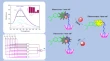
<p>In our CPB-NR composite system shown schematically in Figure <figr fid="F1">1</figr>, the NR is capacitively coupled to a CPB qubit consisting of two Josephson junctions which form a SQUID loop. A strong control MW current and a weak signal MW current are simultaneously applied in a MW line through the CPB to induce the oscillating magnetic fields in the Josephson junction SQUID loop of the CPB qubit. Besides, a direct current <it>I<sub>b </sub>
</it>is also applied to the MW line to control the magnetic flux through the SQUID loop and thus the effective Josephson coupling of the CPB qubit. The Hamiltonian of our coupled CPB-NR system reads:</p>
<fig id="F1"><title><p>Figure 1</p></title><caption><p>Schematic diagram of an NR capacitively coupled to a CPB</p></caption><text>
   <p><b>Schematic diagram of an NR capacitively coupled to a CPB</b>. Two MW currents with frequency <it>&#969;</it><sub>c </sub>and <it>&#969;</it><sub>s </sub>and a direct current <it>I</it><sub>b </sub>are applied in the MW line to control the magnetic flux <it>&#934;<sub>x </sub></it>through the CPB loop.</p>
</text><graphic file="1556-276X-6-570-1"/></fig>
<p>
<display-formula id="M1">
<m:math name="1556-276X-6-570-i1" xmlns:m="http://www.w3.org/1998/Math/MathML"><m:mrow>
   <m:mi>H</m:mi>
   <m:mo class="MathClass-rel">=</m:mo>
   <m:msub>
      <m:mrow>
         <m:mi>H</m:mi>
      </m:mrow>
      <m:mrow>
         <m:mstyle class="text">
            <m:mtext class="textsf" mathvariant="sans-serif">CPB</m:mtext>
         </m:mstyle>
      </m:mrow>
   </m:msub>
   <m:mo class="MathClass-bin">+</m:mo>
   <m:msub>
      <m:mrow>
         <m:mi>H</m:mi>
      </m:mrow>
      <m:mrow>
         <m:mstyle class="text">
            <m:mtext class="textsf" mathvariant="sans-serif">NR</m:mtext>
         </m:mstyle>
      </m:mrow>
   </m:msub>
   <m:mo class="MathClass-bin">+</m:mo>
   <m:msub>
      <m:mrow>
         <m:mi>H</m:mi>
      </m:mrow>
      <m:mrow>
         <m:mstyle class="text">
            <m:mtext class="textsf" mathvariant="sans-serif">int</m:mtext>
         </m:mstyle>
      </m:mrow>
   </m:msub>
   <m:mo class="MathClass-punc">,</m:mo>
</m:mrow>
</m:math>
</display-formula>
</p>
<p>
<display-formula id="M2">
<m:math name="1556-276X-6-570-i2" xmlns:m="http://www.w3.org/1998/Math/MathML"><m:mrow>
   <m:msub>
      <m:mrow>
         <m:mi>H</m:mi>
      </m:mrow>
      <m:mrow>
         <m:mstyle class="text">
            <m:mtext class="textsf" mathvariant="sans-serif">CPB</m:mtext>
         </m:mstyle>
      </m:mrow>
   </m:msub>
   <m:mo class="MathClass-rel">=</m:mo>
   <m:mfrac>
      <m:mrow>
         <m:mn>1</m:mn>
      </m:mrow>
      <m:mrow>
         <m:mn>2</m:mn>
      </m:mrow>
   </m:mfrac>
   <m:mi>&#8463;</m:mi>
   <m:msub>
      <m:mrow>
         <m:mi>&#969;</m:mi>
      </m:mrow>
      <m:mrow>
         <m:mstyle class="text">
            <m:mtext class="textsf" mathvariant="sans-serif">q</m:mtext>
         </m:mstyle>
      </m:mrow>
   </m:msub>
   <m:msub>
      <m:mrow>
         <m:mi>&#963;</m:mi>
      </m:mrow>
      <m:mrow>
         <m:mi>z</m:mi>
      </m:mrow>
   </m:msub>
   <m:mo class="MathClass-bin">-</m:mo>
   <m:mfrac>
      <m:mrow>
         <m:mn>1</m:mn>
      </m:mrow>
      <m:mrow>
         <m:mn>2</m:mn>
      </m:mrow>
   </m:mfrac>
   <m:msub>
      <m:mrow>
         <m:mi>E</m:mi>
      </m:mrow>
      <m:mrow>
         <m:mstyle class="text">
            <m:mtext class="textsf" mathvariant="sans-serif">J0</m:mtext>
         </m:mstyle>
      </m:mrow>
   </m:msub>
   <m:mo class="qopname">cos</m:mo>
   <m:mfenced separators="" open="[" close="]">
      <m:mrow>
         <m:mfrac>
            <m:mrow>
               <m:mi>&#960;</m:mi>
               <m:msub>
                  <m:mrow>
                     <m:mi>&#934;</m:mi>
                  </m:mrow>
                  <m:mrow>
                     <m:mi>x</m:mi>
                  </m:mrow>
               </m:msub>
               <m:mrow>
                  <m:mo class="MathClass-open">(</m:mo>
                  <m:mrow>
                     <m:mi>t</m:mi>
                  </m:mrow>
                  <m:mo class="MathClass-close">)</m:mo>
               </m:mrow>
            </m:mrow>
            <m:mrow>
               <m:msub>
                  <m:mrow>
                     <m:mi>&#934;</m:mi>
                  </m:mrow>
                  <m:mrow>
                     <m:mn>0</m:mn>
                  </m:mrow>
               </m:msub>
            </m:mrow>
         </m:mfrac>
      </m:mrow>
   </m:mfenced>
   <m:msub>
      <m:mrow>
         <m:mi>&#963;</m:mi>
      </m:mrow>
      <m:mrow>
         <m:mi>x</m:mi>
      </m:mrow>
   </m:msub>
   <m:mo class="MathClass-punc">,</m:mo>
</m:mrow>
</m:math>
</display-formula>
</p>
<p>
<display-formula id="M3">
<m:math name="1556-276X-6-570-i3" xmlns:m="http://www.w3.org/1998/Math/MathML"><m:mrow>
   <m:msub>
      <m:mrow>
         <m:mi>H</m:mi>
      </m:mrow>
      <m:mrow>
         <m:mstyle class="text">
            <m:mtext class="textsf" mathvariant="sans-serif">NR</m:mtext>
         </m:mstyle>
      </m:mrow>
   </m:msub>
   <m:mo class="MathClass-rel">=</m:mo>
   <m:mi>&#8463;</m:mi>
   <m:msub>
      <m:mrow>
         <m:mi>&#969;</m:mi>
      </m:mrow>
      <m:mrow>
         <m:mi>n</m:mi>
      </m:mrow>
   </m:msub>
   <m:msup>
      <m:mrow>
         <m:mi>a</m:mi>
      </m:mrow>
      <m:mrow>
         <m:mo class="MathClass-bin">&#8224;</m:mo>
      </m:mrow>
   </m:msup>
   <m:mi>a</m:mi>
   <m:mo class="MathClass-punc">,</m:mo>
</m:mrow>
</m:math>
</display-formula>
</p>
<p>
<display-formula id="M4">
<m:math name="1556-276X-6-570-i4" xmlns:m="http://www.w3.org/1998/Math/MathML"><m:mrow>
   <m:msub>
      <m:mrow>
         <m:mi>H</m:mi>
      </m:mrow>
      <m:mrow>
         <m:mstyle class="text">
            <m:mtext class="textsf" mathvariant="sans-serif">int</m:mtext>
         </m:mstyle>
      </m:mrow>
   </m:msub>
   <m:mo class="MathClass-rel">=</m:mo>
   <m:mi>&#8463;</m:mi>
   <m:mi>&#955;</m:mi>
   <m:mrow>
      <m:mo class="MathClass-open">(</m:mo>
      <m:mrow>
         <m:msup>
            <m:mrow>
               <m:mi>a</m:mi>
            </m:mrow>
            <m:mrow>
               <m:mo class="MathClass-bin">&#8224;</m:mo>
            </m:mrow>
         </m:msup>
         <m:mo class="MathClass-bin">+</m:mo>
         <m:mi>a</m:mi>
      </m:mrow>
      <m:mo class="MathClass-close">)</m:mo>
   </m:mrow>
   <m:msub>
      <m:mrow>
         <m:mi>&#963;</m:mi>
      </m:mrow>
      <m:mrow>
         <m:mi>z</m:mi>
      </m:mrow>
   </m:msub>
   <m:mo class="MathClass-punc">.</m:mo>
</m:mrow>
</m:math>
</display-formula>
</p>
<p>where <it>H</it>
<sub>CPB </sub>is the Hamiltonian of the CPB qubit described by the pseudospin -1/2 operators <it>&#963;<sub>z </sub>
</it>and <it>&#963;<sub>x </sub>
</it>= <it>&#963;</it>
<sub>+ </sub>+ <it>&#963;</it>
<sub>-</sub>. <it>&#969;</it>
<sub>q </sub>= 4<it>E</it>
<sub>c</sub>(2<it>n</it>
<sub>g </sub>- 1)/<it>&#295; </it>is the electrostatic energy difference and <it>E</it>
<sub>J0 </sub>is the maximum Josephson energy. Here, <it>E</it>
<sub>C </sub>= <it>e</it>
<sup>2</sup>/2<it>C<sub>&#931; </sub>
</it>is the charging energy with <it>C<sub>&#931; </sub>
</it>= <it>C</it>
<sub>b </sub>+ <it>C</it>
<sub>g </sub>+ 2<it>C</it>
<sub>J </sub>being the CPB island's total capacitance and <it>n<sub>g </sub>
</it>= (<it>C</it>
<sub>b</sub>
<it>V</it>
<sub>b </sub>+ <it>C</it>
<sub>g</sub>
<it>V</it>
<sub>g</sub>)/(2<it>e</it>) is the dimensionless polarization charge (in units of Cooper pairs), where <it>C</it>
<sub>b </sub>and <it>V</it>
<sub>b </sub>are, respectively, the capacitance and voltage between the NR and the CPB island, <it>C</it>
<sub>g </sub>and <it>V</it>
<sub>g </sub>are, respectively, the gate capacitance and voltage of the CPB qubit, and <it>C</it>
<sub>J </sub>is the capacitance of each Josephson junction. Displacement (by <it>x</it>) of the NR leads to linear modulation of the capacitance between NR and CPB, <it>C</it>
<sub>b</sub>(<it>x</it>) &#8776; <it>C</it>
<sub>b</sub>(0) + (&#8706;<it>C</it>
<sub>b</sub>/&#8706;<it>x</it>)<it>x</it>, which modulates the electrostatic energy of the CPB qubit, resulting in the capacitive coupling constant <inline-formula>
<m:math name="1556-276X-6-570-i5" xmlns:m="http://www.w3.org/1998/Math/MathML"><m:mi>&#955;</m:mi>
<m:mo class="MathClass-rel">=</m:mo>
<m:mfrac>
   <m:mrow>
      <m:mn>4</m:mn>
      <m:msubsup>
         <m:mrow>
            <m:mi>n</m:mi>
         </m:mrow>
         <m:mrow>
            <m:mstyle class="text">
               <m:mtext class="textsf" mathvariant="sans-serif">g</m:mtext>
            </m:mstyle>
         </m:mrow>
         <m:mrow>
            <m:mstyle class="text">
               <m:mtext class="textsf" mathvariant="sans-serif">NR</m:mtext>
            </m:mstyle>
         </m:mrow>
      </m:msubsup>
      <m:msub>
         <m:mrow>
            <m:mi>E</m:mi>
         </m:mrow>
         <m:mrow>
            <m:mstyle class="text">
               <m:mtext class="textsf" mathvariant="sans-serif">C</m:mtext>
            </m:mstyle>
         </m:mrow>
      </m:msub>
   </m:mrow>
   <m:mrow>
      <m:mi>&#8463;</m:mi>
   </m:mrow>
</m:mfrac>
<m:mfrac>
   <m:mrow>
      <m:mn>1</m:mn>
   </m:mrow>
   <m:mrow>
      <m:msub>
         <m:mrow>
            <m:mi>C</m:mi>
         </m:mrow>
         <m:mrow>
            <m:mstyle class="text">
               <m:mtext class="textsf" mathvariant="sans-serif">b</m:mtext>
            </m:mstyle>
         </m:mrow>
      </m:msub>
   </m:mrow>
</m:mfrac>
<m:mfrac>
   <m:mrow>
      <m:mi>&#8706;</m:mi>
      <m:msub>
         <m:mrow>
            <m:mi>C</m:mi>
         </m:mrow>
         <m:mrow>
            <m:mstyle class="text">
               <m:mtext class="textsf" mathvariant="sans-serif">b</m:mtext>
            </m:mstyle>
         </m:mrow>
      </m:msub>
   </m:mrow>
   <m:mrow>
      <m:mi>&#8706;</m:mi>
      <m:mi>x</m:mi>
   </m:mrow>
</m:mfrac>
<m:mi>&#916;</m:mi>
<m:msub>
   <m:mrow>
      <m:mi>x</m:mi>
   </m:mrow>
   <m:mrow>
      <m:mi>z</m:mi>
      <m:mi>p</m:mi>
   </m:mrow>
</m:msub>
</m:math>
</inline-formula>, where <inline-formula>
<m:math name="1556-276X-6-570-i6" xmlns:m="http://www.w3.org/1998/Math/MathML"><m:msubsup>
   <m:mrow>
      <m:mi>n</m:mi>
   </m:mrow>
   <m:mrow>
      <m:mstyle class="text">
         <m:mtext class="textsf" mathvariant="sans-serif">g</m:mtext>
      </m:mstyle>
   </m:mrow>
   <m:mrow>
      <m:mstyle class="text">
         <m:mtext class="textsf" mathvariant="sans-serif">NR</m:mtext>
      </m:mstyle>
   </m:mrow>
</m:msubsup>
<m:mo class="MathClass-rel">=</m:mo>
<m:msub>
   <m:mrow>
      <m:mi>C</m:mi>
   </m:mrow>
   <m:mrow>
      <m:mstyle class="text">
         <m:mtext class="textsf" mathvariant="sans-serif">b</m:mtext>
      </m:mstyle>
   </m:mrow>
</m:msub>
<m:msub>
   <m:mrow>
      <m:mi>V</m:mi>
   </m:mrow>
   <m:mrow>
      <m:mstyle class="text">
         <m:mtext class="textsf" mathvariant="sans-serif">b</m:mtext>
      </m:mstyle>
   </m:mrow>
</m:msub>
<m:mo class="MathClass-bin">&#8725;</m:mo>
<m:mn>2</m:mn>
<m:mi>e</m:mi>
</m:math>
</inline-formula> and <inline-formula>
<m:math name="1556-276X-6-570-i7" xmlns:m="http://www.w3.org/1998/Math/MathML"><m:mi>&#916;</m:mi>
<m:msub>
   <m:mrow>
      <m:mi>x</m:mi>
   </m:mrow>
   <m:mrow>
      <m:mi>z</m:mi>
      <m:mi>p</m:mi>
   </m:mrow>
</m:msub>
<m:mo class="MathClass-rel">=</m:mo>
<m:msqrt>
   <m:mrow>
      <m:mi>&#8463;</m:mi>
      <m:mo class="MathClass-bin">&#8725;</m:mo>
      <m:mn>2</m:mn>
      <m:mi>m</m:mi>
      <m:msub>
         <m:mrow>
            <m:mi>&#969;</m:mi>
         </m:mrow>
         <m:mrow>
            <m:mi>n</m:mi>
         </m:mrow>
      </m:msub>
   </m:mrow>
</m:msqrt>
</m:math>
</inline-formula> is the zero-point uncertainty of the NR with effective mass <it>m </it>and resonance frequency <it>&#969;<sub>n</sub>
</it>. The coupling between the MW line and the CPB qubit in the second term of Equation 2 results from the totally externally applied magnetic flux <it>&#934;<sub>x</sub>
</it>(<it>t</it>) = <it>&#934;</it>
<sub>q</sub>(<it>t</it>) + <it>&#934;</it>
<sub>b </sub>through the CPB qubit loop of an effective area <it>S </it>with <it>&#934;</it>
<sub>0 </sub>= <it>h</it>/(2<it>e</it>) being the flux quantum. Here, <it>&#934;</it>
<sub>q</sub>(<it>t</it>) = <it>&#956;</it>
<sub>0</sub>
<it>SI</it>(<it>t</it>)/(2<it>&#960;r</it>), with <it>r </it>being the distance between the MW line and the qubit and <it>&#956;</it>
<sub>0 </sub>being the vacuum permeability. <it>&#934;</it>
<sub>q</sub>(<it>t</it>) and <it>&#934;</it>
<sub>b </sub>are controlled, respectively, by the MW current <inline-formula>
<m:math name="1556-276X-6-570-i8" xmlns:m="http://www.w3.org/1998/Math/MathML"><m:mi>I</m:mi>
<m:mrow>
   <m:mo class="MathClass-open">(</m:mo>
   <m:mrow>
      <m:mi>t</m:mi>
   </m:mrow>
   <m:mo class="MathClass-close">)</m:mo>
</m:mrow>
<m:mo class="MathClass-rel">=</m:mo>
<m:msub>
   <m:mrow>
      <m:mi>&#8496;</m:mi>
   </m:mrow>
   <m:mrow>
      <m:mstyle class="text">
         <m:mtext class="textsf" mathvariant="sans-serif">c</m:mtext>
      </m:mstyle>
   </m:mrow>
</m:msub>
<m:mstyle class="text">
   <m:mtext class="textsf" mathvariant="sans-serif">cos</m:mtext>
</m:mstyle>
<m:mrow>
   <m:mo class="MathClass-open">(</m:mo>
   <m:mrow>
      <m:msub>
         <m:mrow>
            <m:mi>&#969;</m:mi>
         </m:mrow>
         <m:mrow>
            <m:mstyle class="text">
               <m:mtext class="textsf" mathvariant="sans-serif">c</m:mtext>
            </m:mstyle>
         </m:mrow>
      </m:msub>
      <m:mi>t</m:mi>
   </m:mrow>
   <m:mo class="MathClass-close">)</m:mo>
</m:mrow>
<m:mo class="MathClass-bin">+</m:mo>
<m:msub>
   <m:mrow>
      <m:mi>&#8496;</m:mi>
   </m:mrow>
   <m:mrow>
      <m:mstyle class="text">
         <m:mtext class="textsf" mathvariant="sans-serif">s</m:mtext>
      </m:mstyle>
   </m:mrow>
</m:msub>
<m:mstyle class="text">
   <m:mtext class="textsf" mathvariant="sans-serif">cos</m:mtext>
</m:mstyle>
<m:mrow>
   <m:mo class="MathClass-open">(</m:mo>
   <m:mrow>
      <m:msub>
         <m:mrow>
            <m:mi>&#969;</m:mi>
         </m:mrow>
         <m:mrow>
            <m:mstyle class="text">
               <m:mtext class="textsf" mathvariant="sans-serif">s</m:mtext>
            </m:mstyle>
         </m:mrow>
      </m:msub>
      <m:mi>t</m:mi>
      <m:mo class="MathClass-bin">+</m:mo>
      <m:msup>
         <m:mrow>
            <m:mi>&#948;</m:mi>
         </m:mrow>
         <m:mrow>
            <m:mi>&#8242;</m:mi>
         </m:mrow>
      </m:msup>
   </m:mrow>
   <m:mo class="MathClass-close">)</m:mo>
</m:mrow>
</m:math>
</inline-formula> and the direct current <it>I</it>
<sub>b </sub>in the MW line. For convenience, we assume the phase factor <it>&#948;' </it>= 0 because it is not difficult to demonstrate that the results of this article are not dependent on the value of <it>&#948;'</it>. By adjusting the direct current <it>I</it>
<sub>b </sub>and the MW current <it>I</it>(<it>t</it>) such that <it>&#934;</it>
<sub>b </sub>&#8811; <it>&#934;</it>
<sub>q </sub>(<it>t</it>) and <it>&#960;&#934;</it>
<sub>b</sub>/<it>&#934;</it>
<sub>0 </sub>= <it>&#960; </it>/2, we can obtain <inline-formula>
<m:math name="1556-276X-6-570-i9" xmlns:m="http://www.w3.org/1998/Math/MathML"><m:mrow>
   <m:msub>
      <m:mrow>
         <m:mi>E</m:mi>
      </m:mrow>
      <m:mrow>
         <m:mstyle class="text">
            <m:mtext class="textsf" mathvariant="sans-serif">J</m:mtext>
         </m:mstyle>
      </m:mrow>
   </m:msub>
   <m:mstyle class="text">
      <m:mtext class="textsf" mathvariant="sans-serif">cos</m:mtext>
   </m:mstyle>
   <m:mfenced separators="" open="[" close="]">
      <m:mrow>
         <m:mfrac>
            <m:mrow>
               <m:mi>&#960;</m:mi>
               <m:msub>
                  <m:mrow>
                     <m:mi>&#934;</m:mi>
                  </m:mrow>
                  <m:mrow>
                     <m:mi>x</m:mi>
                  </m:mrow>
               </m:msub>
               <m:mrow>
                  <m:mo class="MathClass-open">(</m:mo>
                  <m:mrow>
                     <m:mi>t</m:mi>
                  </m:mrow>
                  <m:mo class="MathClass-close">)</m:mo>
               </m:mrow>
            </m:mrow>
            <m:mrow>
               <m:msub>
                  <m:mrow>
                     <m:mi>&#934;</m:mi>
                  </m:mrow>
                  <m:mrow>
                     <m:mn>0</m:mn>
                  </m:mrow>
               </m:msub>
            </m:mrow>
         </m:mfrac>
      </m:mrow>
   </m:mfenced>
   <m:mo class="MathClass-rel">&#8776;</m:mo>
   <m:mo class="MathClass-bin">-</m:mo>
   <m:msub>
      <m:mrow>
         <m:mi>E</m:mi>
      </m:mrow>
      <m:mrow>
         <m:mstyle class="text">
            <m:mtext class="textsf" mathvariant="sans-serif">J</m:mtext>
         </m:mstyle>
      </m:mrow>
   </m:msub>
   <m:mfrac>
      <m:mrow>
         <m:mi>&#960;</m:mi>
         <m:msub>
            <m:mrow>
               <m:mi>&#934;</m:mi>
            </m:mrow>
            <m:mrow>
               <m:mstyle class="text">
                  <m:mtext class="textsf" mathvariant="sans-serif">q</m:mtext>
               </m:mstyle>
            </m:mrow>
         </m:msub>
         <m:mrow>
            <m:mo class="MathClass-open">(</m:mo>
            <m:mrow>
               <m:mi>t</m:mi>
            </m:mrow>
            <m:mo class="MathClass-close">)</m:mo>
         </m:mrow>
      </m:mrow>
      <m:mrow>
         <m:msub>
            <m:mrow>
               <m:mi>&#934;</m:mi>
            </m:mrow>
            <m:mrow>
               <m:mn>0</m:mn>
            </m:mrow>
         </m:msub>
      </m:mrow>
   </m:mfrac>
   <m:mo class="MathClass-punc">.</m:mo>
</m:mrow>
</m:math>
</inline-formula> In a rotating frame at the control frequency <it>&#969;</it>
<sub>c</sub>, the total Hamiltonian can now be written as</p>
<p>
<display-formula id="M5">
<m:math name="1556-276X-6-570-i10" xmlns:m="http://www.w3.org/1998/Math/MathML"><m:mrow>
   <m:mtable class="gathered">
      <m:mtr>
         <m:mtd>
            <m:mi>H</m:mi>
            <m:mo class="MathClass-rel">=</m:mo>
            <m:mfrac>
               <m:mrow>
                  <m:mn>1</m:mn>
               </m:mrow>
               <m:mrow>
                  <m:mn>2</m:mn>
               </m:mrow>
            </m:mfrac>
            <m:mi>&#8463;</m:mi>
            <m:mi>&#916;</m:mi>
            <m:msub>
               <m:mrow>
                  <m:mi>&#963;</m:mi>
               </m:mrow>
               <m:mrow>
                  <m:mi>z</m:mi>
               </m:mrow>
            </m:msub>
            <m:mo class="MathClass-bin">+</m:mo>
            <m:mi>&#8463;</m:mi>
            <m:msub>
               <m:mrow>
                  <m:mi>&#969;</m:mi>
               </m:mrow>
               <m:mrow>
                  <m:mi>n</m:mi>
               </m:mrow>
            </m:msub>
            <m:msup>
               <m:mrow>
                  <m:mi>a</m:mi>
               </m:mrow>
               <m:mrow>
                  <m:mo class="MathClass-bin">&#8224;</m:mo>
               </m:mrow>
            </m:msup>
            <m:mi>a</m:mi>
            <m:mo class="MathClass-bin">+</m:mo>
            <m:mi>&#8463;</m:mi>
            <m:mi>&#955;</m:mi>
            <m:mrow>
               <m:mo class="MathClass-open">(</m:mo>
               <m:mrow>
                  <m:msup>
                     <m:mrow>
                        <m:mi>a</m:mi>
                     </m:mrow>
                     <m:mrow>
                        <m:mo class="MathClass-bin">&#8224;</m:mo>
                     </m:mrow>
                  </m:msup>
                  <m:mo class="MathClass-bin">+</m:mo>
                  <m:mi>a</m:mi>
               </m:mrow>
               <m:mo class="MathClass-close">)</m:mo>
            </m:mrow>
            <m:msub>
               <m:mrow>
                  <m:mi>&#963;</m:mi>
               </m:mrow>
               <m:mrow>
                  <m:mi>z</m:mi>
               </m:mrow>
            </m:msub>
            <m:mo class="MathClass-bin">+</m:mo>
            <m:mi>&#8463;</m:mi>
            <m:mi>&#937;</m:mi>
            <m:mrow>
               <m:mo class="MathClass-open">(</m:mo>
               <m:mrow>
                  <m:msub>
                     <m:mrow>
                        <m:mi>&#963;</m:mi>
                     </m:mrow>
                     <m:mrow>
                        <m:mo class="MathClass-bin">+</m:mo>
                     </m:mrow>
                  </m:msub>
                  <m:mo class="MathClass-bin">+</m:mo>
                  <m:msub>
                     <m:mrow>
                        <m:mi>&#963;</m:mi>
                     </m:mrow>
                     <m:mrow>
                        <m:mo class="MathClass-bin">-</m:mo>
                     </m:mrow>
                  </m:msub>
               </m:mrow>
               <m:mo class="MathClass-close">)</m:mo>
            </m:mrow>
         </m:mtd>
      </m:mtr>
      <m:mtr>
         <m:mtd>
            <m:mspace width="1em" class="quad"/>
            <m:mspace width="1em" class="quad"/>
            <m:mo class="MathClass-bin">+</m:mo>
            <m:mi>&#956;</m:mi>
            <m:msub>
               <m:mrow>
                  <m:mi>&#8496;</m:mi>
               </m:mrow>
               <m:mrow>
                  <m:mi>s</m:mi>
               </m:mrow>
            </m:msub>
            <m:mrow>
               <m:mo class="MathClass-open">(</m:mo>
               <m:mrow>
                  <m:msub>
                     <m:mrow>
                        <m:mi>&#963;</m:mi>
                     </m:mrow>
                     <m:mrow>
                        <m:mo class="MathClass-bin">+</m:mo>
                     </m:mrow>
                  </m:msub>
                  <m:msup>
                     <m:mrow>
                        <m:mi>e</m:mi>
                     </m:mrow>
                     <m:mrow>
                        <m:mo class="MathClass-bin">-</m:mo>
                        <m:mi>i</m:mi>
                        <m:mi>&#948;</m:mi>
                        <m:mi>t</m:mi>
                     </m:mrow>
                  </m:msup>
                  <m:mo class="MathClass-bin">+</m:mo>
                  <m:msub>
                     <m:mrow>
                        <m:mi>&#963;</m:mi>
                     </m:mrow>
                     <m:mrow>
                        <m:mo class="MathClass-bin">-</m:mo>
                     </m:mrow>
                  </m:msub>
                  <m:msup>
                     <m:mrow>
                        <m:mi>e</m:mi>
                     </m:mrow>
                     <m:mrow>
                        <m:mi>i</m:mi>
                        <m:mi>&#948;</m:mi>
                        <m:mi>t</m:mi>
                     </m:mrow>
                  </m:msup>
               </m:mrow>
               <m:mo class="MathClass-close">)</m:mo>
            </m:mrow>
            <m:mo class="MathClass-punc">,</m:mo>
         </m:mtd>
      </m:mtr>
      <m:mtr>
         <m:mtd/>
      </m:mtr>
   </m:mtable>
</m:mrow>
</m:math>
</display-formula>
</p>
<p>where <it>&#916; </it>= <it>&#969;</it>
<sub>q </sub>- <it>&#969;</it>
<sub>c </sub>is the detuning of the qubit resonance frequency and the control current frequency, <it>&#948; </it>= <it>&#969;</it>
<sub>s </sub>- <it>&#969;</it>
<sub>c </sub>is the detuning of the signal current and the control current, <it>&#956; </it>= <it>&#956;</it>
<sub>0</sub>
<it>SE</it>
<sub>J0</sub>/(8<it>r&#934;</it>
<sub>0</sub>) is the effective 'electric dipole moment' of the qubit, and <inline-formula>
<m:math name="1556-276X-6-570-i11" xmlns:m="http://www.w3.org/1998/Math/MathML"><m:mi>&#937;</m:mi>
<m:mo class="MathClass-rel">=</m:mo>
<m:mi>&#956;</m:mi>
<m:msub>
   <m:mrow>
      <m:mi>&#8496;</m:mi>
   </m:mrow>
   <m:mrow>
      <m:mstyle class="text">
         <m:mtext class="textsf" mathvariant="sans-serif">c</m:mtext>
      </m:mstyle>
   </m:mrow>
</m:msub>
<m:mo class="MathClass-bin">&#8725;</m:mo>
<m:mi>&#8463;</m:mi>
</m:math>
</inline-formula> is the effective 'Rabi frequency' of the control current.</p>
<p>The dynamics of the coupled CPB-NR system in the presence of dissipation and dephasing is described by the following master equation <abbrgrp>
<abbr bid="B21">21</abbr>
</abbrgrp>
</p>
<p>
<display-formula id="M6">
<m:math name="1556-276X-6-570-i12" xmlns:m="http://www.w3.org/1998/Math/MathML"><m:mrow>
   <m:mfrac>
      <m:mrow>
         <m:mi>d</m:mi>
         <m:mi>&#961;</m:mi>
      </m:mrow>
      <m:mrow>
         <m:mi>d</m:mi>
         <m:mi>t</m:mi>
      </m:mrow>
   </m:mfrac>
   <m:mo class="MathClass-rel">=</m:mo>
   <m:mo class="MathClass-bin">-</m:mo>
   <m:mfrac>
      <m:mrow>
         <m:mi>i</m:mi>
      </m:mrow>
      <m:mrow>
         <m:mi>&#8463;</m:mi>
      </m:mrow>
   </m:mfrac>
   <m:mrow>
      <m:mo class="MathClass-open">[</m:mo>
      <m:mrow>
         <m:mi>H</m:mi>
         <m:mo class="MathClass-punc">,</m:mo>
         <m:mi>&#961;</m:mi>
      </m:mrow>
      <m:mo class="MathClass-close">]</m:mo>
   </m:mrow>
   <m:mo class="MathClass-bin">+</m:mo>
   <m:mfrac>
      <m:mrow>
         <m:mn>1</m:mn>
      </m:mrow>
      <m:mrow>
         <m:mn>2</m:mn>
         <m:msub>
            <m:mrow>
               <m:mi>T</m:mi>
            </m:mrow>
            <m:mrow>
               <m:mn>1</m:mn>
            </m:mrow>
         </m:msub>
      </m:mrow>
   </m:mfrac>
   <m:mi>&#8466;</m:mi>
   <m:mrow>
      <m:mo class="MathClass-open">[</m:mo>
      <m:mrow>
         <m:msub>
            <m:mrow>
               <m:mi>&#963;</m:mi>
            </m:mrow>
            <m:mrow>
               <m:mo class="MathClass-bin">-</m:mo>
            </m:mrow>
         </m:msub>
      </m:mrow>
      <m:mo class="MathClass-close">]</m:mo>
   </m:mrow>
   <m:mo class="MathClass-bin">+</m:mo>
   <m:mfrac>
      <m:mrow>
         <m:mi>&#947;</m:mi>
      </m:mrow>
      <m:mrow>
         <m:mn>2</m:mn>
      </m:mrow>
   </m:mfrac>
   <m:mi>&#8466;</m:mi>
   <m:mrow>
      <m:mo class="MathClass-open">[</m:mo>
      <m:mrow>
         <m:mi>a</m:mi>
      </m:mrow>
      <m:mo class="MathClass-close">]</m:mo>
   </m:mrow>
   <m:mo class="MathClass-bin">+</m:mo>
   <m:mfrac>
      <m:mrow>
         <m:mn>1</m:mn>
      </m:mrow>
      <m:mrow>
         <m:mn>4</m:mn>
         <m:msub>
            <m:mrow>
               <m:mi>&#964;</m:mi>
            </m:mrow>
            <m:mrow>
               <m:mi>&#981;</m:mi>
            </m:mrow>
         </m:msub>
      </m:mrow>
   </m:mfrac>
   <m:mi>&#8466;</m:mi>
   <m:mrow>
      <m:mo class="MathClass-open">[</m:mo>
      <m:mrow>
         <m:msub>
            <m:mrow>
               <m:mi>&#963;</m:mi>
            </m:mrow>
            <m:mrow>
               <m:mi>z</m:mi>
            </m:mrow>
         </m:msub>
      </m:mrow>
      <m:mo class="MathClass-close">]</m:mo>
   </m:mrow>
   <m:mo class="MathClass-punc">,</m:mo>
</m:mrow>
</m:math>
</display-formula>
</p>
<p>where <it>&#961; </it>is the density matrix of the coupled system, <it>T</it>
<sub>1 </sub>is the qubit relaxation time, <it>&#964;<sub>&#981; </sub>
</it>is the qubit pure dephasing time, and <it>&#947; </it>is the decay rate of the NR which is given by <it>&#947; </it>= <it>&#969;<sub>n</sub>
</it>/<it>Q</it>. <inline-formula>
<m:math name="1556-276X-6-570-i13" xmlns:m="http://www.w3.org/1998/Math/MathML"><m:mi>&#8466;</m:mi>
<m:mrow>
   <m:mo class="MathClass-open">[</m:mo>
   <m:mrow>
      <m:mi>D</m:mi>
   </m:mrow>
   <m:mo class="MathClass-close">]</m:mo>
</m:mrow>
</m:math>
</inline-formula>, describing the incoherent decays, is the Lindblad operator for an operator and is given by:</p>
<p>
<display-formula id="M7">
<m:math name="1556-276X-6-570-i14" xmlns:m="http://www.w3.org/1998/Math/MathML"><m:mrow>
   <m:mi>&#8466;</m:mi>
   <m:mrow>
      <m:mo class="MathClass-open">[</m:mo>
      <m:mrow>
         <m:mi>D</m:mi>
      </m:mrow>
      <m:mo class="MathClass-close">]</m:mo>
   </m:mrow>
   <m:mo class="MathClass-rel">=</m:mo>
   <m:mn>2</m:mn>
   <m:mi>D</m:mi>
   <m:mi>&#961;</m:mi>
   <m:msup>
      <m:mrow>
         <m:mi>D</m:mi>
      </m:mrow>
      <m:mrow>
         <m:mo class="MathClass-bin">&#8224;</m:mo>
      </m:mrow>
   </m:msup>
   <m:mo class="MathClass-bin">-</m:mo>
   <m:msup>
      <m:mrow>
         <m:mi>D</m:mi>
      </m:mrow>
      <m:mrow>
         <m:mo class="MathClass-bin">&#8224;</m:mo>
      </m:mrow>
   </m:msup>
   <m:mi>D</m:mi>
   <m:mi>&#961;</m:mi>
   <m:mo class="MathClass-bin">-</m:mo>
   <m:mi>&#961;</m:mi>
   <m:msup>
      <m:mrow>
         <m:mi>D</m:mi>
      </m:mrow>
      <m:mrow>
         <m:mo class="MathClass-bin">&#8224;</m:mo>
      </m:mrow>
   </m:msup>
   <m:mi>D</m:mi>
   <m:mo class="MathClass-punc">.</m:mo>
</m:mrow>
</m:math>
</display-formula>
</p>
<p>Using the identity <inline-formula>
<m:math name="1556-276X-6-570-i15" xmlns:m="http://www.w3.org/1998/Math/MathML"><m:mrow>
   <m:mo>&#9001;</m:mo>
   <m:mover accent="true">
      <m:mi>O</m:mi>
      <m:mo>&#729;</m:mo>
   </m:mover>
   <m:mo>&#9002;</m:mo>
   <m:mo>=</m:mo>
   <m:mi>T</m:mi>
   <m:mi>r</m:mi>
   <m:mo stretchy="false">(</m:mo>
   <m:mi>O</m:mi>
   <m:mover accent="true">
      <m:mi>&#961;</m:mi>
      <m:mo>&#729;</m:mo>
   </m:mover>
   <m:mo stretchy="false">)</m:mo>
</m:mrow>
</m:math>
</inline-formula> for an operator <it>O </it>and a density matrix <it>&#961; </it>in Equation 6, we obtain the following Bloch equations for the coupled CPB-NR system:</p>
<p>
<display-formula id="M8">
<m:math name="1556-276X-6-570-i16" xmlns:m="http://www.w3.org/1998/Math/MathML"><m:mrow>
   <m:mtable class="gathered">
      <m:mtr>
         <m:mtd>
            <m:mfrac>
               <m:mrow>
                  <m:mi>d</m:mi>
                  <m:mrow>
                     <m:mo class="MathClass-open">&#10216;</m:mo>
                     <m:mrow>
                        <m:msub>
                           <m:mrow>
                              <m:mi>&#963;</m:mi>
                           </m:mrow>
                           <m:mrow>
                              <m:mo class="MathClass-bin">-</m:mo>
                           </m:mrow>
                        </m:msub>
                     </m:mrow>
                     <m:mo class="MathClass-close">&#10217;</m:mo>
                  </m:mrow>
               </m:mrow>
               <m:mrow>
                  <m:mi>d</m:mi>
                  <m:mi>t</m:mi>
               </m:mrow>
            </m:mfrac>
            <m:mo class="MathClass-rel">=</m:mo>
            <m:mo class="MathClass-bin">-</m:mo>
            <m:mfenced separators="" open="(" close=")">
               <m:mrow>
                  <m:mfrac>
                     <m:mrow>
                        <m:mn>1</m:mn>
                     </m:mrow>
                     <m:mrow>
                        <m:msub>
                           <m:mrow>
                              <m:mi>T</m:mi>
                           </m:mrow>
                           <m:mrow>
                              <m:mn>2</m:mn>
                           </m:mrow>
                        </m:msub>
                     </m:mrow>
                  </m:mfrac>
                  <m:mo class="MathClass-bin">+</m:mo>
                  <m:mi>i</m:mi>
                  <m:mi>&#916;</m:mi>
               </m:mrow>
            </m:mfenced>
            <m:mrow>
               <m:mo class="MathClass-open">&#10216;</m:mo>
               <m:mrow>
                  <m:msub>
                     <m:mrow>
                        <m:mi>&#963;</m:mi>
                     </m:mrow>
                     <m:mrow>
                        <m:mo class="MathClass-bin">-</m:mo>
                     </m:mrow>
                  </m:msub>
               </m:mrow>
               <m:mo class="MathClass-close">&#10217;</m:mo>
            </m:mrow>
            <m:mo class="MathClass-bin">-</m:mo>
            <m:mi>i</m:mi>
            <m:mrow>
               <m:mo class="MathClass-open">&#10216;</m:mo>
               <m:mrow>
                  <m:mi>Q</m:mi>
                  <m:msub>
                     <m:mrow>
                        <m:mi>&#963;</m:mi>
                     </m:mrow>
                     <m:mrow>
                        <m:mo class="MathClass-bin">-</m:mo>
                     </m:mrow>
                  </m:msub>
               </m:mrow>
               <m:mo class="MathClass-close">&#10217;</m:mo>
            </m:mrow>
            <m:mo class="MathClass-bin">+</m:mo>
            <m:mi>i</m:mi>
            <m:mi>&#937;</m:mi>
            <m:mrow>
               <m:mo class="MathClass-open">&#10216;</m:mo>
               <m:mrow>
                  <m:msub>
                     <m:mrow>
                        <m:mi>&#963;</m:mi>
                     </m:mrow>
                     <m:mrow>
                        <m:mi>z</m:mi>
                     </m:mrow>
                  </m:msub>
               </m:mrow>
               <m:mo class="MathClass-close">&#10217;</m:mo>
            </m:mrow>
         </m:mtd>
      </m:mtr>
      <m:mtr>
         <m:mtd>
            <m:mspace width="1em" class="quad"/>
            <m:mspace width="1em" class="quad"/>
            <m:mspace width="1em" class="quad"/>
            <m:mspace width="1em" class="quad"/>
            <m:mo class="MathClass-bin">+</m:mo>
            <m:mfrac>
               <m:mrow>
                  <m:mi>i</m:mi>
               </m:mrow>
               <m:mrow>
                  <m:mi>&#8463;</m:mi>
               </m:mrow>
            </m:mfrac>
            <m:mi>&#956;</m:mi>
            <m:msub>
               <m:mrow>
                  <m:mi>&#8496;</m:mi>
               </m:mrow>
               <m:mrow>
                  <m:mi>s</m:mi>
               </m:mrow>
            </m:msub>
            <m:mrow>
               <m:mo class="MathClass-open">&#10216;</m:mo>
               <m:mrow>
                  <m:msub>
                     <m:mrow>
                        <m:mi>&#963;</m:mi>
                     </m:mrow>
                     <m:mrow>
                        <m:mi>z</m:mi>
                     </m:mrow>
                  </m:msub>
               </m:mrow>
               <m:mo class="MathClass-close">&#10217;</m:mo>
            </m:mrow>
            <m:msup>
               <m:mrow>
                  <m:mi>e</m:mi>
               </m:mrow>
               <m:mrow>
                  <m:mo class="MathClass-bin">-</m:mo>
                  <m:mi>i</m:mi>
                  <m:mi>&#948;</m:mi>
                  <m:mi>t</m:mi>
               </m:mrow>
            </m:msup>
            <m:mo class="MathClass-punc">,</m:mo>
         </m:mtd>
      </m:mtr>
      <m:mtr>
         <m:mtd/>
      </m:mtr>
   </m:mtable>
</m:mrow>
</m:math>
</display-formula>
</p>
<p>
<display-formula id="M9">
<m:math name="1556-276X-6-570-i17" xmlns:m="http://www.w3.org/1998/Math/MathML"><m:mrow>
   <m:mtable class="gathered">
      <m:mtr>
         <m:mtd>
            <m:mfrac>
               <m:mrow>
                  <m:mi>d</m:mi>
                  <m:mrow>
                     <m:mo class="MathClass-open">&#10216;</m:mo>
                     <m:mrow>
                        <m:msub>
                           <m:mrow>
                              <m:mi>&#963;</m:mi>
                           </m:mrow>
                           <m:mrow>
                              <m:mi>z</m:mi>
                           </m:mrow>
                        </m:msub>
                     </m:mrow>
                     <m:mo class="MathClass-close">&#10217;</m:mo>
                  </m:mrow>
               </m:mrow>
               <m:mrow>
                  <m:mi>d</m:mi>
                  <m:mi>t</m:mi>
               </m:mrow>
            </m:mfrac>
            <m:mo class="MathClass-rel">=</m:mo>
            <m:mo class="MathClass-bin">-</m:mo>
            <m:mfrac>
               <m:mrow>
                  <m:mn>1</m:mn>
               </m:mrow>
               <m:mrow>
                  <m:msub>
                     <m:mrow>
                        <m:mi>T</m:mi>
                     </m:mrow>
                     <m:mrow>
                        <m:mn>1</m:mn>
                     </m:mrow>
                  </m:msub>
               </m:mrow>
            </m:mfrac>
            <m:mrow>
               <m:mo class="MathClass-open">(</m:mo>
               <m:mrow>
                  <m:mrow>
                     <m:mo class="MathClass-open">&#10216;</m:mo>
                     <m:mrow>
                        <m:msub>
                           <m:mrow>
                              <m:mi>&#963;</m:mi>
                           </m:mrow>
                           <m:mrow>
                              <m:mi>z</m:mi>
                           </m:mrow>
                        </m:msub>
                     </m:mrow>
                     <m:mo class="MathClass-close">&#10217;</m:mo>
                  </m:mrow>
                  <m:mo class="MathClass-bin">+</m:mo>
                  <m:mn>1</m:mn>
               </m:mrow>
               <m:mo class="MathClass-close">)</m:mo>
            </m:mrow>
            <m:mo class="MathClass-bin">-</m:mo>
            <m:mn>2</m:mn>
            <m:mi>i</m:mi>
            <m:mi>&#937;</m:mi>
            <m:mrow>
               <m:mo class="MathClass-open">(</m:mo>
               <m:mrow>
                  <m:mrow>
                     <m:mo class="MathClass-open">&#10216;</m:mo>
                     <m:mrow>
                        <m:msub>
                           <m:mrow>
                              <m:mi>&#963;</m:mi>
                           </m:mrow>
                           <m:mrow>
                              <m:mo class="MathClass-bin">+</m:mo>
                           </m:mrow>
                        </m:msub>
                     </m:mrow>
                     <m:mo class="MathClass-close">&#10217;</m:mo>
                  </m:mrow>
                  <m:mo class="MathClass-bin">-</m:mo>
                  <m:mrow>
                     <m:mo class="MathClass-open">&#10216;</m:mo>
                     <m:mrow>
                        <m:msub>
                           <m:mrow>
                              <m:mi>&#963;</m:mi>
                           </m:mrow>
                           <m:mrow>
                              <m:mo class="MathClass-bin">-</m:mo>
                           </m:mrow>
                        </m:msub>
                     </m:mrow>
                     <m:mo class="MathClass-close">&#10217;</m:mo>
                  </m:mrow>
               </m:mrow>
               <m:mo class="MathClass-close">)</m:mo>
            </m:mrow>
         </m:mtd>
      </m:mtr>
      <m:mtr>
         <m:mtd>
            <m:mspace width="1em" class="quad"/>
            <m:mspace width="1em" class="quad"/>
            <m:mspace width="1em" class="quad"/>
            <m:mspace width="1em" class="quad"/>
            <m:mo class="MathClass-bin">-</m:mo>
            <m:mn>2</m:mn>
            <m:mfrac>
               <m:mrow>
                  <m:mi>i</m:mi>
               </m:mrow>
               <m:mrow>
                  <m:mi>&#8463;</m:mi>
               </m:mrow>
            </m:mfrac>
            <m:mi>&#956;</m:mi>
            <m:mrow>
               <m:mo class="MathClass-open">(</m:mo>
               <m:mrow>
                  <m:msub>
                     <m:mrow>
                        <m:mi>&#8496;</m:mi>
                     </m:mrow>
                     <m:mrow>
                        <m:mi>s</m:mi>
                     </m:mrow>
                  </m:msub>
                  <m:mrow>
                     <m:mo class="MathClass-open">&#10216;</m:mo>
                     <m:mrow>
                        <m:msub>
                           <m:mrow>
                              <m:mi>&#963;</m:mi>
                           </m:mrow>
                           <m:mrow>
                              <m:mo class="MathClass-bin">+</m:mo>
                           </m:mrow>
                        </m:msub>
                     </m:mrow>
                     <m:mo class="MathClass-close">&#10217;</m:mo>
                  </m:mrow>
                  <m:msup>
                     <m:mrow>
                        <m:mi>e</m:mi>
                     </m:mrow>
                     <m:mrow>
                        <m:mo class="MathClass-bin">-</m:mo>
                        <m:mi>i</m:mi>
                        <m:mi>&#948;</m:mi>
                        <m:mi>t</m:mi>
                     </m:mrow>
                  </m:msup>
                  <m:mo class="MathClass-bin">-</m:mo>
                  <m:msubsup>
                     <m:mrow>
                        <m:mi>&#8496;</m:mi>
                     </m:mrow>
                     <m:mrow>
                        <m:mi>s</m:mi>
                     </m:mrow>
                     <m:mrow>
                        <m:mo class="MathClass-bin">*</m:mo>
                     </m:mrow>
                  </m:msubsup>
                  <m:mrow>
                     <m:mo class="MathClass-open">&#10216;</m:mo>
                     <m:mrow>
                        <m:msub>
                           <m:mrow>
                              <m:mi>&#963;</m:mi>
                           </m:mrow>
                           <m:mrow>
                              <m:mo class="MathClass-bin">-</m:mo>
                           </m:mrow>
                        </m:msub>
                     </m:mrow>
                     <m:mo class="MathClass-close">&#10217;</m:mo>
                  </m:mrow>
                  <m:msup>
                     <m:mrow>
                        <m:mi>e</m:mi>
                     </m:mrow>
                     <m:mrow>
                        <m:mi>i</m:mi>
                        <m:mi>&#948;</m:mi>
                        <m:mi>t</m:mi>
                     </m:mrow>
                  </m:msup>
               </m:mrow>
               <m:mo class="MathClass-close">)</m:mo>
            </m:mrow>
            <m:mo class="MathClass-punc">,</m:mo>
         </m:mtd>
      </m:mtr>
      <m:mtr>
         <m:mtd/>
      </m:mtr>
   </m:mtable>
</m:mrow>
</m:math>
</display-formula>
</p>
<p>
<display-formula id="M10">
<m:math name="1556-276X-6-570-i18" xmlns:m="http://www.w3.org/1998/Math/MathML"><m:mrow>
   <m:mfrac>
      <m:mrow>
         <m:msup>
            <m:mrow>
               <m:mi>d</m:mi>
            </m:mrow>
            <m:mrow>
               <m:mn>2</m:mn>
            </m:mrow>
         </m:msup>
         <m:mrow>
            <m:mo class="MathClass-open">&#10216;</m:mo>
            <m:mrow>
               <m:mi>Q</m:mi>
            </m:mrow>
            <m:mo class="MathClass-close">&#10217;</m:mo>
         </m:mrow>
      </m:mrow>
      <m:mrow>
         <m:mi>d</m:mi>
         <m:msup>
            <m:mrow>
               <m:mi>t</m:mi>
            </m:mrow>
            <m:mrow>
               <m:mn>2</m:mn>
            </m:mrow>
         </m:msup>
      </m:mrow>
   </m:mfrac>
   <m:mo class="MathClass-bin">+</m:mo>
   <m:mi>&#947;</m:mi>
   <m:mfrac>
      <m:mrow>
         <m:mi>d</m:mi>
         <m:mrow>
            <m:mo class="MathClass-open">&#10216;</m:mo>
            <m:mrow>
               <m:mi>Q</m:mi>
            </m:mrow>
            <m:mo class="MathClass-close">&#10217;</m:mo>
         </m:mrow>
      </m:mrow>
      <m:mrow>
         <m:mi>d</m:mi>
         <m:mi>t</m:mi>
      </m:mrow>
   </m:mfrac>
   <m:mo class="MathClass-bin">+</m:mo>
   <m:msubsup>
      <m:mrow>
         <m:mi>&#969;</m:mi>
      </m:mrow>
      <m:mrow>
         <m:mi>r</m:mi>
      </m:mrow>
      <m:mrow>
         <m:mn>2</m:mn>
      </m:mrow>
   </m:msubsup>
   <m:mrow>
      <m:mo class="MathClass-open">&#10216;</m:mo>
      <m:mrow>
         <m:mi>Q</m:mi>
      </m:mrow>
      <m:mo class="MathClass-close">&#10217;</m:mo>
   </m:mrow>
   <m:mo class="MathClass-rel">=</m:mo>
   <m:mo class="MathClass-bin">-</m:mo>
   <m:mn>4</m:mn>
   <m:msubsup>
      <m:mrow>
         <m:mi>&#969;</m:mi>
      </m:mrow>
      <m:mrow>
         <m:mi>r</m:mi>
      </m:mrow>
      <m:mrow>
         <m:mn>3</m:mn>
      </m:mrow>
   </m:msubsup>
   <m:msub>
      <m:mrow>
         <m:mi>&#955;</m:mi>
      </m:mrow>
      <m:mrow>
         <m:mn>0</m:mn>
      </m:mrow>
   </m:msub>
   <m:mrow>
      <m:mo class="MathClass-open">&#10216;</m:mo>
      <m:mrow>
         <m:msub>
            <m:mrow>
               <m:mi>&#963;</m:mi>
            </m:mrow>
            <m:mrow>
               <m:mi>z</m:mi>
            </m:mrow>
         </m:msub>
      </m:mrow>
      <m:mo class="MathClass-close">&#10217;</m:mo>
   </m:mrow>
   <m:mo class="MathClass-punc">,</m:mo>
</m:mrow>
</m:math>
</display-formula>
</p>
<p>where <inline-formula>
<m:math name="1556-276X-6-570-i19" xmlns:m="http://www.w3.org/1998/Math/MathML"><m:msub>
   <m:mrow>
      <m:mi>&#955;</m:mi>
   </m:mrow>
   <m:mrow>
      <m:mn>0</m:mn>
   </m:mrow>
</m:msub>
<m:mo class="MathClass-rel">=</m:mo>
<m:mfrac>
   <m:mrow>
      <m:msup>
         <m:mrow>
            <m:mi>&#955;</m:mi>
         </m:mrow>
         <m:mrow>
            <m:mn>2</m:mn>
         </m:mrow>
      </m:msup>
   </m:mrow>
   <m:mrow>
      <m:msubsup>
         <m:mrow>
            <m:mi>&#969;</m:mi>
         </m:mrow>
         <m:mrow>
            <m:mi>n</m:mi>
         </m:mrow>
         <m:mrow>
            <m:mn>2</m:mn>
         </m:mrow>
      </m:msubsup>
   </m:mrow>
</m:mfrac>
</m:math>
</inline-formula> and <it>T</it>
<sub>2 </sub>is the qubit dephasing time satisfying</p>
<p>
<display-formula id="M11">
<m:math name="1556-276X-6-570-i20" xmlns:m="http://www.w3.org/1998/Math/MathML"><m:mrow>
   <m:mfrac>
      <m:mrow>
         <m:mn>1</m:mn>
      </m:mrow>
      <m:mrow>
         <m:msub>
            <m:mrow>
               <m:mi>T</m:mi>
            </m:mrow>
            <m:mrow>
               <m:mn>2</m:mn>
            </m:mrow>
         </m:msub>
      </m:mrow>
   </m:mfrac>
   <m:mo class="MathClass-rel">=</m:mo>
   <m:mfrac>
      <m:mrow>
         <m:mn>1</m:mn>
      </m:mrow>
      <m:mrow>
         <m:mn>2</m:mn>
         <m:msub>
            <m:mrow>
               <m:mi>T</m:mi>
            </m:mrow>
            <m:mrow>
               <m:mn>1</m:mn>
            </m:mrow>
         </m:msub>
      </m:mrow>
   </m:mfrac>
   <m:mo class="MathClass-bin">+</m:mo>
   <m:mfrac>
      <m:mrow>
         <m:mn>1</m:mn>
      </m:mrow>
      <m:mrow>
         <m:msub>
            <m:mrow>
               <m:mi>&#964;</m:mi>
            </m:mrow>
            <m:mrow>
               <m:mi>&#981;</m:mi>
            </m:mrow>
         </m:msub>
      </m:mrow>
   </m:mfrac>
   <m:mo class="MathClass-punc">.</m:mo>
</m:mrow>
</m:math>
</display-formula>
</p>
<p>Note that if the pure dephasing rate is neglected, i.e., <inline-formula>
<m:math name="1556-276X-6-570-i21" xmlns:m="http://www.w3.org/1998/Math/MathML"><m:mfrac>
   <m:mrow>
      <m:mn>1</m:mn>
   </m:mrow>
   <m:mrow>
      <m:msub>
         <m:mrow>
            <m:mi>&#964;</m:mi>
         </m:mrow>
         <m:mrow>
            <m:mi>&#981;</m:mi>
         </m:mrow>
      </m:msub>
   </m:mrow>
</m:mfrac>
<m:mo class="MathClass-rel">=</m:mo>
<m:mn>0</m:mn>
</m:math>
</inline-formula>, then <it>T</it>
<sub>2 </sub>= 2<it>T</it>
<sub>1</sub>. In order to solve the above equations, we first take the semiclassical approach by factorizing the NR and CPB qubit degrees of freedom, i.e., &#9001;<it>Q&#963;</it>
<sub>-</sub>&#9002; = &#9001;<it>Q</it>&#9002; &#9001;<it>&#963;</it>
<sub>-</sub>&#9002;, which ignores any entanglement between these systems. For simplicity, we define <it>p </it>= <it>&#956;&#963;</it>
<sub>-</sub>, <it>k </it>= <it>&#963;<sub>z </sub>
</it>and then we have</p>
<p>
<display-formula id="M12">
<m:math name="1556-276X-6-570-i22" xmlns:m="http://www.w3.org/1998/Math/MathML"><m:mrow>
   <m:mfrac>
      <m:mrow>
         <m:mi>d</m:mi>
         <m:mi>p</m:mi>
      </m:mrow>
      <m:mrow>
         <m:mi>d</m:mi>
         <m:mi>t</m:mi>
      </m:mrow>
   </m:mfrac>
   <m:mo class="MathClass-rel">=</m:mo>
   <m:mfenced separators="" open="[" close="]">
      <m:mrow>
         <m:mo class="MathClass-bin">-</m:mo>
         <m:mfrac>
            <m:mrow>
               <m:mn>1</m:mn>
            </m:mrow>
            <m:mrow>
               <m:msub>
                  <m:mrow>
                     <m:mi>T</m:mi>
                  </m:mrow>
                  <m:mrow>
                     <m:mn>2</m:mn>
                  </m:mrow>
               </m:msub>
            </m:mrow>
         </m:mfrac>
         <m:mo class="MathClass-bin">-</m:mo>
         <m:mi>i</m:mi>
         <m:mrow>
            <m:mo class="MathClass-open">(</m:mo>
            <m:mrow>
               <m:mi>&#916;</m:mi>
               <m:mo class="MathClass-bin">+</m:mo>
               <m:mrow>
                  <m:mo class="MathClass-open">&#10216;</m:mo>
                  <m:mrow>
                     <m:mi>Q</m:mi>
                  </m:mrow>
                  <m:mo class="MathClass-close">&#10217;</m:mo>
               </m:mrow>
            </m:mrow>
            <m:mo class="MathClass-close">)</m:mo>
         </m:mrow>
      </m:mrow>
   </m:mfenced>
   <m:mi>p</m:mi>
   <m:mo class="MathClass-bin">+</m:mo>
   <m:mi>i</m:mi>
   <m:mfrac>
      <m:mrow>
         <m:msup>
            <m:mrow>
               <m:mi>&#956;</m:mi>
            </m:mrow>
            <m:mrow>
               <m:mn>2</m:mn>
            </m:mrow>
         </m:msup>
         <m:mi>k</m:mi>
         <m:mi>&#8496;</m:mi>
      </m:mrow>
      <m:mrow>
         <m:mi>&#8463;</m:mi>
      </m:mrow>
   </m:mfrac>
   <m:mo class="MathClass-punc">,</m:mo>
</m:mrow>
</m:math>
</display-formula>
</p>
<p>
<display-formula id="M13">
<m:math name="1556-276X-6-570-i23" xmlns:m="http://www.w3.org/1998/Math/MathML"><m:mrow>
   <m:mfrac>
      <m:mrow>
         <m:mi>d</m:mi>
         <m:mi>k</m:mi>
      </m:mrow>
      <m:mrow>
         <m:mi>d</m:mi>
         <m:mi>t</m:mi>
      </m:mrow>
   </m:mfrac>
   <m:mo class="MathClass-rel">=</m:mo>
   <m:mo class="MathClass-bin">-</m:mo>
   <m:mfrac>
      <m:mrow>
         <m:mn>1</m:mn>
      </m:mrow>
      <m:mrow>
         <m:msub>
            <m:mrow>
               <m:mi>T</m:mi>
            </m:mrow>
            <m:mrow>
               <m:mn>1</m:mn>
            </m:mrow>
         </m:msub>
      </m:mrow>
   </m:mfrac>
   <m:mrow>
      <m:mo class="MathClass-open">(</m:mo>
      <m:mrow>
         <m:mi>k</m:mi>
         <m:mo class="MathClass-bin">+</m:mo>
         <m:mn>1</m:mn>
      </m:mrow>
      <m:mo class="MathClass-close">)</m:mo>
   </m:mrow>
   <m:mo class="MathClass-bin">-</m:mo>
   <m:mfrac>
      <m:mrow>
         <m:mn>4</m:mn>
      </m:mrow>
      <m:mrow>
         <m:mi>&#8463;</m:mi>
      </m:mrow>
   </m:mfrac>
   <m:mstyle class="text">
      <m:mtext class="textsf" mathvariant="sans-serif">Im</m:mtext>
   </m:mstyle>
   <m:mrow>
      <m:mo class="MathClass-open">(</m:mo>
      <m:mrow>
         <m:mi>p</m:mi>
         <m:msup>
            <m:mrow>
               <m:mi>&#8496;</m:mi>
            </m:mrow>
            <m:mrow>
               <m:mo class="MathClass-bin">*</m:mo>
            </m:mrow>
         </m:msup>
      </m:mrow>
      <m:mo class="MathClass-close">)</m:mo>
   </m:mrow>
   <m:mo class="MathClass-punc">,</m:mo>
</m:mrow>
</m:math>
</display-formula>
</p>
<p>
<display-formula id="M14">
<m:math name="1556-276X-6-570-i24" xmlns:m="http://www.w3.org/1998/Math/MathML"><m:mrow>
   <m:mfrac>
      <m:mrow>
         <m:msup>
            <m:mrow>
               <m:mi>d</m:mi>
            </m:mrow>
            <m:mrow>
               <m:mn>2</m:mn>
            </m:mrow>
         </m:msup>
         <m:mrow>
            <m:mo class="MathClass-open">&#10216;</m:mo>
            <m:mrow>
               <m:mi>Q</m:mi>
            </m:mrow>
            <m:mo class="MathClass-close">&#10217;</m:mo>
         </m:mrow>
      </m:mrow>
      <m:mrow>
         <m:mi>d</m:mi>
         <m:msup>
            <m:mrow>
               <m:mi>t</m:mi>
            </m:mrow>
            <m:mrow>
               <m:mn>2</m:mn>
            </m:mrow>
         </m:msup>
      </m:mrow>
   </m:mfrac>
   <m:mo class="MathClass-bin">+</m:mo>
   <m:mi>&#947;</m:mi>
   <m:mfrac>
      <m:mrow>
         <m:mi>d</m:mi>
         <m:mrow>
            <m:mo class="MathClass-open">&#10216;</m:mo>
            <m:mrow>
               <m:mi>Q</m:mi>
            </m:mrow>
            <m:mo class="MathClass-close">&#10217;</m:mo>
         </m:mrow>
      </m:mrow>
      <m:mrow>
         <m:mi>d</m:mi>
         <m:mi>t</m:mi>
      </m:mrow>
   </m:mfrac>
   <m:mo class="MathClass-bin">+</m:mo>
   <m:msubsup>
      <m:mrow>
         <m:mi>&#969;</m:mi>
      </m:mrow>
      <m:mrow>
         <m:mi>r</m:mi>
      </m:mrow>
      <m:mrow>
         <m:mn>2</m:mn>
      </m:mrow>
   </m:msubsup>
   <m:mrow>
      <m:mo class="MathClass-open">&#10216;</m:mo>
      <m:mrow>
         <m:mi>Q</m:mi>
      </m:mrow>
      <m:mo class="MathClass-close">&#10217;</m:mo>
   </m:mrow>
   <m:mo class="MathClass-rel">=</m:mo>
   <m:mo class="MathClass-bin">-</m:mo>
   <m:mn>4</m:mn>
   <m:msub>
      <m:mrow>
         <m:mi>&#955;</m:mi>
      </m:mrow>
      <m:mrow>
         <m:mn>0</m:mn>
      </m:mrow>
   </m:msub>
   <m:msubsup>
      <m:mrow>
         <m:mi>&#969;</m:mi>
      </m:mrow>
      <m:mrow>
         <m:mi>r</m:mi>
      </m:mrow>
      <m:mrow>
         <m:mn>3</m:mn>
      </m:mrow>
   </m:msubsup>
   <m:mi>k</m:mi>
</m:mrow>
</m:math>
</display-formula>
</p>
<p>where <inline-formula>
<m:math name="1556-276X-6-570-i25" xmlns:m="http://www.w3.org/1998/Math/MathML"><m:mi>&#8496;</m:mi>
<m:mo class="MathClass-rel">=</m:mo>
<m:msub>
   <m:mrow>
      <m:mi>&#8496;</m:mi>
   </m:mrow>
   <m:mrow>
      <m:mi>c</m:mi>
   </m:mrow>
</m:msub>
<m:mo class="MathClass-bin">+</m:mo>
<m:msub>
   <m:mrow>
      <m:mi>&#8496;</m:mi>
   </m:mrow>
   <m:mrow>
      <m:mi>s</m:mi>
   </m:mrow>
</m:msub>
<m:msup>
   <m:mrow>
      <m:mi>e</m:mi>
   </m:mrow>
   <m:mrow>
      <m:mo class="MathClass-bin">-</m:mo>
      <m:mi>i</m:mi>
      <m:mi>&#948;</m:mi>
      <m:mi>t</m:mi>
   </m:mrow>
</m:msup>
</m:math>
</inline-formula>. In order to solve the above equations, we make the ansatz &#9001;<it>p</it>(<it>t</it>)&#9002; = <it>p</it>
<sub>0 </sub>+ <it>p</it>
<sub>1</sub>
<it>e</it>
<sup>-<it>i&#948;t </it>
</sup>+ <it>p</it>
<sub>-1</sub>
<it>e<sup>i&#948;t</sup>
</it>, &#9001;<it>k</it>(<it>t</it>)&#9002; = <it>k</it>
<sub>0 </sub>+ <it>k</it>
<sub>1</sub>
<it>e</it>
<sup>-<it>i&#948;t </it>
</sup>+ <it>k</it>
<sub>-1</sub>
<it>e<sup>i&#948;t</sup>
</it>, and &#9001;<it>Q</it>(<it>t</it>)&#9002; = <it>Q</it>
<sub>0 </sub>+ <it>Q</it>
<sub>1</sub>
<it>e</it>
<sup>-<it>i&#948;t </it>
</sup>+ <it>Q</it>
<sub>-1</sub>
<it>e<sup>i&#948;t </sup>
</it>
<abbrgrp>
<abbr bid="B22">22</abbr>
</abbrgrp>. Upon substituting these equations into Equations 12-14 and upon working to the lowest order in <inline-formula>
<m:math name="1556-276X-6-570-i26" xmlns:m="http://www.w3.org/1998/Math/MathML"><m:msub>
   <m:mrow>
      <m:mi>&#8496;</m:mi>
   </m:mrow>
   <m:mrow>
      <m:mi>s</m:mi>
   </m:mrow>
</m:msub>
</m:math>
</inline-formula> but to all orders in <inline-formula>
<m:math name="1556-276X-6-570-i27" xmlns:m="http://www.w3.org/1998/Math/MathML"><m:msub>
   <m:mrow>
      <m:mi>&#8496;</m:mi>
   </m:mrow>
   <m:mrow>
      <m:mi>c</m:mi>
   </m:mrow>
</m:msub>
</m:math>
</inline-formula>, we obtain in the steady state:</p>
<p>
<display-formula id="M15">
<m:math name="1556-276X-6-570-i28" xmlns:m="http://www.w3.org/1998/Math/MathML"><m:mrow>
   <m:msub>
      <m:mrow>
         <m:mi>p</m:mi>
      </m:mrow>
      <m:mrow>
         <m:mn>1</m:mn>
      </m:mrow>
   </m:msub>
   <m:mo class="MathClass-rel">=</m:mo>
   <m:mfrac>
      <m:mrow>
         <m:msup>
            <m:mrow>
               <m:mi>&#956;</m:mi>
            </m:mrow>
            <m:mrow>
               <m:mn>2</m:mn>
            </m:mrow>
         </m:msup>
         <m:msub>
            <m:mrow>
               <m:mi>&#8496;</m:mi>
            </m:mrow>
            <m:mrow>
               <m:mi>s</m:mi>
            </m:mrow>
         </m:msub>
         <m:msub>
            <m:mrow>
               <m:mi>T</m:mi>
            </m:mrow>
            <m:mrow>
               <m:mn>2</m:mn>
            </m:mrow>
         </m:msub>
         <m:msub>
            <m:mrow>
               <m:mi>k</m:mi>
            </m:mrow>
            <m:mrow>
               <m:mn>0</m:mn>
            </m:mrow>
         </m:msub>
      </m:mrow>
      <m:mrow>
         <m:mi>&#8463;</m:mi>
      </m:mrow>
   </m:mfrac>
   <m:mfrac>
      <m:mrow>
         <m:mn>2</m:mn>
         <m:msub>
            <m:mrow>
               <m:mi>T</m:mi>
            </m:mrow>
            <m:mrow>
               <m:mn>1</m:mn>
            </m:mrow>
         </m:msub>
         <m:mo class="MathClass-bin">&#8725;</m:mo>
         <m:msub>
            <m:mrow>
               <m:mi>T</m:mi>
            </m:mrow>
            <m:mrow>
               <m:mn>2</m:mn>
            </m:mrow>
         </m:msub>
         <m:mi>B</m:mi>
         <m:mrow>
            <m:mo class="MathClass-open">(</m:mo>
            <m:mrow>
               <m:msub>
                  <m:mrow>
                     <m:mi>&#948;</m:mi>
                  </m:mrow>
                  <m:mrow>
                     <m:mn>0</m:mn>
                  </m:mrow>
               </m:msub>
               <m:mo class="MathClass-bin">+</m:mo>
               <m:mn>2</m:mn>
               <m:mi>i</m:mi>
            </m:mrow>
            <m:mo class="MathClass-close">)</m:mo>
         </m:mrow>
         <m:mrow>
            <m:mo class="MathClass-open">(</m:mo>
            <m:mrow>
               <m:mi>C</m:mi>
               <m:mo class="MathClass-bin">+</m:mo>
               <m:msubsup>
                  <m:mrow>
                     <m:mi>&#937;</m:mi>
                  </m:mrow>
                  <m:mrow>
                     <m:mi>c</m:mi>
                  </m:mrow>
                  <m:mrow>
                     <m:mn>2</m:mn>
                  </m:mrow>
               </m:msubsup>
            </m:mrow>
            <m:mo class="MathClass-close">)</m:mo>
         </m:mrow>
         <m:mo class="MathClass-bin">+</m:mo>
         <m:mi>E</m:mi>
         <m:mrow>
            <m:mo class="MathClass-open">(</m:mo>
            <m:mrow>
               <m:mi>B</m:mi>
               <m:mo class="MathClass-bin">-</m:mo>
               <m:msub>
                  <m:mrow>
                     <m:mi>&#948;</m:mi>
                  </m:mrow>
                  <m:mrow>
                     <m:mn>0</m:mn>
                  </m:mrow>
               </m:msub>
            </m:mrow>
            <m:mo class="MathClass-close">)</m:mo>
         </m:mrow>
      </m:mrow>
      <m:mrow>
         <m:mi>A</m:mi>
         <m:mi>E</m:mi>
         <m:mrow>
            <m:mo class="MathClass-open">(</m:mo>
            <m:mrow>
               <m:mi>B</m:mi>
               <m:mo class="MathClass-bin">-</m:mo>
               <m:msub>
                  <m:mrow>
                     <m:mi>&#948;</m:mi>
                  </m:mrow>
                  <m:mrow>
                     <m:mn>0</m:mn>
                  </m:mrow>
               </m:msub>
            </m:mrow>
            <m:mo class="MathClass-close">)</m:mo>
         </m:mrow>
      </m:mrow>
   </m:mfrac>
   <m:mo class="MathClass-punc">.</m:mo>
</m:mrow>
</m:math>
</display-formula>
</p>
<p>where</p>
<p>
<display-formula id="M16">
<m:math name="1556-276X-6-570-i29" xmlns:m="http://www.w3.org/1998/Math/MathML"><m:mtable columnalign="left" class="align">
   <m:mtr>
      <m:mtd columnalign="right" class="align-odd">
         <m:mi>A</m:mi>
      </m:mtd>
      <m:mtd class="align-even">
         <m:mo class="MathClass-rel">=</m:mo>
         <m:msub>
            <m:mrow>
               <m:mi>&#916;</m:mi>
            </m:mrow>
            <m:mrow>
               <m:mi>c</m:mi>
            </m:mrow>
         </m:msub>
         <m:mo class="MathClass-bin">-</m:mo>
         <m:mn>4</m:mn>
         <m:msub>
            <m:mrow>
               <m:mi>&#955;</m:mi>
            </m:mrow>
            <m:mrow>
               <m:mn>0</m:mn>
            </m:mrow>
         </m:msub>
         <m:msub>
            <m:mrow>
               <m:mi>&#969;</m:mi>
            </m:mrow>
            <m:mrow>
               <m:mn>0</m:mn>
            </m:mrow>
         </m:msub>
         <m:msub>
            <m:mrow>
               <m:mi>k</m:mi>
            </m:mrow>
            <m:mrow>
               <m:mn>0</m:mn>
            </m:mrow>
         </m:msub>
         <m:mo class="MathClass-bin">-</m:mo>
         <m:msub>
            <m:mrow>
               <m:mi>&#948;</m:mi>
            </m:mrow>
            <m:mrow>
               <m:mn>0</m:mn>
            </m:mrow>
         </m:msub>
         <m:mo class="MathClass-bin">-</m:mo>
         <m:mi>i</m:mi>
         <m:mo class="MathClass-punc">,</m:mo>
         <m:mspace width="2em"/>
      </m:mtd>
   </m:mtr>
   <m:mtr>
      <m:mtd columnalign="right" class="align-odd">
         <m:mi>B</m:mi>
      </m:mtd>
      <m:mtd class="align-even">
         <m:mo class="MathClass-rel">=</m:mo>
         <m:msub>
            <m:mrow>
               <m:mi>&#916;</m:mi>
            </m:mrow>
            <m:mrow>
               <m:mi>c</m:mi>
            </m:mrow>
         </m:msub>
         <m:mo class="MathClass-bin">-</m:mo>
         <m:mn>4</m:mn>
         <m:msub>
            <m:mrow>
               <m:mi>&#955;</m:mi>
            </m:mrow>
            <m:mrow>
               <m:mn>0</m:mn>
            </m:mrow>
         </m:msub>
         <m:msub>
            <m:mrow>
               <m:mi>&#969;</m:mi>
            </m:mrow>
            <m:mrow>
               <m:mn>0</m:mn>
            </m:mrow>
         </m:msub>
         <m:msub>
            <m:mrow>
               <m:mi>k</m:mi>
            </m:mrow>
            <m:mrow>
               <m:mn>0</m:mn>
            </m:mrow>
         </m:msub>
         <m:mo class="MathClass-bin">+</m:mo>
         <m:msub>
            <m:mrow>
               <m:mi>&#948;</m:mi>
            </m:mrow>
            <m:mrow>
               <m:mn>0</m:mn>
            </m:mrow>
         </m:msub>
         <m:mo class="MathClass-bin">+</m:mo>
         <m:mi>i</m:mi>
         <m:mo class="MathClass-punc">,</m:mo>
         <m:mspace width="2em"/>
      </m:mtd>
   </m:mtr>
   <m:mtr>
      <m:mtd columnalign="right" class="align-odd">
         <m:mi>C</m:mi>
      </m:mtd>
      <m:mtd class="align-even">
         <m:mo class="MathClass-rel">=</m:mo>
         <m:mn>4</m:mn>
         <m:msub>
            <m:mrow>
               <m:mi>&#955;</m:mi>
            </m:mrow>
            <m:mrow>
               <m:mn>0</m:mn>
            </m:mrow>
         </m:msub>
         <m:msub>
            <m:mrow>
               <m:mi>&#969;</m:mi>
            </m:mrow>
            <m:mrow>
               <m:mn>0</m:mn>
            </m:mrow>
         </m:msub>
         <m:msub>
            <m:mrow>
               <m:mi>k</m:mi>
            </m:mrow>
            <m:mrow>
               <m:mn>0</m:mn>
            </m:mrow>
         </m:msub>
         <m:mi>&#951;</m:mi>
         <m:msubsup>
            <m:mrow>
               <m:mi>&#937;</m:mi>
            </m:mrow>
            <m:mrow>
               <m:mi>c</m:mi>
            </m:mrow>
            <m:mrow>
               <m:mn>2</m:mn>
            </m:mrow>
         </m:msubsup>
         <m:mo class="MathClass-bin">&#8725;</m:mo>
         <m:mrow>
            <m:mo class="MathClass-open">(</m:mo>
            <m:mrow>
               <m:msub>
                  <m:mrow>
                     <m:mi>&#916;</m:mi>
                  </m:mrow>
                  <m:mrow>
                     <m:mi>c</m:mi>
                  </m:mrow>
               </m:msub>
               <m:mo class="MathClass-bin">-</m:mo>
               <m:mn>4</m:mn>
               <m:msub>
                  <m:mrow>
                     <m:mi>&#955;</m:mi>
                  </m:mrow>
                  <m:mrow>
                     <m:mn>0</m:mn>
                  </m:mrow>
               </m:msub>
               <m:msub>
                  <m:mrow>
                     <m:mi>&#969;</m:mi>
                  </m:mrow>
                  <m:mrow>
                     <m:mn>0</m:mn>
                  </m:mrow>
               </m:msub>
               <m:msub>
                  <m:mrow>
                     <m:mi>k</m:mi>
                  </m:mrow>
                  <m:mrow>
                     <m:mn>0</m:mn>
                  </m:mrow>
               </m:msub>
               <m:mo class="MathClass-bin">-</m:mo>
               <m:mi>i</m:mi>
            </m:mrow>
            <m:mo class="MathClass-close">)</m:mo>
         </m:mrow>
         <m:mo class="MathClass-punc">,</m:mo>
         <m:mspace width="2em"/>
      </m:mtd>
   </m:mtr>
   <m:mtr>
      <m:mtd columnalign="right" class="align-odd">
         <m:mi>D</m:mi>
      </m:mtd>
      <m:mtd class="align-even">
         <m:mo class="MathClass-rel">=</m:mo>
         <m:mn>4</m:mn>
         <m:msub>
            <m:mrow>
               <m:mi>&#955;</m:mi>
            </m:mrow>
            <m:mrow>
               <m:mn>0</m:mn>
            </m:mrow>
         </m:msub>
         <m:msub>
            <m:mrow>
               <m:mi>&#969;</m:mi>
            </m:mrow>
            <m:mrow>
               <m:mn>0</m:mn>
            </m:mrow>
         </m:msub>
         <m:msub>
            <m:mrow>
               <m:mi>k</m:mi>
            </m:mrow>
            <m:mrow>
               <m:mn>0</m:mn>
            </m:mrow>
         </m:msub>
         <m:mi>&#951;</m:mi>
         <m:msubsup>
            <m:mrow>
               <m:mi>&#937;</m:mi>
            </m:mrow>
            <m:mrow>
               <m:mi>c</m:mi>
            </m:mrow>
            <m:mrow>
               <m:mn>2</m:mn>
            </m:mrow>
         </m:msubsup>
         <m:mo class="MathClass-bin">&#8725;</m:mo>
         <m:mrow>
            <m:mo class="MathClass-open">(</m:mo>
            <m:mrow>
               <m:msub>
                  <m:mrow>
                     <m:mi>&#916;</m:mi>
                  </m:mrow>
                  <m:mrow>
                     <m:mi>c</m:mi>
                  </m:mrow>
               </m:msub>
               <m:mo class="MathClass-bin">-</m:mo>
               <m:mn>4</m:mn>
               <m:msub>
                  <m:mrow>
                     <m:mi>&#955;</m:mi>
                  </m:mrow>
                  <m:mrow>
                     <m:mn>0</m:mn>
                  </m:mrow>
               </m:msub>
               <m:msub>
                  <m:mrow>
                     <m:mi>&#969;</m:mi>
                  </m:mrow>
                  <m:mrow>
                     <m:mn>0</m:mn>
                  </m:mrow>
               </m:msub>
               <m:msub>
                  <m:mrow>
                     <m:mi>k</m:mi>
                  </m:mrow>
                  <m:mrow>
                     <m:mn>0</m:mn>
                  </m:mrow>
               </m:msub>
               <m:mo class="MathClass-bin">+</m:mo>
               <m:mi>i</m:mi>
            </m:mrow>
            <m:mo class="MathClass-close">)</m:mo>
         </m:mrow>
         <m:mo class="MathClass-punc">,</m:mo>
         <m:mspace width="2em"/>
      </m:mtd>
   </m:mtr>
   <m:mtr>
      <m:mtd columnalign="right" class="align-odd">
         <m:mi>E</m:mi>
      </m:mtd>
      <m:mtd class="align-even">
         <m:mo class="MathClass-rel">=</m:mo>
         <m:mn>2</m:mn>
         <m:msub>
            <m:mrow>
               <m:mi>T</m:mi>
            </m:mrow>
            <m:mrow>
               <m:mn>1</m:mn>
            </m:mrow>
         </m:msub>
         <m:mo class="MathClass-bin">&#8725;</m:mo>
         <m:msub>
            <m:mrow>
               <m:mi>T</m:mi>
            </m:mrow>
            <m:mrow>
               <m:mn>2</m:mn>
            </m:mrow>
         </m:msub>
         <m:mi>A</m:mi>
         <m:mrow>
            <m:mo class="MathClass-open">(</m:mo>
            <m:mrow>
               <m:mi>D</m:mi>
               <m:mo class="MathClass-bin">+</m:mo>
               <m:msubsup>
                  <m:mrow>
                     <m:mi>&#937;</m:mi>
                  </m:mrow>
                  <m:mrow>
                     <m:mi>c</m:mi>
                  </m:mrow>
                  <m:mrow>
                     <m:mn>2</m:mn>
                  </m:mrow>
               </m:msubsup>
            </m:mrow>
            <m:mo class="MathClass-close">)</m:mo>
         </m:mrow>
         <m:mo class="MathClass-bin">-</m:mo>
         <m:mn>2</m:mn>
         <m:msub>
            <m:mrow>
               <m:mi>T</m:mi>
            </m:mrow>
            <m:mrow>
               <m:mn>1</m:mn>
            </m:mrow>
         </m:msub>
         <m:mo class="MathClass-bin">&#8725;</m:mo>
         <m:msub>
            <m:mrow>
               <m:mi>T</m:mi>
            </m:mrow>
            <m:mrow>
               <m:mn>2</m:mn>
            </m:mrow>
         </m:msub>
         <m:mi>B</m:mi>
         <m:mrow>
            <m:mo class="MathClass-open">(</m:mo>
            <m:mrow>
               <m:mi>C</m:mi>
               <m:mo class="MathClass-bin">+</m:mo>
               <m:msubsup>
                  <m:mrow>
                     <m:mi>&#937;</m:mi>
                  </m:mrow>
                  <m:mrow>
                     <m:mi>c</m:mi>
                  </m:mrow>
                  <m:mrow>
                     <m:mn>2</m:mn>
                  </m:mrow>
               </m:msubsup>
            </m:mrow>
            <m:mo class="MathClass-close">)</m:mo>
         </m:mrow>
         <m:mspace width="2em"/>
      </m:mtd>
   </m:mtr>
   <m:mtr>
      <m:mtd columnalign="right" class="align-odd"/>
      <m:mtd class="align-even">
         <m:mo class="MathClass-bin">-</m:mo>
         <m:mi>A</m:mi>
         <m:mi>B</m:mi>
         <m:mrow>
            <m:mo class="MathClass-open">(</m:mo>
            <m:mrow>
               <m:msub>
                  <m:mrow>
                     <m:mi>T</m:mi>
                  </m:mrow>
                  <m:mrow>
                     <m:mn>1</m:mn>
                  </m:mrow>
               </m:msub>
               <m:mo class="MathClass-bin">&#8725;</m:mo>
               <m:msub>
                  <m:mrow>
                     <m:mi>T</m:mi>
                  </m:mrow>
                  <m:mrow>
                     <m:mn>2</m:mn>
                  </m:mrow>
               </m:msub>
               <m:msub>
                  <m:mrow>
                     <m:mi>&#948;</m:mi>
                  </m:mrow>
                  <m:mrow>
                     <m:mn>0</m:mn>
                  </m:mrow>
               </m:msub>
               <m:mo class="MathClass-bin">+</m:mo>
               <m:mi>i</m:mi>
            </m:mrow>
            <m:mo class="MathClass-close">)</m:mo>
         </m:mrow>
         <m:mo class="MathClass-punc">.</m:mo>
         <m:mspace width="2em"/>
      </m:mtd>
   </m:mtr>
   <m:mtr>
      <m:mtd columnalign="right" class="align-odd"/>
      <m:mtd class="align-even">
         <m:mspace width="2em"/>
      </m:mtd>
   </m:mtr>
</m:mtable>
</m:math>
</display-formula>
</p>
<p>Here, dimensionless variables <it>&#969;</it>
<sub>0 </sub>= <it>&#969;<sub>r</sub>T</it>
<sub>2</sub>, <it>&#947;</it>
<sub>0 </sub>= <it>&#947;T</it>
<sub>2</sub>, <it>&#937;<sub>c </sub>
</it>= <it>&#916;T</it>
<sub>2</sub>, and <it>&#916;<sub>c </sub>
</it>= <it>&#916;T</it>
<sub>2 </sub>are introduced for convenience and the auxiliary function</p>
<p>
<display-formula id="M17">
<m:math name="1556-276X-6-570-i30" xmlns:m="http://www.w3.org/1998/Math/MathML"><m:mrow>
   <m:mi>&#951;</m:mi>
   <m:mo class="MathClass-rel">=</m:mo>
   <m:mfrac>
      <m:mrow>
         <m:msubsup>
            <m:mrow>
               <m:mi>&#969;</m:mi>
            </m:mrow>
            <m:mrow>
               <m:mn>0</m:mn>
            </m:mrow>
            <m:mrow>
               <m:mn>2</m:mn>
            </m:mrow>
         </m:msubsup>
      </m:mrow>
      <m:mrow>
         <m:msubsup>
            <m:mrow>
               <m:mi>&#969;</m:mi>
            </m:mrow>
            <m:mrow>
               <m:mn>0</m:mn>
            </m:mrow>
            <m:mrow>
               <m:mn>2</m:mn>
            </m:mrow>
         </m:msubsup>
         <m:mo class="MathClass-bin">-</m:mo>
         <m:mi>i</m:mi>
         <m:msub>
            <m:mrow>
               <m:mi>&#947;</m:mi>
            </m:mrow>
            <m:mrow>
               <m:mn>0</m:mn>
            </m:mrow>
         </m:msub>
         <m:msub>
            <m:mrow>
               <m:mi>&#948;</m:mi>
            </m:mrow>
            <m:mrow>
               <m:mn>0</m:mn>
            </m:mrow>
         </m:msub>
         <m:mo class="MathClass-bin">-</m:mo>
         <m:msubsup>
            <m:mrow>
               <m:mi>&#948;</m:mi>
            </m:mrow>
            <m:mrow>
               <m:mn>0</m:mn>
            </m:mrow>
            <m:mrow>
               <m:mn>2</m:mn>
            </m:mrow>
         </m:msubsup>
      </m:mrow>
   </m:mfrac>
   <m:mo class="MathClass-punc">.</m:mo>
</m:mrow>
</m:math>
</display-formula>
</p>
<p>The population inversion <it>k</it>
<sub>0 </sub>of the CPB is determined by</p>
<p>
<display-formula id="M18">
<m:math name="1556-276X-6-570-i31" xmlns:m="http://www.w3.org/1998/Math/MathML"><m:mrow>
   <m:mrow>
      <m:mo class="MathClass-open">(</m:mo>
      <m:mrow>
         <m:msub>
            <m:mrow>
               <m:mi>k</m:mi>
            </m:mrow>
            <m:mrow>
               <m:mn>0</m:mn>
            </m:mrow>
         </m:msub>
         <m:mo class="MathClass-bin">+</m:mo>
         <m:mn>1</m:mn>
      </m:mrow>
      <m:mo class="MathClass-close">)</m:mo>
   </m:mrow>
   <m:mrow>
      <m:mo class="MathClass-open">[</m:mo>
      <m:mrow>
         <m:mrow>
            <m:mo class="MathClass-open">(</m:mo>
            <m:mrow>
               <m:msub>
                  <m:mrow>
                     <m:mi>&#916;</m:mi>
                  </m:mrow>
                  <m:mrow>
                     <m:mi>c</m:mi>
                  </m:mrow>
               </m:msub>
               <m:mo class="MathClass-bin">-</m:mo>
               <m:mn>4</m:mn>
               <m:msub>
                  <m:mrow>
                     <m:mi>&#955;</m:mi>
                  </m:mrow>
                  <m:mrow>
                     <m:mn>0</m:mn>
                  </m:mrow>
               </m:msub>
               <m:msub>
                  <m:mrow>
                     <m:mi>&#969;</m:mi>
                  </m:mrow>
                  <m:mrow>
                     <m:mn>0</m:mn>
                  </m:mrow>
               </m:msub>
               <m:msub>
                  <m:mrow>
                     <m:mi>k</m:mi>
                  </m:mrow>
                  <m:mrow>
                     <m:mn>0</m:mn>
                  </m:mrow>
               </m:msub>
               <m:msup>
                  <m:mrow>
                     <m:mo class="MathClass-close">)</m:mo>
                  </m:mrow>
                  <m:mrow>
                     <m:mn>2</m:mn>
                  </m:mrow>
               </m:msup>
               <m:mo class="MathClass-bin">+</m:mo>
               <m:mn>1</m:mn>
            </m:mrow>
            <m:mo class="MathClass-close">]</m:mo>
         </m:mrow>
         <m:mo class="MathClass-bin">+</m:mo>
         <m:mn>4</m:mn>
         <m:msubsup>
            <m:mrow>
               <m:mi>&#937;</m:mi>
            </m:mrow>
            <m:mrow>
               <m:mi>c</m:mi>
            </m:mrow>
            <m:mrow>
               <m:mn>2</m:mn>
            </m:mrow>
         </m:msubsup>
         <m:msub>
            <m:mrow>
               <m:mi>k</m:mi>
            </m:mrow>
            <m:mrow>
               <m:mn>0</m:mn>
            </m:mrow>
         </m:msub>
         <m:mfrac>
            <m:mrow>
               <m:msub>
                  <m:mrow>
                     <m:mi>T</m:mi>
                  </m:mrow>
                  <m:mrow>
                     <m:mn>1</m:mn>
                  </m:mrow>
               </m:msub>
            </m:mrow>
            <m:mrow>
               <m:msub>
                  <m:mrow>
                     <m:mi>T</m:mi>
                  </m:mrow>
                  <m:mrow>
                     <m:mn>2</m:mn>
                  </m:mrow>
               </m:msub>
            </m:mrow>
         </m:mfrac>
         <m:mo class="MathClass-rel">=</m:mo>
         <m:mn>0</m:mn>
         <m:mo class="MathClass-punc">.</m:mo>
      </m:mrow>
   </m:mrow>
</m:mrow>
</m:math>
</display-formula>
</p>
<p>
<it>p</it>
<sub>1 </sub>is a parameter corresponding to the linear susceptibility <inline-formula>
<m:math name="1556-276X-6-570-i32" xmlns:m="http://www.w3.org/1998/Math/MathML"><m:msup>
   <m:mrow>
      <m:mi>&#967;</m:mi>
   </m:mrow>
   <m:mrow>
      <m:mrow>
         <m:mo class="MathClass-open">(</m:mo>
         <m:mrow>
            <m:mn>1</m:mn>
         </m:mrow>
         <m:mo class="MathClass-close">)</m:mo>
      </m:mrow>
   </m:mrow>
</m:msup>
<m:mrow>
   <m:mo class="MathClass-open">(</m:mo>
   <m:mrow>
      <m:msub>
         <m:mrow>
            <m:mi>&#969;</m:mi>
         </m:mrow>
         <m:mrow>
            <m:mi>s</m:mi>
         </m:mrow>
      </m:msub>
   </m:mrow>
   <m:mo class="MathClass-close">)</m:mo>
</m:mrow>
<m:mo class="MathClass-rel">=</m:mo>
<m:msub>
   <m:mrow>
      <m:mi>p</m:mi>
   </m:mrow>
   <m:mrow>
      <m:mn>1</m:mn>
   </m:mrow>
</m:msub>
<m:mo class="MathClass-bin">&#8725;</m:mo>
<m:msub>
   <m:mrow>
      <m:mi>&#8496;</m:mi>
   </m:mrow>
   <m:mrow>
      <m:mi>s</m:mi>
   </m:mrow>
</m:msub>
<m:mo class="MathClass-rel">=</m:mo>
<m:mrow>
   <m:mo class="MathClass-open">(</m:mo>
   <m:mrow>
      <m:msup>
         <m:mrow>
            <m:mi>&#956;</m:mi>
         </m:mrow>
         <m:mrow>
            <m:mn>2</m:mn>
         </m:mrow>
      </m:msup>
      <m:msub>
         <m:mrow>
            <m:mi>T</m:mi>
         </m:mrow>
         <m:mrow>
            <m:mn>2</m:mn>
         </m:mrow>
      </m:msub>
      <m:mo class="MathClass-bin">&#8725;</m:mo>
      <m:mi>&#8463;</m:mi>
   </m:mrow>
   <m:mo class="MathClass-close">)</m:mo>
</m:mrow>
<m:mi>&#967;</m:mi>
<m:mrow>
   <m:mo class="MathClass-open">(</m:mo>
   <m:mrow>
      <m:msub>
         <m:mrow>
            <m:mi>&#969;</m:mi>
         </m:mrow>
         <m:mrow>
            <m:mi>s</m:mi>
         </m:mrow>
      </m:msub>
   </m:mrow>
   <m:mo class="MathClass-close">)</m:mo>
</m:mrow>
</m:math>
</inline-formula>, where the dimensionless linear susceptibility <it>&#967;</it>(<it>&#969;<sub>s</sub>
</it>) is given by</p>
<p>
<display-formula id="M19">
<m:math name="1556-276X-6-570-i33" xmlns:m="http://www.w3.org/1998/Math/MathML"><m:mrow>
   <m:mi>&#967;</m:mi>
   <m:mrow>
      <m:mo class="MathClass-open">(</m:mo>
      <m:mrow>
         <m:msub>
            <m:mrow>
               <m:mi>&#969;</m:mi>
            </m:mrow>
            <m:mrow>
               <m:mi>s</m:mi>
            </m:mrow>
         </m:msub>
      </m:mrow>
      <m:mo class="MathClass-close">)</m:mo>
   </m:mrow>
   <m:mo class="MathClass-rel">=</m:mo>
   <m:mfrac>
      <m:mrow>
         <m:mn>2</m:mn>
         <m:msub>
            <m:mrow>
               <m:mi>T</m:mi>
            </m:mrow>
            <m:mrow>
               <m:mn>1</m:mn>
            </m:mrow>
         </m:msub>
         <m:mo class="MathClass-bin">&#8725;</m:mo>
         <m:msub>
            <m:mrow>
               <m:mi>T</m:mi>
            </m:mrow>
            <m:mrow>
               <m:mn>2</m:mn>
            </m:mrow>
         </m:msub>
         <m:mi>B</m:mi>
         <m:mrow>
            <m:mo class="MathClass-open">(</m:mo>
            <m:mrow>
               <m:msub>
                  <m:mrow>
                     <m:mi>&#948;</m:mi>
                  </m:mrow>
                  <m:mrow>
                     <m:mn>0</m:mn>
                  </m:mrow>
               </m:msub>
               <m:mo class="MathClass-bin">+</m:mo>
               <m:mn>2</m:mn>
               <m:mi>i</m:mi>
            </m:mrow>
            <m:mo class="MathClass-close">)</m:mo>
         </m:mrow>
         <m:mrow>
            <m:mo class="MathClass-open">(</m:mo>
            <m:mrow>
               <m:mi>C</m:mi>
               <m:mo class="MathClass-bin">+</m:mo>
               <m:msubsup>
                  <m:mrow>
                     <m:mi>&#937;</m:mi>
                  </m:mrow>
                  <m:mrow>
                     <m:mi>c</m:mi>
                  </m:mrow>
                  <m:mrow>
                     <m:mn>2</m:mn>
                  </m:mrow>
               </m:msubsup>
            </m:mrow>
            <m:mo class="MathClass-close">)</m:mo>
         </m:mrow>
         <m:mo class="MathClass-bin">+</m:mo>
         <m:mi>E</m:mi>
         <m:mrow>
            <m:mo class="MathClass-open">(</m:mo>
            <m:mrow>
               <m:mi>B</m:mi>
               <m:mo class="MathClass-bin">-</m:mo>
               <m:msub>
                  <m:mrow>
                     <m:mi>&#948;</m:mi>
                  </m:mrow>
                  <m:mrow>
                     <m:mn>0</m:mn>
                  </m:mrow>
               </m:msub>
            </m:mrow>
            <m:mo class="MathClass-close">)</m:mo>
         </m:mrow>
      </m:mrow>
      <m:mrow>
         <m:mi>A</m:mi>
         <m:mi>E</m:mi>
         <m:mrow>
            <m:mo class="MathClass-open">(</m:mo>
            <m:mrow>
               <m:mi>B</m:mi>
               <m:mo class="MathClass-bin">-</m:mo>
               <m:msub>
                  <m:mrow>
                     <m:mi>&#948;</m:mi>
                  </m:mrow>
                  <m:mrow>
                     <m:mn>0</m:mn>
                  </m:mrow>
               </m:msub>
            </m:mrow>
            <m:mo class="MathClass-close">)</m:mo>
         </m:mrow>
      </m:mrow>
   </m:mfrac>
   <m:msub>
      <m:mrow>
         <m:mi>k</m:mi>
      </m:mrow>
      <m:mrow>
         <m:mn>0</m:mn>
      </m:mrow>
   </m:msub>
   <m:mo class="MathClass-punc">.</m:mo>
</m:mrow>
</m:math>
</display-formula>
</p>
<p>The real and imaginary parts of <it>&#967;</it>(<it>&#969;<sub>s</sub>
</it>) characterize, respectively, the dispersive and absorptive properties.</p>
<p>The coupled CPB-NR system has been proposed to measure the vibration frequency of the NR by calculating the absorption spectrum <abbrgrp>
<abbr bid="B23">23</abbr>
</abbrgrp>. On the other hand, NRs have widely been used as mass sensors by measuring the resonant frequency shift because of the added mass of the bound particles. The mass sensing principle is simple. NRs can be described by harmonic oscillators with an effective mass <it>m</it>
<sub>eff</sub>, a spring constant <it>k</it>, and a mechanical resonance frequency <inline-formula>
<m:math name="1556-276X-6-570-i34" xmlns:m="http://www.w3.org/1998/Math/MathML"><m:msub>
   <m:mrow>
      <m:mi>&#969;</m:mi>
   </m:mrow>
   <m:mrow>
      <m:mi>n</m:mi>
   </m:mrow>
</m:msub>
<m:mo class="MathClass-rel">=</m:mo>
<m:msqrt>
   <m:mrow>
      <m:mi>k</m:mi>
      <m:mo class="MathClass-bin">&#8725;</m:mo>
      <m:msub>
         <m:mrow>
            <m:mi>m</m:mi>
         </m:mrow>
         <m:mrow>
            <m:mstyle class="text">
               <m:mtext class="textsf" mathvariant="sans-serif">eff</m:mtext>
            </m:mstyle>
         </m:mrow>
      </m:msub>
   </m:mrow>
</m:msqrt>
</m:math>
</inline-formula>. When a particle adsorbs to the resonator and significantly increases the resonator's effective mass, therefore, the mechanical resonance frequency reduces. Mass sensing is based on monitoring the frequency shift <it>&#916;&#969; </it>of <it>&#969;<sub>n </sub>
</it>induced by the adsorption to the resonator. The relationship between <it>&#916;&#969; </it>with the deposited mass <it>&#916;m </it>is given by</p>
<p>
<display-formula id="M20">
<m:math name="1556-276X-6-570-i35" xmlns:m="http://www.w3.org/1998/Math/MathML"><m:mrow>
   <m:mi>&#916;</m:mi>
   <m:mi>m</m:mi>
   <m:mo class="MathClass-rel">=</m:mo>
   <m:mo class="MathClass-bin">-</m:mo>
   <m:mfrac>
      <m:mrow>
         <m:mn>2</m:mn>
         <m:msub>
            <m:mrow>
               <m:mi>m</m:mi>
            </m:mrow>
            <m:mrow>
               <m:mstyle class="text">
                  <m:mtext class="textsf" mathvariant="sans-serif">eff</m:mtext>
               </m:mstyle>
            </m:mrow>
         </m:msub>
      </m:mrow>
      <m:mrow>
         <m:msub>
            <m:mrow>
               <m:mi>&#969;</m:mi>
            </m:mrow>
            <m:mrow>
               <m:mi>n</m:mi>
            </m:mrow>
         </m:msub>
      </m:mrow>
   </m:mfrac>
   <m:mi>&#916;</m:mi>
   <m:mi>&#969;</m:mi>
   <m:mo class="MathClass-rel">=</m:mo>
   <m:msup>
      <m:mrow>
         <m:mi>&#8475;</m:mi>
      </m:mrow>
      <m:mrow>
         <m:mo class="MathClass-bin">-</m:mo>
         <m:mn>1</m:mn>
      </m:mrow>
   </m:msup>
   <m:mi>&#916;</m:mi>
   <m:mi>&#969;</m:mi>
   <m:mo class="MathClass-punc">,</m:mo>
</m:mrow>
</m:math>
</display-formula>
</p>
<p>where <inline-formula>
<m:math name="1556-276X-6-570-i36" xmlns:m="http://www.w3.org/1998/Math/MathML"><m:mi>&#8475;</m:mi>
<m:mo class="MathClass-rel">=</m:mo>
<m:mrow>
   <m:mo class="MathClass-open">(</m:mo>
   <m:mrow>
      <m:mo class="MathClass-bin">-</m:mo>
      <m:mn>2</m:mn>
      <m:msub>
         <m:mrow>
            <m:mi>m</m:mi>
         </m:mrow>
         <m:mrow>
            <m:mstyle class="text">
               <m:mtext class="textsf" mathvariant="sans-serif">eff</m:mtext>
            </m:mstyle>
         </m:mrow>
      </m:msub>
      <m:mo class="MathClass-bin">&#8725;</m:mo>
      <m:msub>
         <m:mrow>
            <m:mi>&#969;</m:mi>
         </m:mrow>
         <m:mrow>
            <m:mi>n</m:mi>
         </m:mrow>
      </m:msub>
      <m:msup>
         <m:mrow>
            <m:mo class="MathClass-close">)</m:mo>
         </m:mrow>
         <m:mrow>
            <m:mo class="MathClass-bin">-</m:mo>
            <m:mn>1</m:mn>
         </m:mrow>
      </m:msup>
   </m:mrow>
</m:mrow>
</m:math>
</inline-formula> is defined as the mass responsivity. However, the measurement techniques are rather challenging. For example, electrical measurement is unsuitable for mass detections based on very high frequency NRs because of the generated heat effect <abbrgrp>
<abbr bid="B24">24</abbr>
</abbrgrp>. For optical detection, as device dimensions are scaled far below the detection wavelength, diffraction effects become pronounced and will limit the sensitivity of this approach <abbrgrp>
<abbr bid="B25">25</abbr>
</abbrgrp>. Moreover, in any actual implementation, frequency stability of the measuring system as well as various noise sources, including thermomechanical noise generated by the internal loss mechanisms in the resonator and Nyquist-Johnson noise from the readout circuitry <abbrgrp>
<abbr bid="B3">3</abbr>
<abbr bid="B26">26</abbr>
</abbrgrp> will also impose limits to the sensitivity of measurement. Here, we can determine the frequency shifts with high precision by the MW spectroscopy measurement based on our coupled CPB-NR system.</p>
</sec>
<sec>
<st>
<p>3 Numerical results and discussion</p>
</st>
<p>In what follows, we choose the realistically reasonable parameters to demonstrate the validity of mass sensing based on the coupled CPB-NR system. Typical parameters of the CPB (charge qubit) are <it>E</it>
<sub>C</sub>/<it>&#295; </it>= 40 GHz and <it>E</it>
<sub>J0</sub>/<it>&#295; </it>= 4 GHz such that <it>E</it>
<sub>C </sub>&#8811; <it>E</it>
<sub>J </sub>
<abbrgrp>
<abbr bid="B27">27</abbr>
</abbrgrp>. Experiments by many researchers have demonstrated CPB eigenstates with excited state lifetime of up to 2 <it>&#956;</it>s and coherence times of a superpositions states as long as 0.5 <it>&#956;</it>s, i.e., <it>T</it>
<sub>1 </sub>= 2<it>&#956;</it>s, and <it>T</it>
<sub>2 </sub>= 0.5 <it>&#956;</it>s <abbrgrp>
<abbr bid="B13">13</abbr>
<abbr bid="B28">28</abbr>
<abbr bid="B29">29</abbr>
</abbrgrp>. NR with resonance frequency <it>&#969;<sub>n </sub>
</it>= 2<it>&#960; </it>&#215; 133 MHz, quality factor <it>Q </it>= 5000, and effective mass <it>m</it>
<sub>eff </sub>= 73 fg has been used for zeptogram-scale mass sensing <abbrgrp>
<abbr bid="B5">5</abbr>
</abbrgrp>. Besides, coupling constant <it>&#955; </it>between the CPB and NR can be chosen as <it>&#955; </it>= 0.1<it>&#969;<sub>n </sub>
</it>= 2<it>&#960; </it>&#215; 13.3 MHz <abbrgrp>
<abbr bid="B16">16</abbr>
</abbrgrp>. We assume <it>S </it>= 1 <it>&#956;</it>m<sup>2</sup>, <it>r </it>= 10 <it>&#956;</it>m, and <inline-formula>
<m:math name="1556-276X-6-570-i37" xmlns:m="http://www.w3.org/1998/Math/MathML"><m:msub>
   <m:mrow>
      <m:mi>&#8496;</m:mi>
   </m:mrow>
   <m:mrow>
      <m:mstyle class="text">
         <m:mtext class="textsf" mathvariant="sans-serif">c</m:mtext>
      </m:mstyle>
   </m:mrow>
</m:msub>
<m:mo class="MathClass-rel">=</m:mo>
<m:mn>2</m:mn>
<m:mn>0</m:mn>
<m:mn>0</m:mn>
<m:mi>&#956;</m:mi>
<m:mstyle class="text">
   <m:mtext class="textsf" mathvariant="sans-serif">A</m:mtext>
</m:mstyle>
</m:math>
</inline-formula>
<abbrgrp>
<abbr bid="B30">30</abbr>
</abbrgrp>, therefore, we can obtain <it>&#956;</it>/<it>&#295; </it>= <it>&#956;</it>
<sub>0</sub>
<it>SE</it>
<sub>J0</sub>/(8<it>&#295;r&#981;</it>
<sub>0</sub>) &#8776; 30 GHzA<sup>-1 </sup>and <inline-formula>
<m:math name="1556-276X-6-570-i38" xmlns:m="http://www.w3.org/1998/Math/MathML"><m:msub>
   <m:mrow>
      <m:mi>&#937;</m:mi>
   </m:mrow>
   <m:mrow>
      <m:mstyle class="text">
         <m:mtext class="textsf" mathvariant="sans-serif">c</m:mtext>
      </m:mstyle>
   </m:mrow>
</m:msub>
<m:mo class="MathClass-rel">=</m:mo>
<m:mi>&#937;</m:mi>
<m:msub>
   <m:mrow>
      <m:mi>T</m:mi>
   </m:mrow>
   <m:mrow>
      <m:mn>2</m:mn>
   </m:mrow>
</m:msub>
<m:mo class="MathClass-rel">=</m:mo>
<m:mrow>
   <m:mo class="MathClass-open">(</m:mo>
   <m:mrow>
      <m:mi>&#956;</m:mi>
      <m:mo class="MathClass-bin">&#8725;</m:mo>
      <m:mi>&#8463;</m:mi>
   </m:mrow>
   <m:mo class="MathClass-close">)</m:mo>
</m:mrow>
<m:msub>
   <m:mrow>
      <m:mi>&#8496;</m:mi>
   </m:mrow>
   <m:mrow>
      <m:mstyle class="text">
         <m:mtext class="textsf" mathvariant="sans-serif">c</m:mtext>
      </m:mstyle>
   </m:mrow>
</m:msub>
<m:msub>
   <m:mrow>
      <m:mi>T</m:mi>
   </m:mrow>
   <m:mrow>
      <m:mn>2</m:mn>
   </m:mrow>
</m:msub>
<m:mo class="MathClass-rel">=</m:mo>
<m:mn>3</m:mn>
</m:math>
</inline-formula>. The experiments of our proposed mass sensing scheme should be done <it>in situ </it>within a cryogenically cooled, ultrahigh vacuum apparatus with base pressure below 10<sup>-10 </sup>Torr.</p>
<p>Firstly, we would show the principle of measuring the resonance frequency of the NR in the coupled CPB-NR system. Figure <figr fid="F2">2a</figr> illustrates the absorption of the signal current as a function of the detuning <it>&#916;<sub>s </sub>
</it>(<it>&#916;<sub>s </sub>
</it>= <it>&#969;<sub>s </sub>
</it>- <it>&#969;<sub>q</sub>
</it>). The absorption (Im(<it>&#967;</it>)) has been normalized with its maximum when the control current is resonant with the CPB qubit (<it>&#916;<sub>c </sub>
</it>= 0). Mollow triplet, commonly known in atomic and some artificial two-level system <abbrgrp>
<abbr bid="B31">31</abbr>
<abbr bid="B32">32</abbr>
</abbrgrp>, appears in the middle part of Figure <figr fid="F2">2a</figr>. However, there are also two sharp peaks located exactly at <it>&#916;<sub>s </sub>
</it>= &#177;<it>&#969;<sub>n </sub>
</it>in the sidebands of the absorption spectrum, which corresponds to the resonant absorption and amplification of the vibrational mode of the NR. Our proposed mass sensing scheme is just based on these new features in the absorption spectrum. An intuitive physical picture explaining these peaks can be given in the energy level diagram shown in Figure <figr fid="F2">2b</figr>. The Hamiltonian of the coupled system without the externally applied current can be diagonalized <abbrgrp>
<abbr bid="B33">33</abbr>
<abbr bid="B34">34</abbr>
</abbrgrp> in the eigenbasis of <inline-formula>
<m:math name="1556-276X-6-570-i39" xmlns:m="http://www.w3.org/1998/Math/MathML"><m:mrow>
   <m:mo>|</m:mo>
   <m:mo>&#177;</m:mo>
   <m:mo>,</m:mo>
   <m:msub>
      <m:mi>N</m:mi>
      <m:mo>&#177;</m:mo>
   </m:msub>
   <m:mo>&#9002;</m:mo>
   <m:mo>=</m:mo>
   <m:mtext>&#8201;</m:mtext>
   <m:mo>|</m:mo>
   <m:mo>&#177;</m:mo>
   <m:msub>
      <m:mo>&#9002;</m:mo>
      <m:mi>z</m:mi>
   </m:msub>
   <m:mo>&#8855;</m:mo>
   <m:msup>
      <m:mi>e</m:mi>
      <m:mrow>
         <m:mo>&#8723;</m:mo>
         <m:mo stretchy="false">(</m:mo>
         <m:mi>&#955;</m:mi>
         <m:mo>/</m:mo>
         <m:msub>
            <m:mi>&#969;</m:mi>
            <m:mi>n</m:mi>
         </m:msub>
         <m:mo stretchy="false">)</m:mo>
         <m:mo stretchy="false">(</m:mo>
         <m:msup>
            <m:mi>a</m:mi>
            <m:mo>&#8224;</m:mo>
         </m:msup>
         <m:mo>&#8722;</m:mo>
         <m:mi>a</m:mi>
         <m:mo stretchy="false">)</m:mo>
      </m:mrow>
   </m:msup>
   <m:mo>|</m:mo>
   <m:mi>N</m:mi>
   <m:mo>&#9002;</m:mo>
</m:mrow>
</m:math>
</inline-formula>, with the eigenenergies <it>E</it>
<sub>&#177; </sub>= &#177;<it>&#295;</it>/2<it>&#969;<sub>q </sub>
</it>+ <it>&#295;&#969;<sub>n</sub>
</it>(<it>N </it>- <it>&#955;</it>
<sub>0</sub>), where the CPB qubit states |&#177;&#9002;<it>
<sub>z </sub>
</it>are eigenstates of <it>&#963;<sub>z </sub>
</it>with the excited state |+&#9002;<it>
<sub>z </sub>
</it>= |<it>e</it>&#9002; and the ground state |-&#9002;<it>
<sub>z </sub>
</it>= |<it>g</it>&#9002;, the resonator states |<it>N</it>
<sub>&#177;</sub>&#9002; are position-displaced Fock states. Transitions between |-, <it>N</it>
<sub>-</sub>&#9002; and |+, (<it>N </it>+ 1)<sub>+</sub>&#9002; represent signal absorption centered at <it>&#969;<sub>c </sub>
</it>+ <it>&#969;<sub>n </sub>
</it>(the rightmost solid line in Figure <figr fid="F2">2b</figr>). Besides, transitions between |+, <it>N</it>
<sub>+</sub>&#9002; and |-, (<it>N </it>+ 1)<sub>-</sub>&#9002; indicate probe amplification (the leftmost solid line in Figure <figr fid="F2">2b</figr>) because of a three-photon process, involving simultaneous absorption of two control photons and emission of a photon at frequency <it>&#969;<sub>c </sub>
</it>- <it>&#969;<sub>n</sub>
</it>. The middle dashed lines in Figure <figr fid="F2">2a</figr> corresponds to the transition where the signal frequency is equal to the control frequency. Therefore, Figure <figr fid="F2">2a</figr> provides a method to measure the resonance frequency of the NR. If we first tune the frequency of the control MW current to be resonant with the CPB qubit (<it>&#969;<sub>c </sub>
</it>= <it>&#969;<sub>q</sub>
</it>) and scan the signal frequency across the CPB qubit frequency, then we can easily obtain the resonance frequency of the NR from the signal absorption spectrum.</p>
<fig id="F2"><title><p>Figure 2</p></title><caption><p>Scaled absorption spectrum of the signal current as a function of the detuning <b><it>&#916;</it><sub>s </sub></b>and energy level diagram of the coupled system</p></caption><text>
   <p><b>Scaled absorption spectrum of the signal current as a function of the detuning <b><it>&#916;</it><sub>s </sub></b>and energy level diagram of the coupled system</b>. <b>(a) </b>Scaled absorption spectrum of the signal current as a function of the detuning <it>&#916;</it><sub>s </sub>without landing any masses on the NR. <b>(b) </b>The energy level diagram of the CPB coupled to an NR. <b>(c) </b>Signal absorption spectrum as a function of <it>&#916;</it><sub>s </sub>before (black solid line) and after (red dashed line) a binding event of ~ 10 functionalized 1587 bp long dsDNA molecules. Frequency shift of 95 kHz can be well resolved in the spectrum. Other parameters used are <it>&#969;<sub>n </sub></it>= 835 MHz, <it>&#955;</it><sub>0 </sub>= 0.01, <it>&#916;</it><sub>c </sub>= 0, <it>Q </it>= 5000, <it>T</it><sub>1 </sub>= 0.25 <it>&#956;</it>s, <it>T</it><sub>2 </sub>= 0.05 <it>&#956;</it>s, and <it>&#937;<sub>c </sub></it>= 3.</p>
</text><graphic file="1556-276X-6-570-2"/></fig>
<p>Next, we illustrate how to measure the mass of the particles landing on the NR based on the above discussions. Unlike traditional mass spectrometers, nanomechanical mass sensors do not require the potentially destructive ionization of the test sample, are more sensitive to large biomolecules, such as proteins and DNA, and could eventually be incorporated on a chip <abbrgrp>
<abbr bid="B6">6</abbr>
</abbrgrp>. Here, we use the functionalized 1587 bp long dsDNA molecules with mass <it>m</it>
<sub>DNA </sub>&#8776; 1659 zg (1 zg = 10<sup>-21 </sup>g) <abbrgrp>
<abbr bid="B35">35</abbr>
</abbrgrp>, and assume for simplicity that the mass adds uniformly to the mass of the overall NR and changes the resonance frequency of the NR by an amount given by Equation 19. Figure <figr fid="F2">2c</figr> demonstrates the signal absorption as a function of <it>&#916;<sub>s </sub>
</it>before and after a binding event of ~ 10 functionalized 1587 bp DNA molecules in the vicinity of the resonance frequency of the NR. We can see clearly that there is a resonance frequency shift <it>&#916;&#969; </it>= -95 kHz after the adsorption of the DNA molecules because of the increased mass of the NR. According to Equation 19, we can obtain the mass of the accreted DNA molecule: <inline-formula>
<m:math name="1556-276X-6-570-i40" xmlns:m="http://www.w3.org/1998/Math/MathML"><m:mi>&#916;</m:mi>
<m:mi>m</m:mi>
<m:mo class="MathClass-rel">=</m:mo>
<m:mo class="MathClass-bin">-</m:mo>
<m:mfrac>
   <m:mrow>
      <m:mn>2</m:mn>
      <m:msub>
         <m:mrow>
            <m:mi>m</m:mi>
         </m:mrow>
         <m:mrow>
            <m:mstyle class="text">
               <m:mtext class="textsf" mathvariant="sans-serif">eff</m:mtext>
            </m:mstyle>
         </m:mrow>
      </m:msub>
   </m:mrow>
   <m:mrow>
      <m:msub>
         <m:mrow>
            <m:mi>&#969;</m:mi>
         </m:mrow>
         <m:mrow>
            <m:mi>n</m:mi>
         </m:mrow>
      </m:msub>
   </m:mrow>
</m:mfrac>
<m:mi>&#916;</m:mi>
<m:mi>&#969;</m:mi>
<m:mo class="MathClass-rel">=</m:mo>
<m:mn>1</m:mn>
<m:mn>6</m:mn>
<m:mn>5</m:mn>
<m:mn>9</m:mn>
<m:mn>0</m:mn>
<m:mstyle class="text">
   <m:mtext class="textsf" mathvariant="sans-serif">zg</m:mtext>
</m:mstyle>
</m:math>
</inline-formula>, about the mass of 10 functionalized 1587 bp long dsDNA molecules. Therefore, such a coupled CPB-NR system can be used to weigh the external accreted mass landing on the NR by measuring the frequency shift in the signal absorption spectrum when the control current is resonant with the CPB qubit. Plot of frequency shifts versus the number of DNA molecules landing on two different masses of NRs. Other parameters used are <it>&#969;<sub>n </sub>
</it>= 835 MHz, <it>&#955;</it>
<sub>0 </sub>= 0.01, <it>&#916;</it>
<sub>c </sub>= 0, <it>Q </it>= 5000, <it>T</it>
<sub>1 </sub>= 0.25 <it>&#956;</it>s, <it>T</it>
<sub>2 </sub>= 0.05 <it>&#956;</it>s, and <it>&#937;<sub>c </sub>
</it>= 3. Mass responsivity <inline-formula>
<m:math name="1556-276X-6-570-i41" xmlns:m="http://www.w3.org/1998/Math/MathML"><m:mi>&#8475;</m:mi>
</m:math>
</inline-formula> is an important parameter to evaluate the performance of a resonator for mass sensing. Figure <figr fid="F3">3</figr> plots the frequency shifts as a function of the number of DNA molecules landing on the NR for two different kinds of NRs. One is <it>&#969;<sub>n </sub>
</it>= 2<it>&#960; </it>&#215; 133 MHz (<it>m</it>
<sub>eff </sub>= 73 fg), the other is <it>&#969;<sub>n </sub>
</it>= 2<it>&#960; </it>&#215; 190 MHz (<it>m</it>
<sub>eff </sub>= 96 fg) <abbrgrp>
<abbr bid="B2">2</abbr>
<abbr bid="B3">3</abbr>
</abbrgrp>. The mass responsivities, which can be obtained from the slope of the line, are, respectively, <inline-formula>
<m:math name="1556-276X-6-570-i42" xmlns:m="http://www.w3.org/1998/Math/MathML"><m:mo class="MathClass-rel">|</m:mo>
<m:mi>&#8475;</m:mi>
<m:mo class="MathClass-rel">|</m:mo>
<m:mspace width="0.3em" class="thinspace"/>
<m:mo class="MathClass-rel">&#8776;</m:mo>
<m:mn>5</m:mn>
<m:mo class="MathClass-punc">.</m:mo>
<m:mn>7</m:mn>
<m:mn>2</m:mn>
<m:mspace width="0.3em" class="thinspace"/>
<m:mstyle class="text">
   <m:mtext class="textsf" mathvariant="sans-serif">Hz/zg</m:mtext>
</m:mstyle>
</m:math>
</inline-formula> and <inline-formula>
<m:math name="1556-276X-6-570-i43" xmlns:m="http://www.w3.org/1998/Math/MathML"><m:mo class="MathClass-rel">|</m:mo>
<m:mi>&#8475;</m:mi>
<m:mo class="MathClass-rel">|</m:mo>
<m:mspace width="0.3em" class="thinspace"/>
<m:mo class="MathClass-rel">&#8776;</m:mo>
<m:mn>6</m:mn>
<m:mo class="MathClass-punc">.</m:mo>
<m:mn>2</m:mn>
<m:mn>1</m:mn>
<m:mspace width="0.3em" class="thinspace"/>
<m:mstyle class="text">
   <m:mtext class="textsf" mathvariant="sans-serif">Hz/zg</m:mtext>
</m:mstyle>
</m:math>
</inline-formula>. Smaller mass of the nanoresonator enables higher mass responsivity. Here, we have assumed that the DNA molecules land evenly on the NR and they remain on it. In fact, the position on the surface of the resonator where the binding takes place is one factor that strongly affects the resonance frequency shift. The maximization in mass responsivity is obtained if the landing takes places at the position where the resonator's vibrational amplitude is maximum. For the doubly clamped NR used in our model, maximum shift is achieved at the center for the fundamental mode of vibration, while the minimum shift exists at the clamping points. This statistical distribution of frequency shifts has been investigated by building the histogram of event probability versus frequency shift for small ensembles of sequential single molecule or single nanoparticle adsorption events <abbrgrp>
<abbr bid="B6">6</abbr>
<abbr bid="B7">7</abbr>
</abbrgrp>.</p>
<fig id="F3"><title><p>Figure 3</p></title><caption><p>Plot of frequency shifts versus the number of DNA molecules landing on two different masses of NRs</p></caption><text>
   <p><b>Plot of frequency shifts versus the number of DNA molecules landing on two different masses of NRs</b>. Other parameters used are <it>&#969;<sub>n </sub></it>= 835 MHz, <it>&#955;</it><sub>0 </sub>= 0.01, <it>&#916;</it><sub>c </sub>= 0. <it>Q </it>= 5000, <it>T</it><sub>1 </sub>= 0.25 <it>&#956;</it>s, <it>T</it><sub>2 </sub>= 0.05 <it>&#956;</it>s, and <it>&#937;<sub>c </sub></it>= 3.</p>
</text><graphic file="1556-276X-6-570-3"/></fig>
<p>In order to demonstrate the novelty of our proposed mass sensing scheme, we plot Figure <figr fid="F4">4</figr> to illustrate how the vibration mode of NR and the control current affect the spectral features. Figure <figr fid="F4">4a</figr> shows the absorption spectrum of the signal field through the CPB system without the influence of the NR (coupling off) in the absence of the control field (control off), which shows the standard resonance absorption profile. However, when the coupling turns on, the center of the curve shifts from the resonance <it>&#969;</it>
<sub>s </sub>= <it>&#969;</it>
<sub>q </sub>a bit, as shown in Figure <figr fid="F4">4b</figr>. This is because of the coupling <it>&#955;</it>
<sub>0 </sub>between the CPB and the NR <abbrgrp>
<abbr bid="B16">16</abbr>
<abbr bid="B36">36</abbr>
</abbrgrp>. Figure <figr fid="F4">4c</figr> demonstrates the absorption spectrum of the signal field when the control field turns on in the absence of the NR (coupling off). This is the commonly known Mollow triplet, which appears in atomic and some artificial two-level system <abbrgrp>
<abbr bid="B31">31</abbr>
<abbr bid="B32">32</abbr>
</abbrgrp>. None of the above situations can be used to measure the resonance frequency of the NR. However, when the coupled CPB-NR system is driven by a strong control field and a weak signal field simultaneously, the resonance frequency of the NR be measured from the absorption spectrum of the signal field, as shown in Figure <figr fid="F4">4d</figr>. The spectral linewidth of the two sideband peaks that corresponds to the resonance frequency of the NR is much narrower than the peak in the center, since the damping rate of the NR is much smaller than the decay rate of the CPB qubit. Therefore, such a coupled CPB-NR system is proposed here to measure the resonance frequency of the NR when the control field is resonant with the CPB qubit (<it>&#969;<sub>c </sub>
</it>= <it>&#969;<sub>q</sub>
</it>). By measuring the frequency shift of the NR before and after the adsorption of particles landing on it, we can obtain the accreted mass according to Equation 19.</p>
<fig id="F4"><title><p>Figure 4</p></title><caption><p>Signal current absorption spectrum as a function of the detuning <b><it>&#916;</it><sub>s </sub></b>considering the effects of NR and the control field</p></caption><text>
   <p><b>Signal current absorption spectrum as a function of the detuning <b><it>&#916;</it><sub>s </sub></b>considering the effects of NR and the control field</b>. Other parameters are <it>&#916;<sub>c </sub></it>= 0, <it>Q </it>= 5000, <it>T</it><sub>1 </sub>= 0.25 <it>&#956;</it>s, <it>T</it><sub>2 </sub>= 0.05 <it>&#956;</it>s, and <it>&#969;<sub>n </sub></it>= 835 MHz.</p>
</text><graphic file="1556-276X-6-570-4"/></fig>
</sec>
<sec>
<st>
<p>4 Conclusion</p>
</st>
<p>To conclude, we have demonstrated that the coupled NR-CPB system driven by two MW currents can be employed as a mass sensor. In this coupled system, the CPB serves as an auxiliary system to read out the resonance frequency of the NR. Therefore, the accreted mass landing on the NR can be weighed conveniently by measuring the frequency shifts in the signal absorption spectrum. In addition, the use of on-chip capacitive readout will prove especially advantageous for detection in liquid environments of low or arbitrarily varying optical transparency, as well as for operation at cryogenic temperatures, where maintenance of precise optical component alignment becomes difficult.</p>
</sec>
<sec>
<st>
<p>Competing interests</p>
</st>
<p>The authors declare that they have no competing interests.</p>
</sec>
<sec>
<st>
<p>Authors' contributions</p>
</st>
<p>CJ finished the main work of this article, including deducing the formulas, plotting the figures, and drafting the manuscript. BC and JJL participated in the discussion and provided some useful suggestion. KDZ conceived of the idea and participated in the coordination.</p>
</sec>
</bdy><bm>
<ack>
<sec>
<st>
<p>Acknowledgements</p>
</st>
<p>The authors gratefully acknowledge the support from the National Natural Science Foundation of China (Nos. 10774101 and 10974133) and the National Ministry of Education Program for Training Ph.D.</p>
</sec>
</ack>
<refgrp><bibl id="B1"><title><p>Nanoelectromechanical systems face the future</p></title><aug><au><snm>Roukes</snm><fnm>ML</fnm></au></aug><source>Phys World</source><pubdate>2001</pubdate><volume>14</volume><fpage>25</fpage></bibl><bibl id="B2"><title><p>Ultrasensitive nanoelectromechanical mass detection</p></title><aug><au><snm>Ekinci</snm><fnm>KL</fnm></au><au><snm>Huang</snm><fnm>XM</fnm></au><au><snm>Roukes</snm><fnm>ML</fnm></au></aug><source>Appl Phys Lett</source><pubdate>2004</pubdate><volume>84</volume><fpage>4469</fpage><xrefbib><pubid idtype="doi">10.1063/1.1755417</pubid></xrefbib></bibl><bibl id="B3"><title><p>Ultimate limits to inertial mass sensing based upon nanoelectromechanical systems</p></title><aug><au><snm>Ekinci</snm><fnm>KL</fnm></au><au><snm>Tang</snm><fnm>YT</fnm></au><au><snm>Roukes</snm><fnm>ML</fnm></au></aug><source>J Appl Phys</source><pubdate>2004</pubdate><volume>95</volume><fpage>2682</fpage><xrefbib><pubid idtype="doi">10.1063/1.1642738</pubid></xrefbib></bibl><bibl id="B4"><title><p>Attogram detection using nanoelectromechanical oscillators</p></title><aug><au><snm>Llic</snm><fnm>B</fnm></au><au><snm>Craighead</snm><fnm>HG</fnm></au><au><snm>Krylov</snm><fnm>S</fnm></au><au><snm>Senaratne</snm><fnm>W</fnm></au><au><snm>Ober</snm><fnm>C</fnm></au><au><snm>Neuzil</snm><fnm>P</fnm></au></aug><source>J Appl Phys</source><pubdate>2004</pubdate><volume>95</volume><fpage>3694</fpage><xrefbib><pubid idtype="doi">10.1063/1.1650542</pubid></xrefbib></bibl><bibl id="B5"><title><p>Zeptogram-scale nanomechanical mass sensing</p></title><aug><au><snm>Yang</snm><fnm>YT</fnm></au><au><snm>Callegari</snm><fnm>C</fnm></au><au><snm>Feng</snm><fnm>XL</fnm></au><au><snm>Ekinci</snm><fnm>KL</fnm></au><au><snm>Roukes</snm><fnm>ML</fnm></au></aug><source>Nano Lett</source><pubdate>2006</pubdate><volume>6</volume><fpage>583</fpage><xrefbib><pubidlist><pubid idtype="doi">10.1021/nl052134m</pubid><pubid idtype="pmpid" link="fulltext">16608248</pubid></pubidlist></xrefbib></bibl><bibl id="B6"><title><p>An atomic-resolution nanomechanical mass sensor</p></title><aug><au><snm>Jensen</snm><fnm>K</fnm></au><au><snm>Kim</snm><fnm>K</fnm></au><au><snm>Zettl</snm><fnm>A</fnm></au></aug><source>Nat Nanotechnol</source><pubdate>2008</pubdate><volume>3</volume><fpage>533</fpage><xrefbib><pubidlist><pubid idtype="doi">10.1038/nnano.2008.200</pubid><pubid idtype="pmpid">18772913</pubid></pubidlist></xrefbib></bibl><bibl id="B7"><title><p>Towards single-molecule nanomechanical mass spectrometry</p></title><aug><au><snm>Naik</snm><fnm>AK</fnm></au><au><snm>Hanay</snm><fnm>MS</fnm></au><au><snm>Hiebert</snm><fnm>WK</fnm></au><au><snm>Feng</snm><fnm>XL</fnm></au><au><snm>Roukes</snm><fnm>ML</fnm></au></aug><source>Nat Nanotechnol</source><pubdate>2009</pubdate><volume>4</volume><fpage>445</fpage><xrefbib><pubidlist><pubid idtype="doi">10.1038/nnano.2009.152</pubid><pubid idtype="pmpid">19581898</pubid></pubidlist></xrefbib></bibl><bibl id="B8"><aug><au><snm>Wiesendanger</snm><fnm>R</fnm></au></aug><source>Scanning Probe Microscopy and Spectroscopy</source><publisher>Cambridge, UK: Cambridge University Press</publisher><pubdate>1994</pubdate></bibl><bibl id="B9"><title><p>Capacitive resonant mass sensor with frequency demodulation detection based on resonant circuit</p></title><aug><au><snm>Kim</snm><fnm>SJ</fnm></au><au><snm>Ono</snm><fnm>T</fnm></au><au><snm>Esashi</snm><fnm>M</fnm></au></aug><source>Appl Phys Lett</source><pubdate>2006</pubdate><volume>88</volume><fpage>053116</fpage><xrefbib><pubid idtype="doi">10.1063/1.2171650</pubid></xrefbib></bibl><bibl id="B10"><title><p>Ultrasensitive mass sensor fully integrated with complementary metal-oxide-semiconductor circuitry</p></title><aug><au><snm>Forsen</snm><fnm>E</fnm></au><au><snm>Abadal</snm><fnm>G</fnm></au><au><snm>Nilsson</snm><fnm>SG</fnm></au><au><snm>Teva</snm><fnm>J</fnm></au><au><snm>Verd</snm><fnm>J</fnm></au><au><snm>Sandberg</snm><fnm>R</fnm></au><au><snm>Svendsen</snm><fnm>W</fnm></au><au><snm>Murano</snm><fnm>FP</fnm></au><au><snm>Esteve</snm><fnm>J</fnm></au><au><snm>Figueras</snm><fnm>E</fnm></au><au><snm>Campabadal</snm><fnm>F</fnm></au><au><snm>Montelius</snm><fnm>L</fnm></au><au><snm>Barniol</snm><fnm>N</fnm></au><au><snm>Boisen</snm><fnm>A</fnm></au></aug><source>Appl Phys Lett</source><pubdate>2005</pubdate><volume>87</volume><fpage>043507</fpage><xrefbib><pubid idtype="doi">10.1063/1.1999838</pubid></xrefbib></bibl><bibl id="B11"><title><p>Coherent control of macroscopic quantum states in a single-Cooper-pair box</p></title><aug><au><snm>Nakamura</snm><fnm>Y</fnm></au><au><snm>Pashkin</snm><fnm>YA</fnm></au><au><snm>Tsai</snm><fnm>JS</fnm></au></aug><source>Nature</source><pubdate>1999</pubdate><volume>398</volume><fpage>786</fpage><xrefbib><pubid idtype="doi">10.1038/19718</pubid></xrefbib></bibl><bibl id="B12"><title><p>Superconducting circuits and quantum information</p></title><aug><au><snm>You</snm><fnm>JQ</fnm></au><au><snm>Nori</snm><fnm>F</fnm></au></aug><source>Phys Today</source><pubdate>2005</pubdate><volume>58</volume><fpage>42</fpage></bibl><bibl id="B13"><title><p>Superconducting quantum bits</p></title><aug><au><snm>Clarke</snm><fnm>J</fnm></au><au><snm>Wilhelm</snm><fnm>FK</fnm></au></aug><source>Nature</source><pubdate>2008</pubdate><volume>453</volume><fpage>1031</fpage><xrefbib><pubidlist><pubid idtype="doi">10.1038/nature07128</pubid><pubid idtype="pmpid" link="fulltext">18563154</pubid></pubidlist></xrefbib></bibl><bibl id="B14"><title><p>Atomic physics and quantum optics using superconducting circuits</p></title><aug><au><snm>You</snm><fnm>JQ</fnm></au><au><snm>Nori</snm><fnm>F</fnm></au></aug><source>Nature</source><pubdate>2011</pubdate><volume>474</volume><fpage>589</fpage><xrefbib><pubidlist><pubid idtype="doi">10.1038/nature10122</pubid><pubid idtype="pmpid" link="fulltext">21720362</pubid></pubidlist></xrefbib></bibl><bibl id="B15"><title><p>Entanglement and decoherence of a micromechanical resonator via coupling to a Cooper-pair box</p></title><aug><au><snm>Armour</snm><fnm>AD</fnm></au><au><snm>Blencow</snm><fnm>MP</fnm></au><au><snm>Schwab</snm><fnm>KC</fnm></au></aug><source>Phys Rev Lett</source><pubdate>2002</pubdate><volume>88</volume><fpage>148301</fpage><xrefbib><pubid idtype="pmpid" link="fulltext">11955180</pubid></xrefbib></bibl><bibl id="B16"><title><p>Quantum measurement of a coupled nanomechanical resonator-Cooper-pair box system</p></title><aug><au><snm>Irish</snm><fnm>EK</fnm></au><au><snm>Schwab</snm><fnm>K</fnm></au></aug><source>Phys Rev B</source><pubdate>2003</pubdate><volume>68</volume><fpage>155311</fpage></bibl><bibl id="B17"><title><p>Cooling mechanism for a nanomechanical resonator by periodic coupling to a Cooper-pair box</p></title><aug><au><snm>Zhang</snm><fnm>P</fnm></au><au><snm>Wang</snm><fnm>YD</fnm></au><au><snm>Sun</snm><fnm>CP</fnm></au></aug><source>Phys Rev Lett</source><pubdate>2005</pubdate><volume>95</volume><fpage>097204</fpage><xrefbib><pubid idtype="pmpid" link="fulltext">16197246</pubid></xrefbib></bibl><bibl id="B18"><title><p>Nanomechanical measurements of a superconducting qubit</p></title><aug><au><snm>LaHaye</snm><fnm>MD</fnm></au><au><snm>Suh</snm><fnm>J</fnm></au><au><snm>Echternach</snm><fnm>PM</fnm></au><au><snm>Schwab</snm><fnm>KC</fnm></au><au><snm>Roukes</snm><fnm>ML</fnm></au></aug><source>Nature</source><pubdate>2009</pubdate><volume>459</volume><fpage>960</fpage><xrefbib><pubidlist><pubid idtype="doi">10.1038/nature08093</pubid><pubid idtype="pmpid" link="fulltext">19536259</pubid></pubidlist></xrefbib></bibl><bibl id="B19"><title><p>Parametric amplification and back-action noise squeezing by a qubit-coupled nanoresonator</p></title><aug><au><snm>Suh</snm><fnm>J</fnm></au><au><snm>LaHaye</snm><fnm>MD</fnm></au><au><snm>Echternach</snm><fnm>PM</fnm></au><au><snm>Schwab</snm><fnm>KC</fnm></au><au><snm>Roukes</snm><fnm>ML</fnm></au></aug><source>Nano Lett</source><pubdate>2010</pubdate><volume>10</volume><fpage>3990</fpage><xrefbib><pubidlist><pubid idtype="doi">10.1021/nl101844r</pubid><pubid idtype="pmpid" link="fulltext">20843059</pubid></pubidlist></xrefbib></bibl><bibl id="B20"><title><p>Plasmon-assisted mass sensing in a hybrid nanocrystal coupled to a nanomechanical resonator</p></title><aug><au><snm>Li</snm><fnm>JJ</fnm></au><au><snm>Zhu</snm><fnm>KD</fnm></au></aug><source>Phys Rev B</source><pubdate>2011</pubdate><volume>83</volume><fpage>245421</fpage></bibl><bibl id="B21"><aug><au><snm>Gardiner</snm><fnm>CW</fnm></au><au><snm>Zoller</snm><fnm>P</fnm></au></aug><source>Quantum Noise</source><publisher>Berlin: Springer</publisher><edition>2</edition><pubdate>2000</pubdate></bibl><bibl id="B22"><aug><au><snm>Boyd</snm><fnm>RW</fnm></au></aug><source>Nonlinear Optics</source><publisher>San Diego, CA: Academic</publisher><pubdate>2008</pubdate></bibl><bibl id="B23"><title><p>Nanomechanical-resonator-assisted induced transparency in a Cooper-pair box system</p></title><aug><au><snm>Yuan</snm><fnm>XZ</fnm></au><au><snm>Goan</snm><fnm>HS</fnm></au><au><snm>Lin</snm><fnm>CH</fnm></au><au><snm>Zhu</snm><fnm>KD</fnm></au><au><snm>Jiang</snm><fnm>YW</fnm></au></aug><source>New J Phys</source><pubdate>2008</pubdate><volume>10</volume><fpage>095016</fpage><xrefbib><pubid idtype="doi">10.1088/1367-2630/10/9/095016</pubid></xrefbib></bibl><bibl id="B24"><title><p>Nanoelectromechanical systems</p></title><aug><au><snm>Ekinci</snm><fnm>KL</fnm></au><au><snm>Roukes</snm><fnm>ML</fnm></au></aug><source>Rev Sci Instrum</source><pubdate>2005</pubdate><volume>76</volume><fpage>061101</fpage><xrefbib><pubid idtype="doi">10.1063/1.1927327</pubid></xrefbib></bibl><bibl id="B25"><title><p>Ultra-sensitive NEMS-based cantilevers for sensing, scanned probe and very high-frequency applications</p></title><aug><au><snm>Li</snm><fnm>M</fnm></au><au><snm>Tang</snm><fnm>HX</fnm></au><au><snm>Roukes</snm><fnm>ML</fnm></au></aug><source>Nat Naonotechnol</source><pubdate>2007</pubdate><volume>2</volume><fpage>114</fpage><xrefbib><pubid idtype="doi">10.1038/nnano.2006.208</pubid></xrefbib></bibl><bibl id="B26"><title><p>Noise processes in nanomechanical resonators</p></title><aug><au><snm>Cleland</snm><fnm>AN</fnm></au><au><snm>Roukes</snm><fnm>ML</fnm></au></aug><source>J Appl Phys</source><pubdate>2002</pubdate><volume>92</volume><fpage>2758</fpage><xrefbib><pubid idtype="doi">10.1063/1.1499745</pubid></xrefbib></bibl><bibl id="B27"><title><p>Generation of squeezed states of nanomechanical resonators by reservoir engineering</p></title><aug><au><snm>Rabl</snm><fnm>P</fnm></au><au><snm>Shnirman</snm><fnm>A</fnm></au><au><snm>Zoller</snm><fnm>P</fnm></au></aug><source>Phys Rev B</source><pubdate>2004</pubdate><volume>70</volume><fpage>205304</fpage></bibl><bibl id="B28"><title><p>Manipulating the quantum state of an electrical circuit</p></title><aug><au><snm>Vion</snm><fnm>D</fnm></au><au><snm>Aassime</snm><fnm>A</fnm></au><au><snm>Cottet</snm><fnm>A</fnm></au><au><snm>Joyez</snm><fnm>P</fnm></au><au><snm>Pothier</snm><fnm>H</fnm></au><au><snm>Urbina</snm><fnm>C</fnm></au><au><snm>Esteve</snm><fnm>D</fnm></au><au><snm>Devoret</snm><fnm>MH</fnm></au></aug><source>Science</source><pubdate>2002</pubdate><volume>296</volume><fpage>886</fpage><xrefbib><pubidlist><pubid idtype="doi">10.1126/science.1069372</pubid><pubid idtype="pmpid" link="fulltext">11988568</pubid></pubidlist></xrefbib></bibl><bibl id="B29"><title><p>Putting mechanics into quantum mechanics</p></title><aug><au><snm>Schwab</snm><fnm>KC</fnm></au><au><snm>Roukes</snm><fnm>ML</fnm></au></aug><source>Phys Today</source><pubdate>2005</pubdate><volume>58</volume><fpage>36</fpage></bibl><bibl id="B30"><title><p>Quantum transducers: integrating transmission lines and nanomechanical resonators via charge qubits</p></title><aug><au><snm>Sun</snm><fnm>CP</fnm></au><au><snm>Wei</snm><fnm>LF</fnm></au><au><snm>Liu</snm><fnm>YX</fnm></au><au><snm>Nori</snm><fnm>F</fnm></au></aug><source>Phys Rev A</source><pubdate>2006</pubdate><volume>73</volume><fpage>022318</fpage></bibl><bibl id="B31"><title><p>Observation of amplification in a strongly driven two-level atomic system at optical frequencies</p></title><aug><au><snm>Wu</snm><fnm>FY</fnm></au><au><snm>Ezekiel</snm><fnm>S</fnm></au><au><snm>Ducloy</snm><fnm>M</fnm></au><au><snm>Mollow</snm><fnm>BR</fnm></au></aug><source>Phys Rev Lett</source><pubdate>1977</pubdate><volume>38</volume><fpage>1077</fpage><xrefbib><pubid idtype="doi">10.1103/PhysRevLett.38.1077</pubid></xrefbib></bibl><bibl id="B32"><title><p>Coherent optical spectroscopy of a strongly driven quantum dot</p></title><aug><au><snm>Xu</snm><fnm>XD</fnm></au><au><snm>Sun</snm><fnm>B</fnm></au><au><snm>Berman</snm><fnm>PR</fnm></au><au><snm>Steel</snm><fnm>DG</fnm></au><au><snm>Bracker</snm><fnm>AS</fnm></au><au><snm>Gammon</snm><fnm>D</fnm></au><au><snm>Sham</snm><fnm>LJ</fnm></au></aug><source>Science</source><pubdate>2007</pubdate><volume>317</volume><fpage>929</fpage><xrefbib><pubidlist><pubid idtype="doi">10.1126/science.1142979</pubid><pubid idtype="pmpid" link="fulltext">17702938</pubid></pubidlist></xrefbib></bibl><bibl id="B33"><title><p>Dynamics of a two-level system strongly coupled to a high-frequency quantum oscillator</p></title><aug><au><snm>Irish</snm><fnm>EK</fnm></au><au><snm>Gea-Banacloche</snm><fnm>J</fnm></au><au><snm>Martin</snm><fnm>I</fnm></au><au><snm>Schwab</snm><fnm>KC</fnm></au></aug><source>Phys Rev B</source><pubdate>2005</pubdate><volume>72</volume><fpage>195410</fpage></bibl><bibl id="B34"><title><p>Generalized rotating-wave approximation for arbitrarily large coupling</p></title><aug><au><snm>Irish</snm><fnm>EK</fnm></au></aug><source>Phys Rev Lett</source><pubdate>2007</pubdate><volume>99</volume><fpage>173601</fpage><xrefbib><pubid idtype="pmpid" link="fulltext">17995329</pubid></xrefbib></bibl><bibl id="B35"><title><p>Enumeration of DNA molecules bound to a nanomechanical oscillator</p></title><aug><au><snm>Llic</snm><fnm>B</fnm></au><au><snm>Yang</snm><fnm>Y</fnm></au><au><snm>Aubin</snm><fnm>K</fnm></au><au><snm>Reichenbach</snm><fnm>R</fnm></au><au><snm>Krylo</snm><fnm>S</fnm></au><au><snm>Craighead</snm><fnm>HG</fnm></au></aug><source>Nano Lett</source><pubdate>2005</pubdate><volume>5</volume><fpage>925</fpage><xrefbib><pubidlist><pubid idtype="doi">10.1021/nl050456k</pubid><pubid idtype="pmpid" link="fulltext">15884896</pubid></pubidlist></xrefbib></bibl><bibl id="B36"><title><p>Probing tiny motions of nanomechanicalresonators: classical or quantum mechanical?</p></title><aug><au><snm>Wei</snm><fnm>LF</fnm></au><au><snm>Liu</snm><fnm>YX</fnm></au><au><snm>Sun</snm><fnm>CP</fnm></au><au><snm>Nori</snm><fnm>F</fnm></au></aug><source>Phys Rev Lett</source><pubdate>2006</pubdate><volume>97</volume><fpage>237201</fpage><xrefbib><pubid idtype="pmpid" link="fulltext">17280237</pubid></xrefbib></bibl></refgrp>
</bm></art>