<?xml version='1.0'?>
<!DOCTYPE art SYSTEM 'http://www.biomedcentral.com/xml/article.dtd'>
<art><ui>1556-276X-6-329</ui><ji>1556-276X</ji><fm>
<dochead>Nano Express</dochead>
<bibl>
<title>
<p>Solvothermal synthesis and thermoelectric properties of indium telluride nanostring-cluster hierarchical structures</p>
</title>
<aug>
<au ca="yes" id="A1"><snm>Tai</snm><fnm>Guo'an</fnm><insr iid="I1"/><email>taiguoan@nuaa.edu.cn</email></au>
<au id="A2"><snm>Miao</snm><fnm>Chunyang</fnm><insr iid="I1"/><email>mcy8548@yahoo.com.cn</email></au>
<au id="A3"><snm>Wang</snm><fnm>Yubo</fnm><insr iid="I1"/><email>wyb099@yahoo.com.cn</email></au>
<au id="A4"><snm>Bai</snm><fnm>Yunrui</fnm><insr iid="I1"/><email>qrmbtsh.2007@yahoo.com.cn</email></au>
<au id="A5"><snm>Zhang</snm><fnm>Haiqian</fnm><insr iid="I2"/><email>zhanghq@nuaa.edu.cn</email></au>
<au ca="yes" id="A6"><snm>Guo</snm><fnm>Wanlin</fnm><insr iid="I1"/><email>wlguo@nuaa.edu.cn</email></au>
</aug>
<insg>
<ins id="I1"><p>Institute of Nanoscience, Nanjing University of Aeronautics and Astronautics, 29 Yudao Street, Nanjing 210016, People's Republic of China</p></ins>
<ins id="I2"><p>College of Materials Science and Technology, Nanjing University of Aeronautics and Astronautics, 29 Yudao Street, Nanjing 210016, People's Republic of China</p></ins>
</insg>
<source>Nanoscale Research Letters</source>
<issn>1556-276X</issn>
<pubdate>2011</pubdate>
<volume>6</volume>
<issue>1</issue>
<fpage>329</fpage>
<url>http://www.nanoscalereslett.com/content/6/1/329</url>
<xrefbib><pubidlist><pubid idtype="pmpid">21711853</pubid><pubid idtype="doi">10.1186/1556-276X-6-329</pubid></pubidlist></xrefbib>
</bibl>
<history><rec><date><day>7</day><month>10</month><year>2010</year></date></rec><acc><date><day>13</day><month>4</month><year>2011</year></date></acc><pub><date><day>13</day><month>4</month><year>2011</year></date></pub></history>
<cpyrt><year>2011</year><collab>Tai et al; licensee Springer.</collab><note>This is an Open Access article distributed under the terms of the Creative Commons Attribution License (<url>http://creativecommons.org/licenses/by/2.0</url>), which permits unrestricted use, distribution, and reproduction in any medium, provided the original work is properly cited.</note></cpyrt>
<abs>
<sec>
<st>
<p>Abstract</p>
</st>
<p>A simple solvothermal approach has been developed to successfully synthesize n-type &#945;-In<sub>2</sub>Te<sub>3 </sub>thermoelectric nanomaterials. The nanostring-cluster hierarchical structures were prepared using In(NO<sub>3</sub>)<sub>3 </sub>and Na<sub>2</sub>TeO<sub>3 </sub>as the reactants in a mixed solvent of ethylenediamine and ethylene glycol at 200&#176;C for 24 h. A diffusion-limited reaction mechanism was proposed to explain the formation of the hierarchical structures. The Seebeck coefficient of the bulk pellet pressed by the obtained samples exhibits 43% enhancement over that of the corresponding thin film at room temperature. The electrical conductivity of the bulk pellet is one to four orders of magnitude higher than that of the corresponding thin film or p-type bulk sample. The synthetic route can be applied to obtain other low-dimensional semiconducting telluride nanostructures.</p>
<p>PACS: 65.80.-g, 68.35.bg, 68.35.bt</p>
</sec>
</abs>
</fm><bdy>
<sec>
<st>
<p>Introduction</p>
</st>
<p>Thermoelectric materials that convert electrical energy into thermal energy or vice verse have been used in cooling, heating, generating power, and recovering waste heat <abbrgrp>
<abbr bid="B1">1</abbr>
<abbr bid="B2">2</abbr>
<abbr bid="B3">3</abbr>
<abbr bid="B4">4</abbr>
</abbrgrp>. The thermoelectric performance of a given material is characterized by its dimensionless figure of merit <abbrgrp>
<abbr bid="B5">5</abbr>
</abbrgrp>:</p>
<p>
<display-formula>
<graphic file="1556-276X-6-329-i1.gif"/>
</display-formula>
</p>
<p>where &#963;, <it>S</it>, <it>k</it>, and <it>T </it>are the electrical conductivity, Seebeck coefficient, thermal conductivity, and absolute temperature, respectively. The thermal conductivity comprises the combination of heat carried by phonons or lattice vibrations (<it>k</it>
<sub>l</sub>), and electrical carriers (<it>k</it>
<sub>e</sub>). A good thermoelectric material should be perfective combination of high power factor (<it>S</it>
<sup>2</sup>&#963;) with low thermal conductivity. In a bulk material, the Weidmann-Franz law limits the ratio &#963;/<it>k</it>, which makes optimization of <it>ZT </it>very difficult <abbrgrp>
<abbr bid="B5">5</abbr>
<abbr bid="B6">6</abbr>
</abbrgrp>. Recently, nanostructures lowering <it>k </it>and the distortion of electronic density of states enhancing <it>S </it>are effective approaches to enlarge <it>ZT </it>
<abbrgrp>
<abbr bid="B7">7</abbr>
<abbr bid="B8">8</abbr>
<abbr bid="B9">9</abbr>
<abbr bid="B10">10</abbr>
</abbrgrp>. The <it>ZT </it>value of silicon nanowires is over 100-fold improvement up to <it>ZT = </it>0.6 to 1 than that of bulk Si at near room temperature <abbrgrp>
<abbr bid="B11">11</abbr>
<abbr bid="B12">12</abbr>
</abbrgrp>. A maximum <it>ZT </it>value of approx. 2.4 was observed in a p-type Bi<sub>2</sub>Te<sub>3</sub>/Sb<sub>2</sub>Te<sub>3 </sub>superlattice thin film <abbrgrp>
<abbr bid="B13">13</abbr>
</abbrgrp> and a <it>ZT </it>value of 1.6 was also reported in PbSeTe/PbTe quantum dots <abbrgrp>
<abbr bid="B14">14</abbr>
</abbrgrp>. Particularly, layered semiconductors such as bismuth telluride (Bi<sub>2</sub>Te<sub>3</sub>), indium selenide (In<sub>4</sub>Se<sub>3</sub>) with nanostructures are very promising for thermoelectric applications <abbrgrp>
<abbr bid="B7">7</abbr>
<abbr bid="B13">13</abbr>
<abbr bid="B15">15</abbr>
</abbrgrp>.</p>
<p>In addition, hierarchically ordered multiscale architectures have attracted great interest because of their emergent properties <abbrgrp>
<abbr bid="B16">16</abbr>
<abbr bid="B17">17</abbr>
<abbr bid="B18">18</abbr>
<abbr bid="B19">19</abbr>
</abbrgrp>. Specially, hierarchical ordered structures have great potential in developing high-efficient thermoelectric materials and devices because of very low thermal conductivity and high Seebeck coefficient <abbrgrp>
<abbr bid="B18">18</abbr>
<abbr bid="B20">20</abbr>
</abbrgrp>. Up to now, most hierarchical nanostructures were prepared by the surfactants or biomoleculars, which can control the shape and size of semiconductor nanomaterials but they make post-treatment for the materials very difficult and influence the optical and electrical, thermal, magnetic properties of the products <abbrgrp>
<abbr bid="B21">21</abbr>
</abbrgrp>. Therefore, it is necessary to develop a facile, surfactant-free, and high-efficient approach to produce hierarchically structural thermoelectric materials at mild temperature and pressure.</p>
<p>Layered binary chalcogenide alloys A<sub>2</sub>
<sup>III</sup>B<sub>3</sub>
<sup>VI </sup>(A = Al, Ga, In and B = S, Se, Te) with semiconducting properties have important applications in energy conversion and information devices <abbrgrp>
<abbr bid="B15">15</abbr>
<abbr bid="B22">22</abbr>
<abbr bid="B23">23</abbr>
<abbr bid="B24">24</abbr>
</abbrgrp>. Among these compounds, indium telluride (In<sub>2</sub>Te<sub>3</sub>) possessing disordered structure with respect to metal atom is a promising candidate for thermoelectric, optoelectronic, switching and memory devices <abbrgrp>
<abbr bid="B25">25</abbr>
<abbr bid="B26">26</abbr>
<abbr bid="B27">27</abbr>
<abbr bid="B28">28</abbr>
</abbrgrp>. It exhibits two crystalline phases labeled as &#945; and &#946; corresponding to low and high temperature formation, respectively. &#945;-In<sub>2</sub>Te<sub>3 </sub>has a face-centered cubic (fcc) lattice with <it>a </it>= 1.850 nm, which is approximately two times more than the lattice parameter of &#946;-In<sub>2</sub>Te<sub>3 </sub>(<it>a </it>= 0.616 nm). The transition temperature between the two phases is about 600&#176;C <abbrgrp>
<abbr bid="B29">29</abbr>
</abbrgrp>. To date, &#945;- and &#946;-In<sub>2</sub>Te<sub>3 </sub>thin films, three-dimensional open-framework In<sub>2</sub>Te<sub>3 </sub>and it's supertetrahedral T<sub>2 </sub>clusters have been prepared by electrochemical atomic layer deposition, thermal evaporation, electron beam evaporation, etc. <abbrgrp>
<abbr bid="B30">30</abbr>
<abbr bid="B31">31</abbr>
<abbr bid="B32">32</abbr>
<abbr bid="B33">33</abbr>
</abbrgrp>. However, synthesis and application of hierarchically one-dimensional (1D) In<sub>2</sub>Te<sub>3 </sub>nanostructures have not yet been reported, and it is necessary to understand In<sub>2</sub>Te<sub>3 </sub>material properties in low dimensionality.</p>
<p>In this article, a facile, surfactant-free, and high-efficient solvothermal approach has been developed to successfully synthesize &#945;-In<sub>2</sub>Te<sub>3 </sub>hierarchical structures using ethylenediamine (EDA) as the reducing and complexing agent. The typically well-oriented nanoplatelet in the hierarchical structures possesses an edge length of approx. 700 nm and a thickness of approx. 150 nm. The Seebeck coefficient of the bulk pellet pressed by the obtained In<sub>2</sub>Te<sub>3 </sub>samples exhibits a remarkable enhancement about 43% over that of the reported corresponding thin film at room temperature.</p>
<sec>
<st>
<p>Experimental</p>
</st>
<p>All chemicals are analytical grade products purchased from Shanghai Chemical Reagent Company and were used as received without further purification.</p>
<p>In a typical synthesis process, 0.3071 g (0.8 mmol) of In(NO<sub>3</sub>)<sub>3 </sub>and 0.2712 g (1.2 mmol) of Na<sub>2</sub>TeO<sub>3 </sub>were put into a Teflon-lined stainless steel autoclave of 50 mL capacity and dissolved in ethylene glycol (EG) (35.56 mL) under vigorous magnetic stirring to form a clear solution at room temperature for 1 h. Then, EDA (4.44 mL) was added into the mixed solution. The solution was stirred for 30 min again. Then the autoclave was closed and maintained at 200&#176;C for 3, 6, 12, 18, and 24 h. After the treatment, the autoclave was cooled to room temperature naturally. The black flocculating product was collected from the solution by centrifugation, washed several times with absolute ethanol and ultrapure water with resistivity of 18 M&#937;-cm, and then dried at 60&#176;C in vacuum for 10 h; as a result, the black powders were obtained.</p>
<p>The structural properties of the as-prepared products were analyzed by power X-ray diffractometer, which were obtained using Bruker D8 Advance diffractometer operating at 40 kV and 40 mA (Cu K&#945; radiation, &#955; = 0.154178 nm). The morphology of the as-prepared products was analyzed by field-emission scanning electron microscopy (FE-SEM, Sirion 200, 10 kV). Transmission electron microscope (TEM) images and energy dispersive X-ray spectroscopy (EDX) were obtained at 200 kV using a JEM-2010 microscope by dropping a dilute ethanol solution of the powders onto the ultrathin carbon-coated copper grids.</p>
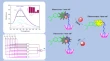
<p>The obtained powders were pressed under a pressure of 58 MPa for 5 min and further pressed with a pressure of 460 MPa for 30 min at room temperature to decrease the porosity of the bulk pellet. Therefore, a rectangular bar of the powders with dimensions 15.06 mm &#215; 5.03 mm &#215; 1.07 mm was obtained for electrical conductivity and Seebeck coefficient measurement. A four-probe method was adopted for electrical conductivity measurement illustrated in Figure <figr fid="F1">1b</figr>. Silver pastes dropped in two ends of the thermoelectric pellet were used as electrical contacts of the electrodes to the sample. The set up of Seebeck coefficient was illustrated in Figure <figr fid="F1">1d</figr>. To decrease the effect of contact resistance on experimental results, a temperature difference of about 1 to 4 K between cool and hot ends of the bulk pellet was used for Seebeck coefficient measurement. The temperature gradient was established in the sample when the electrical power was applied by a ceramic heater. The temperature differences (&#916;<it>T</it>) were determined by the nickel chromium-nickel silicon thermocouples. The two thermocouples were contacted with two ends of the pellet to determine the temperature change. Electrodes fixed on two ends of the thermoelectric pellet were used to monitor the Seebeck voltage drop between the two electrodes. Seebeck coefficients were determined from the slope of plots of sample voltage versus &#916;<it>T</it>: <it>S </it>= -&#916;<it>V</it>/&#916;<it>T</it>.</p>
<fig id="F1"><title><p>Figure 1</p></title><caption><p>Thermoelectric transport properties of the In2Te3 hierarchical structures</p></caption><text>
   <p><b>Thermoelectric transport properties of the In2Te3 hierarchical structures</b>: <b>(a) </b><it>I</it>-<it>V </it>characteristics obtained from the bulk pellet composed of the In<sub>2</sub>Te<sub>3 </sub>hierarchical structures;<b>(b) </b>The scheme of four-probe method; <b>(c) </b>Dependence of the Seebeck voltage as a function of temperature differences along the thermoelectric bulk pellet; <b>(d) </b>The set up of the measurement configuration for the Seebeck coefficient.</p>
</text><graphic file="1556-276X-6-329-1"/></fig>
</sec>
</sec>
<sec>
<st>
<p>Results and discussion</p>
</st>
<sec>
<st>
<p>Phase and morphology characterization of the In<sub>2</sub>Te<sub>3 </sub>hierarchical structures</p>
</st>
<p>The morphology and size of the as-synthesized products were characterized by FE-SEM on a Cu substrate. The FE-SEM images show a large number of hierarchical structures, each of which consists of arrays of small nanoplatelets which is similar to nanostring-cluster structure. Figure <figr fid="F2">2a</figr> shows a FE-SEM image of the In<sub>2</sub>Te<sub>3 </sub>hierarchical structures with diameter from 100 nm to 2 &#956;m and length from several to over 100 &#956;m, under a typically solvothermal reaction with In(NO<sub>3</sub>)<sub>3 </sub>and Na<sub>2</sub>TeO<sub>3 </sub>as the reactants, and EDA as the reductant and complexing agent at 200&#176;C for 24 h. Figure <figr fid="F2">2b</figr> shows that a typically well-oriented nanoplatelet in the hierarchical structures possesses an edge length of approx. 700 nm and a thickness of approx. 150 nm. The phase purity and crystallographic structure of the products were determined by X-ray powder diffraction (XRD) with Cu K&#945; radiation. Figure <figr fid="F3">3a</figr> shows the transformation from <it>t</it>-Te nanowires to In<sub>2</sub>Te<sub>3 </sub>hierarchical structures occurred with increasing the reaction duration. As shown in Figure <figr fid="F3">3a</figr>, the as-synthesized In<sub>2</sub>Te<sub>3 </sub>hierarchical structures at 200&#176;C for 24 h exhibited three broad peaks at 2&#952; = 25.02, 41.40, and 49.02, which were assignable to diffractions of the (511), (822), and (933) planes, respectively. In addition, five weak peaks at 2&#952; = 27.58, 28.92, 59.92, 66.02, and 75.46 were assignable to diffractions of the (440), (600), (1200), (993), and (1266), respectively. The diffraction peaks can be indexed to the purely fcc phase of In<sub>2</sub>Te<sub>3 </sub>(space group: F4\overline 3 m, no. 216) with lattice constants of <it>a </it>= <it>b </it>= <it>c </it>= 1.848 nm (JCPDS card: 33-1488). No other peaks from any other phases of indium telluride were detected. The crystal structure, as seen in Figure <figr fid="F3">3b</figr>, shows strong covalent bonding within each layer and a weak van der Waals force between the layers. Thus, the appearance of nanoplatelets on the wires is understandable due to the planar sheetlike nature of the building blocks. In other words, growth of the nanoplatelets is actually the outward embodiment of the internal crystal structure in this case.</p>
<fig id="F2"><title><p>Figure 2</p></title><caption><p>FE-SEM images of the In<sub>2</sub>Te<sub>3 </sub>hierarchical structures prepared at 200&#176;C for 24 h</p></caption><text>
   <p><b>FE-SEM images of the In</b><sub><b>2</b></sub><b>Te</b><sub><b>3 </b></sub><b>hierarchical structures prepared at 200&#176;C for 24 h</b>:<b>(a) </b>low magnification and <b>(b) </b>high magnification.</p>
</text><graphic file="1556-276X-6-329-2"/></fig>
<fig id="F3"><title><p>Figure 3</p></title><caption><p>XRD patterns and crystal structure of the as-synthesized In2Te3 hierarchical structures</p></caption><text>
   <p><b>XRD patterns and crystal structure of the as-synthesized In2Te3 hierarchical structures</b>: <b>(a) </b>Powder XRD patterns of the samples synthesized with different durations: 3, 6, 12, 18, and 24 h. The Miller indices correspond to bulk cubic In<sub>2</sub>Te<sub>3 </sub>crystals; <b>(b) </b>Layered crystal structure of bulk In<sub>2</sub>Te<sub>3</sub>. The peaks positions of the bulk In<sub>2</sub>Te<sub>3 </sub>XRD profile are indicated by short dashed lines for comparison.</p>
</text><graphic file="1556-276X-6-329-3"/></fig>
<p>The detailed structure of the products was further characterized by TEM. Figure <figr fid="F4">4a</figr> exhibits the TEM image of a typical &#945;-In<sub>2</sub>Te<sub>3 </sub>hierarchical structure. Reliable electron diffraction patterns and high-resolution TEM images are difficult to obtain because of the partial melting of the samples under electron-beam irradiation at 200 kV, which could be obviously seen in Figure <figr fid="F4">4a</figr>. However, XRD pattern (Figure <figr fid="F3">3a</figr>) and FE-SEM images (Figure <figr fid="F2">2</figr>) show that the obtained hierarchical structures are polycrystalline. EDX spectrum reveals an atomic ratio of In:Te = 42.81:57.19 (Figure <figr fid="F4">4b</figr>), close to the stoichiometric In<sub>2</sub>Te<sub>3 </sub>within experimental errors. The signals for Cu, Cr peak were originated from the substrate.</p>
<fig id="F4"><title><p>Figure 4</p></title><caption><p>TEM image and EDX pattern of the as-synthesized In2Te3 hierarchical structures</p></caption><text>
   <p><b>TEM image and EDX pattern of the as-synthesized In2Te3 hierarchical structures</b>: <b>(a) </b>TEM image of the In<sub>2</sub>Te<sub>3 </sub>hierarchical structures prepared at 200&#176;C for 24 h; <b>(b) </b>EDX pattern of the samples taken from the TEM image. The signals for Cu, Cr peaks are originated from the substrate.</p>
</text><graphic file="1556-276X-6-329-4"/></fig>
</sec>
<sec>
<st>
<p>Growth mechanism of the In<sub>2</sub>Te<sub>3 </sub>hierarchical structures</p>
</st>
<p>To understand the growth process of the In<sub>2</sub>Te<sub>3 </sub>hierarchical structures, the effects of the reaction duration, temperature, volume ratio of EDA/EG, concentration of In(NO<sub>3</sub>)<sub>3 </sub>on the resulting products were systematically investigated (Figure <figr fid="F3">3</figr>, <figr fid="F4">4</figr>, <figr fid="F5">5</figr>, <figr fid="F6">6</figr> and <figr fid="F7">7</figr>). (1) Time-dependent experiments in EDA at 200&#176;C were performed to gain insight into the formation process of the hierarchical structures. The obtained product was nearly pure hexagonal <it>t</it>-Te nanowires within 3 h at 200&#176;C (Figures <figr fid="F3">3a</figr> and <figr fid="F5">5a</figr>). Some flower-like In<sub>2</sub>Te<sub>3 </sub>nanoparticles appeared on the surface of the nanowires when the reaction duration was increased to 6 h (Figure <figr fid="F5">5b</figr>). Prolonging the reaction duration to 12 h, the same results as that of 6 h were produced (Figures <figr fid="F3">3a</figr> and <figr fid="F5">5c</figr>). Extending the reaction duration to 18 h caused smooth nanowires to grow into the wires with rough surface composed of nanoparticles (Figure <figr fid="F5">5d</figr>). The above results show that the intermediate morphology composed of the Te nanowires and In<sub>2</sub>Te<sub>3 </sub>nanoplates can be produced in 6 and 12 h. Well-defined In<sub>2</sub>Te<sub>3 </sub>hierarchical structures were obtained when prolonging the reaction duration up to 24 h (Figures <figr fid="F2">2</figr> and <figr fid="F3">3a</figr>). Besides the ordered nanoplates, some nanowires were detected in the nanostructure, which suggests that the nanoplates nucleate and grow out of the nanowires. (2) When aged at 160&#176;C over 48 h, the nearly pure hexagonal <it>t</it>-Te nanowires were only formed (Figures <figr fid="F6">6b</figr> and <figr fid="F7">7b</figr>), but the FE-SEM images (Figure <figr fid="F6">6c</figr>) shows that some flower-like In<sub>2</sub>Te<sub>3 </sub>nanoparticles appeared on the surface of the nanowires. When aged at 220&#176;C over 24 h, the mixture of nanowires and nanoplates was produced, as shown in Figure <figr fid="F6">6d</figr>. Figure <figr fid="F7">7c</figr> exhibits the mixture mainly composed of <it>t</it>-Te nanowires. The indexed Te peaks are in good agreement with the standard literature data (JCPDF card number: 36-1452) in Figure <figr fid="F7">7</figr>. (3) The volume ratio of EDA/EG also plays an important role in structure and phase control of the resulting products (not shown). When pure EDA or EG was used in the reaction, pure cubic In<sub>2</sub>Te<sub>3 </sub>could not be got (not shown). Additionally, when the volume ratios of EDA/EG were 1:2, 1:12, or 1:16, pure cubic In<sub>2</sub>Te<sub>3 </sub>could also not be obtained. (4) When the other conditions remained the same, the concentration of In(NO<sub>3</sub>)<sub>3 </sub>was 13.25 mM, the obtained products were a mixture of In<sub>2</sub>Te<sub>3 </sub>and <it>t</it>-Te (not shown).</p>
<fig id="F5"><title><p>Figure 5</p></title><caption><p>FE-SEM images of the as-synthesized samples at different time intervals</p></caption><text>
   <p><b>FE-SEM images of the as-synthesized samples at different time intervals</b>: <b>(a) </b>3 h, <b>(b) </b>6 h, <b>(c) </b>12 h, and <b>(d) </b>18 h.</p>
</text><graphic file="1556-276X-6-329-5"/></fig>
<fig id="F6"><title><p>Figure 6</p></title><caption><p>FE-SEM images of the as-synthesized samples at different temperatures and durations</p></caption><text>
   <p><b>FE-SEM images of the as-synthesized samples at different temperatures and durations</b>: <b>(a) </b>160&#176;C for 24 h, <b>(b) </b>and <b>(c) </b>160&#176;C for 48 h, and <b>(d) </b>220&#176;C for 24 h.</p>
</text><graphic file="1556-276X-6-329-6"/></fig>
<fig id="F7"><title><p>Figure 7</p></title><caption><p>Powder X-ray diffraction patterns of the as-synthesized samples with different temperatures and durations</p></caption><text>
   <p><b>Powder X-ray diffraction patterns of the as-synthesized samples with different temperatures and durations</b>: <b>(a) </b>160&#176;C for 24 h, <b>(b) </b>160&#176;C for 48 h, and <b>(c) </b>220&#176;C for 24 h.</p>
</text><graphic file="1556-276X-6-329-7"/></fig>
<p>On the basis of the above experimental results, a diffusion-limited reaction mechanism can be reasonably used to explain the formation of the In<sub>2</sub>Te<sub>3 </sub>hierarchical structures. The chemical reactions to form the hierarchical structures are formulated as follows:</p>
<p>
<display-formula id="M1">
<graphic file="1556-276X-6-329-i2.gif"/>
</display-formula>
</p>
<p>
<display-formula id="M2">
<graphic file="1556-276X-6-329-i3.gif"/>
</display-formula>
</p>
<p>
<display-formula id="M3">
<graphic file="1556-276X-6-329-i4.gif"/>
</display-formula>
</p>
<p>
<display-formula id="M4">
<graphic file="1556-276X-6-329-i5.gif"/>
</display-formula>
</p>
<p>
<display-formula id="M5">
<graphic file="1556-276X-6-329-i6.gif"/>
</display-formula>
</p>
<p>In the reaction system, acetaldehyde is produced by dehydration of EG at high temperature, as shown in Equation 1. The EG acted as both solvent and reductant in this case, and <inline-formula>
<graphic file="1556-276X-6-329-i7.gif"/>
</inline-formula> ions were reduced by EG to form elemental Te at the beginning of the reaction, which is shown in Equation 2. The reaction (2) was a quick step, which determined the formation of <it>t</it>-Te nanowires at the beginning of the reaction. The EDA plays an important role in the transformation process from the <it>t</it>-Te nanowires to the hierarchical In<sub>2</sub>Te<sub>3 </sub>nanowires because strongly basic solvents, such as ammonia and EDA, can reduce Te into Te<sup>2- </sup>with a low speed (Equation 3). This leads to the formation of nanoporous structures on the surface of the nanowires (Figure <figr fid="F5">5b, c</figr>); meanwhile, a complex is formed by the reaction of the solvent EDA molecule and the metal In<sup>3+ </sup>ions. In this complex, each In<sup>3+ </sup>is surrounded by six NH<sub>2 </sub>group, similar to Co<sup>3+ </sup>
<abbrgrp>
<abbr bid="B34">34</abbr>
</abbrgrp>. Although In<sup>3+ </sup>is combined with the <it>t</it>-Te and reduced into indium by the EDA <it>in situ </it>near the surface of the template <it>t</it>-Te nanowires at high temperature and high pressure, as Equation 4, In<sup>3+ </sup>has little solubility in EDA at room temperature and atmosphere <abbrgrp>
<abbr bid="B35">35</abbr>
</abbrgrp>. Thus, indium atoms can quickly diffuse into the <it>t</it>-Te nanowires. With increasing the reaction duration, the molar ratio of In:Te is close to the stoichiometric composition of In<sub>2</sub>Te<sub>3 </sub>(Figure <figr fid="F4">4b</figr>). The transformation mechanism of the <it>t</it>-Te nanowires to the In<sub>2</sub>Te<sub>3 </sub>hierarchical structures is shown in Figure <figr fid="F8">8</figr>.</p>
<fig id="F8"><title><p>Figure 8</p></title><caption><p>A schematic of the formation mechanism of the In<sub>2</sub>Te<sub>3 </sub>hierarchical structures</p></caption><text>
   <p><b>A schematic of the formation mechanism of the In</b><sub><b>2</b></sub><b>Te</b><sub><b>3 </b></sub><b>hierarchical structures</b>.</p>
</text><graphic file="1556-276X-6-329-8"/></fig>
</sec>
<sec>
<st>
<p>Thermoelectric transport properties of the In<sub>2</sub>Te<sub>3 </sub>hierarchical structures</p>
</st>
<p>To evaluate thermoelectric properties of the In<sub>2</sub>Te<sub>3 </sub>hierarchical structures, the room-temperature electrical conductivity and Seebeck coefficient of the bulk pellets were measured, which were pressed using the as-prepared powders at 460 MPa for 30 min. The Seebeck voltage measured between cool and hot ends of the bulk pellet varies linearly with the temperature difference. The slope yields a Seebeck coefficient of -300 &#956;V/K (Figure <figr fid="F1">1c</figr>). The negative sign indicates that the bulk pellet behaves as a n-type semiconductor, which is consistent with the EDX result (Figure <figr fid="F4">4b</figr>). The Seebeck coefficient of the bulk pellet is about 43% enhancement over 210 &#956;V/K of the reported corresponding best thin film sample (seen in ref. <abbrgrp>
<abbr bid="B25">25</abbr>
</abbrgrp>). Additionally, the bulk pellet exhibits a linear current-voltage (<it>I-V</it>) curve (see Figure <figr fid="F1">1a</figr>) that is symmetric about the origin, indicating that the contacts are ohmic. The slope yields a resistance of 436 &#937;. An electrical conductivity &#963; of 6.42 &#937;<sup>-1 </sup>m<sup>-1 </sup>can be obtained by using an average bulk pellet thickness in a 1D electrical transport model, which is one to two orders of magnitude higher than that of the corresponding thin film sample (0.66 &#937;<sup>-1 </sup>m<sup>-1</sup>) <abbrgrp>
<abbr bid="B26">26</abbr>
<abbr bid="B36">36</abbr>
</abbrgrp>, and four orders of magnitude higher than that of the corresponding p-type bulk sample <abbrgrp>
<abbr bid="B37">37</abbr>
</abbrgrp>. In addition, bulk In<sub>2</sub>Te<sub>3 </sub>has very small thermal conductivity about 1.4 W (m K)<sup>-1 </sup>
<abbrgrp>
<abbr bid="B25">25</abbr>
</abbrgrp>. The thermal conductivity will further decrease by nanostructuring corresponding thermoelectric materials <abbrgrp>
<abbr bid="B2">2</abbr>
<abbr bid="B38">38</abbr>
</abbrgrp>.</p>
</sec>
</sec>
<sec>
<st>
<p>Conclusions</p>
</st>
<p>In summary, a simple, reproducible, surfactant-free, and high-efficient solvothermal approach has been for the first time developed to successfully synthesize n-type &#945;-In<sub>2</sub>Te<sub>3 </sub>thermoelectric nanomaterials. The nanostring-cluster hierarchical structure were prepared using In(NO<sub>3</sub>)<sub>3 </sub>and Na<sub>2</sub>TeO<sub>3 </sub>as the reactants, EDA as the reducing and complexing agent, and EG as the reductant and solvent at 200&#176;C for 24 h. The typically well-oriented platelet in the hierarchical structures possesses an edge length of approx. 700 nm and a thickness of approx. 150 nm. A diffusion-limited reaction mechanism based on the XRD patterns and FE-SEM images with different durations was proposed to explain the formation of the In<sub>2</sub>Te<sub>3 </sub>hierarchical structures. <it>t</it>-Te nanowires are formed initially using EG as the reductant. Then In<sup>3+ </sup>is reduced into indium by EDA at high temperature and high pressure. Finally, the hierarchically structural In<sub>2</sub>Te<sub>3 </sub>can be obtained by reacting indium and <it>t</it>-Te. The room temperature Seebeck coefficient of the bulk pellet pressed by the obtained samples exhibits a 43% enhancement over that of the reported corresponding thin film. The electrical conductivity of the bulk pellet is one to four orders of magnitude higher than that of the corresponding thin film or p-type bulk sample. This is a promising approach to grow semiconducting telluride nanostructures through a solution-based chemical route under controlled conditions without the presence of any catalysts or templates.</p>
</sec>
<sec>
<st>
<p>Abbreviations</p>
</st>
<p>EDA: ethylenediamine; EDX: energy dispersive X-ray spectroscopy; EG: ethyleneglycol; FE-SEM: field-emission scanning electron microscopy; TEM: transmission electron microscope; XRD: X-ray powder diffraction.</p>
</sec>
<sec>
<st>
<p>Competing interests</p>
</st>
<p>The authors declare that they have no competing interests.</p>
</sec>
<sec>
<st>
<p>Authors' contributions</p>
</st>
<p>The work presented here was carried out in collaboration between all authors. GT designed and guided all aspects of the work. CM, YW, and YB carried out the experiments. HZ, and WG participated in the design of the study and revised the manuscript. All authors have contributed to, seen, and approved the manuscript.</p>
</sec>
</bdy><bm>
<ack>
<sec>
<st>
<p>Acknowledgements</p>
</st>
<p>This work is supported by the 973 Program (no. 2007CB936204), National NSF (no. 10732040), Jiangsu Province NSF (BK2008042), GT is supported by National and Jiangsu Province Postdoctoral Science Foundation (201003582, 20090451207, 0901073C), Jiangsu Province NSF (BK2010501), RFDP Funding (20103218120035), and NUAA Research Funding (4015-909322, NS2010220).</p>
</sec>
</ack>
<refgrp><bibl id="B1"><title><p>Cooling, heating, generating power, and recovering waste heat with thermoelectric systems</p></title><aug><au><snm>Bell</snm><fnm>LE</fnm></au></aug><source>Science</source><pubdate>2008</pubdate><volume>321</volume><fpage>1457</fpage><lpage>1461</lpage><xrefbib><pubidlist><pubid idtype="doi">10.1126/science.1158899</pubid><pubid idtype="pmpid" link="fulltext">18787160</pubid></pubidlist></xrefbib></bibl><bibl id="B2"><title><p>New directions for low-dimensional thermoelectric materials</p></title><aug><au><snm>Dresselhaus</snm><fnm>MS</fnm></au><au><snm>Chen</snm><fnm>G</fnm></au><au><snm>Tang</snm><fnm>MY</fnm></au><au><snm>Yang</snm><fnm>RG</fnm></au><au><snm>Lee</snm><fnm>H</fnm></au><au><snm>Wang</snm><fnm>DZ</fnm></au><au><snm>Ren</snm><fnm>ZF</fnm></au><au><snm>Fleurial</snm><fnm>JP</fnm></au><au><snm>Gogna</snm><fnm>PW</fnm></au></aug><source>Adv Mater</source><pubdate>2007</pubdate><volume>19</volume><fpage>1</fpage><lpage>12</lpage><xrefbib><pubid idtype="doi">10.1002/adma.200600527</pubid></xrefbib></bibl><bibl id="B3"><title><p>Thermoelectric materials, phenomena, and applications: a bird's eye view</p></title><aug><au><snm>Tritt</snm><fnm>TM</fnm></au><au><snm>Subramanian</snm><fnm>MA</fnm></au></aug><source>MRS Bull</source><pubdate>2006</pubdate><volume>31</volume><fpage>188</fpage><lpage>194</lpage><xrefbib><pubid idtype="doi">10.1557/mrs2006.44</pubid></xrefbib></bibl><bibl id="B4"><title><p>Structural characterization and thermoelectric transport properties of uniform single-crystalline lead telluride nanowires</p></title><aug><au><snm>Tai</snm><fnm>GA</fnm></au><au><snm>Zhou</snm><fnm>B</fnm></au><au><snm>Guo</snm><fnm>W</fnm></au></aug><source>J Phys Chem C</source><pubdate>2008</pubdate><volume>112</volume><fpage>11314</fpage><lpage>11318</lpage><xrefbib><pubid idtype="doi">10.1021/jp8041318</pubid></xrefbib></bibl><bibl id="B5"><aug><au><snm>Rowe</snm><fnm>DM</fnm></au></aug><source>CRC Handbook of Thermoelectrics</source><publisher>Boca Raton, FL: CRC Press</publisher><pubdate>1995</pubdate><fpage>701</fpage></bibl><bibl id="B6"><title><p>Complex thermoelectric materials</p></title><aug><au><snm>Snyder</snm><fnm>GJ</fnm></au><au><snm>Toberer</snm><fnm>ES</fnm></au></aug><source>Nat Mater</source><pubdate>2008</pubdate><volume>7</volume><fpage>105</fpage><lpage>114</lpage><xrefbib><pubidlist><pubid idtype="doi">10.1038/nmat2090</pubid><pubid idtype="pmpid" link="fulltext">18219332</pubid></pubidlist></xrefbib></bibl><bibl id="B7"><title><p>High-thermoelectric performance of nanostructured bismuth antimony telluride bulk alloys</p></title><aug><au><snm>Poudel</snm><fnm>B</fnm></au><au><snm>Hao</snm><fnm>Q</fnm></au><au><snm>Ma</snm><fnm>Y</fnm></au><au><snm>Lan</snm><fnm>YC</fnm></au><au><snm>Minnich</snm><fnm>A</fnm></au><au><snm>Yu</snm><fnm>B</fnm></au><au><snm>Yan</snm><fnm>X</fnm></au><au><snm>Wang</snm><fnm>DZ</fnm></au><au><snm>Muto</snm><fnm>A</fnm></au><au><snm>Vashaee</snm><fnm>D</fnm></au><au><snm>Chen</snm><fnm>XY</fnm></au><au><snm>Liu</snm><fnm>JM</fnm></au><au><snm>Dresselhaus</snm><fnm>MS</fnm></au><au><snm>Chen</snm><fnm>G</fnm></au><au><snm>Ren</snm><fnm>ZF</fnm></au></aug><source>Science</source><pubdate>2008</pubdate><volume>320</volume><fpage>634</fpage><lpage>638</lpage><xrefbib><pubidlist><pubid idtype="doi">10.1126/science.1156446</pubid><pubid idtype="pmpid" link="fulltext">18356488</pubid></pubidlist></xrefbib></bibl><bibl id="B8"><title><p>Enhancement of thermoelectric efficiency in PbTe by distortion of the electronic density of states</p></title><aug><au><snm>Heremans</snm><fnm>JP</fnm></au><au><snm>Jovovic</snm><fnm>V</fnm></au><au><snm>Toberer</snm><fnm>ES</fnm></au><au><snm>Saramat</snm><fnm>A</fnm></au><au><snm>Kurosaki</snm><fnm>K</fnm></au><au><snm>Charoenphakdee</snm><fnm>A</fnm></au><au><snm>Yamanaka</snm><fnm>S</fnm></au><au><snm>Snyder</snm><fnm>GJ</fnm></au></aug><source>Science</source><pubdate>2008</pubdate><volume>321</volume><fpage>554</fpage><lpage>557</lpage><xrefbib><pubidlist><pubid idtype="doi">10.1126/science.1159725</pubid><pubid idtype="pmpid" link="fulltext">18653890</pubid></pubidlist></xrefbib></bibl><bibl id="B9"><title><p>Synthesis and thermoelectric properties of Bi<sub>2</sub>Se<sub>3 </sub>nanostructures</p></title><aug><au><snm>Kadel</snm><fnm>K</fnm></au><au><snm>Kumari</snm><fnm>L</fnm></au><au><snm>Li</snm><fnm>WZ</fnm></au><au><snm>Huang</snm><fnm>JY</fnm></au><au><snm>Provencio</snm><fnm>PP</fnm></au></aug><source>Nanoscale Res Lett</source><pubdate>2011</pubdate><volume>6</volume><fpage>57</fpage></bibl><bibl id="B10"><title><p>Thermal contraction of electrodeposited Bi/BiSb superlattice nanowires</p></title><aug><au><snm>Dou</snm><fnm>XC</fnm></au><au><snm>Li</snm><fnm>GH</fnm></au><au><snm>Huang</snm><fnm>XH</fnm></au><au><snm>Li</snm><fnm>L</fnm></au></aug><source>Nanoscale Res Lett</source><pubdate>2010</pubdate><volume>5</volume><fpage>1118</fpage><lpage>1123</lpage><xrefbib><pubidlist><pubid idtype="doi">10.1007/s11671-010-9611-4</pubid><pubid idtype="pmcid">2893938</pubid><pubid idtype="pmpid">20596460</pubid></pubidlist></xrefbib></bibl><bibl id="B11"><title><p>Enhanced thermoelectric performance of rough silicon nanowires</p></title><aug><au><snm>Hochbaum</snm><fnm>AI</fnm></au><au><snm>Chen</snm><fnm>RK</fnm></au><au><snm>Delgado</snm><fnm>RZ</fnm></au><au><snm>Liang</snm><fnm>WJ</fnm></au><au><snm>Garnett</snm><fnm>EC</fnm></au><au><snm>Najarian</snm><fnm>M</fnm></au><au><snm>Majumdar</snm><fnm>A</fnm></au><au><snm>Yang</snm><fnm>PD</fnm></au></aug><source>Nature</source><pubdate>2008</pubdate><volume>451</volume><fpage>163</fpage><lpage>167</lpage><xrefbib><pubidlist><pubid idtype="doi">10.1038/nature06381</pubid><pubid idtype="pmpid" link="fulltext">18185582</pubid></pubidlist></xrefbib></bibl><bibl id="B12"><title><p>Silicon nanowires as efficient thermoelectric materials</p></title><aug><au><snm>Boukai</snm><fnm>A</fnm></au><au><snm>Bunimovich</snm><fnm>Y</fnm></au><au><snm>Tahir-Kheli</snm><fnm>J</fnm></au><au><snm>Yu</snm><fnm>JK</fnm></au><au><snm>Goddard</snm><fnm>WA</fnm></au><au><snm>Heath</snm><fnm>JR</fnm></au></aug><source>Nature</source><pubdate>2008</pubdate><volume>451</volume><fpage>168</fpage><lpage>171</lpage><xrefbib><pubidlist><pubid idtype="doi">10.1038/nature06458</pubid><pubid idtype="pmpid" link="fulltext">18185583</pubid></pubidlist></xrefbib></bibl><bibl id="B13"><title><p>Thin-film thermoelectric devices with high room-temperature figures of merit</p></title><aug><au><snm>Venkatasubramanian</snm><fnm>R</fnm></au><au><snm>Siivola</snm><fnm>E</fnm></au><au><snm>Colpitts</snm><fnm>T</fnm></au><au><snm>O'Quinn</snm><fnm>B</fnm></au></aug><source>Nature</source><pubdate>2001</pubdate><volume>413</volume><fpage>597</fpage><lpage>602</lpage><xrefbib><pubidlist><pubid idtype="doi">10.1038/35098012</pubid><pubid idtype="pmpid" link="fulltext">11595940</pubid></pubidlist></xrefbib></bibl><bibl id="B14"><title><p>Quantum dot superlattice thermoelectric materials and devices</p></title><aug><au><snm>Harman</snm><fnm>TC</fnm></au><au><snm>Taylor</snm><fnm>PJ</fnm></au><au><snm>Walsh</snm><fnm>MP</fnm></au><au><snm>LaForge</snm><fnm>BE</fnm></au></aug><source>Science</source><pubdate>2002</pubdate><volume>297</volume><fpage>2229</fpage><lpage>2232</lpage><xrefbib><pubidlist><pubid idtype="doi">10.1126/science.1072886</pubid><pubid idtype="pmpid" link="fulltext">12351781</pubid></pubidlist></xrefbib></bibl><bibl id="B15"><title><p>Peierls distortion as a route to high thermoelectric performance in In<sub>4</sub>Se<sub>3</sub>-&#948; crystals</p></title><aug><au><snm>Rhyee</snm><fnm>JS</fnm></au><au><snm>Lee</snm><fnm>KH</fnm></au><au><snm>Lee</snm><fnm>SM</fnm></au><au><snm>Cho</snm><fnm>E</fnm></au><au><snm>Kim</snm><fnm>S</fnm></au><au><snm>Lee</snm><fnm>E</fnm></au><au><snm>Kwon</snm><fnm>YS</fnm></au><au><snm>Shim</snm><fnm>JH</fnm></au><au><snm>Kotliar</snm><fnm>G</fnm></au></aug><source>Nature</source><pubdate>2009</pubdate><volume>459</volume><fpage>965</fpage><lpage>968</lpage><xrefbib><pubidlist><pubid idtype="doi">10.1038/nature08088</pubid><pubid idtype="pmpid" link="fulltext">19536260</pubid></pubidlist></xrefbib></bibl><bibl id="B16"><title><p>Nanostructured PbTe compound synthesized by a simple chemical route</p></title><aug><au><snm>Cao</snm><fnm>YQ</fnm></au><au><snm>Zhu</snm><fnm>TJ</fnm></au><au><snm>Zhao</snm><fnm>XB</fnm></au></aug><source>J Alloys Compd</source><pubdate>2010</pubdate><volume>493</volume><fpage>423</fpage><lpage>426</lpage><xrefbib><pubid idtype="doi">10.1016/j.jallcom.2009.12.116</pubid></xrefbib></bibl><bibl id="B17"><title><p>Hierarchically ordered structures by converging holographic lithography and surfactant templating</p></title><aug><au><snm>Lee</snm><fnm>SK</fnm></au><au><snm>Park</snm><fnm>H</fnm></au><au><snm>Yi</snm><fnm>GR</fnm></au><au><snm>Yang</snm><fnm>SM</fnm></au></aug><source>Chem Mater</source><pubdate>2010</pubdate><volume>22</volume><fpage>4117</fpage><lpage>4119</lpage><xrefbib><pubid idtype="doi">10.1021/cm1009527</pubid></xrefbib></bibl><bibl id="B18"><title><p>Controllable synthesis and shape evolution of PbTe three-dimensional hierarchical superstructures via an alkaline hydrothermal method</p></title><aug><au><snm>Zhu</snm><fnm>TJ</fnm></au><au><snm>Chen</snm><fnm>X</fnm></au><au><snm>Cao</snm><fnm>YQ</fnm></au><au><snm>Zhao</snm><fnm>XB</fnm></au></aug><source>J Phys Chem C</source><pubdate>2009</pubdate><volume>113</volume><fpage>8085</fpage><lpage>8091</lpage><xrefbib><pubid idtype="doi">10.1021/jp900452b</pubid></xrefbib></bibl><bibl id="B19"><title><p>Hierarchical surface patterns of nanorods obtained by co-assembly with block copolymers in ultrathin films</p></title><aug><au><snm>Ploshnik</snm><fnm>E</fnm></au><au><snm>Salant</snm><fnm>A</fnm></au><au><snm>Banin</snm><fnm>U</fnm></au><au><snm>Shenhar</snm><fnm>R</fnm></au></aug><source>Adv Mater</source><pubdate>2010</pubdate><volume>22</volume><fpage>2774</fpage><lpage>2779</lpage><xrefbib><pubidlist><pubid idtype="doi">10.1002/adma.201000573</pubid><pubid idtype="pmpid" link="fulltext">20414889</pubid></pubidlist></xrefbib></bibl><bibl id="B20"><title><p>Biomolecule-assisted hydrothermal synthesis and self-assembly of Bi<sub>2</sub>Te<sub>3 </sub>nanostring-cluster hierarchical structure</p></title><aug><au><snm>Mi</snm><fnm>JL</fnm></au><au><snm>Lock</snm><fnm>N</fnm></au><au><snm>Sun</snm><fnm>T</fnm></au><au><snm>Christensen</snm><fnm>M</fnm></au><au><snm>S&#248;ndergaard</snm><fnm>M</fnm></au><au><snm>Hald</snm><fnm>P</fnm></au><au><snm>Hng</snm><fnm>HH</fnm></au><au><snm>Ma</snm><fnm>J</fnm></au><au><snm>Iversen</snm><fnm>BB</fnm></au></aug><source>ACS Nano</source><pubdate>2010</pubdate><volume>4</volume><fpage>2523</fpage><lpage>2530</lpage><xrefbib><pubidlist><pubid idtype="doi">10.1021/nn100267q</pubid><pubid idtype="pmpid" link="fulltext">20405872</pubid></pubidlist></xrefbib></bibl><bibl id="B21"><title><p>Inorganic salt-induced phase control and optical characterization of cadmium sulfide nanoparticles</p></title><aug><au><snm>Tai</snm><fnm>G</fnm></au><au><snm>Zhou</snm><fnm>JX</fnm></au><au><snm>Guo</snm><fnm>W</fnm></au></aug><source>Nanotechnology</source><pubdate>2010</pubdate><volume>21</volume><fpage>175601</fpage><xrefbib><pubidlist><pubid idtype="doi">10.1088/0957-4484/21/17/175601</pubid><pubid idtype="pmpid" link="fulltext">20357414</pubid></pubidlist></xrefbib></bibl><bibl id="B22"><title><p>Intrinsic vacancy-induced nanoscale wire structure in heteroepitaxial Ga<sub>2</sub>Se<sub>3</sub>/Si(001)</p></title><aug><au><snm>Ohta</snm><fnm>T</fnm></au><au><snm>Schmidt</snm><fnm>DA</fnm></au><au><snm>Meng</snm><fnm>S</fnm></au><au><snm>Klust</snm><fnm>A</fnm></au><au><snm>Bostwick</snm><fnm>A</fnm></au><au><snm>Yu</snm><fnm>Q</fnm></au><au><snm>Olmstead</snm><fnm>MA</fnm></au><au><snm>Ohuchi</snm><fnm>FS</fnm></au></aug><source>Phys Rev Lett</source><pubdate>2005</pubdate><volume>94</volume><fpage>116102</fpage><xrefbib><pubidlist><pubid idtype="doi">10.1103/PhysRevLett.94.116102</pubid><pubid idtype="pmpid" link="fulltext">15903873</pubid></pubidlist></xrefbib></bibl><bibl id="B23"><title><p>Unexpectedly low thermal conductivity in natural nanostructured bulk Ga<sub>2</sub>Te<sub>3</sub></p></title><aug><au><snm>Kurosaki</snm><fnm>K</fnm></au><au><snm>Matsumoto</snm><fnm>H</fnm></au><au><snm>Charoenphakdee</snm><fnm>A</fnm></au><au><snm>Yamanaka</snm><fnm>S</fnm></au><au><snm>Ishimaru</snm><fnm>M</fnm></au><au><snm>Hirotsu</snm><fnm>Y</fnm></au></aug><source>Appl Phys Lett</source><pubdate>2008</pubdate><volume>93</volume><fpage>012101</fpage><xrefbib><pubid idtype="doi">10.1063/1.2940591</pubid></xrefbib></bibl><bibl id="B24"><title><p>Synthesis, optical properties, and self-assembly of ultrathin hexagonal In<sub>2</sub>S<sub>3 </sub>nanoplates</p></title><aug><au><snm>Park</snm><fnm>KH</fnm></au><au><snm>Jang</snm><fnm>K</fnm></au><au><snm>Son</snm><fnm>SU</fnm></au></aug><source>Angew Chem Int Ed</source><pubdate>2006</pubdate><volume>45</volume><fpage>4608</fpage><lpage>4612</lpage><xrefbib><pubid idtype="doi">10.1002/anie.200601031</pubid></xrefbib></bibl><bibl id="B25"><title><p>Thermoelectric characterization of (Ga,In)<sub>2</sub>Te<sub>3 </sub>with self-assembled two-dimensional vacancy planes</p></title><aug><au><snm>Yamanaka</snm><fnm>S</fnm></au><au><snm>Ishimaru</snm><fnm>M</fnm></au><au><snm>Charoenphakdee</snm><fnm>A</fnm></au><au><snm>Matsumoto</snm><fnm>H</fnm></au><au><snm>Kurosaki</snm><fnm>K</fnm></au></aug><source>J Electron Mater</source><pubdate>2009</pubdate><volume>38</volume><fpage>1392</fpage><lpage>1396</lpage><xrefbib><pubid idtype="doi">10.1007/s11664-008-0654-6</pubid></xrefbib></bibl><bibl id="B26"><title><p>Investigation of thermoelectric power in indium sesquitelluride(In<sub>2</sub>Te<sub>3</sub>) thin films</p></title><aug><au><snm>Lakshminarayana</snm><fnm>D</fnm></au><au><snm>Patel</snm><fnm>PB</fnm></au><au><snm>Desai</snm><fnm>RR</fnm></au><au><snm>Panchal</snm><fnm>CJ</fnm></au></aug><source>J Mater Sci Mater Electron</source><pubdate>2002</pubdate><volume>13</volume><fpage>27</fpage><lpage>30</lpage><xrefbib><pubid idtype="doi">10.1023/A:1013142929482</pubid></xrefbib></bibl><bibl id="B27"><title><p>Electrical and optical properties of indium sesquitelluride (In<sub>2</sub>Te<sub>3</sub>) thin films</p></title><aug><au><snm>Desai</snm><fnm>RR</fnm></au><au><snm>Lakshminarayana</snm><fnm>D</fnm></au><au><snm>Patel</snm><fnm>PB</fnm></au><au><snm>Panchal</snm><fnm>CJ</fnm></au></aug><source>J Mater Sci</source><pubdate>2006</pubdate><volume>41</volume><fpage>2019</fpage><lpage>2023</lpage><xrefbib><pubid idtype="doi">10.1007/s10853-006-4502-x</pubid></xrefbib></bibl><bibl id="B28"><title><p>The switching phenomenon in amorphous In<sub>2</sub>Te<sub>3 </sub>thin films</p></title><aug><au><snm>Afifi</snm><fnm>MA</fnm></au><au><snm>Hegab</snm><fnm>NA</fnm></au><au><snm>Bekheet</snm><fnm>AE</fnm></au></aug><source>Vacuum</source><pubdate>1996</pubdate><volume>47</volume><fpage>265</fpage><lpage>269</lpage><xrefbib><pubid idtype="doi">10.1016/0042-207X(95)00198-0</pubid></xrefbib></bibl><bibl id="B29"><title><p>Dislocations and line charges in anisotropic piezoelectric insulators</p></title><aug><au><snm>Hughes</snm><fnm>OH</fnm></au><au><snm>Nikoli&#263;</snm><fnm>PM</fnm></au><au><snm>Doran</snm><fnm>CJ</fnm></au><au><snm>Vujatovi&#263;</snm><fnm>SS</fnm></au></aug><source>Phys Stat Sol (b)</source><pubdate>1975</pubdate><volume>71</volume><fpage>105</fpage><lpage>111</lpage><xrefbib><pubid idtype="doi">10.1002/pssb.2220710109</pubid></xrefbib></bibl><bibl id="B30"><title><p>Ultrahigh vacuum surface studies of the electrochemical atomic layer deposition of indium telluride on n-type GaAs(100)</p></title><aug><au><snm>Kim</snm><fnm>JY</fnm></au><au><snm>Stickney</snm><fnm>JL</fnm></au></aug><source>J Phys Chem C</source><pubdate>2008</pubdate><volume>112</volume><fpage>5966</fpage><lpage>5971</lpage><xrefbib><pubid idtype="doi">10.1021/jp7109669</pubid></xrefbib></bibl><bibl id="B31"><title><p>Growth and electrical transport properties of In<sub>2</sub>Te<sub>3 </sub>thin films</p></title><aug><au><snm>Mathur</snm><fnm>PC</fnm></au><au><snm>Kumar</snm><fnm>A</fnm></au><au><snm>Taneja</snm><fnm>OP</fnm></au><au><snm>Dawar</snm><fnm>AL</fnm></au></aug><source>Thin Solid Films</source><pubdate>1981</pubdate><volume>78</volume><fpage>377</fpage><lpage>383</lpage><xrefbib><pubid idtype="doi">10.1016/0040-6090(81)90041-9</pubid></xrefbib></bibl><bibl id="B32"><title><p>A novel method for preparing &#945;-In2Te3 polycrystalline thin films</p></title><aug><au><snm>Emziane</snm><fnm>M</fnm></au><au><snm>Berne&#193;de</snm><fnm>JC</fnm></au><au><snm>Ouerfelli</snm><fnm>JH</fnm></au><au><snm>Essaidi</snm><fnm>H</fnm></au><au><snm>Barreau</snm><fnm>A</fnm></au></aug><source>Mater Chem Phys</source><pubdate>1999</pubdate><volume>61</volume><fpage>229</fpage><lpage>236</lpage><xrefbib><pubid idtype="doi">10.1016/S0254-0584(99)00143-1</pubid></xrefbib></bibl><bibl id="B33"><title><p>The Influence of the substrate temperature on the preparation of thin film In<sub>2</sub>Te<sub>3</sub></p></title><aug><au><snm>Purkayastha</snm><fnm>SD</fnm></au><au><snm>Mukherjee</snm><fnm>JK</fnm></au><au><snm>Bose</snm><fnm>DN</fnm></au></aug><source>Thin Solid Films</source><pubdate>1980</pubdate><volume>74</volume><fpage>219</fpage><xrefbib><pubid idtype="doi">10.1016/0040-6090(80)90084-X</pubid></xrefbib></bibl><bibl id="B34"><title><p>The crystal structure of (+)-D-tris(ethylenediamine)cobalt(III) nitrate</p></title><aug><au><snm>Witiak</snm><fnm>D</fnm></au><au><snm>Clardy</snm><fnm>JC</fnm></au><au><snm>Jnr</snm><fnm>DSM</fnm></au></aug><source>Acta Crystallogr</source><pubdate>1972</pubdate><volume>B28</volume><fpage>2694</fpage><lpage>2699</lpage></bibl><bibl id="B35"><title><p>Synthesis by a solvothermal route and characterization of CuInSe<sub>2 </sub>nanowhiskers and nanoparticles</p></title><aug><au><snm>Li</snm><fnm>B</fnm></au><au><snm>Xie</snm><fnm>Y</fnm></au><au><snm>Huang</snm><fnm>JX</fnm></au><au><snm>Qian</snm><fnm>YT</fnm></au></aug><source>Adv Mater</source><pubdate>1999</pubdate><volume>11</volume><fpage>1456</fpage><lpage>1459</lpage><xrefbib><pubid idtype="doi">10.1002/(SICI)1521-4095(199912)11:17&lt;1456::AID-ADMA1456&gt;3.0.CO;2-3</pubid></xrefbib></bibl><bibl id="B36"><title><p>Electrical conductivity, optical absorption, and photoconductivity measurements of well oriented indium telluride thin films</p></title><aug><au><snm>Zahab</snm><fnm>AA</fnm></au><au><snm>Abd-Lefdil</snm><fnm>M</fnm></au><au><snm>Cadene</snm><fnm>M</fnm></au></aug><source>Phys Stat Sol (a)</source><pubdate>1990</pubdate><volume>117</volume><fpage>K103</fpage><xrefbib><pubid idtype="doi">10.1002/pssa.2211170237</pubid></xrefbib></bibl><bibl id="B37"><title><p>Characteristic features of electrical properties in In<sub>2</sub>Te<sub>3 </sub>single crystals</p></title><aug><au><snm>Hussein</snm><fnm>SA</fnm></au><au><snm>Nagat</snm><fnm>AT</fnm></au></aug><source>Phys Stat Sol (a)</source><pubdate>1989</pubdate><volume>114</volume><fpage>K205</fpage><xrefbib><pubid idtype="doi">10.1002/pssa.2211140259</pubid></xrefbib></bibl><bibl id="B38"><title><p>Large enhancement of the thermoelectric figure of merit in a ridged quantum well</p></title><aug><au><snm>Tavkhelidze</snm><fnm>A</fnm></au></aug><source>Nanotechnology</source><pubdate>2009</pubdate><volume>20</volume><fpage>405401</fpage><xrefbib><pubidlist><pubid idtype="doi">10.1088/0957-4484/20/40/405401</pubid><pubid idtype="pmpid" link="fulltext">19738314</pubid></pubidlist></xrefbib></bibl></refgrp>
</bm></art>



