<?xml version='1.0'?>
<!DOCTYPE art SYSTEM 'http://www.biomedcentral.com/xml/article.dtd'>
<art><ui>1556-276X-6-277</ui><ji>1556-276X</ji><fm>
<dochead>Nano Express</dochead>
<bibl>
<title>
<p>Simple two-step fabrication method of Bi<sub>2</sub>Te<sub>3 </sub>nanowires</p>
</title>
<aug>
<au id="A1"><snm>Kang</snm><fnm>Joohoon</fnm><insr iid="I1"/><email>joohoon@yonsei.ac.kr</email></au>
<au id="A2"><snm>Noh</snm><fnm>Jin-Seo</fnm><insr iid="I1"/><email>nohjins@hotmail.com</email></au>
<au ca="yes" id="A3"><snm>Lee</snm><fnm>Wooyoung</fnm><insr iid="I1"/><email>wooyoung@yonsei.ac.kr</email></au>
</aug>
<insg>
<ins id="I1"><p>Department of Materials Science and Engineering, Yonsei University, 262 Seongsanno, Seodaemun-gu, Seoul 120-749, Korea</p></ins>
</insg>
<source>Nanoscale Research Letters</source>
<issn>1556-276X</issn>
<pubdate>2011</pubdate>
<volume>6</volume>
<issue>1</issue>
<fpage>277</fpage>
<url>http://www.nanoscalereslett.com/content/6/1/277</url>
<xrefbib><pubidlist><pubid idtype="pmpid">21711810</pubid><pubid idtype="doi">10.1186/1556-276X-6-277</pubid></pubidlist></xrefbib>
</bibl>
<history><rec><date><day>1</day><month>11</month><year>2010</year></date></rec><acc><date><day>4</day><month>4</month><year>2011</year></date></acc><pub><date><day>4</day><month>4</month><year>2011</year></date></pub></history>
<cpyrt><year>2011</year><collab>Kang et al; licensee Springer.</collab><note>This is an Open Access article distributed under the terms of the Creative Commons Attribution License (<url>http://creativecommons.org/licenses/by/2.0</url>), which permits unrestricted use, distribution, and reproduction in any medium, provided the original work is properly cited.</note></cpyrt>
<abs>
<sec>
<st>
<p>Abstract</p>
</st>
<p>Bismuth telluride (Bi<sub>2</sub>Te<sub>3</sub>) is an attractive material for both thermoelectric and topological insulator applications. Its performance is expected to be greatly improved when the material takes nanowire structures. However, it is very difficult to grow high-quality Bi<sub>2</sub>Te<sub>3 </sub>nanowires. In this study, a simple and reliable method for the growth of Bi<sub>2</sub>Te<sub>3 </sub>nanowires is reported, which uses post-sputtering and annealing in combination with the conventional method involving on-film formation of nanowires. Transmission electron microscopy study shows that Bi<sub>2</sub>Te<sub>3 </sub>nanowires grown by our technique are highly single-crystalline and oriented along [110] direction.</p>
</sec>
</abs>
</fm><bdy>
<sec>
<st>
<p>Introduction</p>
</st>
<p>Low-dimensional nanostructures have received great attention due to their unique and unusual properties in many research fields related to nanoscience and nanotechnology <abbrgrp>
<abbr bid="B1">1</abbr>
</abbrgrp>. One of the low-dimensional nanostructures, namely the one-dimensional (1D) nanowire, has a high aspect-ratio, making it suitable for future electronic and thermoelectric devices and new types of sensors <abbrgrp>
<abbr bid="B2">2</abbr>
<abbr bid="B3">3</abbr>
</abbrgrp>. In particular, it is believed that the classical size effect and quantum confinement effect in 1D nanowire play a crucial role in enhancing thermoelectric performance <abbrgrp>
<abbr bid="B1">1</abbr>
<abbr bid="B4">4</abbr>
<abbr bid="B5">5</abbr>
</abbrgrp>. Bismuth telluride (Bi<sub>2</sub>Te<sub>3</sub>) is well known for its high thermoelectric figure-of-merit (<it>ZT </it>~ 1) in bulk. Moreover, its thermoelectric performance is expected to be remarkably improved for nanowire structures as a consequence of the high thermoelectric power (<it>S</it>
<sup>2</sup>
<it>&#963;</it>) and suppressed thermal conductivity (<it>&#954;</it>) in the low-dimensional structures <abbrgrp>
<abbr bid="B6">6</abbr>
<abbr bid="B7">7</abbr>
</abbrgrp>. More recently, Bi<sub>2</sub>Te<sub>3 </sub>has also been intensively investigated for the search of an efficient topological insulator since the observation of the quantum-spin-Hall-like phenomenon on the surface of a material even without the applied magnetic fields. Topological insulator materials show almost dissipationless surface conduction because of the high spin degeneracy caused by the spin--orbit coupling, although they behave like an insulator in bulk. Unlike the bulk Bi<sub>2</sub>Te<sub>3</sub>, the existence of the surface states in 1D Bi<sub>2</sub>Te<sub>3 </sub>nanowires has been predicted only by theory <abbrgrp>
<abbr bid="B8">8</abbr>
<abbr bid="B9">9</abbr>
</abbrgrp>. Since the theoretical expectation, numerous synthesis methods of Bi<sub>2</sub>Te<sub>3 </sub>nanowires have been developed over the past several years <abbrgrp>
<abbr bid="B10">10</abbr>
<abbr bid="B11">11</abbr>
<abbr bid="B12">12</abbr>
<abbr bid="B13">13</abbr>
<abbr bid="B14">14</abbr>
<abbr bid="B15">15</abbr>
<abbr bid="B16">16</abbr>
</abbrgrp>. As part of such efforts, we have already reported the simple Bi<sub>2</sub>Te<sub>3 </sub>nanowire growth using a stress-induced method with no catalysts, starting materials, and templates, which is called the on-film formation of nanowires (OFF-ON) <abbrgrp>
<abbr bid="B17">17</abbr>
<abbr bid="B18">18</abbr>
</abbrgrp>. However, the one-step compound nanowire growth using this method is hard to establish the optimum conditions because diffusivity difference between multiple components often leads to nanowires grown with compositions different from a nominal stoichiometry in the thermal annealing step. In this article, a more reliable Bi<sub>2</sub>Te<sub>3 </sub>nanowire growth method is reported based on the OFF-ON process. Our approach is a two-step OFF-ON process. The first step involves pure Bi nanowire growth by the conventional OFF-ON method <abbrgrp>
<abbr bid="B17">17</abbr>
</abbrgrp>. The second step is the <it>in situ </it>deposition of Bi<sub>2</sub>Te<sub>3 </sub>thin film onto a substrate including pure Bi nanowires, followed by thermal annealing. Bi<sub>2</sub>Te<sub>3 </sub>nanowires are synthesized through the inter-diffusion of constituent elements between the Bi nanowire core and the Bi<sub>2</sub>Te<sub>3 </sub>shell during this second step. Here, the reliability of this Bi<sub>2</sub>Te<sub>3 </sub>nanowire growth process and the quality of single-crystalline Bi<sub>2</sub>Te<sub>3 </sub>nanowires thus grown will be presented.</p>
</sec>
<sec>
<st>
<p>Experiment</p>
</st>
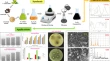
<p>Figure <figr fid="F1">1</figr> illustrates the schematics of Bi<sub>2</sub>Te<sub>3 </sub>nanowires synthesis process based on the OFF-ON method. To synthesize Bi<sub>2</sub>Te<sub>3 </sub>nanowires, Bi nanowires are grown by the OFF-ON method in the first step <abbrgrp>
<abbr bid="B17">17</abbr>
</abbrgrp>. For Bi nanowire growth, a Bi thin film is first deposited onto a SiO<sub>2</sub>/Si substrate at a rate of 32.7 &#197;/s by radio frequency (RF) sputtering under a base pressure of 10<sup>-7 </sup>Torr. Then, the Bi film on the SiO<sub>2</sub>/Si substrate is thermally annealed at 250&#176;C for 10 h in an ultrahigh vacuum to grow Bi nanowires. Bi nanowires spontaneously grow to release the compressive stress acting on the Bi film, which is produced by the large thermal expansion coefficient difference between a Bi thin film (13.4 &#215; 10<sup>-6</sup>/&#176;C) and a SiO<sub>2</sub>/Si substrate ((0.5 &#215; 10<sup>-6</sup>/&#176;C)/(2.4 &#215; 10<sup>-6</sup>/&#176;C)) <abbrgrp>
<abbr bid="B17">17</abbr>
</abbrgrp>. After the Bi nanowire growth is completed, a Bi<sub>2</sub>Te<sub>3 </sub>thin film is deposited onto the Bi nanowire-including SiO<sub>2</sub>/Si substrate using <it>in situ </it>RF sputtering under a base pressure of 10<sup>-7 </sup>Torr. The samples then undergo vacuum annealing at 350&#176;C for 10 h. During this second step, Bi<sub>2</sub>Te<sub>3 </sub>nanowires are synthesized, as the component atoms are inter-diffused between the Bi core nanowire and the Bi<sub>2</sub>Te<sub>3 </sub>surface layer. Moreover, the excess Bi atoms evaporate due to the high annealing temperature (350&#176;C) well above the melting point of Bi (271.5&#176;C), leaving behind stoichiometric Bi<sub>2</sub>Te<sub>3 </sub>nanowires. The probability of Te evaporation is expected to be low, since the annealing temperature (350&#176;C) is significantly lower than the melting points of Te (449.5&#176;C) and Bi<sub>2</sub>Te<sub>3 </sub>(585&#176;C). The whole process is very simple, as schematically depicted in Figure <figr fid="F1">1</figr>. To characterize Bi<sub>2</sub>Te<sub>3 </sub>nanowires in detail, atomic structure, crystalline quality, and composition are analyzed using high-resolution transmission electron microscopy (HR-TEM).</p>
<fig id="F1"><title><p>Figure 1</p></title><caption><p>Schematic representation of Bi<sub>2</sub>Te<sub>3 </sub>nanowire synthesis method</p></caption><text>
   <p><b>Schematic representation of Bi<sub>2</sub>Te<sub>3 </sub>nanowire synthesis method</b>. Step 1: Bi nanowires are grown on the oxidized Si substrate by the OFF-ON method. Step 2: Bi<sub>2</sub>Te<sub>3 </sub>is deposited onto the substrate containing the Bi nanowires by <it>in situ </it>RF sputtering, which forms Bi-Bi<sub>2</sub>Te<sub>3 </sub>core/shell nanowires. Homogeneous Bi<sub>2</sub>Te<sub>3 </sub>nanowires are synthesized during the vacuum annealing at 350&#176;C.</p>
</text><graphic file="1556-276X-6-277-1"/></fig>
</sec>
<sec>
<st>
<p>Results and discussion</p>
</st>
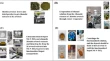
<p>TEM analyses of Bi<sub>2</sub>Te<sub>3 </sub>nanowires grown by the two-step process were performed. Bi<sub>2</sub>Te<sub>3 </sub>nanowires have a cylindrical shape, several tens of nanometers in diameter and several hundreds of micrometers in length. Figure <figr fid="F2">2</figr> exhibits representative TEM images of a Bi<sub>2</sub>Te<sub>3 </sub>nanowire with a diameter of approximately 80 nm. From the selected area electron diffraction (SAED) pattern in the direction perpendicular to the longitudinal axis of the nanowire, it can be recognized that the Bi<sub>2</sub>Te<sub>3 </sub>nanowire is highly single-crystalline and its growth direction is [110]. A HR-TEM image confirms that the Bi<sub>2</sub>Te<sub>3 </sub>nanowire is oriented to [110] the direction with single-crystalline and defect-free atomic arrangements.</p>
<fig id="F2"><title><p>Figure 2</p></title><caption><p>A low-magnification TEM image shows an individual Bi<sub>2</sub>Te<sub>3 </sub>nanowire with a diameter of 78 nm</p></caption><text>
   <p><b>A low-magnification TEM image shows an individual Bi<sub>2</sub>Te<sub>3 </sub>nanowire with a diameter of 78 nm</b>. A SAED pattern reveals that the Bi<sub>2</sub>Te<sub>3 </sub>nanowire is grown in [110] direction with high single-crystallinity. A high-resolution TEM image also indicates highly single-crystalline atomic arrangements without any defects.</p>
</text><graphic file="1556-276X-6-277-2"/></fig>
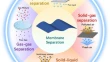
<p>To confirm the chemical composition of the Bi<sub>2</sub>Te<sub>3 </sub>nanowires, scanning TEM (STEM) and energy dispersive X-ray spectroscopy (EDS) were utilized. Figure <figr fid="F3">3a</figr> is a high-angle angular dark field (HAADF) STEM image of a Bi<sub>2</sub>Te<sub>3 </sub>nanowire with a diameter of 78 nm. The EDS line scan profiles show the uniform atomic distribution of Bi and Te elements through the whole nanowire, as displayed in Figure <figr fid="F3">3b</figr>. More importantly, the atomic ratios of Bi and Te are analyzed to be 39 &#177; 1 and 61 &#177; 1%, respectively. This reveals that the nanowire is composed of the thermodynamically stable, stoichiometric Bi<sub>2</sub>Te<sub>3 </sub>phase within the measurement error of STEM. The composition of Bi:Te = 2:3 is further confirmed by STEM elemental mappings across the same nanowire (see Figure <figr fid="F3">3c, d</figr>).</p>
<fig id="F3"><title><p>Figure 3</p></title><caption><p>Composition analysis of a Bi<sub>2</sub>Te<sub>3 </sub>nanowire</p></caption><text>
   <p><b>Composition analysis of a Bi<sub>2</sub>Te<sub>3 </sub>nanowire</b>. <b>(a) </b>A HAADF image of the Bi<sub>2</sub>Te<sub>3 </sub>nanowire. <b>(b) </b>EDS line scan profiles showing the distributions of Bi (cyan, 39%) and Te (red, 61%) through the nanowire. <b>(c,d) </b>Elemental mapping images show the uniform distributions of Bi (cyan) and Te (red) along the nanowire.</p>
</text><graphic file="1556-276X-6-277-3" hint_layout="single"/></fig>
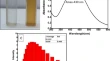
<p>Because our method for Bi<sub>2</sub>Te<sub>3 </sub>nanowires synthesis uses heterogeneous nanowire structures consisting of OFF-ON-grown Bi core and post-deposited Bi<sub>2</sub>Te<sub>3 </sub>shell, the homogeneity of final nanowires should be verified. The biggest concern may be a residual existence of an interface between the original core and the shell layers. To examine this possibility, cross-sectional TEM measurements of thin slices randomly taken from the nanowires were carried out. For the TEM sampling, dual-beam focused ion beam (FIB) was utilized based on the process depicted in Figure <figr fid="F4">4</figr>. Pt was deposited onto a Bi<sub>2</sub>Te<sub>3 </sub>nanowire to prevent any distortion during the dual-beam FIB processes (Figure <figr fid="F4">4a</figr>). Focused gallium (Ga) ion beam or electron beam generated from a fine nozzle makes it possible to deposit or etch a Pt film area selectively on the substrate. The Ga ion beam dissociates injected Pt-precursor molecules and removes the ligands from them on the selective area, resulting in local deposition of the Pt film. This is the well-known technique for TEM sampling <abbrgrp>
<abbr bid="B19">19</abbr>
</abbrgrp>. Then, the Omni-probe of the dual-beam FIB tool took the etched TEM sample with a thickness of below 100 nm away from the SiO<sub>2</sub>/Si substrate. The final sample for TEM measurement is shown in Figure <figr fid="F4">4b</figr>. Figure <figr fid="F4">4c</figr> is the cross-sectional TEM image of a Bi<sub>2</sub>Te<sub>3 </sub>nanowire. From a HR-TEM image and SAED pattern of the part where a Bi core-Bi<sub>2</sub>Te<sub>3 </sub>shell interface was originally located, it is found that the synthesized Bi<sub>2</sub>Te<sub>3 </sub>nanowire has no interface inside and is crystalline across the cross section. These results indicate that the inter-diffusion of component atoms actively occurs between the Bi core and the Bi<sub>2</sub>Te<sub>3 </sub>shell during a 10-h annealing at the elevated temperature, with evaporation of excess Bi atoms at the nanowire surface.</p>
<fig id="F4"><title><p>Figure 4</p></title><caption><p>A cross section of a Bi<sub>2</sub>Te<sub>3 </sub>nanowire</p></caption><text>
   <p><b>A cross section of a Bi<sub>2</sub>Te<sub>3 </sub>nanowire</b>. <b>(a) </b>Pt is deposited locally to protect Bi<sub>2</sub>Te<sub>3 </sub>nanowire during the dual beam FIB process. <b>(b) </b>A SEM image shows the cross section of Bi<sub>2</sub>Te<sub>3 </sub>nanowire. <b>(c) </b>A low-magnification TEM image of the cross section of Bi<sub>2</sub>Te<sub>3 </sub>nanowire. There is no interface between the original Bi core and the Bi<sub>2</sub>Te<sub>3 </sub>shell after annealing. A SAED pattern and a HR-TEM image reveal that Bi<sub>2</sub>Te<sub>3 </sub>nanowire is highly single-crystalline across the nanowire.</p>
</text><graphic file="1556-276X-6-277-4" hint_layout="single"/></fig>
</sec>
<sec>
<st>
<p>Conclusions</p>
</st>
<p>A simple and new synthesis method of quality single-crystalline Bi<sub>2</sub>Te<sub>3 </sub>nanowires combining the OFF-ON method with post-sputtering and annealing is demonstrated. In step one, Bi nanowires are grown by the conventional OFF-ON method. In step two, a Bi<sub>2</sub>Te<sub>3 </sub>thin film is <it>in situ </it>deposited onto the Bi nanowire-including substrate by RF sputtering, followed by the post-annealing at a high temperature well above the melting point of Bi. Bi<sub>2</sub>Te<sub>3 </sub>nanowires are synthesized during the high-temperature annealing by the atomic inter-diffusion between the Bi core and the Bi<sub>2</sub>Te<sub>3 </sub>shell. Indeed, our two-step growth method yielded homogeneous, stoichiometric Bi<sub>2</sub>Te<sub>3 </sub>nanowires with high single-crystallinity and no observable defects, which were hard to achieve using the conventional OFF-ON growth from a single compound source. These results are expected to facilitate the studies on high-efficiency thermoelectric devices and topological insulators taking advantage of Bi<sub>2</sub>Te<sub>3 </sub>nanowires.</p>
</sec>
<sec>
<st>
<p>Abbreviations</p>
</st>
<p>EDS: energy dispersive X-ray spectroscopy; HAADF: high-angle angular dark field; HR-TEM: high-resolution transmission electron microscopy; OFF-ON: on-film formation of nanowires; RF: radio frequency; SAED: selected area electron diffraction; STEM: scanning TEM.</p>
</sec>
<sec>
<st>
<p>Competing interests</p>
</st>
<p>The authors declare that they have no competing interests.</p>
</sec>
<sec>
<st>
<p>Authors' contributions</p>
</st>
<p>J.K carried out this nanowire growth experiment and character analysis and drafted the manuscript. J-S.N participated in the design of the experiment and revised the manuscript. These whole experiment, analysis, and manuscript are totally directed by Prof. W.L. All authors read and approved the final manuscript.</p>
</sec>
</bdy><bm>
<ack>
<sec>
<st>
<p>Acknowledgements</p>
</st>
<p>This study was supported by the Priority Research Centers Program (2009-0093823) through the National Research Foundation of Korea (NRF), a grant from the "Center for Nanostructured Materials Technology," under the "21st Century Frontier R&amp;D Programs" of the Ministry of Education, Science, and by the Pioneer Research Center Program (2010-0019313) through the National Research Foundation of Korea funded by the Ministry of Education, Science and Technology.</p>
</sec>
</ack>
<refgrp><bibl id="B1"><title><p>Control of thickness and orientation of solution-grown Silicon nanowires</p></title><aug><au><snm>Holmes</snm><fnm>J</fnm></au><au><snm>Johnston</snm><fnm>K</fnm></au><au><snm>Doty</snm><fnm>R</fnm></au><au><snm>Korgel</snm><fnm>B</fnm></au></aug><source>Science</source><pubdate>2000</pubdate><volume>287</volume><fpage>1471</fpage><lpage>1473</lpage><xrefbib><pubidlist><pubid idtype="doi">10.1126/science.287.5457.1471</pubid><pubid idtype="pmpid" link="fulltext">10688792</pubid></pubidlist></xrefbib></bibl><bibl id="B2"><title><p>Nanomaterial-based electrochemical biosensors</p></title><aug><au><snm>Wang</snm><fnm>J</fnm></au></aug><source>Analyst</source><pubdate>2005</pubdate><volume>130</volume><fpage>421</fpage><lpage>426</lpage><xrefbib><pubidlist><pubid idtype="doi">10.1039/b414248a</pubid><pubid idtype="pmpid">15846872</pubid></pubidlist></xrefbib></bibl><bibl id="B3"><title><p>Growth of epitaxial nanowires at the junctions of nanowalls</p></title><aug><au><snm>Ng</snm><fnm>H</fnm></au><au><snm>Li</snm><fnm>J</fnm></au><au><snm>Smith</snm><fnm>M</fnm></au><au><snm>Nguyen</snm><fnm>P</fnm></au><au><snm>Cassell</snm><fnm>A</fnm></au><au><snm>Han</snm><fnm>J</fnm></au><au><snm>Meyyappan</snm><fnm>M</fnm></au></aug><source>Science</source><pubdate>2003</pubdate><volume>300</volume><fpage>1249</fpage><xrefbib><pubidlist><pubid idtype="doi">10.1126/science.1082542</pubid><pubid idtype="pmpid" link="fulltext">12764187</pubid></pubidlist></xrefbib></bibl><bibl id="B4"><title><p>Thermoelectric figure of merit of a one-dimensional semiconductor</p></title><aug><au><snm>Hicks</snm><fnm>L</fnm></au><au><snm>Dresselhaus</snm><fnm>M</fnm></au></aug><source>Phys Rev B</source><pubdate>1993</pubdate><volume>47</volume><fpage>16631</fpage><lpage>16634</lpage><xrefbib><pubid idtype="doi">10.1103/PhysRevB.47.16631</pubid></xrefbib></bibl><bibl id="B5"><title><p>Low dimensional thermoelectric materials</p></title><aug><au><snm>Dresselhaus</snm><fnm>M</fnm></au><au><snm>Dresselhaus</snm><fnm>G</fnm></au><au><snm>Sun</snm><fnm>X</fnm></au><au><snm>Zhang</snm><fnm>Z</fnm></au><au><snm>Cronin</snm><fnm>SB</fnm></au><au><snm>Koga</snm><fnm>T</fnm></au></aug><source>Phys Solid State</source><pubdate>1999</pubdate><volume>41</volume><fpage>679</fpage><lpage>682</lpage><xrefbib><pubid idtype="doi">10.1134/1.1130849</pubid></xrefbib></bibl><bibl id="B6"><title><p>The promise of low-dimensional thermoelectric materials</p></title><aug><au><snm>Dresselhaus</snm><fnm>M</fnm></au><au><snm>Dresselhaus</snm><fnm>G</fnm></au><au><snm>Sun</snm><fnm>X</fnm></au><au><snm>Zhang</snm><fnm>Z</fnm></au><au><snm>Cronin</snm><fnm>SB</fnm></au><au><snm>Koga</snm><fnm>T</fnm></au><au><snm>Ying</snm><fnm>JY</fnm></au><au><snm>Chen</snm><fnm>G</fnm></au></aug><source>Microscale Thermophys Eng</source><pubdate>1999</pubdate><volume>3</volume><fpage>89</fpage><lpage>100</lpage><xrefbib><pubid idtype="doi">10.1080/108939599199774</pubid></xrefbib></bibl><bibl id="B7"><aug><au><snm>Rowe</snm><fnm>D</fnm></au></aug><source>Thermoelectrics Handbook: Macro to Nano</source><publisher>New York: Taylor &amp; Francis</publisher><pubdate>2006</pubdate></bibl><bibl id="B8"><title><p>Topological insulators in Bi<sub>2</sub>Se<sub>3</sub>, Bi<sub>2</sub>Te<sub>3</sub>, and Sb<sub>2</sub>Te<sub>3 </sub>with a single Dirac cone on the surface</p></title><aug><au><snm>Zhang</snm><fnm>H</fnm></au><au><snm>Liu</snm><fnm>C</fnm></au><au><snm>Qi</snm><fnm>X</fnm></au><au><snm>Dai</snm><fnm>X</fnm></au><au><snm>Fang</snm><fnm>Z</fnm></au><au><snm>Zhang</snm><fnm>S</fnm></au></aug><source>Nat Phys</source><pubdate>2009</pubdate><volume>5</volume><fpage>438</fpage><xrefbib><pubid idtype="doi">10.1038/nphys1270</pubid></xrefbib></bibl><bibl id="B9"><title><p>Topological insulators: The next generation</p></title><aug><au><snm>Moore</snm><fnm>J</fnm></au></aug><source>Nat Phys</source><pubdate>2009</pubdate><volume>5</volume><fpage>378</fpage><xrefbib><pubid idtype="doi">10.1038/nphys1294</pubid></xrefbib></bibl><bibl id="B10"><title><p>The electrodeposition of high-density, ordered arrays of Bi<sub>1-x</sub>Sb<sub>x </sub>nanowires</p></title><aug><au><snm>Prieto</snm><fnm>A</fnm></au><au><snm>Sander</snm><fnm>M</fnm></au><au><snm>Gonzalez</snm><fnm>M</fnm></au><au><snm>Gronsky</snm><fnm>R</fnm></au><au><snm>Sands</snm><fnm>T</fnm></au><au><snm>Stacy</snm><fnm>A</fnm></au></aug><source>J Am Chem Soc</source><pubdate>2001</pubdate><volume>123</volume><fpage>7160</fpage><lpage>7161</lpage><xrefbib><pubidlist><pubid idtype="doi">10.1021/ja015989j</pubid><pubid idtype="pmpid">11459497</pubid></pubidlist></xrefbib></bibl><bibl id="B11"><title><p>Electrodeposited Bismuth Telluride nanowire arryas with uniform growth fronts</p></title><aug><au><snm>Trahey</snm><fnm>L</fnm></au><au><snm>Becker</snm><fnm>C</fnm></au><au><snm>Stacy</snm><fnm>A</fnm></au></aug><source>Nano Lett</source><pubdate>2007</pubdate><volume>7</volume><fpage>2535</fpage><lpage>2539</lpage><xrefbib><pubidlist><pubid idtype="doi">10.1021/nl070711w</pubid><pubid idtype="pmpid" link="fulltext">17629346</pubid></pubidlist></xrefbib></bibl><bibl id="B12"><title><p>Investigation of electrodeposition of Bi<sub>2</sub>Te<sub>3 </sub>nanowires into nanoporous alumina templates with a rotating electrode</p></title><aug><au><snm>Wang</snm><fnm>W</fnm></au><au><snm>Wan</snm><fnm>C</fnm></au><au><snm>Wang</snm><fnm>Y</fnm></au></aug><source>J Phys Chem B</source><pubdate>2006</pubdate><volume>110</volume><fpage>12974</fpage><lpage>12980</lpage><xrefbib><pubidlist><pubid idtype="doi">10.1021/jp061362h</pubid><pubid idtype="pmpid" link="fulltext">16805602</pubid></pubidlist></xrefbib></bibl><bibl id="B13"><title><p>Direct electrodeposition of highly dense 50 nm Bi<sub>2</sub>Te<sub>3-y</sub>Se<sub>y </sub>nanowire arrays</p></title><aug><au><snm>Gonzalez</snm><fnm>M</fnm></au><au><snm>Snyder</snm><fnm>G</fnm></au><au><snm>Prieto</snm><fnm>A</fnm></au><au><snm>Gronsky</snm><fnm>R</fnm></au><au><snm>Sands</snm><fnm>T</fnm></au><au><snm>Stacy</snm><fnm>A</fnm></au></aug><source>Nano Lett</source><pubdate>2003</pubdate><volume>3</volume><fpage>973</fpage><lpage>977</lpage><xrefbib><pubid idtype="doi">10.1021/nl034079s</pubid></xrefbib></bibl><bibl id="B14"><title><p>Insights into the electrodeposition mechanisms of Bi<sub>2</sub>Te<sub>3</sub></p></title><aug><au><snm>Gonzalez</snm><fnm>M</fnm></au><au><snm>Prieto</snm><fnm>A</fnm></au><au><snm>Gronsky</snm><fnm>R</fnm></au><au><snm>Sands</snm><fnm>T</fnm></au><au><snm>Stacy</snm><fnm>A</fnm></au></aug><source>J Electrochem Soc</source><pubdate>2002</pubdate><volume>149</volume><fpage>C546</fpage><lpage>C554</lpage><xrefbib><pubid idtype="doi">10.1149/1.1509459</pubid></xrefbib></bibl><bibl id="B15"><title><p>Bismuth Telluride nanowires synthesized by cyclic electrodeposition/stripping coupled with step edge decoration</p></title><aug><au><snm>Menke</snm><fnm>E</fnm></au><au><snm>Li</snm><fnm>Q</fnm></au><au><snm>Penner</snm><fnm>R</fnm></au></aug><source>Nano Lett</source><pubdate>2004</pubdate><volume>4</volume><fpage>2009</fpage><lpage>2014</lpage><xrefbib><pubid idtype="doi">10.1021/nl048627t</pubid></xrefbib></bibl><bibl id="B16"><title><p>Thermoelectric investigation of bismuth nanowires</p></title><aug><au><snm>Cronin</snm><fnm>SB</fnm></au><au><snm>Lin</snm><fnm>YM</fnm></au><au><snm>Koga</snm><fnm>T</fnm></au><au><snm>Sun</snm><fnm>X</fnm></au><au><snm>Ying</snm><fnm>JY</fnm></au><au><snm>Dresselhaus</snm><fnm>MS</fnm></au></aug><source>International Conference on Thermoelectrics</source><pubdate>1999</pubdate><fpage>554</fpage><lpage>557</lpage></bibl><bibl id="B17"><title><p>On-film formation of Bi nanowires with extraordinary electron mobility</p></title><aug><au><snm>Shim</snm><fnm>W</fnm></au><au><snm>Ham</snm><fnm>J</fnm></au><au><snm>Lee</snm><fnm>K</fnm></au><au><snm>Jeung</snm><fnm>W</fnm></au><au><snm>Johnson</snm><fnm>M</fnm></au><au><snm>Lee</snm><fnm>W</fnm></au></aug><source>Nano Lett</source><pubdate>2009</pubdate><volume>9</volume><fpage>18</fpage><lpage>22</lpage><xrefbib><pubidlist><pubid idtype="doi">10.1021/nl8016829</pubid><pubid idtype="pmpid" link="fulltext">19032034</pubid></pubidlist></xrefbib></bibl><bibl id="B18"><title><p>Direct growth of compound semiconductor nanowires by on-film formation of nanowires: Bismuth telluride</p></title><aug><au><snm>Ham</snm><fnm>J</fnm></au><au><snm>Shim</snm><fnm>W</fnm></au><au><snm>Kim</snm><fnm>D</fnm></au><au><snm>Lee</snm><fnm>S</fnm></au><au><snm>Roh</snm><fnm>J</fnm></au><au><snm>Sohn</snm><fnm>S</fnm></au><au><snm>Oh</snm><fnm>K</fnm></au><au><snm>Voorhees</snm><fnm>P</fnm></au><au><snm>Lee</snm><fnm>W</fnm></au></aug><source>Nano Lett</source><pubdate>2009</pubdate><volume>9</volume><fpage>2867</fpage><xrefbib><pubidlist><pubid idtype="doi">10.1021/nl9010518</pubid><pubid idtype="pmpid" link="fulltext">19588906</pubid></pubidlist></xrefbib></bibl><bibl id="B19"><title><p>Introduction to Focused Ion Beams: Instrumentation, Theory, Techniques and Practice</p></title><aug><au><snm>Giannuzzi</snm><fnm>LA</fnm></au><au><snm>Stevens</snm><fnm>FA</fnm></au></aug><source>Springer Press</source><pubdate>2004</pubdate></bibl></refgrp>
</bm></art>