<?xml version='1.0'?>
<!DOCTYPE art SYSTEM 'http://www.biomedcentral.com/xml/article.dtd'>
<art><ui>1556-276X-6-276</ui><ji>1556-276X</ji><fm>
<dochead>Nano Express</dochead>
<bibl>
<title>
<p>Fabrication and magnetic properties of granular Co/porous InP nanocomposite materials</p>
</title>
<aug>
<au id="A1"><snm>Zhou</snm><fnm>Tao</fnm><insr iid="I1"/><email>jszhoutao@sjtu.edu.cn</email></au>
<au id="A2"><snm>Cheng</snm><fnm>Dandan</fnm><insr iid="I1"/><email>ddcheng8056@163.com</email></au>
<au ca="yes" id="A3"><snm>Zheng</snm><fnm>Maojun</fnm><insr iid="I1"/><email>mjzheng@sjtu.edu.cn</email></au>
<au id="A4"><snm>Ma</snm><fnm>Li</fnm><insr iid="I2"/><email>mali@sjtu.edu.cn</email></au>
<au id="A5"><snm>Shen</snm><fnm>Wenzhong</fnm><insr iid="I1"/><email>wzshen@sjtu.edu.cn</email></au>
</aug>
<insg>
<ins id="I1"><p>Laboratory of Condensed Matter Spectroscopy and Opto-Electronic Physics, and Key Laboratory of Artificial Structures and Quantum Control (Ministry of Education), Department of Physics, Shanghai Jiao Tong University, Shanghai, 200240, People's Republic of China</p></ins>
<ins id="I2"><p>School of Chemistry &amp; Chemical Technology, Shanghai Jiao Tong University, Shanghai, 200240, People's Republic of China</p></ins>
</insg>
<source>Nanoscale Research Letters</source>
<issn>1556-276X</issn>
<pubdate>2011</pubdate>
<volume>6</volume>
<issue>1</issue>
<fpage>276</fpage>
<url>http://www.nanoscalereslett.com/content/6/1/276</url>
<xrefbib><pubidlist><pubid idtype="pmpid">21711809</pubid><pubid idtype="doi">10.1186/1556-276X-6-276</pubid></pubidlist></xrefbib>
</bibl>
<history><rec><date><day>30</day><month>12</month><year>2010</year></date></rec><acc><date><day>31</day><month>3</month><year>2011</year></date></acc><pub><date><day>31</day><month>3</month><year>2011</year></date></pub></history>
<cpyrt><year>2011</year><collab>Zhou et al; licensee Springer.</collab><note>This is an Open Access article distributed under the terms of the Creative Commons Attribution License (<url>http://creativecommons.org/licenses/by/2.0</url>), which permits unrestricted use, distribution, and reproduction in any medium, provided the original work is properly cited.</note></cpyrt>
<abs>
<sec>
<st>
<p>Abstract</p>
</st>
<p>A novel Co/InP magnetic semiconductor nanocomposite was fabricated by electrodeposition magnetic Co nanoparticles into <it>n</it>-type porous InP templates in ethanol solution of cobalt chloride. The content or particle size of Co particles embedded in porous InP increased with increasing deposition time. Co particles had uniform distribution over pore sidewall surface of InP template, which was different from that of ceramic template and may open up new branch of fabrication of nanocomposites. The magnetism of such Co/InP nanocomposites can be gradually tuned from diamagnetism to ferromagnetism by increasing the deposition time of Co. Magnetic anisotropy of this Co/InP nanocomposite with magnetization easy axis along the axis of InP square channel was well realized by the competition between shape anisotropy and magnetocrystalline anisotropy. Such Co/InP nanocomposites with adjustable magnetism may have potential applications in future in the field of spin electronics.</p>
<p>
<b>PACS</b>: 61.46. +w &#183; 72.80.Tm &#183; 81.05.Rm &#183; 75.75. +a &#183; 82.45.Aa</p>
</sec>
</abs>
</fm><bdy>
<sec>
<st>
<p>Introduction</p>
</st>
<p>The fabrication and magnetic properties of magnetic nanomaterials or nanocomposites have been the center of attraction among researchers, due to their potential applications in high-density data storage devices, magneto-optical sensors, spintronic devices, and interesting fundamental physical phenomena <abbrgrp>
<abbr bid="B1">1</abbr>
<abbr bid="B2">2</abbr>
<abbr bid="B3">3</abbr>
<abbr bid="B4">4</abbr>
<abbr bid="B5">5</abbr>
<abbr bid="B6">6</abbr>
<abbr bid="B7">7</abbr>
<abbr bid="B8">8</abbr>
</abbrgrp>. Particularly, electrodeposition of magnetic nanoparticles, nanowires, and nanotubes in ordered nonmagnetic templates has attracted great attention because of its low cost, preferred yield of order magnetic nanomaterials, and size-adjustable properties <abbrgrp>
<abbr bid="B2">2</abbr>
<abbr bid="B4">4</abbr>
<abbr bid="B5">5</abbr>
<abbr bid="B9">9</abbr>
<abbr bid="B10">10</abbr>
<abbr bid="B11">11</abbr>
<abbr bid="B12">12</abbr>
<abbr bid="B13">13</abbr>
<abbr bid="B14">14</abbr>
<abbr bid="B15">15</abbr>
<abbr bid="B16">16</abbr>
<abbr bid="B17">17</abbr>
<abbr bid="B18">18</abbr>
<abbr bid="B19">19</abbr>
<abbr bid="B20">20</abbr>
</abbrgrp>. The most popular template is anodic alumina oxide (AAO) membrane because of its uniform channel arrays and chemical inertness, which has been widely used for producing magnetic nanostructures, including cobalt ferrite nanodot arrays <abbrgrp>
<abbr bid="B13">13</abbr>
</abbrgrp>, Fe, Co, and Ni nanowires, nanotubes, and nanoparticles arrays <abbrgrp>
<abbr bid="B5">5</abbr>
<abbr bid="B8">8</abbr>
<abbr bid="B14">14</abbr>
<abbr bid="B15">15</abbr>
<abbr bid="B16">16</abbr>
<abbr bid="B17">17</abbr>
<abbr bid="B18">18</abbr>
<abbr bid="B19">19</abbr>
</abbrgrp>, FeNi ferromagnetic alloy, CoPt nanotubes <abbrgrp>
<abbr bid="B9">9</abbr>
</abbrgrp>, and so on. The growth and magnetic properties of magnetic nanomaterials in AlN, MgO, polymer templates, and superlattice matrices were also reported <abbrgrp>
<abbr bid="B21">21</abbr>
<abbr bid="B22">22</abbr>
<abbr bid="B23">23</abbr>
<abbr bid="B24">24</abbr>
<abbr bid="B25">25</abbr>
</abbrgrp>. Up to now, both theoretical and experimental works have focused mainly on insulation templates, while there has not been much study conducted on the growth of magnetic nanomaterials in semiconductor templates. Recently, electrodeposition of Fe, Co, Ni, and FeNi alloy into porous silicon semiconductor matrix has been studied <abbrgrp>
<abbr bid="B11">11</abbr>
<abbr bid="B26">26</abbr>
<abbr bid="B27">27</abbr>
<abbr bid="B28">28</abbr>
<abbr bid="B29">29</abbr>
</abbrgrp>. It was found that the novel magnetization behaviors of these nanocomposite materials depended on deposits and matrices. For example, Granitzer et al. <abbrgrp>
<abbr bid="B29">29</abbr>
</abbrgrp> found a new twofold switching of magnetic hysteresis curve in Ni/porous silicon composites. Therefore, electrochemical deposition of ferromagnetic metals into semiconductor templates and investigation of their magnetic properties may provide a new avenue for nanofabrication and have important applications ranging from magnetic sensing to the field of spin electronics <abbrgrp>
<abbr bid="B5">5</abbr>
<abbr bid="B6">6</abbr>
<abbr bid="B29">29</abbr>
</abbrgrp>.</p>
<p>In addition, owing to its direct band gap and enhanced nonlinear optical response, increasing interest has been focused on porous InP because of its potential applications in nanoscaled Schottky diodes, waveguides, solar cells, and for fabricating nanocomposite materials <abbrgrp>
<abbr bid="B30">30</abbr>
<abbr bid="B31">31</abbr>
<abbr bid="B32">32</abbr>
<abbr bid="B33">33</abbr>
<abbr bid="B34">34</abbr>
</abbrgrp>. However, to our knowledge, there are no reports on the composite between porous InP matrix and magnetic materials. Furthermore, as a typical ferromagnetic materials, Co nanostructures, especially for granular Co, embedded in nonmagnetic matrices have been widely studied, where the matrices most focused were of three kinds: metallic matrices (Cu, Ag and Nb) <abbrgrp>
<abbr bid="B35">35</abbr>
<abbr bid="B36">36</abbr>
<abbr bid="B37">37</abbr>
<abbr bid="B38">38</abbr>
</abbrgrp>; ceramic matrices (Al<sub>2</sub>O<sub>3 </sub>and AlN) <abbrgrp>
<abbr bid="B5">5</abbr>
<abbr bid="B23">23</abbr>
<abbr bid="B39">39</abbr>
</abbrgrp>; and polymeric matrices <abbrgrp>
<abbr bid="B22">22</abbr>
<abbr bid="B24">24</abbr>
</abbrgrp>. In this article, we report on the electrochemical deposition of Co into <it>n</it>-type porous InP semiconductor matrix based on organic solution of cobalt chloride, where the organic solution, i.e., ethanol solution, was applied to protect Co from oxidization. The structure and magnetic properties of such Co/InP nanocomposites were also investigated.</p>
</sec>
<sec>
<st>
<p>Experiment details</p>
</st>
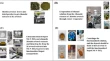
<p>Co/InP magnetic semiconductor nanocomposites were fabricated by one-step electrodeposition of Co particles onto <it>n</it>-type porous InP templates. Figure <figr fid="F1">1</figr> shows the schematic illustration of the fabrication of Co/InP composite structure. First, the <it>n</it>-type porous InP template was prepared by a two-step etching method <abbrgrp>
<abbr bid="B40">40</abbr>
</abbrgrp>. The starting material was Sn-doped InP (&gt;1 &#215; 10<sup>18 </sup>cm<sup>-3</sup>) wafer, which was first etched at a constant voltage of 8 V in 7.5% HCl aqueous solution for 30 s. Next, the specimen was immersed in a mixture of pure HCl and H<sub>3</sub>PO<sub>4 </sub>(HCl:H<sub>3</sub>PO<sub>4 </sub>= 1:3 v/v) for a few minutes to remove the top irregular layer to obtain <it>n</it>-type porous InP templates with uniform and square pore arrays. This was followed by electrochemical deposition of Co particles onto porous InP templates, performed using a three-electrode cell, employing a porous InP template as the working electrode and a graphite plate counter-electrode. The reference electrode was a saturated calomel electrode (SCE), isolated from the solution by a salt bridge. The deposition bath was 0.1 M/L CoCl<sub>2 </sub>ethanol solution, prepared by dissolving CoCl<sub>2 </sub>in ethanol. Before the deposition of Co, the porous InP template was immersed in the bath about 1 h to allow the solution completely wet the inner pore walls. The applied potential was kept at 2.0 V with respect to SCE. After the deposition of Co, the sample was cleaned by de-ionized water, dried in N<sub>2 </sub>atmosphere, and then kept in anhydrous ethanol. All the experiments were performed at room temperature.</p>
<fig id="F1"><title><p>Figure 1</p></title><caption><p>Schematic of fabrication process of Co/InP nanocomposite structure</p></caption><text>
   <p><b>Schematic of fabrication process of Co/InP nanocomposite structure</b>.</p>
</text><graphic file="1556-276X-6-276-1"/></fig>
<p>The morphology of Co/InP nanocomposite structures was subsequently studied by field-emission scanning electron microscope (FE-SEM). The composition and crystallographic structure of samples were investigated by energy dispersive X-ray spectrometer (EDS) system attached to SEM and X-ray diffraction (XRD) with Cu &#922;<sub>&#945; </sub>radiation (&#955; = 1.54 &#197;). Physical property measurement system was applied to characterize magnetic properties of such Co/InP nanocomposites at 300 K with magnetic field sweeping from -15 to 15 KOe.</p>
</sec>
<sec>
<st>
<p>Results and discussions</p>
</st>
<sec>
<st>
<p>Structure characterization of Co/InP nanocomposites</p>
</st>
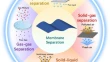
<p>Figure <figr fid="F2">2a</figr> shows the typical FE-SEM image of <it>n</it>-type porous InP template with nearly uniform and square pore arrays. In order to study the growth process of Co in porous InP semiconductor matrix, Co/InP nanocomposites with different deposition times were prepared. The cross-sectional morphologies of different samples are shown in Figure <figr fid="F2">2b, c, d</figr>. There is almost no Co in the inner channel wall of the InP matrix when the deposition time is 30 s, as shown in Figure <figr fid="F2">2b</figr>. When the deposition time increases to 90 s, it was found that a small amount of Co nanoparticles uniformly distribute on the whole inner channel walls of the InP template (Figure <figr fid="F2">2c</figr>). On further increasing the deposition time, the needle-shaped Co forms on the inner pore walls of InP as shown in Figure <figr fid="F2">2d</figr>. It is noted that Co particles prefer to uniformly distribute over the channel wall surface of the InP template than gather at the bottom of channel, which may result from conductivity of <it>n</it>-type porous InP template. In other words, the deposition of metallic Co particles may occur at any position of the pore sidewall surface of InP template (as shown by the schematic of Figure <figr fid="F1">1</figr>), which is different from the "bottom-up" growth mechanism in the insulation templates, such as AAO. Since the channel walls of the insulation templates are stable and nonconductive in the solution, the growth by electrodeposition is always from the bottom to the opening when a conductive layer is fabricated at the bottom side of the insulation channels <abbrgrp>
<abbr bid="B9">9</abbr>
</abbrgrp>. Therefore, adjustable electrodepositions may be realized by tuning the conductivity and reactivity of such porous InP matrix, which may open up a new branch in the fabrication of nanocomposite materials. A detailed discussion for this is not given here because it is not the main concern for this article; similar studies in porous silicon matrix have been summarized by Ogata et al. <abbrgrp>
<abbr bid="B41">41</abbr>
</abbrgrp>.</p>
<fig id="F2"><title><p>Figure 2</p></title><caption><p>FE-SEM images of the cross section of Co/InP nanocomposite structure with different deposition times of Co</p></caption><text>
   <p><b>FE-SEM images of the cross section of Co/InP nanocomposite structure with different deposition times of Co</b>: (a) 0 s, <b>(b) </b>30 s, <b>(c) </b>90 s, and <b>(d) </b>5 min.</p>
</text><graphic file="1556-276X-6-276-2"/></fig>
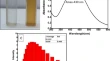
<p>It is also noted that there is oxygen in the first product prepared by electrodeposition in aqueous solution of cobalt chloride under same conditions (this EDS spectrum is not illustrated in this article), which indicates that Co has been oxidized. Therefore, ethanol solution is chosen to fabricate Co/InP nanocomposites, the composition of which is analyzed by EDS as shown in Figure <figr fid="F3">3a</figr>, where only In, P, and Co exist (without the presence of oxygen), indicating that the pure Co nanoparticles have been successfully embedded in the porous InP semiconductor matrix and the ethanol solution effectively protects Co from oxidization. To further investigate the structure and composition of such Co/InP nanocomposites, the XRD pattern has been measured and shown in Figure <figr fid="F3">3b</figr>, where two strong diffraction peaks at 2&#952; = 30.52&#176; and 63.41&#176; are, respectively, identified as (200) and (400) of the porous InP template consistent with the previous results <abbrgrp>
<abbr bid="B34">34</abbr>
<abbr bid="B40">40</abbr>
</abbrgrp>. The other four peaks at 2&#952; = 41.59&#176;, 44.26&#176;, 47.39&#176;, and 75.89&#176; correspond to hexagonal Co (100), (002), (101), and (110), respectively. This further confirms that the obtained sample is that of Co/InP nanocomposites.</p>
<fig id="F3"><title><p>Figure 3</p></title><caption><p>The characterization of the Co/InP nanocomposite structure: <b>(a) </b>EDS spectrum and <b>(b) </b>XRD pattern</p></caption><text>
   <p><b>The characterization of the Co/InP nanocomposite structure: <b>(a) </b>EDS spectrum and <b>(b) </b>XRD pattern</b>.</p>
</text><graphic file="1556-276X-6-276-3"/></fig>
</sec>
<sec>
<st>
<p>Magnetic properties of Co/InP nanocomposites</p>
</st>
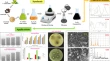
<p>Figure <figr fid="F4">4</figr> shows field-dependent magnetization (<it>M-H</it>) curves of such Co/InP nanocomposites, where the applied magnetic field is perpendicular to the surface of the InP template or parallel to the axis of InP channel. For the deposition time of 30 s, the Co/InP nanocomposite presents diamagnetism as shown in Figure <figr fid="F4">4a</figr>, which is ascribed to the complete diamagnetism of <it>n</it>-type porous InP template according to the above SEM analysis and the <it>M-H </it>curve of pure InP (Figure <figr fid="F4">4b</figr>). While weak ferromagnetism is detected for the sample with the deposition time of 90 s (Figure <figr fid="F4">4a</figr>), with the deposition time of 5 min, the Co/InP nanocomposite exhibits visible hysteresis loop as shown in Figure <figr fid="F4">4b</figr>. This indicates that the Co particles embedded in the InP matrix dominate the magnetic behavior of this Co/InP nanocomposite when the content of Co gradually increases due to the strong ferromagnetism of Co. In a word, the magnetism of such Co/InP magnetic semiconductor nanocomposite is completely determined by the deposition time of Co. The exhibited ferromagnetism under the room temperature, originating from the Co particles embedded in the <it>n</it>-type porous InP matrix, is different from that of the superparamagnetism of Co particles in Cu and dendrimer matrix <abbrgrp>
<abbr bid="B22">22</abbr>
<abbr bid="B36">36</abbr>
</abbrgrp>.</p>
<fig id="F4"><title><p>Figure 4</p></title><caption><p>Field-dependent magnetization curves (<it>M-H</it>) of the Co/InP nanocomposite structure, where the magnetic field is applied perpendicular to the surface of the InP template with different deposition times of Co</p></caption><text>
   <p><b>Field-dependent magnetization curves (<it>M-H</it>) of the Co/InP nanocomposite structure, where the magnetic field is applied perpendicular to the surface of the InP template with different deposition times of Co</b>: <b>(a) </b>30 s (square) and 90 s (solid line), <b>(b) </b>5 min (square), the inset shows the magnetization curve of the <it>n</it>-type porous InP template (square).</p>
</text><graphic file="1556-276X-6-276-4"/></fig>
<p>Figure <figr fid="F5">5</figr> shows magnetic hysteresis loops of Co/InP composite structure with the deposition time of 5 min for both perpendicular and parallel orientations, where <it>H</it>
<sub>// </sub>and <it>H</it>
<sub>&#8869; </sub>represent the field applied perpendicular and parallel to the surface of the InP template, respectively. Typical coercivities with <it>H</it>
<sub>c&#8869; </sub>= 775 Oe and <it>H</it>c<sub>// </sub>= 644 Oe are clearly found in the inset of Figure <figr fid="F5">5</figr>, indicating the enhanced coercivity compared with that of the bulk Co (10 Oe). The relatively larger coercivity in perpendicular orientation suggests weak anisotropy of the system, i.e., magnetization easy axis is perpendicular to the surface of InP template. This magnetic anisotropy of the system is determined by the relatively strong-shape anisotropy of Co nanoparticle arrays embedded in the porous InP matrix compared with the magnetocrystalline anisotropy of hexagonal Co particle. Furthermore, both magnetization curves for perpendicular and parallel are sheared as shown in Figure <figr fid="F5">5</figr>, indicating the existence of inter-particle interactions, which is also manifested by the low squareness ratios, (<it>M<sub>r</sub>
</it>/<it>M<sub>s</sub>
</it>)<sub>&#8869; </sub>= 0.34 and (<it>M<sub>r</sub>
</it>/<it>M<sub>s</sub>
</it>)<sub>// </sub>= 0.36. Similar sheared hysteresis loops were also found in Co/ZrO<sub>2</sub>, Co/AAO, and Ni/AAO nanocomposite materials <abbrgrp>
<abbr bid="B2">2</abbr>
<abbr bid="B14">14</abbr>
<abbr bid="B17">17</abbr>
</abbrgrp>. In brief, magnetic anisotropy in the Co/InP nanocomposite structure with easy axis perpendicular to the surface of InP matrix is compatible with that of typical magnetic nanostructures such as nanowires and nanotubes <abbrgrp>
<abbr bid="B8">8</abbr>
<abbr bid="B14">14</abbr>
<abbr bid="B16">16</abbr>
<abbr bid="B20">20</abbr>
<abbr bid="B21">21</abbr>
<abbr bid="B29">29</abbr>
</abbrgrp>, i.e., the magnetization easy axis is along the long axis of nanostructures, which is the result of the competition between the dominant shape anisotropy and magnetocrystalline anisotropy.</p>
<fig id="F5"><title><p>Figure 5</p></title><caption><p>Magnetic hysteresis loops of the Co/InP nanocomposite structure when the magnetic filed is applied both parallel (circle) and perpendicular (solid line) to the surface of the InP template with deposition time of 5 min</p></caption><text>
   <p><b>Magnetic hysteresis loops of the Co/InP nanocomposite structure when the magnetic filed is applied both parallel (circle) and perpendicular (solid line) to the surface of the InP template with deposition time of 5 min</b>. Inset is the magnification curve.</p>
</text><graphic file="1556-276X-6-276-5"/></fig>
</sec>
</sec>
<sec>
<st>
<p>Conclusion</p>
</st>
<p>We have reported in this article a novel Co/porous InP magnetic semiconductor nanocomposite based on electrochemical deposition technique in ethanol solution of cobalt chloride. The ethanol solution effectively protects Co from oxidization, as confirmed by the XRD and EDS analyses. Granular Co prefers to uniformly distribute over the channel walls of the InP templates, which is different from the "bottom-up" mechanism of ceramic matrix and thereby may provide a new avenue for nanofabrication. With the increasing deposition time of Co, the size or content of granular Co embedded in the InP template increases, and the magnetic behavior of such Co/InP nanocomposites shows gradual change from diamagnetism to ferromagnetism. The comparison of shape anisotropy effects to magnetocrystalline anisotropy effects helps one to explain the magnetic anisotropy of this novel Co/InP magnetic semiconductor nanocomposite, which may lead to new applications in the field of spin electronics.</p>
</sec>
<sec>
<st>
<p>Abbreviations</p>
</st>
<p>AAO: anodic alumina oxide; EDS: energy dispersive X-ray spectrometer; FE-SEM: field emission scanning electron microscope; <it>M-H</it>: field-dependent magnetization; SCE: saturated calomel electrode; XRD: X-ray diffraction.</p>
</sec>
<sec>
<st>
<p>Competing interests</p>
</st>
<p>The authors declare that they have no competing interests.</p>
</sec>
<sec>
<st>
<p>Authors' contributions</p>
</st>
<p>TZ participated in the design of the study, carried out the experiments, performed the statistical analysis, as well as drafted the manuscript. DDC participated in the design of the study, carried out the experiments, and performed the statistical analysis. MJZ participated in the design of the study, provided the theoretical and experimental guidance, performed the statistical analysis, and revised the manuscript. LM participated in the design of experimental section and offered her the help in experiments. WZS gave his help in the setting up of experimental apparatus.</p>
</sec>
</bdy><bm>
<ack>
<sec>
<st>
<p>Acknowledgements</p>
</st>
<p>This study was supported by the Natural Science Foundation of China (grant NO. 10874115 and 10734020), National Major Basic Research Project of 2010CB933702, Shanghai Nanotechnology Research Project of 0952nm01900, Shanghai Key Basic Research Project of 08JC1411000, the Research fund for the Doctoral Program of Higher Education of Chain, and the Graduate Innovative Ability Training Special Fund of Shanghai Jiao Tong University.</p>
</sec>
</ack>
<refgrp><bibl id="B1"><title><p>Monodisperse FePt nanoparticles and ferromagnetic FePt nanocrystal superlattices</p></title><aug><au><snm>Sun</snm><fnm>SH</fnm></au><au><snm>Murray</snm><fnm>CB</fnm></au><au><snm>Weller</snm><fnm>D</fnm></au><au><snm>Folks</snm><fnm>L</fnm></au><au><snm>Moser</snm><fnm>A</fnm></au></aug><source>Science</source><pubdate>2000</pubdate><volume>287</volume><fpage>1989</fpage><lpage>1992</lpage><xrefbib><pubidlist><pubid idtype="doi">10.1126/science.287.5460.1989</pubid><pubid idtype="pmpid" link="fulltext">10720318</pubid></pubidlist></xrefbib></bibl><bibl id="B2"><title><p>An array of concentric composite nanostructures of zirconia nanotubules/cobalt nanowires: preparation and magnetic properties</p></title><aug><au><snm>Bao</snm><fnm>JC</fnm></au><au><snm>Tie</snm><fnm>CY</fnm></au><au><snm>Xu</snm><fnm>Z</fnm></au><au><snm>Ma</snm><fnm>Q</fnm></au><au><snm>Hong</snm><fnm>JM</fnm></au><au><snm>Sang</snm><fnm>H</fnm></au><au><snm>Sheng</snm><fnm>D</fnm></au></aug><source>Adv Mater</source><pubdate>2002</pubdate><volume>14</volume><fpage>44</fpage><lpage>47</lpage><xrefbib><pubid idtype="doi">10.1002/1521-4095(20020104)14:1&lt;44::AID-ADMA44&gt;3.0.CO;2-K</pubid></xrefbib></bibl><bibl id="B3"><title><p>Magnetism from the atom to the bulk in iron, cobalt, and nickel clusters</p></title><aug><au><snm>Billas</snm><fnm>IML</fnm></au><au><snm>Ch&#226;telain</snm><fnm>A</fnm></au><au><snm>De Heer</snm><fnm>WA</fnm></au></aug><source>Science</source><pubdate>1994</pubdate><volume>265</volume><fpage>1682</fpage><lpage>1684</lpage><xrefbib><pubidlist><pubid idtype="doi">10.1126/science.265.5179.1682</pubid><pubid idtype="pmpid" link="fulltext">17770895</pubid></pubidlist></xrefbib></bibl><bibl id="B4"><title><p>Structure and magnetic properties of ferromagnetic nanowires in self-assembled arrays</p></title><aug><au><snm>Zeng</snm><fnm>H</fnm></au><au><snm>Skomski</snm><fnm>R</fnm></au><au><snm>Menon</snm><fnm>L</fnm></au><au><snm>Liu</snm><fnm>Y</fnm></au><au><snm>Bandyopadhyay</snm><fnm>S</fnm></au><au><snm>Sellmyer</snm><fnm>DJ</fnm></au></aug><source>Phys Rev B</source><pubdate>2002</pubdate><volume>65</volume><fpage>134426</fpage><xrefbib><pubid idtype="doi">10.1103/PhysRevB.65.134426</pubid></xrefbib></bibl><bibl id="B5"><title><p>Evidence for a self-organized growth in granular CoO/Al<sub>2</sub>O<sub>3 </sub>multilayers</p></title><aug><au><snm>Babonneau</snm><fnm>D</fnm></au><au><snm>Petroff</snm><fnm>F</fnm></au><au><snm>Maurice</snm><fnm>JL</fnm></au><au><snm>Fettar</snm><fnm>F</fnm></au><au><snm>Vaur&#233;s</snm><fnm>A</fnm></au></aug><source>Appl Phys Lett</source><pubdate>2000</pubdate><volume>76</volume><fpage>2892</fpage><lpage>2894</lpage><xrefbib><pubid idtype="doi">10.1063/1.126508</pubid></xrefbib></bibl><bibl id="B6"><title><p>Nonlithographic nano-wire arrays: fabrication, physics, and devices applications</p></title><aug><au><snm>Roultkevitch</snm><fnm>D</fnm></au><au><snm>Tager</snm><fnm>AA</fnm></au><au><snm>Haruyama</snm><fnm>J</fnm></au><au><snm>Almawlawi</snm><fnm>D</fnm></au><au><snm>Moskovits</snm><fnm>M</fnm></au><au><snm>Xu</snm><fnm>JM</fnm></au></aug><source>IEEE Trans Electron Dev</source><pubdate>1996</pubdate><volume>43</volume><fpage>1646</fpage><lpage>1658</lpage><xrefbib><pubid idtype="doi">10.1109/16.536810</pubid></xrefbib></bibl><bibl id="B7"><title><p>Nucleation of magnetization reversal in individual nanosized nickel wires</p></title><aug><au><snm>Wernsdorfer</snm><fnm>W</fnm></au><au><snm>Doudin</snm><fnm>B</fnm></au><au><snm>Mailly</snm><fnm>D</fnm></au><au><snm>Hasselbach</snm><fnm>K</fnm></au><au><snm>Benoit</snm><fnm>A</fnm></au><au><snm>Meir</snm><fnm>JP</fnm></au><au><snm>Ansermet</snm><fnm>JPh</fnm></au><au><snm>Barbara</snm><fnm>B</fnm></au></aug><source>Phys Rev Lett</source><pubdate>1996</pubdate><volume>77</volume><fpage>1873</fpage><lpage>1876</lpage><xrefbib><pubidlist><pubid idtype="doi">10.1103/PhysRevLett.77.1873</pubid><pubid idtype="pmpid" link="fulltext">10063193</pubid></pubidlist></xrefbib></bibl><bibl id="B8"><title><p>The synthesis of high coercivity cobalt-in-carbon nanotube hybrid structures and their optical limiting properties</p></title><aug><au><snm>Narayanan</snm><fnm>TN</fnm></au><au><snm>Suchand Sandeep</snm><fnm>CS</fnm></au><au><snm>Shaijumon</snm><fnm>MM</fnm></au><au><snm>Ajayan</snm><fnm>PM</fnm></au><au><snm>Philip</snm><fnm>R</fnm></au><au><snm>Anantharaman</snm><fnm>MR</fnm></au></aug><source>Nanotechnology</source><pubdate>2009</pubdate><volume>20</volume><fpage>285702</fpage><xrefbib><pubidlist><pubid idtype="doi">10.1088/0957-4484/20/28/285702</pubid><pubid idtype="pmpid" link="fulltext">19550014</pubid></pubidlist></xrefbib></bibl><bibl id="B9"><title><p>Structural and magnetic properties of various ferromagnetic nanotubes</p></title><aug><au><snm>Han</snm><fnm>XF</fnm></au><au><snm>Shamaila</snm><fnm>S</fnm></au><au><snm>Sharif</snm><fnm>R</fnm></au><au><snm>Chen</snm><fnm>JY</fnm></au><au><snm>Liu</snm><fnm>HR</fnm></au><au><snm>Liu</snm><fnm>DP</fnm></au></aug><source>Adv Mater</source><pubdate>2009</pubdate><volume>21</volume><fpage>4619</fpage><lpage>4624</lpage><xrefbib><pubid idtype="doi">10.1002/adma.200901065</pubid></xrefbib></bibl><bibl id="B10"><title><p>Oriented cobalt nanowires prepared by electrodeposition in a porous membrane</p></title><aug><au><snm>Chaure</snm><fnm>NB</fnm></au><au><snm>Stamenov</snm><fnm>P</fnm></au><au><snm>Rhen</snm><fnm>FMF</fnm></au><au><snm>Coey</snm><fnm>JMD</fnm></au></aug><source>J Magn Magn Mater</source><pubdate>2005</pubdate><volume>290-291</volume><fpage>1210</fpage><lpage>1213</lpage><xrefbib><pubid idtype="doi">10.1016/j.jmmm.2004.11.387</pubid></xrefbib></bibl><bibl id="B11"><title><p>FeNi alloys electroplated into porous (n-type) silicon</p></title><aug><au><snm>Our</snm><fnm>S</fnm></au><au><snm>Sam</snm><fnm>S</fnm></au><au><snm>Fortas</snm><fnm>G</fnm></au><au><snm>Gabouze</snm><fnm>N</fnm></au><au><snm>Beldjilali</snm><fnm>K</fnm></au><au><snm>Tighilt</snm><fnm>F</fnm></au></aug><source>Phys Status Solidi C</source><pubdate>2008</pubdate><volume>5</volume><fpage>3694</fpage><lpage>3697</lpage><xrefbib><pubid idtype="doi">10.1002/pssc.200780175</pubid></xrefbib></bibl><bibl id="B12"><title><p>Co nanostructure arrays in patterned polymeric template</p></title><aug><au><snm>Rosa</snm><fnm>WO</fnm></au><au><snm>Jaafar</snm><fnm>M</fnm></au><au><snm>Asenjo</snm><fnm>A</fnm></au><au><snm>V&#225;zquez</snm><fnm>M</fnm></au></aug><source>J Appl Phys</source><pubdate>2009</pubdate><volume>105</volume><fpage>07C108</fpage><xrefbib><pubid idtype="doi">10.1063/1.3072084</pubid></xrefbib></bibl><bibl id="B13"><title><p>High-density periodically ordered magnetic cobalt ferrite nanodot arrays by template-assisted pulsed laser deposition</p></title><aug><au><snm>Gao</snm><fnm>XS</fnm></au><au><snm>Liu</snm><fnm>L</fnm></au><au><snm>Lee</snm><fnm>W</fnm></au><au><snm>Birajdar</snm><fnm>BI</fnm></au><au><snm>Ziese</snm><fnm>M</fnm></au><au><snm>Alexe</snm><fnm>M</fnm></au><au><snm>Hesse</snm><fnm>D</fnm></au></aug><source>Adv Funct Mater</source><pubdate>2009</pubdate><volume>19</volume><fpage>3450</fpage><lpage>3455</lpage><xrefbib><pubid idtype="doi">10.1002/adfm.200900422</pubid></xrefbib></bibl><bibl id="B14"><title><p>Magnetization behavior of ordered and high density Co nanowire arrays with varying aspect ratio</p></title><aug><au><snm>Kartopu</snm><fnm>G</fnm></au><au><snm>Yal&#231;&#305;n</snm><fnm>O</fnm></au><au><snm>Es-Souni</snm><fnm>M</fnm></au><au><snm>Ba&#351;aran</snm><fnm>AC</fnm></au></aug><source>J Appl Phys</source><pubdate>2008</pubdate><volume>103</volume><fpage>093915</fpage><xrefbib><pubid idtype="doi">10.1063/1.2917191</pubid></xrefbib></bibl><bibl id="B15"><title><p>Tunable magnetic properties of heterogeneous nanobrush: from nanowire to nanofilm</p></title><aug><au><snm>Ren</snm><fnm>Y</fnm></au><au><snm>Dai</snm><fnm>YY</fnm></au><au><snm>Zhang</snm><fnm>B</fnm></au><au><snm>Liu</snm><fnm>QF</fnm></au><au><snm>Xue</snm><fnm>DS</fnm></au><au><snm>Wang</snm><fnm>JB</fnm></au></aug><source>Nanoscale Res Lett</source><pubdate>2010</pubdate><volume>5</volume><fpage>853</fpage><lpage>858</lpage><xrefbib><pubidlist><pubid idtype="doi">10.1007/s11671-010-9574-5</pubid><pubid idtype="pmcid">2894086</pubid><pubid idtype="pmpid">20672098</pubid></pubidlist></xrefbib></bibl><bibl id="B16"><title><p>Growth and magnetic properties of polycrystalline self-assembled bifurcated Co nanowires</p></title><aug><au><snm>Silverberg</snm><fnm>J</fnm></au><au><snm>Friedman</snm><fnm>A</fnm></au><au><snm>Menon</snm><fnm>L</fnm></au></aug><source>J Nanomater</source><pubdate>2008</pubdate><volume>2008</volume><fpage>782930</fpage><xrefbib><pubid idtype="doi">10.1155/2008/782930</pubid></xrefbib></bibl><bibl id="B17"><title><p>Template synthesis of an array of nickel nanotubules and its magnetic behavior</p></title><aug><au><snm>Bao</snm><fnm>JC</fnm></au><au><snm>Tie</snm><fnm>CY</fnm></au><au><snm>Xu</snm><fnm>Z</fnm></au><au><snm>Zhou</snm><fnm>QF</fnm></au><au><snm>Shen</snm><fnm>D</fnm></au><au><snm>Ma</snm><fnm>Q</fnm></au></aug><source>Adv Mater</source><pubdate>2001</pubdate><volume>13</volume><fpage>1631</fpage><lpage>1633</lpage><xrefbib><pubid idtype="doi">10.1002/1521-4095(200111)13:21&lt;1631::AID-ADMA1631&gt;3.0.CO;2-R</pubid></xrefbib></bibl><bibl id="B18"><title><p>Template-based synthesis and magnetic properties of cobalt nanotube arrays</p></title><aug><au><snm>Li</snm><fnm>DD</fnm></au><au><snm>Thompson</snm><fnm>RS</fnm></au><au><snm>Bergmann</snm><fnm>G</fnm></au><au><snm>Lu</snm><fnm>JG</fnm></au></aug><source>Adv Mater</source><pubdate>2008</pubdate><volume>20</volume><fpage>4575</fpage><lpage>4578</lpage><xrefbib><pubid idtype="doi">10.1002/adma.200801455</pubid></xrefbib></bibl><bibl id="B19"><title><p>Fabrication and magnetic properties of metallic nanowires via AAO templates</p></title><aug><au><snm>Thongmee</snm><fnm>S</fnm></au><au><snm>Pang</snm><fnm>HL</fnm></au><au><snm>Ding</snm><fnm>J</fnm></au><au><snm>Lin</snm><fnm>JY</fnm></au></aug><source>J Magn Magn Mater</source><pubdate>2009</pubdate><volume>321</volume><fpage>2712</fpage><lpage>2716</lpage><xrefbib><pubid idtype="doi">10.1016/j.jmmm.2009.03.074</pubid></xrefbib></bibl><bibl id="B20"><title><p>Effect of crystallographic texture on magnetic characteristics of cobalt nanowires</p></title><aug><au><snm>Maaz</snm><fnm>K</fnm></au><au><snm>Karim</snm><fnm>S</fnm></au><au><snm>Usman</snm><fnm>M</fnm></au><au><snm>Mumtaz</snm><fnm>A</fnm></au><au><snm>Liu</snm><fnm>J</fnm></au><au><snm>Duan</snm><fnm>JL</fnm></au><au><snm>Maqbool</snm><fnm>M</fnm></au></aug><source>Nanoscale Res Lett</source><pubdate>2010</pubdate><volume>5</volume><fpage>1111</fpage><lpage>1117</lpage><xrefbib><pubidlist><pubid idtype="doi">10.1007/s11671-010-9610-5</pubid><pubid idtype="pmcid">2894180</pubid><pubid idtype="pmpid">20596344</pubid></pubidlist></xrefbib></bibl><bibl id="B21"><title><p>Template synthesis and magnetic behavior of an array of cobalt nanowires encapsulated in polyaniline nanotubules</p></title><aug><au><snm>Cao</snm><fnm>HQ</fnm></au><au><snm>Xu</snm><fnm>Z</fnm></au><au><snm>Sang</snm><fnm>H</fnm></au><au><snm>Sheng</snm><fnm>D</fnm></au><au><snm>Tie</snm><fnm>CY</fnm></au></aug><source>Adv Mater</source><pubdate>2001</pubdate><volume>13</volume><fpage>121</fpage><lpage>123</lpage><xrefbib><pubid idtype="doi">10.1002/1521-4095(200101)13:2&lt;121::AID-ADMA121&gt;3.0.CO;2-L</pubid></xrefbib></bibl><bibl id="B22"><title><p>Preparation and magnetic properties of cobalt nanoparticles with dendrimers as templates</p></title><aug><au><snm>Wu</snm><fnm>HX</fnm></au><au><snm>Zhang</snm><fnm>CX</fnm></au><au><snm>Jin</snm><fnm>L</fnm></au><au><snm>Yang</snm><fnm>H</fnm></au><au><snm>Yang</snm><fnm>SP</fnm></au></aug><source>Mater Chem Phys</source><pubdate>2010</pubdate><volume>121</volume><fpage>342</fpage><lpage>348</lpage><xrefbib><pubid idtype="doi">10.1016/j.matchemphys.2010.01.049</pubid></xrefbib></bibl><bibl id="B23"><title><p>Structural and magnetic properties of Co/AlN multilayers</p></title><aug><au><snm>Zanghi</snm><fnm>D</fnm></au><au><snm>Traverse</snm><fnm>A</fnm></au><au><snm>Petroff</snm><fnm>F</fnm></au><au><snm>Maurice</snm><fnm>JL</fnm></au><au><snm>Vaures</snm><fnm>A</fnm></au><au><snm>Dallas</snm><fnm>JP</fnm></au></aug><source>J Appl Phys</source><pubdate>2001</pubdate><volume>89</volume><fpage>6329</fpage><lpage>6335</lpage><xrefbib><pubid idtype="doi">10.1063/1.1345866</pubid></xrefbib></bibl><bibl id="B24"><title><p>Magnetic properties of Fe/MgO granular multilayers prepared by pulsed laser deposition</p></title><aug><au><snm>Garc&#237;a-Garc&#237;a</snm><fnm>A</fnm></au><au><snm>Vovk</snm><fnm>A</fnm></au><au><snm>Pardo</snm><fnm>JA</fnm></au><au><snm>&#352;trichovanec</snm><fnm>P</fnm></au><au><snm>Mag&#233;n</snm><fnm>C</fnm></au><au><snm>Snoeck</snm><fnm>E</fnm></au><au><snm>Algarabel</snm><fnm>PA</fnm></au><au><snm>De Teresa</snm><fnm>JM</fnm></au><au><snm>Morell&#243;n</snm><fnm>L</fnm></au><au><snm>Ibarra</snm><fnm>MR</fnm></au></aug><source>J Appl Phys</source><pubdate>2009</pubdate><volume>105</volume><fpage>063909</fpage></bibl><bibl id="B25"><title><p>Self-organized growth of high density magnetic Co nanodot arrays on a Moir&#233; template</p></title><aug><au><snm>Fern&#225;ndez</snm><fnm>L</fnm></au><au><snm>Corso</snm><fnm>M</fnm></au><au><snm>Schiller</snm><fnm>F</fnm></au><au><snm>Ilyn</snm><fnm>M</fnm></au><au><snm>Holder</snm><fnm>M</fnm></au><au><snm>Ortega</snm><fnm>JE</fnm></au></aug><source>Appl Phys Lett</source><pubdate>2010</pubdate><volume>96</volume><fpage>013107</fpage></bibl><bibl id="B26"><title><p>Electrical contact to porous silicon by electrodeposition of iron</p></title><aug><au><snm>Ronkel</snm><fnm>F</fnm></au><au><snm>Schultze</snm><fnm>JW</fnm></au><au><snm>Arens Fisher</snm><fnm>R</fnm></au></aug><source>Thin Solid Films</source><pubdate>1996</pubdate><volume>276</volume><fpage>40</fpage><lpage>43</lpage><xrefbib><pubid idtype="doi">10.1016/0040-6090(95)08045-7</pubid></xrefbib></bibl><bibl id="B27"><title><p>New experiments on the electrodeposition of iron in porous silicon</p></title><aug><au><snm>Renaux</snm><fnm>C</fnm></au><au><snm>Scheuren</snm><fnm>V</fnm></au><au><snm>Flandre</snm><fnm>D</fnm></au></aug><source>Microelectron Reliab</source><pubdate>2000</pubdate><volume>40</volume><fpage>877</fpage><lpage>879</lpage><xrefbib><pubid idtype="doi">10.1016/S0026-2714(99)00331-5</pubid></xrefbib></bibl><bibl id="B28"><title><p>Porous silicon templates for electrodeposition of nanostructures</p></title><aug><au><snm>Aravamudhan</snm><fnm>S</fnm></au><au><snm>Luongo</snm><fnm>K</fnm></au><au><snm>Poddar</snm><fnm>P</fnm></au><au><snm>Srikanth</snm><fnm>H</fnm></au><au><snm>Bhansali</snm><fnm>S</fnm></au></aug><source>Appl Phys A</source><pubdate>2007</pubdate><volume>87</volume><fpage>773</fpage><lpage>780</lpage><xrefbib><pubid idtype="doi">10.1007/s00339-007-3901-4</pubid></xrefbib></bibl><bibl id="B29"><title><p>Squid-magnetometry on ferromagnetic Ni-nanowires embedded in oriented porous silicon channels</p></title><aug><au><snm>Grantizer</snm><fnm>P</fnm></au><au><snm>Rumpf</snm><fnm>K</fnm></au><au><snm>Surnev</snm><fnm>S</fnm></au><au><snm>Krenn</snm><fnm>H</fnm></au></aug><source>J Magn Magn Mater</source><pubdate>2005</pubdate><volume>290</volume><fpage>735</fpage><lpage>737</lpage><xrefbib><pubid idtype="doi">10.1016/j.jmmm.2004.11.359</pubid></xrefbib></bibl><bibl id="B30"><title><p>Enhanced nonlinear optical response of InP(100) membranes</p></title><aug><au><snm>Reid</snm><fnm>M</fnm></au><au><snm>Cravetchi</snm><fnm>I</fnm></au><au><snm>Fedosejevs</snm><fnm>R</fnm></au><au><snm>Tiginyanu</snm><fnm>IM</fnm></au><au><snm>Sirbu</snm><fnm>L</fnm></au><au><snm>Boyd Robert</snm><fnm>W</fnm></au></aug><source>Phys Rev B</source><pubdate>2005</pubdate><volume>71</volume><fpage>081306</fpage><xrefbib><pubid idtype="doi">10.1103/PhysRevB.71.081306</pubid></xrefbib></bibl><bibl id="B31"><title><p>Properties of nanometer-sized metal &#177; semiconductor interfaces of GaAs and InP formed by an in situ electrochemical process</p></title><aug><au><snm>Hasegawa</snm><fnm>H</fnm></au><au><snm>Sato</snm><fnm>T</fnm></au><au><snm>Kaneshiro</snm><fnm>C</fnm></au></aug><source>J Vac Sci Technol B</source><pubdate>1999</pubdate><volume>17</volume><fpage>1856</fpage><lpage>1866</lpage><xrefbib><pubid idtype="doi">10.1116/1.590838</pubid></xrefbib></bibl><bibl id="B32"><title><p>Engineering the morphology of porous InP for waveguide applications</p></title><aug><au><snm>Langa</snm><fnm>S</fnm></au><au><snm>L&#246;lkes</snm><fnm>S</fnm></au><au><snm>Carstensen</snm><fnm>J</fnm></au><au><snm>Hermann</snm><fnm>M</fnm></au><au><snm>B&#246;ttger</snm><fnm>G</fnm></au><au><snm>Tiginyanu</snm><fnm>IM</fnm></au><au><snm>F&#246;ll</snm><fnm>H</fnm></au></aug><source>Phys Status Solidi C</source><pubdate>2005</pubdate><volume>2</volume><fpage>3253</fpage><lpage>3257</lpage><xrefbib><pubid idtype="doi">10.1002/pssc.200561132</pubid></xrefbib></bibl><bibl id="B33"><title><p>Ordered arrays of metal nanotubes in semiconductor envelope</p></title><aug><au><snm>Tiginyanu</snm><fnm>I</fnm></au><au><snm>Monaico</snm><fnm>E</fnm></au><au><snm>Monaico</snm><fnm>E</fnm></au></aug><source>Electrochem Commun</source><pubdate>2008</pubdate><volume>10</volume><fpage>731</fpage><lpage>734</lpage><xrefbib><pubid idtype="doi">10.1016/j.elecom.2008.02.029</pubid></xrefbib></bibl><bibl id="B34"><title><p>The fabrication and characteristics of indium-oxide covered porous InP</p></title><aug><au><snm>Cheng</snm><fnm>DD</fnm></au><au><snm>Zheng</snm><fnm>MJ</fnm></au><au><snm>Yao</snm><fnm>LJ</fnm></au><au><snm>He</snm><fnm>SH</fnm></au><au><snm>Ma</snm><fnm>L</fnm></au><au><snm>Shen</snm><fnm>WZ</fnm></au><au><snm>Kong</snm><fnm>XY</fnm></au></aug><source>Nanotechnology</source><pubdate>2009</pubdate><volume>20</volume><fpage>425302</fpage><xrefbib><pubidlist><pubid idtype="doi">10.1088/0957-4484/20/42/425302</pubid><pubid idtype="pmpid" link="fulltext">19779248</pubid></pubidlist></xrefbib></bibl><bibl id="B35"><title><p>Large variations in the magnetization of co clusters induced by noble-metal coating</p></title><aug><au><snm>Guevara</snm><fnm>J</fnm></au><au><snm>Llois</snm><fnm>AM</fnm></au><au><snm>Weissmann</snm><fnm>M</fnm></au></aug><source>Phys Rev Lett</source><pubdate>1998</pubdate><volume>81</volume><fpage>5306</fpage><lpage>5309</lpage><xrefbib><pubid idtype="doi">10.1103/PhysRevLett.81.5306</pubid></xrefbib></bibl><bibl id="B36"><title><p>Structural, magnetic, and transport properties of Co nanoparticles within a Cu matrix</p></title><aug><au><snm>Cezar</snm><fnm>JC</fnm></au><au><snm>Tolentino</snm><fnm>HCN</fnm></au><au><snm>Knobel</snm><fnm>M</fnm></au></aug><source>Phys Rev B</source><pubdate>2003</pubdate><volume>68</volume><fpage>054404</fpage><xrefbib><pubid idtype="doi">10.1103/PhysRevB.68.054404</pubid></xrefbib></bibl><bibl id="B37"><title><p>Magnetization and electron paramagnetic resonance of Co clusters embedded in Ag nanoparticles</p></title><aug><au><snm>S&#225;nchez</snm><fnm>RD</fnm></au><au><snm>L&#243;pez-Quintela</snm><fnm>MA</fnm></au><au><snm>Rivas</snm><fnm>J</fnm></au><au><snm>Gonz&#225;1ez-Penedo</snm><fnm>A</fnm></au><au><snm>Garc&#237;a-Bastida</snm><fnm>AJ</fnm></au><au><snm>Ramos</snm><fnm>CA</fnm></au><au><snm>Zysler</snm><fnm>RD</fnm></au><au><snm>Ribeiro Guevara</snm><fnm>S</fnm></au></aug><source>J Phys Condens Matter</source><pubdate>1999</pubdate><volume>11</volume><fpage>5643</fpage><lpage>5654</lpage></bibl><bibl id="B38"><title><p>Structure and magnetism of well defined cobalt nanoparticles embedded in a niobium matrix</p></title><aug><au><snm>Jamet</snm><fnm>M</fnm></au><au><snm>Dupuis</snm><fnm>V</fnm></au><au><snm>M&#233;linon</snm><fnm>P</fnm></au><au><snm>Guiraud</snm><fnm>G</fnm></au><au><snm>P&#233;rez</snm><fnm>A</fnm></au><au><snm>Wernsdorfer</snm><fnm>W</fnm></au><au><snm>Traverse</snm><fnm>A</fnm></au><au><snm>Baguenard</snm><fnm>B</fnm></au></aug><source>Phys Rev B</source><pubdate>2000</pubdate><volume>62</volume><fpage>493</fpage><xrefbib><pubid idtype="doi">10.1103/PhysRevB.62.493</pubid></xrefbib></bibl><bibl id="B39"><title><p>Cobalt nanoparticles deposited and embedded in AlN: magnetic, magneto-optical, and morphological properties</p></title><aug><au><snm>Huttel</snm><fnm>Y</fnm></au><au><snm>G&#243;mez</snm><fnm>H</fnm></au><au><snm>Clavero</snm><fnm>C</fnm></au><au><snm>Cebollada</snm><fnm>A</fnm></au><au><snm>Armelles</snm><fnm>G</fnm></au><au><snm>Navarro</snm><fnm>E</fnm></au><au><snm>Ciria</snm><fnm>M</fnm></au><au><snm>Benito</snm><fnm>L</fnm></au><au><snm>Arnaudas</snm><fnm>JI</fnm></au><au><snm>Kellock</snm><fnm>A</fnm></au></aug><source>J Appl Phys</source><pubdate>2004</pubdate><volume>96</volume><fpage>1666</fpage><lpage>1673</lpage><xrefbib><pubid idtype="doi">10.1063/1.1767975</pubid></xrefbib></bibl><bibl id="B40"><title><p>Formation of uniform and square nanopore arrays on (100) InP surfaces by a two-step etching method</p></title><aug><au><snm>Zeng</snm><fnm>AS</fnm></au><au><snm>Zheng</snm><fnm>MJ</fnm></au><au><snm>Ma</snm><fnm>L</fnm></au><au><snm>Shen</snm><fnm>WZ</fnm></au></aug><source>Nanotechnology</source><pubdate>2006</pubdate><volume>17</volume><fpage>4163</fpage><lpage>4167</lpage><xrefbib><pubid idtype="doi">10.1088/0957-4484/17/16/028</pubid></xrefbib></bibl><bibl id="B41"><title><p>Electrochemical metal deposition on silicon</p></title><aug><au><snm>Ogata</snm><fnm>YH</fnm></au><au><snm>Kobayashi</snm><fnm>K</fnm></au><au><snm>Motoyama</snm><fnm>M</fnm></au></aug><source>Curr Opin Solid State Mater Sci</source><pubdate>2006</pubdate><volume>10</volume><fpage>163</fpage><lpage>172</lpage><xrefbib><pubid idtype="doi">10.1016/j.cossms.2007.02.001</pubid></xrefbib></bibl></refgrp>
</bm></art>