<?xml version='1.0'?>
<!DOCTYPE art SYSTEM 'http://www.biomedcentral.com/xml/article.dtd'>
<art>
<ui>1556-276X-6-259</ui>
<ji>1556-276X</ji>
<fm>
<dochead>Nano Idea</dochead>
<bibl>
<title><p>Gold-ionic liquid nanofluids with preferably tribological properties and thermal conductivity</p></title>
<aug><au id="A1"><snm>Wang</snm><fnm>Baogang</fnm><insr iid="I1"/><insr iid="I3"/><email>wangbaogang.yshj@163.com</email></au>
<au id="A2"><snm>Wang</snm><fnm>Xiaobo</fnm><insr iid="I1"/><email>wangxb@licp.cas.cn</email></au>
<au ca="yes" id="A3"><snm>Lou</snm><fnm>Wenjing</fnm><insr iid="I1"/><email>wjlou@licp.cas.cn</email></au>
<au ca="yes" id="A4"><snm>Hao</snm><fnm>Jingcheng</fnm><insr iid="I1"/><insr iid="I2"/><email>jhao@sdu.edu.cn</email></au>
</aug>
<insg>
<ins id="I1"><p>State Key Laboratory of Solid Lubrication, Lanzhou Institute of Chemical Physics, Chinese Academy of Sciences, Lanzhou 730000, China</p></ins>
<ins id="I2"><p>Key Laboratory of Colloid and Interface Chemistry, Shandong University, Ministry of Education, Jinan 250100, China</p></ins>
<ins id="I3"><p>Graduate School of Chinese Academy of Sciences, Beijing 100039, China</p></ins>
</insg>
<source>Nanoscale Research Letters</source>
<issn>1556-276X</issn>
<pubdate>2011</pubdate>
<volume>6</volume>
<issue>1</issue>
<fpage>259</fpage>
<url>http://www.nanoscalereslett.com/content/6/1/259</url>
<xrefbib><pubidlist><pubid idtype="pmpid">21711789</pubid><pubid idtype="doi">10.1186/1556-276X-6-259</pubid></pubidlist></xrefbib></bibl>
<history><rec><date><day>8</day><month>11</month><year>2010</year></date></rec><acc><date><day>28</day><month>3</month><year>2011</year></date></acc><pub><date><day>28</day><month>3</month><year>2011</year></date></pub></history><cpyrt><year>2011</year><collab>Wang et al; licensee Springer.</collab><note>This is an Open Access article distributed under the terms of the Creative Commons Attribution License (<url>http://creativecommons.org/licenses/by/2.0</url>), which permits unrestricted use, distribution, and reproduction in any medium, provided the original work is properly cited.</note></cpyrt>
<abs>
<sec><st><p>Abstract</p></st>
<p>Gold/1-butyl-3-methylimidazolium hexafluorophosphate (Au/[Bmim][PF<sub>6</sub>]) nanofluids containing different stabilizing agents were fabricated by a facile one-step chemical reduction method, of which the nanofluids stabilized by cetyltrimethylammonium bromide (CTABr) exhibited ultrahighly thermodynamic stability. The transmission electron microscopy, UV-visible absorption, Fourier transform infrared, and X-ray photoelectron characterizations were conducted to reveal the stable mechanism. Then, the tribological properties of these ionic liquid (IL)-based gold nanofluids were first investigated in more detail. In comparison with pure [Bmim][PF<sub>6</sub>] and the nanofluids possessing poor stability, the nanofluids with high stability exhibited much better friction-reduction and anti-wear properties. For instance, the friction coefficient and wear volume lubricated by the nanofluid with rather low volumetric concentration (1.02 &#215; 10<sup>-3</sup>%) stabilized by CTABr under 800 N are 13.8 and 45.4% lower than that of pure [Bmim][PF<sub>6</sub>], confirming that soft Au nanoparticles (Au NPs) also can be excellent additives for high performance lubricants especially under high loads. Moreover, the thermal conductivity (TC) of the stable nanofluids with three volumetric fraction (2.55 &#215; 10<sup>-4</sup>, 5.1 &#215; 10<sup>-4</sup>, and 1.02 &#215; 10<sup>-3</sup>%) was also measured by a transient hot wire method as a function of temperature (33 to 81&#176;C). The results indicate that the TC of the nanofluid (1.02 &#215; 10<sup>-3</sup>%) is 13.1% higher than that of [Bmim][PF<sub>6</sub>] at 81&#176;C but no obvious variation at 33&#176;C. The conspicuously temperature-dependent and greatly enhanced TC of Au/[Bmim][PF<sub>6</sub>] nanofluids stabilized by CTABr could be attributed to micro-convection caused by the Brownian motion of Au NPs. Our results should open new avenues to utilize Au NPs and ILs in tribology and the high-temperature heat transfer field.</p>
</sec>
</abs>
</fm>
<meta><classifications><classification id="Nanofluids" subtype="theme_series_title" type="BMC">Nanofluids</classification><classification id="Nanofluids" subtype="theme_series_editor" type="BMC">Stephen Choi, Yogesh Jaluria, Liqiu Wang and Oronzio Manca</classification></classifications></meta><bdy>
<sec><st><p>Introduction</p></st>
<p>Gold nanoparticles (Au NPs) are always the hotspot of scientific research owing to their unique chemical and physical properties <abbrgrp><abbr bid="B1">1</abbr><abbr bid="B2">2</abbr></abbrgrp>, high chemical stability and potential applications in optics, catalysts, sensors, and biology <abbrgrp><abbr bid="B3">3</abbr></abbrgrp>. During the past several decades, a number of research groups have focused on the synthesis, characterization, properties, and applications of gold nanomaterials, and great progress in this field has been made <abbrgrp><abbr bid="B1">1</abbr><abbr bid="B2">2</abbr><abbr bid="B4">4</abbr><abbr bid="B5">5</abbr><abbr bid="B6">6</abbr><abbr bid="B7">7</abbr><abbr bid="B8">8</abbr></abbrgrp>. To date, Au NP chemistry and physics has emerged as a broad new subdiscipline in the domain of colloids and surfaces <abbrgrp><abbr bid="B9">9</abbr></abbrgrp>. On the other hand, ionic liquids (ILs) have also been widely studied due to their unique physicochemical properties such as negligible vapor pressure, nonflammability, high ionic conductivity, low toxicity, as good solvents for organic and inorganic molecules, high thermal stability, and wide electrochemical window <abbrgrp><abbr bid="B10">10</abbr></abbrgrp>. Thus, ILs have attracted interests as benign solvent systems or green stabilizers for synthesizing gold nanomaterials in the past two decades <abbrgrp><abbr bid="B5">5</abbr><abbr bid="B6">6</abbr><abbr bid="B7">7</abbr><abbr bid="B8">8</abbr></abbrgrp>. The Brust-Schiffrin <abbrgrp><abbr bid="B5">5</abbr><abbr bid="B7">7</abbr></abbrgrp>, microwave heating <abbrgrp><abbr bid="B11">11</abbr></abbrgrp>, gamma-radiation <abbrgrp><abbr bid="B12">12</abbr></abbrgrp>, sonochemical <abbrgrp><abbr bid="B13">13</abbr></abbrgrp>, seed-mediated <abbrgrp><abbr bid="B6">6</abbr></abbrgrp>, photochemical reduction <abbrgrp><abbr bid="B14">14</abbr></abbrgrp>, and electron beam irradiation <abbrgrp><abbr bid="B15">15</abbr></abbrgrp> methods have been used to prepare gold nanomaterials in the existence of ILs, of which the Brust-Schiffrin method is most facile and popular.</p>
<p>The stable Au NPs in water or organic solvents have been successfully fabricated using functionalized ILs or surfactants as capping agents and their optical, electrical, catalytic, biological, and thermal properties have been widely studied <abbrgrp><abbr bid="B4">4</abbr><abbr bid="B5">5</abbr><abbr bid="B16">16</abbr><abbr bid="B17">17</abbr><abbr bid="B18">18</abbr></abbrgrp>. While Au NPs synthesized in ILs are usually prone to aggregate in the absence of additional stabilizers <abbrgrp><abbr bid="B11">11</abbr><abbr bid="B14">14</abbr><abbr bid="B15">15</abbr></abbrgrp>, which greatly restrains their physicochemical properties and applications. Moreover, researchers have paid more attention to synthesize gold nanocrystals, while the Au/IL nanofluids may have more potential applications in various fields. Recently, Dash and Scott <abbrgrp><abbr bid="B7">7</abbr></abbrgrp> reported that the stable Au NPs and bimetallic PdAu NPs were successfully synthesized in 1-butyl-3-methylimidazolium hexafluorophosphate ([Bmim][PF<sub>6</sub>]) by using NaBH<sub>4 </sub>as reductant and trace 1-methylimidazole as stabilizer. They found that the catalytic activity of the stable PdAu/[Bmim][PF<sub>6</sub>] nanofluid was remarkably higher than that of the unstable one in which the aggregation of PdAu NPs easily occurred. The pioneer work of Dash et al. indicated that the Au/IL nanofluids were expected to combine the excellent properties and open new avenues to the utilization of Au NPs and ILs. Based on this idea, we would like to make more effort on exploring the fabrication of stable Au/IL nanofluids as well as their properties.</p>
<p>Cetyltrimethylammonium bromide (CTABr) is a commercially available surfactant, which has been widely used as capping agent of Au NPs and shape controller of gold nanorods in aqueous systems <abbrgrp><abbr bid="B19">19</abbr></abbrgrp>. To our best knowledge, CTABr has not yet been used as stabilizer for the synthesis of Au NPs in the ILs. In the present article, we synthesized Au NPs in [Bmim][PF<sub>6</sub>] using CTABr as capping agent and NaBH<sub>4 </sub>as reductant. The Au NPs modified by CTABr exhibit ultrahigh stability and homogeneity in [Bmim][PF<sub>6</sub>] for more than 5 months. We investigated the tribological and thermal conductivity (TC) properties of the novel Au/[Bmim][PF<sub>6</sub>] nanofluids, and two major strategies are pursued in our studies: (1) the effects of the stability of nanofluids on their properties, and (2) the improvements of properties of [Bmim][PF<sub>6</sub>] induced by the introduction of low amount of Au NPs.</p>
<p>[Bmim][PF<sub>6</sub>] has been used as high performance lubricant since 2001 <abbrgrp><abbr bid="B20">20</abbr></abbrgrp>. The nanomaterials and ILs have both been widely used as effective additives for base lubricants in the past decade <abbrgrp><abbr bid="B21">21</abbr><abbr bid="B22">22</abbr></abbrgrp>, whereas the research on soft metal as additives of base ILs has not been developed yet. Therefore, the tribological properties of the Au/[Bmim][PF<sub>6</sub>] nanofluids with changeable stabilities were detailedly evaluated in our present work. Due to their potential applications as next generation heat transfer fluids, the TC of Au nanofluids has been studied as a function of temperature and Au NP content <abbrgrp><abbr bid="B16">16</abbr><abbr bid="B17">17</abbr><abbr bid="B18">18</abbr></abbrgrp>. Patel et al. <abbrgrp><abbr bid="B16">16</abbr></abbrgrp> found the temperature-dependent TC of Au/water nanofluids were greatly enhanced especially at high temperature, whereas Putnam et al. <abbrgrp><abbr bid="B17">17</abbr></abbrgrp> and Shalkevich et al. <abbrgrp><abbr bid="B18">18</abbr></abbrgrp> did not find this phenomenon and the TC of Au/ethanol, Au/methanol, and Au/water nanofluids were no obvious enhancements in their investigation under low temperature (&#8804;40&#176;C). The experimental differences of Au nanofluids and the controversy on whether the Brownian motion of nanoparticles is an important heat transfer mechanism of the nanofluids or not are always existent. Herein, we first measured the TC of Au/[Bmim][PF<sub>6</sub>] nanofluids using a transient hot-wire method as a function of temperature (33 to 81&#176;C) and Au NP amount. The work conducted here is hopeful to supply experimental support and theoretical explanation on heat transfer mechanism in nanofluids.</p>
</sec>
<sec><st><p>Experimental section</p></st>
<sec><st><p>Materials</p></st>
<p>[Bmim][PF<sub>6</sub>] with high purity was synthesized in our laboratory according to Ref. <abbrgrp><abbr bid="B23">23</abbr></abbrgrp> with several small modifications. <b>Chloroauric acid tetrahydrate (HAuCl<sub>4</sub>&#183;4H<sub>2</sub>O, 99.7%), hexadecyl trimethyl ammonium bromide (CTABr, 99%), and 1-Methylimidazole (98%) were purchased from Shanghai Sinopharm Chemical Regent Co., Ltd (China), 1-Methylimidazole was distilled under vacuum before used. Sodium borohydride (NaBH<sub>4</sub>, 98%), dichloromethane (99.5%), and anhydrous ethanol (99.7%) obtained from Tianjin Chemical Regent Co., Ltd (China) were used as received</b>.</p>
</sec>
<sec><st><p>Nanofluid synthesis</p></st>
<p>The experimental parameters and stabilities of different samples are detailedly shown in Table <tblr tid="T1">1</tblr>. Typically, 0.03 mmol of NaBH<sub>4 </sub>was dissolved in 1.5 ml of [Bmim][PF<sub>6</sub>] by stirring and the resulting solution was kept standing for 12 h in room temperature before use. Subsequently, this solution was added into 1.5 ml HAuCl<sub>4</sub>&#183;4H<sub>2</sub>O (2 mM) of [Bmim][PF<sub>6</sub>] solution containing CTABr (10 mM) under stirring at room temperature for 1/2 h, and then the sample 4 in Table <tblr tid="T1">1</tblr> was obtained. The processes for synthesizing other samples are similar but the experimental parameters are varied, as shown in Table <tblr tid="T1">1</tblr>. The Au NPs using for characterization were collected from the sample 4 by centrifugation because the aggregation of Au NPs occurred after adding massive dichloromethane. Then, the obtained Au NPs were thoroughly washed with dichloromethane (six times) and anhydrous ethanol (three times), and dried overnight in a vacuum at 60&#176;C.</p>
<tbl id="T1"><title><p>Table 1</p></title><caption><p>The experimental parameters and stabilities of different samples.</p></caption><tblbdy cols="6">
      <r>
         <c ca="center">
            <p>
               <b>Sample no.</b>
            </p>
         </c>
         <c ca="center">
            <p>
               <b>Solvent</b>
            </p>
         </c>
         <c ca="center">
            <p>
               <b>HAuCl<sub>4 </sub>(mM)</b>
            </p>
         </c>
         <c ca="center">
            <p>
               <b>Stabilizer/Au (mol/mol)</b>
            </p>
         </c>
         <c ca="center">
            <p>
               <b>NaBH<sub>4</sub>/Au (mol/mol)</b>
            </p>
         </c>
         <c ca="center">
            <p>
               <b>Stability</b>
            </p>
         </c>
      </r>
      <r>
         <c cspan="6">
            <hr/>
         </c>
      </r>
      <r>
         <c ca="center">
            <p>1</p>
         </c>
         <c ca="center">
            <p>[Bmim][PF<sub>6</sub>]</p>
         </c>
         <c>
            <p/>
         </c>
         <c>
            <p/>
         </c>
         <c>
            <p/>
         </c>
         <c>
            <p/>
         </c>
      </r>
      <r>
         <c ca="center">
            <p>2</p>
         </c>
         <c ca="center">
            <p>[Bmim][PF<sub>6</sub>]</p>
         </c>
         <c ca="center">
            <p>1</p>
         </c>
         <c>
            <p/>
         </c>
         <c ca="center">
            <p>10</p>
         </c>
         <c ca="center">
            <p>&#8804;2 days</p>
         </c>
      </r>
      <r>
         <c ca="center">
            <p>3 <abbrgrp><abbr bid="B19">19</abbr></abbrgrp></p>
         </c>
         <c ca="center">
            <p>[Bmim][PF<sub>6</sub>]</p>
         </c>
         <c ca="center">
            <p>1</p>
         </c>
         <c ca="center">
            <p>5 (1-Methylimidazole)</p>
         </c>
         <c ca="center">
            <p>10</p>
         </c>
         <c ca="center">
            <p>2 weeks</p>
         </c>
      </r>
      <r>
         <c ca="center">
            <p>4</p>
         </c>
         <c ca="center">
            <p>[Bmim][PF<sub>6</sub>]</p>
         </c>
         <c ca="center">
            <p>1</p>
         </c>
         <c ca="center">
            <p>5 (CTABr)</p>
         </c>
         <c ca="center">
            <p>10</p>
         </c>
         <c ca="center">
            <p>More than 5 months</p>
         </c>
      </r>
      <r>
         <c ca="center">
            <p>5</p>
         </c>
         <c ca="center">
            <p>[Bmim][PF<sub>6</sub>]</p>
         </c>
         <c ca="center">
            <p>2</p>
         </c>
         <c ca="center">
            <p>5 (CTABr)</p>
         </c>
         <c ca="center">
            <p>10</p>
         </c>
         <c ca="center">
            <p>1 week</p>
         </c>
      </r>
      <r>
         <c ca="center">
            <p>6</p>
         </c>
         <c ca="center">
            <p>[Bmim][PF<sub>6</sub>]</p>
         </c>
         <c ca="center">
            <p>3</p>
         </c>
         <c ca="center">
            <p>3 (CTABr)</p>
         </c>
         <c ca="center">
            <p>10</p>
         </c>
         <c ca="center">
            <p>&#8804;4 days</p>
         </c>
      </r>
      <r>
         <c ca="center">
            <p>7</p>
         </c>
         <c ca="center">
            <p>[Bmim][PF<sub>6</sub>]</p>
         </c>
         <c ca="center">
            <p>4</p>
         </c>
         <c ca="center">
            <p>3 (CTABr)</p>
         </c>
         <c ca="center">
            <p>10</p>
         </c>
         <c ca="center">
            <p>&#8804;4 days</p>
         </c>
      </r>
   </tblbdy></tbl>
</sec>
<sec><st><p>Characterization and property measurements</p></st>
<p>Surface Plansmon Resonance (SPR) spectra were recorded on a U-3010 UV-visible spectrometer using a quartz cell of 1 cm path length. Fourier transformation infrared (FT-IR) spectra were recorded on a <b>Bruker </b>IFS 66v/S FTIR spectrometer using the KBr disk method. X-ray photoelectron spectroscopy (XPS) analysis was obtained on a PHI-5702 multifunctional XPS. Transmission electron microscopy (TEM) analysis was conducted on a JEM-2010 transmission electron microscope at 200 kV. To prepare sample of TEM, a drop of sample 4 solution was placed on a holey-carbon coated Cu TEM grid (200 mesh). Then, the grid was rinsed with dichloromethane and dried under room temperature. The SEM/EDS analysis was performed on a JSM-5600LV scanning electron microscope.</p>
<p>The tribological measurements were evaluated on an Optimol SRV-IV oscillating friction and wear tester in a ball-on-disc contact configuration. The upper test piece is &#981; 10 mm GCr15 bearing steel (AISI-52100) ball, and the lower test piece is &#981; 24.00 &#215; 7.88 mm GCr15 bearing steel (AISI-52100) flat disc. All the tests were conducted at the frequency of 25 Hz, amplitude of 1 mm, and 30 min of test duration. Prior to the friction and wear test, two drops of the sample were introduced to the ball-disc contact area. The friction coefficient curve was recorded automatically with a chart attached to the SRV-IV test rig. The wear volumes were conducted by a MicroXAM 3 D surface profilometer (ADE Phase-Shift).</p>
<p>Thermal conductivity of the suspension was measured using <b>a Decagon </b>KD2 pro thermometer. The KD2 is based on transient hot wire method having a probe of length 6 cm and diameter 0.13 cm. This probe integrates in the interior, a heating element and a thermoresistor, which is connected to a microprocessor for controlling as well as conducting measurements. The KD2 was calibrated using distilled water before use. In order to study the temperature effect on TC of nanofluids, a thermostat bath was used, which maintained temperature within the range of &#177;0.1&#176;C. Five measurements were taken at each temperature to ensure uncertainty in the measurement within &#177;5%.</p>
</sec>
</sec>
<sec><st><p>Results and discussion</p></st>
<sec><st><p>Characterization and stabilization mechanism</p></st>
<p>Figure <figr fid="F1">1</figr> shows the SPR spectra of various samples. The three feature SPR absorption peaks between 510 and 550 nm in Figure <figr fid="F1">1a, b, c</figr> indicates that spherical Au NPs with different diameters and stabilities were successfully synthesized in the samples 2, 3, and 4 in Table <tblr tid="T1">1</tblr>. Moreover, the SPR absorption peak of Figure <figr fid="F1">1d</figr> exhibits no shift compared to that of Figure <figr fid="F1">1c</figr>, demonstrating that no aggregation occurs in sample 4 of Table <tblr tid="T1">1</tblr> during a month. The photograph of various samples (the inset in Figure <figr fid="F1">1</figr>) after standing for a month shows that the complete, partial, and none sedimentation occurs in samples 2, 3, and 4 of Table <tblr tid="T1">1</tblr>, respectively, which also verifies the high stability of sample 4. Then, we mainly characterized the Au NPs collected from sample 4 by centrifugation in the following sections in order to disclosure the stabilization mode of Au NPs in the existence of CTABr.</p>
<fig id="F1"><title><p>Figure 1</p></title><caption><p>SPR spectra of the samples (a) 2, (b) 3, (c) 4 in Table 1 after preparation and (d) the sample 4 keeping still for a month</p></caption><text>
   <p><b>SPR spectra of the samples (a) 2, (b) 3, (c) 4 in Table 1 after preparation and (d) the sample 4 keeping still for a month</b>. The <it>inset </it>is the photograph of samples 1, 2, 3, and 4 standing for a month at room temperature.</p>
</text><graphic file="1556-276X-6-259-1"/></fig>
<p>Figure <figr fid="F2">2</figr> shows the TEM images, the selected area electron diffraction (SAED) pattern and size distribution of Au NPs obtained from sample 4. Some extent self-assembly of spherical Au NPs of 5.2 &#177; 1.2 nm in diameter can be observed from Figure <figr fid="F2">2a, c</figr>, and the histogram for the size distribution of Au NPs shown in Figure <figr fid="F2">2d</figr> was obtained by counting more than 150 Au NPs. The dark place in Figure <figr fid="F2">2a</figr> can be attributed to overlap of multilayer Au NPs, whereas white place belongs to monolayer Au NPs which may be modified by CTABr. Figure <figr fid="F2">2c</figr> with high-magnification shows the region marked out in Figure <figr fid="F1">1a</figr> and verifies the conclusions mentioned from Figure <figr fid="F2">2a</figr>. The SAED pattern, as shown in Figure <figr fid="F2">2b</figr>, indicates the crystallinity of synthesized Au NPs belongs to face-centered cubic (fcc) structure. The diffraction rings corresponding to (111), (200), (220), (311), and (331) crystal planes have been marked out, respectively.</p>
<fig id="F2"><title><p>Figure 2</p></title><caption><p>TEM images with (a) low- and (c) high-magnification, (b) SAED pattern and (d) the size distribution of synthesized Au NPs in sample 4</p></caption><text>
   <p><b>TEM images with (a) low- and (c) high-magnification, (b) SAED pattern and (d) the size distribution of synthesized Au NPs in sample 4</b>.</p>
</text><graphic file="1556-276X-6-259-2"/></fig>
<p>The FT-IR spectra of Au NPs and CTABr are shown in Figure <figr fid="F3">3</figr>. The C-H symmetric and asymmetric stretching vibrations of CTABr lie at 2918 and 2852 cm<sup>-1 </sup>as well as those of Au NPs, indicating the CTABr molecules adsorb on Au NPs. The feature peaks at 1487 and 1432 cm<sup>-1 </sup>in the spectrum of CTABr are attributed to asymmetric and symmetric C-H scissoring vibrations of CH<sub>3</sub>-N<sup>+ </sup>moiety. They shift to 1435 and 1356 cm<sup>-1 </sup>in the spectrum of Au NPs, indicating the CTABr molecules are bound to Au NPs with their headgroups. Figure <figr fid="F4">4</figr> shows the XPS spectra of Au NPs modified by CTABr. The Au 4f<sub>7/2 </sub>peak appears at a binding energy of 84.2 eV and Au 4f<sub>5/2 </sub>peak appears at a binding energy of 87.9 eV, which indicates the formation of metallic gold <abbrgrp><abbr bid="B24">24</abbr></abbrgrp>. The appearance of N 1 s peak (400.7 eV) and Br 3 d peak (68.4 eV) verifies the attachment of CTABr molecules on Au NPs.</p>
<fig id="F3"><title><p>Figure 3</p></title><caption><p>The FT-IR spectra of (a) Au NPs obtained from sample 4 and (b) CTABr</p></caption><text>
   <p><b>The FT-IR spectra of (a) Au NPs obtained from sample 4 and (b) CTABr</b>.</p>
</text><graphic file="1556-276X-6-259-3"/></fig>
<fig id="F4"><title><p>Figure 4</p></title><caption><p>The XPS spectrum of Au NPs modified by CTABr</p></caption><text>
   <p><b>The XPS spectrum of Au NPs modified by CTABr</b>. <it>Insets</it>: the N 1 s (<it>left</it>), Au 4f doublet (<it>middle</it>), and Br 3 d (<it>right</it>).</p>
</text><graphic file="1556-276X-6-259-4"/></fig>
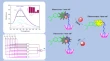
<p>Based on characterization of Au NPs, the preparation process and stabilization mechanism of the sample 4 are shown in Figure <figr fid="F5">5</figr>. First, the NaBH<sub>4 </sub>reduced the AuCl<sub>4</sub><sup>- </sup>into Au NPs quickly and effectively. CTABr molecules specifically adsorbed on the Au NPs can form surface ion pairs through the attachment of Br<sup>- </sup>ions to the Au surfaces and the electrostatic interactions between the cationic CTABr headgroups and the Br<sup>- </sup>layer, which has been verified in a two-phase system <abbrgrp><abbr bid="B25">25</abbr></abbrgrp>. Then, the Au NPs modified by CTABr dispersed in ILs possessed ultrahigh stability due to the electrostatic repulsions and steric hindrances among different Au NPs. Thus, the sample 4 can keep stable and homogeneous after standing for more than 5 months. While the partial aggregation of samples 5, 6, and 7 of Table <tblr tid="T1">1</tblr> within 1 week indicates that this process cannot make high concentration Au nanofluids stable owing to the low solubility of CTABr in [Bmim][PF<sub>6</sub>].</p>
<fig id="F5"><title><p>Figure 5</p></title><caption><p>The preparation process and stabilization mechanism of the sample 4</p></caption><text>
   <p><b>The preparation process and stabilization mechanism of the sample 4</b>. I: the AuCl<sub>4</sub><sup>- </sup>was reduced by sodium borohydride (NaBH<sub>4</sub>) and Au NPs modified by CTABr were quickly obtained; II: after standing for more than 5 months, the modified Au NPs could still exhibit ultrahigh stability due to the electrostatic repulsions and steric hindrances between different Au NPs.</p>
</text><graphic file="1556-276X-6-259-5"/></fig>
</sec>
<sec><st><p>Tribological properties</p></st>
<p>Figure <figr fid="F6">6</figr> shows the friction coefficients and wear volumes of steel discs lubricated by samples 1, 2, 3, and 4 under loads in range of 200 to 800 N. Under low loads of 200 and 400 N, the friction coefficients lubricated by the Au/[Bmim][PF<sub>6</sub>] nanofluids (samples 2, 3, and 4 of Table <tblr tid="T1">1</tblr>) are slightly lower than that of pure [Bmim][PF<sub>6</sub>] (sample 1 of Table <tblr tid="T1">1</tblr>), exhibiting slight friction-reduction properties. However, there are no obvious reduction but even slight increment for the wear volumes lubricated by the nanofluids compared with pure [Bmim][PF<sub>6</sub>], which can be attributed to the occurrence of adhesive wear because the gold is softer than steel. While under high loads of 600 and 800 N, the Au NPs during friction process may first fill up the micro-gap of rubbing surface and deposit there to form a self-assembly thin film, which could provide protection for the surface from serious abrasive wear <abbrgrp><abbr bid="B22">22</abbr></abbrgrp>. It is confirmed by SEM and EDS images of the worn surface lubricated by the sample 4 under 800 N, as shown in Figure <figr fid="F7">7</figr>. In Figure <figr fid="F7">7</figr>, it can be observed that the worn surface is smooth and the Au element homogeneously distributes on the rubbing surface, verifying that no abrasive wear occurs and a protective thin film composed of Au NPs forms during friction process. Therefore, the stable nanofluids (samples 3 and 4 of Table <tblr tid="T1">1</tblr>) are helpful to form a self-assembly metal film and exhibit excellent fiction-reduction and anti-wear ability when they are under the load of 600 or 800 N. For example, the friction coefficient and wear volume of sample 4 are 13.8 and 45.4% lower than those of sample 1 in Table <tblr tid="T1">1</tblr> under 800 N. On the contrary, the unstable Au NPs dispersion of sample 2 in Table <tblr tid="T1">1</tblr> may bring about ruleless aggregation but not self-assemble behavior of Au NPs during friction so as to result in destruction of the layer structure film of [Bmim][PF<sub>6</sub>] <abbrgrp><abbr bid="B26">26</abbr></abbrgrp> on the specimen and serious abrasive wear, leading to high friction coefficient and large wear volume.</p>
<fig id="F6"><title><p>Figure 6</p></title><caption><p>The friction coefficients (a) and wear volumes (b) of steel discs lubricated by samples 1, 2, 3, and 4 under various loads</p></caption><text>
   <p><b>The friction coefficients (a) and wear volumes (b) of steel discs lubricated by samples 1, 2, 3, and 4 under various loads</b>.</p>
</text><graphic file="1556-276X-6-259-6"/></fig>
<fig id="F7"><title><p>Figure 7</p></title><caption><p>SEM (a) and EDS (b) images of the worn surface lubricated by the sample 4 under 800 N and the element distribution of Au</p></caption><text>
   <p><b>SEM (a) and EDS (b) images of the worn surface lubricated by the sample 4 under 800 N and the element distribution of Au</b>.</p>
</text><graphic file="1556-276X-6-259-7"/></fig>
<p>Figure <figr fid="F8">8</figr> shows the friction coefficients and wear volumes of discs lubricated by pure [Bmim][PF<sub>6</sub>], [Bmim][PF<sub>6</sub>] containing 1-methylimidazole (5 mmol), and [Bmim][PF<sub>6</sub>] containing CTABr (5 mmol) under 800 N. The addition of small amount stabilizer (1-Methylimidazole or CTABr) into [Bmim][PF<sub>6</sub>] introduces slight increments of friction coefficient and wear volume in the tribological measurements, indicating that the stabilizers used in the nanofluids have slightly negative effects on the tribological properties of [Bmim][PF<sub>6</sub>]. Then, it is not difficult to understand that the much better tribological properties of the Au/[Bmim][PF<sub>6</sub>] nanofluids (samples 3 and 4 of Table <tblr tid="T1">1</tblr>) must be attributed to the existence of stable Au NPs but not 1-methylimidazole or CTABr.</p>
<fig id="F8"><title><p>Figure 8</p></title><caption><p>The friction coefficients and wear volumes of discs lubricated by (a) pure [Bmim][PF<sub>6</sub>], (b) [Bmim][PF<sub>6</sub>] containing 1-methylimidazole (5 mmol), and (c) [Bmim][PF<sub>6</sub>] containing CTABr (5 mmol) under 800 N</p></caption><text>
   <p><b>The friction coefficients and wear volumes of discs lubricated by (a) pure [Bmim][PF<sub>6</sub>], (b) [Bmim][PF<sub>6</sub>] containing 1-methylimidazole (5 mmol), and (c) [Bmim][PF<sub>6</sub>] containing CTABr (5 mmol) under 800 N</b>.</p>
</text><graphic file="1556-276X-6-259-8"/></fig>
<p>To further verify that the stable Au/[Bmim][PF<sub>6</sub>] nanofluids have much better tribological properties under high loads, the corresponding friction coefficient curves under 800 N as a function of time and the three dimension (3D) images of worn surfaces lubricated by all four samples were measured, as shown in Figure <figr fid="F9">9</figr>. The friction coefficients of samples 1 and 2 in Table <tblr tid="T1">1</tblr> fiercely fluctuate in running-in period during test in Figure <figr fid="F9">9a</figr>, indicating the existence of the serious abrasive wear. This phenomenon is corresponding to their 3 D images of worn surfaces shown in Figure <figr fid="F9">9b, c</figr>, which exhibit large wear volumes and serious abrasion. On the contrary, the friction coefficient curves of samples 3 and 4 in Table <tblr tid="T1">1</tblr> are lower and smoother than those of samples 1 and 2 in Table <tblr tid="T1">1</tblr>, showing obvious friction-reduction properties. Accordingly, their 3 D images of worn surfaces in Figure <figr fid="F9">9d, e</figr> show smaller wear volumes and slight abrasion compared to those of samples 1 and 2, exhibiting favorable anti-wear properties.</p>
<fig id="F9"><title><p>Figure 9</p></title><caption><p>Friction coefficient curves lubricated by various samples as a function of time under 800 N (a), and 3 D images of the worn surfaces lubricated by samples 1 (b), 2 (c), 3 (d), and 4 (e) under 800 N</p></caption><text>
   <p><b>Friction coefficient curves lubricated by various samples as a function of time under 800 N (a), and 3 D images of the worn surfaces lubricated by samples 1 (b), 2 (c), 3 (d), and 4 (e) under 800 N</b>.</p>
</text><graphic file="1556-276X-6-259-9"/></fig>
<p>We assume the HAuCl<sub>4 </sub>was completely reduced by access NaBH<sub>4</sub>. Then, the volumetric fraction of the samples 4, 5, 6, and 7 in Table <tblr tid="T1">1</tblr> are 1.02 &#215; 10<sup>-3</sup>, 2.04 &#215; 10<sup>-3</sup>, 3.06 &#215; 10<sup>-3</sup>, 4.08 &#215; 10<sup>-3</sup>%, respectively. The friction coefficients and wear volumes of discs lubricated by Au/[Bmim][PF<sub>6</sub>] nanofluids using CTABr as stabilizer with various volumetric fraction (vol.%) under 800 N are shown in Figure <figr fid="F10">10</figr>. It has been found that the addition of low concentration Au NPs modified by CTABr greatly improves the tribological properties of basic lubricant ([Bmim][PF<sub>6</sub>]). And the effects of concentration on tribological properties of nanofluids are not obvious. In comparison with concentration, the stability of the Au NPs used as additives is of key importance in improving the tribological properties of pure [Bmim][PF<sub>6</sub>].</p>
<fig id="F10"><title><p>Figure 10</p></title><caption><p>The friction coefficients and wear volumes of discs lubricated by Au/[Bmim][PF<sub>6</sub>] nanofluids containing CTABr with various concentrations under 800 N</p></caption><text>
   <p><b>The friction coefficients and wear volumes of discs lubricated by Au/[Bmim][PF<sub>6</sub>] nanofluids containing CTABr with various concentrations under 800 N</b>.</p>
</text><graphic file="1556-276X-6-259-10"/></fig>
</sec>
<sec><st><p>Thermal conductivity</p></st>
<p>The volumetric fraction of Au NPs of sample 4 in Table <tblr tid="T1">1</tblr> with ultrahigh stability is about 1.02 &#215; 10<sup>-3</sup>% as mentioned above. The Au/[Bmim][PF<sub>6</sub>] nanofluids with concentrations of 2.55 &#215; 10<sup>-4 </sup>and 5.1 &#215; 10<sup>-4</sup>% were also fabricated by diluting the sample 4 before the TC measurements. Compared with traditional heat transfer oil, the [Bmim][PF<sub>6</sub>] possesses slightly higher TC, much higher thermal stability, lower volatility, and nonflammability, which make it be a potential high-temperature heat transfer fluid in the future. However, the poor TC of [Bmim][PF<sub>6</sub>] <abbrgrp><abbr bid="B27">27</abbr></abbrgrp> still needs to be enhanced. Moreover, the temperature is a key factor for the investigation of heat transfer mechanism in nanofluids. Thus, the TC of Au/[Bmim][PF<sub>6</sub>] nanofluids was measured as a function of temperature in our following work.</p>
<p>Figure <figr fid="F11">11</figr> shows the TC of [Bmim][PF<sub>6</sub>] and [Bmim][PF<sub>6</sub>] containing CTABr (5 mM) and the TC enhancements of Au/[Bmim][PF<sub>6</sub>] nanofluids defined as (<it>k</it><sub>nf </sub>- <it>k</it><sub>0</sub>)/<it>k</it><sub>0 </sub>(%) with various concentrations in temperature range of 33 to 81&#176;C, where <it>k</it><sub>nf </sub>and <it>k</it><sub>0 </sub>is TC of the nanofluids and [Bmim][PF<sub>6</sub>] at various temperatures, respectively. The TC of [Bmim][PF<sub>6</sub>] and [Bmim][PF<sub>6</sub>] containing CTABr (5 mM) in Figure <figr fid="F11">11a</figr> is both slightly temperature-dependent and the later is no remarkable differences compared with the former, indicating the low amount of CTABr has no obvious effects on the TC of [Bmim][PF<sub>6</sub>]. Therefore, the effects on the TC of base liquid induced by CTABr are omitted in the following discussion on the TC enhancements of the nanofluids. The TC enhancements of nanofluids in Figure <figr fid="F11">11b</figr> increases slightly at low temperatures (&#8804;53&#176;C) but sharply at high temperatures (&#8805;60&#176;C), exhibiting non-linear increment as a function of temperature and the remarkable effect of stable Au NPs on the TC of base liquid especially at high temperatures. The TC of the nanofluid (1.02 &#215; 10<sup>-3</sup>%) at 81&#176;C is 13.1% higher than that of base liquid, indicating the addition of low concentration of stable Au NPs can greatly improve the thermal properties of [Bmim][PF<sub>6</sub>] under high temperature.</p>
<fig id="F11"><title><p>Figure 11</p></title><caption><p>The TC of [Bmim][PF<sub>6</sub>] and [Bmim][PF<sub>6</sub>] containing CTABr (5 mmol) (a), and the TC enhancement of Au/[Bmim][PF<sub>6</sub>] nanofluids (b) with various concentrations varying with temperature</p></caption><text>
   <p><b>The TC of [Bmim][PF<sub>6</sub>] and [Bmim][PF<sub>6</sub>] containing CTABr (5 mmol) (a), and the TC enhancement of Au/[Bmim][PF<sub>6</sub>] nanofluids (b) with various concentrations varying with temperature</b>.</p>
</text><graphic file="1556-276X-6-259-11"/></fig>
<p>The relationship between the TC enhancement and the concentration under various temperatures is illustrated in Figure <figr fid="F12">12</figr>. The Maxwell effective medium theory <abbrgrp><abbr bid="B28">28</abbr></abbrgrp> which can be simplified to <it>k</it><sub>nf </sub>= (1 + 3&#966;) <it>k</it><sub>0 </sub>when <it>k</it><sub>0 </sub>&lt; &lt; <it>k</it><sub>p </sub>was also drawn in Figure <figr fid="F12">12</figr>, where <it>k</it><sub>p </sub>is the TC of the nanoparticles and &#966; is the volumetric fraction of the nanofluid. The differences of the TC enhancement are negligible when the temperature is lower than 53&#176;C and could be predicted by the Maxwell effective medium theory very well. However, the TC enhancement of the Au nanofluids gradually exhibits non-linear increment with the increment of volumetric fraction when the temperature is higher than 60&#176;C and is much higher than the estimation of the Maxwell model. Moreover, the temperature is higher, the TC enhancement rate is sharper.</p>
<fig id="F12"><title><p>Figure 12</p></title><caption><p>The TC enhancement of Au/[Bmim][PF<sub>6</sub>] nanofluids as a function of concentration under various temperatures</p></caption><text>
   <p><b>The TC enhancement of Au/[Bmim][PF<sub>6</sub>] nanofluids as a function of concentration under various temperatures</b>. The <it>dashed line </it>corresponds to the Maxwell effective medium theory.</p>
</text><graphic file="1556-276X-6-259-12"/></fig>
<p>The TC enhancement of nanofluids showing a strong sensitivity to the temperature was also found by some other researchers <abbrgrp><abbr bid="B16">16</abbr><abbr bid="B29">29</abbr><abbr bid="B30">30</abbr><abbr bid="B31">31</abbr><abbr bid="B32">32</abbr><abbr bid="B33">33</abbr></abbrgrp>. Among the various proposed mechanisms of ballistic heat transfer of nanoparticles, nano-layers of liquid molecules around nanoparticles, clustering of nanoparticles, and the Brownian motion of nanoparticles for the anomalously enhanced TC of nanofluids compared to that of base liquids <abbrgrp><abbr bid="B34">34</abbr></abbrgrp>, the micro-convection caused by the Brownian motion of nanoparticles is the most reliable explanation for low concentration nanofluids <abbrgrp><abbr bid="B35">35</abbr></abbrgrp>. In our experiments, these Au nanofluids with low concentrations exhibit little enhancements under low temperature but obvious enhancements under high temperature. The relationship between the concentration and the TC enhancement is negligibly and sharply relative under low and high temperature, respectively. All these phenomena verify that the micro-convection caused by the Brownian motion of nanoparticles plays the most important role in the TC enhancement of Au nanofluids compared with other heat transfer mechanisms of the nanofluids. Then, it is not difficult to understand the results in our work. The viscosity of base liquids and temperature are two factors influencing the Brownian motion of Au NPs. The increase of temperature would cause large viscosity reduction of [Bmim][PF<sub>6</sub>] with a large viscosity-temperature exponent and aggravate the Brownian motion of Au NPs. These changes of Au/[Bmim][PF<sub>6</sub>] nanofluids with the increase of temperature can be the reason why the TC of nanofluids is conspicuously temperature-dependent and greatly enhanced especially at high temperatures.</p>
</sec>
</sec>
<sec><st><p>Conclusions</p></st>
<p>The Au/[Bmim][PF<sub>6</sub>] nanofluids with changeable stabilities were synthesized by a facile Brust-Schiffrin method at room temperature. The reliable encapsulation mechanism was proposed for the nanofluids with ultrahigh stability by UV-visible, TEM, FT-IR, and XPS characterizations of Au NPs. The electrostatic repulsion and steric hindrance between Au NPs modified by CTABr make the Au NPs keep stable in [Bmim][PF<sub>6</sub>] for a long time. In comparison with pure [Bmim][PF<sub>6</sub>], the stable nanofluids exhibited excellent friction-reduction and anti-wear properties even if the addition concentration of Au NPs was very low, which indicated that the stability of the nanofluids is of key importance. Moreover, the TC of stable Au/[Bmim][PF<sub>6</sub>] nanofluids were also measured as a function of temperature. The TC of nanofluids is sharply temperature-dependent and greatly enhanced compared to that of pure [Bmim][PF<sub>6</sub>], which can be attributed to the micro-convection caused by the Brownian motion of Au NPs. To sum up, the additions of stable Au NPs with low concentrations can greatly improve the physicochemical properties of [Bmim][PF<sub>6</sub>]. Therefore, more Au/IL nanofluids with high stability need to be prepared and their other properties also need to be exploited in the future, which might broaden their potential applications in the fields of photonics, optoelectronics, sensor, catalysts, lubricants, heat transfer liquids, information storage, and medicine.</p>
</sec>
<sec><st><p>Competing interests</p></st>
<p>The authors declare that they have no competing interests.</p>
</sec>
<sec><st><p>Authors' contributions</p></st>
<p>BW did the synthetic and characteristic job in this manuscript. XW, WL, and JH gave the advice and guide for the experimental section and edited the manuscript. All authors read and approved the final manuscript.</p>
</sec>
</bdy>
<bm>
<ack><sec><st><p>Acknowledgements</p></st>
<p>This work was supported by the NFSC (grant nos. 20803087 and 21033005) and the Major State Basic Research Development Program of China (973 Program, 2007CB607606).</p>
</sec>
</ack>
<refgrp><bibl id="B1"><title><p>Shape-controlled synthesis of gold and silver nanoparticles</p></title><aug><au><snm>Sun</snm><fnm>YG</fnm></au><au><snm>Xia</snm><fnm>YN</fnm></au></aug><source>Science</source><pubdate>2002</pubdate><volume>298</volume><fpage>2176</fpage><xrefbib><pubidlist><pubid idtype="doi">10.1126/science.1077229</pubid><pubid idtype="pmpid" link="fulltext">12481134</pubid></pubidlist></xrefbib></bibl><bibl id="B2"><title><p>Synthesis and electrochemical applications of gold nanoparticles</p></title><aug><au><snm>Guo</snm><fnm>SJ</fnm></au><au><snm>Wang</snm><fnm>EK</fnm></au></aug><source>Anal Chim Acta</source><pubdate>2007</pubdate><volume>598</volume><fpage>181</fpage><xrefbib><pubidlist><pubid idtype="doi">10.1016/j.aca.2007.07.054</pubid><pubid idtype="pmpid" link="fulltext">17719891</pubid></pubidlist></xrefbib></bibl><bibl id="B3"><title><p>Gold nanoparticles: assembly, supramolecular chemistry, quantum-size-related properties, and applications toward biology, catalysis, and nanotechnology</p></title><aug><au><snm>Daniel</snm><fnm>MC</fnm></au><au><snm>Astruc</snm><fnm>D</fnm></au></aug><source>Chem Rev</source><pubdate>2004</pubdate><volume>104</volume><fpage>293</fpage><xrefbib><pubidlist><pubid idtype="doi">10.1021/cr030698+</pubid><pubid idtype="pmpid" link="fulltext">14719978</pubid></pubidlist></xrefbib></bibl><bibl id="B4"><title><p>Synthesis of thiol-derivatised gold nanoparticles in a two-phase liquid-liquid system</p></title><aug><au><snm>Brust</snm><fnm>M</fnm></au><au><snm>Walker</snm><fnm>M</fnm></au><au><snm>Bethell</snm><fnm>D</fnm></au><au><snm>Schiffrin</snm><fnm>DJ</fnm></au><au><snm>Whyman</snm><fnm>R</fnm></au></aug><source>J Chem Soc Chem Commun</source><pubdate>1994</pubdate><volume>801</volume></bibl><bibl id="B5"><title><p>Synthesis of gold nanoparticles modified with ionic liquid based on the imidazolium cation</p></title><aug><au><snm>Itoh</snm><fnm>H</fnm></au><au><snm>Naka</snm><fnm>K</fnm></au><au><snm>Chujo</snm><fnm>Y</fnm></au></aug><source>J Am Chem Soc</source><pubdate>2004</pubdate><volume>126</volume><fpage>3026</fpage><xrefbib><pubidlist><pubid idtype="doi">10.1021/ja039895g</pubid><pubid idtype="pmpid">15012113</pubid></pubidlist></xrefbib></bibl><bibl id="B6"><title><p>Imidazolium-based ionic liquids as efficient shape-regulating solvents for the synthesis of gold nanorods</p></title><aug><au><snm>Ryu</snm><fnm>HJ</fnm></au><au><snm>Sanchez</snm><fnm>L</fnm></au><au><snm>Keul</snm><fnm>HA</fnm></au><au><snm>Raj</snm><fnm>A</fnm></au><au><snm>Bockstaller</snm><fnm>MR</fnm></au></aug><source>Angew Chem Int Ed</source><pubdate>2008</pubdate><volume>47</volume><fpage>7639</fpage><xrefbib><pubid idtype="doi">10.1002/anie.200802185</pubid></xrefbib></bibl><bibl id="B7"><title><p>1-Methylimidazole stabilization of gold nanoparticles in imidazolium ionic liquids</p></title><aug><au><snm>Dash</snm><fnm>P</fnm></au><au><snm>Scott</snm><fnm>RWJ</fnm></au></aug><source>Chem Commun</source><pubdate>2009</pubdate><volume>812</volume></bibl><bibl id="B8"><title><p>The synthesis of perylene-coated graphene sheets decorated with Au nanoparticles and its electrocatalysis toward oxygen reduction</p></title><aug><au><snm>Li</snm><fnm>FH</fnm></au><au><snm>Yang</snm><fnm>HF</fnm></au><au><snm>Shan</snm><fnm>CS</fnm></au><au><snm>Zhang</snm><fnm>QX</fnm></au><au><snm>Han</snm><fnm>DX</fnm></au><au><snm>Ivaska</snm><fnm>A</fnm></au><au><snm>Niu</snm><fnm>L</fnm></au></aug><source>J Mater Chem</source><pubdate>2009</pubdate><volume>19</volume><fpage>4022</fpage><xrefbib><pubid idtype="doi">10.1039/b902791b</pubid></xrefbib></bibl><bibl id="B9"><title><p>Gold nanoparticles: past, present, and future</p></title><aug><au><snm>Sardar</snm><fnm>R</fnm></au><au><snm>Funston</snm><fnm>AM</fnm></au><au><snm>Mulvaney</snm><fnm>P</fnm></au><au><snm>Murray</snm><fnm>RW</fnm></au></aug><source>Langmuir</source><pubdate>2009</pubdate><volume>25</volume><fpage>13840</fpage><xrefbib><pubidlist><pubid idtype="doi">10.1021/la9019475</pubid><pubid idtype="pmpid" link="fulltext">19572538</pubid></pubidlist></xrefbib></bibl><bibl id="B10"><title><p>Biocatalysis in ionic liquids</p></title><aug><au><snm>van Rantwijk</snm><fnm>F</fnm></au><au><snm>Sheldon</snm><fnm>RA</fnm></au></aug><source>Chem Rev</source><pubdate>2007</pubdate><volume>107</volume><fpage>2757</fpage><xrefbib><pubidlist><pubid idtype="doi">10.1021/cr050946x</pubid><pubid idtype="pmpid" link="fulltext">17564484</pubid></pubidlist></xrefbib></bibl><bibl id="B11"><title><p>Synthesis of single-crystal gold nanosheets of large size in ionic liquids</p></title><aug><au><snm>Li</snm><fnm>ZH</fnm></au><au><snm>Liu</snm><fnm>ZM</fnm></au><au><snm>Zhang</snm><fnm>JL</fnm></au><au><snm>Han</snm><fnm>BX</fnm></au><au><snm>Du</snm><fnm>JM</fnm></au><au><snm>Gao</snm><fnm>YN</fnm></au><au><snm>Jiang</snm><fnm>T</fnm></au></aug><source>J Phys Chem B</source><pubdate>2005</pubdate><volume>109</volume><fpage>14445</fpage><xrefbib><pubidlist><pubid idtype="doi">10.1021/jp0520998</pubid><pubid idtype="pmpid">16852818</pubid></pubidlist></xrefbib></bibl><bibl id="B12"><title><p>Stabilized and size-tunable gold nanoparticles formed in a quaternary ammonium-based room-temperature ionic liquid under gamma-irradiation</p></title><aug><au><snm>Chen</snm><fnm>SM</fnm></au><au><snm>Liu</snm><fnm>YD</fnm></au><au><snm>Wu</snm><fnm>GZ</fnm></au></aug><source>Nanotechnology</source><pubdate>2005</pubdate><volume>16</volume><fpage>2360</fpage><xrefbib><pubidlist><pubid idtype="doi">10.1088/0957-4484/16/10/061</pubid><pubid idtype="pmpid" link="fulltext">20818018</pubid></pubidlist></xrefbib></bibl><bibl id="B13"><title><p>Gold nanoparticles prepared by sonochemical method in thiol-functionalized ionic liquid</p></title><aug><au><snm>Jin</snm><fnm>Y</fnm></au><au><snm>Wang</snm><fnm>PJ</fnm></au><au><snm>Yin</snm><fnm>DH</fnm></au><au><snm>Liu</snm><fnm>JH</fnm></au><au><snm>Qin</snm><fnm>LS</fnm></au><au><snm>Yu</snm><fnm>NY</fnm></au><au><snm>Xie</snm><fnm>GY</fnm></au><au><snm>Li</snm><fnm>BM</fnm></au></aug><source>Colloids Surf A</source><pubdate>2007</pubdate><volume>302</volume><fpage>366</fpage><xrefbib><pubid idtype="doi">10.1016/j.colsurfa.2007.02.060</pubid></xrefbib></bibl><bibl id="B14"><title><p>Photoinduced synthesis of anisotropic gold nanoparticles in room-temperature ionic liquid</p></title><aug><au><snm>Zhu</snm><fnm>JM</fnm></au><au><snm>Shen</snm><fnm>YH</fnm></au><au><snm>Xie</snm><fnm>AJ</fnm></au><au><snm>Qiu</snm><fnm>LG</fnm></au><au><snm>Zhang</snm><fnm>Q</fnm></au><au><snm>Zhang</snm><fnm>SY</fnm></au></aug><source>J Phys Chem C</source><pubdate>2007</pubdate><volume>111</volume><fpage>7629</fpage><xrefbib><pubid idtype="doi">10.1021/jp0711850</pubid></xrefbib></bibl><bibl id="B15"><title><p>Formation of Au nanoparticles in an ionic liquid by electron beam irradiation</p></title><aug><au><snm>Imanishi</snm><fnm>A</fnm></au><au><snm>Tamura</snm><fnm>M</fnm></au><au><snm>Kuwabata</snm><fnm>S</fnm></au></aug><source>Chem Commun</source><pubdate>2009</pubdate><volume>1775</volume></bibl><bibl id="B16"><title><p>Thermal conductivities of naked and monolayer protected metal nanoparticle based nanofluids: Manifestation of anomalous enhancement and chemical effects</p></title><aug><au><snm>Patel</snm><fnm>HE</fnm></au><au><snm>Das</snm><fnm>SK</fnm></au><au><snm>Sundararajan</snm><fnm>T</fnm></au><au><snm>Nair</snm><fnm>AS</fnm></au><au><snm>George</snm><fnm>B</fnm></au><au><snm>Pradeep</snm><fnm>T</fnm></au></aug><source>Appl Phys Lett</source><pubdate>2003</pubdate><volume>83</volume><fpage>2931</fpage><xrefbib><pubid idtype="doi">10.1063/1.1602578</pubid></xrefbib></bibl><bibl id="B17"><title><p>Thermal conductivity of nanoparticle suspensions</p></title><aug><au><snm>Putnam</snm><fnm>SA</fnm></au><au><snm>Cahill</snm><fnm>DG</fnm></au><au><snm>Braun</snm><fnm>PV</fnm></au><au><snm>Ge</snm><fnm>ZB</fnm></au><au><snm>Shimmin</snm><fnm>RG</fnm></au></aug><source>J Appl Phys</source><pubdate>2006</pubdate><volume>99</volume><fpage>084308</fpage><xrefbib><pubid idtype="doi">10.1063/1.2189933</pubid></xrefbib></bibl><bibl id="B18"><title><p>On the thermal conductivity of gold nanoparticle colloids</p></title><aug><au><snm>Shalkevich</snm><fnm>N</fnm></au><au><snm>Escher</snm><fnm>W</fnm></au><au><snm>Burgi</snm><fnm>T</fnm></au><au><snm>Michel</snm><fnm>B</fnm></au><au><snm>Si-Ahmed</snm><fnm>L</fnm></au><au><snm>Poulikakos</snm><fnm>D</fnm></au></aug><source>Langmuir</source><pubdate>2010</pubdate><volume>26</volume><fpage>663</fpage><xrefbib><pubidlist><pubid idtype="doi">10.1021/la9022757</pubid><pubid idtype="pmpid" link="fulltext">19681632</pubid></pubidlist></xrefbib></bibl><bibl id="B19"><title><p>Synthetic control of the diameter and length of single crystal semiconductor nanowires</p></title><aug><au><snm>Gudiksen</snm><fnm>MS</fnm></au><au><snm>Wang</snm><fnm>JF</fnm></au><au><snm>Lieiber</snm><fnm>CM</fnm></au></aug><source>J Phys Chem B</source><pubdate>2001</pubdate><volume>105</volume><fpage>4062</fpage><xrefbib><pubid idtype="doi">10.1021/jp010540y</pubid></xrefbib></bibl><bibl id="B20"><title><p>Room-temperature ionic liquids: a novel versatile lubricant</p></title><aug><au><snm>Ye</snm><fnm>CF</fnm></au><au><snm>Liu</snm><fnm>WM</fnm></au><au><snm>Chen</snm><fnm>YX</fnm></au><au><snm>Yu</snm><fnm>LG</fnm></au></aug><source>Chem Commun</source><pubdate>2001</pubdate><volume>2244</volume></bibl><bibl id="B21"><title><p>Imidazolium ionic liquids as antiwear and antioxidant additive in poly(ethylene glycol) for steel/steel contacts</p></title><aug><au><snm>Cai</snm><fnm>MR</fnm></au><au><snm>Liang</snm><fnm>YM</fnm></au><au><snm>Yao</snm><fnm>MH</fnm></au><au><snm>Xia</snm><fnm>YQ</fnm></au><au><snm>Zhou</snm><fnm>F</fnm></au><au><snm>Liu</snm><fnm>WM</fnm></au></aug><source>ACS Appl Mater Int</source><pubdate>2010</pubdate><volume>2</volume><fpage>870</fpage><xrefbib><pubid idtype="doi">10.1021/am900847j</pubid></xrefbib></bibl><bibl id="B22"><title><p>Rheological and tribological properties of ionic liquid-based nanofluids containing functionalized multi-walled carbon nanotubes</p></title><aug><au><snm>Wang</snm><fnm>BG</fnm></au><au><snm>Wang</snm><fnm>XB</fnm></au><au><snm>Lou</snm><fnm>WJ</fnm></au><au><snm>Hao</snm><fnm>JC</fnm></au></aug><source>J Phys Chem C</source><pubdate>2010</pubdate><volume>114</volume><fpage>8749</fpage><xrefbib><pubid idtype="doi">10.1021/jp1005346</pubid></xrefbib></bibl><bibl id="B23"><title><p>Characterization and comparison of hydrophilic and hydrophobic room temperature ionic liquids incorporating the imidazolium cation</p></title><aug><au><snm>Huddleston</snm><fnm>JG</fnm></au><au><snm>Visser</snm><fnm>AE</fnm></au><au><snm>Reichert</snm><fnm>WM</fnm></au><au><snm>Willauer</snm><fnm>HD</fnm></au><au><snm>Broker</snm><fnm>GA</fnm></au><au><snm>Rogers</snm><fnm>RD</fnm></au></aug><source>Green Chem</source><pubdate>2001</pubdate><volume>3</volume><fpage>156</fpage><xrefbib><pubid idtype="doi">10.1039/b103275p</pubid></xrefbib></bibl><bibl id="B24"><title><p>Catalytic activity of supported Au nanoparticles deposited from block copolymer micelles</p></title><aug><au><snm>Jaramillo</snm><fnm>TF</fnm></au><au><snm>Baeck</snm><fnm>SH</fnm></au><au><snm>Cuenya</snm><fnm>BR</fnm></au><au><snm>McFarland</snm><fnm>EW</fnm></au></aug><source>J Am Chem Soc</source><pubdate>2003</pubdate><volume>125</volume><fpage>7148</fpage><xrefbib><pubidlist><pubid idtype="doi">10.1021/ja029800v</pubid><pubid idtype="pmpid">12797767</pubid></pubidlist></xrefbib></bibl><bibl id="B25"><title><p>Self-organization of nanosized gold particles</p></title><aug><au><snm>Fink</snm><fnm>J</fnm></au><au><snm>Kiely</snm><fnm>CJ</fnm></au><au><snm>Bethell</snm><fnm>D</fnm></au><au><snm>Schiffrin</snm><fnm>DJ</fnm></au></aug><source>Chem Mater</source><pubdate>1998</pubdate><volume>10</volume><fpage>922</fpage><xrefbib><pubid idtype="doi">10.1021/cm970702w</pubid></xrefbib></bibl><bibl id="B26"><title><p>Tribological performance of phosphonium based ionic liquids for an aluminum-on-steel system and opinions on lubrication mechanism</p></title><aug><au><snm>Liu</snm><fnm>XQ</fnm></au><au><snm>Zhou</snm><fnm>F</fnm></au><au><snm>Liang</snm><fnm>YM</fnm></au><au><snm>Liu</snm><fnm>WM</fnm></au></aug><source>Wear</source><pubdate>2006</pubdate><volume>261</volume><fpage>1174</fpage><xrefbib><pubid idtype="doi">10.1016/j.wear.2006.03.018</pubid></xrefbib></bibl><bibl id="B27"><title><p>Thermochemistry of ionic liquid heat-transfer fluids</p></title><aug><au><snm>Van Valkenburg</snm><fnm>ME</fnm></au><au><snm>Vaughn</snm><fnm>RL</fnm></au><au><snm>Williams</snm><fnm>M</fnm></au><au><snm>Wilkes</snm><fnm>JS</fnm></au></aug><source>Thermochim Acta</source><pubdate>2005</pubdate><volume>425</volume><fpage>181</fpage><xrefbib><pubid idtype="doi">10.1016/j.tca.2004.11.013</pubid></xrefbib></bibl><bibl id="B28"><aug><au><snm>Maxwell</snm><fnm>JC</fnm></au></aug><source>A Treatise on Electricity and Magnetism</source><publisher>Oxford: Clarendon Press</publisher><pubdate>1873</pubdate></bibl><bibl id="B29"><title><p>CePO<sub>4 </sub>nanofluids: synthesis and thermal conductivity</p></title><aug><au><snm>Wei</snm><fnm>XH</fnm></au><au><snm>Zhu</snm><fnm>HT</fnm></au><au><snm>Wang</snm><fnm>LQ</fnm></au></aug><source>J Thermophys Heat Transf</source><pubdate>2009</pubdate><volume>23</volume><fpage>219</fpage><xrefbib><pubid idtype="doi">10.2514/1.38778</pubid></xrefbib></bibl><bibl id="B30"><title><p>Anomalously increased effective thermal conductivities of ethylene glycol-based nanofluids containing copper nanoparticles</p></title><aug><au><snm>Eastman</snm><fnm>JA</fnm></au><au><snm>Choi</snm><fnm>SUS</fnm></au><au><snm>Li</snm><fnm>S</fnm></au><au><snm>Yu</snm><fnm>W</fnm></au><au><snm>Thompson</snm><fnm>LJ</fnm></au></aug><source>Appl Phys Lett</source><pubdate>2009</pubdate><volume>78</volume><fpage>718</fpage><xrefbib><pubid idtype="doi">10.1063/1.1341218</pubid></xrefbib></bibl><bibl id="B31"><title><p>Synthesis and thermal conductivity of Cu<sub>2</sub>O nanofluids</p></title><aug><au><snm>Wei</snm><fnm>XH</fnm></au><au><snm>Zhu</snm><fnm>HT</fnm></au><au><snm>Kong</snm><fnm>TT</fnm></au><au><snm>Wang</snm><fnm>LQ</fnm></au></aug><source>Int J Heat Mass Transf</source><pubdate>2009</pubdate><volume>52</volume><fpage>4371</fpage><xrefbib><pubid idtype="doi">10.1016/j.ijheatmasstransfer.2009.03.073</pubid></xrefbib></bibl><bibl id="B32"><title><p>CuS/Cu<sub>2</sub>S nanofluids: synthesis and thermal conductivity</p></title><aug><au><snm>Wei</snm><fnm>XH</fnm></au><au><snm>Kong</snm><fnm>TT</fnm></au><au><snm>Zhu</snm><fnm>HT</fnm></au><au><snm>Wang</snm><fnm>LQ</fnm></au></aug><source>Int J Heat Mass Transf</source><pubdate>2010</pubdate><volume>53</volume><fpage>1841</fpage><xrefbib><pubid idtype="doi">10.1016/j.ijheatmasstransfer.2010.01.006</pubid></xrefbib></bibl><bibl id="B33"><title><p>Synthesis and thermal conductivity of microfluidic copper nanofluids</p></title><aug><au><snm>Wei</snm><fnm>XH</fnm></au><au><snm>Wang</snm><fnm>LQ</fnm></au></aug><source>Particuology</source><pubdate>2010</pubdate><volume>8</volume><fpage>262</fpage><xrefbib><pubid idtype="doi">10.1016/j.partic.2010.03.001</pubid></xrefbib></bibl><bibl id="B34"><title><p>Molecular dynamics simulation of effective thermal conductivity and study of enhanced thermal transport mechanism in nanofluids</p></title><aug><au><snm>Sarkara</snm><fnm>S</fnm></au><au><snm>Selvam</snm><fnm>RP</fnm></au></aug><source>J Appl Phys</source><pubdate>2007</pubdate><volume>102</volume><fpage>074302</fpage><xrefbib><pubid idtype="doi">10.1063/1.2785009</pubid></xrefbib></bibl><bibl id="B35"><title><p>Role of brownian motion in the enhanced thermal conductivity of nanofluids</p></title><aug><au><snm>Jang</snm><fnm>SP</fnm></au><au><snm>Choi</snm><fnm>SUS</fnm></au></aug><source>Appl Phys Lett</source><pubdate>2004</pubdate><volume>84</volume><fpage>4316</fpage><xrefbib><pubid idtype="doi">10.1063/1.1756684</pubid></xrefbib></bibl></refgrp>
</bm>
</art>