<?xml version='1.0'?>
<!DOCTYPE art SYSTEM 'http://www.biomedcentral.com/xml/article.dtd'>
<art>
<ui>1556-276X-6-23</ui>
<ji>1556-276X</ji>
<fm>
<dochead>Nano Express</dochead>
<bibl>
<title><p>Organic&#8211;Inorganic Nanostructure Architecture via Directly Capping Fullerenes onto Quantum Dots</p></title>
<aug>
<au id="A1"><snm>Lee</snm><mnm>Kwan</mnm><fnm>Jae</fnm><insr iid="I1"/></au>
<au id="A2"><snm>Kim</snm><fnm>Jonggi</fnm><insr iid="I2"/></au>
<au ca="yes" id="A3"><snm>Yang</snm><fnm>Changduk</fnm><insr iid="I2"/><email>yang@unist.ac.kr</email></au>
</aug>
<insg>
<ins id="I1"><p>Research Center for Convergence Technology, Hoseo University, Chungnam 336-795, South Korea</p></ins>
<ins id="I2"><p>Interdisciplinary School of Green Energy, Ulsan National Institute of Science and Technology (UNIST),
 Ulsan 689-798, South Korea</p></ins>
</insg>
<source>Nanoscale Res Lett</source>
<issn>1556-276X</issn>
<pubdate>2011</pubdate>
<volume>6</volume>
<issue>1</issue>
<fpage>23</fpage>
<url>http://www.nanoscalereslett.com/content/6/1/23</url>
<xrefbib><pubid idtype="doi">10.1007/s11671-010-9764-1</pubid></xrefbib>
</bibl>
<history><rec><date><day>14</day><month>7</month><year>2010</year></date></rec><acc><date><day>16</day><month>8</month><year>2010</year></date></acc><pub><date><day>2</day><month>9</month><year>2010</year></date></pub></history>
<cpyrt><year>2010</year><collab>Lee et al.</collab><note>This is an Open Access article distributed under the terms of the Creative Commons Attribution License (<url>http://creativecommons.org/licenses/by/2.0</url>), which permits unrestricted use, distribution, and reproduction in any medium, provided the original work is properly cited.</note></cpyrt>
<kwdg>
<kwd>Quantum dots</kwd>
<kwd>Fullerene</kwd>
<kwd>Organic&#8211;inorganic nanostructure</kwd>
<kwd>Hybrid solar cell</kwd>
<kwd>Ligand exchange</kwd>
</kwdg>
<abs>
<sec><st><p>Abstract</p></st>
<p>A new form of fullerene-capped CdSe nanoparticles (<b>PCBA</b>-capped CdSe NPs), using carboxylate ligands with [60]fullerene capping groups that provides an effective synthetic methodology to attach fullerenes noncovalently to CdSe, is presented for usage in nanotechnology and photoelectric fields. Interestingly, either the internal charge transfer or the energy transfer in the hybrid material contributes to photoluminescence (PL) quenching of the CdSe moieties.</p>
</sec>
</abs>
</fm>
<bdy>
<sec><st><p>Introduction</p></st>
<p>Buckminsterfullerenes, beside their structural attraction, have been extensively researched in materials science due to their unique properties such as the excellent electron affinity as well as the interesting photophysical/photochemical nature <abbrgrp><abbr bid="B1">1</abbr><abbr bid="B2">2</abbr><abbr bid="B3">3</abbr><abbr bid="B4">4</abbr><abbr bid="B5">5</abbr></abbrgrp>. A parallel and equally heady progress has also been made toward the development of semiconductor nanoparticles (e.g., CdSe) since the variation of their particle size and shape provides continuous and predictable changes in optical/electronic properties and chemical processability <abbrgrp><abbr bid="B6">6</abbr><abbr bid="B7">7</abbr><abbr bid="B8">8</abbr></abbrgrp>. In addition, these nanocrystals behave essentially as a three-dimensional potential well for electrons (i.e., the quantum mechanical 'particle in a box'). It thus comes as no surprise that both the fullerenes and the nanocrystals have been actively investigated for various applications; however, their fields have been largely independent so far and have enjoyed their own remarkable developments in the past <abbrgrp><abbr bid="B9">9</abbr><abbr bid="B10">10</abbr><abbr bid="B11">11</abbr></abbrgrp>. For instance, both fullerenes and semiconductor nanocrystals have been blended with conjugated polymers respectively, giving rise to photovoltaic cells with high-power conversion efficiencies <abbrgrp><abbr bid="B12">12</abbr><abbr bid="B13">13</abbr><abbr bid="B14">14</abbr><abbr bid="B15">15</abbr><abbr bid="B16">16</abbr><abbr bid="B17">17</abbr><abbr bid="B18">18</abbr><abbr bid="B19">19</abbr><abbr bid="B20">20</abbr><abbr bid="B21">21</abbr><abbr bid="B22">22</abbr></abbrgrp>. Despite given the prominent features of fullerenes and semiconductor nanocrystals, fullerene-based mixed nanocomposites of well-defined composition and stoichiometry have not been adequately studied <abbrgrp><abbr bid="B23">23</abbr><abbr bid="B24">24</abbr><abbr bid="B25">25</abbr><abbr bid="B26">26</abbr></abbrgrp>. These points have attracted our attention to chemically combine the two in a single unit so that '<it>synergy</it>' between the two can enhance and induce their outstanding properties.</p>
<p>To prepare the quantum dots (QDs)-based organic&#8211;inorganic hybrid nanomaterials, ligand exchange is a very useful method <abbrgrp><abbr bid="B27">27</abbr><abbr bid="B28">28</abbr><abbr bid="B29">29</abbr></abbrgrp>. Even though thiol groups are the most used ligands for capping the QDs, they are unstable against photooxidation, which can lead to aggregation of the QDs <abbrgrp><abbr bid="B30">30</abbr><abbr bid="B31">31</abbr><abbr bid="B32">32</abbr></abbrgrp>. Thus, we have turned to the carboxylic acid ligands for fullerene to CdSe nanocrystals. Recently, we reported the synthesis of the well-solubilized carboxylic acid fullerene (<b>PCBA</b>) (see below) for use as <it>n</it>-type materials in hybrid bulk-heterojunction solar cell <abbrgrp><abbr bid="B14">14</abbr></abbrgrp>.</p>
<p>In the current work, through the ligand-exchange reaction, we describe here a route to prepare readily soluble nanocomposite of <b>PCBA</b>-CdSe (Figure <figr fid="F1">1</figr>). The structural and spectroscopic properties of the resulting <b>PCBA</b>-capped CdSe nanoparticles (NPs) are of great interest since such rational design and synthesis can lead potentially to promising protocol for use in optical and photoelectric fields. Either the internal charge transfer or the energy transfer phenomenon between CdSe core and <b>PCBA</b> shell is clearly observed, resulting in the photoluminescence (PL) quenching of CdSe.</p>
<fig id="F1"><title><p>Figure 1</p></title><caption><p>Synthesis of PCBA-capped CdSe NPs</p></caption><text>
   <p><b>Synthesis of PCBA-capped CdSe NPs</b>.</p>
</text><graphic file="1556-276X-6-23-1" hint_layout="double"/></fig>
</sec>
<sec><st><p>Experimental Section</p></st>
<sec><st><p>General</p></st>
<p>All solvents were purified and freshly distilled prior to use according to literature procedures. The synthesis of 4-(2-Ethylhexyloxy)-[6,6]-phenyl C<sub>61</sub>-butyric acid methyl ester (<b>PCBA</b>) <abbrgrp><abbr bid="B14">14</abbr></abbrgrp>, hexadecylamine-capped CdSe (HDA-capped CdSe) <abbrgrp><abbr bid="B18">18</abbr><abbr bid="B33">33</abbr><abbr bid="B34">34</abbr></abbrgrp>, and pyridine-capped CdSe (pyridine-capped CdSe) <abbrgrp><abbr bid="B34">34</abbr></abbrgrp> was adapted from literature procedures. Commercially available materials were used as received unless noted.</p>
</sec>
<sec><st><p>Ligand Exchange to Prepare PCBA-capped CdSe NPs</p></st>
<p>To the pyridine-capped CdSe nanocrystals (17 mg) dried with N<sub>2</sub> gas, <b>PCBA</b> (66.5 mg, 0.065 mmol) was added along with 10 mL anhydrous THF. The mixture was then sonicated at room temperature for an hour while the nanoparticles gradually became fully soluble in the THF to form an optically clear solution. The exchange procedure was monitored by FT-IR (diminution of the carboxylic acid band at 1705 cm<sup>-1</sup>), which showed nearly quantitative formation after 3 h. The solution was then dried by bubbling Ar and then stored in glove box.</p>
</sec>
</sec>
<sec><st><p>Results and Discussion</p></st>
<p>(6,6)-Phenyl C<sub>61</sub>-butyric acid methyl ester (PCBM) is a soluble form of fullerenes as well as the most widely used organic <it>n</it>-type material. The PCBM can be hydrolyzed with a strong acid to the corresponding carboxylic acid PCMA which is a hardly soluble, not processable material. The introduction of a branched side chain as a solubilizer on the phenylene of PCBM (<b>PCBA</b>) <abbrgrp><abbr bid="B14">14</abbr></abbrgrp> allows the excellent solubility, which enables to study the organic&#8211;inorganic hybrid material containing C<sub>60</sub>.</p>
<p>The hexadecylamine (HDA)-capped CdSe nanoparticles (CdSe NPs) were prepared using the reported procedures <abbrgrp><abbr bid="B18">18</abbr><abbr bid="B33">33</abbr><abbr bid="B34">34</abbr></abbrgrp>. Then, HDA-capped CdSe NPs were successfully transformed to the corresponding pyridine-capped CdSe NPs by the treatment with pyridine under ultrasonication <abbrgrp><abbr bid="B34">34</abbr></abbrgrp>. Subsequently, the ligand exchange with <b>PCBA</b> afforded the <b>PCBA</b>-capped CdSe NPs which is readily soluble in organic solvents (THF, chloroform, toluene, etc.) (Figure <figr fid="F1">1</figr>).</p>
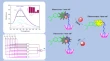
<p>To ensure that the ligand exchanges had successfully gone to completion, the NPs were characterized by FT-IR (Figure <figr fid="F2">2</figr>). On a low-energy region (from 1,800 to 1,500 cm<sup>-1</sup>), the FT-IR spectrum of the pristine <b>PCBA</b>, displays a strong absorption band at 1,705 cm<sup>-1</sup> assigned to the carboxylic acid, which is not present in the pyridine-capped CdSe NPs. In contrast, the <b>PCBA</b>-capped CdSe NPs reveal somewhat similar to the <b>PCBA</b>; however, it appears that the carboxylic acid band is diminished and shifted to lower energy at 1,730 cm<sup>-1</sup> with a relatively decrease in intensity. The inspection of FT-IR of the <b>PCBA</b>-capped CdSe NPs such as the disappearance of the carboxylic acid band and new broad bands around 1,570 cm<sup>-1</sup> is clearly suggestive that carboxylate binding are formed between <b>PCBA</b> and CdSe through the ligand exchange reaction.</p>
<fig id="F2"><title><p>Figure 2</p></title><caption><p>a FT-IR spectra on KBr for dropcast samples of PCBA (<it>diamond</it>), CdSe NPs (<it>asterisk</it>), PCBA-CdSe NPs (<it>circle</it>); b TEM of pyridine-capped CdSe NPs and c PCBA-CdSe NPs</p></caption><text>
   <p><b>a FT-IR spectra on KBr for dropcast samples of PCBA (<it>diamond</it>), CdSe NPs (<it>asterisk</it>), PCBA-CdSe NPs (<it>circle</it>); b TEM of pyridine-capped CdSe NPs and c PCBA-CdSe NPs</b>.</p>
</text><graphic file="1556-276X-6-23-2" hint_layout="single"/></fig>
<p>Figure <figr fid="F2">2b</figr> and <figr fid="F2">2c</figr> depict a transmission electron microscopy (TEM) micrograph of the NPs (pyridine-capped CdSe and <b>PCBA</b>-capped CdSe). The TEM image of the pyridine-capped CdSe is characteristic of uniformly shaped spheres, with a mean size of 5.0 &#177; 1 nm (see Figure <figr fid="F2">2b</figr>). In the case of analyzing the <b>PCBA</b>-capped CdSe, the monodispersed spheres are not easily seen in the resolution TEM; however, a nanometer-sized pattern of larger objects is observed. This can be attributed to the nanoagglomerated feature, which is resulted from the interaction between the <b>PCBA</b> attached to the CdSe. In addition, we cannot rule out that more than two CdSe units can be surrounded by <b>PCBA</b> moieties, which probably leads to the roughly spherical form.</p>
<p>The UV&#8211;Vis and photoluminescence (PL) properties of all the NPs (HDA-capped CdSe, pyridine-capped CdSe and <b>PCBA</b>-capped CdSe) were investigated in chloroform solution. As shown in Figure <figr fid="F3">3</figr>, the solution optical spectra of both HDA-capped CdSe and pyridine-capped CdSe exhibit broad absorption bands (410&#8211;460 nm), arising from exciton absorption peak in CdSe NPs. In the case of <b>PCBA</b>-capped CdSe, the distinguishable band at 330 nm corresponds to the characteristic of C<sub>60</sub> not only exhibits but also the absorption feature is almost identical to that of the pristine <b>PCBA</b>. This implies that <b>PCBA</b> is completely binding along the CdSe unit.</p>
<fig id="F3"><title><p>Figure 3</p></title><caption><p>a UV&#8211;Vis absorption and b PL spectra of HDA-capped CdSe NPs (<it>diamond</it>), pyridine-capped CdSe NPs (<it>asterisk</it>), and PCBA-capped CdSe NPs (<it>circle</it>) in chloroform solution</p></caption><text>
   <p><b>a UV&#8211;Vis absorption and b PL spectra of HDA-capped CdSe NPs (<it>diamond</it>), pyridine-capped CdSe NPs (<it>asterisk</it>), and PCBA-capped CdSe NPs (<it>circle</it>) in chloroform solution</b>.</p>
</text><graphic file="1556-276X-6-23-3" hint_layout="double"/></fig>
<p>In PL spectrum of the pyridine-capped CdSe NPs, the bathochromic shift of the onset of the emission of ca. 60 nm is observed when compared to the HDA-capped CdSe NPs. This low-energy emission can be due to aggregated formation and increased intermolecular interaction in the NPs <abbrgrp><abbr bid="B35">35</abbr></abbrgrp>. In the case of the <b>PCBA</b>-capped CdSe in solution, the PL quenching of the band at 512 nm corresponding to CdSe is clearly observed, and an emission peak centered at 795 nm which stems from the <b>PCBA</b> units becomes dominant. The decrease in PL intensity in CdSe NP is mostly likely caused by the quenching of photoexcited CdSe NP through charge transfer to the electron-accepting <b>PCBA</b> from CdSe NPs. However, we cannot rule out that, through utilization of the carboxylates as a linkage between CdSe with <b>PCBA</b>, it is possible to trigger the energy transfer in the hybrid material since the length scale of domain in <b>PCBA</b>-capped CdSe is smaller than typical values for F&#246;rster energy transfer (&lt;10 nm) <abbrgrp><abbr bid="B36">36</abbr></abbrgrp>. To confirm that the <b>PCBA</b>-capped CdSe of the intracomplex quenching is indeed charge injection of a conduction band electron of the photoexcited CdSe NPs to the surface-bound <b>PCBA</b>, we are complementing our studies by time-resolved transient absorption spectroscopic measurements with CdSe NPs and <b>PCBA</b>-capped CdSe.</p>
<p>Both PCBM and CdSe derivatives have been applied as the electron transport materials in the most widely used configuration of the photovoltaic cells <abbrgrp><abbr bid="B14">14</abbr><abbr bid="B21">21</abbr><abbr bid="B37">37</abbr><abbr bid="B38">38</abbr><abbr bid="B39">39</abbr></abbrgrp>. Furthermore, the nearly complete quenching of emission from the higher energy CdSe NPs to <b>PCBA</b> may be a significant key in further improving the efficiency of an organic solar cell.</p>
<p>In addressing this fundamental question, we are currently studying the hybrid nanostructures fabricated with conjugated polymers, in that enables to create the positive aspect in the hybrid solar cells and other hybrid materials-based optical and electrooptical applications via the ligand exchange.</p>
</sec>
<sec><st><p>Conclusion</p></st>
<p>In summary, we have demonstrated the preparation of soluble nanoparticle of <b>PCBA</b>-CdSe by directly exchanging the ligands onto the surface of pyridine-capped CdSe, which is fully characterized by FT-IR, UV&#8211;Vis absorption, PL spectra, and TEM. The resulting <b>PCBA</b>-capped CdSe in solution shows a dominant emission peak centered at 795 nm, which is originated from the <b>PCBA</b> units. It clearly indicates that either the internal charge transfer or the energy transfer from the CdSe to <b>PCBA</b> moieties in solution occurs, so that the emission band (&#955;<sub>max</sub> = 512 nm) from the CdSe units is nearly quenched. We envision that a hybrid-polymeric nanoarchitecture can be utilized for constructing one layer of solar cell to explore the possible optoelectronic device application, which will open up new opportunities for the development of solar cells based on organic&#8211;inorganic nanocomposites. This work is currently under investigation.</p>
</sec>
</bdy>
<bm>
<ack>
<sec><st><p>Acknowledgements</p></st>
<p>This research was supported by Basic Science Research Program through the National Research Foundation of Korea (NRF) funded by the Ministry of Education, Science and Technology (2010-0002494) and the National Research Foundation of Korea Grant funded by the Korean Government (MEST) (NRF-2009-C1AAA001-2009-0092950).</p>
</sec>
</ack>
<refgrp><bibl id="B1"><title><p>Fullerenes: from Synthesis to Optoelectronic Properties</p></title><aug><au><snm>Guldi</snm><fnm>DM</fnm></au><au><snm>Martin</snm><fnm>N</fnm></au></aug><publisher>Kluwer Academic, Dordrecht</publisher><pubdate>2002</pubdate><fpage>137</fpage><lpage>293</lpage></bibl><bibl id="B2"><title><p>Optical and Electronic Properties of Fullerene-Based Material</p></title><aug><au><snm>Shinar</snm><fnm>J</fnm></au><au><snm>Vardeny</snm><fnm>ZV</fnm></au><au><snm>Kafaf&#237;</snm><fnm>ZH</fnm></au></aug><publisher>Marcel Dekker, Inc., New York</publisher><pubdate>2000</pubdate><fpage>21</fpage><lpage>292</lpage></bibl><bibl id="B3"><aug><au><snm>Dagotto</snm><fnm>E</fnm></au></aug><source>Science</source><pubdate>2001</pubdate><volume>293</volume><fpage>2410</fpage><lpage>2411</lpage><xrefbib><pubidlist><pubid idtype="doi">10.1126/science.1065711</pubid><pubid idtype="pmpid" link="fulltext">11577227</pubid><pubid idtype="pubmed">11577227</pubid></pubidlist></xrefbib></bibl><bibl id="B4"><aug><au><snm>Makarova</snm><fnm>TL</fnm></au><au><snm>Sundqvist</snm><fnm>B</fnm></au><au><snm>Hohne</snm><fnm>R</fnm></au><au><snm>Esquinazi</snm><fnm>P</fnm></au><au><snm>Kopelevich</snm><fnm>Y</fnm></au><au><snm>Scharff</snm><fnm>P</fnm></au><au><snm>Davydov</snm><fnm>VA</fnm></au><au><snm>Kashevarova</snm><fnm>LS</fnm></au><au><snm>Rakhmanina</snm><fnm>AV</fnm></au></aug><source>Nature</source><pubdate>2001</pubdate><volume>413</volume><fpage>716</fpage><lpage>718</lpage><xrefbib><pubidlist><pubid idtype="doi">10.1038/35099527</pubid><pubid idtype="pmpid" link="fulltext">11607027</pubid><pubid idtype="pubmed">11607027</pubid></pubidlist></xrefbib></bibl><bibl id="B5"><aug><au><snm>Haddon</snm><fnm>RC</fnm></au><au><snm>Perel</snm><fnm>AS</fnm></au><au><snm>Morris</snm><fnm>RC</fnm></au><au><snm>Palstra</snm><fnm>TTM</fnm></au><au><snm>Hebard</snm><fnm>AF</fnm></au><au><snm>Fleming</snm><fnm>RM</fnm></au></aug><source>Appl Phys Lett</source><pubdate>1995</pubdate><volume>67</volume><fpage>121</fpage><lpage>123</lpage><xrefbib><pubid idtype="doi">10.1063/1.115503</pubid></xrefbib></bibl><bibl id="B6"><aug><au><snm>Peng</snm><fnm>XG</fnm></au><au><snm>Manna</snm><fnm>L</fnm></au><au><snm>Yang</snm><fnm>WD</fnm></au><au><snm>Wickham</snm><fnm>J</fnm></au><au><snm>Scher</snm><fnm>E</fnm></au><au><snm>Kadavanich</snm><fnm>A</fnm></au><au><snm>Alivisatos</snm><fnm>AP</fnm></au></aug><source>Nature</source><pubdate>2000</pubdate><volume>404</volume><fpage>59</fpage><lpage>61</lpage><xrefbib><pubidlist><pubid idtype="doi">10.1038/35003535</pubid><pubid idtype="pmpid" link="fulltext">10716439</pubid><pubid idtype="pubmed">10716439</pubid></pubidlist></xrefbib></bibl><bibl id="B7"><aug><au><snm>Heath</snm><fnm>JR</fnm></au></aug><source>Acc Chem Res</source><pubdate>1999</pubdate><volume>32</volume><fpage>388</fpage><xrefbib><pubid idtype="doi">10.1021/ar990059e</pubid></xrefbib></bibl><bibl id="B8"><aug><au><snm>Alivisatos</snm><fnm>AP</fnm></au></aug><source>Science</source><pubdate>1996</pubdate><volume>271</volume><fpage>933</fpage><lpage>937</lpage><xrefbib><pubid idtype="doi">10.1126/science.271.5251.933</pubid></xrefbib></bibl><bibl id="B9"><aug><au><snm>Cravino</snm><fnm>A</fnm></au><au><snm>Zerza</snm><fnm>G</fnm></au><au><snm>Maggini</snm><fnm>M</fnm></au><au><snm>Bucella</snm><fnm>S</fnm></au><au><snm>Svensson</snm><fnm>M</fnm></au><au><snm>Andersson</snm><fnm>MR</fnm></au><au><snm>Neugebauer</snm><fnm>H</fnm></au><au><snm>Sariciftci</snm><fnm>NS</fnm></au></aug><source>Chem Commun</source><pubdate>2000</pubdate><issue>24</issue><fpage>2487</fpage><lpage>2488</lpage><xrefbib><pubid idtype="doi">10.1039/b008072l</pubid></xrefbib></bibl><bibl id="B10"><aug><au><snm>Scharber</snm><fnm>MC</fnm></au><au><snm>Wuhlbacher</snm><fnm>D</fnm></au><au><snm>Koppe</snm><fnm>M</fnm></au><au><snm>Denk</snm><fnm>P</fnm></au><au><snm>Waldauf</snm><fnm>C</fnm></au><au><snm>Heeger</snm><fnm>AJ</fnm></au><au><snm>Brabec</snm><fnm>CL</fnm></au></aug><source>Adv Mater</source><pubdate>2006</pubdate><volume>18</volume><fpage>789</fpage><lpage>794</lpage><xrefbib><pubid idtype="doi">10.1002/adma.200501717</pubid></xrefbib></bibl><bibl id="B11"><aug><au><snm>Liang</snm><fnm>ZQ</fnm></au><au><snm>Dzienis</snm><fnm>KL</fnm></au><au><snm>Xu</snm><fnm>J</fnm></au><au><snm>Wang</snm><fnm>Q</fnm></au></aug><source>Adv Funct Mater</source><pubdate>2006</pubdate><volume>16</volume><fpage>542</fpage><lpage>548</lpage><xrefbib><pubid idtype="doi">10.1002/adfm.200500334</pubid></xrefbib></bibl><bibl id="B12"><aug><au><snm>Yang</snm><fnm>C</fnm></au><au><snm>Cho</snm><fnm>S</fnm></au><au><snm>Heeger</snm><fnm>AJ</fnm></au><au><snm>Wudl</snm><fnm>F</fnm></au></aug><source>Angew Chem Int Ed</source><pubdate>2009</pubdate><volume>48</volume><fpage>1592</fpage><lpage>1595</lpage><xrefbib><pubid idtype="doi">10.1002/anie.200805228</pubid></xrefbib></bibl><bibl id="B13"><aug><au><snm>Park</snm><fnm>SH</fnm></au><au><snm>Yang</snm><fnm>CD</fnm></au><au><snm>Cowan</snm><fnm>S</fnm></au><au><snm>Lee</snm><fnm>JK</fnm></au><au><snm>Wudl</snm><fnm>F</fnm></au><au><snm>Lee</snm><fnm>K</fnm></au><au><snm>Heeger</snm><fnm>AJ</fnm></au></aug><source>J Mater Chem</source><pubdate>2009</pubdate><volume>19</volume><fpage>5624</fpage><lpage>5628</lpage><xrefbib><pubid idtype="doi">10.1039/b904535j</pubid></xrefbib></bibl><bibl id="B14"><aug><au><snm>Yang</snm><fnm>C</fnm></au><au><snm>Kim</snm><fnm>JY</fnm></au><au><snm>Cho</snm><fnm>S</fnm></au><au><snm>Lee</snm><fnm>JK</fnm></au><au><snm>Heeger</snm><fnm>AJ</fnm></au><au><snm>Wudl</snm><fnm>F</fnm></au></aug><source>J Am Chem Soc</source><pubdate>2008</pubdate><volume>130</volume><fpage>6444</fpage><lpage>6450</lpage><xrefbib><pubidlist><pubid idtype="doi">10.1021/ja710621j</pubid><pubid idtype="pmpid">18412342</pubid><pubid idtype="pubmed">18412342</pubid></pubidlist></xrefbib></bibl><bibl id="B15"><aug><au><snm>Shiga</snm><fnm>T</fnm></au><au><snm>Takechi</snm><fnm>K</fnm></au><au><snm>Motohiro</snm><fnm>T</fnm></au></aug><source>Sol Energ Mat Sol Cells</source><pubdate>2006</pubdate><volume>90</volume><fpage>1849</fpage><lpage>1858</lpage><xrefbib><pubid idtype="doi">10.1016/j.solmat.2005.11.011</pubid></xrefbib></bibl><bibl id="B16"><aug><au><snm>Landi</snm><fnm>BJ</fnm></au><au><snm>Castro</snm><fnm>SL</fnm></au><au><snm>Ruf</snm><fnm>HJ</fnm></au><au><snm>Evans</snm><fnm>CM</fnm></au><au><snm>Bailey</snm><fnm>SG</fnm></au><au><snm>Raffaelle</snm><fnm>RP</fnm></au></aug><source>Sol Energ Mat Sol Cells</source><pubdate>2005</pubdate><volume>87</volume><fpage>733</fpage><lpage>746</lpage><xrefbib><pubid idtype="doi">10.1016/j.solmat.2004.07.047</pubid></xrefbib></bibl><bibl id="B17"><aug><au><snm>Beek</snm><fnm>WJE</fnm></au><au><snm>Wienk</snm><fnm>MM</fnm></au><au><snm>Janssen</snm><fnm>RAJ</fnm></au></aug><source>Adv Mater</source><pubdate>2004</pubdate><volume>16</volume><fpage>1009</fpage><lpage>1013</lpage><xrefbib><pubid idtype="doi">10.1002/adma.200306659</pubid></xrefbib></bibl><bibl id="B18"><aug><au><snm>Kumar</snm><fnm>S</fnm></au><au><snm>Nann</snm><fnm>T</fnm></au></aug><source>J Mater Res</source><pubdate>2004</pubdate><volume>19</volume><fpage>1990</fpage><lpage>1994</lpage><xrefbib><pubid idtype="doi">10.1557/JMR.2004.0279</pubid></xrefbib></bibl><bibl id="B19"><aug><au><snm>Huynh</snm><fnm>WU</fnm></au><au><snm>Dittmer</snm><fnm>JJ</fnm></au><au><snm>Libby</snm><fnm>WC</fnm></au><au><snm>Whiting</snm><fnm>GL</fnm></au><au><snm>Alivisatos</snm><fnm>AP</fnm></au></aug><source>Adv Funct Mater</source><pubdate>2003</pubdate><volume>13</volume><fpage>73</fpage><lpage>79</lpage><xrefbib><pubid idtype="doi">10.1002/adfm.200390009</pubid></xrefbib></bibl><bibl id="B20"><aug><au><snm>Raffaelle</snm><fnm>RP</fnm></au><au><snm>Castro</snm><fnm>SL</fnm></au><au><snm>Hepp</snm><fnm>AF</fnm></au><au><snm>Bailey</snm><fnm>SG</fnm></au></aug><source>Prog Photovolt</source><pubdate>2002</pubdate><volume>10</volume><fpage>433</fpage><lpage>439</lpage><xrefbib><pubid idtype="doi">10.1002/pip.452</pubid></xrefbib></bibl><bibl id="B21"><aug><au><snm>Huynh</snm><fnm>WU</fnm></au><au><snm>Dittmer</snm><fnm>JJ</fnm></au><au><snm>Alivisatos</snm><fnm>AP</fnm></au></aug><source>Science</source><pubdate>2002</pubdate><volume>295</volume><fpage>2425</fpage><lpage>2427</lpage><xrefbib><pubidlist><pubid idtype="doi">10.1126/science.1069156</pubid><pubid idtype="pmpid" link="fulltext">11923531</pubid><pubid idtype="pubmed">11923531</pubid></pubidlist></xrefbib></bibl><bibl id="B22"><aug><au><snm>Guchhait</snm><fnm>A</fnm></au><au><snm>Rath</snm><fnm>AK</fnm></au><au><snm>Pal</snm><fnm>AJ</fnm></au></aug><source>Chem Mater</source><pubdate>2009</pubdate><volume>21</volume><fpage>5292</fpage><lpage>5299</lpage><xrefbib><pubid idtype="doi">10.1021/cm902404s</pubid></xrefbib></bibl><bibl id="B23"><aug><au><snm>Shon</snm><fnm>YS</fnm></au><au><snm>Choo</snm><fnm>H</fnm></au></aug><source>Chem Commun</source><pubdate>2002</pubdate><issue>21</issue><fpage>2560</fpage><lpage>2561</lpage><xrefbib><pubid idtype="doi">10.1039/b207246g</pubid></xrefbib></bibl><bibl id="B24"><aug><au><snm>Sudeep</snm><fnm>PK</fnm></au><au><snm>Ipe</snm><fnm>BI</fnm></au><au><snm>Thomas</snm><fnm>KG</fnm></au><au><snm>George</snm><fnm>MV</fnm></au><au><snm>Barazzouk</snm><fnm>S</fnm></au><au><snm>Hotchandani</snm><fnm>S</fnm></au><au><snm>Kamat</snm><fnm>PV</fnm></au></aug><source>Nano Lett</source><pubdate>2002</pubdate><volume>2</volume><fpage>29</fpage><lpage>35</lpage><xrefbib><pubid idtype="doi">10.1021/nl010073w</pubid></xrefbib></bibl><bibl id="B25"><aug><au><snm>Fujihara</snm><fnm>H</fnm></au><au><snm>Nakai</snm><fnm>H</fnm></au></aug><source>Langmuir</source><pubdate>2001</pubdate><volume>17</volume><fpage>6393</fpage><lpage>6395</lpage><xrefbib><pubid idtype="doi">10.1021/la0111250</pubid></xrefbib></bibl><bibl id="B26"><aug><au><snm>Xu</snm><fnm>CM</fnm></au><au><snm>Xi</snm><fnm>B</fnm></au><au><snm>Li</snm><fnm>YL</fnm></au><au><snm>Wang</snm><fnm>C</fnm></au><au><snm>Wang</snm><fnm>S</fnm></au><au><snm>Shi</snm><fnm>ZQ</fnm></au><au><snm>Fang</snm><fnm>HJ</fnm></au><au><snm>Xiao</snm><fnm>SX</fnm></au><au><snm>Zhu</snm><fnm>DB</fnm></au></aug><source>New J Chem</source><pubdate>2001</pubdate><volume>25</volume><fpage>1191</fpage><lpage>1194</lpage><xrefbib><pubid idtype="doi">10.1039/b008383f</pubid></xrefbib></bibl><bibl id="B27"><aug><au><snm>Advincula</snm><fnm>RC</fnm></au></aug><source>Dalton Trans</source><pubdate>2006</pubdate><issue>23</issue><fpage>2778</fpage><lpage>2784</lpage><xrefbib><pubidlist><pubid idtype="doi">10.1039/b517601h</pubid><pubid idtype="pmpid" link="fulltext">16751885</pubid></pubidlist></xrefbib></bibl><bibl id="B28"><aug><au><snm>Chen</snm><fnm>KB</fnm></au><au><snm>Chen</snm><fnm>MH</fnm></au><au><snm>Yang</snm><fnm>SH</fnm></au><au><snm>Hsieh</snm><fnm>CH</fnm></au><au><snm>Hsu</snm><fnm>CS</fnm></au><au><snm>Chen</snm><fnm>CC</fnm></au><au><snm>Chien</snm><fnm>HJ</fnm></au></aug><source>J Polym Sci Part A Polym Chem</source><pubdate>2006</pubdate><volume>44</volume><fpage>5378</fpage><lpage>5390</lpage><xrefbib><pubid idtype="doi">10.1002/pola.21608</pubid></xrefbib></bibl><bibl id="B29"><aug><au><snm>Landi</snm><fnm>BJ</fnm></au><au><snm>Evans</snm><fnm>CM</fnm></au><au><snm>Worman</snm><fnm>JJ</fnm></au><au><snm>Castro</snm><fnm>SL</fnm></au><au><snm>Bailey</snm><fnm>SG</fnm></au><au><snm>Raffaelle</snm><fnm>RP</fnm></au></aug><source>Mater Lett</source><pubdate>2006</pubdate><volume>60</volume><fpage>3502</fpage><lpage>3506</lpage><xrefbib><pubid idtype="doi">10.1016/j.matlet.2006.03.057</pubid></xrefbib></bibl><bibl id="B30"><aug><au><snm>Kloepfer</snm><fnm>JA</fnm></au><au><snm>Bradforth</snm><fnm>SE</fnm></au><au><snm>Nadeau</snm><fnm>JL</fnm></au></aug><source>J Phys Chem B</source><pubdate>2005</pubdate><volume>109</volume><fpage>9996</fpage><lpage>10003</lpage><xrefbib><pubidlist><pubid idtype="doi">10.1021/jp044581g</pubid><pubid idtype="pmpid">16852208</pubid><pubid idtype="pubmed">16852208</pubid></pubidlist></xrefbib></bibl><bibl id="B31"><aug><au><snm>Potapova</snm><fnm>I</fnm></au><au><snm>Mruk</snm><fnm>R</fnm></au><au><snm>Prehl</snm><fnm>S</fnm></au><au><snm>Zentel</snm><fnm>R</fnm></au><au><snm>Basche</snm><fnm>T</fnm></au><au><snm>Mews</snm><fnm>A</fnm></au></aug><source>J Am Chem Soc</source><pubdate>2003</pubdate><volume>125</volume><fpage>320</fpage><lpage>321</lpage><xrefbib><pubidlist><pubid idtype="doi">10.1021/ja028641c</pubid><pubid idtype="pmpid">12517129</pubid><pubid idtype="pubmed">12517129</pubid></pubidlist></xrefbib></bibl><bibl id="B32"><aug><au><snm>Aldana</snm><fnm>J</fnm></au><au><snm>Wang</snm><fnm>YA</fnm></au><au><snm>Peng</snm><fnm>XG</fnm></au></aug><source>J Am Chem Soc</source><pubdate>2001</pubdate><volume>123</volume><fpage>8844</fpage><lpage>8850</lpage><xrefbib><pubidlist><pubid idtype="doi">10.1021/ja016424q</pubid><pubid idtype="pmpid" link="fulltext">11535092</pubid><pubid idtype="pubmed">11535092</pubid></pubidlist></xrefbib></bibl><bibl id="B33"><aug><au><snm>Qu</snm><fnm>LH</fnm></au><au><snm>Peng</snm><fnm>XG</fnm></au></aug><source>J Am Chem Soc</source><pubdate>2002</pubdate><volume>124</volume><fpage>2049</fpage><lpage>2055</lpage><xrefbib><pubidlist><pubid idtype="doi">10.1021/ja017002j</pubid><pubid idtype="pmpid" link="fulltext">11866620</pubid><pubid idtype="pubmed">11866620</pubid></pubidlist></xrefbib></bibl><bibl id="B34"><aug><au><snm>Shallcross</snm><fnm>RC</fnm></au><au><snm>D&apos;Ambruoso</snm><fnm>GD</fnm></au><au><snm>Korth</snm><fnm>BD</fnm></au><au><snm>Hall</snm><fnm>HK</fnm></au><au><snm>Zheng</snm><fnm>ZP</fnm></au><au><snm>Pyun</snm><fnm>J</fnm></au><au><snm>Armstrong</snm><fnm>NR</fnm></au></aug><source>J Am Chem Soc</source><pubdate>2007</pubdate><volume>129</volume><fpage>11310</fpage><lpage>11311</lpage><xrefbib><pubidlist><pubid idtype="doi">10.1021/ja073332d</pubid><pubid idtype="pmpid">17718491</pubid><pubid idtype="pubmed">17718491</pubid></pubidlist></xrefbib></bibl><bibl id="B35"><aug><au><snm>Oh</snm><fnm>SW</fnm></au><au><snm>Kang</snm><fnm>YS</fnm></au></aug><source>Colloids Surf A Physicochem Eng Aspects</source><pubdate>2005</pubdate><volume>257&#8211;258</volume><fpage>415</fpage><lpage>418</lpage><xrefbib><pubid idtype="doi">10.1016/j.colsurfa.2004.07.036</pubid></xrefbib></bibl><bibl id="B36"><aug><au><snm>F&#246;rster</snm><fnm>T</fnm></au></aug><source>Discuss Faraday Soc</source><pubdate>1959</pubdate><fpage>7</fpage><lpage>17</lpage></bibl><bibl id="B37"><aug><au><snm>Liu</snm><fnm>JS</fnm></au><au><snm>Tanaka</snm><fnm>T</fnm></au><au><snm>Sivula</snm><fnm>K</fnm></au><au><snm>Alivisatos</snm><fnm>AP</fnm></au><au><snm>Fr&#233;chet</snm><fnm>JMJ</fnm></au></aug><source>J Am Chem Soc</source><pubdate>2004</pubdate><volume>126</volume><fpage>6550</fpage><lpage>6551</lpage><xrefbib><pubidlist><pubid idtype="doi">10.1021/ja0489184</pubid><pubid idtype="pmpid">15161272</pubid><pubid idtype="pubmed">15161272</pubid></pubidlist></xrefbib></bibl><bibl id="B38"><aug><au><snm>Janssen</snm><fnm>RAJ</fnm></au><au><snm>Hummelen</snm><fnm>JC</fnm></au><au><snm>Lee</snm><fnm>K</fnm></au><au><snm>Pakbaz</snm><fnm>K</fnm></au><au><snm>Sariciftci</snm><fnm>NS</fnm></au><au><snm>Heeger</snm><fnm>AJ</fnm></au><au><snm>Wudl</snm><fnm>F</fnm></au></aug><source>J Chem Phys</source><pubdate>1995</pubdate><volume>103</volume><fpage>788</fpage><lpage>793</lpage><xrefbib><pubid idtype="doi">10.1063/1.470110</pubid></xrefbib></bibl><bibl id="B39"><aug><au><snm>Zheng</snm><fnm>LP</fnm></au><au><snm>Zhou</snm><fnm>QM</fnm></au><au><snm>Deng</snm><fnm>XY</fnm></au><au><snm>Yuan</snm><fnm>M</fnm></au><au><snm>Yu</snm><fnm>G</fnm></au><au><snm>Cao</snm><fnm>Y</fnm></au></aug><source>J Phys Chem B</source><pubdate>2004</pubdate><volume>108</volume><fpage>11921</fpage><lpage>11926</lpage><xrefbib><pubid idtype="doi">10.1021/jp048890i</pubid></xrefbib></bibl></refgrp>
</bm>
</art>