<?xml version='1.0'?>
<!DOCTYPE art SYSTEM 'http://www.biomedcentral.com/xml/article.dtd'>
<art>
<ui>1556-276X-6-111</ui>
<ji>1556-276X</ji>
<fm>
<dochead>Nano Express</dochead>
<bibl>
<title><p>Doping graphene films via chemically mediated charge transfer</p></title>
<aug><au ca="yes" id="A1"><snm>Ishikawa</snm><fnm>Ryousuke</fnm><insr iid="I1"/><insr iid="I2"/><email>ishikawa.r.ab@m.titech.ac.jp</email></au>
<au id="A2"><snm>Bando</snm><fnm>Masashi</fnm><insr iid="I1"/><email>bando.m.aa@m.titech.ac.jp</email></au>
<au id="A3"><snm>Morimoto</snm><fnm>Yoshitaka</fnm><insr iid="I1"/><email>morimoto.y.ab@m.titech.ac.jp</email></au>
<au id="A4"><snm>Sandhu</snm><fnm>Adarsh</fnm><insr iid="I1"/><insr iid="I2"/><insr iid="I3"/><email>sandhu.a.aa@m.titech.ac.jp</email></au>
</aug>
<insg>
<ins id="I1"><p>Department of Electrical and Electronic Engineering, Tokyo Institute of Technology, 2-12-1 O-okayama, Meguro, Tokyo 152-8552, Japan</p></ins>
<ins id="I2"><p>G-COE Program on Evolving Education and Research Center for Spatio-Temporal Biological Network, 4259 Nagatsuta Midori-ku, Yokohama 226-8501, Japan</p></ins>
<ins id="I3"><p>Electronics-Inspired Interdisciplinary Research Institute (EIIRIS), Toyohashi University of Technology, 1-1 Hibarigaoka, Tempaku-cho, Toyohashi, Aichi 441-8580, Japan</p></ins>
</insg>
<source>Nanoscale Research Letters</source>
<issn>1556-276X</issn>
<pubdate>2011</pubdate>
<volume>6</volume>
<issue>1</issue>
<fpage>111</fpage>
<url>http://www.nanoscalereslett.com/content/6/1/111</url>
<xrefbib><pubidlist><pubid idtype="pmpid">21711624</pubid><pubid idtype="doi">10.1186/1556-276X-6-111</pubid></pubidlist></xrefbib></bibl>
<history><rec><date><day>6</day><month>9</month><year>2010</year></date></rec><acc><date><day>31</day><month>1</month><year>2011</year></date></acc><pub><date><day>31</day><month>1</month><year>2011</year></date></pub></history><cpyrt><year>2011</year><collab>Ishikawa et al; licensee Springer.</collab><note>This is an Open Access article distributed under the terms of the Creative Commons Attribution License (<url>http://creativecommons.org/licenses/by/2.0</url>), which permits unrestricted use, distribution, and reproduction in any medium, provided the original work is properly cited.</note></cpyrt>
<abs>
<sec><st><p>Abstract</p></st>
<p>Transparent conductive films (TCFs) are critical components of a myriad of technologies including flat panel displays, light-emitting diodes, and solar cells. Graphene-based TCFs have attracted a lot of attention because of their high electrical conductivity, transparency, and low cost. Carrier doping of graphene would potentially improve the properties of graphene-based TCFs for practical industrial applications. However, controlling the carrier type and concentration of dopants in graphene films is challenging, especially for the synthesis of <it>p</it>-type films. In this article, a new method for doping graphene using the conjugated organic molecule, tetracyanoquinodimethane (TCNQ), is described. Notably, TCNQ is well known as a powerful electron accepter and is expected to favor electron transfer from graphene into TCNQ molecules, thereby leading to <it>p</it>-type doping of graphene films. Small amounts of TCNQ drastically improved the resistivity without degradation of optical transparency. Our carrier doping method based on charge transfer has a huge potential for graphene-based TCFs.</p>
</sec>
</abs>
</fm>
<meta><classifications><classification id="advanced_materials_nanocharacterization" subtype="theme_series_title" type="BMC">Advanced Materials Nanocharacterization</classification><classification id="advanced_materials_nanocharacterization" subtype="theme_series_editor" type="BMC"/></classifications></meta><bdy>
<sec><st><p>Introduction</p></st>
<p>Transparent conductive films (TCFs) are a class of extremely important components of modern technology for applications such as optical devices and solar energy utilization <abbrgrp><abbr bid="B1">1</abbr></abbrgrp>. Indium tin oxide (ITO) is the most widely used material as TCFs; however, the high cost and the limited supply of indium, a rare-earth metal, have become a serious concern. Thus, alternative materials with high transparency and low electrical sheet resistance comparable to ITO are required. During the last decade, a number of materials, such as conducting polymer films <abbrgrp><abbr bid="B2">2</abbr></abbrgrp> or nanostructured thin films <abbrgrp><abbr bid="B3">3</abbr></abbrgrp> have been proposed as alternatives to ITO. Recently, carbon nanotubes have also shown high potential as the replacement material of ITO; however, their cost performance remains an issue <abbrgrp><abbr bid="B4">4</abbr></abbrgrp>.</p>
<p>Meanwhile, graphene, a single atomic layer of carbon, has attracted greater attention as an alternative material of TCFs because of its high electrical conductivity and transparency <abbrgrp><abbr bid="B5">5</abbr></abbrgrp>. In addition to its superb properties, graphene-based TCFs could also be cost-competitive if produced via a chemical production method. Therefore, we focused on developing an inexpensive chemical fabrication procedure in liquid phase without any vacuum systems.</p>
<p>The problem of high resistivity of chemically derived graphene-based TCFs <abbrgrp><abbr bid="B6">6</abbr></abbrgrp> still remains to be resolved. Up to now, several types of carrier doping of graphene have been demonstrated including boron- or nitrogen-substitutional doping <abbrgrp><abbr bid="B7">7</abbr><abbr bid="B8">8</abbr></abbrgrp>, deposition of alkali metal atoms <abbrgrp><abbr bid="B9">9</abbr></abbrgrp>, adsorption of gaseous NO<sub>2 </sub><abbrgrp><abbr bid="B10">10</abbr></abbrgrp>, and charge transfer from conjugated organic molecules <abbrgrp><abbr bid="B11">11</abbr><abbr bid="B12">12</abbr></abbrgrp>. However, controlling the carrier type and concentration of dopants in graphene films is challenging, especially for fabrication of <it>p</it>-type films. With a view to improving the electrical properties of graphene-based TCFs, we propose a novel carrier doping method based on charge transfer from conjugated organic molecules. It is anticipated that liquid phase chemical interaction between graphene and conjugated organic molecules induces a high doping efficiency.</p>
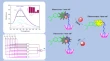
<p>Tetracyanoquinodimethane (TCNQ) is well known as a powerful electron accepter and is expected to favor electron transfer from graphene into TCNQ molecules, thereby leading to <it>p</it>-type doping of graphene films. Figure <figr fid="F1">1</figr> shows a schematic image of graphene doping by adsorbed TCNQ molecules. In fact, small amounts of TCNQ improved the resistivity by two orders of magnitude without degradation of optical transparency. Our new doping method opens up the possibility of graphene-based TCFs.</p>
<fig id="F1"><title><p>Figure 1</p></title><caption><p>Schematic image of doping graphene by adsorbed TCNQ molecules</p></caption><text>
   <p><b>Schematic image of doping graphene by adsorbed TCNQ molecules</b>.</p>
</text><graphic file="1556-276X-6-111-1"/></fig>
</sec>
<sec><st><p>Experiment</p></st>
<sec><st><p>Synthesis of graphene</p></st>
<p>Chemically derived graphene was synthesized by the modified Hummer's method <abbrgrp><abbr bid="B13">13</abbr></abbrgrp>, a well-known approach to produce monolayered graphene via liquid-phase exfoliation of graphite oxide. Natural graphite powder (SEC Carbon SNO-30) was washed in H<sub>2</sub>SO<sub>4 </sub>and K<sub>2</sub>S<sub>2</sub>O<sub>8</sub>, and oxidized in KMnO<sub>4 </sub>and H<sub>2</sub>SO<sub>4</sub>. After centrifugation, the resulting graphite oxide was exfoliated into graphene oxide (GO) by ultra-sonication (100 W, 30 min, 60&#176;C). Then, a GO aqueous dispersion was produced by centrifugation and dialysis to neutralize a pH. The morphology of GO synthesized by this procedure was characterized by Raman spectroscopy (excited by 532-nm Ne laser) <abbrgrp><abbr bid="B14">14</abbr></abbrgrp>, optical microscope, scanning electron microscope, and atomic force microscope (in tapping mode using Si tips).</p>
<p>A reduction step of GO into graphene plays an essential role to determine the electrical properties of the resulting graphene films. GO was reduced as follows: GO was dispersed in aqueous solution containing N<sub>2</sub>H<sub>4</sub>, a strong reductant, with NH<sub>3 </sub>to adjust pH <abbrgrp><abbr bid="B15">15</abbr></abbrgrp>. This was reacted in 95&#176;C water bath for 1 h, and the color of dispersion changed from brownish color to gray. Finally, the solvent of reduced graphene oxide (RGO) dispersion was replaced by <it>N</it>,<it>N</it>-dimethylformamide (DMF) using an evaporator. RGO can be dispersed well in many kinds of organic solvents including DMF, while it is easily aggregated in aqueous solution because of its low electrostatic repulsion force. A RGO sample deposited on Au (10 nm)/SiO<sub>2 </sub>(90 nm)/Si substrate was prepared for the evaluation of the reduction state by x-ray photoelectron spectroscopy (monochrome Al K&#945; X-ray).</p>
</sec>
<sec><st><p>Fabrication of graphene films</p></st>
<p>Our graphene films were deposited on glass substrates (Corning7059) by a spray-coat method at a substrate temperature of 200&#176;C in an atmosphere containing the solvent vapor. The thickness of the films was controlled by varying the spray amounts. The optical transmittance was measured in the wavelength range from 250 to 2500 nm, and the sheet resistance was measured by van der Pauw method.</p>
</sec>
<sec><st><p>Doping graphene films</p></st>
<p>Doping graphene via charge transfer by TCNQ molecules was carried out as follows. First, 0.01 g of TCNQ powder (&gt;98.0%, Tokyo Chemical Industry Co. Ltd., Tokyo, Japan) was dissolved into 5 ml of DMF solvent. It is expected that TCNQ molecules in DMF are radicalized <abbrgrp><abbr bid="B16">16</abbr></abbrgrp>. Then, 5 ml of RGO dispersion and radicalized TCNQ in DMF were mixed and stirred for 1 week at room temperature. The color of mixture solution changed from yellow-green to orange. This RGO-TCNQ mixture dispersion has been very stable for over a few months, and no clear evidence of aggregation was observed.</p>
</sec>
</sec>
<sec><st><p>Results and discussion</p></st>
<sec><st><p>Characterization of GO and graphene</p></st>
<p>Large GO flakes (over 30 &#215; 30 &#956;m<sup>2</sup>) were present in the GO aqueous dispersion as shown in Figure <figr fid="F2">2a</figr>. The surface morphology of these flakes was measured to be atomically thin (0.4 nm) two-dimensional (2D) structure using AFM as shown in Figure <figr fid="F2">2b,c</figr>, indicating the presence of monolayer of GO. In addition, a Raman peak shift and peak shape of second-order two phonons process peak at 2700 cm<sup>-1</sup>, referred to as the 2D band, which indicates about 25% of GO flakes were single layer of carbon as demonstrated in our previous article <abbrgrp><abbr bid="B14">14</abbr></abbrgrp>.</p>
<fig id="F2"><title><p>Figure 2</p></title><caption><p>Images of synthesized GO flakes</p></caption><text>
   <p><b>Images of synthesized GO flakes</b>. <b>(a) </b>Optical microscope image of synthesized GO flakes, <b>(b) </b>AFM height image of monolayer GO flakes, and <b>(c) </b>line profile in image <b>(b)</b>.</p>
</text><graphic file="1556-276X-6-111-2"/></fig>
<p>The carbon 1s core level XPS spectra of GO, RGO, and graphite samples were shown in Figure <figr fid="F3">3</figr>. From the semi-quantitative analysis by XPS, the relative amount of oxygen containing functional groups in each sample was estimated. Peak separation was carried out for all samples after Shirley background was subtracted. The relative ratios of each component consisted of aromatic rings (284.6 eV), C-OH (286.5 eV), C-O-C (287.0 eV), and O = C-OH (288.3 eV) are summarized in Table <tblr tid="T1">1</tblr>. Oxygen-containing functional groups decreased from around 50 to around 25% of all components after reduction process. Such a low concentration of oxygen-containing functional groups is comparable to the RGO reduced by high-temperature annealing <abbrgrp><abbr bid="B17">17</abbr></abbrgrp>.</p>
<fig id="F3"><title><p>Figure 3</p></title><caption><p>Carbon 1s core level XPS spectra of GO, RGO, and graphite samples</p></caption><text>
   <p><b>Carbon 1s core level XPS spectra of GO, RGO, and graphite samples</b>.</p>
</text><graphic file="1556-276X-6-111-3"/></fig>
<tbl id="T1"><title><p>Table 1</p></title><caption><p>Relative ratio of all components for each sample</p></caption><tblbdy cols="5">
      <r>
         <c ca="left">
            <p>
               <b>Components</b>
            </p>
         </c>
         <c ca="center">
            <p>
               <b>C-C (%)</b>
            </p>
         </c>
         <c ca="center">
            <p>
               <b>C-OH (%)</b>
            </p>
         </c>
         <c ca="center">
            <p>
               <b>C-O-C (%)</b>
            </p>
         </c>
         <c ca="center">
            <p>
               <b>O = C-OH (%)</b>
            </p>
         </c>
      </r>
      <r>
         <c cspan="5">
            <hr/>
         </c>
      </r>
      <r>
         <c ca="left">
            <p>GO</p>
         </c>
         <c ca="center">
            <p>49.10</p>
         </c>
         <c ca="center">
            <p>25.64</p>
         </c>
         <c ca="center">
            <p>22.07</p>
         </c>
         <c ca="center">
            <p>3.18</p>
         </c>
      </r>
      <r>
         <c ca="left">
            <p>RGO</p>
         </c>
         <c ca="center">
            <p>73.65</p>
         </c>
         <c ca="center">
            <p>19.08</p>
         </c>
         <c ca="center">
            <p>0.00</p>
         </c>
         <c ca="center">
            <p>7.26</p>
         </c>
      </r>
      <r>
         <c ca="left">
            <p>Graphite</p>
         </c>
         <c ca="center">
            <p>99.7</p>
         </c>
         <c ca="center">
            <p>0.00</p>
         </c>
         <c ca="center">
            <p>0.25</p>
         </c>
         <c ca="center">
            <p>0.68</p>
         </c>
      </r>
   </tblbdy></tbl>
</sec>
<sec><st><p>Graphene films</p></st>
<p>Figure <figr fid="F4">4a</figr> shows photograph of fabricated graphene films on glass substrates at various spray volumes. SEM images of fabricated graphene films revealed them to be continuous and uniform (Figure <figr fid="F4">4b</figr>). Figure <figr fid="F5">5a</figr> shows the optical transmittance spectra of these fabricated graphene films, and the transmittance decreased for all wavelength ranges as the spray volume increased. Optical and electrical properties are summarized in Figure <figr fid="F5">5b</figr>. Sheet resistance of minimum spray volume sample was too high to be measured by our analyzer. The graphene films obtained in this study had a sheet resistance as high as 1 &#215; 10<sup>6 </sup>&#937;/square with a transparency of 88% at 550 nm. Such a sheet resistance was the lowest obtained compared with previously reported chemically derived graphene films as deposited <abbrgrp><abbr bid="B6">6</abbr><abbr bid="B18">18</abbr></abbrgrp>. Post-annealing treatment was expected to improve the performance of our graphene films due to removal of residual solvent and oxygen-containing functional groups on RGO. Actually, Becerril et al. <abbrgrp><abbr bid="B19">19</abbr></abbrgrp> obtained the highest performance in chemically derived graphene films through high-temperature annealing in vacuum. However, no post-annealing treatment on our graphene films was conducted, since the focus was on an inexpensive fabrication procedure without any vacuum systems.</p>
<fig id="F4"><title><p>Figure 4</p></title><caption><p>Images of fabricated graphene films on glass substrate</p></caption><text>
   <p><b>Images of fabricated graphene films on glass substrate</b>. <b>(a) </b>Photograph, and <b>(b) </b>SEM image.</p>
</text><graphic file="1556-276X-6-111-4"/></fig>
<fig id="F5"><title><p>Figure 5</p></title><caption><p>Physical property of fabricated graphene films</p></caption><text>
   <p><b>Physical property of fabricated graphene films</b>. <b>(a) </b>Optical transmittance spectra, <b>(b) </b>Summarized optical and electrical properties.</p>
</text><graphic file="1556-276X-6-111-5"/></fig>
</sec>
<sec><st><p>Doping graphene films</p></st>
<p>The SEM images of individual doped graphene flakes indicate RGO flakes maintaining 2D structures after interaction with TCNQ molecules in liquid phase as shown in Figure <figr fid="F6">6a</figr>. Continuous and uniform film morphology of the doped graphene films was confirmed by SEM images as shown in Figure <figr fid="F6">6b</figr>.</p>
<fig id="F6"><title><p>Figure 6</p></title><caption><p>SEM image of (a) individual doped graphene, (b) fabricated doped graphene films</p></caption><text>
   <p><b>SEM image of (a) individual doped graphene, (b) fabricated doped graphene films</b>.</p>
</text><graphic file="1556-276X-6-111-6"/></fig>
<p>Figure <figr fid="F7">7a</figr> shows optical transmittance spectra of doped and undoped graphene films at the same spray volumes. Except for an appearance of slight adsorption around 500 nm, spectrum did not change dominantly after doping. Transmittance (at 550 nm) as a function of sheet resistance of doped and undoped graphene films is summarized in Figure <figr fid="F7">7b</figr>. Owing to carrier doping from TCNQ, the sheet resistance drastically decreased by two orders of magnitude without degradation of optical transparency. To the best of our knowledge, such drastic doping effects have never been achieved until now <abbrgrp><abbr bid="B20">20</abbr></abbrgrp>. However, the estimated sheet carrier concentrations were 9.96 &#215; 10<sup>10 </sup>and 1.17 &#215; 10<sup>12 </sup>cm<sup>-2 </sup>for the undoped and doped graphenes, respectively. These estimated values are similar to the reported values by Coletti et al. <abbrgrp><abbr bid="B21">21</abbr></abbrgrp>. They modified the carrier concentration of monolayer epitaxial graphene on SiC by one order of magnitude by deposition of tetrafluoro-TCNQ. In short, the better doping effect cannot be interpreted only by accelerated charge transfer induced by radicalized TCNQ molecules in DMF solvent. Further it is necessary to consider other factors such as improvement of film stacking or percolation effect.</p>
<fig id="F7"><title><p>Figure 7</p></title><caption><p>Physical property of fabricated doped graphene films</p></caption><text>
   <p><b>Physical property of fabricated doped graphene films</b>. <b>(a) </b>Optical transmittance spectra, <b>(b) </b>Summarized optical and electrical properties.</p>
</text><graphic file="1556-276X-6-111-7"/></fig>
</sec>
</sec>
<sec><st><p>Conclusion</p></st>
<p>The authors developed a new and inexpensive fabrication method of chemically derived graphene-based TCFs and demonstrated a huge potential of doping effect via charge transfer by conjugated organic molecules. All of the fabrication steps including the reduction of GO and carrier doping were carried out in liquid phase. Therefore, this novel method proposed in this study does not require any vacuum system and is suitable for quantity synthesis. Furthermore, chemically derived graphene combined with the above doping technique could be a potential alternative to conventional transparent conductive materials.</p>
</sec>
<sec><st><p>Abbreviations</p></st>
<p>DMF: <it>N</it>,<it>N</it>-dimethylformamide; GO: graphene oxide; ITO: indium tin oxide; RGO: reduced graphene oxide; TCFs: transparent conductive films; TCNQ: tetracyanoquinodimethane.</p>
</sec>
<sec><st><p>Competing interests</p></st>
<p>The authors declare that they have no competing interests.</p>
</sec>
<sec><st><p>Authors' contributions</p></st>
<p>RI designed and conducted all experiments and characterisation and drafted the manuscript. MB helped in technical support for experiments and drafting the manuscript. Both YM and AS have read and approved the final manuscript.</p>
</sec>
</bdy>
<bm>
<ack><sec><st><p>Acknowledgements</p></st>
<p>This study was conducted as part of the Tokyo Tech Global COE Program on Evolving Education and Research Center for Spatio-Temporal Biological Network based on a grant from the Ministry of Education, Culture, Sports, Science, and Technology, Japan. The natural graphite powder used in this study was donated by SEC Carbon Ltd.</p>
</sec>
</ack>
<refgrp><bibl id="B1"><title><p>Transparent conductors as solar energy materials: A panoramic review</p></title><aug><au><snm>Granqvist</snm><fnm>CG</fnm></au></aug><source>Solar Energy Mater Solar Cells</source><pubdate>2007</pubdate><volume>91</volume><fpage>1529</fpage><xrefbib><pubid idtype="doi">10.1016/j.solmat.2007.04.031</pubid></xrefbib></bibl><bibl id="B2"><title><p>Investigation on Polymer Anode Design for Flexible Polymer Solar Cells</p></title><aug><au><snm>Zhou</snm><fnm>YH</fnm></au><au><snm>Zhang</snm><fnm>FL</fnm></au><au><snm>Tvingstedt</snm><fnm>K</fnm></au><au><snm>Barrau</snm><fnm>S</fnm></au><au><snm>Li</snm><fnm>FH</fnm></au><au><snm>Tian</snm><fnm>WJ</fnm></au><au><snm>Inganas</snm><fnm>O</fnm></au></aug><source>Appl Phys Lett</source><pubdate>2008</pubdate><volume>92</volume><lpage>233308</lpage></bibl><bibl id="B3"><title><p>Solution-processed metal nanowire mesh transparent electrodes</p></title><aug><au><snm>Lee</snm><fnm>JY</fnm></au><au><snm>Connor</snm><fnm>ST</fnm></au><au><snm>Cui</snm><fnm>Y</fnm></au><au><snm>Peumans</snm><fnm>P</fnm></au></aug><source>Nano Lett</source><pubdate>2008</pubdate><volume>8</volume><fpage>689</fpage><xrefbib><pubidlist><pubid idtype="doi">10.1021/nl073296g</pubid><pubid idtype="pmpid" link="fulltext">18189445</pubid></pubidlist></xrefbib></bibl><bibl id="B4"><title><p>Electrical Connectivity in Single-Walled Carbon Nanotube Networks</p></title><aug><au><snm>Nirmalraj</snm><fnm>PN</fnm></au><au><snm>Lyons</snm><fnm>PE</fnm></au><au><snm>De</snm><fnm>S</fnm></au><au><snm>Coleman</snm><fnm>JN</fnm></au><au><snm>Boland</snm><fnm>JJ</fnm></au></aug><source>Nano Lett</source><pubdate>2009</pubdate><volume>9</volume><fpage>3890</fpage><xrefbib><pubidlist><pubid idtype="doi">10.1021/nl9020914</pubid><pubid idtype="pmpid" link="fulltext">19775126</pubid></pubidlist></xrefbib></bibl><bibl id="B5"><title><p>Fine Structure Constant Defines Visual Transparency of Graphene</p></title><aug><au><snm>Nair</snm><fnm>RR</fnm></au><au><snm>Blake</snm><fnm>P</fnm></au><au><snm>Grigorenko</snm><fnm>AN</fnm></au><au><snm>Novoselov</snm><fnm>KS</fnm></au><au><snm>Booth</snm><fnm>TJ</fnm></au><au><snm>Stauber</snm><fnm>T</fnm></au><au><snm>Peres</snm><fnm>NMR</fnm></au><au><snm>Geim</snm><fnm>AK</fnm></au></aug><source>Science</source><pubdate>2008</pubdate><volume>320</volume><fpage>1308</fpage><xrefbib><pubidlist><pubid idtype="doi">10.1126/science.1156965</pubid><pubid idtype="pmpid" link="fulltext">18388259</pubid></pubidlist></xrefbib></bibl><bibl id="B6"><title><p>Are There Fundamental Limitations on the Sheet Resistance and Transmittance of Thin Graphene Films?</p></title><aug><au><snm>De</snm><fnm>S</fnm></au><au><snm>Coleman</snm><fnm>JN</fnm></au></aug><source>ACS Nano</source><pubdate>2010</pubdate><volume>4</volume><fpage>2713</fpage><xrefbib><pubidlist><pubid idtype="doi">10.1021/nn100343f</pubid><pubid idtype="pmpid" link="fulltext">20384321</pubid></pubidlist></xrefbib></bibl><bibl id="B7"><title><p>N-Doping of Graphene Through Electrothermal Reactions with Ammonia</p></title><aug><au><snm>Wang</snm><fnm>XR</fnm></au><au><snm>Li</snm><fnm>XL</fnm></au><au><snm>Zhang</snm><fnm>L</fnm></au><au><snm>Yoon</snm><fnm>Y</fnm></au><au><snm>Weber</snm><fnm>PK</fnm></au><au><snm>Wang</snm><fnm>HL</fnm></au><au><snm>Guo</snm><fnm>J</fnm></au><au><snm>Dai</snm><fnm>HJ</fnm></au></aug><source>Science</source><pubdate>2009</pubdate><volume>324</volume><fpage>768</fpage><xrefbib><pubidlist><pubid idtype="doi">10.1126/science.1170335</pubid><pubid idtype="pmpid" link="fulltext">19423822</pubid></pubidlist></xrefbib></bibl><bibl id="B8"><title><p>Nonlinear Behavior in the Thermopower of Doped Carbon Nanotubes Due to Strong, Localized States</p></title><aug><au><snm>Choi</snm><fnm>YM</fnm></au><au><snm>Lee</snm><fnm>DS</fnm></au><au><snm>Czerw</snm><fnm>R</fnm></au><au><snm>Chiu</snm><fnm>PW</fnm></au><au><snm>Grobert</snm><fnm>N</fnm></au><au><snm>Terrones</snm><fnm>M</fnm></au><au><snm>Reyes</snm><fnm>M</fnm></au><au><snm>Terrones</snm><fnm>H</fnm></au><au><snm>Charlier</snm><fnm>JC</fnm></au><au><snm>Ajayan</snm><fnm>PM</fnm></au><au><snm>Roth</snm><fnm>S</fnm></au><au><snm>Carroll</snm><fnm>DL</fnm></au><au><snm>Park</snm><fnm>YW</fnm></au></aug><source>Nano Lett</source><pubdate>2003</pubdate><volume>3</volume><fpage>839</fpage><xrefbib><pubid idtype="doi">10.1021/nl034161n</pubid></xrefbib></bibl><bibl id="B9"><title><p>Charged-impurity scattering in graphene</p></title><aug><au><snm>Chen</snm><fnm>JH</fnm></au><au><snm>Jang</snm><fnm>C</fnm></au><au><snm>Adam</snm><fnm>S</fnm></au><au><snm>Fuhrer</snm><fnm>MS</fnm></au><au><snm>Williams</snm><fnm>ED</fnm></au><au><snm>Ishigami</snm><fnm>M</fnm></au></aug><source>Nat Phys</source><pubdate>2008</pubdate><volume>4</volume><fpage>377</fpage><xrefbib><pubid idtype="doi">10.1038/nphys935</pubid></xrefbib></bibl><bibl id="B10"><title><p>Molecular Doping of Graphene</p></title><aug><au><snm>Wehling</snm><fnm>TO</fnm></au><au><snm>Novoselov</snm><fnm>KS</fnm></au><au><snm>Morozov</snm><fnm>SV</fnm></au><au><snm>Vdovin</snm><fnm>EE</fnm></au><au><snm>Katsnelson</snm><fnm>MI</fnm></au><au><snm>Geim</snm><fnm>AK</fnm></au><au><snm>Lichtenstein</snm><fnm>AI</fnm></au></aug><source>Nano Lett</source><pubdate>2008</pubdate><volume>8</volume><fpage>173</fpage><xrefbib><pubidlist><pubid idtype="doi">10.1021/nl072364w</pubid><pubid idtype="pmpid" link="fulltext">18085811</pubid></pubidlist></xrefbib></bibl><bibl id="B11"><title><p>Surface transfer p-type doping of epitaxial graphene</p></title><aug><au><snm>Chen</snm><fnm>W</fnm></au><au><snm>Chen</snm><fnm>S</fnm></au><au><snm>Qi</snm><fnm>DC</fnm></au><au><snm>Gao</snm><fnm>XY</fnm></au><au><snm>Wee</snm><fnm>ATS</fnm></au></aug><source>J Am Chem Soc</source><pubdate>2007</pubdate><volume>129</volume><fpage>10418</fpage><xrefbib><pubidlist><pubid idtype="doi">10.1021/ja071658g</pubid><pubid idtype="pmpid">17665912</pubid></pubidlist></xrefbib></bibl><bibl id="B12"><title><p>A comparative Raman study of the interaction of electron donor and acceptor molecules with graphene prepared by different methods</p></title><aug><au><snm>Subrahmanyam</snm><fnm>KS</fnm></au><au><snm>Voggu</snm><fnm>R</fnm></au><au><snm>Govindaraj</snm><fnm>A</fnm></au><au><snm>Rao</snm><fnm>CNR</fnm></au></aug><source>Chem Phys Lett</source><pubdate>2009</pubdate><volume>472</volume><fpage>96</fpage><xrefbib><pubid idtype="doi">10.1016/j.cplett.2009.03.003</pubid></xrefbib></bibl><bibl id="B13"><title><p>High-throughput solution processing of large-scale graphene</p></title><aug><au><snm>Tung</snm><fnm>VC</fnm></au><au><snm>Allen</snm><fnm>MJ</fnm></au><au><snm>Yang</snm><fnm>Y</fnm></au><au><snm>Kaner</snm><fnm>RB</fnm></au></aug><source>Nat Nanotechnol</source><pubdate>2009</pubdate><volume>4</volume><fpage>25</fpage><xrefbib><pubidlist><pubid idtype="doi">10.1038/nnano.2008.329</pubid><pubid idtype="pmpid">19119278</pubid></pubidlist></xrefbib></bibl><bibl id="B14"><title><p>Patterning of Two-Dimensional Graphene Oxide on Silicon Substrates</p></title><aug><au><snm>Ishikawa</snm><fnm>R</fnm></au><au><snm>Bando</snm><fnm>M</fnm></au><au><snm>Morimoto</snm><fnm>Y</fnm></au><au><snm>Park</snm><fnm>SY</fnm></au><au><snm>Sandhu</snm><fnm>A</fnm></au></aug><source>Jpn J Appl Phys</source><pubdate>2010</pubdate><volume>49</volume><fpage>06GC02</fpage><xrefbib><pubid idtype="doi">10.1143/JJAP.49.06GC02</pubid></xrefbib></bibl><bibl id="B15"><title><p>Processable aqueous dispersions of graphene nanosheets</p></title><aug><au><snm>Li</snm><fnm>D</fnm></au><au><snm>Muller</snm><fnm>MB</fnm></au><au><snm>Gilje</snm><fnm>S</fnm></au><au><snm>Kaner</snm><fnm>RB</fnm></au><au><snm>Wallace</snm><fnm>GG</fnm></au></aug><source>Nat Nanotechnol</source><pubdate>2008</pubdate><volume>3</volume><fpage>101</fpage><xrefbib><pubidlist><pubid idtype="doi">10.1038/nnano.2007.451</pubid><pubid idtype="pmpid">18654470</pubid></pubidlist></xrefbib></bibl><bibl id="B16"><title><p>Effect of addition of salts on coal xtraction in CS<sub>2</sub>/NMP mixed solvent</p></title><aug><au><snm>Chen</snm><fnm>C</fnm></au><au><snm>Iino</snm><fnm>M</fnm></au></aug><source>Energy Fuels</source><pubdate>1999</pubdate><volume>13</volume><fpage>1105</fpage><xrefbib><pubid idtype="doi">10.1021/ef990064z</pubid></xrefbib></bibl><bibl id="B17"><title><p>Evolution of electrical, chemical and structural properties of transparent and conducting chemically derived graphene thin films</p></title><aug><au><snm>Mattevi</snm><fnm>C</fnm></au><au><snm>Eda</snm><fnm>G</fnm></au><au><snm>Agnoli</snm><fnm>S</fnm></au><au><snm>Miller</snm><fnm>S</fnm></au><au><snm>Mkhoyan</snm><fnm>KA</fnm></au><au><snm>Celik</snm><fnm>O</fnm></au><au><snm>Mostrogiovanni</snm><fnm>D</fnm></au><au><snm>Granozzi</snm><fnm>G</fnm></au><au><snm>Garfunkel</snm><fnm>E</fnm></au><au><snm>Chhowalla</snm><fnm>M</fnm></au></aug><source>Adv Funct Mater</source><pubdate>2009</pubdate><volume>19</volume><fpage>2577</fpage><xrefbib><pubid idtype="doi">10.1002/adfm.200900166</pubid></xrefbib></bibl><bibl id="B18"><title><p>Large-area ultrathin films of reduced graphene oxide as a transparent and flexible electronic material</p></title><aug><au><snm>Eda</snm><fnm>G</fnm></au><au><snm>Fanchini</snm><fnm>G</fnm></au><au><snm>Chhowalla</snm><fnm>M</fnm></au></aug><source>Nat Nanotechnol</source><pubdate>2008</pubdate><volume>3</volume><fpage>270</fpage><xrefbib><pubidlist><pubid idtype="doi">10.1038/nnano.2008.83</pubid><pubid idtype="pmpid">18654522</pubid></pubidlist></xrefbib></bibl><bibl id="B19"><title><p>Evaluation of Solution-Processed Reduced Graphene Oxide Films as Transparent Conductors</p></title><aug><au><snm>Becerril</snm><fnm>HA</fnm></au><au><snm>Mao</snm><fnm>J</fnm></au><au><snm>Liu</snm><fnm>Z</fnm></au><au><snm>Stoltenberg</snm><fnm>RM</fnm></au><au><snm>Bao</snm><fnm>Z</fnm></au><au><snm>Chen</snm><fnm>Y</fnm></au></aug><source>ACS Nano</source><pubdate>2008</pubdate><volume>2</volume><fpage>463</fpage><xrefbib><pubidlist><pubid idtype="doi">10.1021/nn700375n</pubid><pubid idtype="pmpid" link="fulltext">19206571</pubid></pubidlist></xrefbib></bibl><bibl id="B20"><title><p>Effects of the charge-transfer interactions of graphene with electron-donor and -acceptor molecules examined by Raman spectroscopy and cognate techniques</p></title><aug><au><snm>Voggu</snm><fnm>R</fnm></au><au><snm>Das</snm><fnm>B</fnm></au><au><snm>Rout</snm><fnm>CS</fnm></au><au><snm>Rao</snm><fnm>CNR</fnm></au></aug><source>J Phys Condens Matter</source><pubdate>2008</pubdate><volume>20</volume><fpage>472204</fpage><xrefbib><pubid idtype="doi">10.1088/0953-8984/20/47/472204</pubid></xrefbib></bibl><bibl id="B21"><title><p>Charge neutrality and band-gap tuning of epitaxial graphene on SiC by molecular doping</p></title><aug><au><snm>Coletti</snm><fnm>C</fnm></au><au><snm>Riedl</snm><fnm>C</fnm></au><au><snm>Lee</snm><fnm>DS</fnm></au><au><snm>Krauss</snm><fnm>B</fnm></au><au><snm>Patthey</snm><fnm>L</fnm></au><au><snm>von Klitzing</snm><fnm>K</fnm></au><au><snm>Smet</snm><fnm>JH</fnm></au><au><snm>Starke</snm><fnm>U</fnm></au></aug><source>Phys Rev B</source><pubdate>2010</pubdate><volume>81</volume><fpage>235401</fpage><xrefbib><pubid idtype="doi">10.1103/PhysRevB.81.235401</pubid></xrefbib></bibl></refgrp>
</bm>
</art>