<?xml version='1.0'?>
<!DOCTYPE art SYSTEM 'http://www.biomedcentral.com/xml/article.dtd'>
<art>
   <ui>1556-276X-5-961</ui>
   <ji>1556-276X</ji>
   <fm>
      <dochead>Nano Express</dochead>
      <bibl>
         <title>
            <p>Controllable Synthesis of Single-Crystalline CdO and Cd(OH)<sub>2</sub>Nanowires by a Simple Hydrothermal Approach</p>
         </title>
         <aug>
            <au id="A1"><snm>Yang</snm><fnm>Zai-xing</fnm><insr iid="I1"/></au>
            <au ca="yes" id="A2"><snm>Zhong</snm><fnm>Wei</fnm><insr iid="I1"/><email>wzhong@mail.nju.edu.cn</email></au>
            <au id="A3"><snm>Yin</snm><fnm>Yan-xue</fnm><insr iid="I3"/></au>
            <au id="A4"><snm>Du</snm><fnm>Xin</fnm><insr iid="I1"/></au>
            <au id="A5"><snm>Deng</snm><fnm>Yu</fnm><insr iid="I1"/></au>
            <au id="A6"><snm>Au</snm><fnm>Chaktong</fnm><insr iid="I2"/></au>
            <au id="A7"><snm>Du</snm><fnm>You-wei</fnm><insr iid="I1"/></au>
         </aug>
         <insg>
            <ins id="I1"><p>Nanjing National Laboratory of Microstructures and Department of Physics, Nanjing University, 210093, Nanjing, People&#8217;s Republic of China</p></ins>
            <ins id="I2"><p>Chemistry Department, Hong Kong Baptist University, Hong Kong, People&#8217;s Republic of China</p></ins>
            <ins id="I3"><p>Laser Institute, Qufu Normal University, 273165, Qufu, People&#8217;s Republic of China</p></ins>
         </insg>
         <source>Nanoscale Research Letters</source>
         <publisher>Springer-Verlag, New York</publisher>
         <issn>1556-276X</issn>
         <pubdate>2010</pubdate>
         <volume>5</volume>
         <issue>6</issue>
         <fpage>961</fpage>
         <lpage>965</lpage>
         <xrefbib><pubidlist><pubid idtype="pmpid">20672033</pubid><pubid idtype="doi">10.1007/s11671-010-9589-y</pubid></pubidlist></xrefbib>
      </bibl>
      <history><rec><date><day>28</day><month>12</month><year>2009</year></date></rec><acc><date><day>27</day><month>3</month><year>2010</year></date></acc><pub><date><day>11</day><month>4</month><year>2010</year></date></pub></history>
      <cpyrt><year>2010</year><collab>The Author(s)</collab></cpyrt>
      <kwdg>
         <kwd>CdO</kwd>
         <kwd>Cd(OH)<sub>2</sub></kwd>
         <kwd>Nanowires</kwd>
         <kwd>Hydrothermal</kwd>
         <kwd>Photoluminescence</kwd>
      </kwdg>
      <abs>
         <sec>
            <st>
               <p>Abstract</p>
            </st>
            <p>Single-crystalline Cd(OH)<sub>2</sub> or CdO nanowires can be selectively synthesized at 150 &#176;C by a simple hydrothermal method using aqueous Cd(NO<sub>3</sub>)<sub>2</sub> as precursor. The method is biosafe, and compared to the conventional oil-water surfactant approach, more environmental-benign. As revealed by the XRD results, CdO or Cd(OH)<sub>2</sub> nanowires can be generated in high purity by varying the time of synthesis. The results of FESEM and HRTEM analysis show that the CdO nanowires are formed in bundles. Over the CdO-nanowire bundles, photoluminescence at ~517 nm attributable to near band-edge emission of CdO was recorded. Based on the experimental results, a possible growth mechanism of the products is proposed.</p>
         </sec>
      </abs>
   </fm>
   <meta>
      <classifications>
         <classification id="springerjournalsubject" type="Primary">Material Science</classification>
         <classification id="springerjournalsubject" type="Secondary">Molecular Medicine</classification>
         <classification id="springerjournalsubject" type="Secondary">Engineering, general</classification>
         <classification id="springerjournalsubject" type="Secondary">Chemistry/Food Science, general</classification>
         <classification id="springerjournalsubject" type="Secondary">Physics, general</classification>
         <classification id="springerjournalsubject" type="Secondary">Materials Science, general</classification>
         <classification id="springerjournalsubject" type="Secondary">Nanotechnology</classification>
      </classifications>
   </meta>
   <bdy>
      <sec>
         <st>
            <p>Introduction</p>
         </st>
         <p>One-dimensional (1-D) nanostructures, such as nanowires, nanorods, nanotubes, and nanobelts, have received wide attention in the field of nanoscience <abbrgrp><abbr bid="B1">1</abbr></abbrgrp>. With unique physical properties that are size- and shape dependent, the materials are expected to play a critical role in the technologies of future electronic and optoelectronic devices <abbrgrp><abbr bid="B2">2</abbr></abbrgrp>. 1-D structures of semiconductor materials such as Si <abbrgrp><abbr bid="B3">3</abbr></abbrgrp>, Ge <abbrgrp><abbr bid="B4">4</abbr></abbrgrp>, GaN <abbrgrp><abbr bid="B5">5</abbr></abbrgrp>, GaAs <abbrgrp><abbr bid="B6">6</abbr></abbrgrp> as well as those of ZnO, SnO<sub>2</sub>, In <sub>2</sub>O<sub>3</sub> and CdO <abbrgrp><abbr bid="B7">7</abbr></abbrgrp> are frequently reported in the literature. They are produced by various methods including vapor-phase transport <abbrgrp><abbr bid="B5">5</abbr></abbrgrp>, chemical vapor deposition <abbrgrp><abbr bid="B8">8</abbr></abbrgrp>, arc discharge <abbrgrp><abbr bid="B9">9</abbr></abbrgrp>, laser ablation <abbrgrp><abbr bid="B6">6</abbr></abbrgrp>, solution <abbrgrp><abbr bid="B10">10</abbr></abbrgrp> and template-based method <abbrgrp><abbr bid="B11">11</abbr></abbrgrp>.</p>
         <p>Cadmium oxide (CdO) is an important n-type semiconductor with a direct band gap of 2.5 eV and an indirect band gap of 1.98 eV <abbrgrp><abbr bid="B12">12</abbr></abbrgrp>. The difference in band gap originates from cadmium and oxygen vacancies and strongly depends on the procedures of synthesis <abbrgrp><abbr bid="B13">13</abbr></abbrgrp>. Because of the large linear refractive index (<it>n</it><sub>0</sub> = 2.49), CdO is a promising candidate for optoelectronics applications and can be used in the fabrication of solar cells, phototransistors, photodiodes, transparent electrodes, catalysts and gas sensors <abbrgrp><abbr bid="B14">14</abbr><abbr bid="B15">15</abbr><abbr bid="B16">16</abbr><abbr bid="B17">17</abbr></abbrgrp>. In the past decade, CdO of multifarious 1-D nanostructures (such as nanowires <abbrgrp><abbr bid="B18">18</abbr></abbrgrp>, octahedrons and nanowires on micro-octahedrons <abbrgrp><abbr bid="B19">19</abbr></abbrgrp>, porous nanobelts <abbrgrp><abbr bid="B20">20</abbr></abbrgrp>, nanoneedles <abbrgrp><abbr bid="B21">21</abbr></abbrgrp>, and nanostrands <abbrgrp><abbr bid="B1">1</abbr></abbrgrp>) have been synthesized and studied. However, the reported CdO nanostructures were produced through the use of a sacrificial template. Jia et al. <abbrgrp><abbr bid="B20">20</abbr></abbrgrp> obtained CdO nanostructures by calcining shape-controlled single-crystalline CdCO<sub>3</sub>. With heating in the presence of oxygen at high temperatures, Zhang et al. <abbrgrp><abbr bid="B18">18</abbr></abbrgrp> prepared CdO nanowires from a layered metalorganic framework assembled by 1-D infinite zigzag chains. It is noted that efficient synthesis of 1-D CdO nanostructures using one-step, template-free, and seedless method is rare.</p>
         <p>Cadmium hydroxide, Cd(OH)<sub>2</sub>, is a wide band gap semiconductor with a wide range of possible applications including solar cells, photo transistors and diodes, transparent electrodes, sensors, cathode electrode materials of batteries, and so forth <abbrgrp><abbr bid="B15">15</abbr><abbr bid="B22">22</abbr><abbr bid="B23">23</abbr><abbr bid="B24">24</abbr></abbrgrp>. The applications of Cd(OH)<sub>2</sub> are based on its specific optical and electrical properties. For example, Cd(OH)<sub>2</sub> films show high electrical conductivity as well as high transparency in the visible region of solar spectrum. Cadmium hydroxide has also been proven to be an important precursor that can be converted into cadmium oxide through dehydration or into other functional materials (e.g., CdS, CdSe) by reaction with appropriate elements or compounds <abbrgrp><abbr bid="B25">25</abbr></abbrgrp>.</p>
         <p>Herein, we report a simple hydrothermal method for the preparation of single-crystalline CdO or Cd(OH)<sub>2</sub> nanowires. The approach is efficient and simple and does not involve the use of a template. The synthesis was conducted at 150 &#176;C using aqueous Cd(NO<sub>3</sub>)<sub>2</sub> as the only precursor. By varying the synthesis time, the growth of CdO and Cd(OH)<sub>2</sub> can be selectively controlled. To the best of our knowledge, the fabrication of CdO or Cd(OH)<sub>2</sub> nanowires in such a way has never been reported.</p>
      </sec>
      <sec>
         <st>
            <p>Experimental Details</p>
         </st>
         <p>For the synthesis of single-crystalline CdO and Cd(OH)<sub>2</sub> nanowires, 0.1 M Cd(NO<sub>3</sub>)<sub>2</sub>2H<sub>2</sub>O was dissolved in deionized water to form a 40.0-mL solution that was transferred into a Teflon-lined autoclave. The autoclave with its content was kept in an oven at 150 &#176;C for 10 h, 24 h, or 48 h. At the end of the hydrothermal treatment, the as-obtained solid material was separated from the yellow turbid solution using a centrifuge and thoroughly washed with absolute ethanol and deionized water (three cycles). The reagents used in the experiments were of analytical grade (purchased from Nanjing Chemical Industrial Co.) and used without further purification.</p>
         <p>The samples were examined on an X-ray powder diffractometer (XRD) at room temperature (RT) for phase identification using Cu K&#945; radiation (Model D/Max-RA, Rigaku, Japan). The morphologies of the samples were examined over a high-resolution TEM (HRTEM, model JEOL-2010, Japan) operated at an accelerating voltage of 200 kV and a field-emission scanning electron microscope (FESEM model FEI Sirion 200, America) operated at an accelerating voltage of 5 kV. The photoluminescence (PL) of samples was measured at RT using a He&#8211;Cd laser (excitation source: 325 nm).</p>
      </sec>
      <sec>
         <st>
            <p>Results and Discussion</p>
         </st>
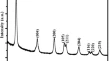
         <p>The X-ray diffraction (XRD) results of the samples collected at 10, 24, and 48 h are shown in Fig. <figr fid="F1">1</figr>. The peaks of the 24-h sample (Fig. <figr fid="F1">1b</figr>) are indexed to cubic phase of CdO with lattice constants of <it>a</it> = <it>b</it> = <it>c</it> = 0.4725 nm (JCPDS No. 78-0653). We find that the 48-h sample (Fig. <figr fid="F1">1c</figr>) is mainly Cd(OH)<sub>2</sub>, while the 10-h one is composed of CdO and Cd(OH)<sub>2</sub>. Based on the results, one can see that there is the conversion of Cd(NO<sub>3</sub>)<sub>2</sub>2H<sub>2</sub>O to Cd(OH)<sub>2</sub> in the initial hours of synthesis plausibly by means of hydrolysis (Eq. 1). After 24 h, CdO is formed, likely a result of Cd(OH)<sub>2</sub> decomposition (Eq. 2). At around 48 h, it is found that Cd(OH)<sub>2</sub> is the predominant product. The inter-transformation of CdO and Cd(OH)<sub>2</sub> will be discussed later in this article. It is proposed that the as-prepared bundles of Cd(OH)<sub>2</sub> nanowires can be used as a template for fabricating porous cadmium chalcogenides nanomaterials.</p>
         <p>
            <display-formula>
               <graphic file="1556-276X-5-961-i1.gif"/>
            </display-formula>
         </p>
         <p/>
         <p>
            <display-formula>
               <graphic file="1556-276X-5-961-i2.gif"/>
            </display-formula>
         </p>
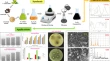
         <p>The morphology and size of the as-synthesized (150 &#176;C, 24 h) CdO-nanowire bundles were characterized by FESEM and HRTEM. According to Fig. <figr fid="F2">2a</figr>, the yield of CdO wires (tens of micrometers in length) is high. One can see that the wires are comprised of several nanowires that bundle together, and the average diameter of the wires is around 40 nm (Fig. <figr fid="F2">2b</figr>, <figr fid="F2">2c</figr>). In addition, detected also are nanostrands of smaller size which could be considered as &#8220;building blocks&#8221; for the formation of the nanowire bundles. The HRTEM image (Fig. <figr fid="F2">2d</figr>) indicates that the CdO nanowires are single-crystalline, showing spacing (0.273 nm) corresponding to the (111) plane of CdO. In EDX analysis, only Cd and O are detected over the as-synthesized CdO bundles (Fig. <figr fid="F2">2e</figr>). It is apparent that bundles of single-crystalline CdO nanowires can be fabricated by this simple method of hydrothermal synthesis.</p>
         <fig id="F1"><title><p>Figure 1</p></title><caption><p>XRD patterns of samples collected after <b>a</b> 10 h, <b>b</b> 24 h and <b>c</b> 48 h of hydrothermal treatment at 150 &#176;C</p></caption><text>
   <p>XRD patterns of samples collected after <b>a</b> 10 h, <b>b</b> 24 h and <b>c</b> 48 h of hydrothermal treatment at 150 &#176;C</p>
</text><graphic file="1556-276X-5-961-1"/></fig>
         <fig id="F2"><title><p>Figure 2</p></title><caption><p>FESEM images of the as-fabricated CdO wires at <b>a</b> low and <b>b</b> high magnifications; <b>c</b> TEM image of a bundle of CdO nanowires; <b>d</b> HRTEM image of nanowires that make up the bundle; and <b>e</b> EDX spectrum of the as-prepared nanostructures</p></caption><text>
   <p>FESEM images of the as-fabricated CdO wires at <b>a</b> low and <b>b</b> high magnifications; <b>c</b> TEM image of a bundle of CdO nanowires; <b>d</b> HRTEM image of nanowires that make up the bundle; and <b>e</b> EDX spectrum of the as-prepared nanostructures</p>
</text><graphic file="1556-276X-5-961-2"/></fig>
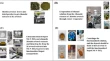
         <p>Shown in Fig. <figr fid="F3">3</figr> are the FESEM and TEM images of the 10-h and 48-h samples. Over the 10-h sample, one can detect the presence of nanowires that are in the process of gathering into bundles (Fig. <figr fid="F3">3a</figr>&#8211;<figr fid="F3">3c</figr>). As for the 48-h sample (Fig. <figr fid="F3">3d</figr>&#8211;<figr fid="F3">3f</figr>), the FESEM and TEM images differ significantly from those of the 10-h (Fig. <figr fid="F3">3a</figr>&#8211;<figr fid="F3">3c</figr>) and 24-h (Fig. <figr fid="F1">1</figr>) samples. The 48-h sample is comprised of wires that are much shorter in length (Fig. <figr fid="F3">3d</figr>) and with ends that are cuspidated (Fig. <figr fid="F3">3e</figr>). We find that the wires of the 48-h sample readily decompose into nanoparticles during HRTEM analysis (Fig. <figr fid="F3">3f</figr>). It is known that Cd(OH)<sub>2</sub> nanowires easily decompose to porous CdO nanowires upon heat treatment <abbrgrp><abbr bid="B26">26</abbr></abbrgrp>. The decomposition of the 48-h sample during HRTEM analysis could be a result of electron bombardment. The result of SAED analysis shows that the 10-h and 48-h samples are single-crystalline. Indicated by arrows in Fig. <figr fid="F3">3b</figr>, e are the positions from where the SAED patterns were taken. At the 10th hour, the product is a mixture of CdO and Cd(OH)<sub>2</sub>, and the SAED pattern is similar to that of 24-h Cd(OH)<sub>2</sub>.</p>
         <fig id="F3"><title><p>Figure 3</p></title><caption><p>a FESEM, b TEM images and c SAED pattern of the 10-h sample</p></caption><text>
   <p><b>a</b> FESEM, <b>b</b> TEM images and <b>c</b> SAED pattern of the 10-h sample. <b>d</b> FESEM, <b>e</b> TEM and <b>f</b> HRTEM images of the 48-h sample. <it>Inset</it><b>e</b> is the SAED pattern</p>
</text><graphic file="1556-276X-5-961-3"/></fig>
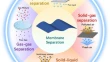
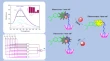
         <p>Despite the exact growth mechanism of the CdO-nanowire bundles is not clear, one can make hypotheses based on the obtained data. As indicated by the XRD results, the reaction processes in different reaction periods can be different. At the initial stage, because of the release of NO<sub>2</sub> during the hydrolysis of Cd(NO<sub>3</sub>)<sub>2</sub>2H<sub>2</sub>O (Eq. 1), the formation of cadmium hydroxide nuclei is promoted. From these nuclei, Cd(OH)<sub>2</sub> compounds gather to form nanostrands (can be observed clearly in Fig. <figr fid="F2">2c</figr>) of high aspect ratios as demonstrated elsewhere <abbrgrp><abbr bid="B27">27</abbr><abbr bid="B28">28</abbr><abbr bid="B29">29</abbr><abbr bid="B30">30</abbr></abbrgrp>. As shown in Fig. <figr fid="F4">4</figr>, the nanostrands could serve as building blocks for the formation of ordered nanostructures. As reported by Shinde et al. <abbrgrp><abbr bid="B31">31</abbr></abbrgrp> with the availability of ionic species, nanoparticles accumulated on the positive nanostrands, resulting in the generation of nanowire bundles. Under the adopted hydrothermal conditions, the nanostrands are in the course of assembling into bundles at the 10th hour (Fig. <figr fid="F4">4</figr>). With the dehydration reaction, bundles of single-crystalline CdO nanowires are obtained at the 24th hour. However, Cd(OH)<sub>2</sub> nanowires are obtained at the 48th hour. The inter-transformation of CdO and Cd(OH)<sub>2</sub> could be explained as follows. In the reaction bath, there are Cd<sup>2+</sup>, NO<sub>3</sub><sup>&#8722;</sup>, OH<sup>&#8722;</sup>, H<sup>+</sup>, NO<sub>2</sub>, H<sub>2</sub>O, and O<sub>2</sub>. Because of the continuous release of NO<sub>2</sub>, there is decrease in NO<sub>3</sub><sup>&#8722;</sup> concentration. It is worth pointing out that besides existing as gas in the autoclave, NO<sub>2</sub> dissolves in H<sub>2</sub>O as well as indicated by the turbid solution that is yellow in color. To keep neutrality of the reaction system, the amount of OH<sup>&#8722;</sup> should increase. As a result, the reaction gradually shifts toward the formation of Cd(OH)<sub>2</sub> during the later hours, making Cd(OH)<sub>2</sub> being the major product. In other words, despite of the fact that the reactions of Eqs. 1 and 2 are reversible, and normally the product should be a mixture of CdO and Cd(OH)<sub>2</sub>, high-purity CdO and Cd(OH)<sub>2</sub> can be generated, respectively, at the 24th and 48th hour, as indicated by the results of XRD investigation.</p>
         <fig id="F4"><title><p>Figure 4</p></title><caption><p>Schematic of the formation of nanowire bundles</p></caption><text>
   <p>Schematic of the formation of nanowire bundles</p>
</text><graphic file="1556-276X-5-961-4"/></fig>
         <p>Shown in Fig. <figr fid="F5">5</figr> are the photoluminescence (PL) spectra of the 10-h and 24-h samples. The 24-h bundles show a strong emission peak at ~517 nm ascribable to the near band-edge emission of CdO. The 10-h sample exhibits an excitonic peak at ~512 nm, showing a modest blue-shift (~5 nm) compared to the corresponding peak of the 24-h sample. The weak emissions detected in both cases are likely to be due to impurities and/or various kinds of defects. With such strong emission peak at ~517 nm, the CdO-nanowire bundles can be utilized in the industry of high-quality monochromatic laser.</p>
         <fig id="F5"><title><p>Figure 5</p></title><caption><p>PL spectra of bundles of nanowires collected after <b>a</b> 10 h and <b>b</b> 24 h of hydrothermal treatment</p></caption><text>
   <p>PL spectra of bundles of nanowires collected after <b>a</b> 10 h and <b>b</b> 24 h of hydrothermal treatment</p>
</text><graphic file="1556-276X-5-961-5"/></fig>
      </sec>
      <sec>
         <st>
            <p>Conclusion</p>
         </st>
         <p>In conclusion, we have demonstrated that by means of a facile, low-cost, and template-free approach, bundles of single-crystalline CdO nanowires can be hydrothermally fabricated at 150 &#176;C using aqueous Cd(NO<sub>3</sub>)<sub>2</sub> as precursor. We find that CdO and Cd(OH)<sub>2</sub> can be selectively obtained according to synthesis time. The as-synthesized CdO bundles show strong 517-nm emission and hence can be utilized in the manufacture of gas sensors. Also, the 48-h product can act a good template for the fabrication of CdS and CdO nanostructures. It is envisioned that this simple and low-cost approach can be adopted for the synthesis of nanostrucures of other oxides (such as ZnO, FeO) using the corresponding nitrates as precursors.</p>
      </sec>
   </bdy>
   <bm>
      <ack>
         <sec>
            <st>
               <p>Acknowledgments</p>
            </st>
            <p>We would like to acknowledge the Foundation of National Laboratory of Solid State Microstructures, Nanjing University (Grant No. 2010ZZ18), the National High Technology Research and Development Program of China (Grant No. 2007AA021805), and the National Key Project for Basic Research (Grant No. 2005CB623605), People&#8217;s Republic of China for financial support.</p>
            <sec>
               <st>
                  <p>Open Access</p>
               </st>
               <p>This article is distributed under the terms of the Creative Commons Attribution Noncommercial License which permits any noncommercial use, distribution, and reproduction in any medium, provided the original author(s) and source are credited.</p>
            </sec>
         </sec>
      </ack>
      <refgrp><bibl id="B1"><aug><au><snm>Ye</snm><fnm>MF</fnm></au><au><snm>Zhong</snm><fnm>HZ</fnm></au><au><snm>Zheng</snm><fnm>WJ</fnm></au><au><snm>Li</snm><fnm>R</fnm></au><au><snm>Li</snm><fnm>YF</fnm></au></aug><source>Langmuir</source><pubdate>2007</pubdate><volume>23</volume><fpage>90649</fpage></bibl><bibl id="B2"><aug><au><snm>Lu</snm><fnm>W</fnm></au><au><snm>Lieber</snm><fnm>CM</fnm></au></aug><source>J. Phys. D Appl. Phys.</source><pubdate>2006</pubdate><volume>39</volume><fpage>R387</fpage><note>COI number [1:CAS:528:DC%2BD28Xht1GrtrrO]; Bibcode number [2006JPhD...39R.387L]</note><xrefbib><pubid idtype="doi">10.1088/0022-3727/39/21/R01</pubid></xrefbib></bibl><bibl id="B3"><aug><au><snm>Hu</snm><fnm>JT</fnm></au><au><snm>Odom</snm><fnm>TW</fnm></au><au><snm>Lieber</snm><fnm>CM</fnm></au></aug><source>Acc. Chem. Res.</source><pubdate>1999</pubdate><volume>32</volume><fpage>435</fpage><note>COI number [1:CAS:528:DyaK1MXht1ShurY%3D]</note><xrefbib><pubid idtype="doi">10.1021/ar9700365</pubid></xrefbib></bibl><bibl id="B4"><aug><au><snm>Wu</snm><fnm>Y</fnm></au><au><snm>Yang</snm><fnm>P</fnm></au></aug><source>Chem. Mater.</source><pubdate>2000</pubdate><volume>12</volume><fpage>605</fpage><note>COI number [1:CAS:528:DC%2BD3cXhslymsrg%3D]</note><xrefbib><pubid idtype="doi">10.1021/cm9907514</pubid></xrefbib></bibl><bibl id="B5"><aug><au><snm>Chen</snm><fnm>CC</fnm></au><au><snm>Yeh</snm><fnm>CC</fnm></au></aug><source>Adv. Mater.</source><pubdate>2000</pubdate><volume>12</volume><fpage>738</fpage><note>COI number [1:CAS:528:DC%2BD3cXkslCit7w%3D]</note><xrefbib><pubid idtype="doi">10.1002/(SICI)1521-4095(200005)12:10&lt;738::AID-ADMA738&gt;3.0.CO;2-J</pubid></xrefbib></bibl><bibl id="B6"><aug><au><snm>Duan</snm><fnm>XF</fnm></au><au><snm>Lieber</snm><fnm>CM</fnm></au></aug><source>Adv. Mater.</source><pubdate>2000</pubdate><volume>279</volume><fpage>208</fpage></bibl><bibl id="B7"><aug><au><snm>Kuo</snm><fnm>TJ</fnm></au><au><snm>Huang</snm><fnm>MH</fnm></au></aug><source>J. Phys. Chem. B</source><pubdate>2006</pubdate><volume>110</volume><fpage>13717</fpage><note>COI number [1:CAS:528:DC%2BD28XmtFGltr8%3D]</note><xrefbib><pubidlist><pubid idtype="doi">10.1021/jp062854x</pubid><pubid idtype="pmpid" link="fulltext">16836315</pubid></pubidlist></xrefbib></bibl><bibl id="B8"><aug><au><snm>Yazawa</snm><fnm>M</fnm></au><au><snm>Koguchi</snm><fnm>M</fnm></au><au><snm>Muto</snm><fnm>A</fnm></au><au><snm>Ozawa</snm><fnm>M</fnm></au><au><snm>Hiruma</snm><fnm>K</fnm></au></aug><source>Appl. Phys. Lett.</source><pubdate>1992</pubdate><volume>61</volume><fpage>2051</fpage><note>COI number [1:CAS:528:DyaK38XmsVaqu7g%3D]; Bibcode number [1992ApPhL..61.2051Y]</note><xrefbib><pubid idtype="doi">10.1063/1.108329</pubid></xrefbib></bibl><bibl id="B9"><aug><au><snm>Choi</snm><fnm>YC</fnm></au><au><snm>Kim</snm><fnm>WS</fnm></au><au><snm>Park</snm><fnm>YS</fnm></au><au><snm>Lee</snm><fnm>SM</fnm></au><au><snm>Bae</snm><fnm>DJ</fnm></au><au><snm>Lee</snm><fnm>YH</fnm></au><au><snm>Park</snm><fnm>GS</fnm></au><au><snm>Choi</snm><fnm>WB</fnm></au><au><snm>Lee</snm><fnm>NS</fnm></au><au><snm>Kim</snm><fnm>JM</fnm></au></aug><source>Adv. Mater.</source><pubdate>2000</pubdate><volume>12</volume><fpage>746</fpage><note>COI number [1:CAS:528:DC%2BD3cXkslCit7g%3D]</note><xrefbib><pubid idtype="doi">10.1002/(SICI)1521-4095(200005)12:10&lt;746::AID-ADMA746&gt;3.0.CO;2-N</pubid></xrefbib></bibl><bibl id="B10"><aug><au><snm>Holmes</snm><fnm>JD</fnm></au><au><snm>Johnson</snm><fnm>KP</fnm></au><au><snm>Doty</snm><fnm>RC</fnm></au><au><snm>Korgel</snm><fnm>BA</fnm></au></aug><source>Science</source><pubdate>2000</pubdate><volume>287</volume><fpage>1471</fpage><note>COI number [1:CAS:528:DC%2BD3cXhsV2qt7s%3D]; Bibcode number [2000Sci...287.1471H]</note><xrefbib><pubidlist><pubid idtype="doi">10.1126/science.287.5457.1471</pubid><pubid idtype="pmpid" link="fulltext">10688792</pubid></pubidlist></xrefbib></bibl><bibl id="B11"><aug><au><snm>Li</snm><fnm>Y</fnm></au><au><snm>Meng</snm><fnm>GW</fnm></au><au><snm>Zhang</snm><fnm>LD</fnm></au><au><snm>Philipp</snm><fnm>F</fnm></au></aug><source>Appl. Phys. Lett.</source><pubdate>2000</pubdate><volume>76</volume><fpage>2011</fpage><note>COI number [1:CAS:528:DC%2BD3cXitlSkur0%3D]; Bibcode number [2000ApPhL..76.2011L]</note><xrefbib><pubid idtype="doi">10.1063/1.126238</pubid></xrefbib></bibl><bibl id="B12"><aug><au><snm>Zhang</snm><fnm>YZ</fnm></au><au><snm>Wang</snm><fnm>GL</fnm></au></aug><source>Mater. Lett.</source><pubdate>2008</pubdate><volume>62</volume><fpage>673</fpage><note>COI number [1:CAS:528:DC%2BD2sXhsVOisbrP]</note><xrefbib><pubid idtype="doi">10.1016/j.matlet.2007.06.031</pubid></xrefbib></bibl><bibl id="B13"><aug><au><snm>Gulino</snm><fnm>A</fnm></au><au><snm>Tabbi</snm><fnm>G</fnm></au><au><snm>Scalisi</snm><fnm>AA</fnm></au></aug><source>Chem. Mater.</source><pubdate>2003</pubdate><volume>15</volume><fpage>3332</fpage><note>COI number [1:CAS:528:DC%2BD3sXlsFOhs78%3D]</note><xrefbib><pubid idtype="doi">10.1021/cm031075f</pubid></xrefbib></bibl><bibl id="B14"><aug><au><snm>Ferro</snm><fnm>R</fnm></au><au><snm>Rodriguez</snm><fnm>IA</fnm></au></aug><source>Sol. Energy Mater. Sol. Cells</source><pubdate>2000</pubdate><volume>64</volume><fpage>363</fpage><note>COI number [1:CAS:528:DC%2BD3cXmslKrt7k%3D]</note><xrefbib><pubid idtype="doi">10.1016/S0927-0248(00)00228-2</pubid></xrefbib></bibl><bibl id="B15"><aug><au><snm>Ristic</snm><fnm>M</fnm></au><au><snm>Poporic</snm><fnm>S</fnm></au><au><snm>Music</snm><fnm>S</fnm></au></aug><source>Mater. Lett.</source><pubdate>2004</pubdate><volume>58</volume><fpage>2494</fpage><note>COI number [1:CAS:528:DC%2BD2cXkvVWmtrw%3D]</note><xrefbib><pubid idtype="doi">10.1016/j.matlet.2004.03.016</pubid></xrefbib></bibl><bibl id="B16"><aug><au><snm>Subramanyam</snm><fnm>TK</fnm></au><au><snm>Uthanna</snm><fnm>S</fnm></au><au><snm>Srinivasulu</snm><fnm>NB</fnm></au></aug><source>Mater. Lett.</source><pubdate>1998</pubdate><volume>35</volume><fpage>214</fpage><note>COI number [1:CAS:528:DyaK1cXjvVSru7w%3D]</note><xrefbib><pubid idtype="doi">10.1016/S0167-577X(97)00246-2</pubid></xrefbib></bibl><bibl id="B17"><aug><au><snm>Srivastava</snm><fnm>AK</fnm></au><au><snm>Pandey</snm><fnm>S</fnm></au><au><snm>Sood</snm><fnm>KN</fnm></au><au><snm>Halder</snm><fnm>SK</fnm></au><au><snm>Kishore</snm><fnm>R</fnm></au></aug><source>Mater. Lett.</source><pubdate>2008</pubdate><volume>62</volume><fpage>727</fpage><note>COI number [1:CAS:528:DC%2BD2sXhsVOisbvL]</note><xrefbib><pubid idtype="doi">10.1016/j.matlet.2007.06.044</pubid></xrefbib></bibl><bibl id="B18"><aug><au><snm>Zhang</snm><fnm>F</fnm></au><au><snm>Bei</snm><fnm>L</fnm></au><au><snm>Cao</snm><fnm>JM</fnm></au><au><snm>Wang</snm><fnm>X</fnm></au></aug><source>J. Solid State Chem.</source><pubdate>2008</pubdate><volume>181</volume><fpage>143</fpage><note>COI number [1:CAS:528:DC%2BD1cXit1ehsQ%3D%3D]; Bibcode number [2008JSSCh.181..143Z]</note><xrefbib><pubid idtype="doi">10.1016/j.jssc.2007.11.004</pubid></xrefbib></bibl><bibl id="B19"><aug><au><snm>Ghoshal</snm><fnm>T</fnm></au><au><snm>Biswas</snm><fnm>S</fnm></au><au><snm>Nambissan</snm><fnm>PMG</fnm></au><au><snm>Majumdar</snm><fnm>G</fnm></au><au><snm>De</snm><fnm>SK</fnm></au></aug><source>Cryst. Growth Des.</source><pubdate>2009</pubdate><volume>9</volume><issue>3</issue><fpage>1287</fpage><note>COI number [1:CAS:528:DC%2BD1MXpsl2lsA%3D%3D]</note><xrefbib><pubid idtype="doi">10.1021/cg800203y</pubid></xrefbib></bibl><bibl id="B20"><aug><au><snm>Jia</snm><fnm>ZY</fnm></au><au><snm>Tang</snm><fnm>YW</fnm></au><au><snm>Luo</snm><fnm>LJ</fnm></au><au><snm>Li</snm><fnm>BH</fnm></au></aug><source>Cryst. Growth Des.</source><pubdate>2008</pubdate><volume>8</volume><issue>7</issue><fpage>2116</fpage><note>COI number [1:CAS:528:DC%2BD1cXmvVWrtbY%3D]</note><xrefbib><pubid idtype="doi">10.1021/cg7007254</pubid></xrefbib></bibl><bibl id="B21"><aug><au><snm>Liu</snm><fnm>XL</fnm></au><au><snm>Li</snm><fnm>C</fnm></au><au><snm>Han</snm><fnm>S</fnm></au><au><snm>Han</snm><fnm>J</fnm></au><au><snm>Zhou</snm><fnm>CW</fnm></au></aug><source>Appl. Phys. Lett.</source><pubdate>2003</pubdate><volume>82</volume><fpage>12</fpage></bibl><bibl id="B22"><aug><au><snm>Zhang</snm><fnm>H</fnm></au><au><snm>Ma</snm><fnm>XY</fnm></au><au><snm>Ji</snm><fnm>YJ</fnm></au><au><snm>Xu</snm><fnm>J</fnm></au><au><snm>Yang</snm><fnm>DR</fnm></au></aug><source>Mater. Lett.</source><pubdate>2005</pubdate><volume>59</volume><fpage>56</fpage><note>COI number [1:CAS:528:DC%2BD2cXpsFSmt7k%3D]</note><xrefbib><pubid idtype="doi">10.1016/j.matlet.2004.08.027</pubid></xrefbib></bibl><bibl id="B23"><aug><au><snm>Motupally</snm><fnm>S</fnm></au><au><snm>Jain</snm><fnm>M</fnm></au><au><snm>Srinivasan</snm><fnm>V</fnm></au><au><snm>Weidner</snm><fnm>JW</fnm></au></aug><source>J. Electrochem. Soc.</source><pubdate>1998</pubdate><volume>145</volume><fpage>34</fpage><note>COI number [1:CAS:528:DyaK1cXlt1artQ%3D%3D]</note><xrefbib><pubid idtype="doi">10.1149/1.1838206</pubid></xrefbib></bibl><bibl id="B24"><aug><au><snm>Tang</snm><fnm>B</fnm></au><au><snm>Zhuo</snm><fnm>LH</fnm></au><au><snm>Ge</snm><fnm>JC</fnm></au><au><snm>Niu</snm><fnm>JY</fnm></au><au><snm>Shi</snm><fnm>ZQ</fnm></au></aug><source>Inorg. Chem.</source><pubdate>2005</pubdate><volume>44</volume><fpage>2568</fpage><note>COI number [1:CAS:528:DC%2BD2MXisVSgsbs%3D]</note><xrefbib><pubidlist><pubid idtype="doi">10.1021/ic049195s</pubid><pubid idtype="pmpid" link="fulltext">15819536</pubid></pubidlist></xrefbib></bibl><bibl id="B25"><aug><au><snm>Zhong</snm><fnm>HZ</fnm></au><au><snm>Li</snm><fnm>YC</fnm></au><au><snm>Zhou</snm><fnm>Y</fnm></au><au><snm>Yang</snm><fnm>CH</fnm></au><au><snm>Li</snm><fnm>YF</fnm></au></aug><source>Nanotechnology</source><pubdate>2006</pubdate><volume>17</volume><fpage>772</fpage><note>COI number [1:CAS:528:DC%2BD28Xis1yhsLc%3D]; Bibcode number [2006Nanot..17..772Z]</note><xrefbib><pubid idtype="doi">10.1088/0957-4484/17/3/026</pubid></xrefbib></bibl><bibl id="B26"><aug><au><snm>Guo</snm><fnm>Z</fnm></au><au><snm>Li</snm><fnm>MQ</fnm></au><au><snm>Liu</snm><fnm>JH</fnm></au></aug><source>Nanotechnology</source><pubdate>2008</pubdate><volume>19</volume><fpage>245611</fpage><note>Bibcode number [2008Nanot..19x5611G]</note><xrefbib><pubid idtype="doi">10.1088/0957-4484/19/24/245611</pubid></xrefbib></bibl><bibl id="B27"><aug><au><snm>Ichinose</snm><fnm>I</fnm></au><au><snm>Kurashima</snm><fnm>K</fnm></au><au><snm>Kunitake</snm><fnm>T</fnm></au></aug><source>J. Am. Chem. Soc.</source><pubdate>2004</pubdate><volume>126</volume><fpage>7162</fpage><note>COI number [1:CAS:528:DC%2BD2cXktVSlsL8%3D]</note><xrefbib><pubidlist><pubid idtype="doi">10.1021/ja049141h</pubid><pubid idtype="pmpid" link="fulltext">15186138</pubid></pubidlist></xrefbib></bibl><bibl id="B28"><aug><au><snm>Luo</snm><fnm>YH</fnm></au><au><snm>Huang</snm><fnm>J</fnm></au><au><snm>Ichinose</snm><fnm>I</fnm></au></aug><source>J. Am. Chem. Soc.</source><pubdate>2005</pubdate><volume>127</volume><fpage>8296</fpage><note>COI number [1:CAS:528:DC%2BD2MXktFOltLY%3D]</note><xrefbib><pubidlist><pubid idtype="doi">10.1021/ja052189q</pubid><pubid idtype="pmpid" link="fulltext">15941258</pubid></pubidlist></xrefbib></bibl><bibl id="B29"><aug><au><snm>Ichinose</snm><fnm>I</fnm></au><au><snm>Huang</snm><fnm>J</fnm></au><au><snm>Luo</snm><fnm>YH</fnm></au></aug><source>Nano Lett.</source><pubdate>2005</pubdate><volume>5</volume><fpage>97</fpage><note>COI number [1:CAS:528:DC%2BD2cXhtFWqsr%2FO]; Bibcode number [2005NanoL...5...97I]</note><xrefbib><pubidlist><pubid idtype="doi">10.1021/nl048270t</pubid><pubid idtype="pmpid" link="fulltext">15792420</pubid></pubidlist></xrefbib></bibl><bibl id="B30"><aug><au><snm>Luo</snm><fnm>YH</fnm></au><au><snm>Huang</snm><fnm>J</fnm></au><au><snm>Jin</snm><fnm>J</fnm></au><au><snm>Peng</snm><fnm>X</fnm></au><au><snm>Schmitt</snm><fnm>W</fnm></au><au><snm>Ichinose</snm><fnm>I</fnm></au></aug><source>Chem. Mater.</source><pubdate>2006</pubdate><volume>18</volume><fpage>1795</fpage><note>COI number [1:CAS:528:DC%2BD28Xit1OksLk%3D]</note><xrefbib><pubid idtype="doi">10.1021/cm052270s</pubid></xrefbib></bibl><bibl id="B31"><aug><au><snm>Shinde</snm><fnm>VR</fnm></au><au><snm>Shim</snm><fnm>HS</fnm></au><au><snm>Gujar</snm><fnm>TP</fnm></au><au><snm>Kim</snm><fnm>HJ</fnm></au><au><snm>Kim</snm><fnm>WB</fnm></au></aug><source>Adv. Mater.</source><pubdate>2008</pubdate><volume>20</volume><fpage>1008</fpage><note>COI number [1:CAS:528:DC%2BD1cXlt1Wmt7o%3D]</note><xrefbib><pubid idtype="doi">10.1002/adma.200701828</pubid></xrefbib></bibl></refgrp>
   </bm>
</art>