<?xml version='1.0'?>
<!DOCTYPE art SYSTEM 'http://www.biomedcentral.com/xml/article.dtd'>
<art>
   <ui>1556-276X-4-932</ui>
   <ji>1556-276X</ji>
   <fm>
      <dochead>Nano Express</dochead>
      <bibl>
         <title>
            <p>Fabrication of Uniform Au&#8211;Carbon Nanofiber by Two-Step Low Temperature Decomposition</p>
         </title>
         <aug>
            <au id="A1"><snm>Lee</snm><fnm>Myeongsoon</fnm><insr iid="I1"/></au>
            <au id="A2"><snm>Hong</snm><fnm>Seong-Cheol</fnm><insr iid="I1"/></au>
            <au ca="yes" id="A3"><snm>Kim</snm><fnm>Don</fnm><insr iid="I1"/><email>donkim@pknu.ac.kr</email></au>
         </aug>
         <insg>
            <ins id="I1"><p>Department of Chemistry, Pukyong National University, 599-1 Daeyon 3 dong, Namgu, Busan, 608-737, Korea</p></ins>
         </insg>
         <source>Nanoscale Research Letters</source>
         <publisher>Springer-Verlag, New York</publisher>
         <issn>1556-276X</issn>
         <pubdate>2009</pubdate>
         <volume>4</volume>
         <issue>8</issue>
         <fpage>932</fpage>
         <lpage>936</lpage>
         <xrefbib><pubidlist><pubid idtype="pmpid">20596484</pubid><pubid idtype="doi">10.1007/s11671-009-9341-7</pubid></pubidlist></xrefbib>
      </bibl>
      <history><rec><date><day>1</day><month>4</month><year>2009</year></date></rec><acc><date><day>5</day><month>5</month><year>2009</year></date></acc><pub><date><day>22</day><month>5</month><year>2009</year></date></pub></history>
      <cpyrt><year>2009</year><collab>to the authors</collab></cpyrt>
      <kwdg>
         <kwd>Au</kwd>
         <kwd>Carbon</kwd>
         <kwd>Nanoparticles</kwd>
         <kwd>Nanofibers</kwd>
         <kwd>AAO</kwd>
      </kwdg>
      <abs>
         <sec>
            <st>
               <p>Abstract</p>
            </st>
            <p>This paper presents a facile and efficient way to prepare carbon nanofibers ornamented with Au nanoparticles (Au/CNFs). Gold nanoparticles were first deposited in the channels of an anodized aluminum oxide (AAO) membrane by thermal decomposition of HAuCl<sub>4</sub>and then carbon nanofibers were produced in the same channels loaded with the Au nanoparticles by decomposition of sucrose at 230 &#176;C. An electron microscopy study revealed that the carbon nanofibers, ~10 nm thick and 6 &#956;m long, were decorated with Au nanoparticles with a diameter of 10 nm. This synthetic route can produce uniform Au nanoparticles on CNF surfaces without using any additional chemicals to modify the AAO channels or the CNF surfaces.</p>
         </sec>
      </abs>
   </fm>
   <meta>
      <classifications>
         <classification subtype="Primary" type="springerjournalsubject">Material Science</classification>
         <classification subtype="Secondary" type="springerjournalsubject">Molecular Medicine</classification>
         <classification subtype="Secondary" type="springerjournalsubject">Engineering, general</classification>
         <classification subtype="Secondary" type="springerjournalsubject">Chemistry/Food Science, general</classification>
         <classification subtype="Secondary" type="springerjournalsubject">Physics, general</classification>
         <classification subtype="Secondary" type="springerjournalsubject">Materials Science, general</classification>
         <classification subtype="Secondary" type="springerjournalsubject">Nanotechnology</classification>
      </classifications>
   </meta>
   <bdy>
      <sec>
         <st>
            <p>Introduction</p>
         </st>
         <p>Carbon nanostructures have attracted extensive attentions due to their unique physicochemical properties and promising applications in nanodevices <abbrgrp><abbr bid="B1">1</abbr>
            <abbr bid="B2">2</abbr></abbrgrp>. One of the major challenges for nanodevice fabrication is how to immobilize the functional nanostructures on electrically conducting electrodes. Amma et al<it>.</it> 
            <abbrgrp>
               <abbr bid="B3">3</abbr>
            </abbrgrp> demonstrated that extremely hydrophilic carbon nanotubes (CNTs) could be immobilized on a hydrophilic Au surface by means of electrostatic interaction. However, this technique requires harsh chemical reactions (e.g. azo-coupling) to modify the CNT surface with a hydrophilic group (e.g., &#8211;SO<sub>3</sub>Na). The harsh reaction conditions and the bonded chemical groups may cause some changes of the intrinsic nature of the carbon nanotubes.</p>
         <p>Therefore, an alternative immobilization method under relatively mild reaction conditions is desirable to assemble the carbon nanodevices without sacrificing the unique properties of the carbon nanotube. One of the most promising immobilization methods would be to attach Au nanoparticles on the carbon nanostructure as anchoring posts. The Au nanoparticles offer the great potential in nanodevice assembly because the Au surface can be easily modified to interact with a substrate through a mild chemical treatment <abbrgrp><abbr bid="B4">4</abbr>
            <abbr bid="B5">5</abbr></abbrgrp>. There are some known methods to attach Au nanoparticles to carbon nanostructures <abbrgrp><abbr bid="B6">6</abbr>
            <abbr bid="B7">7</abbr>
            <abbr bid="B8">8</abbr></abbrgrp>. For example, Au nanoparticles can be attached to CNTs by chemical reductions of HAuCl<sub>4</sub> either in a solution of CNT stabilized by surfactant <abbrgrp>
               <abbr bid="B6">6</abbr>
            </abbrgrp> or surface-modified CNTs <abbrgrp>
               <abbr bid="B7">7</abbr>
            </abbrgrp>. However, the intrinsic surface properties of CNTs could not be sustained due to the surface modification chemicals <abbrgrp><abbr bid="B6">6</abbr>
            <abbr bid="B7">7</abbr></abbrgrp>. The Au/CNTs can also be prepared by a direct pyrolysis of HAuCl<sub>4</sub>/acetone mixture in a template <abbrgrp>
               <abbr bid="B8">8</abbr>
            </abbrgrp>. This may be the simplest method to prepare the Au-decorated 1D carbon nanostructures <abbrgrp><abbr bid="B1">1</abbr>
<abbr bid="B2">2</abbr><abbr bid="B9">9</abbr>
<abbr bid="B10">10</abbr>
<abbr bid="B11">11</abbr>
<abbr bid="B12">12</abbr>
<abbr bid="B13">13</abbr>
<abbr bid="B14">14</abbr></abbrgrp>. But this method could be applied only to get large the diameter (&gt; ~180 nm) of carbon tubes <abbrgrp>
               <abbr bid="B8">8</abbr>
            </abbrgrp>.</p>
         <p>We investigated a facile route to prepare the Au nanoparticle loaded carbon nanostructures by a two-step thermal decomposition method. This method consists of the thermal decomposition of HAuCl<sub>4</sub> followed by the carbonization of sucrose in anodized aluminum oxide (AAO) channel, 80 nm in diameter. In the previous paper, we have shown that monodisperse Au-nanoparticles with a diameter of ~10 nm can be produced by thermal decomposition of HAuCl<sub>4</sub> solution infiltrated in the AAO channel <abbrgrp>
               <abbr bid="B15">15</abbr>
            </abbrgrp>. This synthesis route produces carbon nanofibers ornamented with uniform sizes Au nanoparticles. Since the Au nanoparticles are synthesized first and the sucrose carbonization is carried out at the same temperature used for the Au nanoparticle synthesis, the property of Au nanoparticles will not be disrupted during the carbon nanofiber growth. Once the carbon fibers are produced, the Au/carbon nanostructure can be released from the AAO channel under mild chemical etching conditions. Therefore, the intrinsic properties of the complexed nanostructures will not be altered greatly.</p>
      </sec>
      <sec>
         <st>
            <p>Experimental Details</p>
         </st>
         <p>The AAO membrane was prepared by the Masuda process <abbrgrp>
               <abbr bid="B16">16</abbr>
            </abbrgrp> and the diameter of AAO channels was controlled to ca. 80 nm. The uniform Au nanoparticles (~10 nm) were embedded inside the AAO channels by a thermal decomposition of HAuCl<sub>4</sub> at 230 &#176;C. The detailed procedure was described elsewhere <abbrgrp>
               <abbr bid="B15">15</abbr>
            </abbrgrp>. Then the AAO membranes loaded with Au nanoparticles (Au&#8211;AAO) were soaked in a sucrose (Aldrich ACS grade) aqueous solution for 24 h followed by heating to 230 &#176;C for 30 min under the nitrogen (99.9%) flow to carbonize the sucrose. The heating ramping rate was 4 &#176;C/min. The AAO frame was removed in an etch solution (6% H<sub>2</sub>CrO<sub>4</sub>:1.8% H<sub>3</sub>PO<sub>4</sub> = 1:1 in volume) and rinsed several times with deionized water. The carbon nanostructures decorated with Au nanoparticles (Au/C) were retrieved from the solution. For comparison, bare carbon nanostructures without Au nanoparticles were synthesized via the same carbonization procedure inside the pristine AAO channels. The samples were characterized with field-emission scanning electron microscopy (FE-SEM, JEOL JSM6700-F), transmission electron microscopy, energy dispersive X-ray spectroscopy and selected area electron diffraction (TEM/HRTEM/EDX/SAED, JEOL JEM-2010), powder X-ray diffractometry (XRD, Philips X&#8217;Pert MPD system, Cu K&#945; radiation), and X-ray photoelectron spectroscopy (XPS, VG-Multilab 2000).</p>
      </sec>
      <sec>
         <st>
            <p>Results and Discussion</p>
         </st>
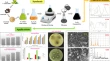
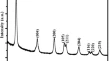
         <p>Figure <figr fid="F1">1</figr>a and b shows XRD patterns of Au/C embedded in AAO membrane (Au/C&#8211;AAO) and carbon embedded in AAO membrane (C&#8211;AAO), respectively. The embedded carbon phase is amorphous. There are no recognizably specific reflections of crystalline carbon in XRD patterns. The diffraction peaks of Au in the XRD pattern of Au/C&#8211;AAO are identical to those of Au&#8211;AAO <abbrgrp>
               <abbr bid="B15">15</abbr>
            </abbrgrp>. This indicates that the crystal structure of the Au nanoparticles does not change during the carbonization. The insets in Fig. <figr fid="F1">1</figr> are the optical images of bare AAO, Au&#8211;AAO, and Au/C&#8211;AAO. After embedding the Au nanoparticles in bare AAO, the transparent AAO membrane exhibited a dark red wine color (&#955;<sub>max</sub> = 528 nm), which is characteristic color of the colloidal Au nanoparticles. The color change is indicative of the conversion from HAuCl<sub>4</sub> to Au nanoparticles. The embedded Au nanoparticles (ca. 10 nm in diameter) partially coalesced with each other to form conducting Au nanotubes/nanoparticles on the walls of AAO channels <abbrgrp>
               <abbr bid="B15">15</abbr>
            </abbrgrp>. After the carbonization of the infiltrated sucrose at 230 &#176;C under the nitrogen gas flow, the wine color of the membrane turned to black. This carbonization temperature, which is higher than the decomposition temperature of sucrose (~185 &#176;C) <abbrgrp>
               <abbr bid="B17">17</abbr>
            </abbrgrp> and the same as the decomposition temperature of HAuCl<sub>4</sub> in AAO to form Au nanotubes, <abbrgrp>
               <abbr bid="B15">15</abbr>
            </abbrgrp> would not change the properties of the Au nanoparticles pre-embedded in AAO channels.</p>
         <fig id="F1"><title><p>Figure 1</p></title><text>
   <p>XRD patterns of (a) carbonized sucrose in Au nanoparticles embedded AAO (Au/C&#8211;AAO) and (b) carbonized sucrose in anodized aluminum oxide(C&#8211;AAO) template. Insets are optical images of bare AAO, Au&#8211;AAO, and Au/C&#8211;AAO membrane (from left to right)</p>
</text><graphic file="1556-276X-4-932-1"/></fig>
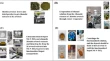
         <p>The enriched carbon in Au/C&#8211;AAO was confirmed by the XPS analysis. Compared with the spectrum for the Au&#8211;AAO sample, Fig. <figr fid="F2">2</figr>a, the intensity of the characteristic binding energies of C 1<it>s</it> peak (285.0 eV) was remarkably enhanced after the carbonization as shown in Fig. <figr fid="F2">2</figr>b. The binding energies of Al 2<it>p</it> (75.5 eV), O 1<it>s</it> (532 eV), and Au 4<it>f</it> (88.5 and 85 eV) in the XPS spectrum of Au/C&#8211;AAO corresponded well with those of Au&#8211;AAO in other reports <abbrgrp><abbr bid="B7">7</abbr><abbr bid="B18">18</abbr>
<abbr bid="B19">19</abbr>
<abbr bid="B20">20</abbr></abbrgrp>.</p>
         <fig id="F2"><title><p>Figure 2</p></title><text>
   <p>XPS spectra of<b>a</b>Au embedded AAO and<b>b</b>carbonized sucrose in Au embedded AAO. Peaks were calibrated against the binding energy of C 1<it>s</it>(285.0 eV)</p>
</text><graphic file="1556-276X-4-932-2"/></fig>
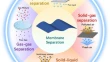
         <p>Figure <figr fid="F3">3</figr>a is a TEM image of carbon nanotube bundles, which were prepared by the carbonization of the infiltrated sucrose in the pristine AAO membrane. The diameter of the nanotubes is the same as that of AAO channels, 80 nm. EDX analysis (not shown here) confirmed that the tube consists of carbon. Figure <figr fid="F3">3</figr>b is a TEM image of the free-standing Au/CNFs. The dark spots in the image are Au nanoparticles. The inset of Fig. <figr fid="F3">3</figr>b is the SEM image of Au/CNTs in the AAO template. According to EDX analysis (not shown here), the chemical compositions of the imaged area co-insist with Au and carbon in addition to the aluminum oxide. Although some reports claimed that the formation of carbon nanostructures via the carbonization of sucrose inside nano-templates is possible only with aid of sulfuric acid <abbrgrp><abbr bid="B11">11</abbr>
            <abbr bid="B12">12</abbr>
            <abbr bid="B13">13</abbr>
            <abbr bid="B14">14</abbr></abbrgrp> or linker chemicals, <abbrgrp>
               <abbr bid="B9">9</abbr>
            </abbrgrp> the present method shows that the carbonization of sucrose in the AAO channel can be carried out to form carbon nanostructures without additional chemicals.</p>
         <fig id="F3"><title><p>Figure 3</p></title><text>
   <p><b>a</b>TEM image of carbon nanotubes prepared in anodized aluminum oxide (AAO) template and<b>b</b>TEM image of free standing carbon nanotubes ornamented with Au nanoparticles. The inset is SEM image of carbon nanotubes in Au embedded AAO (Au/C&#8211;AAO) template. The Au/C&#8211;AAO was crashed to expose the edge</p>
</text><graphic file="1556-276X-4-932-3"/></fig>
         <p>Although the thermal decomposition process of sucrose includes complicated multiple steps, <abbrgrp>
               <abbr bid="B17">17</abbr>
            </abbrgrp> it can be simplified as C<sub>12</sub>(H<sub>2</sub>O)<sub>11</sub> &#8594; 12C(s) + 11H<sub>2</sub>O(g). If this reaction occurs in the AAO channels, the water vapor will be evolved and form bubbles. The bubble formed inside a channel, when escapes, pushes outward the sucrose phase at the outer region of the channel. At the same time, due to the strong adhesion between the aluminol groups of AAO and the hydroxyl groups of sucrose, <abbrgrp>
               <abbr bid="B21">21</abbr>
            </abbrgrp> a thin layer of sucrose might remain on the wall of AAO channel. Finally, the decomposition of the coated sucrose on as-prepared AAO channel will result in the nanotubes as shown in Fig. <figr fid="F3">3</figr>.</p>
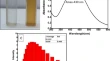
         <p>Initially, it was expected that carbon tubes, 80 nm in diameter, coated with Au nanoparticles could be prepared through the carbonization of sucrose inside the AAO pre-loaded with Au nanoparticles (Au&#8211;AAO) with the same procedure as discussed above. Instead, however, Au decorated carbon nanofibers (Au/CNFs) were obtained as shown in Fig. <figr fid="F4">4</figr>a. A higher resolution image (Fig. <figr fid="F4">4</figr>b) shows that the thickness of the CNFs approaches around 10 nm. The dark spots in the image are crystalline Au nanoparticles as shown in the SAED pattern of Au nanoparticle (inset of Fig. <figr fid="F4">4</figr>a). The circled area in Fig. <figr fid="F4">4</figr>c shows a bundle of cross-linked Au/CNFs and the distance between the dark lines is 80 nm, which corresponds to the diameter of the AAO channels. From these images, it is noteworthy that the width of Au/CNFs corresponds to the diameter of Au nanoparticles and the length of the bridge between two dark lines in the cross-linked Au/CNFs corresponds to the diameter of AAO channel, 80 nm. Figure <figr fid="F4">4</figr>d is the distribution plot of 185 Au nanoparticles appeared in Fig. <figr fid="F4">4</figr>b. The mean diameter of Au nanoparticle was 9.2 nm.</p>
         <fig id="F4"><title><p>Figure 4</p></title><text>
   <p>TEM images of<b>a</b>Au ornamented carbon nanofibers,<b>b</b>magnified image of the circled section on<b>a</b>, and<b>c</b>other area of the same TEM grid.<b>d</b>The histograms of particle size distribution of<b>b</b>. The inset in<b>a</b>is a SAED pattern of an Au nanoparticle</p>
</text><graphic file="1556-276X-4-932-4"/></fig>
         <p>The formation of long narrow nanofibers (Au/CNFs) shown in Fig. <figr fid="F4">4</figr>a, may be not explained by the above simple extrusion model. It was confirmed that the pre-loaded Au nanoparticles coat all over the AAO channel <abbrgrp>
               <abbr bid="B15">15</abbr>
            </abbrgrp>. Therefore, if all Au nanoparticles take part in the formation of Au/CNF, the carbon fibers would be fully coated. But, the TEM image of Au/CNFs shows that not so much Au nanoparticles are attached. This suggests that a great part of Au nanoparticles are removed from the inside of the AAO channels during the decomposition process. The fact that the CNFs have the same diameter of the Au nanoparticles and the distance of the bridge in the cross-linked CNFs is the same as the diameter of AAO channel suggests that the fibers are the splits of the tubular shape of carbon. We could not get in situ information of the extrusion activity in the channel during the decomposition. However, it could be speculated that the Au nanoparticles (~10 nm in diameter) could act as blades during the thermal extrusion, as schematically shown in Fig. <figr fid="F5">5</figr>. In this case, the Au nanoparticles would be aligned at the interface of liquefied (partially decomposed) sucrose and water vapor bubble, which generated during the thermal decomposition. Then the distance between the Au nanoparticle&#8217;s center (i.e., distance between the gold blades) become ~10 nm. The aligned Au particles could split the sucrose layer, which is coated on the wall of AAO channel as discussed in previous section, when the water vapor bubble is expanded by continuing decomposition. This will result in the evenly sectioned (10 &#215; 10 nm) carbon nanofibers up to several micrometers long with Au nanoparticles as ornament, as shown in Fig. <figr fid="F5">5</figr>.</p>
         <fig id="F5"><title><p>Figure 5</p></title><text>
   <p>Schematic diagram of the two-step preparation method. The preloaded Au nanoparticles act like knife blade during decomposition of sucrose and result carbon nanofibers. TEM image is low magnified free standing Au/C nanofibers</p>
</text><graphic file="1556-276X-4-932-5"/></fig>
         <p>In conclusion, we demonstrated a facile route for the synthesis of carbon nanotubes and dimension-confined (10 &#215; 10 nm) nanofibers decorated with size-defined (10 nm) Au nanoparticles by the carbonization of sucrose in the AAO channels which were coated with Au nanoparticles without any chemical additives or further chemical reactions. The attached Au nanoparticles could be used as good anchoring posts to assemble carbon nanostructures on proper substrates.</p>
      </sec>
   </bdy>
   <bm>
      <ack>
         <sec>
            <st>
               <p>Acknowledgments</p>
            </st>
            <p>This work was supported by Pukyong National University Research Abroad Fund in 2007(PS-2007-010). D.K. is grateful to Prof. S.H. Kim for his stay and research at Penn State.</p>
         </sec>
      </ack>
      <refgrp><bibl id="B1"><aug><au><snm>Shi</snm><fnm>Q</fnm></au><au><snm>Liang</snm><fnm>H</fnm></au><au><snm>Feng</snm><fnm>D</fnm></au><au><snm>Wang</snm><fnm>J</fnm></au><au><snm>Stucky</snm><fnm>GD</fnm></au></aug><source>J. Am. Chem. Soc.</source><pubdate>2008</pubdate><volume>130</volume><fpage>5034</fpage><note>COI number [1:CAS:528:DC%2BD1cXjsVOms7c%3D]</note><xrefbib><pubidlist><pubid idtype="doi">10.1021/ja800376t</pubid><pubid idtype="pmpid" link="fulltext">18355006</pubid></pubidlist></xrefbib></bibl><bibl id="B2"><aug><au><snm>Liang</snm><fnm>C</fnm></au><au><snm>Li</snm><fnm>Z</fnm></au><au><snm>Dai</snm><fnm>S</fnm></au></aug><source>Angew Chem. Int. Ed.</source><pubdate>2008</pubdate><volume>47</volume><fpage>3696</fpage><note>COI number [1:CAS:528:DC%2BD1cXmsVKiurY%3D]</note><xrefbib><pubid idtype="doi">10.1002/anie.200702046</pubid></xrefbib></bibl><bibl id="B3"><aug><au><snm>Amma</snm><fnm>A</fnm></au><au><snm>Razavi</snm><fnm>B</fnm></au><au><snm>St. Angelo</snm><fnm>SK</fnm></au><au><snm>Mayer</snm><fnm>TS</fnm></au><au><snm>Mallouk</snm><fnm>TE</fnm></au></aug><source>Adv. Funct. Mater.</source><pubdate>2003</pubdate><volume>13</volume><fpage>365</fpage><note>COI number [1:CAS:528:DC%2BD3sXktV2ksLg%3D]</note><xrefbib><pubid idtype="doi">10.1002/adfm.200304232</pubid></xrefbib></bibl><bibl id="B4"><aug><au><snm>Lee</snm><fnm>MS</fnm></au><au><snm>Hong</snm><fnm>SC</fnm></au><au><snm>Kim</snm><fnm>D</fnm></au></aug><source>Jpn. J. Appl. Phys.</source><pubdate>2004</pubdate><volume>43</volume><fpage>8347</fpage><note>COI number [1:CAS:528:DC%2BD2MXjvFCnsg%3D%3D]; Bibcode number [2004JaJAP..43.8347L]</note><xrefbib><pubid idtype="doi">10.1143/JJAP.43.8347</pubid></xrefbib></bibl><bibl id="B5"><aug><au><snm>Lee</snm><fnm>MS</fnm></au><au><snm>Hong</snm><fnm>SC</fnm></au><au><snm>Kim</snm><fnm>D</fnm></au></aug><source>Appl. Surf. Sci.</source><pubdate>2006</pubdate><volume>252</volume><fpage>5019</fpage><note>COI number [1:CAS:528:DC%2BD28XkvFKru74%3D]; Bibcode number [2006ApSS..252.5019L]</note><xrefbib><pubid idtype="doi">10.1016/j.apsusc.2005.07.019</pubid></xrefbib></bibl><bibl id="B6"><aug><au><snm>Kim</snm><fnm>DS</fnm></au><au><snm>Lee</snm><fnm>T</fnm></au><au><snm>Gerkeler</snm><fnm>KE</fnm></au></aug><source>Angew Chem. Ind. Ed.</source><pubdate>2005</pubdate><volume>45</volume><fpage>104</fpage><xrefbib><pubid idtype="doi">10.1002/anie.200500234</pubid></xrefbib></bibl><bibl id="B7"><aug><au><snm>Hu</snm><fnm>X</fnm></au><au><snm>Wang</snm><fnm>T</fnm></au><au><snm>Qu</snm><fnm>X</fnm></au><au><snm>Dong</snm><fnm>S</fnm></au></aug><source>J. Phys. Chem. B</source><pubdate>2006</pubdate><volume>110</volume><fpage>853</fpage><note>COI number [1:CAS:528:DC%2BD2MXhtlagu77K]</note><xrefbib><pubidlist><pubid idtype="doi">10.1021/jp055834o</pubid><pubid idtype="pmpid" link="fulltext">16471615</pubid></pubidlist></xrefbib></bibl><bibl id="B8"><aug><au><snm>Goring</snm><fnm>P</fnm></au><au><snm>Pippel</snm><fnm>E</fnm></au><au><snm>Hofmeister</snm><fnm>H</fnm></au><au><snm>Wehrspohn</snm><fnm>RB</fnm></au><au><snm>Steinhart</snm><fnm>M</fnm></au><au><snm>Gosele</snm><fnm>U</fnm></au></aug><source>Nano Lett.</source><pubdate>2004</pubdate><volume>4</volume><fpage>1121</fpage><note>Bibcode number [2004NanoL...4.1121G]</note><xrefbib><pubid idtype="doi">10.1021/nl049542v</pubid></xrefbib></bibl><bibl id="B9"><aug><au><snm>Rodriguez</snm><fnm>AT</fnm></au><au><snm>Chen</snm><fnm>M</fnm></au><au><snm>Chen</snm><fnm>Z</fnm></au><au><snm>Brinker</snm><fnm>CJ</fnm></au><au><snm>Fan</snm><fnm>H</fnm></au></aug><source>J. Am. Chem. Soc.</source><pubdate>2006</pubdate><volume>128</volume><fpage>9276</fpage><note>COI number [1:CAS:528:DC%2BD28XmsVeltb4%3D]</note><xrefbib><pubidlist><pubid idtype="doi">10.1021/ja061380c</pubid><pubid idtype="pmpid" link="fulltext">16848431</pubid></pubidlist></xrefbib></bibl><bibl id="B10"><aug><au><snm>Hsieh</snm><fnm>CT</fnm></au><au><snm>Chen</snm><fnm>JM</fnm></au><au><snm>Kuo</snm><fnm>RR</fnm></au><au><snm>Huang</snm><fnm>YH</fnm></au></aug><source>Appl. Phys. Lett.</source><pubdate>2004</pubdate><volume>84</volume><fpage>1186</fpage><note>COI number [1:CAS:528:DC%2BD2cXht1OgsLk%3D]; Bibcode number [2004ApPhL..84.1186H]</note><xrefbib><pubid idtype="doi">10.1063/1.1646746</pubid></xrefbib></bibl><bibl id="B11"><aug><au><snm>Joo</snm><fnm>SH</fnm></au><au><snm>Choi</snm><fnm>SJ</fnm></au><au><snm>Oh</snm><fnm>IW</fnm></au><au><snm>Kwak</snm><fnm>JH</fnm></au><au><snm>Liu</snm><fnm>Z</fnm></au><au><snm>Terasaki</snm><fnm>O</fnm></au></aug><source>Nature</source><pubdate>2001</pubdate><volume>412</volume><fpage>169</fpage><note>COI number [1:CAS:528:DC%2BD3MXlsFWmsL8%3D]; Bibcode number [2001Natur.412..169J]</note><xrefbib><pubidlist><pubid idtype="doi">10.1038/35084046</pubid><pubid idtype="pmpid" link="fulltext">11449269</pubid></pubidlist></xrefbib></bibl><bibl id="B12"><aug><au><snm>Han</snm><fnm>SJ</fnm></au><au><snm>Kim</snm><fnm>MS</fnm></au><au><snm>Hyeon</snm><fnm>TH</fnm></au></aug><source>Carbon</source><pubdate>2003</pubdate><volume>41</volume><fpage>1525</fpage><note>COI number [1:CAS:528:DC%2BD3sXkt1GjtL8%3D]</note><xrefbib><pubid idtype="doi">10.1016/S0008-6223(03)00072-1</pubid></xrefbib></bibl><bibl id="B13"><aug><au><snm>Lee</snm><fnm>JW</fnm></au><au><snm>Kim</snm><fnm>JY</fnm></au><au><snm>Hyeon</snm><fnm>TH</fnm></au></aug><source>Adv. Mater.</source><pubdate>2006</pubdate><volume>18</volume><fpage>2073</fpage><note>COI number [1:CAS:528:DC%2BD28Xptlygs7k%3D]</note><xrefbib><pubid idtype="doi">10.1002/adma.200501576</pubid></xrefbib></bibl><bibl id="B14"/><bibl id="B15"><aug><au><snm>Lee</snm><fnm>MS</fnm></au><au><snm>Hong</snm><fnm>SC</fnm></au><au><snm>Kim</snm><fnm>D</fnm></au></aug><source>Appl. Phys. Lett.</source><pubdate>2006</pubdate><volume>89</volume><fpage>043120</fpage><note>Bibcode number [2006ApPhL..89d3120L]</note><xrefbib><pubid idtype="doi">10.1063/1.2221883</pubid></xrefbib></bibl><bibl id="B16"><aug><au><snm>Masuda</snm><fnm>H</fnm></au><au><snm>Fukuda</snm><fnm>K</fnm></au></aug><source>Science</source><pubdate>1995</pubdate><volume>268</volume><fpage>1466</fpage><note>COI number [1:CAS:528:DyaK2MXmtFKktbc%3D]; Bibcode number [1995Sci...268.1466M]</note><xrefbib><pubidlist><pubid idtype="doi">10.1126/science.268.5216.1466</pubid><pubid idtype="pmpid" link="fulltext">17843666</pubid></pubidlist></xrefbib></bibl><bibl id="B17"><aug><au><snm>Simkovic</snm><fnm>I</fnm></au><au><snm>Surina</snm><fnm>I</fnm></au><au><snm>Vrican</snm><fnm>M</fnm></au></aug><source>J. Anal. Appl. Pyrol.</source><pubdate>2003</pubdate><volume>70</volume><fpage>493</fpage><note>COI number [1:CAS:528:DC%2BD3sXos12rsLo%3D]</note><xrefbib><pubid idtype="doi">10.1016/S0165-2370(03)00007-X</pubid></xrefbib></bibl><bibl id="B18"><aug><au><snm>Qiu</snm><fnm>T</fnm></au><au><snm>Wu</snm><fnm>XL</fnm></au><au><snm>Siu</snm><fnm>GG</fnm></au><au><snm>Chu</snm><fnm>PK</fnm></au></aug><source>Appl. Phys. Lett.</source><pubdate>2005</pubdate><volume>87</volume><fpage>223115</fpage><note>Bibcode number [2005ApPhL..87v3115Q]</note><xrefbib><pubid idtype="doi">10.1063/1.2138360</pubid></xrefbib></bibl><bibl id="B19"><aug><au><snm>Nguyen</snm><fnm>TP</fnm></au><au><snm>Ip</snm><fnm>J</fnm></au><au><snm>Le Rendu</snm><fnm>P</fnm></au><au><snm>Lahmar</snm><fnm>A</fnm></au></aug><source>Surf. Coat. Technol.</source><pubdate>2001</pubdate><volume>141</volume><fpage>108</fpage><note>COI number [1:CAS:528:DC%2BD3MXjsFaktLw%3D]</note><xrefbib><pubid idtype="doi">10.1016/S0257-8972(01)01165-3</pubid></xrefbib></bibl><bibl id="B20"><aug><au><snm>Szytula</snm><fnm>A</fnm></au><au><snm>Fus</snm><fnm>D</fnm></au><au><snm>Penc</snm><fnm>B</fnm></au><au><snm>Jezierski</snm><fnm>A</fnm></au></aug><source>Alloy. J. Compd.</source><pubdate>2001</pubdate><volume>317</volume><fpage>340</fpage><xrefbib><pubid idtype="doi">10.1016/S0925-8388(00)01427-4</pubid></xrefbib></bibl><bibl id="B21"><aug><au><snm>Singh</snm><fnm>K</fnm></au></aug><source>Appl. Surf. Sci.</source><pubdate>2004</pubdate><volume>221</volume><fpage>308</fpage><note>COI number [1:CAS:528:DC%2BD3sXps1Chsbs%3D]; Bibcode number [2004ApSS..221..308S]</note><xrefbib><pubid idtype="doi">10.1016/S0169-4332(03)00950-4</pubid></xrefbib></bibl></refgrp>
   </bm>
</art>