Original paper
First identification of primary nanoparticles in the aggregation of HMF
1 School of Mechanical and Chemical Engineering and Centre for Energy, The University of Western Australia, 35 Stirling Highway, Perth, Western Australia, 6009, Australia
2 School of Materials and Metallurgy, Northeastern University, Wen Hua Road, Shenyang, 110004, People's Republic of China
3 State Key Laboratory of Rare Earth Resource Utilization, Changchun Institute of Applied Chemistry, Chinese Academy of Sciences, Ren Min Street, Changchun, 130022, People's Republic of China
Nanoscale Research Letters 2012, 7:38 doi:10.1186/1556-276X-7-38
Published: 5 January 2012Abstract
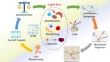
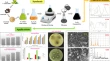
5-Hydroxymethylfurfural [HMF] is an important intermediate compound for fine chemicals. It is often obtained via hydrothermal treatment of biomass-derived carbohydrates, such as fructose, glucose and sucrose. This study investigates the formation of carbonaceous spheres from HMF created by dehydration of fructose under hydrothermal conditions. The carbonaceous spheres, ranging between 0.4 and 10 μm in diameter, have granulated morphologies both on the surface and in the interior. The residual solution is found to contain a massive number of primary nanoparticles. The chemical structure of the carbonaceous spheres was characterised by means of FTIR and NMR spectroscopies. Based on these observations, a mechanism involving the formation and aggregation of the nanoparticles is proposed. This mechanism differs considerably from the conventional understanding in the open literature.