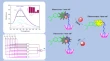
Abstract
Zn particulates overlaid with wurtzite (W)-type ZnO condensates having nearly orthogonal
and
facets were found to self-catalyze unusual tapered W-ZnO whiskers upon isothermal
atmospheric annealing, i.e., thermal oxidation, at 600 °C. Analytical electron microscopic
observations indicated that such whiskers formed tapered slabs having mosaic
and
twinned domains. The tapered whiskers can be rationalized by an alternative vapor–liquid–solid
growth, i.e., {hkil}-specific coalescence twinning growth from the ZnO condensates taking advantage of
a partially molten bottom source of Zn and the adsorption of atoms at the whisker
tips and ledges under the influence of capillarity effect. The tapered whiskers having
strong photoluminescence at 391 nm and with a considerable flexibility could have
potential applications.
Keywords:
ZnO; Whiskers; Pulsed laser ablation; VLS; PhotoluminescenceIntroduction
The motivation of this research was to prove experimentally that tapered whiskers bounded by specific crystal surfaces can be formed by an unusual vapor–liquid–solid (VLS) growth mechanism, i.e., {hkil}-specific coalescence twinning growth from crystalline condensates taking advantage of a partially molten bottom source rather than a small liquid globular at the tip of the whisker.
The VLS mechanism of single crystal growth [1] was generally accepted to be a liquid-mediated growth at the tip of an elongated
crystal where mass transportation from vapor to solid via liquid occurs. In general,
the intermediate liquid has nothing to do with the growth direction of the elongated
crystal via this mechanism unless there is partial crystallinity of liquid that affects
lattice match and hence the crystallographic relationship with the crystal underneath
as experimentally proved for catalyst-free [2] or catalyst-guided [3] growth of wurtzite(W)-type ZnO nanowires/nanobelts having polar surfaces (0001) and
to minimize the electrostatic energy [4].
Recently, W-ZnO condensates prepared by pulsed laser ablation (PLA) in vacuum for
nanosized and predominant surfaces
were used for self-catalyzed VLS growth of rod-like W-ZnO whiskers in air [5]. The resultant whiskers have characteristic globular tips yet unusual habit, i.e.,
extending along the zone axis of the well-developed polar surfaces
accompanied by
-specific growth twinning and/or coalescence twinning for a beneficial fair coincidence-site
lattice at the twin boundary [5]. Such W-ZnO whiskers with globular tips [5] are in accord with the commonly accepted VLS mechanism via liquid-mediated growth
at the tip [1]. The observed twin boundary
[5] is additional to
[6-8],
[7],
[9], and
[10] reported for W-ZnO.
In this study, we report further the development of tapered whiskers from Zn particulates overlaid with twinned W-ZnO condensates acting as seeds for VLS growth via a thermal oxidation process. There is significant difference in this study in respect of our previous experiments i.e., the usage of an oxygen environment instead of the residual oxygen-containing vacuum [5] to form Zn particulates overlaid with W-ZnO nanocrystallites during PLA. (Zn particulates as the solidification products of molten plumes were significantly formed via PLA in air rather than in vacuum, because the former process has a significant air-breaking effect to broaden the beam and hence to produce more molten Zn particulates covered with ZnO condensates in order to prevent from complete oxidation.) Such Zn particulates overlaid with W-ZnO nanocrystallites are essential to the present formation of tapered W-ZnO whiskers via a thermal oxidation VLS process from a partially molten bottom source of Zn upon annealing, in drastic contrast with our previously studied case of VLS growth at a partially molten globular tip [5].
Thermal oxidization of Zn is popular for synthesizing nanoneedles or nanobelts of ZnO. The effect of H2O2 pre-oxidation of Zn [11] and the co-existence of Au nanoparticles with Zn at temperatures [12] on the fabrication of W-ZnO nanoneedles or nanobelts has been studied. Direct oxidation of zinc foil in alkaline zincate ion solution at near room temperature [13] and a simple hydrothermal synthesis [14] were also found to cause the formation of highly [0001]-oriented ZnO nanoneedle/nanorods arrays. There are other growth manners through solution chemistry, such as an electrochemical deposition process to control the growth of ZnO taper-tubes [15]; an in situ template route to fabricate ZnO taper-tubes through chemical etching reaction [16]; and an in situ chemistry strategy to convert ZnO nanorods into ZnO/ZnS nanocable arrays [17].
We emphasize here that a partially molten bottom source of Zn overlaid with W-ZnO
condensates having nearly orthogonal
and
facets accounts for {hkil}-specific coalescence and hence VLS growth of the tapered whiskers extending along
mosaic twin domain boundaries rather than commonly observed [0001] direction. This
study sheds light on an alternative VLS growth mechanism for other compound whiskers
to be explored in the future.
Experimental
Zn target with negligible impurities (99.9% pure) was subjected to energetic Nd-YAG-laser (Lotis, 1064 nm in wavelength, beam mode: TEM00) under oxygen flow rate of 50 L/min in air, rather than vacuum as in our previous experiments [5], so that abundant Zn particulates covered with W-ZnO nanocondensates can be produced. These particulates with round surface and irregular shape (Appendix) act as a partially molten bottom source of Zn for the present thermal oxidation VLS growth upon annealing as mentioned. (Particulates were commonly accepted to be solidified from molten plumes during a PLA process [18].) The nearly pure oxygen gas was introduced into an open air chamber at the specified flow rate under room temperature and pressure conditions, i.e., near 25 °C and 1 atm.
Pulse energy of 560 mJ/pulse, i.e., power density of 1.17 × 10¹² W/cm2 given pulse time duration of 16 ns at 10 Hz (Q-switch) on focused area of 0.03 mm2 was employed in the present PLA process. (A peak power density as high as 1.17 × 10¹¹ W/cm² rather than a mean power density is of concern to the rapid heating–cooling, and hence to the phase and size selection of the condensates in the present PLA process.) Soda-lime glass or Zn plate at a distance of 25–10 mm from the target was used as a substrate to collect the condensates and particulates during PLA for a total of 10 min. The angle of incidence of the laser beam was maintained at ca. 20 degree in order to scan over a part of the moving target and to assure a satisfactory yield of deposit on the substrate in parallel to the target. The deposits with a common yield of 0.2-μm thickness per minute on the two different substrates were then annealed at 600 °C in air for a specified time up to 1 h (Appendix) in order to study the substrate effect, if any, on the formation of the tapered W-ZnO whiskers having an approximate 10% volume ratio of whiskers with respect to the partially molten particulates of bulk Zn with a melting point at 420 °C [19].
X-ray diffraction (XRD, CuKα, D5000 instrument) was used to study the orientation
change, if any, of the W-ZnO and Zn deposits on glass upon annealing. High resolution
XRD (CuKα, D1 instrument) step-scan with 0.001 degree increment of 2θ was also employed
to resolve the nearly superimposed
and (0002)Zn peaks. Scanning electron microscopy (SEM, JEOL 6330, 10 kV) was used to characterize
the microstructure changes, in particular the whisker development, due to post-deposition
annealing. The W-ZnO whiskers retrieved from the glass substrate were dispersed in
alcohol and dipped onto copper grids overlaid with a carbon-coated collodion film
for field emission transmission electron microscopy (TEM, FEI Tecnai G2 F20 at 200
kV) study coupled with selected area electron diffraction (SAED), and point-count
energy dispersive X-ray (EDX) analysis at a beam size of 5 nm. The EDX analysis was
performed using K shell counts for Zn and O, and the principle of ratio method without
absorption correction [20].
The PL measurements were carried out at room temperature by Micro photoluminescence (PL) spectroscopy (Jobin Yvon T64000 Micro-PL/Raman Spectroscopy). The excitation source was the 325-nm line of a He–Cd laser. More than five independent PL runs were conducted for the tapered W-ZnO whiskers in order to compare with the PL result of a polycrystalline W-ZnO standard prepared by sintering at 1400°C for 3 h in air.
Results and Discussion
Results of PLA Process
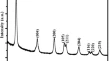
The XRD whole trace showed a strong preferred orientation of (0001)Zn and
as deposited on glass (Fig. 1). The corresponding high resolution XRD step-scan showed the resolved
and (0002)Zn peaks. Such preferred orientations are the same as the condensates overlaid on glass
by PLA in vacuum [5] and can be rationalized by the shape-dependent orientation of the condensates on
a noncrystalline substrate rather than a true epitaxy relationship with respect to
a crystalline substrate. Optical polarized microscopic observations of the as-formed
deposits on glass showed irregularly shaped Zn plumes and micron-sized Zn particulates
in a matrix of W-ZnO nanocondensates (Fig. 2a). (It should be noted that PLA of Zn in a permanently oxygen-enriched environment
did not cause uniform oxidized W-ZnO deposit. Instead, Zn particulates covered with
W-ZnO nanocondensates were formed. This is due to rapid solidification of the particulates
from a molten state and a concurrent condensation process for significant coverage
of W-ZnO nanocondensates in a permanently oxygen-enriched PLA environment.)
Figure 1. X-ray diffraction (CuKα) traces of the Zn/W-ZnO deposits on glass:aas prepared by PLA;bfurther annealed at 600°C. High-resolution XRD (CuKα) step-scan (inset) is able to resolve nearly overlapped
and (0002)Znfora, but notbbecause of low diffraction intensities
Figure 2. Optical micrographs of Zn/W-ZnO samples via PLA deposition and/or annealing:aas-deposited on glass showing irregular-shaped Zn plumes and micron-sized Zn particulates
(opaque) overlaid with hardly resolved W-ZnO nanocondensates (cf. SEM image in Fig.
3a);bfurther annealed sample showing significantly coarsened Zn particulates with blurred
outline due to tapered W-ZnO whiskers (arrow) radiating from them (cf. SEM image in
Fig. 3b);cblank Zn plate annealed without forming W-ZnO whiskers;dZn plate with Zn/W-ZnO deposit via PLA and further annealed, showing W-ZnO whiskers
(arrow) were developed from Zn particulates overlaid with W-ZnO condensates. Note:aandbwere taken under transmission plane polarized light, whereascanddunder reflective light
Results of Annealing
After annealing, the preferred orientations of (0001)Zn and
on glass became obscure and the nearly overlapped
and (0002)Znwere hardly resolvable due to low diffraction intensities (Fig. 1b). Optical polarized microscopy indicated that the opaque Zn particulates were significantly
coarsened having a blurred outline due to birefringent W-ZnO whiskers radiating from
them (Fig. 2b).
The same annealing condition did not cause the development of W-ZnO whiskers from a partially molten Zn plate (Fig. 2c), unless it has been deposited with Zn particulates overlaid with W-ZnO nanocondensates (Fig. 2d). (The Zn plate partly survived annealing at 600°C despite a lower melting point of bulk Zn at 420°C [19] and an unavoidable sublimation process with an activation energy of 197 KJmol−1 in the temperature range of 573–1073 K [21]. This can be explained by the presence of a passive oxide film on the bulk Zn plate upon annealing in air.) We conclude therefore that the deposit of Zn particulates overlaid with W-ZnO nanocondensates via the present PLA process are essential to the tapered whisker growth regardless of the substrate being glass or Zn plate.
The SEM images of the representative deposit on glass showed that the W-ZnO nanocondensates were coalesced as nano chain aggregate (NCA) or in a more closely packed manner on the surface of globular Zn particulates which also tended to coalesce (Fig. 3a). After annealing, tapered W-ZnO whiskers radiating from the coalesced Zn particulates appeared (Fig. 3b). According to point-count EDX analyses, the Zn particulate overlaid with tiny ZnO condensates (Fig. 3c) has more Zn counts than the W-ZnO whisker (Fig. 3d), both being immune from impurities.
Figure 3. SEM secondary electron images of Zn/W-ZnO particulates:aas-deposited by PLA, having W-ZnO condensates coalesced as NCA or in a closely packed
manner on the surface of globular Zn particulates also in coalescence;bfurther annealed at 600°C for 30 min to form tapered W-ZnO whiskers radiating from the coalesced particulates.
The magnified image from the arrowed area (inset) shows a wide whisker base (underline)
and smaller pores (circle) nearby (cf. text);canddPoint-count EDX spectra from the arrowed areas inaandb, respectively, showing more Zn counts from the Zn particulate overlaid with tiny
ZnO condensates than the W-ZnO whiskers
Microstructures of Tapered Whiskers
The assembly of the tapered W-ZnO whiskers was observed by TEM bright field image
(BFI) (Fig. 4a). The individual whisker (Fig. 4b) is twinned as indicated by SAED patterns taken from the root area (Fig. 4c) and nearby (Fig. 4d), which are slightly off and in exact
zone axis, respectively indexed according to a hexagonal W-type structure (space
group P63mc) with lattice parameters a = 0.3249 nm and c = 0.5206 nm (JCPDS file 36–1451).
It should be noted that such tapered whisker has well-developed
surface/steps to rest upon and hence in a preferred orientation close to
zone axis. The magnified areas near the tip (Fig. 4e and f) were also twinned with growth steps/ledges parallel to
, although a curved surface possibly due to surface premelting as will be discussed
later also occurred (Fig. 4e). By contrast, the tip (Fig. 4g) is a single crystal with
facets as indicated by lattice image and the 2-D forward Fourier transform. The
ledge, which is nearly orthogonal to the side surface
and an almost horizontal
plane in the
zone axis, also occurred near the tip.
Figure 4. TEM:aBFI of tapered W-ZnO whiskers;bMagnified BFI of an individual twinned whisker with SAED patterns;canddtaken from root and middle areas, respectively, showing the twin domains are slightly
off
as indicated by spot splitting (circled) inc, but are in exact
zone axis ind, having twin spot denoted as t and double diffraction denoted asd;eandfMagnified BFIs from specified areas showing
facets and a curved growth ledge;gThe Lattice image and the 2-D forward Fourier transform from the square region showing
that the whisker tip is a single crystal with
facets as in the case ofeand (f). Note: a nearby
ledge (arrowed) orthogonal to the side surface
; The same specimen as in Fig. 3b
As for the twinning scheme of the tapered W-ZnO whiskers, Fig. 5shows well-developed twin plane
close to a top view in
zone axis. The lattice image (Fig. 5b) and the 2-D forward Fourier transform (Fig. 5c) showed lamellae fringes due to superimposition of the bicrystals twinning over
a horizontal
twin plane. The inverse Fourier transform and atomic simulation (Fig. 5d) further indicated that the
twin is about superimposition of the
plane by 52.2 degree off in order to show the lamellae fringes parallel to
plane and the twinning spots as simulated in Fig. 5e.
Figure 5. TEM:aBFI of a tapered ZnO whisker with ledges and twinning;bLattice image from the square region inacoupled withcforward- anddinverse Fourier transform from the square region inb, showing lamellae fringes due to superimposition of the bicrystals twinned over a
nearly horizontal
twin plane in
zone axis. The inserted atomic simulation of two
slabs 2 nm in thickness superimposed by 52.2 degree off indindeed shows lamellae-like
fringes with corresponding twin spots (denoted as t) in the simulated diffraction
pattern ine. The same specimen as in Fig. 3b
The tapered whisker has another twin plane, i.e.,
, which is nearly orthogonal to
in local area to show a mosaic pattern. The BFI taken near the tip of such twinned
ZnO whisker (Fig. 6a) shows vertical
twin plane besides the nearly horizontal
twin plane in
zone axis. Lattice images and 2-D Fourier transform showed that the nearly horizontal
twin plane prevailed in area b in order to show twin and double diffraction spots
(Fig. 6b). The
twinning, however, prevailed edge on in local area I in Fig. 6c to show twin diffraction spots yet no significant double diffractions. The inverse
2-D Fourier transform of such an area and inserted atomic simulation further showed
that the
twin boundary is in fact a tilt boundary by 52orotation about the
zone axis. By contrast, the area II in Fig. 6c is nearly a single crystal and hence free of twin diffraction spots. The point-count
EDX analyses along the axial growth direction (not shown) indicated that the W-ZnO
whisker is nearly stoichiometric in chemical composition except at steps/ledges and
tips where a liquid-like layer, possibly due to surface premelting and EDX detection
angle could cause apparent composition difference.
Figure 6. TEM:aBFI taken near the tip of a tapered W-ZnO whisker with a
twin plane edge on besides the
twin plane nearly horizontal in
zone axis;bandcLattice images from the specified areas inawith Fourier transform from the square regions (I and II) inset. The nearly horizontal
twin plane prevails in region b, whereas an additional
twin plane shows up edge on in area c as indicated bydinverse Fourier transform of the area I incwith inserted atomic simulation showing orientation difference of the basic units
(outlined) across such a twin boundary. The same sample as in Fig. 3b
Scenario of Tapered Whisker Growth from a Partially Molten Bottom Source
The W-ZnO condensates on glass [5] or Zn plate (this study) were able to self-catalyze rod-like W-ZnO whiskers with
characteristic globular tips, in accordance with the commonly accepted VLS mechanism
via liquid mediated growth at the tip [1]. By contrast, the formation of the present tapered W-ZnO whiskers in this study involved
an alternative VLS growth process from Zn particulates covered with nanocrystalline
W-ZnO deposit on glass or Zn plate. It should be noted that tiny globular tip on top
of twinned W-ZnO condensate typically causes a rod-like whisker with a well-developed
surface and
-specific growth twinning or coalescence twinning by VLS growth [5]. On the other hand, much larger-sized Zn particulates, preferable via the PLA process
in air (this study) rather than vacuum [5] as mentioned, would act as a bottom reservoir for a thermal oxidation VLS process.
Under such a case, there are a number of twinned W-ZnO condensates on top of a Zn
particulate to impinge and coalesce mutually as a tapered whisker with unique
mosaic twinning and growth ledges as depicted sequentially in Fig. 7. First, the W-ZnO seeds on Zn particulates underwent
- and/or
-specific coalescence twinning during laser ablation condensation (Fig. 7a). The W-ZnO whiskers with well-developed
and
surfaces and twin boundaries then developed anisotropically from such twinned seeds
on the partially molten Zn particulates upon annealing (Fig. 7b). Such whiskers were impinged and assembled as tapered bundles with intimate intergrowth
of such twinned domains, which are nearly orthogonal and hence a mosaic pattern (Fig.
7c). (Note that some
and
surfaces intersect at ca. 82 degree depending on the c/a ratio [5], see Appendix 1) The outward Zn and inward oxygen diffusion would occur across the
ZnO/Zn interface and along specific surfaces and twin planes of the tapered bundles.
The adsorption of atoms for a fair accommodation at the whisker tips and ledges would
also proceed continuously under the influence of capillarity effect (Fig. 7d). In other words, we propose a sort of capillary diffusion of Zn atoms from the
bottom to the tip of the whisker along the twinning edges and stepwise ledges as the
source of tip growth to form a tapered whisker. Nucleation site saturation and later
coalescence of the neighboring W-ZnO whiskers, in order to form a single crystal or
twin, would occur predominantly in the early stage of this VLS growth process in order
to have nearly the same size and aspect ratio of the tapered whiskers.
Figure 7. Schematic drawing of the VLS growth of tapered ZnO whiskers from a partially molten
bottom source of Zn in sequential stages:a
and/or
specific coalescence twinning (gray vs white domains) of the W-ZnO condensate seeds;banisotropic growth of individual W-ZnO whisker with well-developed
and
surfaces and twin boundaries;cimpingement and assembling to form tapered bundles with intimate intergrowth of
- and
-twinned domains in a mosaic pattern;doutward Zn and inward oxygen diffusion via
surfaces and twin boundaries in accompaniment with adsorption of vapor atoms at the
whisker tip and ledges under the influence of capillarity effect
It should be noted that the Zn liquid splashed out of a compact oxide film shell could
oxidize and grow as W-ZnO nanoneedles in a thermal oxidation process [22]. Under such a case, the needles grow out from the extremities and corners of the
Zn nanoparticles [22]. By contrast, the tapered W-ZnO whiskers in this study were hardly derived from the
splashed liquid because the tapered whiskers have a much wider base than the pores
on the partially molten particulate (Fig. 3b). This is analogous to the case of Fe3O4 nanoneedles nucleating on the plated Fe nanocrystals, rather than from their gaps,
during thermal oxidation [23]. In any case, the tapered W-ZnO whiskers extending along mosaic
and
surfaces, and twin boundaries can be more reasonably explained by precedent nanocondensates
with such characteristics as mentioned.
Twinning Energetics and Mass Transport for the Tapered W-ZnO Whisker
The atomic structure and electronic effects of the
twin boundary, in ZnO has been studied experimentally and theoretically using first-principle density-functional
total-energy calculations [8]. The twin boundary was found to have the head-to-tail polarity configuration, which
avoids dangling bonds, leading to a low twin-boundary energy of 0.040 J/m2. The authors, investigations [8] of the electronic structure further revealed that the twin boundary does not introduce
localized energy states in the band gap in W-ZnO. Such detailed electronic structure
and atomic bonding at twin boundaries are out of the scope of this study. Instead,
the crystallographic and energetic aspects for the growth of the present W-ZnO whisker
with
vs
-specific twinning can be rationalized by their difference of lattice misfit [5]. It was pointed out that the
or
contact plane is allowed for coalescence twinning of W-ZnO crystallites involving
rotation within 52.2 degree (cw or ccw) for both cases [5]. However, in comparison with
, the
twin plane has much better coincidence on the lattice sites, in fact, with coincidence-site
density of 1 in 6, i.e., Σ = 6 [5]. Thus
twin plane is an interfacial energy cusp for {hkil}-specific coalescence twinning [5] and beneficial for further extended growth to form the tapered whiskers with minor
twin boundaries nearly orthogonal to
twin plane as mentioned. The tapered ZnO whiskers in this study extend along mosaic
twin domain boundaries rather than commonly observed [0001] direction. This can be
rationalized by a rather rapid twinning growth kinetics taking advantage of the mass
transport along the twin boundary [24].
The surface of a liquid alloy droplet was proved experimentally and theoretically
to provide a favorable mass transport path for VLS growth [25]. The partially molten Zn particulate at the base of the tapered whisker would adopt
such a rapid diffusion path. In addition, local whisker step/ledge with a curvature,
as shown in Fig. 4e, could possibly involve the so-called surface premelting [26], despite a rather high bulk ZnO melting temperature of 1978°C [27]. The initial smooth surface of nanocrystallites could become rough by surface premelting
so that the atoms are not located on lattice positions and the layer has typical liquid-like
short-range order [26]. However, it is less likely that surface premelting occurred along the well-developed
and
surface, in particular the latter having a significantly higher surface density than
the former [5]. (The surface density of
and
are 6.47 and 10.04 atoms per nm2, respectively, in terms of cation–anion-mixed and the outermost oxygen layer in
the unrelaxed state [5].) In this connection, overheating experiment of lead particles [28] indicated that cubo-octahedra cannot, but {111} octahedral can be overheated (i.e.,
the close-packed {111} surfaces remained inert above the bulk Pb melting temperature.
Temperature is also of concern to the growth rate anisotropy and surface energy, as
shown by the formation of α-Fe2O3 nanobelts at ~700°C whereas cylindrical nanowires at ~800°C both forming mostly bicrystallites extending along [110], i.e.,
direction during direct thermal oxidation of iron substrates under the flow of O2[29]. In any case, interdiffusion via the
and
surface or twin boundaries would be easier than lattice diffusion [30,31] for the axial growth of whiskers. (The diffusivity of W-ZnO was reported to be 10−13–10−15 cm2/s for Zn2+[30] and 10−15–10−17 cm2/s for O2−[31] in the temperature range 900–1000°C.)
It is noteworthy that the negatively charged Zn interstitials in coordination four and charge-compensating oxygen as well as Zn-on-O antisite are pertinent to n-type W-ZnO [32]. Future study is required to see how the oxygen partial pressure and system total pressure that played key roles in the growth of ZnO nanowires from various single crystal substrates [33] would affect the transport of such point defects and hence the growth of the tapered whiskers with mosaic twinning.
Implications
The formation of
-specific surface and mosaic twinning of the tapered W-ZnO whiskers by isothermal
atmospheric annealing of the Zn particulates overlaid with W-ZnO condensates sheds
light on an alternative VLS growth mechanism, i.e., {hkil}-specific coalescence twinning growth from the crystalline condensates taking advantage
of a partially molten bottom source rather than a small liquid globular at the tip
of the whisker. The ZnO whiskers when grown to a larger size and quantity can be removed
by chemical and/or mechanical means from the Zn particulates for potential engineering
applications. Further study is required to know whether such a mosaic twinning- and
surface/interface diffusion-controlled VLS growth from bottom molten source, i.e.,
PLA-induced particulates, can be extended to the synthesis of other compound whiskers.
As for engineering applications, the present tapered W-ZnO whiskers in this syudy
are promising seeds for growing larger crystals with unusual surface/twin boundaries.
Such whiskers extending along polar
surfaces with mosaic
twin boundaries yet with a strong photoluminescence at 391 nm and a considerable
flexibility as shown in Fig. 8a and b, respectively, could have potential lasing/piezoelectric and energy-scavenging
applications. The red shift of the near band edge emission in comparison with that
of the sintered polycrystals (385 nm) (Fig. 8a), the [0001]-aligned rods (380 nm) [14], and taper-tubes (382 nm) [15] is possibly due to nanosize effect [34], the prevailed polar surfaces, and the mosaic-twinned domain boundaries of the present
tapered whiskers in this study. Besides, a slight red shift and an increase in peak
intensity were observed upon increasing the laser power. Such a phenomenon has been
observed in thin ZnO films, which may indicate the presence of stimulated emission
[35]. A novel nanostructure of nanobow in Fig. 8b is similar to that due to continuous and uniform bending of ZnO nanobelts [36]. In fact, bending of polar-surface-dominated nanobelt of ZnO can be attributed to
electrostatic neutralization of the dipole moment via deformation (called an electrostatic
polar charge model) and/or imbalances between surface tensions via surface-termination-induced
stresses [36]. The bending modulus of such a ZnO ring has been experimentally determined as 109
GPa [37]. The self-organized, [0001] oriented W-ZnO nanowire arrays grown on suitable substrates
can be used as room-temperature ultraviolet lasing materials [35]. The W-ZnO microfiber–nanowire hybrid structure was also demonstrated to be effective
for energy scavenging from mechanical vibration/friction of the nanowires [38] taking advantage of the AC frequency-dependent piezoelectric coefficient (14.3–26.7
pm/V) [39] and the elastic bending dependence of conductance [37] for the [0001]-oriented W-ZnO nanowire with a rather high fracture strength of ca.
7 GPa [40]. Photoelectronic application, such as field emission, of the whiskers is also possible
depending on other factors besides morphology. The tapered ZnO whiskers bounded by
unusual crystal surfaces could have novel applications such as nanoforce/nanopressure
sensors, nanocantilevers, field effect transistors and nanoresonants as shown for
other (hkil)-specific ZnO nanobelts [41].
Figure 8. aPL spectra of the tapered W-ZnO whisker showing strong luminescence at 391 nm with
a significant red shift in comparison with the broad and weak signal at 385 nm for
a polycrystalline W-ZnO standard;bTEM BFI showing that the tapered W-ZnO whisker is flexible to bend. The tapered whiskers
are of the same specimen as in Fig. 3b
Conclusions
(1) Thermal oxidation of Zn particulates overlaid with W-ZnO condensates having
and
facets caused tapered W-ZnO whiskers with mosaic twinning.
(2) The tapered whisker slabs have
- and
-twinned domains due to {hkil}-specific coalescence and twinning growth along a common zone axis of the twin planes.
(3) The VLS growth of such twinned and tapered W-ZnO whiskers was facilitated by a partially molten bottom source of Zn and a sort of capillary diffusion of Zn atoms from the bottom to the tip of the whisker along the twinning edges and stepwise ledges as the source of tip growth.
Appendix

Auxiliary SEM secondary electron images of Zn/W-ZnO particulates subjected to post-deposition annealing: (a) As-deposited Zn molten plume with irregular shape; (b) further annealed at 600 C for 1 h in air for the development of W-ZnO whiskers via a thermal oxidation VLS process from the globular particulates associated with the Znplume craters as indicated by the arrowed area magnified in (c)
Acknowledgments
We thank C.N. Huang for his technical assistance on laser ablation, and L.J. Wang for her technical assistance on AEM, and anonymous referees for constructive comments. This research was supported by the Center for Nanoscience and Nanotechnology at NSYSU, and The National Science Council, Taiwan, ROC under contract NSC96-2221-E214-037 & NSC97-2221-E214-007.
References
-
Appl. Phys. Lett.. 1964, 4:89.
COI number [1:CAS:528:DyaF2cXls1yhug%3D%3D]; Bibcode number [1964ApPhL...4...89W]
Publisher Full Text -
Science. 2001, 291:1947.
COI number [1:CAS:528:DC%2BD3MXhvVSnu7s%3D]; Bibcode number [2001Sci...291.1947P]
Publisher Full Text -
J. Am. Chem. Soc.. 2004, 126:2066.
COI number [1:CAS:528:DC%2BD2cXnvFWnsw%3D%3D]
Publisher Full Text -
Wang ZL, Kong XY, Ding Y, Gao P, Hughes WL, Yang R, Zhang Y:
Adv. Funct. Mater.. 2004, 14:943.
COI number [1:CAS:528:DC%2BD2cXhtVagtbbL]
Publisher Full Text -
J. Phys. Chem. C. 2008, 112:1064.
COI number [1:CAS:528:DC%2BD1cXis1Olsw%3D%3D]
Publisher Full Text -
Yan Y, Al-Jassim MM, Chisholm MF, Boatner LA, Pennycook SJ, Oxley M:
Phys. Rev. B. 2005, 71:041309.
Bibcode number [2005PhRvB..71d1309Y]
Publisher Full Text -
Dai Y, Zhang Y, Bai YQ, Wang ZL:
Chem. Phys. Lett.. 2003, 375:96.
COI number [1:CAS:528:DC%2BD3sXkvVWmt7Y%3D]; Bibcode number [2003CPL...375...96D]
Publisher Full Text -
Ding Y, Wang ZL, Sun T, Qiu J:
Appl. Phys. Lett.. 2007, 90:153510-153511.
Bibcode number [2007ApPhL..90o3510D]
Publisher Full Text -
Mater. Chem. Phys.. 2005, 93:539.
COI number [1:CAS:528:DC%2BD2MXls1Olsrg%3D]
Publisher Full Text -
Trans. Nonferrous Metab. Soc. China. 2004, 14:973.
COI number [1:CAS:528:DC%2BD2cXhtFGjs7%2FL]
-
Wu X, Bai H, Li C, Lu G, Shi G:
Chem. Commun. Camb.. 2006, 15:1655. Publisher Full Text
-
J. Cryst. Growth. 2008, 310:1836.
COI number [1:CAS:528:DC%2BD1cXktlajsbw%3D]; Bibcode number [2008JCrGr.310.1836Y]
Publisher Full Text -
Electrochem. Commun.. 2007, 9:1247.
COI number [1:CAS:528:DC%2BD2sXlslGit7o%3D]
Publisher Full Text -
Yan C, Liu J, Liu F, Wu J, Gao K, Xue D:
Nanoscale Res. Lett.. 2008, 3:473.
COI number [1:CAS:528:DC%2BD1cXhsVyhtrjP]; Bibcode number [2008NRL.....3..473Y]
Publisher Full Text -
J. Phys. Chem. B. 2006, 110:25850.
COI number [1:CAS:528:DC%2BD28Xht1Clu7bF]
Publisher Full Text -
Chrisey DB, Hubler GK: Pulsed Laser Deposition of Thin Films. Wiley, New York; 1994.
-
Stull D: American Institute of Physics Handbook. Edited by Gray DE. McGraw Hill, New York; 1972.
-
Williams DB: Practical analytical electron microscopy in materials science. Philips Electronic Instruments Inc, Mahwah; 1984.
-
Panasyuk GP, Danchevskaya MN, Kobozev NI:
Zh.Fiz. Khim. 1967, 41:691.
COI number [1:CAS:528:DyaF2sXkvVGqtb4%3D]
-
Wu R, Xie C, Hu J, Xia H, Wang A:
Scr. Mater.. 2000, 43:841.
COI number [1:CAS:528:DC%2BD3cXotlertLo%3D]
Publisher Full Text -
Liu Y, Liao L, Pan C, Li J, Dai Y, Chen W, Phy J:
Chem. Can.. 2008, 112:902.
COI number [1:CAS:528:DC%2BD1cXisV2ksg%3D%3D]
-
Porter DA, Easterling KE: Phase Transformations in Metals and Alloys. CRC Press, USA; 1992.
-
J. Appl. Phys.. 1994, 76:1557.
COI number [1:CAS:528:DyaK2cXlvFWlu7o%3D]; Bibcode number [1994JAP....76.1557W]
Publisher Full Text -
Ultramicroscopy. 1989, 31:73. Publisher Full Text
-
Wagman DD, Jobe TL, Domalski ES, Schumn RH: American Institute of Physics Handbook. Edited by Gray DE. McGraw Hill, New York; 1972.
-
Wen X, Wang S, Ding Y, Wang ZL, Yang S:
J. Phys. Chem. B. 2005, 109:215.
COI number [1:CAS:528:DC%2BD2cXhtVCntbnK]
Publisher Full Text -
Tomlins GW, Routbort JL, Mason TO:
J. Appl. Phys.. 2000, 87:117.
COI number [1:CAS:528:DC%2BD3cXksVCgsA%3D%3D]; Bibcode number [2000JAP....87..117T]
Publisher Full Text -
Sabioni ACS, Ramos MJF, Ferraz WB:
Mater. Res.. 2003, 6:173.
COI number [1:CAS:528:DC%2BD3sXltFagsbo%3D]
-
Özgür Ü, Alivov YI, Liu C, Teke A, Reshchikov MA, Doğan S, Avrutin V, Cho SJ, Morkoç H:
J. Appl. Phys.. 2005, 98:041301.
Bibcode number [2005JAP....98d1301O]
Publisher Full Text -
J. Mater. Chem.. 2007, 17:711.
COI number [1:CAS:528:DC%2BD2sXhslSrt7k%3D]
Publisher Full Text -
Gong Y, Andelman T, Neumark GF, O’brien S, Kuskovsky IL:
Nanoscale Res. Lett.. 2007, 2:297.
COI number [1:CAS:528:DC%2BD2sXpslegsbg%3D]; Bibcode number [2007NRL.....2..297G]
Publisher Full Text -
Huang MH, Wu Y, Feick H, Tran N, Weber E, Yang PD:
Adv. Mater.. 2001, 13:113.
COI number [1:CAS:528:DC%2BD3MXht1altrg%3D]
Publisher Full Text -
J. Am. Chem. Soc.. 2004, 126:6703.
COI number [1:CAS:528:DC%2BD2cXjs12is7o%3D]
Publisher Full Text -
Wang X, Zhou J, Song J, Liu J, Xu N, Wang ZL:
Nano Lett.. 2006, 6:2768.
COI number [1:CAS:528:DC%2BD28Xht1aitrzK]
Publisher Full Text -
Nature. 2008, 451:809.
COI number [1:CAS:528:DC%2BD1cXhvVyms7k%3D]; Bibcode number [2008Natur.451..809Q]
Publisher Full Text -
Nano Lett.. 2004, 4:587.
COI number [1:CAS:528:DC%2BD2cXhs1yisbs%3D]
Publisher Full Text -
Appl. Phys. Lett.. 2007, 90:043105.
Bibcode number [2007ApPhL..90d3105C]
Publisher Full Text -
J. Phys. Cond. Mater.. 2004, 16:R829.
COI number [1:CAS:528:DC%2BD2cXmtVyhtLY%3D]; Bibcode number [2004JPCM...16R.829W]
Publisher Full Text